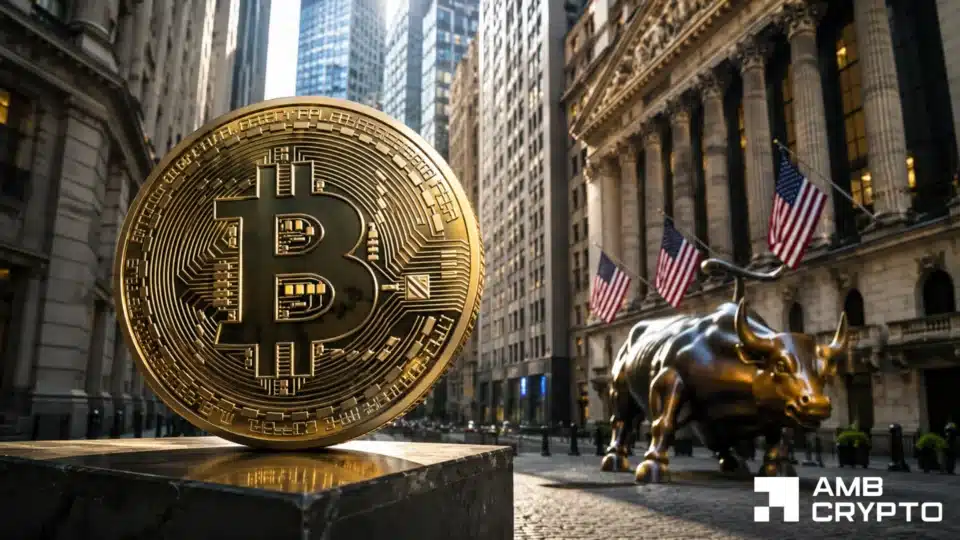
Le président de la Fed, Kevin Warsh, sera devant le Congrès le 14 juillet dans le contexte du débat sur la hausse des taux

TheNewsCryptoPublished on 2026-06-23Last updated on 2026-06-23

Abstract

Le président de la Réserve fédérale américaine (Fed), Kevin Warsh, doit comparaître devant la commission des services financiers de la Chambre des représentants le 14 juillet pour évaluer la politique monétaire de la banque centrale. Cette audition, l'une des deux présentations semestrielles requises par la loi, survient à quelques semaines de la prochaine réunion du Comité fédéral de l'open market (FOMC). Les investisseurs et les législateurs attendent ce témoignage avec attention, notamment pour obtenir des éclaircissements sur l'évolution de l'inflation aux États-Unis. L'attention se concentre principalement sur l'indice des prix de la consommation personnelle (PCE), l'indicateur d'inflation privilégié par la Fed. Alors que les prévisions pour le mois de mai indiquent une hausse, certaines institutions financières, comme Bank of America, ont révisé leurs anticipations. Elles prévoient désormais que la Fed pourrait relever ses taux d'intérêt par incréments de 0,25 point de pourcentage lors de trois réunions du FOMC (septembre, octobre et décembre), un changement par rapport aux précédentes prévisions qui n'envisageaient aucun mouvement cette année. Les marchés financiers reflètent cette incertitude. Si la probabilité d'une hausse des taux en juillet est estimée à environ 25%, elle dépasse les 50% pour le mois de septembre selon les outils d'analyse comme le CME FedWatch. Dans ce contexte, la déposition de Kevin Warsh devant le Congrès sera scrutée pour tout indice concern...

Le président de la Fed, Kevin Warsh, va évaluer la politique monétaire de la banque devant la commission des services financiers de la Chambre des représentants. L'audition est fixée au 14 juillet, et il ne reste que quelques semaines avant la réunion du FOMC. Warsh présentera sa première évaluation de la politique monétaire de la Réserve fédérale devant le Congrès lors de cette audition imminente.

Les règlements fédéraux exigent que le président de la Réserve fédérale présente des rapports sur la politique monétaire au Congrès deux fois par an. Warsh devrait également comparaître devant la commission bancaire du Sénat lors d'une audition distincte. Les investisseurs attendent le témoignage de Warsh en raison de l'examen continu par les décideurs politiques de l'état de l'inflation au sein de l'économie américaine. Les attentes sont fortes quant au fait que les membres demanderont des avis sur la situation économique.

Les données sur l'inflation restent l'attraction principale

Entre-temps, les investisseurs et les décideurs politiques ont tourné leur attention vers l'indice des prix des dépenses de consommation personnelle (PCE), que la Réserve fédérale utilise pour mesurer l'inflation. Les analystes prévoient que l'inflation mesurée par le PCE en mai a augmenté de 0,5 % par rapport à avril. Les projections d'inflation ces derniers temps ont contraint certaines organisations financières à revoir leurs perspectives en matière de politique monétaire. Bank of America prévoit désormais que la Réserve fédérale augmentera le taux d'intérêt par paliers de 25 points de base lors de trois réunions. L'organisation prévoit de nouvelles hausses du taux d'intérêt lors des réunions de septembre, octobre et décembre du Comité fédéral de l'open market. Des prévisions antérieures tablaient sur le fait que la Fed maintiendrait ses mesures politiques inchangées tout au long de l'année.

Les marchés anticipent de nouvelles hausses de taux

Les marchés de prédiction continuent d'afficher de l'incertitude quant aux futures actions de la Réserve fédérale. On estime que la probabilité d'une action de la Fed en juillet est d'environ 25 %. Bien que les investisseurs continuent de s'attendre à ce que la Fed n'agisse pas lors de sa prochaine réunion de juillet, les marchés anticipent de plus en plus des taux plus élevés vers la fin de l'année.

Selon les données de CME FedWatch, on pense que la possibilité d'un resserrement de la politique en septembre est supérieure à 50 %. Les investisseurs continuent d'analyser les données économiques disponibles pour évaluer les futures mesures politiques. Alors que Warsh se prépare pour son audition au Congrès, les marchés restent concentrés sur la tendance de l'inflation, l'économie et les attentes en matière de taux d'intérêt.

Actualité crypto en vedette :
La Banque d'Angleterre assouplit ses règles sur les stablecoins dans son cadre final avant un lancement en 2027

TagsBlockchainCryptocurrencyFederal ReserveFederalReserveU.S CongressUS House

Trending Cryptos

Related Questions

QQuand Kevin Warsh, le président de la Fed, doit-il comparaître devant le Comité des services financiers de la Chambre des représentants ?

AKevin Warsh doit comparaître devant le Comité des services financiers de la Chambre des représentants le 14 juillet.

QQuel indice clé de l'inflation les investisseurs et décideurs surveillent-ils actuellement, selon l'article ?

ALes investisseurs et décideurs surveillent actuellement l'indice des prix des dépenses de consommation personnelle (PCE), que la Réserve fédérale utilise pour mesurer l'inflation.

QSelon les nouvelles prévisions de Bank of America, à combien de réunions du FOMC la Fed augmenterait-elle les taux cette année ?

ASelon les nouvelles prévisions de Bank of America, la Fed augmenterait les taux d'intérêt par incréments de 0,25 point lors de trois réunions cette année : en septembre, octobre et décembre.

QQuelle est la probabilité estimée d'une action de la Fed sur les taux lors de sa réunion de juillet, selon l'article ?

ASelon l'article, la probabilité estimée d'une action de la Fed sur les taux lors de sa réunion de juillet est d'environ 25%.

QSelon les données du CME FedWatch citées, quelle est la probabilité perçue d'un resserrement monétaire de la Fed en septembre ?

ASelon les données du CME FedWatch citées dans l'article, la possibilité d'un resserrement monétaire de la Fed en septembre est estimée à plus de 50%.

Related Reads

In the AI Era, What's Left for Bitcoin?

As Bitcoin falls below $60,000, the author reflects on the relationship between AI and Bitcoin, seeing them as two sides of the same coin. In the AI era, the cost of generating content has plummeted, making fake text, images, and videos increasingly easy and cheap to produce. This has led to a fundamental shift: while AI dramatically lowers the cost of information production, it also undermines trust and authenticity online. What becomes truly valuable is not more content, but the ability to verify what is real—"verifiability." This perspective offers a new lens for Bitcoin. Its massive energy consumption, often criticized as wasteful, is reinterpreted. While AI burns energy to enhance "capability" and efficiency, Bitcoin burns energy to produce "verifiability." Its purpose is not to be trusted but to enable a system where no trust in intermediaries—banks, platforms, or developers—is needed. Every transaction and the entire ledger's history is secured by cryptography and a decentralized network of nodes, making it independently verifiable. AI cannot forge a transaction on the Bitcoin network because the system is designed for proof, not generation. The author draws a historical parallel to the Renaissance: the printing press drastically reduced the cost of copying knowledge, while double-entry bookkeeping reduced the cost of trust in commerce. Today, AI is the new printing press, reducing content creation costs to near zero. Blockchain, and Bitcoin as its pioneer, may be the modern equivalent of double-entry bookkeeping—a foundational technology for verifying digital asset ownership and historical records without centralized authorities. Thus, AI and blockchain are not competitors. AI lowers the cost of creation; blockchain lowers the cost of verification. In an age where AI can generate anything, true scarcity may lie not in more content, but in independently verifiable facts. Whether the market will reprice Bitcoin accordingly remains uncertain, but its core value proposition as a "machine for producing verifiability" becomes strikingly relevant.

marsbit21m ago

In the AI Era, What's Left for Bitcoin?

marsbit21m ago

In the Age of AI, What's Left for Bitcoin?

Author: Sevclub, Seven Research Amid Bitcoin's recent drop below $60k, the author reflects on a growing sense that AI and Bitcoin are two sides of the same coin. Today, encountering any content triggers a new default question: "Was this made by AI?" The cost of generating convincing text, images, and video is now negligible. While the internet lowered information *distribution* costs, AI is crashing information *production* costs to near zero. The consequence is a flood of content where truth and falsehood are increasingly indistinguishable. In this environment, what becomes truly valuable is not more information, but the ability to verify what is real—"verifiability." This reframes the common criticism that Bitcoin "wastes electricity." AI consumes power to produce "capability" (e.g., more powerful models). Bitcoin consumes power to produce something else: "verifiability." Bitcoin's core purpose isn't about belief or trust in any institution, developer, or even its creator. It's about enabling independent verification. Every bitcoin's origin, every transaction, and the integrity of the entire ledger are secured by mathematics, cryptography, and a global network of nodes. AI can fabricate convincing media, but it cannot falsify a transaction on the Bitcoin network. The expended energy makes篡改历史 (tampering with history) prohibitively expensive, purchasing a globally verifiable ledger. The author draws a historical parallel to the Renaissance. The printing press drastically reduced the cost of copying knowledge, while double-entry bookkeeping reduced the cost of trust in commerce—one enabled creation, the other verification. Today, AI is the new printing press, driving content production costs toward zero. The question becomes: what is this era's "double-entry bookkeeping"? Blockchain appears to be the leading candidate. It doesn't verify which news is true or which image is real, but it provides a foundational layer for independently verifying asset ownership and historical records in the digital realm without centralized authorities. Therefore, AI and blockchain are not in competition. AI lowers the cost of *generation*. Blockchain (and Bitcoin as a prime example) lowers the cost of *verification*. One creates, the other proves. Whether Bitcoin ultimately succeeds remains uncertain, facing potential challenges from quantum computing, regulation, and technical evolution. However, the author now sees it less as a "machine for making bitcoin" and more as a "machine for making verifiability." In an age where AI can generate anything, true scarcity may no longer be "more content," but "more independently verifiable facts." Whether the market will price this accordingly is a separate question.

链捕手29m ago

In the Age of AI, What's Left for Bitcoin?

链捕手29m ago

Trading

Spot

Hot Articles

What is $BANK

Bank AI: A Revolutionary Step in the Future of Banking Introduction In an era marked by rapid advancements in technology, Bank AI stands at the intersection of artificial intelligence (AI) and banking services. This innovative project seeks to redefine the financial landscape, enhancing operational efficiency, security measures, and customer experiences through the power of AI. As we embark on this exploration of Bank AI, we will delve into what the project entails, its operational dynamics, its historical context, and significant milestones. What is Bank AI? At its core, Bank AI represents a transformative initiative aimed at integrating artificial intelligence into various banking operations. This project harnesses the capabilities of AI to automate processes, improve risk management protocols, and enhance customer interaction through personalised services. The primary objectives of Bank AI include: Automation of Banking Functions: By leveraging AI technologies, Bank AI aims to automate routine tasks, reducing the burden on human resources and enhancing efficiency. Enhanced Risk Management: The project utilises AI algorithms to predict and identify risks, thereby fortifying security measures against fraud and other threats. Personalisation of Banking Services: Bank AI focuses on offering tailored financial products and services by analysing customer data and behaviours. Improving Customer Experience: The implementation of AI-driven solutions, such as chatbots and virtual assistants, aims to provide users with more human-like interactions, revolutionising the way customers engage with banks. With these goals, Bank AI positions itself as a crucial player in rendering banking more efficient, secure, and user-centric. Who is the Creator of Bank AI? Details regarding the creator of Bank AI remain unknown. As such, no specific individual or organisation has been identified in the available information. The anonymity surrounding the project's inception raises questions but does not detract from its ambitious vision and objectives. Who are the Investors of Bank AI? Similar to the project's creator, specific information regarding the investors or supporting organisations of Bank AI has not been disclosed. Without this information, it is challenging to outline the financial backing and institutional support that might be propelling the project forward. Nevertheless, the importance of having a robust investment foundation is pivotal for sustaining development in such an innovative field. How Does Bank AI Work? Bank AI operates on several innovative fronts, focusing on unique factors that differentiate it from traditional banking frameworks. Below are key operational features: Automation: By applying machine learning algorithms, Bank AI automates various manual processes within banks. This results in reduced operational costs and allows human workers to redirect their efforts towards more strategic activities. Advanced Risk Management: The integration of AI into risk management practices equips banks with tools to accurately predict potential threats such as fraud, ensuring that customer information and assets remain secure. Tailored Financial Recommendations: Through continuous learning from customer interactions, the AI systems develop a nuanced understanding of user needs, enabling them to offer tailored advice on financial decisions. Enhanced Customer Interactions: Utilizing chatbots and virtual assistants powered by AI, Bank AI enables a more engaging customer experience, allowing users to have their queries resolved quickly, thus reducing wait times and improving satisfaction levels. Together, these operational features position Bank AI as a pioneer in the banking sector, establishing new benchmarks for service delivery and operational excellence. Timeline of Bank AI Understanding the trajectory of Bank AI requires a look at its historical context. Below is a timeline highlighting important milestones and developments: Early 2010s: The conceptualisation of AI integration into banking services began to gain attention as banking institutions recognised the potential benefits. 2018: A marked increase in the implementation of AI technologies occurred when banks started using AI tools like chatbots for basic customer service and risk management systems for improved security handling. 2023: The sophistication of AI continued to advance, with generative AI being introduced for more complex tasks such as document processing and real-time investment analysis. This year marked a significant leap in the capabilities afforded to banks by AI technology. 2024-Current Status: As of this year, Bank AI is on an upward trajectory, with ongoing research and developments poised to further enhance capabilities in banking operations. Continued exploration of AI applications hints at exciting developments yet to come. Key Points About Bank AI Integration of AI in Banking: Bank AI focuses on adopting artificial intelligence to streamline banking processes and improve user experiences. Automation and Risk Management Focus: The project strongly emphasises these areas, aiming to shift the burden of routine tasks while enhancing security frameworks through predictive analytics. Personalised Banking Solutions: By harnessing customer data, Bank AI enables tailored banking services that cater to individual user needs. Commitment to Development: Bank AI remains committed to ongoing research and development efforts, ensuring its adaptability and ongoing relevance as technology continues to evolve. Conclusion In summary, Bank AI exemplifies a crucial step forward in the banking industry, leveraging artificial intelligence to reshape operational paradigms, enhance security, and promote customer satisfaction. Despite gaps in information surrounding the creator and investors, the clear objectives and functional mechanisms of Bank AI provide a strong foundation for its ongoing evolution. As AI technology continues to advance and merge with the banking sector, Bank AI is well-positioned to significantly impact the future of financial services, enhancing the way we understand and interact with banking.

172 Total ViewsPublished 2024.04.06Updated 2024.12.03

What is $BANK

Discussions

Welcome to the HTX Community. Here, you can stay informed about the latest platform developments and gain access to professional market insights. Users' opinions on the price of BANK (BANK) are presented below.

活动图片