Kesulitan dan Perjuangan Industri Rantai Pasok "Chip" Cahaya dalam Negeri

marsbitPublished on 2026-06-17Last updated on 2026-06-17

Abstract

Dalam perlombaan AI global, modul optik adalah komponen kritis untuk menghubungkan dan mensinkronisasi ribuan GPU dalam pelatihan model besar. Dua perusahaan AS, Marvell dan Broadcom, mendominasi pasar chip DSP (Digital Signal Processor) berkecepatan tinggi (800G/1.6T), yang penting untuk modul optik AI canggih, dengan pangsa gabungan diperkirakan lebih dari 90%. Produsen modul optik Tiongkok terkemuka dunia seperti Zhongji Innolight dan Eoptolink sangat bergantung pada chip ini untuk ekspor ke pasar AI luar negeri, terutama AS. Sementara itu, chip laser EML berkecepatan tinggi, komponen kunci lainnya, juga didominasi oleh pemasok seperti Lumentum. Namun, lanskap pemasok di segmen ini lebih beragam, dan kemajuan substitusi domestik Tiongkok lebih cepat dibandingkan dengan DSP. Risiko gangguan pasokan dari pemasok AS memang ada, tetapi hubungannya saling bergantung: Marvell dan Broadcom mengandalkan pasar manufaktur dan rantai pasok Tiongkok. Untuk mengurangi risiko, industri Tiongkok dapat melakukan diversifikasi pemasok, memperpanjang persediaan, serta mengembangkan pasar domestik dan regional. Solusi jangka panjang terletak pada percepatan substitusi domestik untuk chip DSP dan optik berkecepatan tinggi, didukung oleh pasar komputasi dalam negeri yang besar. Teknologi baru seperti Silicon Photonics dan CPO juga berpotensi mengurangi ketergantungan di masa depan. Meskipun jalan menuju swasembada penuh membutuhkan waktu dan investasi berkelanjutan, fondasi industri yang kua...

Artikel | Caihua She

Dalam narasi besar persaingan AI global hari ini, chip komputasi (GPU) tak diragukan lagi adalah pemeran utama. Namun, di luar sorotan utama, ada elemen yang lebih mendasar dan kritis yang diam-diam menentukan batas atas skala kluster AI—yaitu cahaya.

"Kamu harus berdiri dalam cahaya, jangan hanya berdiri di sana." Permainan kata-kata (谐音梗) ini mampu memicu euforia valuasi pasar miliaran dolar, mencerminkan kenyataan industri yang mendalam: ujung jalan AI bukan hanya komputasi, tetapi juga konektivitas.

Dan di dunia yang saling terhubung ini, ada dua raksasa AS—Marvell (MRVL.US) (selanjutnya disebut Marvell) dan Broadcom (AVGO.US)—yang memainkan peran sebagai "penjual sekop". Mereka tidak memproduksi modul optik, tetapi mayoritas modul optik kelas tinggi tidak bisa lepas dari mereka. Memahami mereka adalah kunci untuk melihat situasi sebenarnya industri cahaya di Tiongkok.

Apa itu Modul Optik, dan Mengapa Perkembangan AI Bergantung Padanya?

Modul optik terlihat seperti flash drive USB kecil, dapat dihubungkan ke antarmuka server atau switch, dengan serat optik di kedua ujungnya. Inti kerjanya adalah menerjemahkan sinyal listrik dan sinyal cahaya bolak-balik.

Di dalam server dan kartu grafis GPU, data ditransmisikan menggunakan sinyal listrik melalui kabel tembaga atau jalur pada papan sirkuit. Namun, sinyal listrik memiliki kelemahan fatal: sinyal menjadi buram setelah beberapa meter, kecepatan terbatas, dan panas yang parah.

Serat optik mengandalkan laser untuk mentransmisikan data, hampir tanpa kehilangan, sangat cepat, dan jarak hampir tidak terbatas. Tetapi mesin tidak dapat mengenali sinyal cahaya.

Di sinilah modul optik berperan sebagai penerjemah: sisi pengirim mengubah sinyal listrik menjadi laser dan memasukkannya ke dalam serat optik; sisi penerima mengubah laser kembali menjadi sinyal listrik untuk diproses oleh GPU. Tanpa modul optik, data dalam jumlah besar tidak dapat mengalir secara efisien di antara banyak GPU.

Ruang pelatihan AI skala besar sering menggunakan puluhan ribu GPU. Semua kartu grafis ini perlu bertukar data model secara real-time, setara dengan puluhan ribu komputer yang beroperasi secara bersamaan. Jika transmisi data tidak dapat mengikuti, meskipun daya komputasi GPU sangat kuat, akan terjadi idle computing dan kemacetan data, yang secara signifikan memperlambat pelatihan AI.

Modul optik adalah jaringan jalan raya kecepatan tinggi yang membangun kluster komputasi, untuk mencapai:

1) Interkoneksi jarak pendek: Transmisi antara server dan GPU dalam satu rak yang sama, mengandalkan modul optik kecepatan tinggi 800G dan 1.6T, mendukung pelatihan model besar yang cepat.

2) Interkoneksi antar ruang server: Komunikasi antara switch di rak atau lantai yang berbeda, mengandalkan modul optik kecepatan menengah hingga tinggi.

3) Transmisi jarak jauh: Penjadwalan komputasi lintas kota dan wilayah, mengandalkan modul optik koheren jarak jauh.

Semakin besar parameter model AI dan skala kluster, semakin tinggi jumlah dan kecepatan transmisi modul optik yang dibutuhkan. 800G dan 1.6T telah menjadi standar di kalangan raksasa AI luar negeri, dengan produk 3.2T di masa depan akan terus ditingkatkan. Modul optik adalah perangkat keras dasar yang tak tergantikan untuk ekspansi komputasi AI.

Modul optik kecepatan tinggi secara internal terdiri dari komponen optik (laser, detektor), chip listrik, dan komponen pasif pendukung. Di antaranya, chip listrik DSP (Digital Signal Processor) adalah kunci yang menentukan apakah modul optik kelas tinggi seperti 800G dan 1.6T dapat bekerja stabil.

Dalam transmisi kecepatan tinggi, sinyal cahaya setelah menempuh jarak jauh melalui serat optik rentan terhadap distorsi, noise, dan pergeseran waktu. Algoritma bawaan DSP (seperti equalization, clock recovery, forward error correction) dapat memperbaiki sinyal secara real-time, mengurangi tingkat kesalahan bit, dan menstabilkan bandwidth. Dapat dikatakan, modul optik AI kelas tinggi seperti 800G dan 1.6T sama sekali tidak dapat berfungsi normal tanpa DSP berkinerja tinggi. Inilah alasan mendasar mengapa Marvell dan Broadcom memegang kendali.

Perusahaan Apa Sebenarnya Marvell dan Broadcom, dan Apa Peran Mereka dalam Rantai Industri?

Marvell, yang harga sahamnya telah naik 263.92% year-to-date, kartu truf utamanya adalah chip DSP khusus untuk modul optik (diperoleh melalui akuisisi Inphi pada 2021), disertai dengan chip pendukung TIA (Transimpedance Amplifier) dan chip pendukung silicon photonics. Mereka dapat menyediakan skema chip listrik lengkap untuk produsen modul optik. Selain itu, mereka juga memproduksi chip PHY Ethernet, chip komunikasi base station 5G, dll., dengan cakupan bisnis meliputi dua jalur utama: pusat data dan komunikasi operator. Server AI resmi NVIDIA (NVDA.US) merekomendasikan solusi DSP Marvell. Lebih dari 70% modul optik kelas tinggi Tiongkok yang diekspor ke luar negeri menggunakan chip mereka. Zhongji Innolight (300308.SZ) adalah pelanggan global besar mereka.

Broadcom, dengan kapitalisasi pasar mencapai $1.87 triliun, adalah raksasa chip jaringan kelas dunia teratas, peringkat pertama dalam chip switch, dan secara bersamaan mengembangkan chip DSP optik. Chip mereka mengunggulkan keunggulan konsumsi daya rendah, sangat disukai oleh penyedia cloud Amerika Utara seperti Google (GOOG.US), Microsoft (MSFT.US), Meta (META.US), dan juga merupakan satu-satunya pemasok DSP yang dapat bersaing dengan Marvell di pasar (Credo, MaxLinear memiliki pangsa kecil tetapi skala lebih kecil). Beberapa pesanan luar negeri dari produsen dalam negeri seperti Eoptolink (300502.SZ) memilih DSP Broadcom.

Di pasar DSP PAM4 kecepatan tinggi 800G/1.6T yang ditujukan untuk komputasi AI, pasar global sangat terkonsentrasi—berdasarkan data dari lembaga riset seperti LightCounting dan Cignal AI, pangsa pasar Marvell mungkin di atas 60%, Broadcom mungkin 20-30%, keduanya kemungkinan menguasai lebih dari 90% pasar kelas tinggi. Sisa pangsa dibagi oleh produsen seperti Credo dan MaxLinear. DSP koheren (transmisi jarak jauh) juga didominasi oleh Marvell dan Broadcom, bersama-sama mungkin menguasai hingga 90% pasar kelas tinggi.

Dengan kata lain, jika pabrik dalam negeri ingin memproduksi modul optik kelas tinggi untuk dijual ke raksasa AI Amerika Utara, saat ini hanya ada dua pilihan chip matang dari Marvell dan Broadcom. Pasokan sepenuhnya berada di tangan perusahaan AS. Namun, kedua perusahaan AS ini, Broadcom dan Marvell, tunduk pada peraturan kontrol ekspor AS.

Apakah hubungan keterikatan Marvell dan Broadcom dengan perusahaan modul optik Tiongkok akan menyulitkan kita?

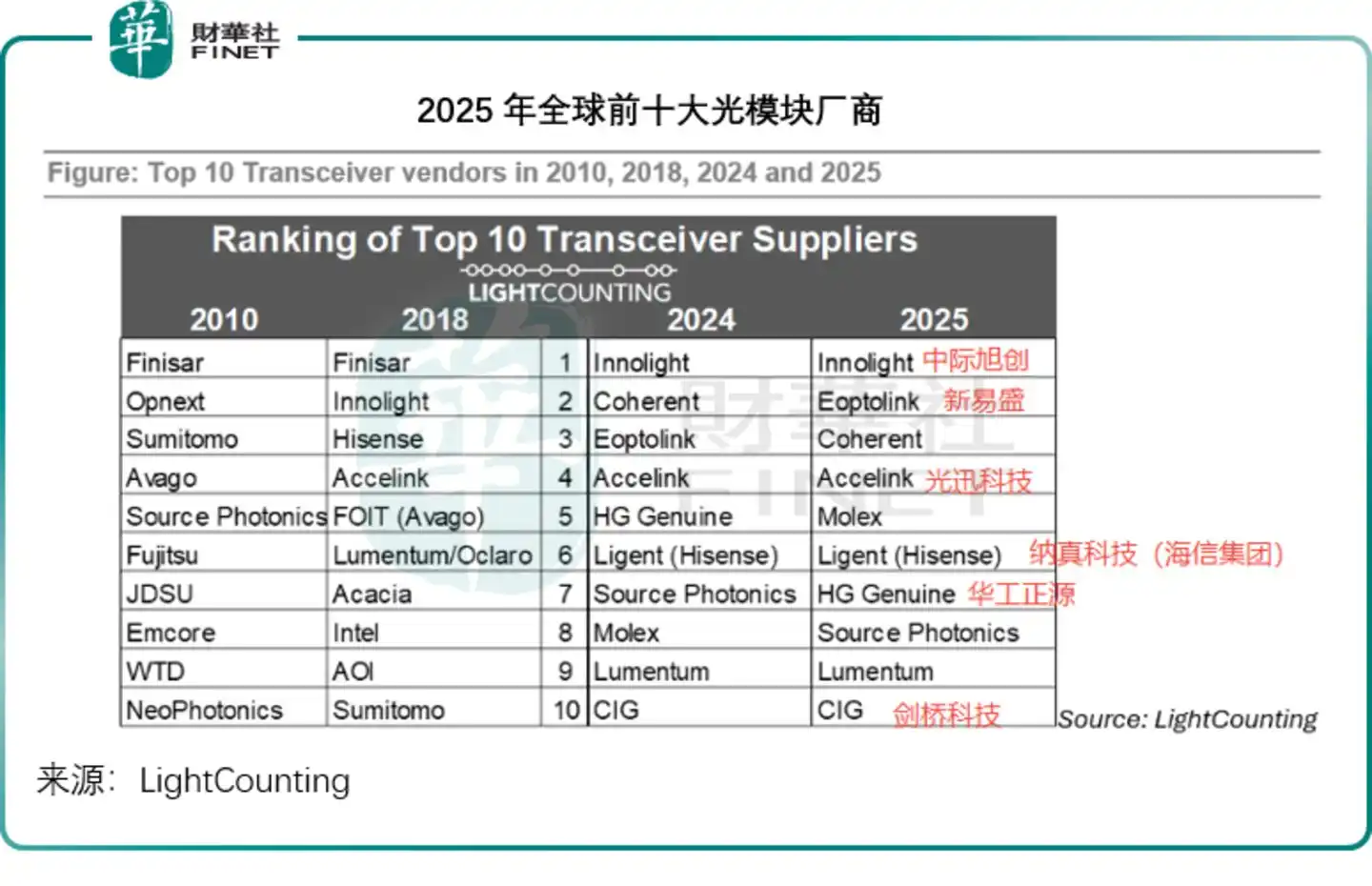
Zhongji Innolight dan Eoptolink, yang telah terdaftar di A-share dan berencana untuk listing di HK, adalah dua pabrik perakitan modul optik terbesar di dunia. Data lembaga riset LightCounting tahun 2025 menunjukkan bahwa dari sepuluh produsen modul optik teratas dunia, enam di antaranya adalah perusahaan Tiongkok, seperti terlihat pada gambar di bawah. Selain Zhongji Innolight dan Eoptolink, termasuk juga Accelink (002281.SZ), HiSense Group旗下的Nano Tech (telah mengajukan pendaftaran di HKEx), HG Genuine, dan Cambridge Industries (06166.HK). Tiongkok adalah basis produksi modul optik terbesar di dunia.
Jika mengibaratkan Zhongji Innolight dan Eoptolink sebagai pabrikan mobil yang merakit kendaraan lengkap, maka Marvell dan Broadcom adalah pabrik yang hanya memproduksi mesin kelas tinggi. Pabrikan mobil sendiri tidak dapat membuat mesin kelas tinggi yang sesuai dengan pelanggan luar negeri, sehingga harus membeli chip DSP dalam jumlah besar dari dua perusahaan AS untuk waktu yang lama, lalu menggabungkannya dengan komponen optik dan casing buatan dalam negeri untuk dirakit menjadi modul optik lengkap yang dijual ke luar.

Penyedia cloud luar negeri memiliki standar pembelian yang ketat, lebih mengakui skema chip Marvell dan Broadcom. DSP buatan dalam negeri belum melalui validasi mesin lengkap oleh pelanggan luar negeri yang memakan waktu 1-2 tahun, sehingga tidak dapat digunakan secara besar-besaran untuk pesanan ekspor luar negeri. Produsen modul optik terkemuka dalam negeri memiliki pilihan terbatas untuk mengganti chip upstream secara mandiri.

Hubungan mereka bukan sekadar jual beli sederhana, tetapi juga melibatkan pengembangan produk baru bersama: Ketika Marvell merilis chip baru, mereka segera memberikannya kepada Zhongji Innolight untuk penyesuaian dan pengujian; Broadcom dan Eoptolink berkolaborasi mengoptimalkan produk konsumsi daya rendah, terikat dalam secara mendalam dengan ekosistem komputasi luar negeri NVIDIA.

Dari laporan tahunan Marvell untuk tahun fiskal yang berakhir pada Januari 2026, terlihat bahwa pasar Greater China, termasuk Taiwan, menyumbang sekitar 56% dari total pendapatannya.
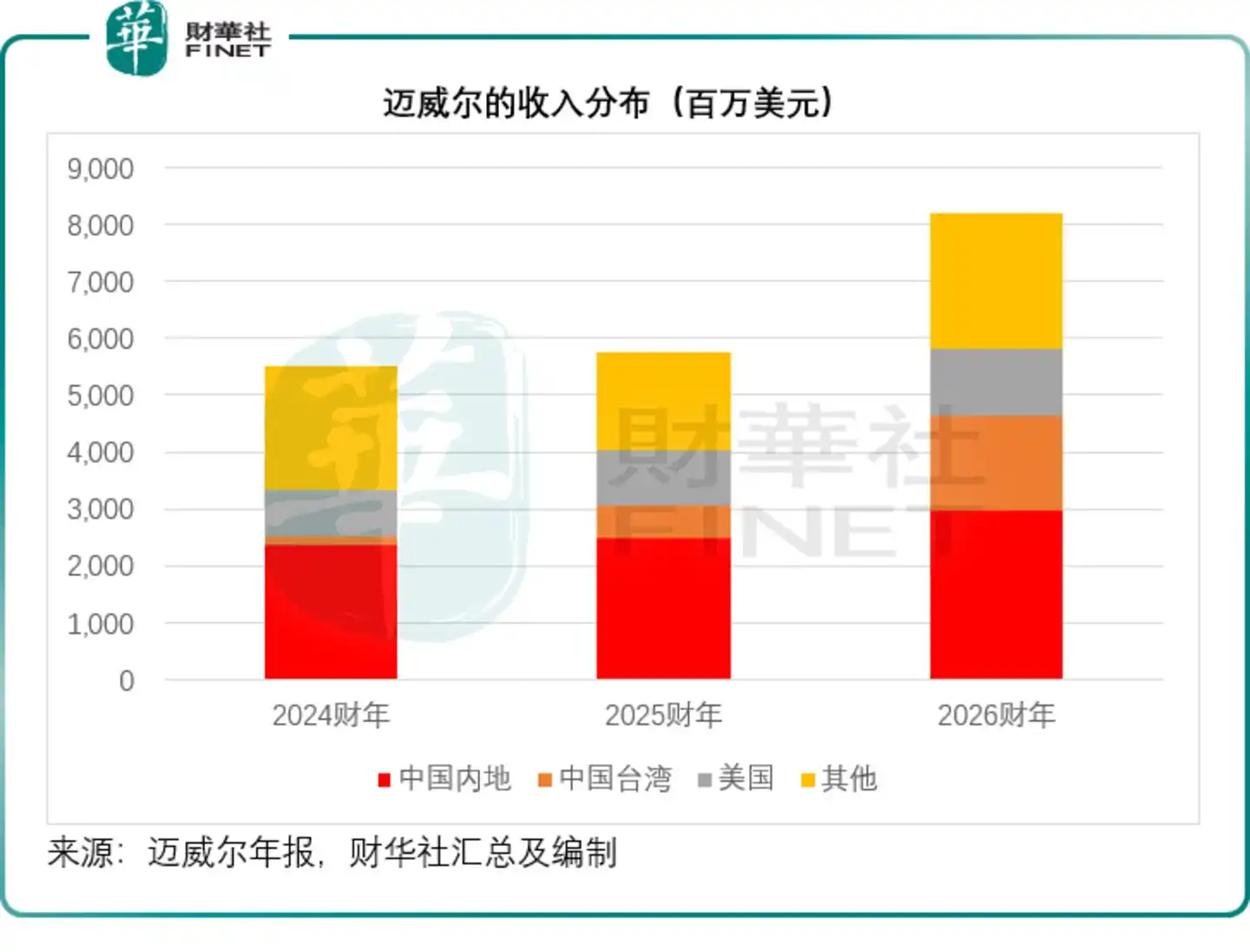
Meskipun kita bergantung pada chip mereka, Marvell dan Broadcom juga tidak dapat sepenuhnya melepaskan diri dari pasar Tiongkok.

Pertama, lebih dari setengah pendapatan chip optik Marvell berasal dari produsen modul optik Tiongkok. Seperti terlihat pada gambar di atas, pendapatan dari Tiongkok daratan menyumbang sekitar 36% dari total pendapatan Marvell, dan pendapatan dari Greater China (termasuk Taiwan) menyumbang sekitar 56%. Tiongkok adalah basis produksi modul optik terbesar di dunia. Menghentikan pasokan sepenuhnya sama dengan secara sukarela meninggalkan pasar pertumbuhan terbesar AI, yang akan menyebabkan kerugian besar.

Kedua, kemasan chip DSP kelas tinggi Marvell dan banyak komponen optik membutuhkan dukungan perusahaan dalam negeri. Jiangsu Changjiang Electronics Technology (600584.SH) dll. bertanggung jawab atas pengujian dan pengemasan chip, Tianfu Communication (300394.SZ), SIO (688498.SZ) dll. memasok perangkat optik. Tanpa rantai pasokan dalam negeri, kapasitas produksi chip AS akan langsung terbatas.

Ketiga, meskipun Marvell dan Broadcom adalah perusahaan AS, produk mereka sangat bergantung pada fondri seperti TSMC yang berbasis di luar AS. Rantai pasokan itu sendiri memiliki karakteristik global, yang juga menambah kompleksitas penghentian pasokan total.

Mengapa Risiko Potensial Pembatasan Pasok untuk Produsen Chip Optik Relatif Lebih Rendah Dibandingkan DSP?

Selain chip listrik DSP, komponen lain yang paling mahal dalam struktur biaya modul optik adalah chip laser EML kecepatan tinggi, yang juga dikendalikan oleh produsen Jepang dan AS seperti Lumentum (LITE.US), Coherent (COHR.US), Broadcom, Sumitomo Electric, Mitsubishi Electric.

Jika DSP adalah "otak komputasi" modul optik, maka Lumentum membuat "jantung pemancar cahaya" modul optik, bertanggung jawab untuk menghasilkan sinyal laser kecepatan tinggi, yang merupakan komponen inti lain yang memungkinkan modul optik mencapai transmisi kecepatan sangat tinggi.

Dalam modul optik kelas tinggi AI 800G dan 1.6T saat ini, chip laser EML kecepatan tinggi single-wave 100G dan 200G adalah komponen inti yang sangat penting. Spesifikasi kelas tinggi ini saat ini sangat bergantung pada pemasok luar negeri seperti Lumentum, dengan pangsa pasar Lumentum untuk EML 200G kemungkinan melebihi 40%.

Perusahaan chip optik dalam negeri saat ini dapat memproduksi secara stabil chip optik kecepatan menengah hingga rendah 10G dan 25G, dengan tingkat lokalisasi untuk yang pertama mungkin sekitar 60%, dan yang terakhir sekitar 70%, yang pada dasarnya memenuhi kebutuhan pusat data biasa dan jaringan akses operator. Namun, kemampuan produksi massal untuk chip EML kecepatan sangat tinggi 200G masih dalam tahap pengembangan, belum mencapai produksi massal skala besar.

Sementara itu, produsen luar negeri terkemuka telah lama menyelesaikan iterasi teknologi dan telah mengunci kapasitas produksi jangka panjang sebelumnya. Perlu dicatat bahwa chip EML secara keseluruhan berada dalam kondisi kekurangan pasokan. Kapasitas produksi Lumentum tahun 2026 telah dikunci 70% oleh pelanggan seperti NVIDIA dan Google, dengan pesanan sudah terjadwal hingga 2027. Ini berarti bahwa meskipun ada beberapa pemasok yang dapat dipilih, kapasitas produksi EML kelas tinggi global tetap ketat dalam jangka pendek, dan produsen modul optik dalam negeri masih menghadapi tantangan untuk mendapatkan kapasitas yang cukup. Raksasa AI Amerika Utara seperti NVIDIA lebih lanjut mengikat kapasitas produksi Lumentum melalui investasi strategis dan kontrak jangka panjang, semakin memperbesar tekanan pasokan untuk modul optik kelas tinggi dalam negeri.

Namun, dibandingkan dengan DSP Marvell dan Broadcom, meskipun "kendala" pada chip optik serius, masih dapat diatasi. Pasar DSP kelas tinggi adalah monopoli absolut oleh dua raksasa, hampir tidak ada pilihan tier kedua. Sementara itu, lomba chip optik kecepatan tinggi adalah persaingan di antara beberapa produsen luar negeri. Selain Lumentum, ada juga beberapa pemasok matang seperti Sumitomo Electric, Broadcom, dll. Produsen modul optik dalam negeri dapat dengan fleksibel beralih sumber. Selain itu, Lumentum dll. adalah produsen komponen, mereka tidak memiliki otoritas validasi ekosistem mesin lengkap. Penyedia cloud luar negeri tidak akan secara khusus menentukan skema chip optik mereka, sehingga dibandingkan dengan jalur DSP yang terkunci oleh ikatan ekosistem, ruang otonomi rantai pasok lebih besar.

Yang lebih kritis, kemajuan substitusi impor di jalur ini jauh lebih cepat daripada DSP kelas tinggi. Perusahaan terkemuka dalam negeri seperti SIO, Focuslight (688048.SH), Accelink, dll., telah mencapai penerapan komersial dalam skala berbeda untuk chip EML 100G, dan chip optik kecepatan tinggi 200G juga telah menyelesaikan pengujian sampel, memasuki tahap validasi pelanggan, dan diharapkan dapat secara bertahap diimplementasikan dalam skala besar dalam satu hingga dua tahun ke depan, yang dapat dengan cepat mengurangi risiko pasokan potensial dari produsen luar negeri.

Sebaliknya, chip DSP kecepatan tinggi 1.6T mungkin membutuhkan bertahun-tahun iterasi validasi lagi sebelum dapat memasuki rantai pasok kelas tinggi luar negeri. Mungkin ada perbedaan siklus yang signifikan dalam upaya penembusan keduanya.

Singkatnya, meskipun rantai industri global saling bergantung, kita tetap harus waspada terhadap risiko potensial penghentian pasokan.

Pemikiran: Bagaimana Rantai Industri Dalam Negeri Menghadapi Risiko Potensial Penghentian Pasokan?

1) Penyeimbangan jangka pendek: Diversifikasi rantai pasok, kunci pesanan kontrak jangka panjang, pertahankan bisnis luar negeri yang ada.

Produsen modul optik terkemuka dapat secara bersamaan menandatangani perjanjian pasokan jangka panjang dengan Marvell dan Broadcom, mendiversifikasi risiko dari ketergantungan pada satu pemasok. Bayar di muka untuk mengunci kapasitas produksi chip, perpanjang siklus persediaan, hadapi kemungkinan pengetatan pasokan chip jangka pendek.

Secara bersamaan, kembangkan pasar Asia Tenggara, Timur Tengah, dan pasar komputasi dalam negeri, kurangi ketergantungan pendapatan pada pelanggan tunggal Amerika Utara, seimbangkan struktur bisnis.

2) Lingkaran tertutup pasar domestik: Dorong implementasi skala besar chip buatan dalam negeri, jamin keamanan komputasi domestik

Proyek pusat kecerdasan komputasi (AI computing center) dan operator dalam negeri dapat memprioritaskan penerapan skala besar chip optik dan DSP buatan dalam negeri, memprioritaskan pembelian chip yang dikembangkan sendiri oleh produsen dalam negeri, termasuk Orange Silicon (橙科微), Huawei HiSilicon, ZTE Microelectronics, Accelink, Yutai Micro (裕太微), dll.

Pasar domestik secara bertahap membentuk lingkaran tertutup rantai industri yang independen dan lengkap. Bahkan jika pasokan chip kelas tinggi dari luar negeri terputus sementara, sebagian besar bisnis pelatihan model besar, komputasi pemerintah, dan layanan broadband komunikasi masih dapat dijamin oleh DSP buatan dalam negeri. Namun, perlu diakui bahwa dalam skenario pelatihan AI kelas tinggi yang sangat sensitif terhadap performa ekstrem dan konsumsi daya, masih ada kesenjangan performa tertentu antara DSP buatan dalam negeri dan solusi luar negeri.

3) Penekanan inti jangka menengah-panjang: Percepat substitusi impor penuh untuk DSP kecepatan tinggi

Ini adalah metode fundamental untuk menyelesaikan masalah kendala secara tuntas, dengan beberapa jalur teknologi dikerjakan secara bersamaan:

Perusahaan chip berbasis pasar (Orange Silicon): Terus beriterasi DSP PAM4 800G dan 1.6T, percepat pengujian bersama dengan produsen modul optik dalam negeri, pertama-tama tutupi seluruh pasar domestik, kemudian secara bertahap lanjutkan validasi dengan pelanggan kecil-menengah luar negeri.

Chip yang dikembangkan sendiri oleh produsen perangkat (Huawei HiSilicon, ZTE Microelectronics): Kembangkan sendiri DSP kecepatan tinggi untuk mendukung modul optik dan server mereka sendiri, membentuk ekosistem swasembada.

Dukungan bersama pemerintah dan perusahaan: Melalui dana industri, kebijakan pengadaan komputasi, tingkatkan subsidi untuk fabrikasi (tape-out), pengujian, dan pengembangan chip buatan dalam negeri, persingkat siklus validasi produk (ini mungkin membutuhkan dukungan modal dan kebijakan yang berkelanjutan).

Terobosan simultan pada rantai industri pendukung: Secara bersamaan atasi tantangan untuk chip pemancar cahaya kecepatan tinggi 200G, proses pengemasan dan pengujian chip mutakhir, lengkapi seluruh kelemahan hulu.

4) Teknologi terdepan untuk mengurangi ketergantungan: Kembangkan teknologi baru Silicon Photonics, CPO, kurangi bobot nilai DSP individual

Modul optik diskrit tradisional sangat bergantung pada chip DSP independen. Teknologi baru Co-Packaged Optics (CPO) dan Silicon Photonics Integration dapat mengintegrasikan chip optik dan sirkuit listrik bersama-sama, mengurangi kebutuhan akan DSP independen kelas tinggi.

Perusahaan dalam negeri seperti HGTECH (华工科技), Zhongji Innolight, SIO semuanya mengembangkan penelitian Silicon Photonics dan CPO. Dengan mengubah pola ketergantungan chip yang ada melalui jalur teknologi baru, dari teknologi dasar mengurangi batasan chip eksternal. Namun, perlu dicatat bahwa teknologi CPO dan Silicon Photonics masih dalam tahap awal industrialisasi, masih jauh dari penerapan komersial skala besar, termasuk dalam arah jangka menengah-panjang, dan sulit untuk mengubah pola ketergantungan pada DSP kelas tinggi dalam jangka pendek.

5) Ruang untuk tindakan balasan dari sisi aplikasi.

Tiongkok adalah salah satu pasar modul optik terbesar di dunia, dan juga pihak pembangunan komputasi AI terbesar. Jika pasokan chip kelas tinggi upstream dibatasi, dapat beralih ke pasar internal untuk memprioritaskan dukungan produk substitusi impor domestik, sekaligus mengambil tindakan balasan terhadap produk terkait dari luar negeri. Ini bukan hanya alat balasan taktis, tetapi juga secara strategis memberi waktu dan ruang pasar tertentu bagi industri chip optik domestik untuk berkembang.

Kesimpulan

Dilihat dari keseluruhan rantai industri, Marvell dan Broadcom memang memegang kunci utama untuk ekspor modul optik dalam negeri ke pasar AI luar negeri, dan memiliki kemampuan untuk membatasi sementara bisnis kelas tinggi luar negeri kita.

Penyangga keamanan terbesar kita mungkin adalah kemampuan manufaktur menengah yang lengkap dan otonom (modul optik dan kabel serat optik) serta pasar komputasi dan komunikasi domestik yang cukup besar.

Solusi jangka panjang untuk mengatasi risiko penghentian pasokan tidak terletak pada permainan pasif dengan perusahaan AS, tetapi pada terus mendorong pengembangan dan implementasi skala besar dari DSP kecepatan tinggi dan chip optik kelas tinggi buatan dalam negeri. Dalam jangka pendek, andalkan pemasok ganda dan diversifikasi pasar untuk menyeimbangkan risiko; dalam jangka menengah-panjang, andalkan chip buatan dalam negeri dan teknologi baru terdepan untuk mencapai terobosan industri, baru kemudian dapat benar-benar menguasai inisiatif pengembangan rantai industri cahaya.

Perlu diperhatikan bahwa setiap langkah DSP buatan dalam negeri, dari produksi skala kecil ke produksi massal, dari validasi domestik ke adopsi luar negeri, menghadapi banyak hambatan teknologi, modal, waktu, dan ekosistem, dan sama sekali tidak dapat dicapai dalam semalam. Industri dan pembuat kebijakan perlu mempertahankan keteguhan strategis, terus berinvestasi, agar dapat secara bertahap mengejar ketertinggalan dengan raksasa luar negeri dalam tiga hingga lima tahun ke depan.

Trending Cryptos

Related Questions

QApa itu modul optik dan mengapa sangat penting untuk pengembangan AI?

AModul optik adalah perangkat keras kecil yang berfungsi sebagai penerjemah antara sinyal listrik dan sinyal cahaya. Di dalam pusat data AI, GPU dan server menggunakan sinyal listrik untuk komputasi internal, tetapi sinyal listrik memiliki keterbatasan dalam jarak, kecepatan, dan panas. Modul optik mengubah sinyal listrik menjadi sinyal cahaya (laser) untuk dikirim melalui serat optik dengan kecepatan tinggi dan hampir tanpa kehilangan data, lalu mengubahnya kembali menjadi sinyal listrik di sisi penerima. Tanpa modul optik berkecepatan tinggi seperti 800G dan 1.6T, pertukaran data real-time antara ribuan GPU dalam kluster pelatihan AI tidak akan efisien, yang menyebabkan penurunan kinerja pelatihan model AI secara signifikan.

QPeran apa yang dimainkan perusahaan AS Marvell dan Broadcom dalam industri modul optik global?

AMarvell dan Broadcom adalah pemasok kunci chip DSP (Digital Signal Processor) berkinerja tinggi yang digunakan dalam modul optik canggih (seperti 800G, 1.6T) untuk AI. Chip DSP ini penting untuk memperbaiki distorsi sinyal, mengurangi kesalahan, dan memastikan transmisi data yang stabil. Kedua perusahaan ini mendominasi pasar DSP kelas atas untuk modul optik AI, dengan gabungan pangsa pasar diperkirakan lebih dari 90%. Sebagian besar pabrikan modul optik Tiongkok, seperti Zhongji Innolight dan Eoptolink, bergantung pada chip mereka untuk memproduksi modul ekspor yang memenuhi standar vendor cloud AS seperti NVIDIA, Google, dan Meta.

QApa saja tantangan utama yang dihadapi industri modul optik Tiongkok terkait ketergantungan pada chip DSP impor?

ATantangan utamanya adalah risiko potensial terhadap pasokan chip DSP canggih dari Marvell dan Broadcom, karena kedua perusahaan tunduk pada peraturan kontrol ekspor AS. Pabrikan modul optik Tiongkok memiliki pilihan terbatas untuk pengganti karena chip DSP buatan dalam negeri belum melalui proses validasi panjang (1-2 tahun) yang diperlukan oleh pelanggan cloud luar negeri. Ini membatasi kemampuan mereka untuk secara mandiri memilih chip upstream untuk pesanan ekspor kelas atas. Selain itu, pasar DSP kelas atas sangat terkonsentrasi, dengan sedikit alternatif di luar dua pemain utama tersebut.

QBagaimana perbandingan risiko ketergantungan pada chip cahaya (seperti laser EML) dengan chip DSP?

ARisiko ketergantungan pada chip cahaya berkecepatan tinggi (seperti EML 200G) dianggap lebih dapat dikelola dibandingkan dengan chip DSP. Pasar chip DSP didominasi oleh duopoli Marvell dan Broadcom dengan hampir tidak ada alternatif, sementara pasar chip cahaya memiliki beberapa pemasok kompetitif seperti Lumentum, Coherent, Sumitomo, dan Mitsubishi, memberikan lebih banyak pilihan sumber. Selain itu, kemajuan substitusi impor untuk chip cahaya lebih cepat di Tiongkok; perusahaan seperti Source Photonics dan Accelink telah mencapai komersialisasi chip 100G EML dan sedang menguji sampel chip 200G. Vendor cloud luar negeri juga tidak secara ketat menentukan skema chip cahaya tertentu, sehingga memberikan lebih banyak ruang otonomi bagi rantai pasokan dibandingkan dengan ekosistem DSP yang terkunci.

QApa saja strategi yang dapat diadopsi industri Tiongkok untuk mengurangi risiko potensial dari gangguan pasokan chip kunci?

AStrateginya meliputi: 1) Diversifikasi rantai pasokan jangka pendek dengan menandatangani perjanjian pasokan jangka panjang dengan kedua pemasok (Marvell dan Broadcom) dan memperluas pasar ke wilayah seperti Asia Tenggara dan Tiongkok sendiri. 2) Membentuk siklus tertutup pasar domestik dengan mempromosikan adopsi skala besar chip DSP dan cahaya buatan dalam negeri untuk proyek pusat komputasi AI domestik. 3) Fokus jangka panjang pada terobosan dalam pengembangan DSP berkecepatan tinggi dalam negeri melalui upaya perusahaan chip, vendor peralatan (seperti Huawei HiSilicon), dan dukungan kebijakan. 4) Berinvestasi dalam teknologi baru seperti Silicon Photonics dan CPO (Co-Packaged Optics) yang dapat mengurangi ketergantungan pada chip DSP diskrit. 5) Memanfaatkan ukuran pasar domestik yang besar sebagai ruang penyangga dan leverage untuk mendukung industri chip dalam negeri.

Related Reads

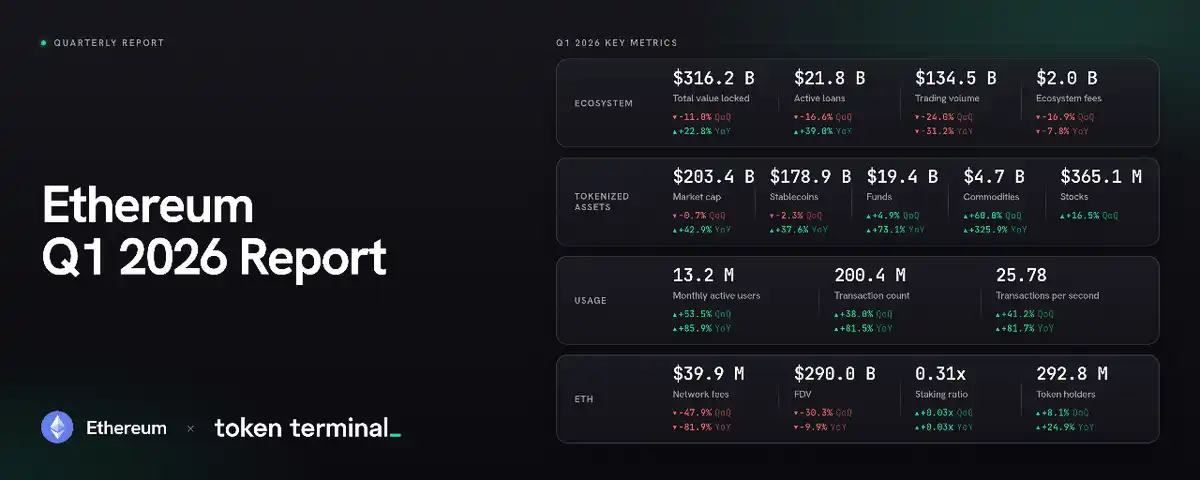
Ethereum 2026 Q1 Review: On-Chain Activity Hits Record Highs, Tokenized Assets Lead the Industry

Ethereum Q1 2026 Review: Record On-Chain Activity, Tokenized Assets Lead the Industry. Despite a price correction impacting USD-denominated metrics, Ethereum's on-chain usage hit all-time highs in Q1 2026. Monthly active addresses surged 85.9% year-over-year to 13.2 million, while L1 transactions and throughput also set new records. This growth occurred alongside a significant 47.9% quarterly drop in L1 transaction fees, demonstrating the impact of network scaling via upgrades like the Blob Parameter Fork. The ecosystem maintained its dominance in decentralized finance (DeFi), holding 71% of the total value locked among top chains and 79.2% of active borrowing. Ethereum solidified its position as the primary platform for tokenized real-world assets (RWAs), with a total market cap of $203.4B. It holds leading shares in stablecoins (61.8%), tokenized funds (73%), and tokenized commodities (84%) across major chains. Key developments included the ERC-8004 standard for AI agents and heightened institutional engagement at forums. Major financial institutions like BlackRock, JPMorgan, and a European banking consortium announced new tokenized products on Ethereum throughout the period. The report draws parallels to the early internet, suggesting Ethereum is sacrificing short-term fee revenue for long-term network expansion and adoption. Its strategy focuses on becoming a neutral, open settlement layer for global finance, with scaling roadmaps aiming for tens of thousands of TPS by 2029.

marsbit15m ago

Ethereum 2026 Q1 Review: On-Chain Activity Hits Record Highs, Tokenized Assets Lead the Industry

marsbit15m ago

Matrixdock Featured Again in SBMA’s 《Crucible》: Discussing How Tokenisation Enhances Efficiency in the Precious Metals Market

Matrixdock's research article, titled "Why Tokenisation Matters for the Bullion Industry and How Carrying Costs Fit In," has been featured again in the SBMA's industry publication *Crucible*. Authored by Matrixdock lead Eva Meng, the piece examines how tokenisation enhances the efficiency and utility of the precious metals market. The article argues that tokenisation builds upon the accessibility improvements brought by gold ETFs, not by redefining gold's value but by enabling it to function within digital finance. It extends gold's role beyond a portfolio holding, potentially facilitating instant settlement, digital collateral, and operation in 24/7 markets. A key focus is transparently handling the unavoidable carrying costs (storage, insurance) of physical assets like gold and silver. Matrixdock introduces the Fungible Reserve Standard (FRS) framework, based on an "Economic Purity Principle," which aims to reflect these real-world economic costs clearly within the token mechanism, rather than bundling them opaquely. The platform's practical applications are highlighted, including its gold token XAUm and its silver token XAGm, the first built on the FRS framework. As the tokenised gold market surpassed $6 billion in February 2026, the industry's focus is shifting from initial proofs of reserves to broader concerns of market efficiency and capital utilization. Tokenisation is positioning gold and other precious metals to become active components within the evolving digital financial system.

marsbit47m ago

Matrixdock Featured Again in SBMA’s 《Crucible》: Discussing How Tokenisation Enhances Efficiency in the Precious Metals Market

marsbit47m ago

New Huo Research: Dense Bottom Fishing in the $60K BTC Range, a 'High Value-for-Money Zone' Sees a Handover Surge

Bitcoin has shown a significant oversold rebound this week, with extreme panic in the crypto market easing. Multiple data points indicate a notable market bottom is forming. On the market front, the net outflow from Bitcoin spot ETFs has continued to shrink, and the negative premium between Coinbase and USDT is steadily correcting. Industry fundamentals suggest the shutdown cost for mainstream miners is concentrated between $30,000 and $50,000, potentially solidifying a阶段性 industry cost floor—a classic signal of market bottoms in previous cycles. Institutional capital is notably positioning against the trend. For instance, Sinohope Group's weekly OTC trading volume surged over 8 times环比, with active platform users doubling, both reaching record highs. This confirms a sharp increase in large capital transaction activity and a spike in off-exchange funding demand. Sinohope Research also observed on-chain data showing that funds from entities with public company attributes and long-term "whale" wallets are actively accumulating Bitcoin around the key $60,000 price level. The research institute has maintained since mid-May that a high-value investment window has reopened, and the market is now undergoing a shift from panic selling to long-term holding. Looking ahead, the core drivers for an upward market move will be liquidity release and macro policy developments. The successful and strong performance of SpaceX's IPO has reignited market optimism, and the massive liquidity frozen during its subscription period is now being unlocked. This substantial capital is expected to seek new value opportunities, potentially flowing into currently undervalued assets like Bitcoin. On the macro and policy front, the tone set in Kevin Warsh's upcoming speech at the FOMC meeting is crucial for near-term monetary policy expectations. Furthermore, the potential passage of the CLARITY Act by late July could significantly boost institutional confidence for capital entry. Considering these bottoming signals alongside favorable liquidity and policy factors, Sinohope Research remains optimistic about the market's subsequent trajectory.

marsbit51m ago

New Huo Research: Dense Bottom Fishing in the $60K BTC Range, a 'High Value-for-Money Zone' Sees a Handover Surge

marsbit51m ago

Trading

Spot
Futures

Hot Articles

What is LINON

Linde plc Tokenized Stock (Ondo): Revolutionizing Traditional Equity Access Through Blockchain Innovation The emergence of Linde plc Tokenized Stock (Ondo), represented by the ticker $LINON, signifies a monumental shift in the fusion of traditional financial structures and decentralized finance (DeFi). This innovative financial instrument showcases the tremendous potential of blockchain technology to democratize access to traditional equity markets while ensuring the security and regulatory compliance necessary for institutional-grade financial products. Through Ondo Finance's pioneering tokenization platform, $LINON provides a seamless pathway for global investors to engage with one of the world's leading industrial gas companies, Linde plc, creating a blockchain-native representation of the underlying equity. Introduction to Linde plc Tokenized Stock The landscape of financial markets is witnessing a groundbreaking transformation through the tokenization of real-world assets. Linde plc Tokenized Stock (Ondo) epitomizes this revolutionary approach by bridging the gap between conventional stock ownership and blockchain-enabled financial infrastructure. The $LINON token allows investors to gain exposure to one of the prominent industrial companies worldwide through decentralized technology. Operating within Ondo Finance's comprehensive ecosystem, $LINON symbolizes a practical application of tokenization technology that enhances accessibility, efficiency, and global connectivity in traditional financial markets. By leveraging blockchain infrastructure, this tokenized stock enables international investors to participate in U.S. equity markets, overcoming traditional barriers associated with cross-border investing. The significance of $LINON goes beyond technological innovation; it represents a fundamental shift in asset structuring, distribution, and trading in the digital age. This tokenized stock maintains all the economic benefits associated with traditional Linde plc shares while offering improved liquidity, programmable compliance features, and seamless integration with decentralized finance protocols. The development of $LINON indicates a growing acceptance of blockchain technology as a viable means for traditional finance, exemplifying how even well-established assets like Linde plc can integrate into blockchain systems. This approach preserves the core attributes that appeal to investors while introducing advanced capabilities that enhance the overall investment proposition. Project Overview and Objectives Linde plc Tokenized Stock (Ondo) encapsulates a strategic effort to democratize access to traditional equity markets through advanced blockchain technologies. The primary objective of $LINON is to provide approved global investors seamless access to the economic exposure associated with Linde plc shares, furthering an effort to create a more inclusive financial ecosystem. Beyond the digital representation of traditional assets, $LINON endeavors to eliminate barriers of geography and time zones that limit investor participation. Its design ensures that blockchain technology can elevate traditional investment vehicles without undermining the security or compliance requirements expected by investors. Key goals of the project include enhanced liquidity provision, programmable compliance mechanisms, and interoperability with other blockchain networks. Each $LINON token is fortified by actual Linde plc securities housed at U.S.-registered broker-dealers, allowing holders to reap economic advantages akin to traditional stockholders, such as dividend reinvestment. Furthermore, $LINON aims to establish new industry standards for institutional-grade tokenized securities, paving the way for traditional assets to embrace blockchain technology while remaining compliant with regulatory frameworks. By associating itself with a company as reputable as Linde plc, the project opens avenues for exploring tokenized equities catering to both conservative institutional players and daring retail investors. Project Creator and Development Team The vision for Linde plc Tokenized Stock (Ondo) comes from Nathan Allman, founder and CEO of Ondo Finance. His background in traditional finance coupled with expertise in blockchain technology positions him uniquely to navigate the complexities of asset tokenization. Allman's academic journey began at Brown University, focusing on Economics and Biology, equipping him with valuable analytical skills. His time at Goldman Sachs in the Digital Assets division strengthened his understanding of the interplay between financial institutions and emerging technologies, laying the groundwork for his later endeavors in alternative investment strategies. Under Allman's guidance, Ondo Finance has emerged as a leader in asset tokenization, launching $LINON as a flagship example of the company's larger mission towards revolutionizing traditional financial systems using blockchain technology. His commitment to leveraging blockchain for creating institutional-grade financial products has shaped the landscape of real-world asset tokenization. Investment and Funding Structure The growth of Ondo Finance, the platform powering Linde plc Tokenized Stock (Ondo), is bolstered by robust financial backing from prestigious venture capital firms and strategic investors. This strong investment foundation underpins the development of the key infrastructure essential for compliant tokenized securities like $LINON. In August 2021, Ondo Finance secured $4 million in seed funding led by a major venture capital firm, which enabled the company to commence platform development and establish the necessary regulatory processes for tokenizing real-world assets. This early investment cemented Ondo Finance's credibility within the industry. The Series A funding round followed, garnering $20 million with participation from renowned firms committed to transformative technology companies. This backing demonstrated substantial institutional confidence in Ondo Finance's vision, allowing it to hone its approach to asset tokenization through mechanisms that ensure compliance and accessibility. Noteworthy contributors, including institutional investors and experienced partners, have added significant value to Ondo Finance’s development efforts. Their involvement underscores the confidence across sectors in Ondo Finance's approach to bridging traditional finance with blockchain innovations. Technical Infrastructure and Innovation The technical architecture that underpins Linde plc Tokenized Stock (Ondo) represents a sophisticated melding of traditional finance systems and cutting-edge blockchain technology. The architecture's foundation is built on the Ethereum network, renowned for its security and programmability—both critical for intricate financial instruments. The $LINON tokenization process comprises creating a blockchain-native representation of Linde plc shares that preserves economic benefits while augmenting investor capabilities. Each token corresponds to actual shares held at U.S.-registered broker-dealers, creating a compliant custody structure that legitimizes the asset's existence and value. Automated compliance systems are integrated into the tokenization process, managing critical components such as know-your-customer (KYC) verification and anti-money laundering (AML) protocols. This incorporation of programmable compliance empowers $LINON to uphold regulatory standards essential for institutional proliferation. Cross-chain interoperability characterizes the advanced technical features of $LINON. While initially deployed on Ethereum, the framework is designed for expansion to other networks such as Solana and BNB Chain. This adaptability enhances liquidity and accessibility, allowing investors to select their preferred blockchain ecosystems. Historical Timeline and Development Crafting the history of Linde plc Tokenized Stock (Ondo) unfolds in parallel with the evolution of Ondo Finance's tokenization platform. The timeline's inception dates back to March 2021 when Nathan Allman laid the foundations for creating institutional-grade financial products on blockchain infrastructure. The initial funding round in August 2021 provided crucial resources for developing the platform and establishing partnerships necessary for effective tokenization. By January 2023, Ondo Finance launched its tokenized treasury products, establishing mechanisms that would facilitate future tokenized equities such as $LINON. A pivotal milestone arose in February 2025 when Ondo Chain—a Layer 1 blockchain designed specifically for asset tokenization—was introduced. This infrastructure enhances capabilities vital for institutional markets, demonstrating Ondo Finance's long-term commitment to tokenization. Subsequently, the launch of Ondo Global Markets in September 2025 marked the official debut of $LINON. This milestone showcased the successful transition from development to active trading, enabling investors around the world to access American financial markets seamlessly. Ongoing development plans include a targeted expansion of available tokenized assets to over 1,000 by the end of 2025, pointing to a bright future for Ondo Finance's ecosystem and its mission to broaden tokenized equity accessibility. Regulatory Compliance and Legal Framework The legal architecture governing Linde plc Tokenized Stock (Ondo) emphasizes a sophisticated approach to regulatory compliance, allowing tokenized securities to be implemented within a blockchain-based framework. The legal structure governing $LINON spans multiple jurisdictions while maintaining a robust legal footing. Compliance systems ensure that only eligible investors can access the token, enforced through automated verification that aligns with international regulations. This innovative regulatory technology promises real-time enforcement of complex requirements, considerably enhancing efficiency in operating within the regulatory landscape. The custody framework undergirding $LINON ensures that the underlying shares are securely held at U.S.-registered broker-dealers, complying with necessary regulations while delivering blockchain-driven access to investors. The token maintains its economic equivalency and security through this carefully structured custody arrangement. KYC and AML compliance systems are embedded within the smart contract architecture, ensuring integrity and adherence to regulatory practices while fostering transparency for investors. The jurisdictional restrictions mark a commitment to navigating the evolving landscape of international securities laws. Market Impact and Industry Significance The advent of Linde plc Tokenized Stock (Ondo) holds profound implications for the broader financial landscape, symbolizing a clear shift towards blockchain-enabled markets. $LINON serves as a proof-of-concept for integrating traditional companies into blockchain ecosystems, showcasing the potential benefits such as broader accessibility and improved efficiency. The market's response to $LINON indicates a growing acceptance of tokenization among institutional investors, contributing to the emergence of an expanding sector wherein traditional assets can be interconnected with blockchain innovations. The success of $LINON further solidifies market confidence, indicating an overarching shift towards recognizing asset tokenization as a transformative force in finance. Future Development and Expansion Plans The future trajectory for Linde plc Tokenized Stock (Ondo) centers around the expansion of the tokenization ecosystem and enhanced infrastructure supporting blockchain-enabled financial services. Plans for cross-chain integration usher in new opportunities for liquidity and flexibility within the investment framework, with existing capabilities poised for continuous enhancement. With the introduction of Ondo Chain, Ondo Finance aims to transition $LINON to an optimized blockchain environment specifically designed for asset tokenization. This new infrastructure heralds exciting prospects for the development of institutional-grade financial products, ensuring ongoing compatibility with contemporary investment strategies. Further integration with decentralized finance protocols signifies a commitment to empowering $LINON holders through advanced financial strategies. The anticipated expansion of available tokenized assets promises to broaden investor access, enhancing the utility and appeal of the platform. In alignment with ambitions for regulatory expansion, ongoing efforts to secure approvals for new jurisdictions will enhance investor access, further positioning $LINON at the forefront of the burgeoning tokenization market. Conclusion Linde plc Tokenized Stock (Ondo), as represented by the $LINON token, stands at the intersection of traditional finance and blockchain innovation. It embodies a transformative milestone in how financial assets are structured, distributed, and engaged within modern investment ecosystems. The technical sophistication behind $LINON, combined with its regulatory compliance framework, illustrates that asset tokenization can improve financial infrastructure rather than simply digitizing existing products. This pioneering effort not only enhances investor access to U.S. equity markets but also signifies an evolution of how traditional financial services can integrate blockchain technology. As the asset tokenization market grows exponentially, with prospects suggesting significant valuation increases, $LINON paves the way for a future where tokenized securities become standard fixtures in the financial landscape. The trajectory of $LINON will undoubtedly influence how traditional finance adapts to a transformed, blockchain-powered world.

3.2k Total ViewsPublished 2025.12.05Updated 2025.12.05

What is LINON

What is CRMON

Salesforce Tokenized Stock (Ondo): Revolutionising Traditional Equity Access Through Blockchain Innovation The emergence of Salesforce Tokenized Stock (CRMON) marks a pivotal advancement in integrating traditional financial markets with blockchain technology. This innovative approach offers investors unprecedented access to equity exposure through tokenisation. Developed by Ondo Finance, CRMON provides tokenholders with economic exposure equivalent to holding Salesforce stock (CRM) while automatically reinvesting dividends. This effectively bridges the gap between conventional equity markets and decentralised finance (DeFi). Introduction and Comprehensive Overview of Salesforce Tokenized Stock In recent years, the financial landscape has dramatically transformed due to blockchain technology, fundamentally altering how investors access and interact with traditional assets. The development of Salesforce Tokenized Stock (CRMON) is a prime example of this evolution, representing a sophisticated fusion of conventional equity markets with cutting-edge distributed ledger technology. CRMON is a tokenised version of Salesforce stock, emerging from the innovative work of Ondo Finance, a leading platform in the real-world asset tokenisation sector that positions itself as a bridge between traditional finance and decentralised systems. Designed to provide tokenholders with economic exposure that mirrors the performance of the underlying Salesforce stock, CRMON incorporates automatic dividend reinvestment mechanisms. This eliminates many traditional barriers associated with international equity investment, such as complex brokerage relationships, currency conversion challenges, and restricted trading hours. The tokenisation process reimagines stock ownership as a blockchain-native asset while maintaining its economic equivalence with the underlying security, offering enhanced portability and integration capabilities within decentralised finance ecosystems. CRMON transcends its individual utility as an investment instrument to represent a fundamental shift in how financial markets can operate in an increasingly digital world. By maintaining full backing through U.S.-registered broker-dealers and implementing robust compliance frameworks, CRMON demonstrates that tokenised securities can achieve the regulatory standards necessary for institutional adoption while delivering the technological advantages of blockchain infrastructure. Understanding Tokenized Real-World Assets and CRMON's Strategic Position Tokenised real-world assets signify one of the most significant innovations in modern finance, fundamentally reimagining how traditional securities are represented, traded, and utilised within digital ecosystems. CRMON operates as a tokenised equity instrument correlating directly with Salesforce stock while optimising accessibility and efficiency. This aligns with Ondo Finance's broader mission to democratise access to institutional-grade financial products through innovative tokenisation strategies. The tokenisation process guarantees complete economic equivalence with the underlying Salesforce equity. Each CRMON token represents a proportional claim on Salesforce stock held by qualified custodians, with dividend payments automatically reinvested to maintain continuous exposure to total return performance. This structure simplifies dividend management and ensures that tokenholders receive the full economic benefit of their equity exposure, encompassing both capital appreciation and income generation. Ondo Finance's strategy in tokenising Salesforce stock demonstrates its expertise in creating compliant, institutional-grade products that meet traditional financial markets' stringent requirements. The platform’s focus on merging regulatory compliance with blockchain benefits positions it at the forefront of decentralised finance, captivating both institutional and retail investors seeking blockchain-native solutions. The Technology and Innovation Framework Behind CRMON The technological infrastructure supporting CRMON integrates blockchain technology with traditional financial mechanisms, delivering institutional-grade security and compliance while maintaining the operational advantages of decentralised systems. Built on the Ethereum blockchain, CRMON utilises robust smart contract capabilities to ensure transparent, secure operations. The smart contract architecture incorporates layered security and compliance mechanisms, enabling automated compliance checks and real-time asset backing verification. Integration with oracle services maintains accurate pricing and dividend information, ensuring CRMON reflects the underlying Salesforce stock's accurate performance. This architecture delivers automated dividend reinvestments and other corporate actions, eliminating manual processing requirements and directly enhancing tokenholder benefits. Ondo Finance ensures CRMON's security structure includes daily third-party verification of holdings, independent collateral agents, and a multiple-layer custody system through partnerships with established financial institutions. This framework safeguards tokenholder interests against operational risks while providing robust asset backing. The user interface enhances integration capabilities, allowing seamless interaction between CRMON and various decentralised finance protocols, as well as cryptocurrency exchanges. This interoperability enables users to leverage their tokenised equity across multiple platforms, creating sophisticated investment strategies that marry traditional equity characteristics with blockchain-native innovation. Leadership and Corporate Structure of Ondo Finance The leadership team behind CRMON and Ondo Finance blends expertise from traditional finance and blockchain technology, presenting a robust combination of skills essential for successfully bridging conventional markets with decentralised finance. Nathan Allman, the founder and CEO, emerged from a distinguished financial background before establishing Ondo Finance in 2021. Allman's experience includes notable roles at major financial institutions, including significant contributions to developing cryptocurrency market services. His insights into regulatory compliance were paramount in developing products like CRMON that successfully unify traditional securities with blockchain technology. With a team of professionals boasting substantial experience in both conventional finance and blockchain sectors, Ondo Finance's leadership comprises diverse expertise that covers every aspect of tokenised asset development. Justin Schmidt serves as President and COO, contributing unique operational expertise, while Chris Tyrell brings essential compliance knowledge. Investment Landscape and Funding History The investment landscape surrounding Ondo Finance reflects significant institutional confidence in its mission to tokenise real-world assets. The company has raised substantial funds through various investment rounds, attracting leading venture capital firms and strategic investors that recognise the transformative potential of tokenised securities like CRMON. Notably, Ondo Finance completed a successful Series A funding round in 2022, led by well-known venture capital firms. This funding success validates Ondo Finance's innovative approach to creating compliant, institutional-grade tokenised products. In total, Ondo Finance has successfully secured substantial funding, raising significant capital for product development and market expansion, including a noteworthy token sale that reinforced its governance structure through the establishment of the ONDO token. The diverse composition of investors reflects broad market confidence in Ondo Finance's business model, demonstrating support from both traditional and blockchain-native organisations. Operational Mechanics and Technical Implementation The operational framework supporting CRMON exemplifies sophisticated integration of traditional financial mechanisms with blockchain technology. The technical implementation introduces multiple layers of security, compliance, and operational efficiency to meet institutional standards while enhancing accessibility. The tokenisation process begins by acquiring actual Salesforce stock through U.S.-registered broker-dealers, ensuring each CRMON token maintains direct correlation with the underlying equity performance. Smart contracts automate operational processes, including dividend reinvestment and corporate action processing, facilitating a streamlined user experience. The Minting and redemption processes allow authorised participants to manage CRMON tokens effectively. During U.S. trading hours, institutions can mint new tokens by depositing stablecoins that are used to purchase corresponding Salesforce equity. This structure maintains a tight correlation with underlying assets, enhancing liquidity and price discovery. Additionally, the infrastructure supports twenty-four-hour token transfer capabilities, providing CRMON holders with operations outside traditional market hours. This represents a significant advantage over conventional securities ownership, thus promoting integration with decentralised finance applications. Plans for cross-chain compatibility through partnerships signal further ambitions for CRMON's market reach. By expanding to other blockchain networks, Ondo Finance aims to enhance accessibility and user engagement with tokenised equity products. Timeline and Historical Development of Tokenized Equity Innovation The timeline of CRMON's development and Ondo Finance's broader tokenised capabilities demonstrates a systematic innovation process beginning with the company's founding in 2021. 2021: Ondo Finance is founded by Nathan Allman and co-founders, launching initial products focused on structured vault offerings on the Ethereum blockchain. 2022: The company completes substantial funding rounds—both equity and token sales—totaling significant capital and launching initial tokenised U.S. Treasury products. 2023-2024: Ondo Finance experiences substantial growth, establishing partnerships with major financial institutions while expanding its product offerings beyond fixed-income securities. February 2025: Ondo Global Markets is announced, marking the transition into equity tokenisation with plans for accessing over one hundred U.S. stocks and ETFs. September 2025: The official launch of Ondo Global Markets includes CRMON alongside other tokenised equity offerings, marking a significant evolution in Ondo Finance's product ecosystem. This timeline highlights the organisation's rapid growth and its capability to adapt its technological and compliance frameworks to accommodate different asset classes effectively while maintaining security and regulatory integrity. Regulatory Framework and Compliance Approach Ondo Finance's regulatory framework showcases a sophisticated compliance strategy, essential for achieving institutional adoption in the tokenised securities market. The company's strong partnerships with U.S.-registered broker-dealers promote adherence to Securities and Exchange Commission regulations and apply robust investor protections. Acquisitions, such as Oasis Pro—a registered broker-dealer—significantly enhance Ondo Finance's compliance capabilities, ensuring thorough alignment with existing regulatory structures. The company employs independent verification procedures that foster transparency, aiming for a solid performance standards reputation. Furthermore, Ondo Finance's commitment extends to international regulatory compliance, ensuring token access remains restricted to eligible investors while adhering to pertinent cross-border securities regulations. Comprehensive attention to tax implications and reporting requirements fortifies the security and compliance landscape of CRMON, ensuring that investor obligations remain manageable. Future Prospects and Market Positioning The forward-looking landscape for CRMON and Ondo Finance illustrates substantial growth opportunities driven by institutional adoption of blockchain technology and escalating demand for efficient alternatives to conventional securities ownership. Market projections indicate the tokenised asset sector could value multiple trillion dollars by 2030. With plans to scale CRMON offerings significantly and integrate it with a dedicated blockchain infrastructure—Ondo Chain—Ondo Finance aims to elevate its institutional-grade tokenised asset operations. Additionally, the development of strategic partnerships enhances distribution capabilities while establishing the company's credibility in the financial market. Furthermore, the integration of tokenised equity with decentralised finance protocols offers new potential for innovative financial products and strategies previously impossible with traditional securities. These factors underscore CRMON's positioning to effectively capture increased market share and deliver innovative solutions for international investment exposure. Conclusion Salesforce Tokenized Stock (CRMON) symbolises a transformative development within financial markets, successfully bridging traditional equity ownership with blockchain technology to create unprecedented accessibility for global investors. Through Ondo Finance's sophisticated tokenisation framework, CRMON provides complete economic exposure to Salesforce equity performance while enhancing operational advantages that exceed traditional ownership. The launch of CRMON reflects the broader evolution of financial markets towards blockchain infrastructures that maintain regulatory compliance while delivering increased efficiency. Ondo Finance's extensive approach to regulatory adherence, institutional-grade security, and technological innovation solidifies CRMON as a model for future tokenised securities, delivering access previously unattainable in conventional brokerage structures. As the tokenised asset sector continues to develop, CRMON is well-positioned to address historical inefficiencies in capital markets while providing investors with innovative solutions for accessing traditional securities. The outlook for CRMON looks exceptionally promising, supported by ambitious expansion plans, technological innovations, and strategic partnerships, thereby representing a pioneering model of modern financial infrastructure evolving through blockchain integration.

3.3k Total ViewsPublished 2025.12.05Updated 2025.12.05

What is CRMON

What is SHOPON

Shopify Tokenized Stock (Ondo): A Comprehensive Analysis of Real-World Asset Tokenization in Web3 This article delves into the Shopify Tokenized Stock (Ondo), recognised by its ticker symbol $SHOPON, exploring its implications at the intersection of traditional finance and blockchain technology. As a part of Ondo Finance's tokenized securities platform, Shopify’s tokenized stock exemplifies advancements in democratizing access to global capital markets through innovative digital assets. Introduction and Overview of Shopify Tokenized Stock (Ondo) Shopify Tokenized Stock (Ondo), or $SHOPON, portrays a pivotal innovation in the realm of tokenized securities, allowing investors to gain economic exposure akin to directly owning shares of Shopify Inc. This token, developed under the umbrella of Ondo Finance, not only provides investors with the ability to hold digital representations of the company’s stock but also integrates features such as automatic reinvestment of dividends. This advancement represents a substantial shift in the landscape of decentralized finance (DeFi), linking conventional equity markets with blockchain solutions designed to enhance accessibility, transparency, and liquidity. By eliminating geographical barriers and enabling 24/7 trading capabilities, $SHOPON is positioned as a bridge connecting traditional financial instruments and the emerging Web3 ecosystem. What is Shopify Tokenized Stock (Ondo), $SHOPON? The $SHOPON token serves as a digital manifestation of Shopify Inc.'s shares, engineered to provide a direct correlation to the underlying asset's performance. Through the utilization of blockchain technology, the token gives holders a mechanism to participate in the economic benefits associated with equity ownership, including capital appreciation and dividend distribution. The unique aspect of $SHOPON lies in its automatic dividend reinvestment mechanism, which allows returns to compound without necessitating active management by the investor. This feature inherently enhances its attractiveness as an investment vehicle, particularly for individuals seeking passive income growth alongside exposure to high-performing equities. The tokenization process is facilitated by the custody of actual Shopify shares through regulated intermediaries, ensuring that every $SHOPON token is verifiably backed by real equity. This structure empowers investors with the dual advantages of both traditional financial characteristics and the innovative benefits tied to blockchain technology. Who is the Creator of Shopify Tokenized Stock (Ondo)? The creator of Shopify Tokenized Stock (Ondo), Nathan Allman, is an experienced figure in the finance sector, formerly associated with Goldman Sachs. His rich background includes significant expertise in digital asset development, bridging the gap between traditional finance and cryptocurrencies. Allman’s educational journey, marked by studies at Brown University, provided him with a deep understanding of economics and biology, equipping him with analytical skills that inform his strategic vision. In 2021, he founded Ondo Finance, committing to developing tokenized securities that meet institutional-grade standards while leveraging blockchain's transformative capabilities. Under Allman's leadership, Ondo Finance has focused on creating compliant and innovative financial products that empower a diverse investor base. Who are the Investors of Shopify Tokenized Stock (Ondo)? The investment landscape surrounding Shopify Tokenized Stock (Ondo) is notably robust, underpinned by significant institutional support. Primarily, Pantera Capital stands out as a strategic partner through the Ondo Catalyst initiative, a $250 million commitment aimed at accelerating the development of on-chain capital markets. This partnership not only signifies institutional confidence in the potential of tokenized assets but also reinforces Ondo Finance's operational capabilities and market positioning. The funding pathways have included earlier rounds that amassed millions in seed funding and further structural investments, solidifying relationships with both venture capital firms and private investors. Moreover, the financial framework is complemented by strategic partnerships with established financial institutions and technology companies, enhancing Ondo’s infrastructure and operational expertise. How Does Shopify Tokenized Stock (Ondo), $SHOPON Work? At the core of $SHOPON's operational framework is a sophisticated system integrating traditional finance mechanisms with blockchain technology. The custody of actual Shopify shares ensures that token holders retain authentic economic exposure, safeguarding their investments in line with recognized legal structures. The smart contracts employed in managing $SHOPON handle various functions, including automatic dividend reinvestment and ownership transfer, offering instant settlement and increased liquidity, marking a significant departure from conventional trading systems plagued by multi-day settlement delays. By providing interoperability with other decentralized finance applications, $SHOPON empowers holders with potentially lucrative opportunities for advanced investment strategies, including lending and automated market making. This complex integration presents a unique value proposition, catering to both traditional and crypto-native investors. The innovative structure of $SHOPON also allows for real-time settlements and transactions documented on the blockchain, delivering unparalleled transparency and security—a major advancement over standard equity trading practices. Timeline of Shopify Tokenized Stock (Ondo) March 2021: Nathan Allman establishes Ondo Finance, initially focusing on decentralized finance yield optimization. August 2021: Completion of a $4 million seed funding round led by Pantera Capital. January 2023: Launch of initial tokenized treasury security products, laying the groundwork for future equity tokenization. July 2025: Announcement of the Ondo Catalyst initiative, a strategic investment program valued at $250 million, aimed at propelling the development of tokenization in capital markets. September 3, 2025: Launch of Ondo Global Markets featuring over 100 tokenized U.S. stocks and ETFs, including $SHOPON. Technical Implementation and Blockchain Infrastructure Shopify Tokenized Stock (Ondo) operates on a technical architectural framework that marries blockchain protocols with traditional financial custody arrangements. The ecosystem leverages Ethereum's smart contract capabilities, providing seamless transaction management while ensuring compliance with regulatory standards through established financial custodians. Central to this architecture are security measures and transparent transaction records that affirm the legitimacy of each tokenholder's economic stake. With automated features managed by intricate smart contracts, $SHOPON not only streamlines ownership transfers but also allows for the tactical reinvestment of dividends—a hallmark of modern investment strategies. Moreover, the incorporation of LayerZero technology facilitates cross-chain interoperability, making $SHOPON accessible across multiple blockchain environments while preserving its functional robustness. This forward-thinking technical design positions $SHOPON as an adaptable asset within the larger DeFi milieu. Regulatory Framework and Compliance Architecture $SHOPON's regulatory framework is built upon the meticulous navigation of existing financial regulations that govern securities. The custody arrangements for the underlying Shopify shares are managed by U.S.-regulated broker-dealers, ensuring compliance and protection for investors. By maintaining a separation between the blockchain tokenization process and traditional custody, $SHOPON adheres to legal requirements while offering innovative functionalities that challenge conventional constraints. This dual-layered compliance approach enhances investor confidence and underscores Ondo Finance's commitment to regulatory integrity. Notably, the availability of $SHOPON is tailored to international investors from regions such as Asia-Pacific, Europe, and Africa, as regulatory parameters in the U.S. and U.K. present challenges in accessing tokenized securities. Market Access and Global Distribution Strategy The distribution strategy of $SHOPON is keenly designed to optimize global access while conforming to regulatory standards. The platform aims to establish comprehensive coverage for eligible investors across multiple regions, effectively dismantling traditional barriers through the implementation of blockchain technology. Integration with various cryptocurrency wallets and exchanges also promotes user-friendliness and accessibility, establishing a streamlined experience for investors to manage their holdings. Moreover, the 24/7 trading capabilities afforded by the tokenized model allow participants to react promptly to market shifts, fundamentally transforming how global equities are accessed and traded. Technology Integration and Cross-Chain Functionality The remarkable technological underpinnings of $SHOPON propagate its multi-chain functionality, set to expand its reach beyond Ethereum to networks such as Solana and BNB Chain. Such cross-chain capabilities allow users flexibility when navigating between blockchains, concurrently leveraging distinct network attributes to optimize their trading experience. LayerZero serves as the backbone for ensuring decentralized transfers between networks while providing the requisite security and speed, quintessential for maintaining investor trust. This comprehensive interoperability illustrates $SHOPON's commitment to being a versatile, user-centric asset in the evolving investment landscape. Ecosystem Integration and DeFi Compatibility Incorporating $SHOPON into broader DeFi protocols signifies its potential beyond traditional stock ownership. Token holders can leverage their holdings for various sophisticated strategies and applications, enhancing investment returns and liquidity management. By establishing a presence in lending protocols and automated trading systems, $SHOPON effectively democratizes access to advanced financial strategies previously limited to institutional investors. Such integration contributes to a more competitive and dynamic financial landscape, where individual investors can capitalize on tools typically reserved for larger entities. Risk Management and Security Framework Security remains paramount in the operational infrastructure of $SHOPON. The tokenization framework employs multiple layers of protection—beginning with regulated custody of the underlying Shopify shares. The operational protocols establish rigorous auditing, key management, and transaction monitoring standards, thus safeguarding against potential vulnerabilities. Moreover, meticulous adherence to evolving regulatory requirements provides an extra layer of security, fortifying investor protections and institutional compliance. Market Impact and Industry Implications The introduction of Shopify Tokenized Stock (Ondo) heralds a transformative shift in how financial markets operate, emphasizing the potential of tokenized securities to reshape traditional investment paradigms. The successful integration of $SHOPON encapsulates the efficiencies inherent in blockchain technology and opens avenues for new user demographics previously barred from extensive market participation. The impact extends beyond the immediate benefits to token holders, indicating broader trends that may challenge the status quo of investment services, particularly in addressing geographic restrictions and operational costs typically associated with traditional brokerage platforms. Undeniably, $SHOPON encapsulates the potential for traditional institutions to innovate further, leveraging the increasing demand for seamless blockchain access to complement existing financial infrastructure. Future Development Roadmap and Strategic Vision As Ondo Finance looks forward, the trajectory of $SHOPON rests on ambitious goals aimed at broadening the spectrum of available tokenized assets significantly. Over the next few years, plans are in place to expand to more than 1,000 tokenized securities, further enhancing market participation and investment options for individuals worldwide. Continued integration with traditional financial actors, development of specialized institutional products, and enhancements in automated trading capabilities will ensure that $SHOPON maintains its position at the forefront of financial innovation. Regulatory collaboration will also remain a focal point, establishing a framework that not only supports the compliance requirements but also promotes a healthy environment for tokenized asset proliferation. Conclusion and Market Significance In summary, Shopify Tokenized Stock (Ondo), represented by the ticker $SHOPON, is more than merely a tokenized equity offering; it embodies the innovation possible when traditional finance collides with modern blockchain applications. With a robust technical architecture, a commitment to compliance, and a clear strategic vision, $SHOPON exemplifies the potential for tokenized assets to enhance liquidity, accessibility, and functionality in capital markets. As the global investment landscape evolves, the transformative implications of $SHOPON extend beyond individual investors to revolutionize how financial instruments are perceived, traded, and utilized within both traditional and decentralized frameworks.

3.3k Total ViewsPublished 2025.12.05Updated 2025.12.05

What is SHOPON

Discussions

Welcome to the HTX Community. Here, you can stay informed about the latest platform developments and gain access to professional market insights. Users' opinions on the price of CHIP (CHIP) are presented below.

活动图片