一周代币解锁:PYTH解锁高达流通量37%代币

marsbitPublished on 2026-05-17Last updated on 2026-05-17

Abstract

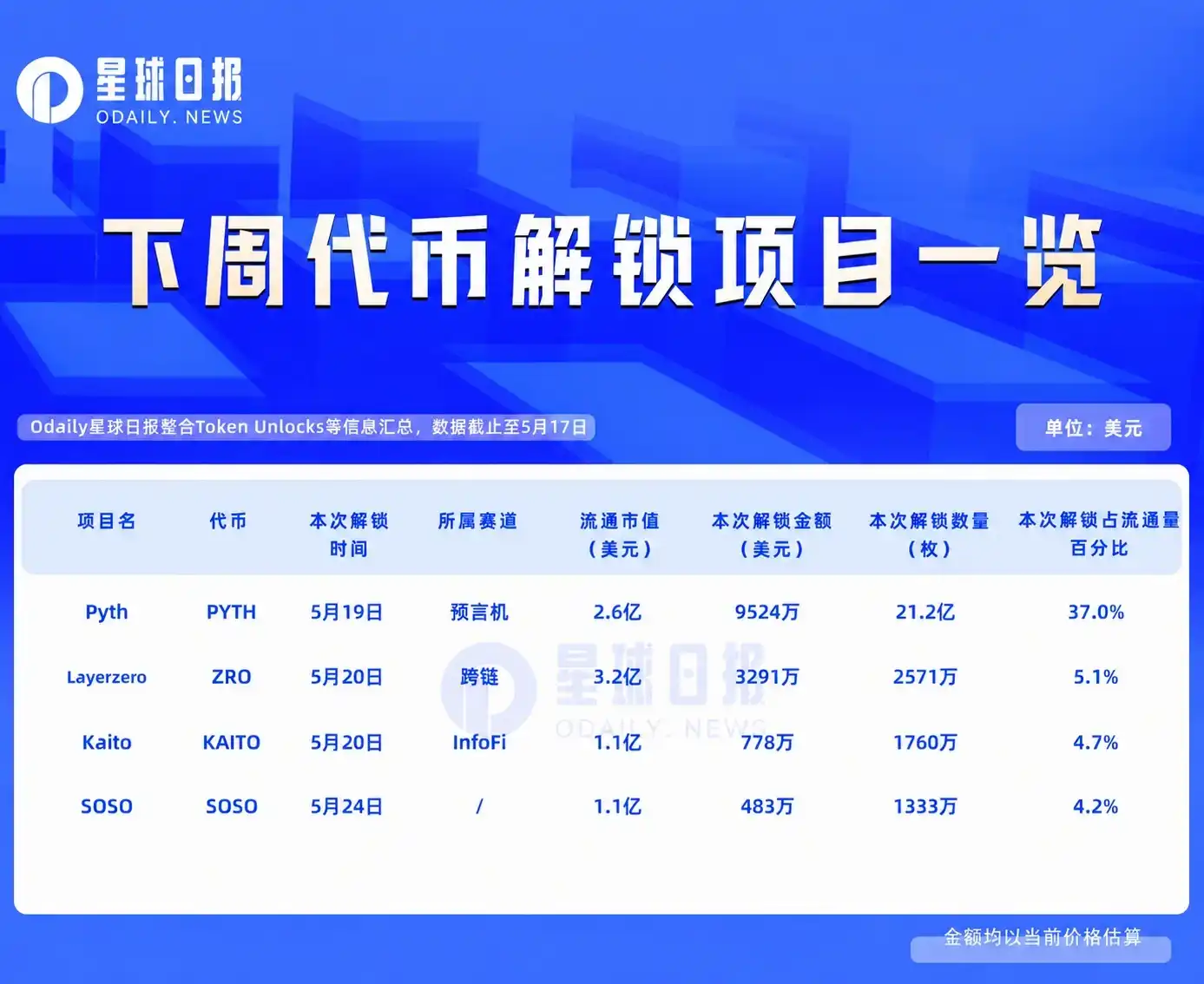
本周多个加密货币项目将有大规模代币解锁,可能对市场流动性造成影响。 首先是**Pyth Network (PYTH)**,一个去中心化预言机项目。本次将解锁21.2亿枚代币,价值约9524万美元,解锁量高达其流通量的37%。该项目提供实时的金融市场数据。 其次是**LayerZero (ZRO)**,一个全链互操作性协议。本次解锁2571万枚代币,价值约3291万美元。该协议专注于跨链消息传递。 另外还有**Kaito (KAI)**,一个AI驱动的Web3信息平台。本次将解锁1760万枚代币,价值约778万美元。该平台旨在聚合加密行业的碎片化信息。 以上三个项目的具体代币释放时间表可参考原文中的图表。大规模代币解锁通常会增加市场供应量,投资者需关注其潜在的价格影响。

Pyth

项目推特:https://twitter.com/PythNetwork

项目官网:https://pyth.network/

本次解锁数量:21.2亿枚

本次解锁金额:约9524万美元

Pyth Network 是一个去中心化的预言机项目,提供实时、精确的金融市场数据,涵盖DEX、衍生品、DeFi借贷、稳定币、合成资产等,旨在增强去中心化金融(DeFi)应用的功能性和可靠性。

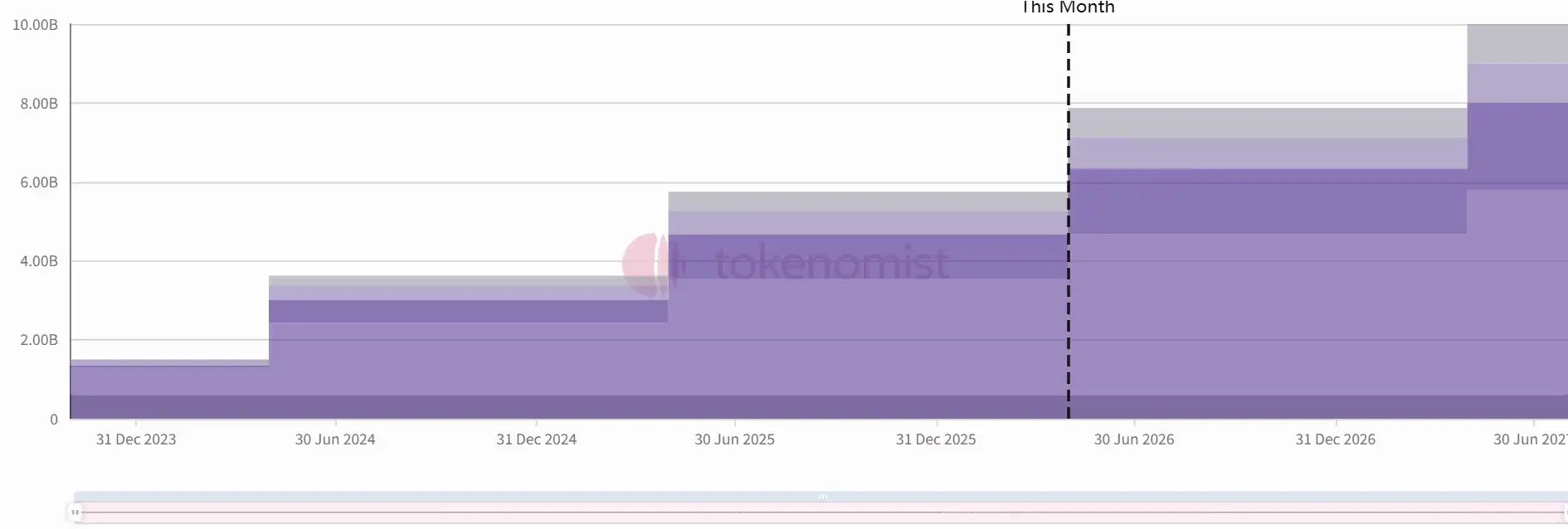
具体释放曲线如下:

Layerzero

项目推特:https://x.com/LayerZero_Core

项目官网:https://layerzero.network/

本次解锁数量:2571万枚

本次解锁金额:约3291万美元

LayerZero 是一种全链互操作性协议,专为跨链的轻量级消息传递而设计。LayerZero 提供了可信且有保障的消息传递,并具有可配置的去信任化。

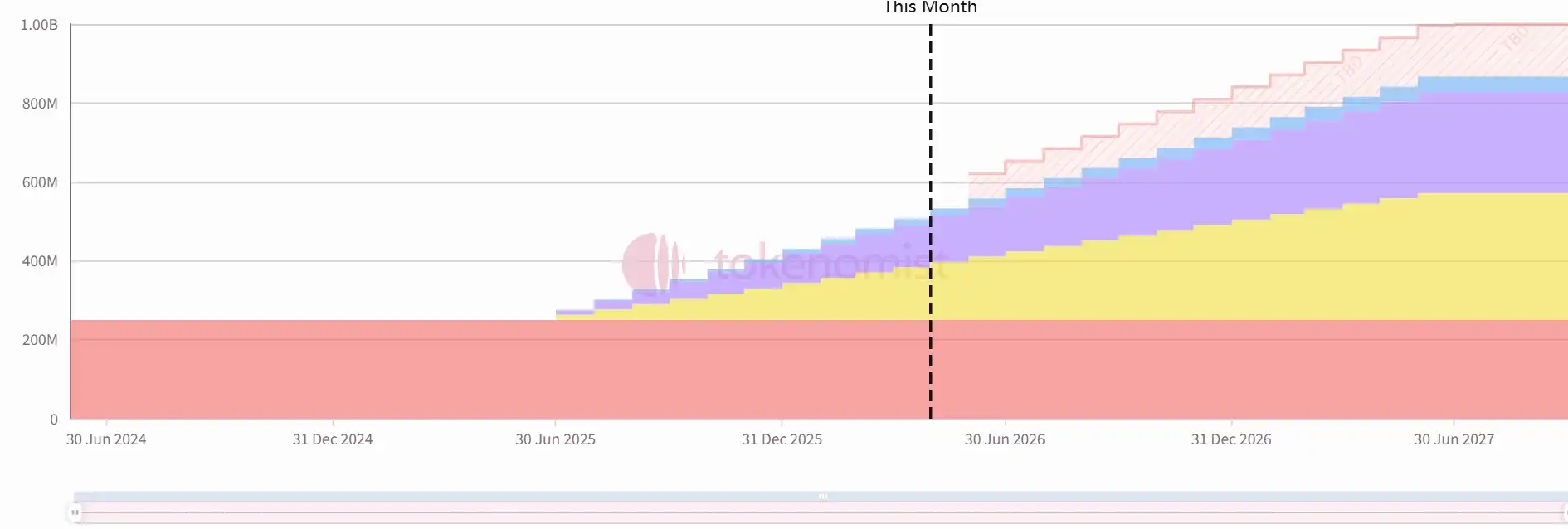
具体释放曲线如下:

Kaito

项目推特:https://x.com/KaitoAI

项目官网:https://www.kaito.ai/

本次解锁数量:1760万枚

本次解锁金额:约778万美元

Kaito是一个AI驱动的Web3信息平台,旨在解决加密行业信息碎片化问题。通过聚合社交媒体、治理论坛等数来源,Kaito利用AI技术提供实时搜索、情绪分析和趋势跟踪。

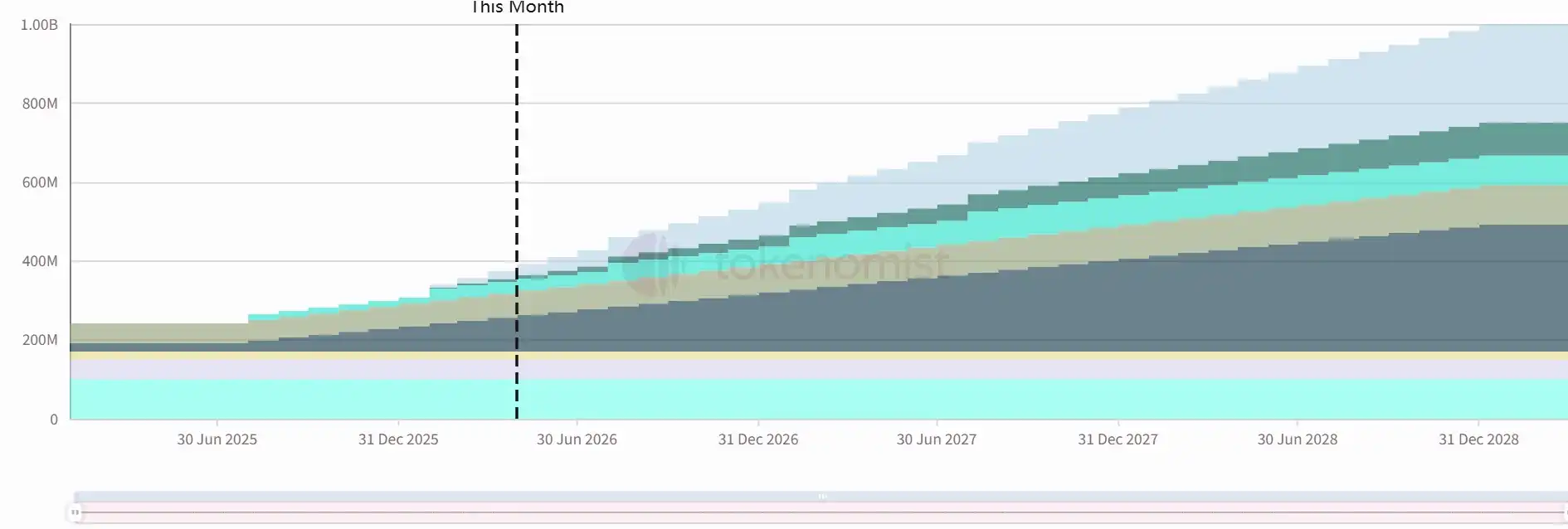
具体释放曲线如下:

Related Questions

Q根据文章,Pyth Network 本次解锁的代币数量是多少?

A21.2亿枚。

QLayerZero 协议的主要用途是什么?

ALayerZero 是一种全链互操作性协议,专为跨链的轻量级消息传递而设计,提供了可信且有保障的消息传递。

Q本次解锁中,哪个项目是AI驱动的Web3信息平台?

AKaito。

QPyth Network 提供的市场数据主要涵盖哪些领域?

A涵盖DEX、衍生品、DeFi借贷、稳定币、合成资产等金融市场数据。

QKaito 平台旨在解决什么问题?

A旨在解决加密行业信息碎片化问题,通过AI聚合各类信息来源并提供实时搜索、情绪分析和趋势跟踪。

Related Reads

a16z: How Tokenization is Transforming the Nature of Assets in 7 Charts

"Tokenized Assets: How Tokenization Changes the Nature of Assets" by a16z Crypto The market for tokenized assets, excluding stablecoins, has grown from under $3 billion two years ago to over $340 billion today. US Treasury bonds are the primary growth driver, allowing investors to hold yield-bearing assets digitally and enabling more efficient settlement. Other key sectors include private credit (growing fastest), commodities (dominated by gold), and niche financial assets. However, the market remains concentrated in tokenized US Treasuries and gold. A critical insight is that most tokenized assets currently lack "composability." While the total market is large, only a small fraction is actively used within DeFi protocols. For instance, only about 5% of tokenized bonds and a low percentage of tokenized gold are utilized on-chain. In contrast, assets like reinsurance and private credit tokens show much higher on-chain usage rates (84% and 33%, respectively). This highlights a divide: many tokenized assets are merely digital records on a blockchain without enabling new, programmable financial applications. The Pantera Capital Token Native Index indicates over 70% of tokenized assets have minimal on-chain native functionality. Ethereum remains the dominant blockchain for tokenized assets (over $150B), but the ecosystem is diversifying across chains like BNB Chain, Solana, and Stellar, based on factors like cost and compliance. Major institutions forecast massive future growth, with predictions for the tokenized asset market ranging from $2 trillion to over $30 trillion by the early 2030s. However, compared to the global financial system (e.g., ~$140T bonds, multi-trillion dollar gold market), tokenized assets currently represent a tiny fraction (0.01% or less). The conclusion is that while tokenization has begun by digitizing and streamlining settlement for simpler assets, the next phase involves bringing more complex financial instruments on-chain and deeply integrating them into composable, internet-native financial infrastructure.

Odaily星球日报24m ago

a16z: How Tokenization is Transforming the Nature of Assets in 7 Charts

Odaily星球日报24m ago

The Revived Codex, Carrying OpenAI's Hopes for IPO

This article analyzes the intense recent development of OpenAI's Codex, positioning it as a crucial component for OpenAI's impending IPO. Over the past two months, Codex has seen a rapid series of major updates focused on integrating into real enterprise workflows. Key new features include enhanced context capture (Appshots, file previews, built-in browser), long-running task execution ("Goal Mode"), remote operation (phone control, lock-screen access), and enterprise management tools (plugin sharing, access tokens, automated risk review). These updates aim to make Codex a comprehensive AI workbench that can "see the scene, push tasks, and manage risks." The author argues that while ChatGPT proves OpenAI's massive user base and API provides foundational revenue, Codex represents OpenAI's clearest path to demonstrating tangible, high-value commercial viability. It targets developers and engineering teams—a segment already accustomed to paying for efficiency gains in costly software development cycles. This is critical because, despite higher overall revenue, OpenAI's adjusted operating margins remain deeply negative, highlighting the challenge of outrunning immense compute costs. The pressure is amplified by competitor Anthropic's success with Claude Code, which has shown that a focused approach on high-value enterprise and developer workflows can lead to a path toward profitability. Codex's aggressive evolution is thus seen as OpenAI's strategic move to capture a similar enterprise-ready, revenue-generating narrative essential for its market debut. In essence, "ChatGPT proved OpenAI has users. Codex needs to prove OpenAI is a business that can make money."

marsbit1h ago

The Revived Codex, Carrying OpenAI's Hopes for IPO

marsbit1h ago

a16z: 7 Charts to Understand How Tokenization Is Changing the Nature of Assets

a16z: 7 Charts on How Tokenization is Transforming the Nature of Assets Tokenized Assets, often referred to as "real-world assets" (RWA), are altering the form, flow, and structure of the financial system. The market recently surpassed $30 billion (excluding stablecoins), driven largely by tokenized U.S. Treasuries. These offer investors digital, yield-bearing assets with efficient settlement. Growth varies significantly by asset class. Asset-backed credit leads in speed, followed by niche financial assets, while venture capital and active strategies took longer to scale. U.S. Treasuries and commodities dominate, holding about two-thirds of the current market share. Within commodities, gold tokenization dominates entirely due to its standardization and historical appeal in crypto. The ecosystem is spread across multiple blockchains. Ethereum holds over half the market, with others like BNB Chain, Solana, and Stellar holding significant shares. However, a key insight is that most tokenized assets currently lack "composability." While the total market is large, only a small fraction (e.g., 5% of tokenized bonds) is used within DeFi protocols. Many tokens are simply digital records of off-chain assets, not natively programmable financial building blocks. In contrast, smaller categories like reinsurance tokens see very high on-chain usage. Looking ahead, forecasts for the tokenized asset market by 2030 range from $2 trillion to over $30 trillion, representing immense potential growth from today's ~$340 billion base. Yet, relative to global markets (e.g., $140T+ in bonds), tokenization's penetration remains minuscule (<0.02%). The current phase focuses on digitizing straightforward assets for efficiency. The next major challenge is bringing more complex financial instruments on-chain and integrating tokenized assets into truly composable, internet-native financial infrastructure.

marsbit1h ago

a16z: 7 Charts to Understand How Tokenization Is Changing the Nature of Assets

marsbit1h ago

Trading

Spot
Futures

Hot Articles

How to Buy PYTH

Welcome to HTX.com! We've made purchasing PYTH (Pyth) (PYTH) simple and convenient. Follow our step-by-step guide to embark on your crypto journey.Step 1: Create Your HTX AccountUse your email or phone number to sign up for a free account on HTX. Experience a hassle-free registration journey and unlock all features.Get My AccountStep 2: Go to Buy Crypto and Choose Your Payment MethodCredit/Debit Card: Use your Visa or Mastercard to buy PYTH (Pyth) (PYTH) instantly.Balance: Use funds from your HTX account balance to trade seamlessly.Third Parties: We've added popular payment methods such as Google Pay and Apple Pay to enhance convenience.P2P: Trade directly with other users on HTX.Over-the-Counter (OTC): We offer tailor-made services and competitive exchange rates for traders.Step 3: Store Your PYTH (Pyth) (PYTH)After purchasing your PYTH (Pyth) (PYTH), store it in your HTX account. Alternatively, you can send it elsewhere via blockchain transfer or use it to trade other cryptocurrencies.Step 4: Trade PYTH (Pyth) (PYTH)Easily trade PYTH (Pyth) (PYTH) on HTX's spot market. Simply access your account, select your trading pair, execute your trades, and monitor in real-time. We offer a user-friendly experience for both beginners and seasoned traders.

3.4k Total ViewsPublished 2024.03.29Updated 2025.03.21

How to Buy PYTH

Discussions

Welcome to the HTX Community. Here, you can stay informed about the latest platform developments and gain access to professional market insights. Users' opinions on the price of PYTH (PYTH) are presented below.

活动图片