Pelepasan Token Minggu Ini: STRK Lepas 4% Pasokan Beredar namun Harga Melonjak

marsbitPublished on 2026-05-10Last updated on 2026-05-10

Abstract

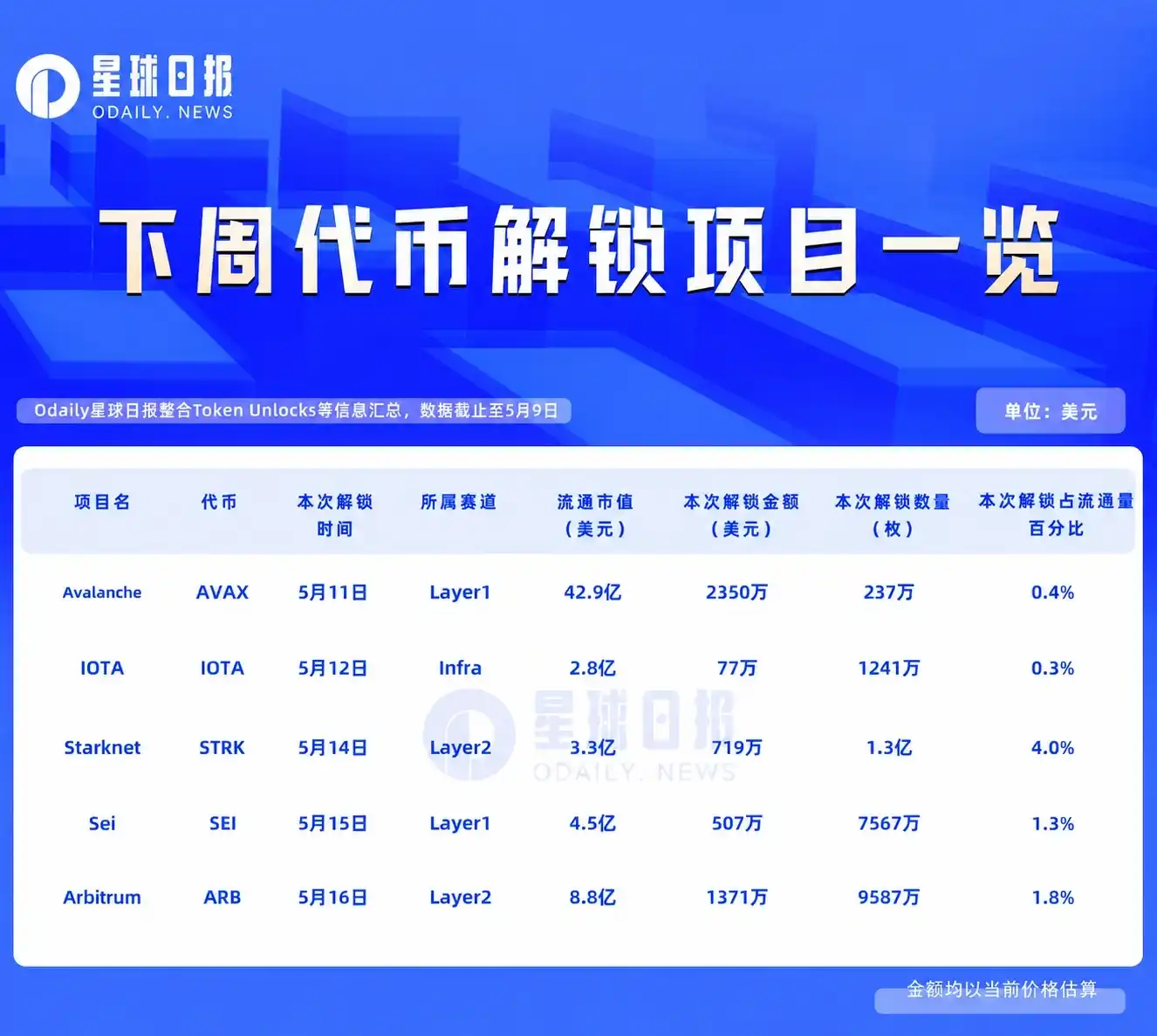
Minggu ini, Starknet (STRK) akan membuka kunci 130 juta token, setara dengan 4% dari pasokan yang beredar, senilai sekitar $7,19 juta. Starknet adalah Layer 2 Ethereum yang menggunakan teknologi zk-STARKs untuk mempercepat transaksi dan mengurangi biaya. Menariknya, meski ada penambahan pasokan yang signifikan, harga STRK justru menunjukkan peningkatan. Selain Starknet, Arbitrum (ARB) juga akan mengalami proses serupa dengan membuka kunci 95,87 juta token senilai sekitar $13,71 juta. Arbitrum merupakan solusi Rollup Ethereum yang bertujuan meningkatkan skalabilitas dengan memproses transaksi di luar rantai utama, menawarkan transaksi yang lebih cepat dan murah sambil tetap menjaga keamanan jaringan Ethereum. Pemegang token ARB dapat berpartisipasi dalam tata kelola protokol.

Starknet

Akun Twitter Proyek:https://twitter.com/Starknet

Situs Web Resmi Proyek:https://starknet.io/

Jumlah pelepasan kali ini: 130 juta token

Nilai pelepasan kali ini: Sekitar $7.19 juta

Starknet adalah Layer2 Ethereum yang memanfaatkan teknologi zk-STARKs untuk membuat transaksi Ethereum lebih cepat dan biayanya lebih rendah. Perusahaan induk Starknet, StarkWare, didirikan pada tahun 2018, berkantor pusat di Israel, dan produk utama yang dikembangkan di bawahnya adalah Starknet dan StarkEx. Dengan menggunakan STARK, Starknet memverifikasi transaksi dan komputasi tanpa memerlukan semua node jaringan untuk memverifikasi setiap operasi. Ini secara signifikan mengurangi beban komputasi dan meningkatkan throughput jaringan blockchain.

Arbitrum

Akun Twitter Proyek:https://twitter.com/arbitrum

Situs Web Resmi Proyek:https://arbitrum.io/

Jumlah pelepasan kali ini: 95.87 juta token

Nilai pelepasan kali ini: Sekitar $13.71 juta

Arbitrum adalah Rollup Ethereum yang bertujuan untuk meningkatkan skalabilitas Ethereum. Arbitrum mengagregasi dan memproses transaksi off-chain sebelum mengirimkan satu transaksi tunggal ke mainnet Ethereum. Ini berarti pengguna dapat menikmati transaksi yang lebih cepat dan lebih murah, sambil tetap mendapatkan manfaat dari keamanan dan desentralisasi jaringan Ethereum. Token asli Arbitrum adalah ARB. Pemegang ARB dapat berpartisipasi dalam proses pengambilan keputusan, seperti mengajukan proposal dan memberikan suara untuk peningkatan atau perubahan protokol.


Related Questions

QBerapa jumlah token STRK yang akan dilepas (unlock) dalam periode ini dan berapa nilainya?

AJumlah token STRK yang dilepas adalah 1.3 miliar token dengan nilai sekitar 7.19 juta dolar AS.

QApa tujuan utama dari proyek Starknet dan teknologi apa yang digunakan?

ATujuan utama Starknet adalah sebagai Layer2 Ethereum untuk mempercepat transaksi dan mengurangi biaya, menggunakan teknologi zk-STARKs untuk verifikasi.

QBerapa jumlah token ARB yang akan dilepas dari Arbitrum dan berapa perkiraan nilainya?

AJumlah token ARB yang dilepas adalah 95.87 juta token dengan nilai sekitar 13.71 juta dolar AS.

QApa fungsi utama dari token ARB di jaringan Arbitrum?

AToken ARB memungkinkan pemegangnya untuk berpartisipasi dalam pengambilan keputusan, seperti mengusulkan dan memilih proposal untuk pembaruan atau perubahan protokol.

QBagaimana cara kerja Arbitrum dalam meningkatkan skalabilitas Ethereum?

AArbitrum bekerja sebagai Rollup Ethereum dengan mengagregasi dan memproses transaksi di luar rantai (off-chain) sebelum mengirimkan satu transaksi ke jaringan utama Ethereum, sehingga transaksi menjadi lebih cepat dan murah.

Related Reads

OpenAI's Hyperliquid Pre-IPO Pricing Venture: Why Did It Last Only Half a Year?

The article discusses the rise and fall of Pre-IPO pricing markets on the Hyperliquid blockchain. Trade.xyz, an anonymous team, successfully built the largest pre-market for SpaceX (SPCX) by launching a contract with a clear anchor: the eventual Nasdaq listing price. This provided inherent price stability and validation. In contrast, Ventuals, a team backed by Paradigm, failed despite holding exclusive contracts for highly sought-after companies like OpenAI and Anthropic. Its key mistake was its pricing mechanism. For companies with no near-term IPO date, Ventuals' oracle relied partly on opaque private market transactions and, critically, partly on its own contract's moving average price. This created a self-referential feedback loop where prices were artificially propped up and detached from genuine supply and demand, leading to illiquid markets. Ventuals shut down after nine months, settling positions at final prices of $1,341.80 for OpenAI and $1,618.90 for Anthropic. Ironically, some employees and late-stage investors of these very companies reportedly used these flawed Ventuals prices for valuation reference, highlighting the acute demand for any price signal in illiquid private markets. The article concludes that while demand for pre-IPO trading is real and growing, with players like Coinbase now entering the space, the fundamental challenge remains: without a public listing to provide a definitive price anchor, these markets struggle to establish truly accurate and liquid pricing. The need for a transparent, self-correcting market is the critical lesson from Ventuals' failure.

marsbit19m ago

OpenAI's Hyperliquid Pre-IPO Pricing Venture: Why Did It Last Only Half a Year?

marsbit19m ago

With Daily Active Users Reaching 3-4 Times That of the Industry's Second Place, Which Crack in the Office Agent Market Has Tencent's WorkBuddy Torn Open?

Tencent's AI office assistant, WorkBuddy, has achieved daily active users (DAU) 3-4 times that of the industry's second-place product, primarily driven by non-technical users like HR, operations, and administrative staff. Its rapid growth, starting with a public beta in March 2026, highlights a key strategic divergence from competitors like OpenAI's Codex and Anthropic's Claude Code. Unlike those tools, which originated as developer-focused assistants (in command lines or IDEs) and are now expanding towards office scenarios, WorkBuddy was built from the ground up for non-technical office workers. Its development was user-driven, initiated after腾讯云's team observed non-technical employees using their CodeBuddy coding tool for general tasks. WorkBuddy's design is defined by three core decisions aimed at lowering barriers: 1) Using natural language instead of technical concepts, so users describe their goal without needing to understand prompts or agents. 2) Providing pre-packaged "Skill" templates for common office tasks like data processing, content creation, and research. 3) Natively integrating into existing腾讯 ecosystems like腾讯 Docs and WeChat, making the agent a seamless part of the user's workflow rather than a separate tool. This "scenario encapsulation" approach, prioritizing the shortest path for users to get work done, contrasts with the "underlying capability" focus of Codex and Claude, which offer more flexibility but require more technical setup. Analysts confirm WorkBuddy's leading market position in China by mid-2026, with massive user and request growth following its launch. Recognizing the same trend of surging non-technical adoption, OpenAI and Anthropic are now pivoting their products with features like role-based plugins (Codex) and a simplified desktop interface (Claude Cowork). However, adapting tools built for developers requires significant changes to interaction models and integrations. WorkBuddy currently holds an estimated six-month lead in delivering a complete solution for non-technical office users. Its recently launched enterprise version aims to solidify this advantage. The competition underscores two valid paths: embedding agent capabilities directly into familiar work environments versus building powerful, general-purpose agents that users must learn to access. WorkBuddy's early success demonstrates the effectiveness of the former strategy for mainstream office adoption.

marsbit27m ago

With Daily Active Users Reaching 3-4 Times That of the Industry's Second Place, Which Crack in the Office Agent Market Has Tencent's WorkBuddy Torn Open?

marsbit27m ago

Trading

Spot
Futures

Hot Articles

How to Buy 4

Welcome to HTX.com! We've made purchasing 4 (4) simple and convenient. Follow our step-by-step guide to embark on your crypto journey.Step 1: Create Your HTX AccountUse your email or phone number to sign up for a free account on HTX. Experience a hassle-free registration journey and unlock all features.Get My AccountStep 2: Go to Buy Crypto and Choose Your Payment MethodCredit/Debit Card: Use your Visa or Mastercard to buy 4 (4) instantly.Balance: Use funds from your HTX account balance to trade seamlessly.Third Parties: We've added popular payment methods such as Google Pay and Apple Pay to enhance convenience.P2P: Trade directly with other users on HTX.Over-the-Counter (OTC): We offer tailor-made services and competitive exchange rates for traders.Step 3: Store Your 4 (4)After purchasing your 4 (4), store it in your HTX account. Alternatively, you can send it elsewhere via blockchain transfer or use it to trade other cryptocurrencies.Step 4: Trade 4 (4)Easily trade 4 (4) on HTX's spot market. Simply access your account, select your trading pair, execute your trades, and monitor in real-time. We offer a user-friendly experience for both beginners and seasoned traders.

4.3k Total ViewsPublished 2025.10.20Updated 2026.06.02

How to Buy 4

Discussions

Welcome to the HTX Community. Here, you can stay informed about the latest platform developments and gain access to professional market insights. Users' opinions on the price of 4 (4) are presented below.

活动图片