Pelepasan Token Mingguan: BARD Lepas Token 12% dari Pasaran Beredar Minggu Ini

marsbitPublished on 2026-03-14Last updated on 2026-03-14

Abstract

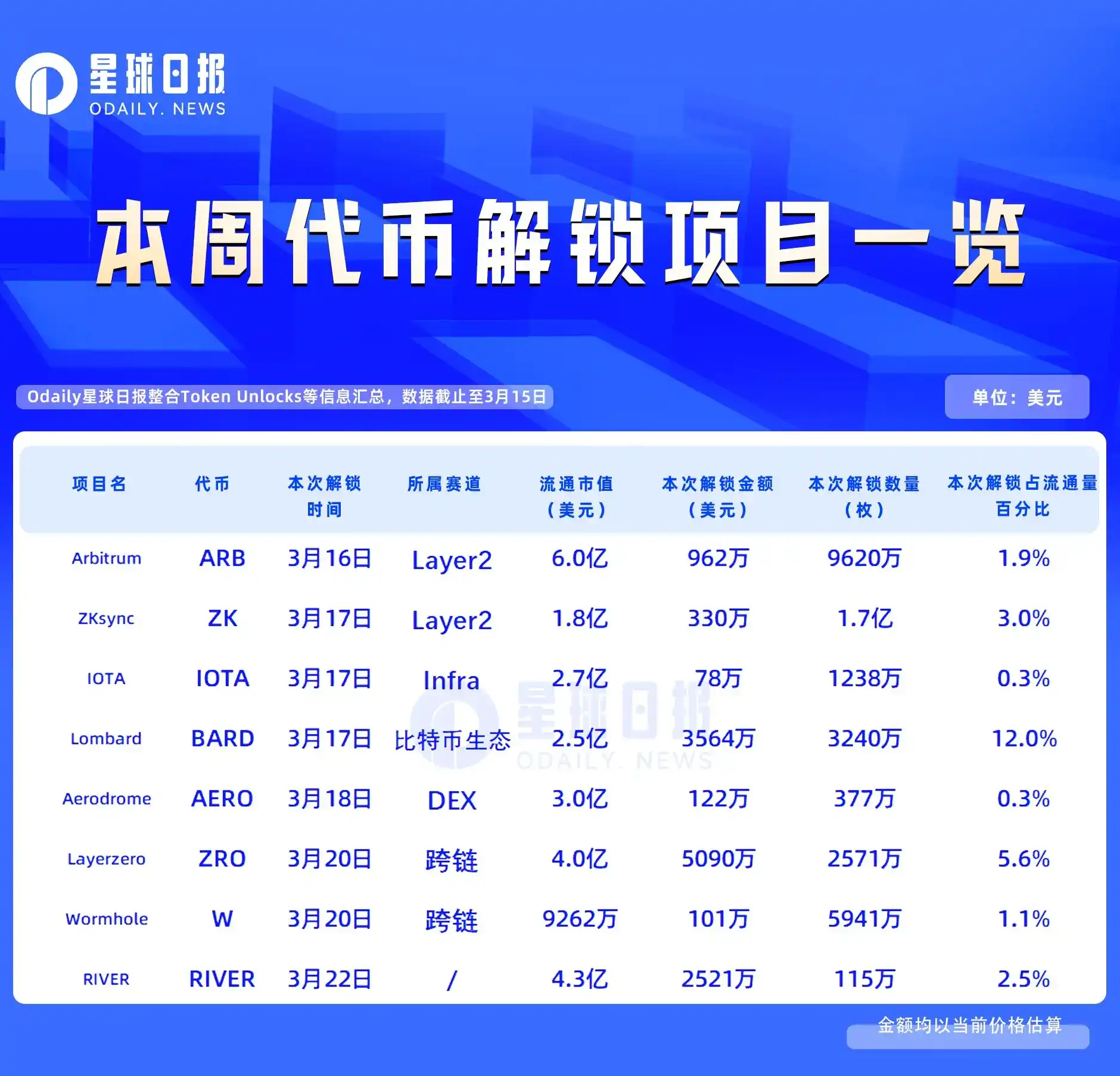
Rangkuman: Pekan ini, tiga proyek kripto utama akan mengalami unlock token signifikan. **Lombard (BARD)** akan membuka kunci 32,4 juta token (senilai ~$35,64 juta), setara dengan 12% dari pasokan yang beredar, untuk mendanai ekosistem Bitcoin DeFi. **LayerZero (ZRO)** akan melepas 25,71 juta token (~$50,9 juta) sebagai bagian dari alokasi insentif. Sementara itu, **zkSync (ZK)** akan mengunlock 170 juta token (~$330 ribu) untuk tim inti dan para penasihat. Unlock besar-besaran ini berpotensi menciptakan tekanan jual di pasar.

Lombard

Akun Twitter Proyek:https://x.com/Lombard_Finance

Situs Web Proyek:https://www.lombard.finance/

Jumlah Pelepasan Kali Ini: 32.4 juta token

Nilai Pelepasan Kali Ini: Sekitar $35.64 juta

Lombard sedang membangun pasar modal Bitcoin on-chain, yang bertujuan untuk melepaskan potensi penuh dari aset ikonik masa kini. Hubungan Lombard dengan BTC, mirip dengan Circle dan Tether terhadap stablecoin. Lombard mengintegrasikan secara vertikal tumpukan DeFi Bitcoin, bertujuan untuk mendukung semua chain, aplikasi, dan pengembang dalam mengintegrasikan Bitcoin ke on-chain dengan mulus.

Kurva pelepasan spesifik adalah sebagai berikut:

Layerzero

Akun Twitter Proyek:https://x.com/LayerZero_Core

Situs Web Proyek:https://layerzero.network/

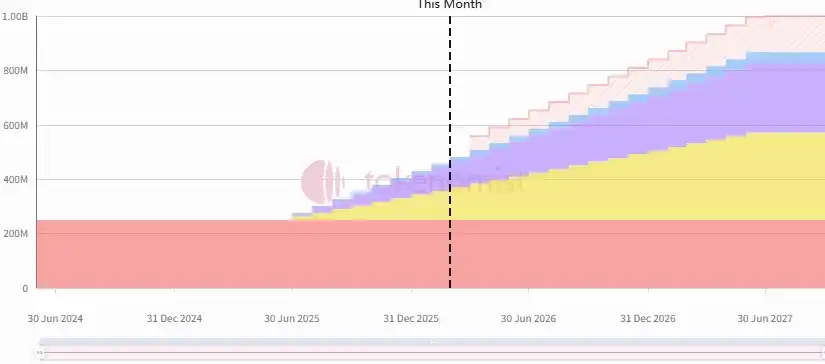
Jumlah Pelepasan Kali Ini: 25.71 juta token

Nilai Pelepasan Kali Ini: Sekitar $50.9 juta

LayerZero adalah protokol interoperabilitas all-chain, yang dirancang khusus untuk pertukaran pesan ringan lintas chain. LayerZero menyediakan pertukaran pesan yang andal dan terjamin, dengan kemampuan konfigurasi yang tanpa perlu kepercayaan (trustless).

Kurva pelepasan spesifik adalah sebagai berikut:
ZKsync

Akun Twitter Proyek:https://x.com/zksync

Situs Web Proyek:https://zksync.io/

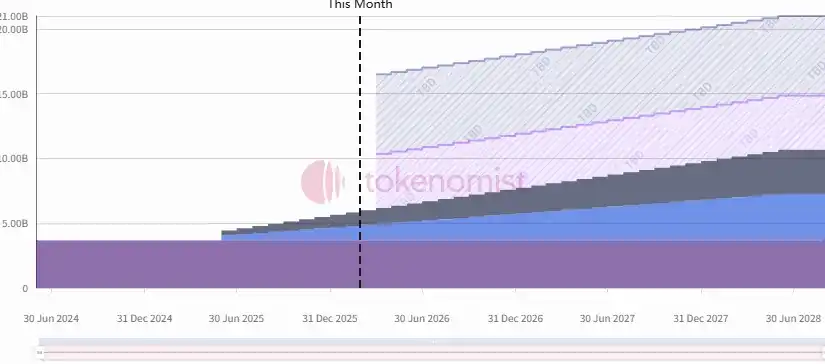
Jumlah Pelepasan Kali Ini: 170 juta token

Nilai Pelepasan Kali Ini: Sekitar $3.3 juta

zkSync adalah solusi skalabilitas lapisan ke-2 yang dikembangkan oleh Matter Labs, dengan memanfaatkan zero-knowledge proof generasi terbaru untuk mempertahankan properti keamanan blockchain dasar. Semua dana dalam zkSync dipegang oleh kontrak pintar di main chain, sementara komputasi dan penyimpanan dieksekusi off-chain.

Kurva pelepasan spesifik adalah sebagai berikut:
Related Questions

QBerapa jumlah token BARD yang akan diunlock minggu ini dan berapa persen dari suplai yang beredar?

AJumlah token BARD yang diunlock minggu ini adalah 32,4 juta token, yang mewakili 12% dari suplai yang beredar.

QApa tujuan utama dari proyek Lombard?

ALombard bertujuan untuk membangun pasar modal Bitcoin on-chain dan mengintegrasikan tumpukan DeFi Bitcoin secara vertikal untuk mendukung semua chain, aplikasi, dan pengembang dalam mengintegrasikan Bitcoin ke on-chain dengan mulus.

QBerapa nilai dolar AS dari unlock token LayerZero minggu ini?

ANilai unlock token LayerZero minggu ini adalah sekitar $50,9 juta.

QApa yang dimaksud dengan zkSync dan siapa pengembangnya?

AzkSync adalah solusi penskalaan lapisan 2 yang dikembangkan oleh Matter Labs, yang memanfaatkan zero-knowledge proof untuk mempertahankan properti keamanan blockchain dasar.

QDari ketiga proyek yang disebutkan (Lombard, LayerZero, ZKsync), mana yang memiliki jumlah token terbanyak yang diunlock minggu ini?

AZKsync memiliki jumlah token terbanyak yang diunlock minggu ini, yaitu 170 juta token.

Related Reads

Sharplink CEO: One Million Ethereum Developers, Who Can Compete?

Etherean Ecosystem: One Million Developers and a Formidable Moat The Ethereum network has surpassed a significant milestone: over one million unique lifetime developers, with approximately 232,000 active in the past year. This vast and growing talent pool is Ethereum's core advantage, far more critical than transient metrics like speed or transaction fees. The central question is not which blockchain is fastest, but where the best builders choose to build long-term. Ethereum's answer lies in a decade-long accumulation of infrastructure, standards, tools, liquidity, and collaborative culture that is exceptionally difficult to replicate. It has become the default operating system for programmable finance. This massive developer base is actively working on complex, high-risk challenges that deepen Ethereum's strategic moat: * **Glamsterdam Upgrade (2026):** Focused on core protocol scalability (ePBS, parallel execution) while preserving core values like credible neutrality. * **Synchronous Composability:** Aims to make numerous Rollups interoperate like a single chain, directly addressing fragmentation concerns. * **Quantum Resistance:** Ethereum leads mainstream ecosystems in coordinated preparation for post-quantum cryptography, with a targeted migration plan around 2029. This developer advantage is self-reinforcing, fueled by: * **Deep Composability:** Applications interact like interoperable financial Lego bricks via shared standards (e.g., EVM, Solidity). * **Credible Neutrality:** Secured by over 900,000 validators, making it trusted by major institutions. * **Modularity:** Rollups (Base, Arbitrium, etc.) expand, rather than fracture, the ecosystem into a tightly connected modular internet economy. * **Culture:** Attracts top-tier researchers and standard-setters who guide the entire industry. In essence, while other chains generate activity, Ethereum is consolidating as the trusted, long-term coordination layer for internet-native finance. Its future is being built now by the architects of the next-generation financial infrastructure.

Odaily星球日报25m ago

Sharplink CEO: One Million Ethereum Developers, Who Can Compete?

Odaily星球日报25m ago

Ethereum Reaches the Milestone of One Million Developers, Sharplink CEO Delves Deep into Ethereum's Future Possibilities

Ethereum Surpasses One Million Developers Milestone: A Look at Its Unshakeable Dominance and Future Joseph Chalom, CEO of Sharplink, reflects on his recent Asia trip where he engaged deeply with Ethereum developers and ecosystem leaders. The most striking takeaway was not just the industry's vibrancy, but the rigorous, long-term vision of local builders. This context brings to life a pivotal statistic: Ethereum has now surpassed one million cumulative developers (1,012,824), with approximately 232,000 remaining active in the past year—a talent pool unmatched by any other crypto ecosystem. The critical question isn't which blockchain is fastest, but where top developers choose to build long-term. Ethereum's answer is unequivocal. Its decade-long lead stems from a unique convergence of technology, institutional culture, economic systems, and composability, cementing its role as the foundational operating system for programmable finance. This massive developer base is tackling the industry's hardest problems, continuously strengthening Ethereum's moat. Key initiatives include: * **The Glamsterdam Upgrade (planned 2026):** Introducing ePBS and Block-level Access Lists for parallel execution and higher throughput while preserving core values like credible neutrality and fair MEV distribution. * **Synchronous Composability:** Projects are working to enable atomic transactions across dozens of Rollups, making them function as one unified chain and eliminating ecosystem fragmentation. * **Post-Quantum Security:** Ethereum is far ahead in preparing for quantum computing threats, with a dedicated foundation working group and testnets targeting a full migration by ~2029—a crucial factor for institutional adoption. Beyond developers, Ethereum's core network effects are its unparalleled composability and unified standards (like EVM and Solidity), which create a powerful flywheel: more developers → better tools → greater liquidity → more institutional participation. Its other decisive advantages include credible neutrality (over 900k validators), a secure modular architecture with interconnected Rollups, and a deeply entrenched culture shaped by top-tier researchers. Ultimately, there's a vast difference between generating short-term activity and becoming the trusted, long-term coordination layer for global native finance. Major institutions prioritize security, trust, and liquidity—areas where Ethereum holds dominant mindshare. The industry's trajectory shows resources consolidating around unified standards, deep liquidity, and developer consensus. After meeting the builders in Seoul and Hong Kong, Chalom is more convinced than ever: Ethereum's unshakeable future is being built right now.

Foresight News37m ago

Ethereum Reaches the Milestone of One Million Developers, Sharplink CEO Delves Deep into Ethereum's Future Possibilities

Foresight News37m ago

Saylor's Latest Long Read: Bitcoin is Not Money, It's Digital Capital, and Money is Built Upon It

Michael Saylor presents his "Digital Asset Stack" theory, positioning Bitcoin as the foundational layer of digital capital. He argues Bitcoin itself should remain unchanged—no staking, inflation, or protocol alterations. Instead, a five-layer financial architecture should be built atop it: Digital Capital (BTC), Digital Credit (e.g., yield instruments like STRC), Digital Currency (stable, yield-bearing instruments pegged to fiat), Digital Yield (leveraged/structured products), and Digital Equity (e.g., MSTR stock, absorbing residual volatility). Saylor asserts this stack transforms Bitcoin's high-volatility, high-energy capital into tailored products: stable currencies for payments/savings, yield instruments for income seekers, and equity for growth investors. This approach meets diverse needs—corporate treasuries, banks, retirees, emerging market users—without compromising Bitcoin's core properties (scarcity, decentralization). The "killer use case" is rebuilding global money, credit, and capital markets on Bitcoin, bridging the fiat world with a superior digital asset foundation. The system leverages traditional finance principles (risk layering, structured products) while using Bitcoin as the ultimate collateral. This expands Bitcoin's utility, drives adoption, and offers a better monetary experience: digital, yield-bearing, stable-value tools for everyday use.

marsbit49m ago

Saylor's Latest Long Read: Bitcoin is Not Money, It's Digital Capital, and Money is Built Upon It

marsbit49m ago

Can SK Hynix's Stock Double Again in This Rally?

The article discusses the highly optimistic price target of approximately $3,500 for SK Hynix stock, set by Aletheia Capital. This target is significantly above the consensus range of $2,000-$2,520 from major brokerages. The core debate is whether SK Hynix deserves a fundamental re-rating beyond its traditional cyclical discount, based on the long-term impact of AI-driven demand. The $3,500 target hinges on three key assumptions holding simultaneously until at least 2027: 1) Continued shortage and high pricing for HBM (High Bandwidth Memory), a critical component for AI chips; 2) Sustained high prices for standard DRAM, as HBM production consumes capacity and constrains general supply; and 3) Strong AI server demand generating substantial, above-expectation free cash flow. SK Hynix's leading ~58% market share in HBM and its early certification with key clients like Nvidia provide a competitive advantage, allowing it to capture significant supply chain premiums. The HBM shortage is seen not just as a niche growth driver but as a catalyst that amplifies profitability across the entire memory business by tightening overall DRAM supply. However, the article cautions that this target represents an optimistic "tail scenario." Key risks include potential supply increases from competitors (Samsung, Micron) by 2027, a possible slowdown in HBM price growth, and high capital expenditures that could erode the projected free cash flow. The divergence in analyst targets reflects the market's uncertainty over whether the current AI-driven boom will temporarily elevate earnings or permanently raise the memory industry's profit baseline.

marsbit52m ago

Can SK Hynix's Stock Double Again in This Rally?

marsbit52m ago

Trading

Spot
Futures

Hot Articles

How to Buy BARD

Welcome to HTX.com! We've made purchasing Lombard (BARD) simple and convenient. Follow our step-by-step guide to embark on your crypto journey.Step 1: Create Your HTX AccountUse your email or phone number to sign up for a free account on HTX. Experience a hassle-free registration journey and unlock all features.Get My AccountStep 2: Go to Buy Crypto and Choose Your Payment MethodCredit/Debit Card: Use your Visa or Mastercard to buy Lombard (BARD) instantly.Balance: Use funds from your HTX account balance to trade seamlessly.Third Parties: We've added popular payment methods such as Google Pay and Apple Pay to enhance convenience.P2P: Trade directly with other users on HTX.Over-the-Counter (OTC): We offer tailor-made services and competitive exchange rates for traders.Step 3: Store Your Lombard (BARD)After purchasing your Lombard (BARD), store it in your HTX account. Alternatively, you can send it elsewhere via blockchain transfer or use it to trade other cryptocurrencies.Step 4: Trade Lombard (BARD)Easily trade Lombard (BARD) on HTX's spot market. Simply access your account, select your trading pair, execute your trades, and monitor in real-time. We offer a user-friendly experience for both beginners and seasoned traders.

3.8k Total ViewsPublished 2025.09.18Updated 2026.06.02

How to Buy BARD

Discussions

Welcome to the HTX Community. Here, you can stay informed about the latest platform developments and gain access to professional market insights. Users' opinions on the price of BARD (BARD) are presented below.

活动图片