Tiger Research : Si j'étais le fondateur de Kaito, comment prendrais-je des décisions face aux changements radicaux d'InfoFi ?

marsbitPublished on 2026-01-20Last updated on 2026-01-20

Abstract

Tiger Research analyse l'effondrement de l'écosystème InfoFi suite aux changements de politique d'API de X (ex-Twitter), qui a dévoilé la vulnérabilité des projets Web3 trop dépendants des plateformes centralisées. En seulement trois jours, cette décision a paralysé le secteur, provoquant une chute brutale de la valeur des jetons comme $KAITO. Le rapport propose cinq stratégies de survie pour les projets comme Kaito : 1) Arrêt pur et simple ; 2) Transition vers une plateforme de récompenses à prime (bounty) avec approbation manuelle ; 3) Adoption d'un modèle de parrainage inspiré de la Corée du Sud, plus sécurisé pour les créateurs ; 4) Expansion multi-plateformes (YouTube, TikTok, Instagram) pour diversifier les risques ; 5) Évolution vers un modèle de gestion des influenceurs (KOL) de type MCN, basé sur des relations contractuelles et des données. L'ère "InfoFi 2.0" qui s'annonce sera probablement plus petite, plus contrôlée et axée sur la qualité plutôt que sur la quantité sans permission. Cependant, le défi fondamental reste de concevoir un système d'incitations équitable et de démontrer la valeur intrinsèque des jetons au-delà de la simple spéculation.

Ce rapport est rédigé par Tiger Research. Les changements radicaux de la politique d'API de la plateforme X ont provoqué l'effondrement instantané de l'écosystème InfoFi. En tant que projet leader de l'industrie, si j'étais le fondateur de Kaito, quelles voies de transformation seraient possibles à l'heure actuelle ?

Points clés

  • Démantèlement de l'écosystème en trois jours : L'ajustement de la politique de la plateforme X a détruit l'écosystème InfoFi en seulement trois jours, exposant pleinement la vulnérabilité structurelle des projets Web3 qui dépendent excessivement de plateformes centralisées.
  • Cinq voies de survie : Les projets InfoFi sont désormais confrontés à cinq choix : arrêt complet, transformation en plateforme de financement par primes, adoption du modèle de parrainage à la coréenne, expansion multi-plateformes ou évolution vers une gestion de type MCN pour les KOL.
  • L'évolution d'InfoFi 2.0 : Le futur modèle sera plus sophistiqué et contrôlé, passant d'une « mise à l'échelle sans permission » à une « collaboration de haute qualité et vérifiée ».
  • Défi fondamental : Établir un système d'incitation et de compensation équitable et redémontrer la valeur intrinsèque des jetons reste un fossé que l'industrie doit franchir.

1. L'« effondrement » d'InfoFi en trois jours
Source : X(@nikitabier)

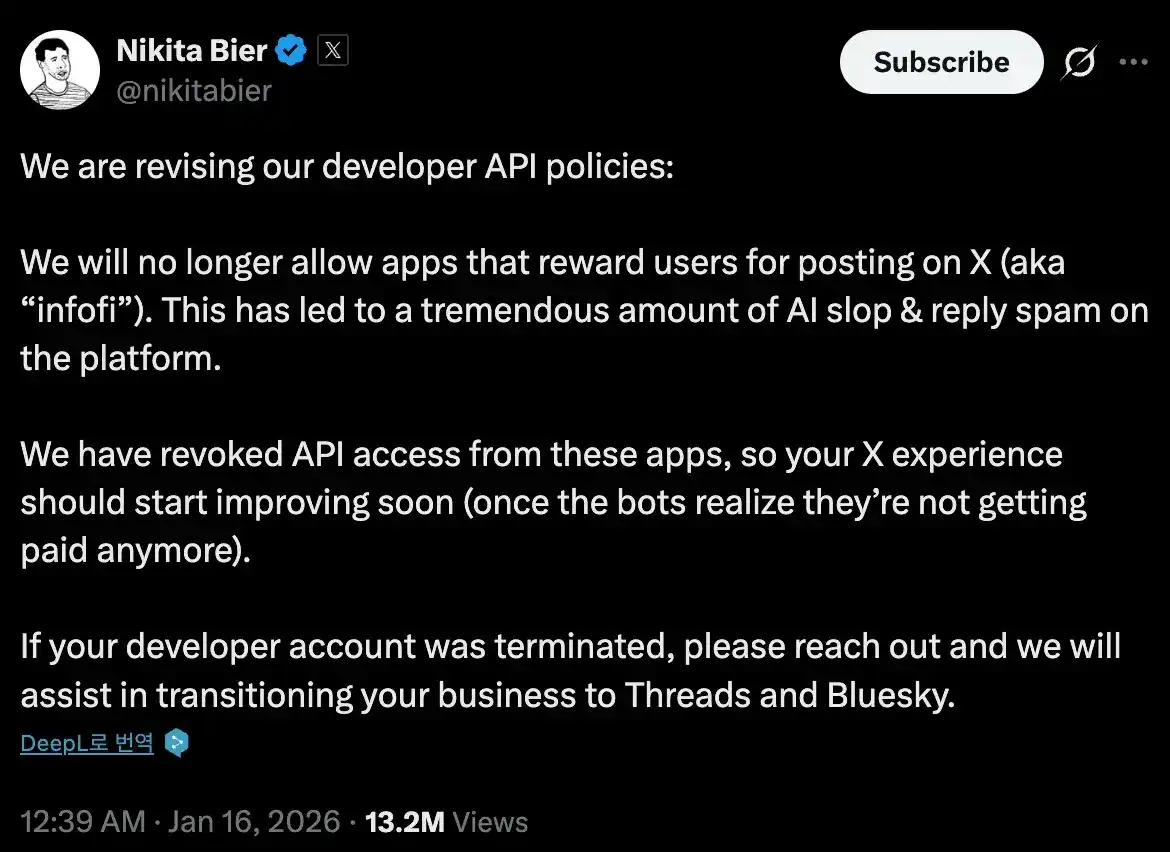
Le 15 janvier, Nikita Bier, responsable produit de la plateforme X, a publié un bref avis indiquant clairement que les applications incitant les utilisateurs à publier via des récompenses n'étaient plus autorisées à fonctionner sur la plateforme. Pour le secteur InfoFi, cela équivalait à un « arrêt de mort ».

Selon la chronologie divulguée par Yu Hu, fondateur de Kaito, les événements ont évolué comme suit :

  • 13 janvier : Kaito reçoit un email de la plateforme X, signalant un examen potentiel et demandant des clarifications.
  • 14 janvier : La plateforme X envoie une notification légale formelle, à laquelle Kaito répond le jour même.
  • 15 janvier : La déclaration officielle est publiée, Kaito et toute l'industrie apprennent simultanément la décision finale.

La réaction du marché a été extrêmement violente, le prix de $KAITO s'est fortement contracté. La communauté a reproché à l'équipe, bien qu'elle ait affirmé avoir un plan, de ne pas avoir su avertir à l'avance. Kaito a ensuite publié une déclaration d'urgence, expliquant qu'il avait précédemment résolu des litiges similaires par des voies légales et avait donc mal jugé la marge de négociation de cet événement.

Leçon : Une décision d'une entreprise centralisée a mis fin à une toute nouvelle catégorie Web3 en seulement trois jours. Cette situation où le « pouvoir de vie ou de mort » est entre les mains d'autrui étouffe tout l'écosystème.

2. Si j'étais actuellement le fondateur d'InfoFi

Cela signifie-t-il qu'InfoFi est dans une impasse ? Des projets comme Kaito préparent déjà la suite. Cependant, ce dont on a besoin maintenant n'est pas de poursuivre les anciennes voies, mais une version radicalement différente d'« InfoFi 2.0 ».

Si j'étais le fondateur d'un projet InfoFi comme Kaito, quels choix réalistes aurais-je actuellement ? En examinant ces voies potentielles, nous pouvons commencer à esquisser les contours de la prochaine phase d'InfoFi.

2.1 Arrêt complet

C'est l'option la plus simple et la plus directe : arrêter les opérations avant que les fonds ne soient complètement épuisés. En réalité, de nombreux petits et moyens projets pourraient entrer dans une « phase zombie » – essentiellement inactifs, publiant occasionnellement sur les réseaux sociaux, puis disparaissant lentement de la vue du public.

Étant donné que « l'adéquation produit-marché » (PMF) établie précédemment autour de la plateforme X a maintenant disparu, choisir de fermer pourrait être plus réaliste que de continuer à brûler de l'argent pour chercher une nouvelle direction insaisissable. Si le projet détient encore des actifs de données utilisables, il peut les vendre à d'autres entreprises pour récupérer une partie de la valeur résiduelle. Ainsi, la plupart des petits projets InfoFi choisiront probablement cette voie.

2.2 Plateforme de financement basée sur les primes

Si l'accès à l'API de X n'est plus possible, une autre option est de revenir à un modèle commercial plus ancien : les KOL postulent directement pour des activités, soumettent leur contenu pour examen manuel, et reçoivent une récompense.
Source : Scribble

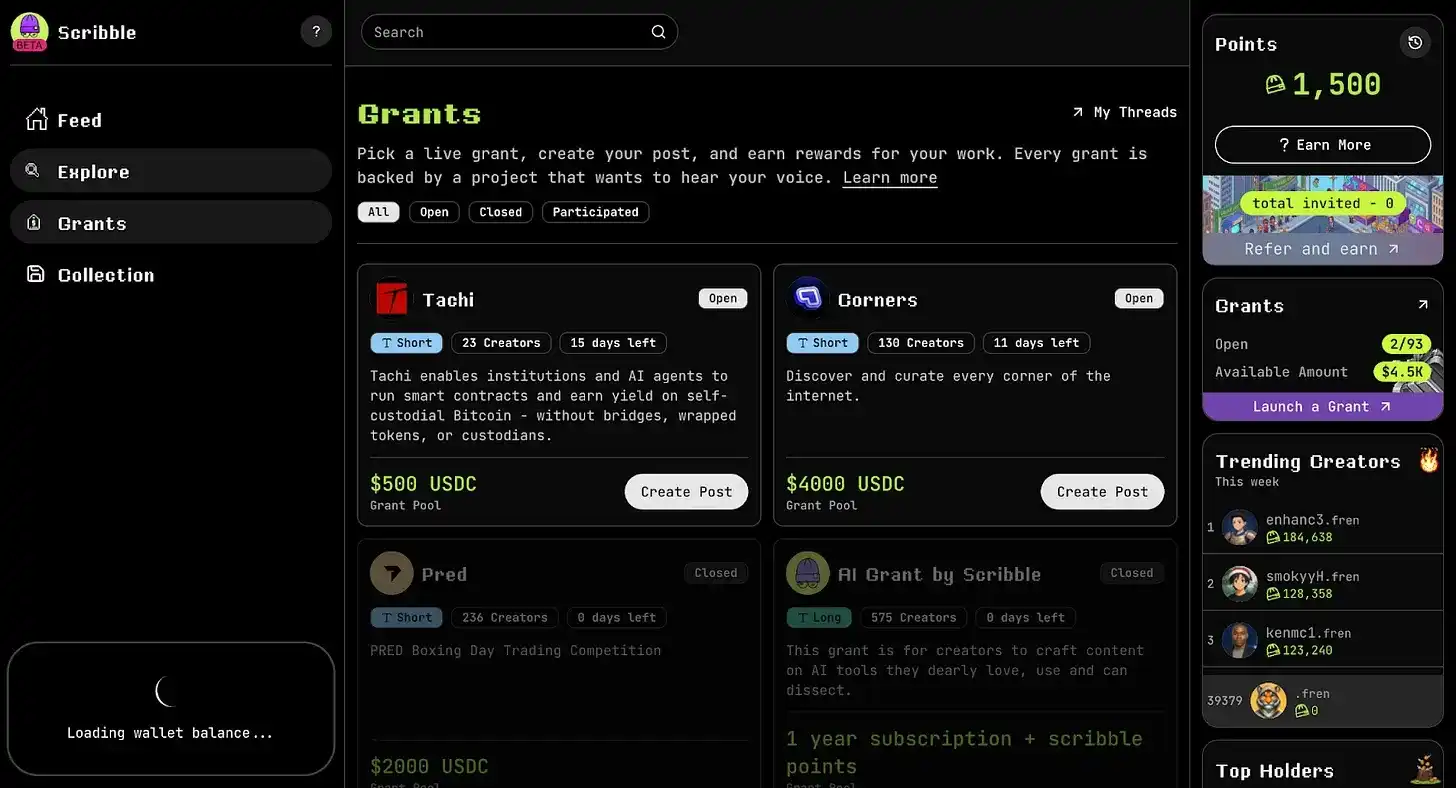
Le modèle représenté par Scribble en est un exemple typique. Les projets publient des missions de financement sous forme de primes, les KOL créent et soumettent du contenu pour examen par la plateforme, et sont rémunérés après approbation. C'est un modèle « soumettre d'abord, examiner ensuite », et non un suivi en temps réel via API.

Cette structure peut être étendue en tant que plateforme ouverte : la plateforme fournit uniquement l'intermédiation de mise en relation et l'infrastructure, tandis que chaque projet gère ses propres campagnes. À mesure que le nombre de projets participants augmente, le bassin de KOL s'élargit ; et la croissance de la base de KOL offre à son tour plus de choix aux projets. L'inconvénient est l'incertitude considérable pour les KOL : si le contenu soumis est rejeté, le temps et les efforts investis sont perdus. Après plusieurs échecs, les bons KOL risquent de quitter la plateforme.

2.3 Modèle de blog sponsorisé à la coréenne
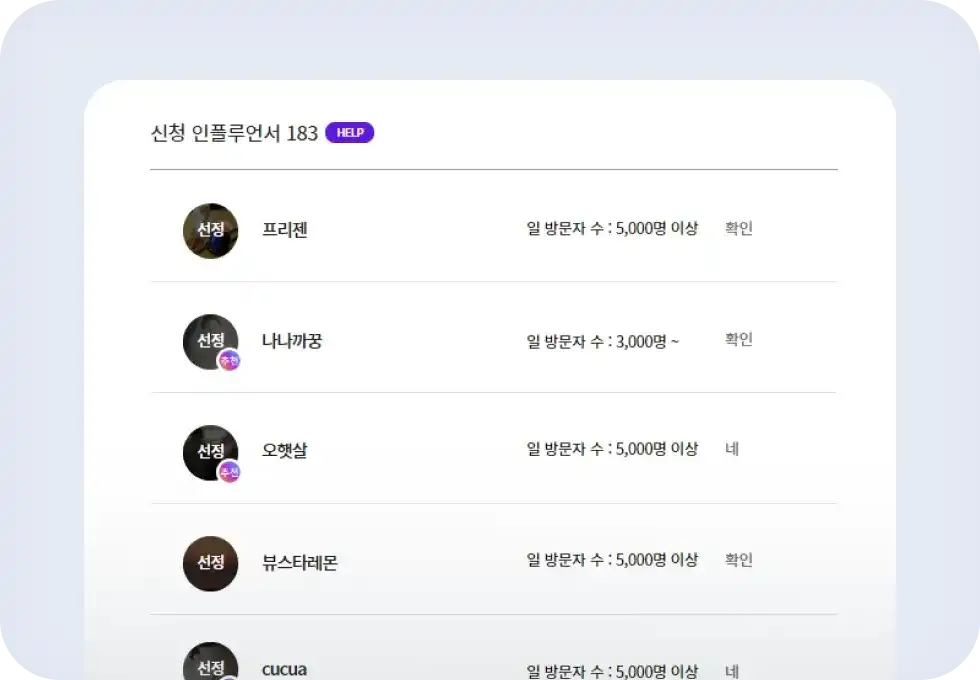
Le modèle de blog sponsorisé coréen suit une méthode « choisir d'abord, gérer ensuite », et non un examen a posteriori. Des agences comme Revu utilisent ce modèle depuis plus de dix ans.

Le processus est très clair : le projet fixe un objectif de participants et publie une campagne, les candidats soumettent leur candidature, puis le projet sélectionne les KOL appropriés en fonction du nombre d'abonnés, des performances passées, etc. Les KOL sélectionnés reçoivent des directives de création claires, et le contenu publié est examiné par le personnel opérationnel. S'il ne respecte pas les standards, des modifications sont demandées ; si la date limite est dépassée, des pénalités s'appliquent.

Dans ce modèle, les KOL peuvent éviter efficacement le travail inutile. Une fois sélectionnés, la rémunération est essentiellement garantie s'ils suivent les directives. Contrairement à un système basé sur les primes, il n'y a pas de risque d'être rejeté sans raison après avoir effectué le travail. Du point de vue du projet, le contrôle qualité devient plus facile puisque seuls des participants pré-approuvés sont choisis.

2.4 Expansion multi-plateformes

Si la plateforme X n'est plus fertile, le choix suivant est naturellement de se tourner vers YouTube, TikTok et Instagram. Dans le domaine Web3, une forte impulsion pour dépasser la plateforme X est déjà apparue. L'opinion dominante est qu'une croissance réelle nécessite de passer de plateformes dominées par des utilisateurs natifs du crypto, à des canaux grand public ayant un public plus large.

Le principal avantage de cette voie est une base d'utilisateurs potentiels bien plus grande que celle de X, en particulier dans les marchés émergents comme l'Asie du Sud-Est et l'Amérique latine, où TikTok et Instagram ont une influence considérable. De plus, les algorithmes de chaque plateforme étant différents, même si un canal est restreint, les opérations globales peuvent continuer.

Cependant, le défi de ce compromis est l'augmentation drastique de la complexité opérationnelle. Sur X, il suffisait généralement d'examiner des publications textuelles ; sur YouTube, la longueur et la qualité de production du contenu sont cruciales ; sur TikTok, les trois premières secondes d'une vidéo déterminent ses performances ; et sur Instagram, il faut évaluer l'exécution des Stories et la qualité du format. Cela nécessite une expertise spécifique à chaque plateforme, voire le développement de nouveaux outils internes. Les politiques d'API et les méthodes de collecte de données variant considérablement d'une plateforme à l'autre, cela revient presque à reconstruire le projet from scratch. De plus, le risque politique demeure, toute plateforme pouvant changer ses règles soudainement comme X. Néanmoins, disperser les activités sur plusieurs plateformes réduit significativement la dépendance à une seule plateforme, et pour les projets de plus grande envergure, c'est la seule option offrant une évolutivité substantielle.

2.5 Gestion des KOL de type MCN

Dans le modèle Web2 des MCN (Réseaux Multi-Chaînes), la valeur de marque des KOL est cruciale. Dans le Web3, cette influence est encore plus déterminante : le récit conduit le capital, un simple commentaire d'un leader d'opinion peut directement influencer le prix d'un jeton.

Les projets InfoFi réussis ont généralement formé un groupe de KOL actifs et très fidèles, ces créateurs ayant grandi grâce à une participation approfondie sur la plateforme pendant des mois. Le projet peut conserver ce groupe et le réorienter vers un mode de gestion axé sur les données, plutôt que de chercher des créateurs from scratch. Cela diffère des MCN Web2 traditionnels qui dépendent de la découverte continue de nouveaux talents.

Une structure de type MCN implique d'établir des relations contractuelles formelles, et non une participation sélective lâche. Grâce aux données historiques accumulées et aux relations établies, la plateforme peut exercer une influence plus forte within l'écosystème Web3 et négocier de meilleures transactions commerciales. Pour un projet InfoFi, cela nécessite un système de gestion robuste, les données devenant l'actif central. Si l'on peut guider avec précision les KOL via les données et offrir aux projets des stratégies GTM (Go-To-Market) professionnelles et axées sur les données, ce modèle offrira un avantage concurrentiel durable.

3. InfoFi 2.0

Cet effondrement de l'écosystème InfoFi laisse deux leçons profondes au monde Web3 :

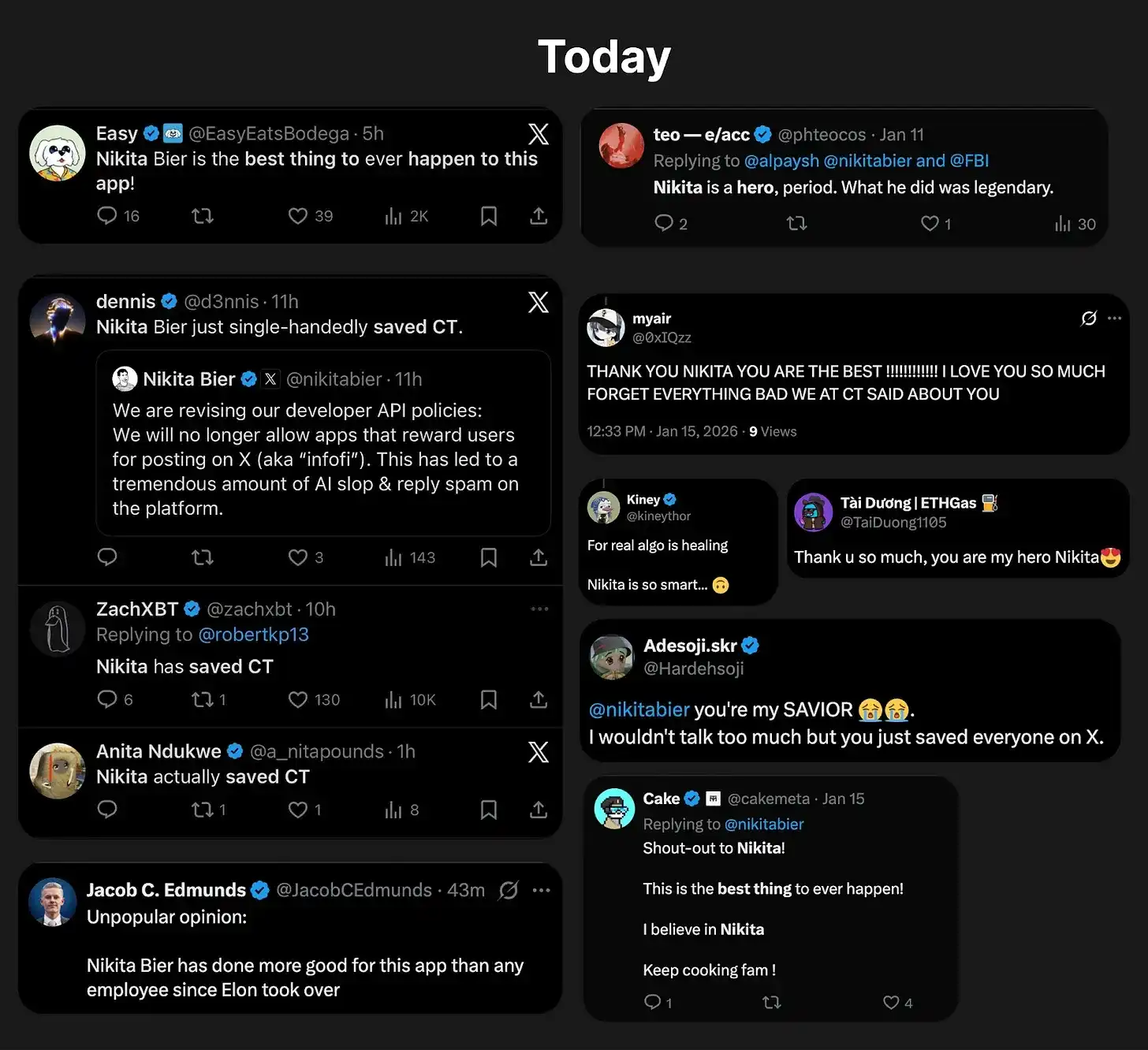
  1. L'ironie de la décentralisation : De nombreux projets Web3 dépendaient profondément de la plateforme X centralisée, et une seule décision de X a suffi à détruire tout le système.
  2. Les limites de la conception incitative : Le mécanisme de récompense a réussi à attirer de nombreux participants, mais il manquait une méthode efficace pour contrôler la qualité du contenu. La prolifération de contenu spam a donné à la plateforme une raison évidente d'intervenir.
Source : X(@nikitabier)

Cela signifie-t-il que la route d'InfoFi est terminée ?

Pas tout à fait. Une minorité de projets ayant trouvé leur « adéquation produit-marché » pourraient survivre en changeant leur forme commerciale. Ils pourraient se tourner vers l'expansion multi-plateformes, organiser des événements plus sélectifs ou se transformer en gestion de type MCN.

InfoFi 2.0 pourrait devenir plus petit, plus contrôlé et plus axé sur la qualité du contenu. Il passerait d'une plateforme ouverte et sans permission à un réseau professionnel soigneusement vérifié, dont la forme se rapprocherait davantage d'une plateforme de marketing intégré combinant des efforts GTM locaux et des composants comme la publicité hors ligne.

Cependant, le problème fondamental demeure. Joel Mun de Tiger Research House souligne : une fois les mécanismes de récompense introduits, les participants cherchent inévitablement à exploiter les failles du système, ce qui rend la conception d'une structure d'incitation équitable extrêmement difficile. Ce comportement spéculatif génère du contenu de faible qualité et crée une boucle de rétroaction négative susceptible de détruire la plateforme.

De plus, le chercheur David soulève une question plus fondamentale : il estime que le maintien de la valeur des jetons InfoFi reposait davantage par le passé sur l'attente d'un airdrop de staking et la croyance en un certain récit, plutôt que sur les performances réelles de la plateforme. Aujourd'hui, ces deux éléments ont perdu de leur pertinence. Cela soulève une question directe : pourquoi les investisseurs achèteraient-ils à l'avenir des jetons InfoFi ?

Pour qu'InfoFi 2.0 puisse véritablement survivre, ces questions doivent recevoir des réponses claires et convaincantes. Si un projet ne parvient pas à aligner ses intérêts avec ceux des détenteurs de jetons, il ne pourra pas atteindre une véritable durabilité.

Lien vers l'article original

Related Questions

QQuel a été l'impact immédiat de la décision de X (anciennement Twitter) sur l'écosystème InfoFi ?

ALa décision de X a provoqué un effondrement quasi total de l'écosystème InfoFi en seulement trois jours. La plateforme a interdit les applications qui récompensent les utilisateurs pour leurs publications, ce qui a entraîné une chute brutale de la valeur des jetons comme $KAITO et a exposé la vulnérabilité des projets Web3 dépendant excessivement d'une plateforme centralisée.

QQuelles sont les cinq options de transformation identifiées pour un projet InfoFi comme Kaito ?

ALes cinq options sont : 1) Arrêt complet des opérations. 2) Transition vers une plateforme de récompenses basée sur les primes (bounty). 3) Adoption d'un modèle de parrainage à la coréenne (comme Revu). 4) Expansion multi-plateformes (YouTube, TikTok, etc.). 5) Évolution vers un modèle de gestion des KOL de type MCN (Multi-Channel Network).

QQuel est le principal défi fondamental auquel l'écosystème InfoFi 2.0 doit faire face pour survivre ?

ALe défi fondamental est de concevoir un système d'incitation équitable qui récompense la qualité du contenu sans encourager les abus, et de démontrer la valeur intrinsèque réelle de son jeton au-delà de simples promesses d'airdrop ou de narratives spéculatives.

QEn quoi le modèle de parrainage 'style coréen' diffère-t-il du système de primes (bounty) ?

ALe modèle coréen (comme Revu) fonctionne sur une logique de 'sélection puis gestion' : les projets choisissent à l'avance les KOLs appropriés qui sont ensuite rémunérés pour un contenu conforme à des directives précises, minimisant ainsi le travail non récompensé. Le système de bounty suit une logique de 'soumission puis examen', où les créateurs soumettent un contenu sans garantie de paiement s'il est rejeté, ce qui peut décourager les créateurs de qualité.

QPourquoi la dépendance à l'égard de X était-elle un problème pour les projets InfoFi, et quelle leçon en tire le Web3 ?

ACette dépendance a révélé la fragilité structurelle de projets prônant la décentralisation mais reposant entièrement sur une plateforme centralisée qui peut, par une seule décision unilatérale, anéantir tout un secteur. La leçon pour le Web3 est la nécessité impérative de réduire cette dépendance envers des tiers centralisés et de construire des écosystèmes véritablement résilients et distribués.

Related Reads

Uncovering the Truth About Agent Commerce, Payments, and Infrastructure

Decoding Agent Commerce, Payments, and Infrastructure: The Reality Over the past year, I've been building infrastructure for the Agent economy, engaging with major players like Stripe, Visa, Coinbase, Google, and dozens of startups. A clear conclusion emerges: true, large-scale demand does not yet exist. Startups face structural challenges. Data points illustrate this gap. Stripe's Agent commerce platform has over 1,000 merchants but only single-digit transacting agents. Visa's Agent payment token requires 9-month KYC and a $250M revenue threshold, accessible only to giants like Amazon. On-chain analysis reveals actual daily Agent transaction volume is around $17k, half of which are test transactions. The article analyzes four potential markets: **1. Agent-to-Merchant (A2M):** Current AI shopping UX is often inferior to traditional e-commerce for visual, comparison-heavy purchases (clothing, electronics). Chat interfaces are a step back. Real merchant interest is defensive "Agent Engine Optimization," fearing future obsolescence, not current demand. Potential exists in high-frequency, low-decision purchases (e.g., food delivery) or simplifying terrible UX (complex checkouts, non-native shoppers), but these require massive consumer distribution channels dominated by giants like DoorDash and Amazon. **2. Agent-to-API (A2A):** Developers already have subscriptions and billing for core APIs (compute, data). The argument for micro-payments via crypto for sub-dollar API calls is addressed by pre-paid balances today. The deeper issue is supplier resistance; major SaaS firms rely on enterprise contracts, not fractional cent pricing. Opportunity lies in the long tail of niche services, but this is a smaller market catering to developers, a historically low-paying group. **3. Agent-to-Agent (A2A):** This remains a theoretical long-term vision with near-zero current transaction volume. It involves unique challenges: discovery, trust, negotiation, dispute resolution. When it materializes, it will require a fundamentally new settlement infrastructure for high-speed, variable-value, multi-party transactions. It's a real long-term bet, but not the current market. **4. Agent-to-Finance (A2F):** This is the only category with existing, paying demand. Integrating AI into financial workflows (trading, portfolio management) is a natural evolution and enables new capabilities like autonomous rebalancing. However, competition favors incumbents with regulatory licenses, compliance infrastructure, and existing client relationships. **The Real Issue:** Why is infrastructure still being built? Incumbents can afford long-term bets, and payment companies see every problem as a nail for their payment hammer. However, payment is just one piece. The core challenge is *coordination*—orchestrating work between Agents and humans, verifying outcomes, and settling results. Payment is part of settlement, which is part of coordination. Companies that solve the coordination problem will subsume payments, not the other way around. Startups lack the infinite runway of giants and must find today's real market, which, after a year of exploration, lies outside these four categories—in an area with real, growing, and underserved activity.

marsbit2h ago

Uncovering the Truth About Agent Commerce, Payments, and Infrastructure

marsbit2h ago

Trading

Spot
Futures

Hot Articles

What is SONIC

Sonic: Pioneering the Future of Gaming in Web3 Introduction to Sonic In the ever-evolving landscape of Web3, the gaming industry stands out as one of the most dynamic and promising sectors. At the forefront of this revolution is Sonic, a project designed to amplify the gaming ecosystem on the Solana blockchain. Leveraging cutting-edge technology, Sonic aims to deliver an unparalleled gaming experience by efficiently processing millions of requests per second, ensuring that players enjoy seamless gameplay while maintaining low transaction costs. This article delves into the intricate details of Sonic, exploring its creators, funding sources, operational mechanics, and the timeline of significant events that have shaped its journey. What is Sonic? Sonic is an innovative layer-2 network that operates atop the Solana blockchain, specifically tailored to enhance the existing Solana gaming ecosystem. It accomplishes this through a customised, VM-agnostic game engine paired with a HyperGrid interpreter, facilitating sovereign game economies that roll up back to the Solana platform. The primary goals of Sonic include: Enhanced Gaming Experiences: Sonic is committed to offering lightning-fast on-chain gameplay, allowing players and developers to engage with games at previously unattainable speeds. Atomic Interoperability: This feature enables transactions to be executed within Sonic without the need to redeploy Solana programmes and accounts. This makes the process more efficient and directly benefits from Solana Layer1 services and liquidity. Seamless Deployment: Sonic allows developers to write for Ethereum Virtual Machine (EVM) based systems and execute them on Solana’s SVM infrastructure. This interoperability is crucial for attracting a broader range of dApps and decentralised applications to the platform. Support for Developers: By offering native composable gaming primitives and extensible data types - dining within the Entity-Component-System (ECS) framework - game creators can craft intricate business logic with ease. Overall, Sonic's unique approach not only caters to players but also provides an accessible and low-cost environment for developers to innovate and thrive. Creator of Sonic The information regarding the creator of Sonic is somewhat ambiguous. However, it is known that Sonic's SVM is owned by the company Mirror World. The absence of detailed information about the individuals behind Sonic reflects a common trend in several Web3 projects, where collective efforts and partnerships often overshadow individual contributions. Investors of Sonic Sonic has garnered considerable attention and support from various investors within the crypto and gaming sectors. Notably, the project raised an impressive $12 million during its Series A funding round. The round was led by BITKRAFT Ventures, with other notable investors including Galaxy, Okx Ventures, Interactive, Big Brain Holdings, and Mirana. This financial backing signifies the confidence that investment foundations have in Sonic’s potential to revolutionise the Web3 gaming landscape, further validating its innovative approaches and technologies. How Does Sonic Work? Sonic utilises the HyperGrid framework, a sophisticated parallel processing mechanism that enhances its scalability and customisability. Here are the core features that set Sonic apart: Lightning Speed at Low Costs: Sonic offers one of the fastest on-chain gaming experiences compared to other Layer-1 solutions, powered by the scalability of Solana’s virtual machine (SVM). Atomic Interoperability: Sonic enables transaction execution without redeployment of Solana programmes and accounts, effectively streamlining the interaction between users and the blockchain. EVM Compatibility: Developers can effortlessly migrate decentralised applications from EVM chains to the Solana environment using Sonic’s HyperGrid interpreter, increasing the accessibility and integration of various dApps. Ecosystem Support for Developers: By exposing native composable gaming primitives, Sonic facilitates a sandbox-like environment where developers can experiment and implement business logic, greatly enhancing the overall development experience. Monetisation Infrastructure: Sonic natively supports growth and monetisation efforts, providing frameworks for traffic generation, payments, and settlements, thereby ensuring that gaming projects are not only viable but also sustainable financially. Timeline of Sonic The evolution of Sonic has been marked by several key milestones. Below is a brief timeline highlighting critical events in the project's history: 2022: The Sonic cryptocurrency was officially launched, marking the beginning of its journey in the Web3 gaming arena. 2024: June: Sonic SVM successfully raised $12 million in a Series A funding round. This investment allowed Sonic to further develop its platform and expand its offerings. August: The launch of the Sonic Odyssey testnet provided users with the first opportunity to engage with the platform, offering interactive activities such as collecting rings—a nod to gaming nostalgia. October: SonicX, an innovative crypto game integrated with Solana, made its debut on TikTok, capturing the attention of over 120,000 users within a short span. This integration illustrated Sonic’s commitment to reaching a broader, global audience and showcased the potential of blockchain gaming. Key Points Sonic SVM is a revolutionary layer-2 network on Solana explicitly designed to enhance the GameFi landscape, demonstrating great potential for future development. HyperGrid Framework empowers Sonic by introducing horizontal scaling capabilities, ensuring that the network can handle the demands of Web3 gaming. Integration with Social Platforms: The successful launch of SonicX on TikTok displays Sonic’s strategy to leverage social media platforms to engage users, exponentially increasing the exposure and reach of its projects. Investment Confidence: The substantial funding from BITKRAFT Ventures, among others, emphasizes the robust backing Sonic has, paving the way for its ambitious future. In conclusion, Sonic encapsulates the essence of Web3 gaming innovation, striking a balance between cutting-edge technology, developer-centric tools, and community engagement. As the project continues to evolve, it is poised to redefine the gaming landscape, making it a notable entity for gamers and developers alike. As Sonic moves forward, it will undoubtedly attract greater interest and participation, solidifying its place within the broader narrative of blockchain gaming.

1.6k Total ViewsPublished 2024.04.04Updated 2024.12.03

What is SONIC

What is $S$

Understanding SPERO: A Comprehensive Overview Introduction to SPERO As the landscape of innovation continues to evolve, the emergence of web3 technologies and cryptocurrency projects plays a pivotal role in shaping the digital future. One project that has garnered attention in this dynamic field is SPERO, denoted as SPERO,$$s$. This article aims to gather and present detailed information about SPERO, to help enthusiasts and investors understand its foundations, objectives, and innovations within the web3 and crypto domains. What is SPERO,$$s$? SPERO,$$s$ is a unique project within the crypto space that seeks to leverage the principles of decentralisation and blockchain technology to create an ecosystem that promotes engagement, utility, and financial inclusion. The project is tailored to facilitate peer-to-peer interactions in new ways, providing users with innovative financial solutions and services. At its core, SPERO,$$s$ aims to empower individuals by providing tools and platforms that enhance user experience in the cryptocurrency space. This includes enabling more flexible transaction methods, fostering community-driven initiatives, and creating pathways for financial opportunities through decentralised applications (dApps). The underlying vision of SPERO,$$s$ revolves around inclusiveness, aiming to bridge gaps within traditional finance while harnessing the benefits of blockchain technology. Who is the Creator of SPERO,$$s$? The identity of the creator of SPERO,$$s$ remains somewhat obscure, as there are limited publicly available resources providing detailed background information on its founder(s). This lack of transparency can stem from the project's commitment to decentralisation—an ethos that many web3 projects share, prioritising collective contributions over individual recognition. By centring discussions around the community and its collective goals, SPERO,$$s$ embodies the essence of empowerment without singling out specific individuals. As such, understanding the ethos and mission of SPERO remains more important than identifying a singular creator. Who are the Investors of SPERO,$$s$? SPERO,$$s$ is supported by a diverse array of investors ranging from venture capitalists to angel investors dedicated to fostering innovation in the crypto sector. The focus of these investors generally aligns with SPERO's mission—prioritising projects that promise societal technological advancement, financial inclusivity, and decentralised governance. These investor foundations are typically interested in projects that not only offer innovative products but also contribute positively to the blockchain community and its ecosystems. The backing from these investors reinforces SPERO,$$s$ as a noteworthy contender in the rapidly evolving domain of crypto projects. How Does SPERO,$$s$ Work? SPERO,$$s$ employs a multi-faceted framework that distinguishes it from conventional cryptocurrency projects. Here are some of the key features that underline its uniqueness and innovation: Decentralised Governance: SPERO,$$s$ integrates decentralised governance models, empowering users to participate actively in decision-making processes regarding the project’s future. This approach fosters a sense of ownership and accountability among community members. Token Utility: SPERO,$$s$ utilises its own cryptocurrency token, designed to serve various functions within the ecosystem. These tokens enable transactions, rewards, and the facilitation of services offered on the platform, enhancing overall engagement and utility. Layered Architecture: The technical architecture of SPERO,$$s$ supports modularity and scalability, allowing for seamless integration of additional features and applications as the project evolves. This adaptability is paramount for sustaining relevance in the ever-changing crypto landscape. Community Engagement: The project emphasises community-driven initiatives, employing mechanisms that incentivise collaboration and feedback. By nurturing a strong community, SPERO,$$s$ can better address user needs and adapt to market trends. Focus on Inclusion: By offering low transaction fees and user-friendly interfaces, SPERO,$$s$ aims to attract a diverse user base, including individuals who may not previously have engaged in the crypto space. This commitment to inclusion aligns with its overarching mission of empowerment through accessibility. Timeline of SPERO,$$s$ Understanding a project's history provides crucial insights into its development trajectory and milestones. Below is a suggested timeline mapping significant events in the evolution of SPERO,$$s$: Conceptualisation and Ideation Phase: The initial ideas forming the basis of SPERO,$$s$ were conceived, aligning closely with the principles of decentralisation and community focus within the blockchain industry. Launch of Project Whitepaper: Following the conceptual phase, a comprehensive whitepaper detailing the vision, goals, and technological infrastructure of SPERO,$$s$ was released to garner community interest and feedback. Community Building and Early Engagements: Active outreach efforts were made to build a community of early adopters and potential investors, facilitating discussions around the project’s goals and garnering support. Token Generation Event: SPERO,$$s$ conducted a token generation event (TGE) to distribute its native tokens to early supporters and establish initial liquidity within the ecosystem. Launch of Initial dApp: The first decentralised application (dApp) associated with SPERO,$$s$ went live, allowing users to engage with the platform's core functionalities. Ongoing Development and Partnerships: Continuous updates and enhancements to the project's offerings, including strategic partnerships with other players in the blockchain space, have shaped SPERO,$$s$ into a competitive and evolving player in the crypto market. Conclusion SPERO,$$s$ stands as a testament to the potential of web3 and cryptocurrency to revolutionise financial systems and empower individuals. With a commitment to decentralised governance, community engagement, and innovatively designed functionalities, it paves the way toward a more inclusive financial landscape. As with any investment in the rapidly evolving crypto space, potential investors and users are encouraged to research thoroughly and engage thoughtfully with the ongoing developments within SPERO,$$s$. The project showcases the innovative spirit of the crypto industry, inviting further exploration into its myriad possibilities. While the journey of SPERO,$$s$ is still unfolding, its foundational principles may indeed influence the future of how we interact with technology, finance, and each other in interconnected digital ecosystems.

54 Total ViewsPublished 2024.12.17Updated 2024.12.17

What is $S$

What is AGENT S

Agent S: The Future of Autonomous Interaction in Web3 Introduction In the ever-evolving landscape of Web3 and cryptocurrency, innovations are constantly redefining how individuals interact with digital platforms. One such pioneering project, Agent S, promises to revolutionise human-computer interaction through its open agentic framework. By paving the way for autonomous interactions, Agent S aims to simplify complex tasks, offering transformative applications in artificial intelligence (AI). This detailed exploration will delve into the project's intricacies, its unique features, and the implications for the cryptocurrency domain. What is Agent S? Agent S stands as a groundbreaking open agentic framework, specifically designed to tackle three fundamental challenges in the automation of computer tasks: Acquiring Domain-Specific Knowledge: The framework intelligently learns from various external knowledge sources and internal experiences. This dual approach empowers it to build a rich repository of domain-specific knowledge, enhancing its performance in task execution. Planning Over Long Task Horizons: Agent S employs experience-augmented hierarchical planning, a strategic approach that facilitates efficient breakdown and execution of intricate tasks. This feature significantly enhances its ability to manage multiple subtasks efficiently and effectively. Handling Dynamic, Non-Uniform Interfaces: The project introduces the Agent-Computer Interface (ACI), an innovative solution that enhances the interaction between agents and users. Utilizing Multimodal Large Language Models (MLLMs), Agent S can navigate and manipulate diverse graphical user interfaces seamlessly. Through these pioneering features, Agent S provides a robust framework that addresses the complexities involved in automating human interaction with machines, setting the stage for myriad applications in AI and beyond. Who is the Creator of Agent S? While the concept of Agent S is fundamentally innovative, specific information about its creator remains elusive. The creator is currently unknown, which highlights either the nascent stage of the project or the strategic choice to keep founding members under wraps. Regardless of anonymity, the focus remains on the framework's capabilities and potential. Who are the Investors of Agent S? As Agent S is relatively new in the cryptographic ecosystem, detailed information regarding its investors and financial backers is not explicitly documented. The lack of publicly available insights into the investment foundations or organisations supporting the project raises questions about its funding structure and development roadmap. Understanding the backing is crucial for gauging the project's sustainability and potential market impact. How Does Agent S Work? At the core of Agent S lies cutting-edge technology that enables it to function effectively in diverse settings. Its operational model is built around several key features: Human-like Computer Interaction: The framework offers advanced AI planning, striving to make interactions with computers more intuitive. By mimicking human behaviour in tasks execution, it promises to elevate user experiences. Narrative Memory: Employed to leverage high-level experiences, Agent S utilises narrative memory to keep track of task histories, thereby enhancing its decision-making processes. Episodic Memory: This feature provides users with step-by-step guidance, allowing the framework to offer contextual support as tasks unfold. Support for OpenACI: With the ability to run locally, Agent S allows users to maintain control over their interactions and workflows, aligning with the decentralised ethos of Web3. Easy Integration with External APIs: Its versatility and compatibility with various AI platforms ensure that Agent S can fit seamlessly into existing technological ecosystems, making it an appealing choice for developers and organisations. These functionalities collectively contribute to Agent S's unique position within the crypto space, as it automates complex, multi-step tasks with minimal human intervention. As the project evolves, its potential applications in Web3 could redefine how digital interactions unfold. Timeline of Agent S The development and milestones of Agent S can be encapsulated in a timeline that highlights its significant events: September 27, 2024: The concept of Agent S was launched in a comprehensive research paper titled “An Open Agentic Framework that Uses Computers Like a Human,” showcasing the groundwork for the project. October 10, 2024: The research paper was made publicly available on arXiv, offering an in-depth exploration of the framework and its performance evaluation based on the OSWorld benchmark. October 12, 2024: A video presentation was released, providing a visual insight into the capabilities and features of Agent S, further engaging potential users and investors. These markers in the timeline not only illustrate the progress of Agent S but also indicate its commitment to transparency and community engagement. Key Points About Agent S As the Agent S framework continues to evolve, several key attributes stand out, underscoring its innovative nature and potential: Innovative Framework: Designed to provide an intuitive use of computers akin to human interaction, Agent S brings a novel approach to task automation. Autonomous Interaction: The ability to interact autonomously with computers through GUI signifies a leap towards more intelligent and efficient computing solutions. Complex Task Automation: With its robust methodology, it can automate complex, multi-step tasks, making processes faster and less error-prone. Continuous Improvement: The learning mechanisms enable Agent S to improve from past experiences, continually enhancing its performance and efficacy. Versatility: Its adaptability across different operating environments like OSWorld and WindowsAgentArena ensures that it can serve a broad range of applications. As Agent S positions itself in the Web3 and crypto landscape, its potential to enhance interaction capabilities and automate processes signifies a significant advancement in AI technologies. Through its innovative framework, Agent S exemplifies the future of digital interactions, promising a more seamless and efficient experience for users across various industries. Conclusion Agent S represents a bold leap forward in the marriage of AI and Web3, with the capacity to redefine how we interact with technology. While still in its early stages, the possibilities for its application are vast and compelling. Through its comprehensive framework addressing critical challenges, Agent S aims to bring autonomous interactions to the forefront of the digital experience. As we move deeper into the realms of cryptocurrency and decentralisation, projects like Agent S will undoubtedly play a crucial role in shaping the future of technology and human-computer collaboration.

717 Total ViewsPublished 2025.01.14Updated 2025.01.14

What is AGENT S

Discussions

Welcome to the HTX Community. Here, you can stay informed about the latest platform developments and gain access to professional market insights. Users' opinions on the price of S (S) are presented below.

活动图片













