Altcoin: Làn sóng ETF bùng nổ – XRP, SOL, LTC, HBAR, DOGE, LINK và sự xuất hiện của cơ hội mới

bitcoinistPublished on 2025-12-08Last updated on 2025-12-08

Abstract

Trong bối cảnh làn sóng ETF altcoin bùng nổ, XRP và SOL dẫn đầu với dòng vốn lần lượt là 874 triệu USD và 682 triệu USD. Các ETF mới cho LTC, HBAR, DOGE và LINK cũng đã gia nhập thị trường, thu hút tổng cộng 133,46 triệu USD. Mặc dù phát triển mạnh, các quỹ này vẫn còn khá nhỏ so với ETF Bitcoin và Ethereum. Đáng chú ý, Bitcoin Hyper (HYPER) nổi lên như một altcoin tiềm năng, huy động gần 29 triệu USD từ presale, kết hợp tốc độ Solana và bảo mật Bitcoin để mở ra cơ hội mới cho BTC trong DeFi.

Trong khi mọi ánh mắt đổ dồn vào các ETF Solana (SOL) với tổng dòng vốn vào khoảng $682 triệu, thì ETF XRP âm thầm vượt mặt với $874 triệu — dù các sản phẩm SOL ra mắt trước. Cùng lúc đó, một loạt ETF altcoin mới liên quan đến LTC, HBAR, DOGE và LINK cũng đã chính thức gia nhập cuộc chơi, mỗi quỹ đều ghi nhận dòng vốn khiêm tốn nhưng ổn định kể từ khi ra mắt.

Thực đơn “Altcoin Buffet” chính thức xuất hiện trên Wall Street

Bảy ETF Solana riêng biệt đã tạo ra $618,62 triệu dòng vốn ròng kể từ khi niêm yết, và với $915,08 triệu tổng tài sản quản lý, các quỹ này hiện chiếm khoảng 1,15% vốn hóa Solana.

Trong khi đó, XRP đã thu hút $874,28 triệu, theo dữ liệu từ sosovalue.com.

Chỉ có bốn ETF XRP xuất hiện trên bảng điều khiển của nền tảng này — do Grayscale, Franklin Templeton, Canary và Bitwise quản lý. ETF của Canary, với mã XRPC, dẫn đầu với $357 triệu dòng vốn kể từ ngày đầu tiên. Riêng ngày hôm qua, cả nhóm thu hút $50,27 triệu, trong đó Grayscale GXRP đóng góp lớn nhất.

Tổng cộng, bốn ETF này đang nắm giữ $906,46 triệu giá trị XRP, tương đương 0,68% vốn hóa của XRP.

Đối với các nhà đầu tư muốn tiếp cận LINK, HBAR, LTC và DOGE, những ETF mới ra mắt này cũng đã ghi nhận tổng cộng $133,46 triệu dòng vốn ròng. Riêng DOGE có hai ETF — Grayscale GDOG và Bitwise BWOW — thu hút $2,85 triệu.

ETF Floodgates Open: Altcoin ngập tràn lựa chọn

Grayscale GLNK đã thu hút khoảng $40,90 triệu, trong khi LTCC của Canary (theo dõi Litecoin) thu về $7,67 triệu. ETF HBAR của Canary (HBR) đã ghi nhận $82,04 triệu dòng vốn ròng.

Khi nhà đầu tư có thể dễ dàng “nhảy giữa các quỹ”, thị trường nhiều khả năng sẽ biến động mạnh hơn khi dòng vốn luân chuyển liên tục.

Và mặc dù XRP và SOL ETF đang bám đuổi sát sao nhau, cả hai vẫn còn rất xa so với BTC và ETH ETF — những quỹ đã được triển khai sớm hơn một năm và đang tiến gần mốc hai năm hoạt động.

Khi ngày càng nhiều ETF altcoin được tung ra thị trường, dòng vốn sẽ tiếp tục phân tán. Thách thức lớn nhất sẽ là liệu sự hào hứng của nhà đầu tư có theo kịp tốc độ mở rộng của danh sách quỹ hay không. Hiện tại, các ETF mới đang cạnh tranh quyết liệt với nhau, nhưng hành trình để đạt tới tầm vóc của BTC và ETH ETF vẫn còn rất dài.

Tuy nhiên, sự mở rộng này cho thấy thị trường đang chuyển sang giai đoạn mới — một giai đoạn của sự lựa chọn đa dạng, cạnh tranh mạnh mẽ và dòng vốn mới tràn vào.

Bitcoin Hyper – ứng viên altcoin tiềm năng giữa làn sóng ETF mới

Dù bài toán ETF đang chi phối dòng tiền tổ chức, nhà đầu tư nhỏ lẻ và trung hạn vẫn đang tìm kiếm altcoin tiềm năng có thể bứt phá ngoài phạm vi ETF truyền thống.

Một trong những cái tên ngày càng nổi bật là Bitcoin Hyper (HYPER) — dự án Bitcoin Layer-2 chạy trên Solana Virtual Machine (SVM), tạo ra sự kết hợp giữa tốc độ Solana và bảo mật Bitcoin.

Với gần $29 triệu huy động được từ presale, tổng cung cố định 21 tỷ token, và APY staking 40%, HYPER đang thu hút sự chú ý mạnh mẽ từ cả trader lẫn nhà đầu tư tổ chức nhỏ.

Mô hình này mở ra khả năng giúp lượng BTC “nằm im” có thể tham gia DeFi — điều mà các nhà phân tích coi là một trong những cơ hội tăng trưởng mạnh nhất ngoài ETF, giúp Bitcoin Hyper trở thành một trong những đồng altcoin tiềm năng đáng theo dõi nhất trong năm tới.

Truy cập Bitcoin Hyper

FAQ 📊

ETF crypto nào đang thu hút dòng vốn lớn nhất hiện tại?
XRP và SOL dẫn đầu trong nhóm altcoin, trong khi BTC và ETH vẫn vượt xa về tổng dòng vốn.

ETF nào mới ra mắt cho nhà đầu tư?
Các ETF gắn với LINK, HBAR, LTC và DOGE vừa được niêm yết, cung cấp thêm lựa chọn cho thị trường.

Tổng dòng vốn vào các ETF altcoin mới là bao nhiêu?
Hơn $133 triệu cho DOGE, HBAR, LINK và LTC — trong khi XRP và SOL cao hơn nhiều do ra mắt sớm hơn.

XRP và SOL ETF so với BTC và ETH ra sao?
Mặc dù đang phát triển mạnh, chúng vẫn còn rất xa mới đạt được quy mô khổng lồ của BTC và ETH ETF.


Trending Cryptos

Related Reads

Low Investment Isn't Apple's Immunity Pass

While Meta and Google face investor scrutiny over ballooning AI capital expenditures, Apple's minimal AI investment has paradoxically become a strength. Its market cap recently reclaimed the global top spot, surpassing $5 trillion. The irony is deep: Apple's own AI efforts have lagged, with "Apple Intelligence" delayed and core talent lost, forcing reliance on partners like Google Gemini and Alibaba's Qianwen. Its Q3 FY2026 (Q2 CY) earnings initially seemed stellar. Revenue hit $109.4B (up 16% YoY), with iPhone and Mac sales, growing 22% and 29% respectively, driving most of the growth. However, the stock fell over 8% post-earnings. The primary concern was a weaker Q4 revenue growth forecast of 9-11%, below expectations, due to looming supply chain constraints. Apple is feeling the indirect cost of the AI boom. Soaring memory and chip prices, fueled by massive data center investments from Microsoft, Amazon, and others, are forcing Apple to raise Mac and iPad prices significantly. The upcoming iPhone launch is also expected to see substantial price hikes. Despite avoiding heavy AI infrastructure spending—its capital expenditures are actually down 28%—Apple cannot escape the industry-wide supply and cost pressures. While Apple's operating cash flow remains robust, its substantial R&D spending (up 32% YoY) has yet to yield major AI breakthroughs. As Tim Cook prepares to step down as CEO, Apple faces a challenging transition: balancing its premium hardware success against the strategic and cost pressures of the AI era it has so far cautiously navigated.

marsbit34m ago

Low Investment Isn't Apple's Immunity Pass

marsbit34m ago

PA Graphics Explanation | One Chart to Understand the Major Web3 Events in August 2026

**PANews Crypto Calendar: Key Web3 Events in August 2026** PANews introduces its revamped crypto calendar, featuring comprehensive coverage, flexible filtering, and easy export options. The market in August will be shaped by multiple key events across macroeconomics, regulation, tokenomics, and project developments: * **Macro & Policy:** Key US economic data releases (July Non-Farm Payrolls, CPI), the Federal Reserve meeting minutes, and the Jackson Hole Economic Symposium will be in focus. On the regulatory front, the US Senate plans to release a new draft of the *CLARITY Act*, while the EU's expanded crypto ban against Belarus comes into effect. * **Token Unlocks:** Significant token unlocks are scheduled for assets including ENA, AVAX, CONX, ZRO, and KAITO, which may influence market volatility. * **Project Updates & Shutdowns:** Several services, including Exchange Art, Ctrl Wallet, Zapper, NFTfi, and Summer.fi, are set to cease operations or undergo major adjustments. Users are advised to manage their assets accordingly. * **Corporate Activity:** Q2 earnings reports from companies like SpaceX, Circle, and Nvidia are due. Unitree Robotics will initiate its IPO subscription on the STAR Market, and Moonshot AI plans to begin a Pre-IPO financing round. * **Industry Events:** Major conferences such as Bitcoin Asia 2026 and the 2026 Digital Expo will take place. The overarching market narrative for August will revolve around macroeconomic expectations, regulatory developments, token unlock schedules, and ongoing industry consolidation.

marsbit44m ago

PA Graphics Explanation | One Chart to Understand the Major Web3 Events in August 2026

marsbit44m ago

Wall Street's Most Famous 'Cassandra' Now Has His Sights Set on Nvidia

Michael Burry, the famed "Big Short" investor, has once again captured Wall Street's attention with a series of short positions against major tech and semiconductor stocks, most notably Nvidia. In late June and July, through his "Cassandra Unchained" newsletter, Burry disclosed short bets against Nvidia, Tesla, Applied Materials, Caterpillar, the SOXX semiconductor ETF, and later, Micron Technology. His core thesis revolves around potential distortions in the AI infrastructure boom, specifically questioning whether extended depreciation schedules (e.g., 6 years vs. a realistic 2-3 years for AI chips) by cloud giants like Microsoft and Google artificially inflate profits. He also raises concerns about possible "off-balance-sheet circular financing," where chip demand might be propped up by vendor-backed funding to clients. Nvidia's stock experienced volatility following these disclosures, briefly dipping but largely holding near Burry's reported entry points, leaving his positions roughly flat or slightly underwater as of late July. This move is part of a pattern for Burry, whose track record since his legendary 2008 bet is mixed. He has faced notable losses, such as on Tesla in 2021, while scoring on broader market turns like the 2020 pandemic crash. His methodology focuses intensely on free cash flow and scrutinizing original financial documents to spot overvaluation and structural risks, but it often struggles with timing the market. The article contrasts Burry's stance with other prominent investors. Steve Eisman, another "Big Short" figure, is not shorting Nvidia, citing strong fundamentals but expressing nervousness about sustainability. Jim Chanos agrees with the broad "accounting mismatch" concern—comparing it to the dot-com bubble—but targets financial leverage in private equity firms rather than the chip stocks themselves. While Nvidia's short interest remains relatively low at 1.3-1.4% of float, the massive stock size means absolute short losses have been significant, exceeding $5 billion earlier this year. The piece concludes that for ordinary investors, the key takeaway is not replicating specific short bets but learning from the critical frameworks these investors use: questioning rosy accounting, identifying structural vulnerabilities, and maintaining skepticism during market euphoria, even if pinpointing the exact catalyst for a downturn remains elusive.

marsbit1h ago

Wall Street's Most Famous 'Cassandra' Now Has His Sights Set on Nvidia

marsbit1h ago

Weekly Selection丨Epic Stock Market Volatility, Changxin Tech's IPO Reshapes Storage Landscape, Saylor Aims to Re-Anchor STRC Around September 8th

PANews Weekly Digest: Market Turmoil, Tech Breakthroughs, and Crypto Developments. The week saw significant volatility across global markets. South Korea's KOSPI index experienced extreme turbulence, including multiple trading halts, largely driven by sharp declines in AI hardware stocks like SK Hynix. In contrast, China's Changxin Xinqiao (CXC) achieved a landmark IPO with a market cap surpassing 4 trillion yuan, marking a major success for the domestic DRAM industry after a decade of losses. In the crypto and Web3 space, several key narratives emerged. AI is driving demand for new infrastructure, with projects like AI agent wallets and programmable payments gaining traction, attracting interest from firms like Coinbase. The Bitcoin mining sector is pivoting, with companies like MARA focusing on energy management as electricity becomes a core AI-era asset. Meanwhile, the RWA (Real World Assets) sector faces a "utilization puzzle," with hundreds of billions in on-chain assets remaining dormant. Notable market movements included a historic single-day surge of over 17% for the KOSPI index and a significant migration of $16.5 billion in staked ETH within the Lido ecosystem. Michael Saylor announced a target to re-peg the STRC stablecoin around September 8th. Other highlights include discussions on Ethereum's ambitious 2030 roadmap for scaling and privacy, analysis showing high protocol revenues not always translating to token price gains, and warnings from Citi about potential extreme commodity price shocks by late 2026.

marsbit1h ago

Weekly Selection丨Epic Stock Market Volatility, Changxin Tech's IPO Reshapes Storage Landscape, Saylor Aims to Re-Anchor STRC Around September 8th

marsbit1h ago

When the Market Begins to Question AI Capex: A Full Analysis of Q2 Earnings Reports from Five Tech Giants

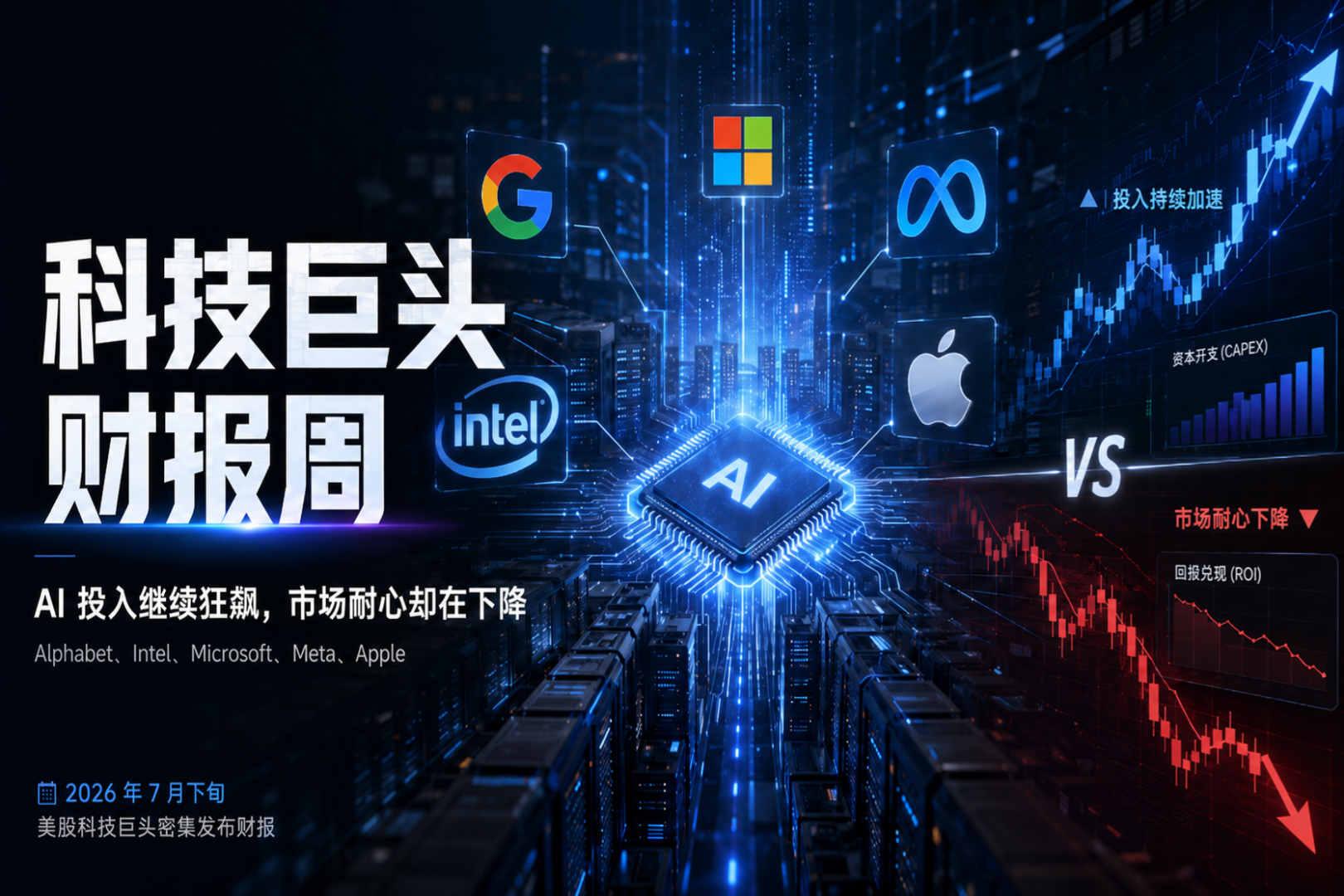
In late July 2026, five major US tech giants—Alphabet, Intel, Microsoft, Meta, and Apple—released their Q2 earnings reports. While all companies exceeded revenue and profit expectations, driven by strong AI-related business growth, investor reactions diverged sharply due to concerns over escalating AI capital expenditures (capex) and their impact on free cash flow. Alphabet reported strong revenue growth and a surging cloud business, but its stock fell after announcing a doubled year-on-year capex and negative quarterly free cash flow for the first time. Intel posted its strongest revenue growth in over 15 years, but its stock experienced volatile trading after significantly raising its full-year capex guidance. Microsoft saw its stock surge after beating estimates and, crucially, lowering its capex forecast while projecting positive free cash flow. Meta faced the most severe sell-off as its profits declined despite revenue beats, with free cash flow plunging over 90% and its capex guidance raised. Apple reported record June-quarter results, but its stock plummeted after providing Q4 revenue guidance that fell short of expectations, citing supply chain constraints and forex headwinds. The overall takeaway is that the market's focus has shifted from validating AI demand to scrutinizing the timeline for returns on massive AI investments. Companies demonstrating a clearer path to managing capex and preserving free cash flow, like Microsoft, were rewarded, while those signaling continued aggressive spending faced investor skepticism.

Odaily星球日报1h ago

When the Market Begins to Question AI Capex: A Full Analysis of Q2 Earnings Reports from Five Tech Giants

Odaily星球日报1h ago

Trading

Spot

Hot Articles

What is DOGE M

Doge Matrix ($doge m): The New Breed of Community-Driven Cryptocurrency Introduction In the ever-evolving landscape of cryptocurrency, new projects constantly emerge, each aiming to capture the interest of investors and enthusiasts alike. One of the latest entrants to this domain is Doge Matrix, represented by the ticker symbol $doge m. This project has attracted attention thanks to its roots in the popular meme culture surrounding Dogecoin, establishing its place within the web3 space. This article aims to provide a comprehensive analysis of Doge Matrix, covering its overview, creator, investors, functionality, timeline, and notable aspects. What is Doge Matrix ($doge m)? Doge Matrix is a community-driven cryptocurrency project that seemingly builds upon the widespread appeal of Dogecoin, a digital currency known for its Shiba Inu mascot and its meme origins. While the overarching objectives of Doge Matrix are not extensively defined, it is characterized by a commitment to harnessing community involvement and support. Unlike traditional cryptocurrencies that often emphasize utility or intrinsic value through underlying technologies, Doge Matrix positions itself within a space that embraces the cultural phenomenon of cryptocurrencies, particularly appealing to those who resonate with the ethos of meme-based assets. Drawing on the strengths of the Dogecoin community, Doge Matrix operates as part of a broader ecosystem, inviting participation and engagement from users who share an interest in cryptocurrency and the digital landscape. Who is the Creator of Doge Matrix ($doge m)? The identity of the creator of Doge Matrix remains unknown. This lack of transparency is not an uncommon occurrence in the cryptocurrency space, where some projects are launched without revealing the identities of their founders. The absence of information regarding the founding team can raise questions among potential investors about the project’s accountability and direction. Who are the Investors of Doge Matrix ($doge m)? As it stands, there is no publicly available information detailing the investors or investment foundations that back Doge Matrix. The project appears to rely primarily on community support rather than institutional investment. This model aligns with the community-driven nature of the initiative, fostering an environment where the direction of the project is shaped by its participants rather than being dictated by a select few financial backers. How Does Doge Matrix ($doge m) Work? The specifics regarding the operational mechanisms of Doge Matrix are somewhat vague, reflecting a broader trend of projects in the meme coin space where innovative functionalities are not always clearly articulated. Nonetheless, Doge Matrix seems designed to tap into the existing cryptocurrency ecosystem by encouraging user participation while tapping into the familiar cultural references associated with Dogecoin. Its potentially unique characteristics derive from community interactions rather than technological advancements, emphasizing shared experiences and collaboration among token holders. While the exact innovations have not been explicitly outlined, the project appears to create a space where community members can engage, share ideas, and propel the project's potential forward. Timeline of Doge Matrix ($doge m) Reflecting on the project’s timeline reveals notable events that have defined its journey thus far: November 25, 2024: Doge Matrix reached its all-time high value, marking a significant milestone in its early history. January 1, 2025: Conversely, Doge Matrix hit its all-time low value, illustrating the volatility often associated with cryptocurrencies, especially in the early stages of a project's lifecycle. Ongoing: The project continues to be actively traded and supported by its community, although specific future milestones or objectives have yet to be disclosed. Key Points About Doge Matrix ($doge m) Community Focus At the heart of Doge Matrix is a commitment to community engagement. The project thrives on the premise of collaboration and shared objectives among its members, emphasizing the importance of collective effort. Unlike centralized projects that often have a defined leadership structure, Doge Matrix at present showcases a more fluid approach to governance, where every community member's voice matters. Volatility The cryptocurrency market is notorious for its volatility, and Doge Matrix is no exception. Its price history reflects significant fluctuations between high and low values, which is typical of many new cryptocurrencies but underscores the risks associated with investment in emerging tokens. Lack of Detailed Information One of the most striking features about Doge Matrix is the scarcity of detailed information regarding its technological underpinnings and operational mechanisms. This ambiguity necessitates that potential investors conduct thorough due diligence before engaging with the project. Conclusion In summary, Doge Matrix ($doge m) illustrates a new wave of cryptocurrency projects that lean heavily on community engagement and cultural relevance. While lacking in certain specifics—such as clear leadership, defined objectives, and detailed functionality—the project has managed to generate interest within the crypto community, leveraging the established appeal of meme culture. As with any investment in the cryptocurrency space, understanding the inherent risks and conducting comprehensive research is essential for potential participants. Doge Matrix stands as a reminder of the dynamic, sometimes unpredictable nature of the crypto industry, marked by constant evolution and enthusiasm for community-driven initiatives.

4.2k Total ViewsPublished 2025.02.03Updated 2025.02.03

What is DOGE M

Discussions

Welcome to the HTX Community. Here, you can stay informed about the latest platform developments and gain access to professional market insights. Users' opinions on the price of DOGE (DOGE) are presented below.

活动图片