代币融资新时代,美国合规融资的里程碑

深潮Published on 2025-11-12Last updated on 2025-11-13

币圈的资产发行,正在进入一个合规的新时代。

撰文:Cookie

Monad 将在 Coinbase 上进行 ICO 是本周的热门话题。市场除了讨论以 25 亿美元 FDV 进行发售是否值得参与外,作为 Coinbase 首次进行的 ICO,其「合规程度」也引起了广泛讨论,被认为是币圈合规化的标志性事件。

稳定币 USDC 发行商 Circle 在近日发布的第三季度财报中提到,正在探索在 Arc Network 上发行原生代币的可能性。Coinbase 也在近 2 年后于今年 10 月由 Base 链联合创始人 Jesse Pollak 在采访时表示,会推出 Base 代币。种种迹象表示,币圈的资产发行,正在进入一个合规的新时代。

Coinbase 历史首次 ICO,Monad 都披露了什么?

为了这场 Coinbase 历史首次的 ICO,Monad 基金会子公司 MF Services (BVI), Ltd. 提供了一份长达 18 页的披露文件。这份文件明晰了 Monad 的法律架构、融资详情以及做市方案,并有着长达 8 页的投资风险提示。相比于过去的 ICO,这是绝无仅有的,并且有着够大的进步意义。

在法律架构层面,Monad 明晰了如下内容:

- Monad 代币的销售方为 Monad 基金会的子公司 MF Services (BVI) Ltd.,Monad 基金会为该公司的唯一董事

- Monad 的 3 位联合创始人分别是 Keone Hon、James Hunsaker 以及 Eunice Giarta。Monad 的核心贡献者是 Monad 基金会以及 Category Labs。

- Category Labs 总部位于美国纽约,负责 Monad 的技术开发,James Hunsaker 是 Category Labs 的首席执行 19 官

- Monad 基金会是一家无成员的开曼群岛基金会,负责包括社区参与、业务开发、开发者和用户教育以及营销服务,Keone Hon 和 Eunice Giarta 是 Monad 基金会的联合总经理。基金会由董事会监督,董事会成员包括 Petrus Basson、Keone Hon 以及 Marc Piano

这些法律架构层面的披露内容为投资者提供更强的保护机制,提升了投资者的问责制和法律追索权。

在融资详情层面,Monad 明晰了如下内容:

- 种子轮前融资:融资额为 1960 万美元,于 2022 年 6 月 至 12 月期间进行

- 种子轮融资:融资额为 2260 万美元,于 2024 年 1 月 至 3 月期间进行

- A 轮融资:融资额为 2.205 亿美元,于 2024 年 3 月 至 8 月期间进行

- 2024 年,Monad 基金会从 Category Labs 获得了 9000 万美元的捐款,用于支付 Monad 网络公开启动前的运营成本。这笔捐款用于 Monad 基金会到 2026 年的预期支出,并且是 Monad Labs 在其各轮融资中筹集的 2.62 亿美元资金的一部分

融资详情的披露避免了过往币圈项目方容易存在的融资虚构以及所导致的错误估值情况。

在做市方案层面,Monad 明晰了如下内容:

- MF Services (BVI) Ltd. 已与 CyantArb、Auros、Galaxy、GSR、Wintermute 五家做市商签订贷款协议,累计出借 1.6 亿枚 MON 代币。其中,Wintermute 的出借期限为 1 年,其余各家为一个月,可按月续签
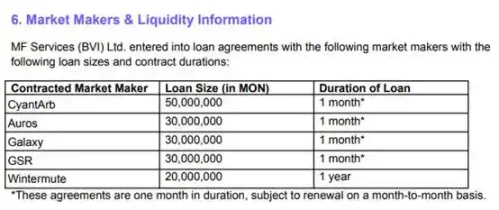
- 由第三方专家(Coinwatch)进行监控,以验证出借代币的使用情况,包括 CyantArb、Auros、Galaxy 和 GSR 的闲置余额

- MF Services (BVI) Ltd. 还可以在一个或多个去中心化交易所(DEX)池中部署高达初始 MON 代币供应总量 0.20% 的初始流动性

- 做市商贷款和初始流动性中的代币包含在代币经济学的生态系统发展分配部分中

这是首次看到币圈项目在 TGE 前如此透明地披露具体的做市方案。结合上面的所有的内容提炼,也是我们首次在币圈看到 ICO 的透明度向传统市场的资产发行靠拢。

ICO 合规的艰难旅程

2017 年,以太坊出现,ERC-20 带来了 ICO 浪潮,项目激增,行业第一次爆发。但也就是在那一年,2017 年 7 月,SEC 第一次发布了关于 ICO 的指导文件。当时,SEC 宣布,只要将任何新加密货币出售给希望获利的投资者,并且是由中心化公司进行的,都将被视为证券,因此必须遵循证券法规。

根据该指南,在这个时间后在美国发生的 ICO 很可能违反证券法规,并有被 SEC 起诉的风险,自指南公布后,被公布的案例已经有多起。而根据 SEC 2018 年的年度报告,仅在这一年,在启动的数十项涉及 ICO 和数字资产的调查中,「许多在 2018 财政年度还未进行」。

2018 年 11 月,SEC 针对未进行适当证券注册而进行 ICO 的行为,首次发布了民事罚款,Paragon(PRG)和 Airfox(AIR)两个项目分别被罚款 25 万美元,此外,还需要将代币注册为证券,并提交定期报告。

2019 年 6 月,加拿大社交媒体公司 Kik Interactive 因为进行 ICO 而深陷与 SEC 的诉讼,为了对抗 SEC,Kik 还成立了名为 crypto.org 的新基金,以筹集足够的应诉费用。

加密历史上最大的两次 ICO,EOS 的 42 亿美元和 Telegram 的 17 亿美元,都曾陷入与 SEC 的法律纠纷中。Block.one 支付 2400 万美元罚金与 SEC 和解,Telegram 就其子公司 TON Issuer 旗下的 Gram 代币发行达成了 12.4 亿美元的和解。12.4 亿美元的 Telegram 和解包括 12.2 亿美元的非法所得和 1850 万美元的民事罚款。

名人和 KOL 也有因涉嫌 ICO 相关问题而遭到 SEC 起诉。著名杀毒软件 McAfee 的创始人 John McAfee 因未披露自己推广 ICO 代币取得收入、加密 KOL Ian Balina 因参与未注册加密货币 ICO 推广均遭到 SEC 起诉。

2019 年 7 月 10 日,SEC 批准了区块链公司 Blockstack PBC 的二级监管 A 级发行,这是符合证券法的首次此类首次发行 (ICO),另一个项目 Props 也在该年 7 月获得了美国证券交易委员会(SEC)的批准。但两年后,Props 宣布计划在 2021 年 12 月结束后依据美国证券交易委员会(SEC)的 Reg A+ 停止继续发行其代币 Props,并停止支持 Props Loyalty 计划。Props 在当时表示,已确定无法在现有证券监管框架内维持或进一步发展 Props Loyalty 计划,由于缺乏相关的、授权的国内交易平台,例如自动交易系统(ATS),Props 代币的美国持有者被限制交易其 Props 代币,类似的因素均阻碍了 Props 的发展。

长期以来,ICO 模式饱受合规问题困扰,因此在 2017 年的狂热后逐渐被 VC 投资、交易所 IEO 以及追溯性空投等模式取代。也因此,Coinbase 此次带回 ICO 的举动,不被市场认为是一次简单的「怀旧」,而是多年加密合规推进后,ICO 以全新的面貌,在结构全新的市场下的「重新归来」。

ICO 的重新归来

11 月 12 日,Bitwise 首席投资官 Matt Hougan 表示,Coinbase 新推出的 Launchpad 标志着基于加密的资本形成方式强势回归。合规 ICO 有望成为 2026 年的核心主题,并重塑初创企业融资模式,成为加密货币颠覆传统金融的第四大支柱,此前三大支柱分别是:比特币对黄金的重塑、稳定币对美元的重塑、代币化对交易与结算的重塑。

Matt Hougan 称,早期的 ICO 实验证明了区块链技术能够比传统 IPO 更快、更低成本地连接创业者和投资者,即便此前的热潮失败了。此次的关键区别在于监管与结构,现任美国证券交易委员会(SEC)主席 Paul Atkins(曾共同主持支持 ICO 的加密倡导组织 Token Alliance,并担任代币化公司 Securitize 董事会成员)近期呼吁制定新规和安全港机制,以支持合规代币发行,而 Coinbase 的新平台正是这一方向的首个重大实践。

2025 年,ICO 已占据所有代币发售交易量的约五分之一,而两年前这一占比还微乎其微。Echo、Kraken Launch 以及 Buidlpad 等平台除了适配当前的合规要求,相比于过去过去粗糙的 ICO 运行机制或是单纯的 Gas 大战,在自托管、多链发行支持以及准入渠道控制等各方面都有了长足进步。我们已经在这些平台上看到了像 Plasma、Falcon Finance 等非常成功的案例。

ICO 的重新归来,是加密货币市场在多年合规探索之后开花结果的体现。我们会看到越来越多像 Monad 这样严肃的 ICO 案例,散户投资者将得到更好的保护。而正如我们在文章开头提到的来自 Circle 的 Arc 以及 Coinbase 的 Base,这些之前被广泛认为发币可能性低的项目,都在合规成熟的当下发出了新的信号。

我们正在进入一个新的时代。

Trending Cryptos

Related Reads

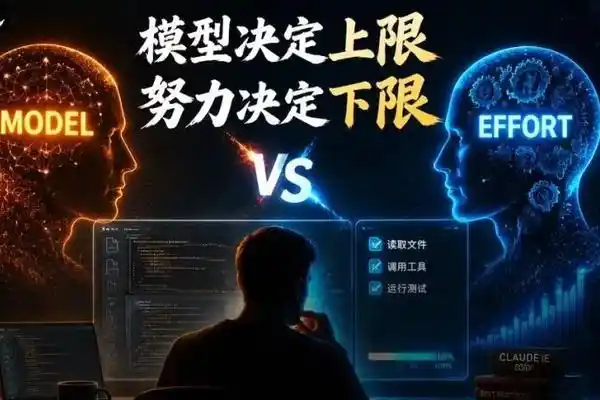
Claude Accused of Becoming Dumber by the Entire Internet, Anthropic Steps In to Reveal: It’s Not the Model That’s Tricking You

When users complained that Claude was "getting dumber," the root cause wasn't the AI model itself. In an official blog post, Anthropic clarified the critical difference between two key settings in Claude Code: Model and Effort. Model refers to the core "brain"—the fixed, trained weights of a specific AI (like Sonnet, Opus, or Fable). Changing the Model addresses *capability* ("can it do this?"), but its knowledge is static post-training. Effort, however, controls the AI's *approach and thoroughness* for a specific task. A higher Effort level instructs Claude to read more files, run tests, perform verification, and complete multi-step reasoning before responding, significantly increasing its "work output" for that job. Conversely, low Effort leads to quicker, less thorough replies. This distinction explains the March 2024 uproar where users experienced a sudden drop in Claude's performance. The cause was not a model change but Anthropic quietly lowering the *default* Effort setting from "high" to "medium" to reduce latency, which was later reverted. The key insight is that a smaller, capable model (like Sonnet) on high Effort can often outperform a larger, more powerful model (like Opus) on low Effort for many tasks. The article provides a practical troubleshooting framework: if Claude makes an error, first check the context and instructions. If it seems to skip necessary steps or validations, increase Effort. If it diligently attempts the task but fails conceptually or makes consistent factual errors despite good context, then consider switching to a more capable Model. The takeaway is a shift in focus: effective AI programming is less about always choosing the "strongest" model and more about intelligently *orchestrating* models and effort levels—acting like a project manager to assign the right "brain" with the right level of diligence for each job, optimizing both results and cost.

marsbit1h ago

Claude Accused of Becoming Dumber by the Entire Internet, Anthropic Steps In to Reveal: It’s Not the Model That’s Tricking You

marsbit1h ago

Will the Ethereum Foundation Evolve into a 'Mascot'? Diversified Organizations Are Fragmenting Its Functions

The Ethereum Foundation (EF) is undergoing significant internal turmoil and functional erosion. Following its largest-ever layoff of 54 staff (20% of its workforce) and a major organizational restructuring announced in June, its Protocol Support Team has been officially dissolved. This comes alongside the high-profile resignation of key figures like co-executive director Xiaowei Wang, bringing senior departures this year to at least eight. Criticism of EF's rigid structure, opaque decision-making, and perceived lack of a clear value narrative for ETH has intensified within the community. The layoffs have catalyzed the emergence of independent, non-profit organizations like Ethlabs and Ethereum Institutional, founded by former EF researchers and members. These entities are now taking on core functions such as protocol research/development and institutional adoption, effectively fragmenting the EF's traditional leadership role. Concurrently, EF's security team is adapting to technological change, deploying specialized AI agents to audit Ethereum's codebase, which successfully discovered a critical vulnerability (CVE-2026-34219). While EF states AI complements rather than replaces researchers, it signals a potential future shift in its operational model. Faced with these challenges—internal restructuring, talent drain, the rise of competing organizations, and AI integration—the Ethereum Foundation appears to be stepping back from a central commanding role. Analysts and community observers speculate it may increasingly transition towards a symbolic "ecosystem mascot" function, while decentralized initiatives drive Ethereum's future growth and institutional adoption.

marsbit1h ago

Will the Ethereum Foundation Evolve into a 'Mascot'? Diversified Organizations Are Fragmenting Its Functions

marsbit1h ago

Nearly a Hundred Players Rush into Embodied Data: With 4.47 Billion Yuan in Financing in One Year, Who Can Really Make Money by 'Selling Data'?

The domestic embodied AI data industry has attracted nearly 100 players, with 70 focused on data collection and 27 on data infrastructure. In the past year, 15 independent embodied data service providers raised approximately 4.47 billion yuan. Despite this growth, the sector remains early-stage, fragmented, and faces significant challenges. Data collection methods are diverse, categorized into four main routes: teleoperation of real robots, human demonstration without a robot (using motion capture, exoskeletons, etc.), simulation synthesis, and distillation from internet videos. Most companies (43%) adopt hybrid approaches, combining multiple routes, as no single method can meet all training needs. Teleoperation alone is pursued by 31% of players, often by state-owned platforms and robot companies, while newer firms favor asset-light, no-hardware human demonstration. Independent data service providers now form the largest player group (40%), indicating the emergence of a distinct industry segment rather than just a subsidiary function for robot makers. Two-thirds of all players are "embodied-native" startups, while one-third are companies that pivoted from fields like AI data annotation, which are more prevalent in the data infrastructure layer. Current annual industry capacity is estimated at 1.6-1.8 million hours plus 70-80 million data points, with a short-term goal to increase this 15-20 fold within 1-3 years. Data collection factories are spread across 20 provinces in China, concentrated in the Yangtze River Delta, Beijing-Tianjin-Hebei, and Pearl River Delta regions. Financially, the 4.47 billion yuan raised in the past year pales compared to the 43.8 billion yuan raised by the broader embodied intelligence sector in just the first half of 2026, highlighting that data remains a less "sexy" bet for investors. The 15 funded independent providers show clear stratification: a top tier led by a unicorn (Lightwheel Intelligence, 3.1 billion yuan), a middle tier of 11 firms raising tens to hundreds of millions, and an early-stage tier of 3 companies. Sixty-nine investment institutions have participated, but none have made concentrated bets, reflecting uncertainty about viable business models. Over half of these funded companies are less than a year old, most are at pre-A or A rounds, and profitability remains largely unproven. In summary, the embodied data industry has become an independent track creating jobs and local economic activity. However, it is still nascent, with unformed consensus, unsolved problems, and unproven business models. The coming 1-2 years will be a critical validation window to see if companies can build sustainable, profitable businesses purely by "selling data."

marsbit4h ago

Nearly a Hundred Players Rush into Embodied Data: With 4.47 Billion Yuan in Financing in One Year, Who Can Really Make Money by 'Selling Data'?

marsbit4h ago

Trading

Spot

Hot Articles

What is DOGE M

Doge Matrix ($doge m): The New Breed of Community-Driven Cryptocurrency Introduction In the ever-evolving landscape of cryptocurrency, new projects constantly emerge, each aiming to capture the interest of investors and enthusiasts alike. One of the latest entrants to this domain is Doge Matrix, represented by the ticker symbol $doge m. This project has attracted attention thanks to its roots in the popular meme culture surrounding Dogecoin, establishing its place within the web3 space. This article aims to provide a comprehensive analysis of Doge Matrix, covering its overview, creator, investors, functionality, timeline, and notable aspects. What is Doge Matrix ($doge m)? Doge Matrix is a community-driven cryptocurrency project that seemingly builds upon the widespread appeal of Dogecoin, a digital currency known for its Shiba Inu mascot and its meme origins. While the overarching objectives of Doge Matrix are not extensively defined, it is characterised by a commitment to harnessing community involvement and support. Unlike traditional cryptocurrencies that often emphasise utility or intrinsic value through underlying technologies, Doge Matrix positions itself within a space that embraces the cultural phenomenon of cryptocurrencies, particularly appealing to those who resonate with the ethos of meme-based assets. Drawing on the strengths of the Dogecoin community, Doge Matrix operates as part of a broader ecosystem, inviting participation and engagement from users who share an interest in cryptocurrency and the digital landscape. Who is the Creator of Doge Matrix ($doge m)? The identity of the creator of Doge Matrix remains unknown. This lack of transparency is not an uncommon occurrence in the cryptocurrency space, where some projects are launched without revealing the identities of their founders. The absence of information regarding the founding team can raise questions among potential investors about the project’s accountability and direction. Who are the Investors of Doge Matrix ($doge m)? As it stands, there is no publicly available information detailing the investors or investment foundations that back Doge Matrix. The project appears to rely primarily on community support rather than institutional investment. This model aligns with the community-driven nature of the initiative, fostering an environment where the direction of the project is shaped by its participants rather than being dictated by a select few financial backers. How Does Doge Matrix ($doge m) Work? The specifics regarding the operational mechanisms of Doge Matrix are somewhat vague, reflecting a broader trend of projects in the meme coin space where innovative functionalities are not always clearly articulated. Nonetheless, Doge Matrix seems designed to tap into the existing cryptocurrency ecosystem by encouraging user participation while tapping into the familiar cultural references associated with Dogecoin. Its potentially unique characteristics derive from community interactions rather than technological advancements, emphasising shared experiences and collaboration among token holders. While the exact innovations have not been explicitly outlined, the project appears to create a space where community members can engage, share ideas, and propel the project's potential forward. Timeline of Doge Matrix ($doge m) Reflecting on the project’s timeline reveals notable events that have defined its journey thus far: November 25, 2024: Doge Matrix reached its all-time high value, marking a significant milestone in its early history. January 1, 2025: Conversely, Doge Matrix hit its all-time low value, illustrating the volatility often associated with cryptocurrencies, especially in the early stages of a project's lifecycle. Ongoing: The project continues to be actively traded and supported by its community, although specific future milestones or objectives have yet to be disclosed. Key Points About Doge Matrix ($doge m) Community Focus At the heart of Doge Matrix is a commitment to community engagement. The project thrives on the premise of collaboration and shared objectives among its members, emphasising the importance of collective effort. Unlike centralised projects that often have a defined leadership structure, Doge Matrix at present showcases a more fluid approach to governance, where every community member's voice matters. Volatility The cryptocurrency market is notorious for its volatility, and Doge Matrix is no exception. Its price history reflects significant fluctuations between high and low values, which is typical of many new cryptocurrencies but underscores the risks associated with investment in emerging tokens. Lack of Detailed Information One of the most striking features about Doge Matrix is the scarcity of detailed information regarding its technological underpinnings and operational mechanisms. This ambiguity necessitates that potential investors conduct thorough due diligence before engaging with the project. Conclusion In summary, Doge Matrix ($doge m) illustrates a new wave of cryptocurrency projects that lean heavily on community engagement and cultural relevance. While lacking in certain specifics—such as clear leadership, defined objectives, and detailed functionality—the project has managed to generate interest within the crypto community, leveraging the established appeal of meme culture. As with any investment in the cryptocurrency space, understanding the inherent risks and conducting comprehensive research is essential for potential participants. Doge Matrix stands as a reminder of the dynamic, sometimes unpredictable nature of the crypto industry, marked by constant evolution and enthusiasm for community-driven initiatives.

559 Total ViewsPublished 2025.02.03Updated 2025.02.03

What is DOGE M

What is $M

Understanding Mantis ($M): A New Era in Cross-Chain Interoperability In the continually evolving landscape of Web3 and cryptocurrency, new projects strive to offer innovative solutions aimed at enhancing the user experience and expanding functional possibilities within the decentralised financial ecosystem. One such project garnering attention is Mantis ($M), a pioneering protocol founded on the principles of cross-chain interoperability and intent-based settlements. This article delves into the essential aspects of Mantis, including its core functionality, creators, investment backing, innovative features, and critical milestones. What is Mantis ($M)? Mantis is described as a multi-domain intent settlement protocol that simplifies cross-chain interactions, enabling users to execute complex financial transactions across various blockchain platforms seamlessly. The protocol operates through three primary layers: Intent Expression: Users can articulate their transaction goals using natural language facilitated by the DISE LLM, an advanced AI language model. For instance, a user might express a desire to swap Ethereum (ETH) for Solana (SOL) with a specific slippage tolerance of 1%. Execution: This layer employs a network of solvers that compete to fulfil user intents. Transactions are executed using mechanisms such as Coincidence of Wants (CoWs) and Order Flow Auctions (OFAs), which ensure that user demands are met optimally. Settlement: Leveraging the Inter-Blockchain Communication (IBC) protocol, Mantis enables atomic cross-chain transactions, allowing users to operate across various supported chains, including Ethereum, Solana, and Cosmos. Mantis is engineered to introduce native yield generation for idle assets, employing cryptographic proofs to maintain the integrity of transactions throughout the entire process. Creators & Development Team Mantis was conceived by the Composable Foundation, a research-driven organisation notable for its emphasis on blockchain interoperability solutions. This foundation collaborates with esteemed academic institutions, including Harvard University and the University of Lisbon, contributing to extensive research and development efforts that inform Mantis's architecture and functionality. The Composable Foundation’s commitment to fostering innovation in the blockchain space positions Mantis as a robust solution for the growing demand for interoperability among multiple blockchain networks. Investors & Backing While specific details about individual investors have not been publicly disclosed, Mantis enjoys substantial backing from various entities, including: Ecosystem grants from IBC-enabled chains, which support the protocol's growth and integration within decentralised finance ecosystems. Strategic partnerships with infrastructure providers that enhance Mantis's network capabilities and deployment strategies. Funding through the Composable Foundation's treasury, ensuring sustained financial support for ongoing development and operational costs. These collaborative efforts reflect a consensus among stakeholders about the importance of enhancing cross-chain functionality and the potential utility of Mantis's infrastructural innovations. Key Innovations Mantis sets itself apart through several pioneering innovations that enhance its functionality and utility: Chain-Agnostic Intents: Users can initiate transactions from any supported chain while settling on another. This flexibility empowers users, driving increased interaction among different platforms. AI-Powered Interface: The integration of DISE LLM allows users to conduct complex DeFi operations using natural language, thereby simplifying interactions and making blockchain technology accessible to a broader audience. Cross-Domain MEV Capture: Mantis creates an internal market for maximal extractable value (MEV) through competitions among solvers. This innovative approach allows for greater efficiency and value extraction in complex transactions. Modular Settlement Layer: The protocol supports various verification methods, including zero-knowledge proofs and optimistic rollups, providing a versatile framework that can adapt to emerging blockchain technologies. Historical Timeline Mantis's development is marked by several critical milestones that chart its trajectory and growth: | Year | Milestone | |————|————————————————————————-| | 2022 | Initial concept development within the Composable Foundation's research division. | | Q3 2024 | Launch of the testnet with bridging capabilities between Solana and Ethereum. | | Q1 2025 | Anticipated Token Generation Event (TGE) alongside the mainnet launch. | | Q2 2025 | Expected integration of DISE LLM and expansion of cross-chain capabilities. | | 2025 H2 | Planned support for over 15 chains through further IBC upgrades. | This timeline outlines Mantis's evolution, from conceptual discussions to active implementation and future growth phases. Ecosystem Growth Strategy Mantis's strategy for ecosystem growth includes several initiatives designed to encourage user participation and developer engagement: Credits System: Users can earn protocol credits by providing liquidity and engaging in referral programmes. These credits are redeemable for incentives in the future, fostering a robust user community. Modular Software Development Kit (SDK): This toolkit empowers developers to create applications based on intent-driven models utilising Mantis's infrastructure, thus promoting innovation within its ecosystem. Governance Model: As the protocol matures, $M token holders will have a voice in protocol governance, allowing them to vote on proposed upgrades and changes, thereby enhancing community engagement and decentralisation. Mantis represents a significant advancement in the realm of cross-chain architecture. By seamlessly integrating advanced AI algorithms with a robust settlement framework, Mantis seeks to tackle the problems of fragmentation within multi-chain ecosystems. Its innovative approach prioritises improved user experiences while adhering to the foundational principles of decentralisation and security, setting a new standard for the future interoperability of blockchain technologies. As Mantis continues its journey of growth and implementation, it promises to be a project to watch closely in the competitive landscape of Web3 and decentralised finance. With its focus on crossing boundaries and elevating user engagement, Mantis is poised to be an integral part of the future developments in the cryptocurrency space.

83 Total ViewsPublished 2025.03.18Updated 2025.03.18

What is $M

Discussions

Welcome to the HTX Community. Here, you can stay informed about the latest platform developments and gain access to professional market insights. Users' opinions on the price of M (M) are presented below.

活动图片