一天两次「画门」:地狱级行情,还有人能赚 500 万美元

Foresight NewsPublished on 2025-10-22Last updated on 2025-10-22

Abstract

昨天的市场残酷且公平,多空都被吞噬。

撰文:叮当

一天经历了两次「画门」行情。

正如专业交易员 Eugene 所说,加密市场正处于地狱级别难度,即使是优秀的交易员恐怕也逃不过被反复「收割」的命运。

先来看看行情数据,BTC 冲高至 114,000 美元后急坠,现报 108,260 美元,24 小时跌幅 1.85%;ETH 从 4,110 美元跌至 3,850 美元,跌幅 2.73%;SOL 暂报 186 美元,跌幅 0.98%;BNB 报 1,062 美元,跌幅 3.13%。(如果忽略过程,单看日跌幅在近期不算惊艳。)

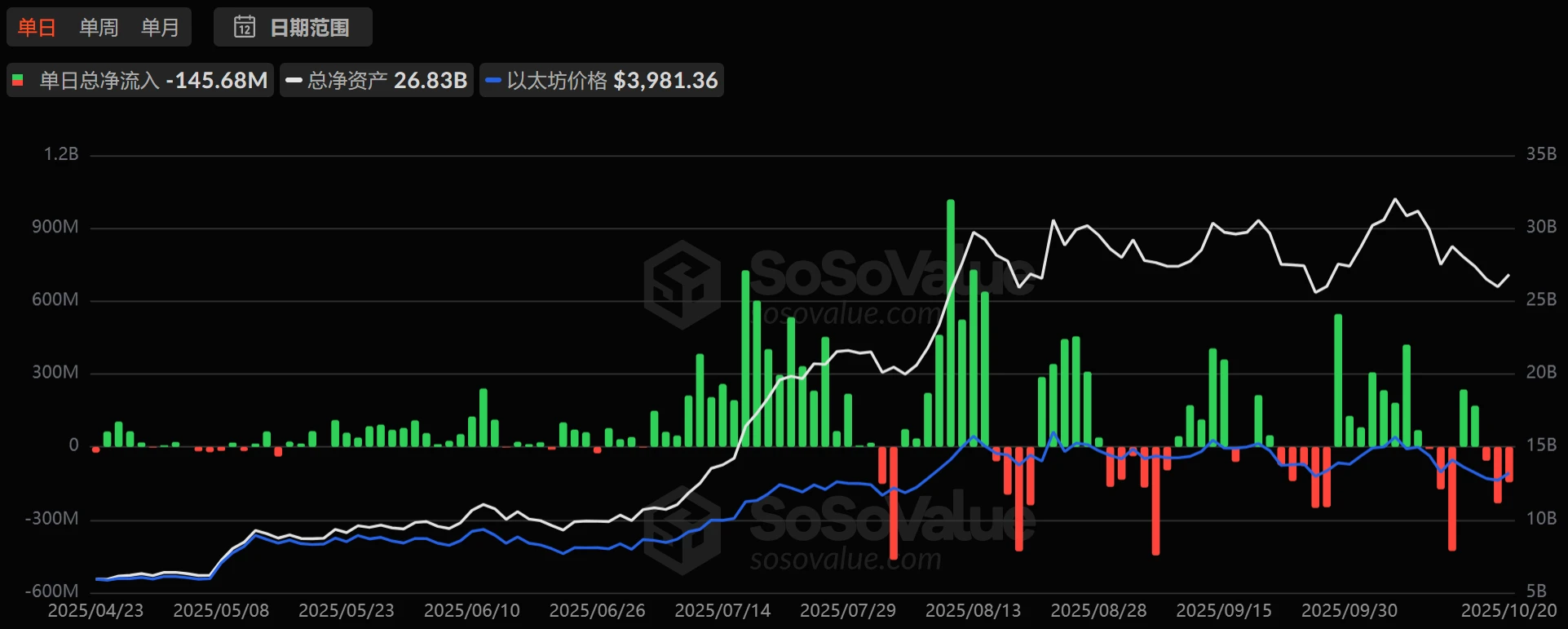
衍生品数据,最近 24 小时,爆仓总金额为 7.72 亿美元,其中多单爆仓 2.98 亿美元,空单爆仓 2.61 亿美元,最大单笔爆仓单发生在 Hyperliquid - BTC-USD 价值 1445.39 万美元。

在昨日的市场里,「公平」这个词显得格外残酷——多空同归于尽。
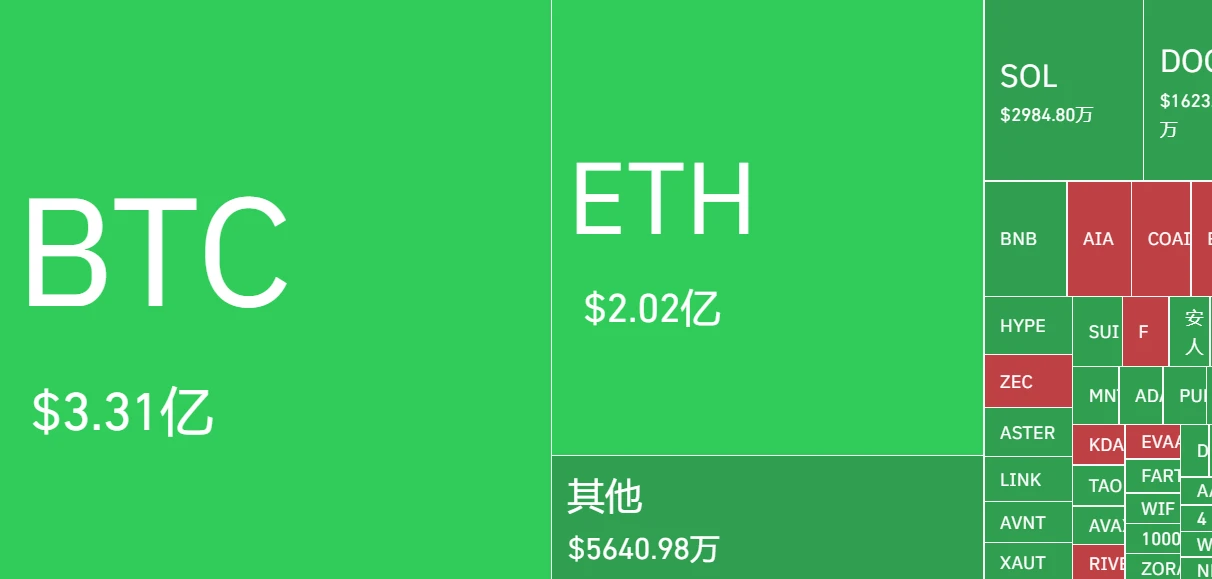
ETF 资金流入同样开始转冷。BTC 现货 ETF 在上周「暴风吸金」之后,已连续四日录得净流出;ETH 现货 ETF 近期净流入一直相对较弱,且已连续三日净流出。
据 Glassnode 数据显示,比特币未平仓合约下降约 30%,市场的过度杠杆已被大幅清除。资金费率趋近中性,意味着短期内再度触发「清算瀑布」的概率显著降低。

宏观剧本:黄金暴跌、俄乌冲突或结束?

宏观层面,加密市场在昨天又手执什么剧本呢?

瑞银全球研究首席日本经济学家 Masamichi Adachi 表示,日本央行在未来几个月内「很可能加息」。他指出,日本的实际利率依然为负,这意味着金融环境依旧过于宽松。通胀预期持续上升至 2% 区间,使得「退出宽松」的论调愈发坚定。瑞银预计,日本央行将在 1 月加息 25 个基点,但不排除 12 月提前行动的可能性。

昨日晚间,现货黄金暴跌 6% ,金价在周一触及每盎司 4381 美元高点后,周二骤跌至 4082 美元,创逾 12 年来最大跌幅。同时,有市场消息称,欧洲和乌克兰据悉已准备好一份包含 12 个要点的计划,以结束俄乌冲突。而凌晨,美国总统特朗普方面称,也许与习主席的会晤不会举行。让市场行情再次急转直下。

这一连串事件让市场在数小时内完成了从「反转」到「坠落」的全过程。真真是印证了社区的一句话:一顿分析猛如虎,涨跌全靠特朗普。

当前,市场能寄托的唯一期待或许只剩下——降息。根据路透社 10 月 15 日至 21 日对经济学家的调查,美联储大概率将在下周与 12 月各降息 25 个基点。CME「美联储观察」数据亦显示:10 月降息概率高达 99.4%,12 月累计降息 50 个基点的概率为 98.6%。

然而,关于明年年底的利率水平,分歧依旧尖锐——这意味着市场并未真正找到方向。

「明星」交易员

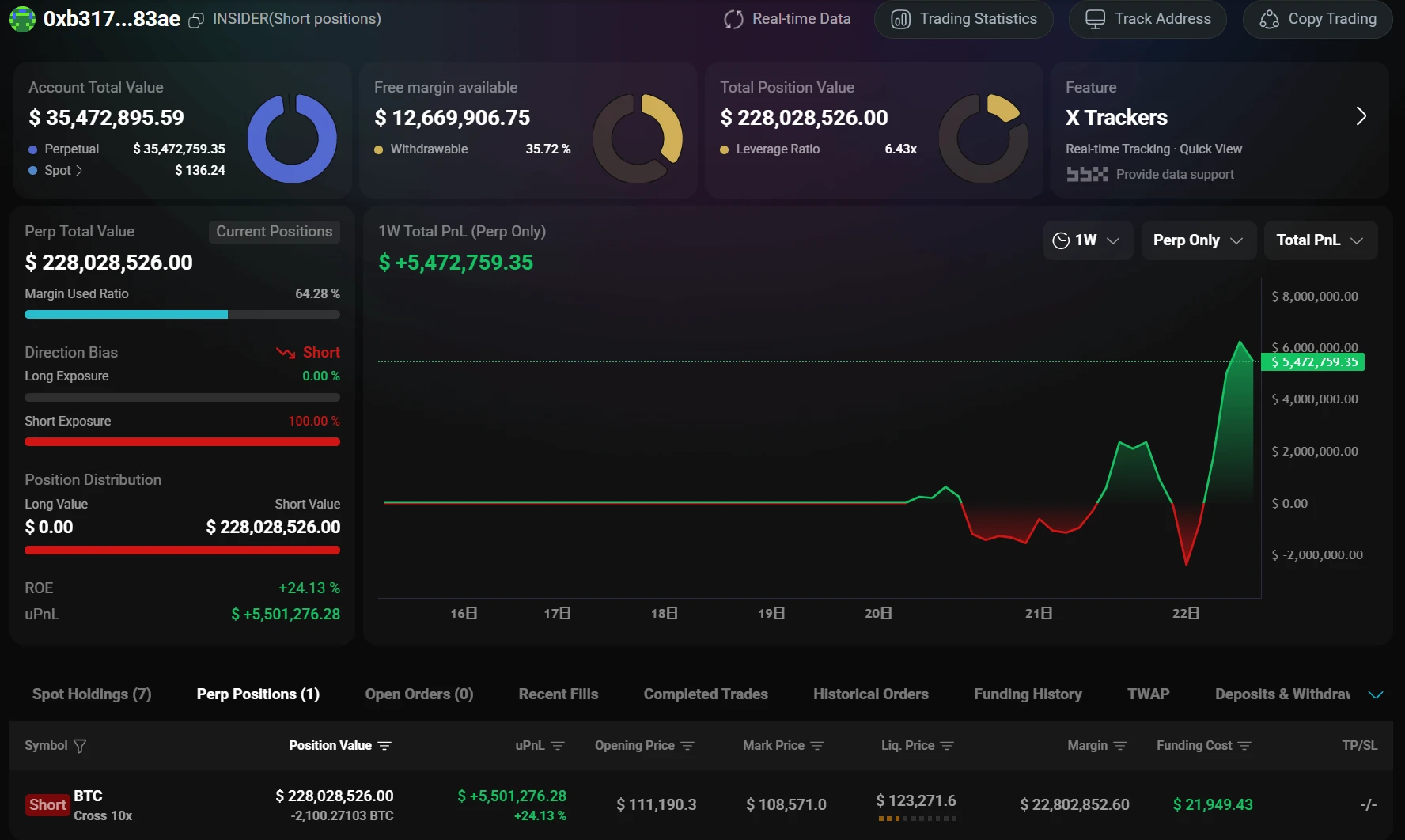
现在加密市场的唯一真正交易明星就是「10.11 内幕巨鲸 」,其当前已再度出手 10 倍做空 BTC。当前空单仓位价值 2.27 亿美元,现已浮盈超 500 万美元,清算 123,271 美元。
另外一位则是反面教材。此前曾在 ETH 交易中亏损 888 万美元的黑客昨晚再次追涨,以均价 4020 美元买入 7126.74 枚 ETH(总价值约 2903 万美元),一觉醒来已浮亏超 100 万美元。被分析人士调侃,「不是自己的钱花起来就是不心疼」。

市场观点

Matrixport:比特币触及 21 周均线,市场聚焦关键技术位

Matrixport 发布图表称,21 周均线再度成为比特币走势的关键观察点。该水平历来被视为牛熊转换的重要分界:价格位于其上方时往往意味着市场由空转多;而跌破则通常预示行情进入调整阶段。若比特币长时间未能重新站上该水平当前的盘整走势可能进一步演化为更深度的回调。

目前回调幅度仍相对温和,在市场普遍预期美联储仍将降息的背景下,整体走势或将保持可控,除非美国经济出现明显走弱。

从历史经验看,理想的入场时机往往出现在比特币短暂跌破该均线后,又重新站上并维持较长时间之际。在这一信号出现之前,投资者仍应保持谨慎。

CryptoQuant:比特币期货流动性疲弱,买方主动性明显减弱

据 CryptoQuant 分析师 Axel Adler Jr 分析,比特币期货流动指数表明市场仍处于弱势区域(<45)。多头在 10 月 13 日和 10 月 20 日两次尝试夺回市场控制权,但均告失败。第一次尝试虽显得有力,但迅速失去动能,第二次则缺乏持续的推动力。

目前价格仍低于 30 日公允价值,期货流动性疲弱,买方主动性明显减弱,显示市场多头已显疲态。

交易员 Nachi:极度看多比特币,预计未来 6 至 12 个月 BTC 突破 20 万美元

据币安平台交易员 Nachi 的最新发文,他表示已经平掉所有空单,并全面转为做多永续合约仓位。他坚信,上周五可能是比特币的关键底部,市场资金正从黄金流向比特币。Nachi 依然极度看多市场,预计未来 6 至 12 个月比特币将突破 20 万美元,Ethereum 将突破 1 万美元。

现在的市场,关于牛与熊的讨论越来越多。而在地狱级行情中,没有神话,只有幸存者。

Trending Cryptos

Related Reads

Media: Anthropic Aims for Revenue Up to $200 Billion by 2028 Ahead of IPO

Anthropic, the AI company behind Claude, is reportedly projecting its revenue could reach between $190 billion and $200 billion by 2028, according to sources cited by Reuters. This forecast, significantly higher than its reported $47 billion annual run-rate in May 2026, is being used by investors and bankers to value the company ahead of a potential IPO. Anthropic has confidentially filed with the SEC, with listing details dependent on market conditions and regulatory approval. The valuation reportedly applies a revenue multiple (EV/Revenue) to these future 2028 figures, an approach common for high-growth tech firms but unusual for a forecast two years ahead of an IPO. This reflects confidence in Anthropic's rapid scaling; its annual run-rate grew tenfold yearly for three years leading into 2026, jumping from ~$9B in late 2025 to over $47B by May 2026. Investors are betting the company's massive spending on GPUs, model training, and infrastructure will eventually outpace costs, leading to expanding margins. Public companies like Palantir, Cloudflare, and SpaceX, valued at high multiples of their forward revenue, serve as benchmarks. While this forward-looking method has precedents, some analysts question the sustainability of such valuations and the actual productivity gains from AI. Despite these concerns, earlier reports suggested Anthropic could be valued at over $1 trillion for its IPO.

cryptonews.ru18m ago

Media: Anthropic Aims for Revenue Up to $200 Billion by 2028 Ahead of IPO

cryptonews.ru18m ago

Open Blockchain Business: Who Gets the Fees and Why a Foundation is Needed

Business of Open Blockchain: Who Gets the Fees and Why a Foundation is Needed In public blockchains, user transaction fees do not simply become "revenue" for a single entity. The flow of money is complex and protocol-dependent. In Ethereum, fees consist of a base fee (burned, permanently removing ETH from circulation) and a priority tip (paid to the validator). In Solana, half the base fee is burned and half goes to the validator, while priority fees go entirely to validators. Thus, "fees" are not synonymous with "project revenue"; they may go to network operators or be destroyed. Foundations like the Ethereum Foundation do not take a cut of user fees. They are funded by their own treasuries, which can generate income (e.g., from staking rewards) and finance ecosystem development, research, and security. Their role is to fund public goods that are hard to monetize directly. Developers of open-source blockchain code can monetize through services, not the code itself. For example, Optimism provides its technology freely but sells enterprise support and managed services (OP Enterprise). Additionally, networks built on Optimism's tech, like Coinbase's Base, share a portion of their revenue with the Optimism ecosystem via agreements, creating an economic link. Token holders do not automatically receive fees as dividends. In Optimism, a portion of protocol revenue is now used to buy back and treasury-lock OP tokens, creating an indirect link between network usage and token economics. In Ethereum, fee burning reduces ETH supply but doesn't distribute funds to all holders; stakers and validators receive direct rewards. For evaluation, analysts should look beyond total fee figures. Key questions are: Who paid and for what? Where did the money go (to validators, operators, treasury, or burning)? What were the recipient's costs? Is there a mechanism linking this income to the token? The same fee amount impacts different blockchain economies in vastly different ways depending on these factors.

cryptonews.ru20m ago

Open Blockchain Business: Who Gets the Fees and Why a Foundation is Needed

cryptonews.ru20m ago

Trading

Spot

Hot Articles

What is $BITCOIN

DIGITAL GOLD ($BITCOIN): A Comprehensive Analysis Introduction to DIGITAL GOLD ($BITCOIN) DIGITAL GOLD ($BITCOIN) is a blockchain-based project operating on the Solana network, which aims to combine the characteristics of traditional precious metals with the innovation of decentralized technologies. While it shares a name with Bitcoin, often referred to as “digital gold” due to its perception as a store of value, DIGITAL GOLD is a separate token designed to create a unique ecosystem within the Web3 landscape. Its goal is to position itself as a viable alternative digital asset, although specifics regarding its applications and functionalities are still developing. What is DIGITAL GOLD ($BITCOIN)? DIGITAL GOLD ($BITCOIN) is a cryptocurrency token explicitly designed for use on the Solana blockchain. In contrast to Bitcoin, which provides a widely recognized value storage role, this token appears to focus on broader applications and characteristics. Notable aspects include: Blockchain Infrastructure: The token is built on the Solana blockchain, known for its capacity to handle high-speed and low-cost transactions. Supply Dynamics: DIGITAL GOLD has a maximum supply capped at 100 quadrillion tokens (100P $BITCOIN), although details regarding its circulating supply are currently undisclosed. Utility: While precise functionalities are not explicitly outlined, there are indications that the token could be utilized for various applications, potentially involving decentralized applications (dApps) or asset tokenization strategies. Who is the Creator of DIGITAL GOLD ($BITCOIN)? At present, the identity of the creators and development team behind DIGITAL GOLD ($BITCOIN) remains unknown. This situation is typical among many innovative projects within the blockchain space, particularly those aligning with decentralized finance and meme coin phenomena. While such anonymity may foster a community-driven culture, it intensifies concerns about governance and accountability. Who are the Investors of DIGITAL GOLD ($BITCOIN)? The available information indicates that DIGITAL GOLD ($BITCOIN) does not have any known institutional backers or prominent venture capital investments. The project seems to operate on a peer-to-peer model focused on community support and adoption rather than traditional funding routes. Its activity and liquidity are primarily situated on decentralized exchanges (DEXs), such as PumpSwap, rather than established centralized trading platforms, further highlighting its grassroots approach. How DIGITAL GOLD ($BITCOIN) Works The operational mechanics of DIGITAL GOLD ($BITCOIN) can be elaborated on based on its blockchain design and network attributes: Consensus Mechanism: By leveraging Solana’s unique proof-of-history (PoH) combined with a proof-of-stake (PoS) model, the project ensures efficient transaction validation contributing to the network's high performance. Tokenomics: While specific deflationary mechanisms have not been extensively detailed, the vast maximum token supply implies that it may cater to microtransactions or niche use cases that are still to be defined. Interoperability: There exists the potential for integration with Solana’s broader ecosystem, including various decentralized finance (DeFi) platforms. However, the details regarding specific integrations remain unspecified. Timeline of Key Events Here is a timeline that highlights significant milestones concerning DIGITAL GOLD ($BITCOIN): 2023: The initial deployment of the token occurs on the Solana blockchain, marked by its contract address. 2024: DIGITAL GOLD gains visibility as it becomes available for trading on decentralized exchanges like PumpSwap, allowing users to trade it against SOL. 2025: The project witnesses sporadic trading activity and potential interest in community-led engagements, although no noteworthy partnerships or technical advancements have been documented as of yet. Critical Analysis Strengths Scalability: The underlying Solana infrastructure supports high transaction volumes, which could enhance the utility of $BITCOIN in various transaction scenarios. Accessibility: The potential low trading price per token could attract retail investors, facilitating wider participation due to fractional ownership opportunities. Risks Lack of Transparency: The absence of publicly known backers, developers, or an audit process may yield skepticism regarding the project's sustainability and trustworthiness. Market Volatility: The trading activity is heavily reliant on speculative behavior, which can result in significant price volatility and uncertainty for investors. Conclusion DIGITAL GOLD ($BITCOIN) emerges as an intriguing yet ambiguous project within the rapidly evolving Solana ecosystem. While it attempts to leverage the “digital gold” narrative, its departure from Bitcoin's established role as a store of value underscores the need for a clearer differentiation of its intended utility and governance structure. Future acceptance and adoption will likely depend on addressing the current opacity and defining its operational and economic strategies more explicitly. Note: This report encompasses synthesised information available as of October 2023, and developments may have transpired beyond the research period.

1.9k Total ViewsPublished 2025.05.13Updated 2025.05.13

What is $BITCOIN

Discussions

Welcome to the HTX Community. Here, you can stay informed about the latest platform developments and gain access to professional market insights. Users' opinions on the price of BTC (BTC) are presented below.

活动图片