那个纹着LUNΑ的男人,单季5亿「雪耻」

比推Published on 2025-10-22Last updated on 2025-10-22

那枚LUNA刺青还在,但Galaxy Digital已经变了

2022年,Michael Novogratz把LUNA图案纹在了手臂上。那时,他是加密行业最活跃的布道者之一,手握资产管理平台Galaxy Digital,正处于上一轮加密牛市的高潮。

image.png

然而,2022年5月,LUNA在一周内暴跌归零,市值蒸发600亿美元。这个被称为“死亡螺旋”的事件,几乎摧毁了整个Terra生态,也把Galaxy推上了风口浪尖。

对大多数公司来说,这样的事件足以毁掉职业生涯。但Galaxy没有倒下。三年后,它以一份令人意外的成绩单完成回归——净利润5.05亿美元、股价单日上涨近9%、市值重回165亿美元

这次不只是翻身,更是用结果说话。

反思,从一封信开始

当LUNA崩盘后,大多数公司选择保持沉默。但Novogratz选择了坐下来写一封信。

他在信中承认了对项目风险的误判,也反思了作为投资机构应有的审慎。他写道,那枚刺青不会被遮住,而会成为一个永远的提醒:“创投需要谦逊。”
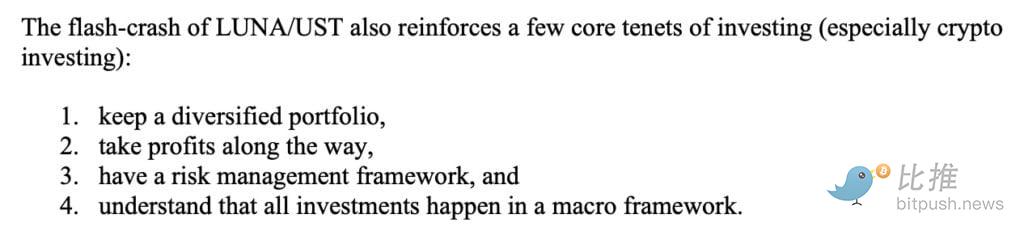
image.png

这是Galaxy转型的开始。从那之后,公司陆续减少了对“短期行情”的依赖,重新梳理了自己的核心能力——并试图用更加可持续的方式赢得市场信任。

盈利“雪耻”:结构重构

2025年第三季度,Galaxy Digital交出了成立七年来最亮眼的财报:

  • 净利润:5.05亿美元(同比增长16倍)

  • 调整后毛利润:7.28亿美元(环比增长143%)

  • 交易营收:2.95亿美元(年化可达12亿)

  • 资产管理规模:突破90亿美元

  • 核心机构客户金库资产注入:45亿美元

  • 股价单日上涨8.7%,总市值达165亿美元

这不是靠“某个币暴涨”带来的暴利,而是Galaxy三大业务板块同时发力、共同推动的结果。

在过去三年里,Galaxy完成了内部业务的全面重构,搭建起更清晰、稳健的三大核心业务体系:

1. 交易与市场基础设施

服务对象是机构客户,包括做市商、家族办公室、数字资产金库等。
公司提供交易执行、借贷、衍生品与现货清算服务。2025年Q3交易业务收入达2.95亿美元,同比增幅超140%。

2. 资产管理

为机构客户提供数字资产配置、ETF、质押与托管服务。
截至Q3,资产管理规模已超90亿美元,核心增长来自一批将比特币、以太坊纳入资产负债表的“金库客户”。

这些客户带来的资产注入超45亿美元,为公司带来每年超4000万美元的稳定管理费用。

3. 科技与基础设施服务

这是Galaxy最重要的战略转向之一:不再只做“金融产品提供者”,而是成为“基础设施持有者”。

2025年,Galaxy启动了名为“Helios”的大型数据中心项目,服务对象是AI公司与Web3底层服务项目。首期项目获得14亿美元融资,为AI公司CoreWeave提供800兆瓦电力,相当于一个小城市用电量。

一旦建成,Helios年营收可达10亿美元,收入体量可与交易业务比肩,成为公司“第三支柱”。

关键财报数据一览(2025年Q3)

指标 数据 增长情况 说明
净利润 5.05亿美元 同比增长16倍 业绩创下新高
调整后毛利润 7.28亿美元 环比增长143% 收入质量改善显著
交易收入 2.95亿美元 同比增超140% 来自机构订单与借贷服务
资产管理规模 90亿美元+ 稳定上升 金库客户推动AUM增长
金库客户资产注入 45亿美元 6月–9月新增 提供长期管理费收入
Helios数据中心融资 14亿美元 第一期已完成 AI时代基建押注
预计Helios营收 年化10亿美元+ 2026年起释放 与交易业务体量相当

背后高管团队,皆有华尔街背景

Galaxy能实现绝地翻身,离不开其明星级的领导团队——这支被业内称为“银河舰队”的核心班子,完美融合了华尔街老将的稳健与加密界先锋的锐气:

姓名 职务 背景与角色
Michael Novogratz 创始人兼CEO 前高盛合伙人,LUNA事件后亲自推动公司风控重建与战略转向
Christopher Ferraro 总裁兼CIO 资产配置专家,重构了Galaxy的盈利模型与投研体系
Erin Brown COO 金融科技出身,主导平台系统效率与客户体验优化
Alex Ioffe CFO 负责资本结构、财务重组与融资安排
Michael Daffey 董事会主席 前高盛高管,推动公司治理与合规制度落地

2025年中,Galaxy已正式在纳斯达克挂牌。这家曾因加密泡沫爆破而跌至谷底的公司,如今正重新赢得传统资本市场的关注。

"如果我们在2030年前还没有彻底改变自己,那我们就输了。"Novogratz在内部会议上的这句话,不仅是对员工的鞭策,更是对整个加密行业的前瞻判断。

如今的Galaxy已成功摆脱对单一加密资产价格波动的依赖,通过构建交易、资产管理、科技服务三大业务支柱,形成了可持续的增长飞轮。而AI时代的到来,更让其前瞻性的基础设施布局展现出巨大潜力。

Galaxy的战略转型不仅体现在内部业务重构,更反映在其精心构建的合作伙伴生态中:

合作伙伴 类型/角色 合作亮点 对 Galaxy 的战略影响
CoreWeave AI 云计算巨头 租赁 Helios 全部第二阶段容量;改造矿场为$70亿AI 数据中心 贡献预计 $100 亿收入;定位 Galaxy 为 "加密-AI 枢纽"
DWS 传统资产管理巨头 $46 亿战略投资 Helios;联合发行欧元稳定币 注入机构资金,提升监管合规;稳定币年处理 $1940 亿
Flow Traders 市场做市商 联合发行首个全监管欧元稳定币 扩大 DeFi-TradFi 桥梁;Q3 交易量 +140%
Robinhood 零售加密平台 顾问支持 Bitstamp 收购交易;潜在 ETF 合作 开拓散户市场;与 GalaxyOne 平台形成互补
SEC & 贝莱德 监管/ETF 巨头 与 SEC 合作以太坊代币化;BlackRock ETF 流入受益 确保合规性;平台资产规模 +62%

这一价值超过60亿美元的合作伙伴网络,不仅提供了资金支持,更重要的是为Galaxy建立了跨领域的信任背书。正如Novogratz在2025年10月的推文中所言:"我们的盟友让Galaxy完成了从比特币矿场到AI帝国的蜕变。"

结语

Terra Luna的崩盘,曾几乎让Galaxy成为加密行业最失败的代名词。而今天,它成为极少数能在崩盘之后恢复盈利并迈入主流市场的企业。Galaxy成功搭建起一座连接各个领域的桥梁,这正是其能够在后LUNA时代实现华丽转身的关键支撑。

Novogratz的那枚刺青没有被遮住,它依旧在。但它不再只是失败的象征,更像是一个提醒:
只有穿越低谷并留下记录的人,才配拥有高光时刻。

作者:Seedly.eth


Twitter:https://twitter.com/BitpushNewsCN

比推 TG 交流群:https://t.me/BitPushCommunity

比推 TG 订阅: https://t.me/bitpush

说明: 比推所有文章只代表作者观点,不构成投资建议

Trending Cryptos

Related Reads

Media: Anthropic Aims for Revenue Up to $200 Billion by 2028 Ahead of IPO

Anthropic, the AI company behind Claude, is reportedly projecting its revenue could reach between $190 billion and $200 billion by 2028, according to sources cited by Reuters. This forecast, significantly higher than its reported $47 billion annual run-rate in May 2026, is being used by investors and bankers to value the company ahead of a potential IPO. Anthropic has confidentially filed with the SEC, with listing details dependent on market conditions and regulatory approval. The valuation reportedly applies a revenue multiple (EV/Revenue) to these future 2028 figures, an approach common for high-growth tech firms but unusual for a forecast two years ahead of an IPO. This reflects confidence in Anthropic's rapid scaling; its annual run-rate grew tenfold yearly for three years leading into 2026, jumping from ~$9B in late 2025 to over $47B by May 2026. Investors are betting the company's massive spending on GPUs, model training, and infrastructure will eventually outpace costs, leading to expanding margins. Public companies like Palantir, Cloudflare, and SpaceX, valued at high multiples of their forward revenue, serve as benchmarks. While this forward-looking method has precedents, some analysts question the sustainability of such valuations and the actual productivity gains from AI. Despite these concerns, earlier reports suggested Anthropic could be valued at over $1 trillion for its IPO.

cryptonews.ru18m ago

Media: Anthropic Aims for Revenue Up to $200 Billion by 2028 Ahead of IPO

cryptonews.ru18m ago

Open Blockchain Business: Who Gets the Fees and Why a Foundation is Needed

Business of Open Blockchain: Who Gets the Fees and Why a Foundation is Needed In public blockchains, user transaction fees do not simply become "revenue" for a single entity. The flow of money is complex and protocol-dependent. In Ethereum, fees consist of a base fee (burned, permanently removing ETH from circulation) and a priority tip (paid to the validator). In Solana, half the base fee is burned and half goes to the validator, while priority fees go entirely to validators. Thus, "fees" are not synonymous with "project revenue"; they may go to network operators or be destroyed. Foundations like the Ethereum Foundation do not take a cut of user fees. They are funded by their own treasuries, which can generate income (e.g., from staking rewards) and finance ecosystem development, research, and security. Their role is to fund public goods that are hard to monetize directly. Developers of open-source blockchain code can monetize through services, not the code itself. For example, Optimism provides its technology freely but sells enterprise support and managed services (OP Enterprise). Additionally, networks built on Optimism's tech, like Coinbase's Base, share a portion of their revenue with the Optimism ecosystem via agreements, creating an economic link. Token holders do not automatically receive fees as dividends. In Optimism, a portion of protocol revenue is now used to buy back and treasury-lock OP tokens, creating an indirect link between network usage and token economics. In Ethereum, fee burning reduces ETH supply but doesn't distribute funds to all holders; stakers and validators receive direct rewards. For evaluation, analysts should look beyond total fee figures. Key questions are: Who paid and for what? Where did the money go (to validators, operators, treasury, or burning)? What were the recipient's costs? Is there a mechanism linking this income to the token? The same fee amount impacts different blockchain economies in vastly different ways depending on these factors.

cryptonews.ru20m ago

Open Blockchain Business: Who Gets the Fees and Why a Foundation is Needed

cryptonews.ru20m ago

Trading

Spot

Hot Articles

How to Buy LUNA

Welcome to HTX.com! We've made purchasing Terra (LUNA) simple and convenient. Follow our step-by-step guide to embark on your crypto journey.Step 1: Create Your HTX AccountUse your email or phone number to sign up for a free account on HTX. Experience a hassle-free registration journey and unlock all features.Get My AccountStep 2: Go to Buy Crypto and Choose Your Payment MethodCredit/Debit Card: Use your Visa or Mastercard to buy Terra (LUNA) instantly.Balance: Use funds from your HTX account balance to trade seamlessly.Third Parties: We've added popular payment methods such as Google Pay and Apple Pay to enhance convenience.P2P: Trade directly with other users on HTX.Over-the-Counter (OTC): We offer tailor-made services and competitive exchange rates for traders.Step 3: Store Your Terra (LUNA)After purchasing your Terra (LUNA), store it in your HTX account. Alternatively, you can send it elsewhere via blockchain transfer or use it to trade other cryptocurrencies.Step 4: Trade Terra (LUNA)Easily trade Terra (LUNA) on HTX's spot market. Simply access your account, select your trading pair, execute your trades, and monitor in real-time. We offer a user-friendly experience for both beginners and seasoned traders.

5.7k Total ViewsPublished 2024.03.29Updated 2026.06.02

How to Buy LUNA

What is $LUNA

Luna28 ($$LUNA): A Moon-Inspired Crypto Venture Introduction In the ever-evolving world of cryptocurrencies, innovation is key. Luna28 stands out as a project that not only embraces technology but also intertwines it with the mystique of cosmic cycles. Inspired by the moon's 28-day cycle, Luna28 ($$LUNA) aims to create a unique and engaging experience for its community, merging the concepts of tokenomics and lunar-themed non-fungible tokens (NFTs). At its core, this project employs a distinctive token burn mechanism aligned with lunar and solar eclipses, setting a new precedent in the crypto space. What is Luna28? Luna28 is a token-based cryptocurrency project built on the Ethereum blockchain. It seeks to offer its users a blend of cosmic engagement through a series of innovative features. Key to its identity is the launch of lunar-themed NFTs which enhance community interaction while celebrating the moon's cultural significance. The project aims to create a deeper connection between its community members and the cosmos. This connection is facilitated through a carefully crafted ecosystem that leverages lunar themes, token burns, and dynamic activities associated with celestial events. The goal is not just about enhancing token value but fostering a sense of belonging and enjoyment within the community. Creator of Luna28 The details surrounding the creator of Luna28 remain largely unknown. This lack of information has led to an air of mystery around the project, further adding to its uniqueness. The anonymous nature of its creation reflects a broader trend within the crypto industry, where the focus is often on the project and its community rather than individual profiles. Investors of Luna28 Currently, there is no publicly available information regarding the specific investment foundations or organizations that support Luna28. This aspect may indicate a grassroots initiative where the community plays a vital role in the project's development and growth. The absence of prominent investors can sometimes create a more decentralized and independent project, allowing for organic community engagement and involvement. How Does Luna28 Work? One of the most compelling aspects of Luna28 is how it operates, particularly its unique features that set it apart from other cryptocurrency projects. 1. Lunar and Solar Eclipse Token Burns Luna28 incorporates a special token burn mechanism, which involves periodically burning a portion of its token supply during lunar and solar eclipses. This approach not only creates excitement around celestial events but also works on the fundamental principle of increasing scarcity. By reducing the overall token supply through burns, the remaining tokens have the potential for increased value, benefiting all holders. 2. Tokenomics The economic structure of Luna28 is crafted to ensure sustainability and growth. Each transaction incurs a 4.4% tax: 2% contributes to the Moon Cycle Fund, which is burned every 28 days during the full moon. The remaining 2.4% is earmarked for development and marketing, facilitating the project’s expansion and continuous improvement. This tax structure establishes a steady flow of funding while maintaining a deflationary approach that can enhance the token's value proposition. 3. 100% Burned Liquidity Security and trust are paramount in any cryptocurrency project. Luna28 addresses these concerns by locking its liquidity pool tokens in a burn wallet. This ensures that liquidity is permanently secured, fostering confidence within the community as they engage with the platform. 4. NFT Drops Further enhancing community engagement, Luna28 plans to release lunar-themed NFTs. These digital collectibles not only serve as a source of fun and creativity but also offer users unique assets tied to the larger lunar theme. The introduction of NFTs reflects a growing trend in the crypto space, blending traditional forms of artistic expression with innovative technology. 5. Hyper Deflationary Token Luna28 is classified as a hyper deflationary token, emphasizing its commitment to a declining token supply through systematic burns. This design encourages long-term holding, as community members anticipate potential value growth driven by scarcity. 6. First Buyer Incentive In a bid to promote active participation, Luna28 offers a unique first buyer incentive. After each celestial burn event, the first participant in the market is rewarded with 10% of the tokens burned during that event. This encourages immediate engagement and interest surrounding each significant celestial phenomenon. 7. Sustainable Tax Structure The project's tax model is specifically designed to encourage sustainable growth, balancing the need for ongoing project development with the goal of enhancing token value. This innovative tax structure serves the dual purpose of supporting the community's interests while maintaining a healthy ecosystem for the project. Timeline of Luna28 A well-charted timeline helps in understanding the progression and milestones of Luna28. Here’s a synopsis of important events in the project’s history: Stealth Launch: The project entered the crypto arena under a stealth launch, garnering significant community interest and posting a remarkable 1792% increase from its initial listing. This initial surge indicated strong community reception and a solid foundation for future growth. Token Burns: Committing to its unique approach, Luna28 plans to burn 28% of its token supply over a three-year period, timed specifically during lunar and solar eclipses. Community members eagerly await their opportunities to participate in these events. Community Involvement: Emphasizing transparency and the importance of community feedback, Luna28 plans to notify its users in advance about upcoming token burn events. This engagement approach encourages active participation, fostering a strong sense of community. Key Features Luna28's distinctive features bolster its appeal within the cryptocurrency sector: Hyper Deflationary Nature: The project's focus on hyper deflationary mechanics enables a strategic reduction in supply, aiming for enhanced value retention. Incentives for Early Engagement: The project rewards early participants with direct benefits, which cultivates a proactive community eager to contribute. Commitment to Community Development: The sustainable tax model not only ensures the project's growth but also actively involves the community in shaping its future direction. Conclusion Luna28 represents a unique fusion of technology, community engagement, and celestial inspiration in the cryptocurrency landscape. By integrating innovative mechanisms such as token burns during astrological events and creating engaging lunar-themed NFTs, the project distinguishes itself as a trailblazer within its niche. As a community-driven endeavor, Luna28 promises to deliver not just another cryptocurrency but an experience that marries elements of cosmic fascination with blockchain technology. With its innovative features and strong emphasis on community involvement, Luna28 has the potential to create a lasting impact in the world of digital currencies. The connection it forges between its users and the universe represents not only a creative endeavor but also a brilliantly calculated business strategy poised for growth. As we observe the evolution of Luna28, it is evident that it is more than just a token; it is a concept that encourages its community to look up at the cosmos and ponder their place within it, all while navigating the exciting world of cryptocurrency. The future for Luna28 looks bright and full of potential, eagerly awaiting its next lunar cycle.

1.3k Total ViewsPublished 2024.04.01Updated 2024.12.03

What is $LUNA

What is TERRA

Exploring the Terra Ecosystem: A Comprehensive Overview Introduction In the ever-evolving landscape of blockchain technology and cryptocurrency, the Terra Ecosystem has emerged as an ambitious project designed to facilitate a decentralized financial system. This innovative platform focuses on creating stable and scalable algorithmic stablecoins, aimed at driving the widespread adoption of cryptocurrencies. In this article, we will delve into the foundational aspects of the Terra Ecosystem, exploring its operational mechanisms, its creators, investors, notable components, and the timeline of its development. What is the Terra Ecosystem? Founded in 2018, the Terra Ecosystem is a layer-one blockchain designed to provide an efficient and reliable payment platform. The core mission of Terra is to create a preferred form of money that is not only decentralized but also practical for everyday use. At the heart of the ecosystem is its native algorithmic stablecoin, TerraUSD (UST), which is pegged to the US dollar using an innovative algorithmic mechanism. This unique approach addresses a common concern in the cryptocurrency space: the volatility that often accompanies digital assets. The Terra Ecosystem aims to enhance the usability of cryptocurrencies by creating an environment where digital currencies function similarly to traditional currencies. By being user-friendly and stable, Terra sets out to attract users outside of the crypto community, ultimately fostering mass adoption. The Creators of the Terra Ecosystem The Terra Ecosystem emerged under the guidance of its co-founders Daniel Shin and Do Kwon. Both individuals, with a wealth of experience in entrepreneurship and technology, launched Terraform Labs to spearhead this groundbreaking project. Daniel Shin, a prominent figure in the South Korean tech landscape, has co-founded multiple tech companies, while Do Kwon has an extensive background in computer science and engineering. Their partnership is pivotal in steering the development and growth trajectory of the Terra Ecosystem. Investors in the Terra Ecosystem While detailed information about specific investors remains limited, it is widely acknowledged that Terraform Labs has garnered substantial financial support from a variety of angel investors and venture capital firms. This backing provides the necessary resources for the ongoing development and expansion of the Terra Ecosystem. The emphasis on acquiring diversified investment sources reflects the strong belief in the project's potential within the cryptocurrency community. How Does the Terra Ecosystem Work? At the core of the Terra Ecosystem's functionality lies its innovative proof-of-stake (PoS) consensus mechanism. This allows holders of the LUNA token, the native currency of the ecosystem, to participate in the governance and operation of the network. The dual-token structure differentiates Terra from many other projects, with LUNA serving both as a stake for validators and as a governance token. The mechanism operates in a distinctive way, whereby the supply of LUNA backs the stablecoin UST. If the demand for UST increases, the algorithm automatically adjusts the supply of LUNA to maintain the stability of UST at its dollar peg. Users are enabled to exchange 1 UST for an equivalent value in LUNA, ensuring that fluctuations in demand do not affect the peg. This innovative approach enables the Terra Ecosystem to maintain price stability, one of its primary goals. Timeline of the Terra Ecosystem The development journey of the Terra Ecosystem has been marked by significant milestones: 2018: Establishment of Terraform Labs by Daniel Shin and Do Kwon, laying the groundwork for the Terra Ecosystem. April 2019: The initial release of the Terra blockchain, initiating its journey into the broader cryptocurrency landscape. 2021: Terra experiences remarkable growth as its total value locked (TVL) reaches new heights, positioning it as a dominant player in decentralized finance (DeFi). May 2022: A turbulent period arises as the Terra blockchain is temporarily halted following the collapse of UST and LUNA, leading to a significant impact on market perception and capitalization. January 2024: Terraform Labs files for bankruptcy, marking another critical event in the project's history, sparking discussions on the sustainability and future of the ecosystem. Key Components of the Terra Ecosystem A variety of features contribute to the unique functionality of the Terra Ecosystem: Core Functionality The Terra Ecosystem includes essential functionalities such as managing transaction fees, monitoring price fluctuations, and maintaining historical balances of transactions, all of which are crucial for ensuring user experience and operational integrity. Applications One of the flagship features of the Terra Ecosystem is its diverse array of applications. This includes: Anchor Protocol: A money market protocol that provides high stablecoin yields and tokenized stakes for users seeking to maximize returns on their investments. Mirroring Technology: Enabling users to create assets that mirror real-world assets and trades, allowing for broader use cases and applications. Chai: A payment platform designed to facilitate everyday transactions using Terra's stablecoin technology. Swaps and Exchanges The ecosystem provides functionality for seamless asset exchanges. Notable features include native swapping capabilities and platforms such as Terraswap, allowing users to exchange Terra assets efficiently while benefiting from competitive rates. Governance Governance plays a critical role in the decentralized nature of the Terra Ecosystem. Token holders use their LUNA tokens to propose changes or vote on proposals that affect the network, ensuring collective decision-making and community involvement in the ecosystem's evolution. Notable Projects in the Terra Ecosystem Beyond the core functionalities, the Terra Ecosystem is also home to notable projects that further augment its capabilities: Terraswap: This decentralized exchange (DEX) emerged to facilitate easy swapping of Terra assets, thus promoting a vibrant trading environment within the ecosystem. Astroport: Another DEX known for its high total value locked, Astroport enhances trading opportunities and liquidity provision for users. Loop Markets: This integrated exchange hub offers users a range of trading tools and services, significantly contributing to the user experience across the Terra platform. Conclusion The Terra Ecosystem stands as a significant player within the blockchain and cryptocurrency domains, aiming to create a stable and scalable financial platform designed for widespread cryptocurrency adoption. Although the ecosystem faced dramatic challenges, notably the collapse of its stablecoin UST and the LUNA token, it continues to adapt and evolve in the face of adversity. As the project navigates its future, it remains committed to its foundational vision of building practical products accessible to a broader audience, thereby reinforcing the potential of decentralized finance. The Terra Ecosystem, with its robust features and innovative approach, holds promise as it seeks to redefine the landscape of digital currency use, remaining a focal point for enthusiasts and investors alike in the ongoing evolution of blockchain technology.

1.7k Total ViewsPublished 2024.12.17Updated 2024.12.17

What is TERRA

Discussions

Welcome to the HTX Community. Here, you can stay informed about the latest platform developments and gain access to professional market insights. Users' opinions on the price of LUNA (LUNA) are presented below.

活动图片