市场疲软,山寨却将反弹?

ambcryptoPublished on 2025-10-22Last updated on 2025-10-22

Abstract

总体而言,市场正在形成逆转,但尚不确定何时会发生逆转。

当前加密货币市场前景如何?

随着比特币反弹至 11 万美元以上,山寨币对买家而言稳定在弱势水平之上。

山寨币会逆转吗?

美国政府关门即将结束以及过度杠杆的清理暗示着形势将出现逆转。

近期,加密货币市场陷入困境,资本化程度不断下降。

然而,自本周初以来,比特币 [BTC]似乎正在改变其走向,这可能为更广泛的市场树立先例。

撇开比特币不谈,山寨币市场也出现了一些迹象,暗示可能出现逆转。尽管如此,市场依然疲软。那么,围绕这种潜在趋势的具体细节是什么呢?

评估加密货币市场的地位

第一个需要评估的指标是山寨币的多空比。该指标呈下降趋势,闪电崩盘使其值降至 1.4 左右。结果导致买入量从 2 以上的高点下降。

虽然多空比率呈下降趋势,但山寨币价格位于弱势买盘区域上方,约为1.8。这表明多头开始介入。
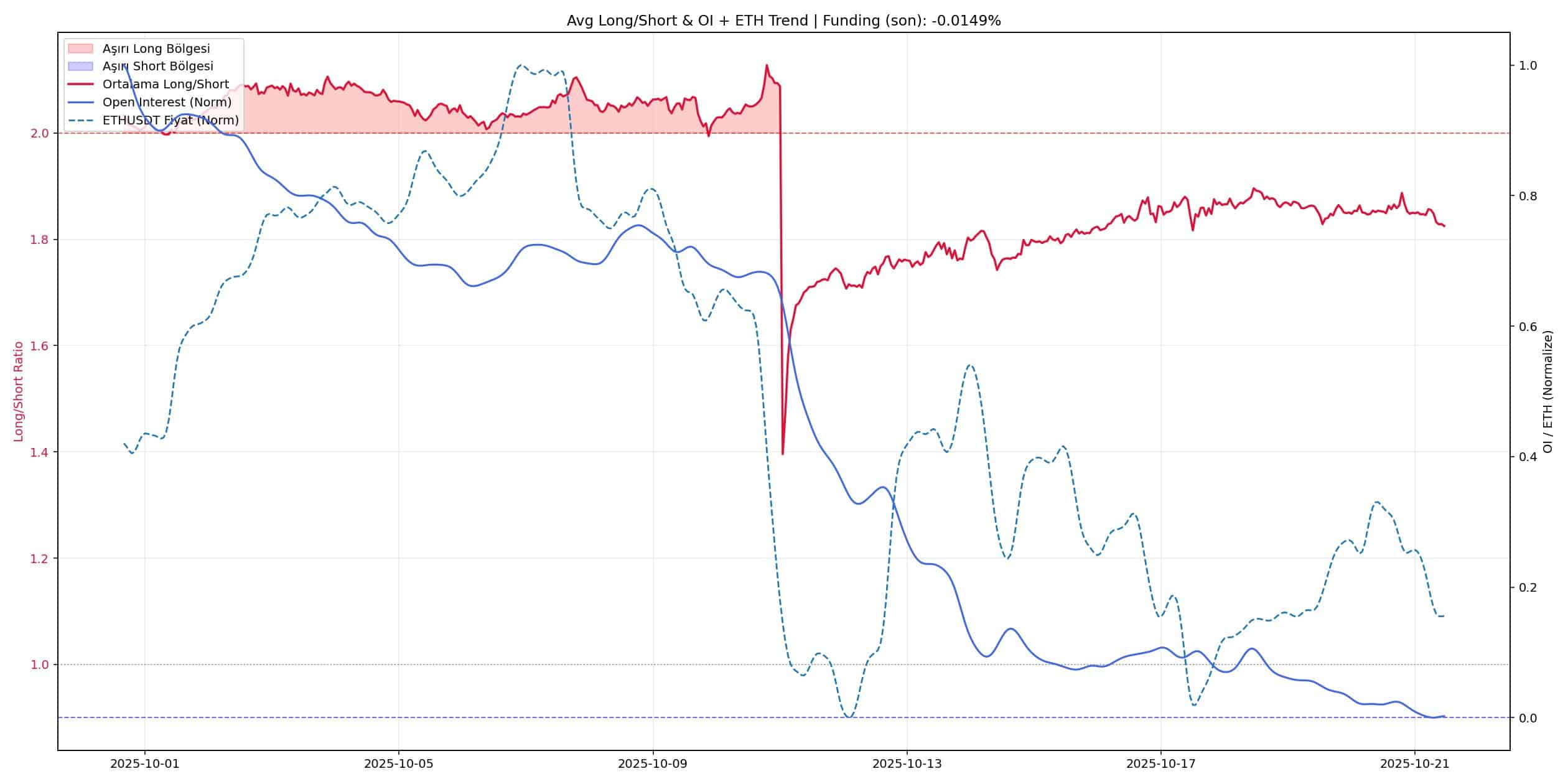
如果这种情况持续下去,对山寨币持有者来说将是利好和鼓舞。最大的山寨币以太坊[ETH]的未平仓合约已形成双底,暗示潜在的反转正在形成。

山寨币走弱!

尽管山寨币一直在试图上涨,但山寨币季节指数已跌至 40。这些山寨币的超卖程度比 COVID-19、FTX 崩盘和特朗普引发的关税战期间还要严重。

迈尔斯·多伊彻 (Miles Deutscher)表示,亚洲市场持续抛售是导致此次下跌的主要原因。如果进一步跌至 25 或更低,山寨币季的复苏将不复存在。

有趣的是,在达到 40 之后,价值开始逆转。
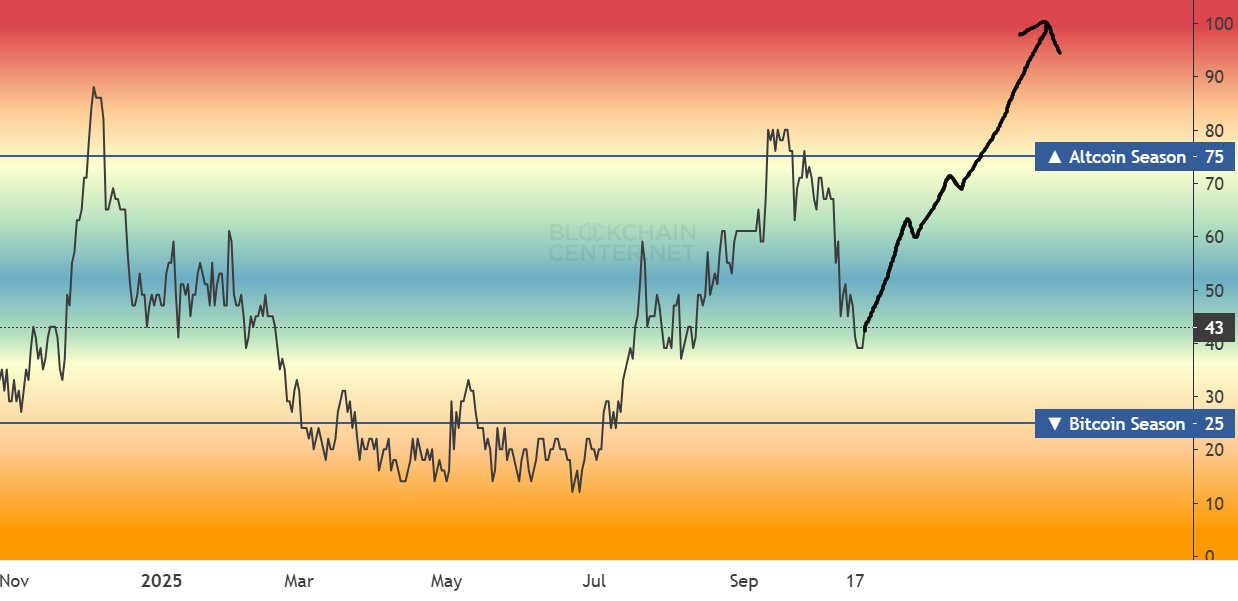
分析师Rekt Fencer在一篇文章中指出,这可能是牛市复苏前的最后一次震荡。然而,截至本文撰写时,这一走势尚未显示出任何动能。

考虑到这一点,还有什么暗示了这种潜在的逆转?

山寨币会反转还是进一步下跌?

比特币未平仓合约下跌30%,导致市场上的过剩杠杆被冲走,因为山寨币也效仿了BTC的做法。根据Glassnode的数据,当时未平仓合约价值约为350亿美元。

这一下降意味着资本流动是中性的,市场不太容易受到另一次大规模清算的影响。

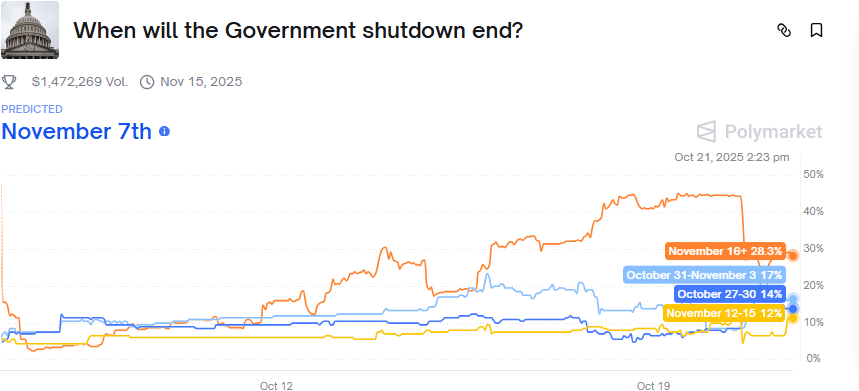
此外,根据Polymarket的数据,美国政府关门即将于11月7日结束。在经历了过去一周的下跌之后,押注开始回升。

如果这种情况结束,山寨币和BTC将迎来利好。不过,最好的情况是11月16日之后。
总体而言,市场正在形成逆转,但尚不确定何时会发生逆转。

Trending Cryptos

Related Reads

Media: Anthropic Aims for Revenue Up to $200 Billion by 2028 Ahead of IPO

Anthropic, the AI company behind Claude, is reportedly projecting its revenue could reach between $190 billion and $200 billion by 2028, according to sources cited by Reuters. This forecast, significantly higher than its reported $47 billion annual run-rate in May 2026, is being used by investors and bankers to value the company ahead of a potential IPO. Anthropic has confidentially filed with the SEC, with listing details dependent on market conditions and regulatory approval. The valuation reportedly applies a revenue multiple (EV/Revenue) to these future 2028 figures, an approach common for high-growth tech firms but unusual for a forecast two years ahead of an IPO. This reflects confidence in Anthropic's rapid scaling; its annual run-rate grew tenfold yearly for three years leading into 2026, jumping from ~$9B in late 2025 to over $47B by May 2026. Investors are betting the company's massive spending on GPUs, model training, and infrastructure will eventually outpace costs, leading to expanding margins. Public companies like Palantir, Cloudflare, and SpaceX, valued at high multiples of their forward revenue, serve as benchmarks. While this forward-looking method has precedents, some analysts question the sustainability of such valuations and the actual productivity gains from AI. Despite these concerns, earlier reports suggested Anthropic could be valued at over $1 trillion for its IPO.

cryptonews.ru18m ago

Media: Anthropic Aims for Revenue Up to $200 Billion by 2028 Ahead of IPO

cryptonews.ru18m ago

Open Blockchain Business: Who Gets the Fees and Why a Foundation is Needed

Business of Open Blockchain: Who Gets the Fees and Why a Foundation is Needed In public blockchains, user transaction fees do not simply become "revenue" for a single entity. The flow of money is complex and protocol-dependent. In Ethereum, fees consist of a base fee (burned, permanently removing ETH from circulation) and a priority tip (paid to the validator). In Solana, half the base fee is burned and half goes to the validator, while priority fees go entirely to validators. Thus, "fees" are not synonymous with "project revenue"; they may go to network operators or be destroyed. Foundations like the Ethereum Foundation do not take a cut of user fees. They are funded by their own treasuries, which can generate income (e.g., from staking rewards) and finance ecosystem development, research, and security. Their role is to fund public goods that are hard to monetize directly. Developers of open-source blockchain code can monetize through services, not the code itself. For example, Optimism provides its technology freely but sells enterprise support and managed services (OP Enterprise). Additionally, networks built on Optimism's tech, like Coinbase's Base, share a portion of their revenue with the Optimism ecosystem via agreements, creating an economic link. Token holders do not automatically receive fees as dividends. In Optimism, a portion of protocol revenue is now used to buy back and treasury-lock OP tokens, creating an indirect link between network usage and token economics. In Ethereum, fee burning reduces ETH supply but doesn't distribute funds to all holders; stakers and validators receive direct rewards. For evaluation, analysts should look beyond total fee figures. Key questions are: Who paid and for what? Where did the money go (to validators, operators, treasury, or burning)? What were the recipient's costs? Is there a mechanism linking this income to the token? The same fee amount impacts different blockchain economies in vastly different ways depending on these factors.

cryptonews.ru20m ago

Open Blockchain Business: Who Gets the Fees and Why a Foundation is Needed

cryptonews.ru20m ago

Trading

Spot

Hot Articles

Discussions

Welcome to the HTX Community. Here, you can stay informed about the latest platform developments and gain access to professional market insights. Users' opinions on the price of ETH (ETH) are presented below.

活动图片