Mastercard, Chainlink Use CCIP to Bring Payments Onchain

TheCryptoTimesPublished on 2025-10-16Last updated on 2025-10-16

Mastercard’s partnership with Chainlink has entered a new phase. This time, focusing on Chainlink’s Cross-Chain Interoperability Protocol (CCIP) to securely bridge legacy payment information with blockchain networks.

The partnership aims to link Mastercard’s 3.5 billion cardholders directly to blockchain-based services, in what’s being seen as a major step to bring traditional finance and Web3 closer together.

According to Chainlink, the initiative uses CCIP to move verified payment data from Mastercard’s system to blockchain networks securely. XSwap plays a key role, taking that verified data and executing a real-time on-chain swap. In other words, turning ordinary Mastercard transactions into blockchain-ready actions.

About the partnership

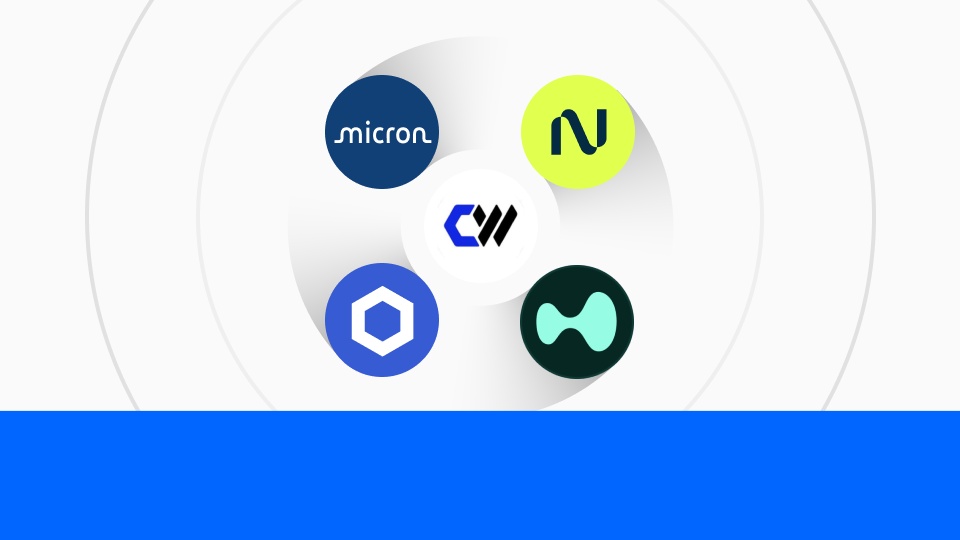
This builds on a June announcement, when Mastercard teamed up with Chainlink and other Web3 partners, including XSwap, Swapper Finance, Shift4 Payments, and ZeroHash. 

While the earlier phase focused on letting users buy crypto, the current effort goes further: it now supports verified on-chain execution of payment data, integrating blockchain more smoothly into Mastercard’s existing systems.

The goal is to make blockchain usage transparent to the end user. Practically, it implies that a Mastercard payment might cause activity on decentralized networks, e.g., tokenized transactions or instant cross-border settlement, without users having to deal with wallets or crypto explicitly.

Behind the scenes, Chainlink maintains payment data passing securely, XSwap manages technical processing onchain, and Swapper Finance bridges liquidity across decentralized exchanges so everything settles smoothly.

If implemented at scale, the initiative could provide a template for how large financial networks integrate blockchain capabilities into their operations without changing the user experience.

Also Read: Ant Digital Launches Ethereum L2 Jovay With Chainlink Integration


Mobile Only Image

Trending Cryptos

Related Reads

Uniswap Founder: When Stocks and Treasuries Are Fully On-Chain, How Will AMMs Restructure the Global Market?

Uniswap founder Hayden Adams argues that as traditional assets like stocks become tokenized, Automated Market Makers (AMMs) could fundamentally restructure global markets. The core insight is that AMMs are most efficient in "correlated pairs"—such as NVDA/SPY—where assets move together. In these pairs, passive liquidity providers (LPs) who are willing to hold the underlying assets face lower inventory risk and minimal hedging costs compared to traditional, delta-neutral market makers. This cost advantage allows AMMs to undercut professional firms. Tokenization enables assets to trade directly against each other on a shared settlement layer, rather than being siloed in dollar-based systems. Adams observes this pattern already emerging in DeFi, where assets naturally pair with correlated benchmarks (e.g., ETH for Ethereum assets). He believes this will extend to tokenized stocks, with liquidity concentrating in low-volatility correlated pairs, while a few high-volume "bridge pairs" (like SPY/USD) handle dollar conversions. The article highlights that early correlated markets for tokenized stocks already exist (e.g., on Robinhood's chain), and Uniswap v4 hooks like DualPool can further boost LP returns. Adams draws a parallel to the rise of passive index funds, suggesting passive AMM liquidity could similarly democratize market-making and capture significant market share from traditional finance. A response from crypto KOL Cody adds practical analysis, noting that while the correlated pair strategy reduces impermanent loss, current on-chain fees may not yet fully compensate for it. He shares his own LP strategy using valuation models, emphasizing that AMMs offer a novel, low-cost market-making avenue for those willing to hold inventory.

marsbit11m ago

Uniswap Founder: When Stocks and Treasuries Are Fully On-Chain, How Will AMMs Restructure the Global Market?

marsbit11m ago

Goldman Sachs Buys Volatility, Turns Bitcoin into a Yield Business

Goldman Sachs acquired NEOS Investments for up to $2.25 billion, gaining a suite of ETFs that generate income by selling options against crypto assets, particularly Bitcoin. This includes the BTCI fund, which sells call options against Bitcoin ETF holdings to capture high premiums from crypto’s volatility, offering investors stable cash flow—around 27% annualized in returns—while capping upside potential and fully exposing them to downside risk. The move highlights Wall Street’s broader push to package crypto-native yield—through staking, lending, and structured products—without taking directional bets on prices. Firms like Fidelity, JPMorgan, and Morgan Stanley now offer staking services or accept crypto as collateral for loans, collecting steady fees regardless of market direction. In contrast, native crypto firms like Bitwise remain vulnerable to market downturns, as their revenue depends entirely on assets under management. This reflects a strategic pivot: large institutions no longer need to “believe” in crypto to profit from it. They monetize volatility and investor activity through fee-based structures, leaving price risk to retail investors. As regulatory shifts like the proposed 401(k) rules unfold, yield-generating crypto products may gain even broader adoption in traditional portfolios, further cementing Wall Street’s role as a neutral intermediary capturing reliable revenue streams from the ecosystem.

marsbit15m ago

Goldman Sachs Buys Volatility, Turns Bitcoin into a Yield Business

marsbit15m ago

AI Launches a Fierce Assault on Cancer, Virtually Tests 4,000 Anti-Cancer Drugs, Google Gemma Downloads Exceed 1 Billion

Google's open-source Gemma AI model family has reached a new milestone, surpassing 10 billion cumulative downloads in two and a half years since its February 2024 launch. This growth has fueled a vast ecosystem, with over 100,000 developer-derived model variants powering diverse applications, from NASA satellites to over 100 million phones. A standout application involves cancer research. In collaboration with Google Research and Yale, a team developed a 27-billion-parameter model called Cell2Sentence-Scale 27B (C2S-Scale). This model innovatively converts complex single-cell sequencing data into a "sentence" of gene names ranked by activity, allowing it to analyze cellular behavior. It was used to conduct a "dual-context virtual screen" of over 4,000 drugs, aiming to find one that specifically boosts antigen presentation—a key process for immune system recognition—only in the presence of low interferon signals (a "cold tumor" context), not in neutral conditions. The model identified silmitasertib (CX-4945), a CK2 kinase inhibitor, as a top candidate. Subsequent live-cell experiments validated this AI-generated hypothesis, showing that the drug combined with low-dose interferon increased antigen presentation by about 50%, whereas neither element alone had a significant effect. This represents a novel, AI-proposed mechanistic pathway for potential cancer therapy. Beyond biomedicine, the Gemma ecosystem is expanding into unique domains. Models have been deployed in space on high-performance GPUs and are being used in projects like DolphinGemma to decipher dolphin communication patterns. The 10-billion-download milestone underscores a key trend: the disruptive potential of AI lies not just in raw model capability but in its widespread, silent integration into diverse hardware and real-world applications, as evidenced by the thriving "Gemmaverse" community.

marsbit16m ago

AI Launches a Fierce Assault on Cancer, Virtually Tests 4,000 Anti-Cancer Drugs, Google Gemma Downloads Exceed 1 Billion

marsbit16m ago

Shocking: OpenAI Fully Open-Sources Codex Harness

OpenAI has open-sourced the core framework of Codex, called "Harness," under an Apache-2.0 license. This move allows developers to deeply integrate AI agents into their own applications and workflows, moving beyond the limitations of generic chat interfaces. The Harness is the underlying execution system that manages an AI agent's complete lifecycle: understanding tasks, maintaining memory, using tools, handling failures, and requesting human approvals. OpenAI demonstrated that optimizations to the Harness alone can dramatically boost a model's performance, tripling scores on a benchmark while using significantly fewer tokens. The release includes three key components: a CLI tool (`codex exec`) for automated tasks, official SDKs (TypeScript/Python) for programmatic control, and the `app-server` for embedding agents directly into products. This enables features like persistent state, real-time event streaming, and human-in-the-loop controls. Early adopters showcase its versatility beyond coding. Examples include a tax preparation system that cut processing time by one-third, Cisco's platform for building apps with natural language, and a demo logistics dashboard where agents analyze data and propose actions within the existing interface. This paradigm shift grants developers full control over the user interface, context, tools, and security boundaries. AI becomes an invisible assistant within specialized software, rather than a separate chatbot. By open-sourcing the engine behind its powerful agents, OpenAI aims to spark a new wave of native, deeply integrated AI applications.

marsbit21m ago

Shocking: OpenAI Fully Open-Sources Codex Harness

marsbit21m ago

Trading

Spot

Hot Articles

How to Buy LINK

Welcome to HTX.com! We've made purchasing ChainLink (LINK) simple and convenient. Follow our step-by-step guide to embark on your crypto journey.Step 1: Create Your HTX AccountUse your email or phone number to sign up for a free account on HTX. Experience a hassle-free registration journey and unlock all features.Get My AccountStep 2: Go to Buy Crypto and Choose Your Payment MethodCredit/Debit Card: Use your Visa or Mastercard to buy ChainLink (LINK) instantly.Balance: Use funds from your HTX account balance to trade seamlessly.Third Parties: We've added popular payment methods such as Google Pay and Apple Pay to enhance convenience.P2P: Trade directly with other users on HTX.Over-the-Counter (OTC): We offer tailor-made services and competitive exchange rates for traders.Step 3: Store Your ChainLink (LINK)After purchasing your ChainLink (LINK), store it in your HTX account. Alternatively, you can send it elsewhere via blockchain transfer or use it to trade other cryptocurrencies.Step 4: Trade ChainLink (LINK)Easily trade ChainLink (LINK) on HTX's spot market. Simply access your account, select your trading pair, execute your trades, and monitor in real-time. We offer a user-friendly experience for both beginners and seasoned traders.

10.4k Total ViewsPublished 2024.03.29Updated 2026.06.02

How to Buy LINK

Discussions

Welcome to the HTX Community. Here, you can stay informed about the latest platform developments and gain access to professional market insights. Users' opinions on the price of LINK (LINK) are presented below.

活动图片