Ставка Pantera на Solana не предотвратила падение цены SOL на 10%

cryptonews.ruPublished on 2025-12-25Last updated on 2025-12-25

Сегодня Solana испытывает новое давление, несмотря на планы Pantera Capital привлечь $1,25 млрд для создания казначейского инструмента Solana, который будет котироваться на Nasdaq

Хотя это объявление могло бы стать стимулом для роста, оно оказалось в тени общего падения рынка, из-за чего SOL потерял почти 10% за последние 24 часа.

Ставка Pantera на $1,25 млрд не поддержала Solana

Ранее BeInCrypto сообщал, что Pantera Capital планирует привлечь $500 млн от инвесторов для преобразования компании, котирующейся на Nasdaq, в публичный инвестиционный инструмент Solana под названием «Solana Co.». Средства пойдут на покупку SOL, при этом Pantera вложит $100 млн собственных средств и может привлечь еще $750 млн.

Несмотря на эти новости, цена SOL осталась стабильной. Общее падение рынка привело к снижению монеты почти на 10% за последний день. За этот период открытый интерес по фьючерсам упал на 11% и составил $11,38 млрд на момент написания.
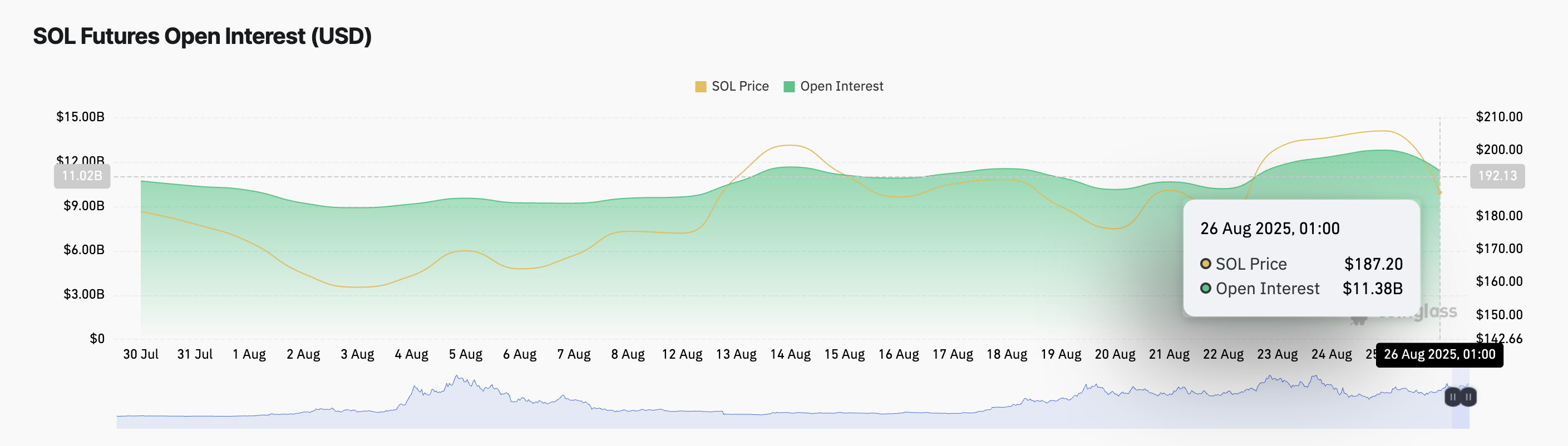
Открытый интерес по фьючерсам SOL. Источник: Coinglass

Открытый интерес показывает количество незакрытых деривативных контрактов, таких как фьючерсы или опционы, которые еще не урегулированы. Если он снижается вместе с ценой, это значит, что трейдеры закрывают позиции, а не открывают новые. Это может указывать на снижение уверенности на рынке или уменьшение спекулятивного интереса.

Несмотря на привлечение $1,25 млрд от Pantera, падение цены и открытого интереса SOL говорит о том, что быки теряют контроль над рынком.

Медведи Solana набирают силу

На дневном графике MACD для SOL формируется медвежье пересечение, что может указывать на возможные более глубокие потери в ближайшем будущем.
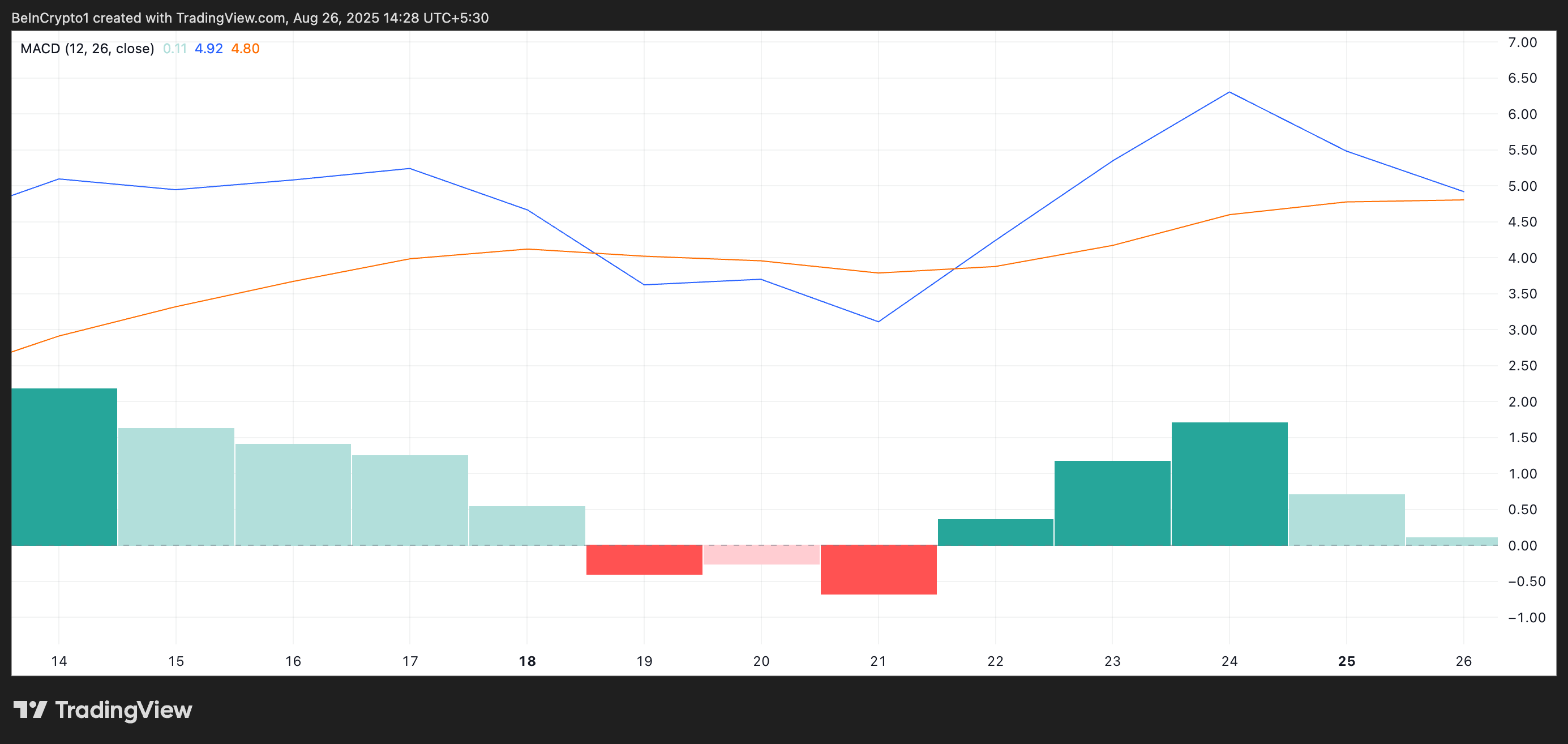
График MACD для SOL. Источник: TradingView

Медвежий паттерн пересечения возникает, когда линия MACD (синяя) опускается ниже сигнальной линии (оранжевая), указывая на нарушение бычьей структуры рынка.

Будет ли Solana падать или расти

Трейдеры видят потенциальное медвежье пересечение MACD как сигнал к продаже. Если продажи резко возрастут, SOL может упасть до $171,88.
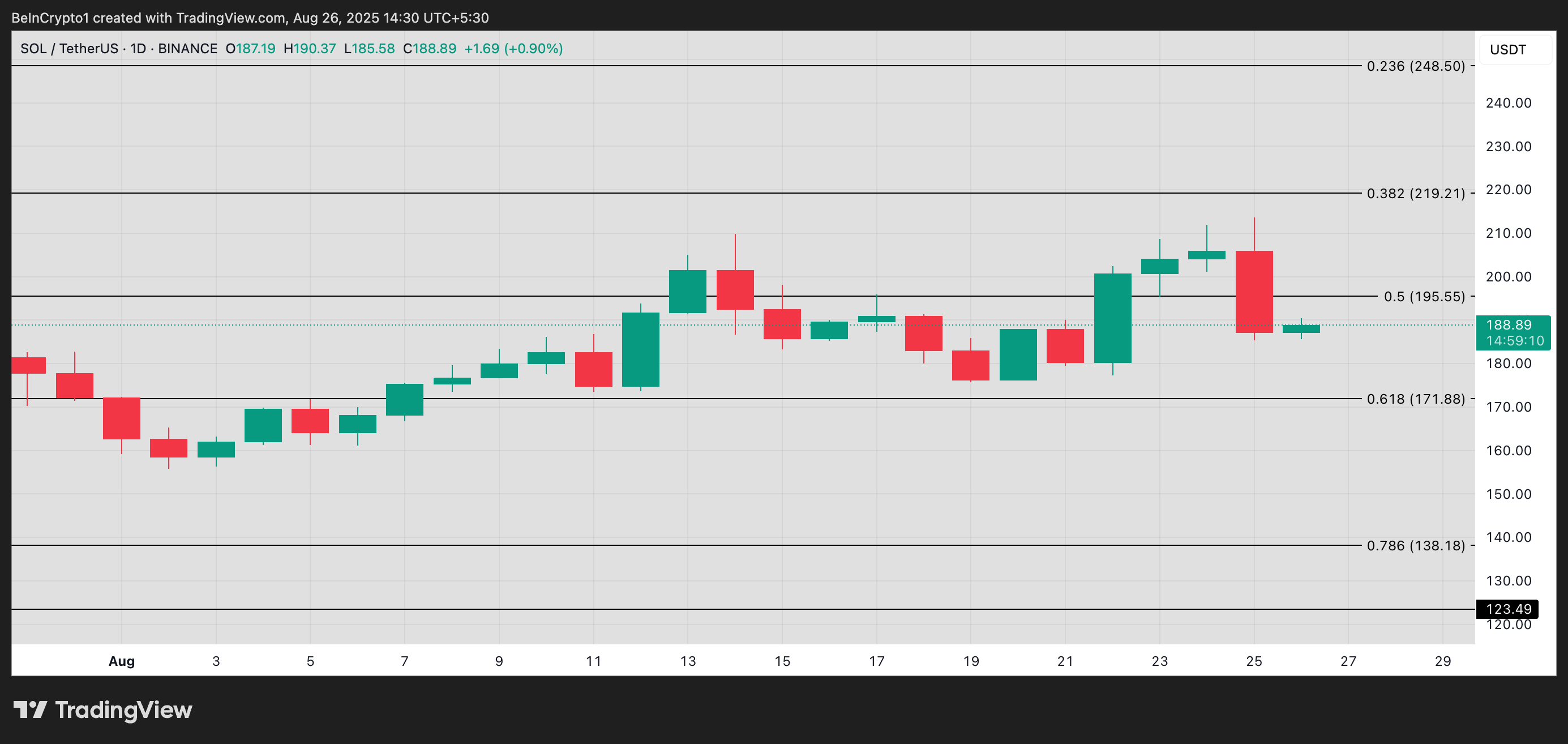
Анализ цены SOL. Источник: TradingView

Если же спрос резко возрастет и быки вернут контроль, цена получит шанс отскочить к $195,55.

Trending Cryptos

Related Reads

How Does Codex Use a Computer? Three Entry Points and Permission Boundaries

This article explains the three primary methods for Codex to interact with a computer, each with distinct use cases, permission boundaries, and trust levels. **1. Computer Use:** This offers the broadest access, allowing Codex to visually control and interact with the graphical user interface of authorized macOS/Windows apps, system settings, and even iOS simulators. It's ideal for tasks lacking APIs or structured tools, such as operating legacy software or multi-app workflows. However, it's the slowest method and has the widest permission scope, requiring careful supervision for sensitive actions. **2. Chrome Extension:** This grants Codex access to the user's logged-in Chrome browser state, including cookies, profiles, and open tabs. It's best for tasks requiring user identity across websites like Gmail, LinkedIn, Salesforce, or internal dashboards. Its key advantage is multi-tab control for complex workflows. While more powerful for browser-based tasks than Computer Use, it carries higher sensitivity as actions are performed under the user's identity. **3. In-App Browser:** This is a browser isolated within the Codex thread, separate from the user's personal browsing data. It excels in web development and debugging scenarios—previewing local servers, testing responsive layouts, or annotating designs directly on the page. Its isolation is a strength for development but a limitation for tasks requiring login sessions. The core principle is to choose the narrowest, safest, and most structured interface for the task. Use plugins or MCPs first, resort to visual control (Computer Use) only for GUI-dependent tasks, employ the Chrome extension for identity-reliant browser work, and prefer the In-App Browser for isolated development. **Appshots** are clarified as a fourth, complementary tool for *inputting* context—capturing a screenshot of a window to point Codex to something—rather than a method for Codex to *act*. Together, this layered approach highlights a key to AI agent productization: not granting unlimited permissions, but constraining them within clear boundaries for specific tasks while preserving user oversight.

marsbit47m ago

How Does Codex Use a Computer? Three Entry Points and Permission Boundaries

marsbit47m ago

The "Iron Rule" of Chip Equipment Is Being Broken

For years, the semiconductor equipment industry followed an unwritten "iron rule": suppliers offered steep discounts for new tool introductions (Design-in) and faced consistent price pressure during repeat orders, especially during market downturns. This long-standing buyer's market dynamic is now being upended. Recently, SK Hynix's primary equipment suppliers have reportedly requested a 3-4% price *increase*, a nearly unprecedented move. This shift is driven by a severe supply-demand imbalance fueled by the AI compute boom. Securing equipment has become an urgent arms race as chipmakers' expansion speed dictates their ability to fulfill massive AI chip orders. Key areas feeling the strain include: **TCB (Thermal Compression Bonding) Equipment:** Demand is exploding, driven by the simultaneous needs of HBM4 memory stacking, AI chip Chip-on-Substrate (C2S), and logic Chiplet Chip-on-Wafer (C2W) packaging. Players like Hanmi Semiconductor, Hanwha Semitech, and ASMPT are receiving major orders. While hybrid bonding is seen as the future, TCB remains the pragmatic choice for HBM4 mass production, with its lifecycle extended by relaxed specifications and ongoing technological upgrades. **Test Equipment Bottlenecks:** Ironically, AI-driven shortages are now crippling test equipment manufacturing. Critical components like FPGAs, Driver ICs, and CPUs face severe shortages and extended lead times (up to 52 weeks for FPGAs), as AI data center and server vendors prioritize supply. This creates a paradoxical cycle: AI chip shortages drive fab expansion, which requires more test equipment, whose production is delayed because its key parts are diverted to make AI chips. The industry is entering a broad, AI-powered upcycle. SEMI forecasts global semiconductor equipment sales to hit a record $156 billion by 2027, fueled by investment in advanced logic/foundry, HBM-driven DRAM, and advanced packaging (like CoWoS). Major players like TSMC, SK Hynix, and Micron are aggressively ramping capital expenditure. In conclusion, leading equipment vendors are no longer just selling tools; they are selling the critical capability to deliver AI-era capacity. Pricing power is shifting decisively to those with indispensable technology in key process nodes like advanced logic, HBM, and advanced packaging, rewriting the industry's traditional power structure.

marsbit1h ago

The "Iron Rule" of Chip Equipment Is Being Broken

marsbit1h ago

Trading

Spot
Futures

Hot Articles

Discussions

Welcome to the HTX Community. Here, you can stay informed about the latest platform developments and gain access to professional market insights. Users' opinions on the price of SOL (SOL) are presented below.

活动图片