deBridge добавляет поддержку Tron, связывая сеть с USDT

cryptonews.ruPublished on 2025-08-25Last updated on 2025-08-26

Acryptoinvest.news: Проект deBridge, многоцепочечный протокол взаимодействия, интегрировал Tron, что позволяет пользователям обмениваться активами в режиме реального времени между блокчейном Джастина Сана, Ethereum, Solana и более чем двумя десятками других блокчейнов, сообщил во вторник проект.

Благодаря этому высокопроизводительная сеть Tron, в которой находится почти половина всех стейблкоинов Tether USDT, находящихся в обращении, подключается к системе маршрутизации deBridge для транзакций с низким проскальзыванием и защитой MEV. Около 81,4 млрд USDT из 167,2 млрд находятся в Tron.

По словам deBridge, интеграция обеспечивает «полномасштабную совместимость», позиционируя Tron как платформу, совместимую с ведущими экосистемами, и позволяя пользователям осуществлять сложные межсетевые взаимодействия в рамках одной транзакции.

Для разработчиков эта связь превращает Tron в «шлюз ликвидности» для связи с другими сетями, что является важным шагом, учитывая роль блокчейна на развивающихся рынках. Согласно заявлению, мобильные кошельки и стейблкоин-рейлы привлекли более 100 миллионов аккаунтов и более четырёх миллионов активных пользователей в блокчейн, основанный Саном. Теперь пользователи могут направлять активы между Tron и более чем 25 блокчейнами через интерфейс и API deBridge.

Интеграция является частью более широкого подхода к повышению ликвидности DeFi и повышению полезности продукта. deBridge — это протокол, связывающий такие сети, как Solana, Ethereum и BNB Chain. В отличие от многих мостов, он не блокирует средства и не выпускает обёрнутые токены, что часто становится целью взломов.

Ранее acryptoinvest.news сообщал о запуске токена DBR компании deBridge через Jupiter и последующих инициативах по обратному выкупу. Протокол, запущенный в 2022 году, привлёк 5,5 млн долларов от таких инвесторов, как Animoca Brands.


Trending Cryptos

Related Reads

Upbit is Anxious: A Hasty Counterattack Aimed at Regaining Stablecoin Market Share

Title: Upbit's Rushed Counterattack to Reclaim Stablecoin Market Share Facing a dramatic shift in South Korea's stablecoin market, leading exchange Upbit launched a promotional campaign from July 26 to August 9, waiving the 0.05% trading fee for stablecoins paired with the Korean Won (KRW) and rapidly listing new stablecoins like RLUSD and USDG. This move is a direct response to its plummeting market share in this sector. Historically a duopoly with Bithumb, the market has been reshaped since October 2025 when Coinone permanently removed fees for USDC trading. By June 2026, Coinone led with 34.8% of stablecoin volume, followed by Bithumb (31.1%) and Upbit (30.1%). This contrasts sharply with the overall crypto market, where Upbit commands 60%. The data shows stablecoin demand is highly sensitive to fees, as users primarily buy them to transfer capital overseas for derivatives trading or forex arbitrage. South Korean exchanges have seen a net outflow of stablecoins for 18 consecutive months, totaling approximately 14.9 trillion KRW, underscoring their role as a cross-border capital conduit. Upbit's limited-time promotion initially boosted its daily stablecoin volume by 162%, but the surge was almost entirely in USDT (98.1% of volume). The newly listed stablecoins saw negligible, fleeting interest. Furthermore, the promotional effect quickly waned in the second week, with volume dropping 33% on weekdays. A concurrent weakening of the KRW also contributed to the trading spike, independent of the fee waiver. The analysis suggests that once the promotion ends, Upbit is unlikely to retain its temporary gains unless it matches Coinone's permanent zero-fee policy, forcing a choice between market share and fee revenue. Upbit's strategic push may be less about immediate profit and more about preparing for future regulatory shifts. With South Korea's *Digital Asset Basic Act* on the horizon, which will regulate KRW-backed stablecoins, and following Dunamu's (Upbit's parent) integration into Naver Financial to build a payment ecosystem, securing a dominant position in the dollar stablecoin distribution channel holds long-term strategic value. However, potential regulatory conflicts could prevent Upbit from listing a future Naver-issued KRW stablecoin, making the current fight for dollar stablecoin flow even more critical.

marsbit3h ago

Upbit is Anxious: A Hasty Counterattack Aimed at Regaining Stablecoin Market Share

marsbit3h ago

Michael Saylor Compares Bitcoin and Gold!

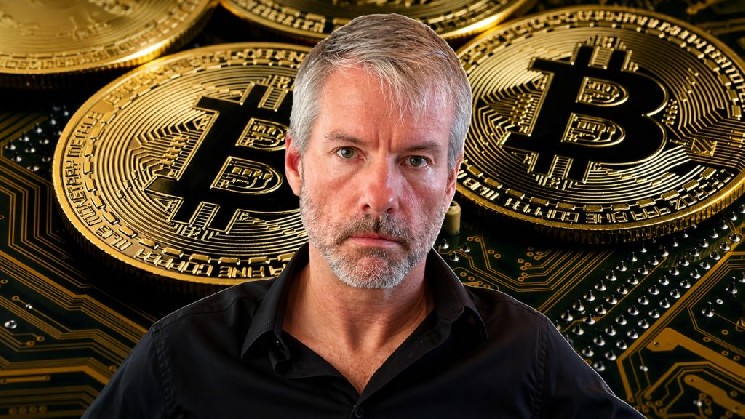
Michael Saylor, founder of MicroStrategy, argues that Bitcoin fundamentally changes how wealth is stored and transferred by transforming digital scarcity into economic value. He describes Bitcoin as the first digital monetary network, combining computers, digital networks, and cryptography. It digitizes monetary assets, allowing their supply to be controlled by public protocols rather than institutions, thus converting economic value into information transmissible over global networks. Comparing Bitcoin to gold, Saylor states that while increasing Bitcoin's supply is harder, its integration with software and transfer is easier. He highlights Bitcoin's proof-of-work mechanism, which ties it to the physical world by consuming real energy to secure the ledger, making past transactions immutable. This creates a shared security system involving miners, energy companies, and investors. Saylor suggests "digital monetary energy" is a more accurate term than "digital gold." He emphasizes that the Bitcoin network is an adaptive ecosystem of miners, nodes, developers, and users. Its core design is intentionally simple, focused on maintaining a secure ledger for scarce digital assets, with complex functionalities built in higher-layer applications. This architecture allows Bitcoin to serve as a foundation for transmitting value and fostering innovation in payments and financial services. Saylor notes Bitcoin's deeper impact lies in creating digital sovereignty, where private keys give individuals permissionless control over their economic power, with ownership verified mathematically, not by institutions. He concludes that while gold's physical scarcity makes it money, Bitcoin's digital scarcity does the same, characterizing Bitcoin as the monetary energy of the digital age.

cryptonews.ru4h ago

Michael Saylor Compares Bitcoin and Gold!

cryptonews.ru4h ago

Trading

Spot

Hot Articles

How to Buy TRX

Welcome to HTX.com! We've made purchasing TRON (TRX) simple and convenient. Follow our step-by-step guide to embark on your crypto journey.Step 1: Create Your HTX AccountUse your email or phone number to sign up for a free account on HTX. Experience a hassle-free registration journey and unlock all features.Get My AccountStep 2: Go to Buy Crypto and Choose Your Payment MethodCredit/Debit Card: Use your Visa or Mastercard to buy TRON (TRX) instantly.Balance: Use funds from your HTX account balance to trade seamlessly.Third Parties: We've added popular payment methods such as Google Pay and Apple Pay to enhance convenience.P2P: Trade directly with other users on HTX.Over-the-Counter (OTC): We offer tailor-made services and competitive exchange rates for traders.Step 3: Store Your TRON (TRX)After purchasing your TRON (TRX), store it in your HTX account. Alternatively, you can send it elsewhere via blockchain transfer or use it to trade other cryptocurrencies.Step 4: Trade TRON (TRX)Easily trade TRON (TRX) on HTX's spot market. Simply access your account, select your trading pair, execute your trades, and monitor in real-time. We offer a user-friendly experience for both beginners and seasoned traders.

27.5k Total ViewsPublished 2024.03.29Updated 2026.06.02

How to Buy TRX

Discussions

Welcome to the HTX Community. Here, you can stay informed about the latest platform developments and gain access to professional market insights. Users' opinions on the price of TRX (TRX) are presented below.

活动图片