Wait—Ripple Came Before Bitcoin? Newly Uncovered Document Says So

bitcoinistPublished on 2025-06-26Last updated on 2025-06-26

Abstract

Ripple’s backstory just got a little twist. According to a set of emails from 2014, early notes on what became...

Trusted Editorial content, reviewed by leading industry experts and seasoned editors. Ad Disclosure

Ripple’s backstory just got a little twist. According to a set of emails from 2014, early notes on what became Ripple go as far back as 2004.

That’s four years before Satoshi Nakamoto put out the Bitcoin whitepaper. These emails, shared by XRP community figure SMOQE, feature comments from tech writer Reutzel Bailey and industry insider Jeffrey Cliff.

They hint that Ripple’s seed was planted long before anyone mined the very first bitcoin block in January 2009.

Email Exchange Raises Timeline Questions

In the 2014 thread, Bailey points out that Ryan Fugger first sketched out a payment system in 2004. Back then, it wasn’t meant to be a public, mined cryptocurrency.

It was called RipplePay, and it let folks move value without banks. Bailey says Chris Larsen later saw Bitcoin’s buzz and steered Ripple in a crypto direction.

Cliff jumps in to stress that Ripple’s idea “predates Bitcoin,” though he argues it wasn’t a “copycat math-based currency” riding on Bitcoin’s hype.

RipplePay’s Early Vision

Based on reports, Fugger’s 2004 project aimed to speed up payments between trusted parties. It leaned on digital trust rather than mining. Transactions were approved by a small group of validators—not by open mining.

That setup made it fast, but also private. It wasn’t until 2011 that developers began talking about an open network, one anyone could join to validate deals, rather than a gated club.
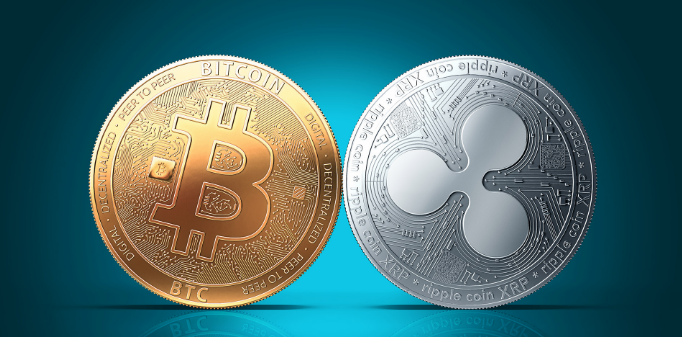
Image: WazirX

XRP Ledger Emerges In 2012

In 2011, Jed McCaleb teamed up with Arthur Britto and David Schwartz to code what they called the XRP Ledger. They wanted a version of Bitcoin that skipped proof-of-work.

By 2012, Fugger passed the torch, and McCaleb, Larsen and others launched NewCoin. The name switched to OpenCoin in 2013, then to Ripple in 2015.

Based on the timeline, XRP the token went live in 2012—three years after Netflix hit 1 million subscribers in the US, and about 10 years before McCaleb sold his last coins in 2022.

BTC is now trading at $107,776. Chart: TradingView

Token Gifts And Executive Moves

When XRP started, its founders gifted 80 billion tokens to the company. McCaleb got 9.5 billion XRP of that stash. He agreed to sell his holdings bit by bit to avoid sudden market shocks.

His final XRP sales wrapped up in 2022. After exiting, he helped start Stellar. Larsen stayed on and today leads Ripple as its chairman.

Even though Bitcoin gets the credit as the first real cryptocurrency, Ripple actually laid the groundwork years earlier – at least according to the document — showing that the dream of sending value without a middleman was already taking shape.

Featured image from Unsplash, chart from TradingView

Editorial Process for bitcoinist is centered on delivering thoroughly researched, accurate, and unbiased content. We uphold strict sourcing standards, and each page undergoes diligent review by our team of top technology experts and seasoned editors. This process ensures the integrity, relevance, and value of our content for our readers.

Christian, a journalist and editor with leadership roles in Philippine and Canadian media, is fueled by his love for writing and cryptocurrency. Off-screen, he's a cook and cinephile who's constantly intrigued by the size of the universe.

Trending Cryptos

Related Reads

Today, Claude Cowork Major Update: Close Your Laptop, It Works for You Overnight

Anthropic's Claude Cowork has received a major upgrade, officially launching on mobile and web platforms. This allows users to manage and monitor tasks from any device, freeing them from needing to stay at their computers. The key innovation is that tasks now run in the cloud on Anthropic's servers, meaning work continues even when a user's personal device is offline or closed. The update merges Chat and Cowork into a single interface and extends usage quotas. Engineers highlight three core capabilities now unified: precise context understanding, support for long-running tasks, and complete independence from a user's physical device. The workflow is described as a full cycle: a user assigns a complex task (e.g., preparing a meeting summary, drafting emails, post-meeting analysis). Claude Cowork autonomously breaks it down, connects to necessary tools like Slack and email, gathers information, and executes. It pauses only for critical user decisions, sending a notification to the user's phone for approval before proceeding. Product managers share use cases like monitoring AI agents during a soccer game or resuming a cloud-based task seamlessly after a flight, emphasizing the new flexibility. The article frames this as part of a larger trend where tech giants (OpenAI, Microsoft, Google) are competing to bring AI agents into the daily workflows of general knowledge workers, not just developers. The ultimate battleground is becoming an indispensable, seamless part of everyday productivity.

marsbit52m ago

Today, Claude Cowork Major Update: Close Your Laptop, It Works for You Overnight

marsbit52m ago

Trading

Spot

Hot Articles

What is $BITCOIN

DIGITAL GOLD ($BITCOIN): A Comprehensive Analysis Introduction to DIGITAL GOLD ($BITCOIN) DIGITAL GOLD ($BITCOIN) is a blockchain-based project operating on the Solana network, which aims to combine the characteristics of traditional precious metals with the innovation of decentralized technologies. While it shares a name with Bitcoin, often referred to as “digital gold” due to its perception as a store of value, DIGITAL GOLD is a separate token designed to create a unique ecosystem within the Web3 landscape. Its goal is to position itself as a viable alternative digital asset, although specifics regarding its applications and functionalities are still developing. What is DIGITAL GOLD ($BITCOIN)? DIGITAL GOLD ($BITCOIN) is a cryptocurrency token explicitly designed for use on the Solana blockchain. In contrast to Bitcoin, which provides a widely recognized value storage role, this token appears to focus on broader applications and characteristics. Notable aspects include: Blockchain Infrastructure: The token is built on the Solana blockchain, known for its capacity to handle high-speed and low-cost transactions. Supply Dynamics: DIGITAL GOLD has a maximum supply capped at 100 quadrillion tokens (100P $BITCOIN), although details regarding its circulating supply are currently undisclosed. Utility: While precise functionalities are not explicitly outlined, there are indications that the token could be utilized for various applications, potentially involving decentralized applications (dApps) or asset tokenization strategies. Who is the Creator of DIGITAL GOLD ($BITCOIN)? At present, the identity of the creators and development team behind DIGITAL GOLD ($BITCOIN) remains unknown. This situation is typical among many innovative projects within the blockchain space, particularly those aligning with decentralized finance and meme coin phenomena. While such anonymity may foster a community-driven culture, it intensifies concerns about governance and accountability. Who are the Investors of DIGITAL GOLD ($BITCOIN)? The available information indicates that DIGITAL GOLD ($BITCOIN) does not have any known institutional backers or prominent venture capital investments. The project seems to operate on a peer-to-peer model focused on community support and adoption rather than traditional funding routes. Its activity and liquidity are primarily situated on decentralized exchanges (DEXs), such as PumpSwap, rather than established centralized trading platforms, further highlighting its grassroots approach. How DIGITAL GOLD ($BITCOIN) Works The operational mechanics of DIGITAL GOLD ($BITCOIN) can be elaborated on based on its blockchain design and network attributes: Consensus Mechanism: By leveraging Solana’s unique proof-of-history (PoH) combined with a proof-of-stake (PoS) model, the project ensures efficient transaction validation contributing to the network's high performance. Tokenomics: While specific deflationary mechanisms have not been extensively detailed, the vast maximum token supply implies that it may cater to microtransactions or niche use cases that are still to be defined. Interoperability: There exists the potential for integration with Solana’s broader ecosystem, including various decentralized finance (DeFi) platforms. However, the details regarding specific integrations remain unspecified. Timeline of Key Events Here is a timeline that highlights significant milestones concerning DIGITAL GOLD ($BITCOIN): 2023: The initial deployment of the token occurs on the Solana blockchain, marked by its contract address. 2024: DIGITAL GOLD gains visibility as it becomes available for trading on decentralized exchanges like PumpSwap, allowing users to trade it against SOL. 2025: The project witnesses sporadic trading activity and potential interest in community-led engagements, although no noteworthy partnerships or technical advancements have been documented as of yet. Critical Analysis Strengths Scalability: The underlying Solana infrastructure supports high transaction volumes, which could enhance the utility of $BITCOIN in various transaction scenarios. Accessibility: The potential low trading price per token could attract retail investors, facilitating wider participation due to fractional ownership opportunities. Risks Lack of Transparency: The absence of publicly known backers, developers, or an audit process may yield skepticism regarding the project's sustainability and trustworthiness. Market Volatility: The trading activity is heavily reliant on speculative behavior, which can result in significant price volatility and uncertainty for investors. Conclusion DIGITAL GOLD ($BITCOIN) emerges as an intriguing yet ambiguous project within the rapidly evolving Solana ecosystem. While it attempts to leverage the “digital gold” narrative, its departure from Bitcoin's established role as a store of value underscores the need for a clearer differentiation of its intended utility and governance structure. Future acceptance and adoption will likely depend on addressing the current opacity and defining its operational and economic strategies more explicitly. Note: This report encompasses synthesised information available as of October 2023, and developments may have transpired beyond the research period.

663 Total ViewsPublished 2025.05.13Updated 2025.05.13

What is $BITCOIN

Discussions

Welcome to the HTX Community. Here, you can stay informed about the latest platform developments and gain access to professional market insights. Users' opinions on the price of BTC (BTC) are presented below.

活动图片