PwC Predicts Digital Euro Will Cost €18 Billion: Why Bitcoin is Better, Cheaper & Safer

bitcoinistPublished on 2025-06-18Last updated on 2025-06-18

Abstract

PricewaterhouseCoopers (PwC) has just released its Digital Euro Cost Study, which estimates the costs involved in introducing a digital euro...

Trusted Editorial content, reviewed by leading industry experts and seasoned editors. Ad Disclosure

PricewaterhouseCoopers (PwC) has just released its Digital Euro Cost Study, which estimates the costs involved in introducing a digital euro at €18B, most of which will be borne by local retail banks.
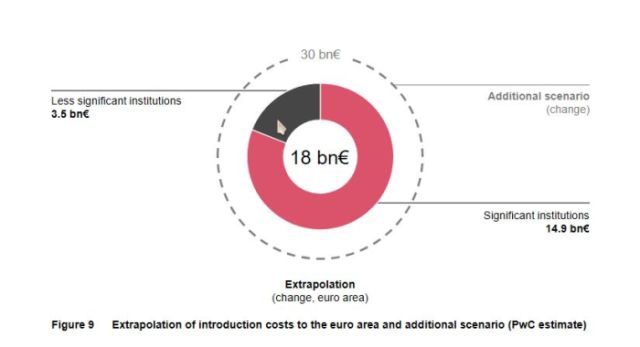
PwC Digital Euro Cost Study.
Source: PwC Digital Euro Cost Study

Commissioned by several European banking associations (EACB, EBF, ESBG), the findings reiterate what Bitcoin maximalists have been saying forever: why not just use Bitcoin?

Unlike a central bank digital currency (CBDC), Bitcoin offers lower costs, quicker transactions, enhanced security and privacy, and it’s a household name in contemporary financial culture.

Also, as the first and still the biggest decentralized cryptocurrency, $BTC lets ordinary people participate in building out and profiting from the financial infrastructure of the future.

This article digs into PwC’s findings and recommendations. It also gets into the wider digital currency debate and investigates why many still see Bitcoin as the best digital currency.

Finally, we’ll look at several ways for just about anyone to capitalize on Bitcoin’s growth.

The ECB Case for a Digital Euro

The European Central Bank (ECB) believes a digital euro will reinforce Europe’s financial independence while securing the central bank’s place in an increasingly digitalized economy.

And the EU is not alone. Most countries have flirted with the idea of a CBDC at one point or another.

With cash usage declining, a secure digital version of the euro — one that isn’t reliant on foreign tech and payment providers — would help the ECB retain control over the euro zone’s monetary system.

Citizens and businesses would surely welcome a public digital payment method that works as legal tender, is as easy to use as cash, and is accepted across the entire eurozone.

On the other hand, local retail banks and branches were concerned that the brunt of the change would fall on them, which is why they commissioned PwC to calculate the costs.

PwC Digital Euro Cost Study: Costs and Concerns

The Digital Euro Cost Study was commissioned to work out what introducing the digital euro across the euro area would cost retail banks. Here’s what they found:

  • High Upfront Costs: Implementing the digital euro could cost over €2B, a bill the 19 participating banks would have to foot, averaging €110M per bank. If introduced in all euro area banks, estimated costs lie between €18B and €30B, and that’s just accounting for the initial “change costs”, not the running costs beyond the initial four-year launch period.
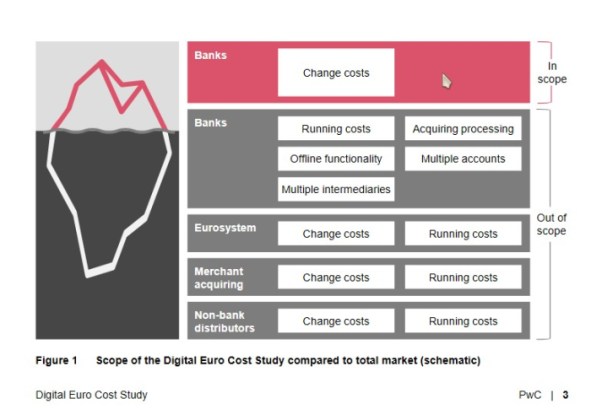
    PwC Digital Euro Cost Study.
    Source: PwC Digital Euro Cost Study

  • Heavy Technical Demands: About 75% of costs involve complex technical upgrades to apps, ATMs, POS terminals, backend systems, etc.
  • Human Resource and Operational Challenges: The project will require nearly 46% of the skilled personnel annually, potentially stifling innovation in other areas. Concerns were also raised around the cost of ATM upgrades, branch roles in deployment, physical digital euro cards, and compliance.
  • Anti-Competition: There are also concerns about how it might potentially overlap with, and crowd out, existing payment systems like cards, wallets, and apps.

The PwC recommends that the ECB provide retail banks with a clear compensation model and cost-benefit analysis to ensure they don’t have to bear an unfair load of the change costs.

The Case for Bitcoin

Bitcoin maximalists would argue that a CBDC is unnecessary and a step backward, and that Bitcoin is superior to a central bank digital currency in almost every respect.

For one thing, Bitcoin is anti-deflationary. Its fixed supply of 21M $BTC makes it immune to the government policies that erode the value of fiat currencies.

Indeed, as the very embodiment of decentralized, Bitcoin is free from central bank control and political influence.

Unlike a digital euro, which would be issued, regulated, and monitored by the ECB. Bitcoin champions freedom and privacy — blockchain transactions don’t lead back to your personal identity.

The best part is that Bitcoin welcomes anyone, not just the banks, to build on its infrastructure and profit from their participation.

Invest Now in the Bitcoin Economy

Whether the digital euro comes to pass, $BTC shows no signs of slowing. From Strategy to Mastercard, Visa, PayPal, and JPMorgan, the world’s biggest asset managers and payment providers are putting their past grievances behind them and going all in on crypto.

National Bitcoin reserves are on the agenda, from the US to El Salvador, to Russia, and crypto is breaking into the Nasdaq, as it cleans up its image and takes on Wall Street.

In a Bitcoin-led economy, related DeFi projects can also carve out a niche while offering a low-cap entry point for retail investors who want a piece of action.

Below, we explore why these are some of the best presales to buy now.

1. Bitcoin Hyper ($HYPER) — Layer 2 Blockchain Unleashing Bitcoin’s Utility

Bitcoin Hyper ($HYPER) is the Layer-2 upgrade Bitcoin Maximalists have long been asking for.

It helps Bitcoin compete with fast chains like Solana. And it lets developers and everyday people use $BTC in new and varied ways, from making instant payments to DeFi, NFTs, and even online gaming.

As it stands, Bitcoin’s sluggish speed, high fees, heavy congestion, and limited scalability have prevented its usefulness as legal tender for small, daily payments.

Bitcoin Hyper uses the Solana Virtual Machine (SVM) for lightning-fast execution of smart contracts, boosting scalability and delivering transaction speeds and fees on par with Solana.

Layer 2 transactions are then batched and compressed for near-instant finality and confirmation on the main net.

Thanks to real-time synchronization between Bitcoin Hyper’s Layer-2 and Bitcoin’s Layer-1, everything is always 100% transparent and secure.
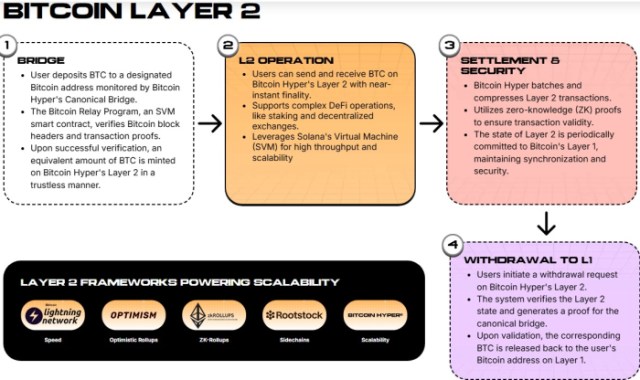
How Bitcoin Hyper works.

The project has been in presale since May 16, 2025, and has already accumulated over $1.3M.

Today, $HYPER is priced at $0.011925 and offers a 560% staking APY. Our price prediction forecasts a high of $0.90, giving a potential ROI of 7,494% from the current price.

You can get in at the official $HYPER presale page, or read our guide on how to buy $HYPER for more information.

2. Best Wallet Token — You Can Bet on People Needing a Good, Private Wallet

Another way to back a Bitcoin-based financial system is to invest in the growth of a top new crypto wallet, Best Wallet.

A challenger brand in the non-custodial crypto wallet space, Best Wallet enables seamless cross-chain swaps with the lowest fees and the best exchange rates.

Best Wallet Token main features.

Aside from just trading and storing your crypto safely in Best Wallet, buying and holding its native Best Wallet Token ($BEST) lets you ride its success as the demand for crypto wallets continues to grow.

You’ll also enjoy higher staking rewards, reduced on-chain transaction fees, community governance rights, and early access to upcoming projects.

The presale has already raised over $13.3M with 25M+ tokens staked, showing strong confidence in the project’s ambition to take 40% of the crypto wallet market by 2026.

Our price prediction for $BEST anticipates that the token could reach $0.006467 by the end of the year 2025, for an ROI of 152% of today’s price.

Find out how to buy $BEST and join the staking pool today, or read our complete Best Wallet review for more information on this powerful new Bitcoin wallet.

You Can’t Beat Bitcoin

The PwC report confirms that Bitcoin is best for everyone but the central bank, and you can’t lose investing in Bitcoin and related infrastructure like Bitcoin Hyper and Best Wallet Token.

As always, however, this is not financial advice, and you should DYOR before making any investment.

 

Editorial Process for bitcoinist is centered on delivering thoroughly researched, accurate, and unbiased content. We uphold strict sourcing standards, and each page undergoes diligent review by our team of top technology experts and seasoned editors. This process ensures the integrity, relevance, and value of our content for our readers.

As a crypto writer, Bogdan’s responsibilities are split between researching and writing articles and entertaining the team with his humor bordering on the politically incorrect, an aspiring Bill Burr, if you will. Thanks to his 12+ years of writing experience in just as many fields, including tech, cybersecurity, modelling, fitness, crypto, and other topics-that-shall-not-be-named, he's become a genuine asset to the team. While his position as a senior writer at PrivacyAffairs thought him valuable lessons about the power of self-management, his entire writing career was and is an exercise in self-improvement. Now, he's ready to sink his teeth into crypto and teach people how to take control of their own money on the blockchain. With fiat as an eternally devaluing currency, Bitcoin and altcoins seem like the best-fitting alternative for Bogdan. Bogdan’s biggest professional accomplishment, aside from securing a position as a main writer for Bitcoinist, was his 5-year run as a writing manager at Blackwood Productions, where he coordinated a team of four writers. During that time, he learned the value of teamwork and that of creating a working environment that breeds efficiency, positivity, and friendship.

Trending Cryptos

Related Reads

Trading

Spot

Hot Articles

What is $BITCOIN

DIGITAL GOLD ($BITCOIN): A Comprehensive Analysis Introduction to DIGITAL GOLD ($BITCOIN) DIGITAL GOLD ($BITCOIN) is a blockchain-based project operating on the Solana network, which aims to combine the characteristics of traditional precious metals with the innovation of decentralized technologies. While it shares a name with Bitcoin, often referred to as “digital gold” due to its perception as a store of value, DIGITAL GOLD is a separate token designed to create a unique ecosystem within the Web3 landscape. Its goal is to position itself as a viable alternative digital asset, although specifics regarding its applications and functionalities are still developing. What is DIGITAL GOLD ($BITCOIN)? DIGITAL GOLD ($BITCOIN) is a cryptocurrency token explicitly designed for use on the Solana blockchain. In contrast to Bitcoin, which provides a widely recognized value storage role, this token appears to focus on broader applications and characteristics. Notable aspects include: Blockchain Infrastructure: The token is built on the Solana blockchain, known for its capacity to handle high-speed and low-cost transactions. Supply Dynamics: DIGITAL GOLD has a maximum supply capped at 100 quadrillion tokens (100P $BITCOIN), although details regarding its circulating supply are currently undisclosed. Utility: While precise functionalities are not explicitly outlined, there are indications that the token could be utilized for various applications, potentially involving decentralized applications (dApps) or asset tokenization strategies. Who is the Creator of DIGITAL GOLD ($BITCOIN)? At present, the identity of the creators and development team behind DIGITAL GOLD ($BITCOIN) remains unknown. This situation is typical among many innovative projects within the blockchain space, particularly those aligning with decentralized finance and meme coin phenomena. While such anonymity may foster a community-driven culture, it intensifies concerns about governance and accountability. Who are the Investors of DIGITAL GOLD ($BITCOIN)? The available information indicates that DIGITAL GOLD ($BITCOIN) does not have any known institutional backers or prominent venture capital investments. The project seems to operate on a peer-to-peer model focused on community support and adoption rather than traditional funding routes. Its activity and liquidity are primarily situated on decentralized exchanges (DEXs), such as PumpSwap, rather than established centralized trading platforms, further highlighting its grassroots approach. How DIGITAL GOLD ($BITCOIN) Works The operational mechanics of DIGITAL GOLD ($BITCOIN) can be elaborated on based on its blockchain design and network attributes: Consensus Mechanism: By leveraging Solana’s unique proof-of-history (PoH) combined with a proof-of-stake (PoS) model, the project ensures efficient transaction validation contributing to the network's high performance. Tokenomics: While specific deflationary mechanisms have not been extensively detailed, the vast maximum token supply implies that it may cater to microtransactions or niche use cases that are still to be defined. Interoperability: There exists the potential for integration with Solana’s broader ecosystem, including various decentralized finance (DeFi) platforms. However, the details regarding specific integrations remain unspecified. Timeline of Key Events Here is a timeline that highlights significant milestones concerning DIGITAL GOLD ($BITCOIN): 2023: The initial deployment of the token occurs on the Solana blockchain, marked by its contract address. 2024: DIGITAL GOLD gains visibility as it becomes available for trading on decentralized exchanges like PumpSwap, allowing users to trade it against SOL. 2025: The project witnesses sporadic trading activity and potential interest in community-led engagements, although no noteworthy partnerships or technical advancements have been documented as of yet. Critical Analysis Strengths Scalability: The underlying Solana infrastructure supports high transaction volumes, which could enhance the utility of $BITCOIN in various transaction scenarios. Accessibility: The potential low trading price per token could attract retail investors, facilitating wider participation due to fractional ownership opportunities. Risks Lack of Transparency: The absence of publicly known backers, developers, or an audit process may yield skepticism regarding the project's sustainability and trustworthiness. Market Volatility: The trading activity is heavily reliant on speculative behavior, which can result in significant price volatility and uncertainty for investors. Conclusion DIGITAL GOLD ($BITCOIN) emerges as an intriguing yet ambiguous project within the rapidly evolving Solana ecosystem. While it attempts to leverage the “digital gold” narrative, its departure from Bitcoin's established role as a store of value underscores the need for a clearer differentiation of its intended utility and governance structure. Future acceptance and adoption will likely depend on addressing the current opacity and defining its operational and economic strategies more explicitly. Note: This report encompasses synthesised information available as of October 2023, and developments may have transpired beyond the research period.

730 Total ViewsPublished 2025.05.13Updated 2025.05.13

What is $BITCOIN

Discussions

Welcome to the HTX Community. Here, you can stay informed about the latest platform developments and gain access to professional market insights. Users' opinions on the price of BTC (BTC) are presented below.

活动图片