​​Huma Finance 登陆 Jupiter 开启预售:PayFi 革命与 Solana 生态的「核爆点」​​

深潮Published on 2025-05-22Last updated on 2025-05-22

Huma Finance 的 Jupiter 预售,本质上是一场关于 DeFi 未来形态的实验。

撰文:Lawrence

引言:当 PayFi 遇见 Solana,一场价值重构的序幕
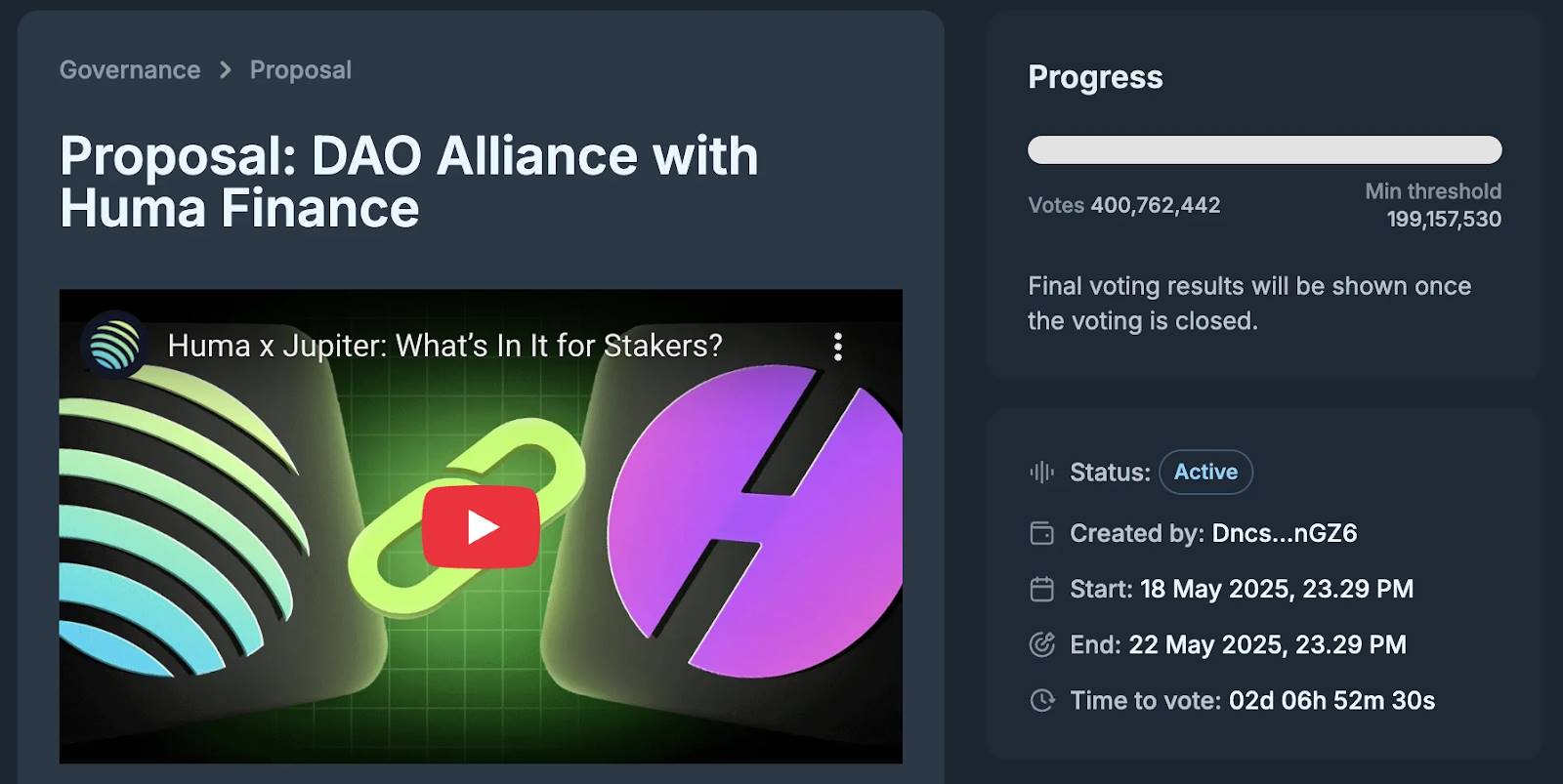
2025 年 5 月,Solana 生态的 Launchpad 战场硝烟弥漫。在 Pump.Fun 与 Raydium 围绕 Meme 代币和流动性挖矿的缠斗中,Jupiter 以一场战略级合作打破了僵局——全球首个 PayFi 协议 Huma Finance 宣布在其新平台 TGE(代币生成事件)启动 IDO。

这场合作不仅关乎代币发行的流量争夺,更被视作 PayFi(支付金融)与 DeFi 深度融合的里程碑。Huma Finance 以 43 亿美元累计交易量、年化 14% 的稳定收益,以及「现实资产 + 区块链」的叙事,为 Solana 生态注入了久违的价值锚点。而 Jupiter 凭借 40 万月活用户的社区势能,试图将这场预售推向「Web3 金融基础设施」的信仰之战。

一、Huma Finance:PayFi 赛道的「破局者」与数据狂飙
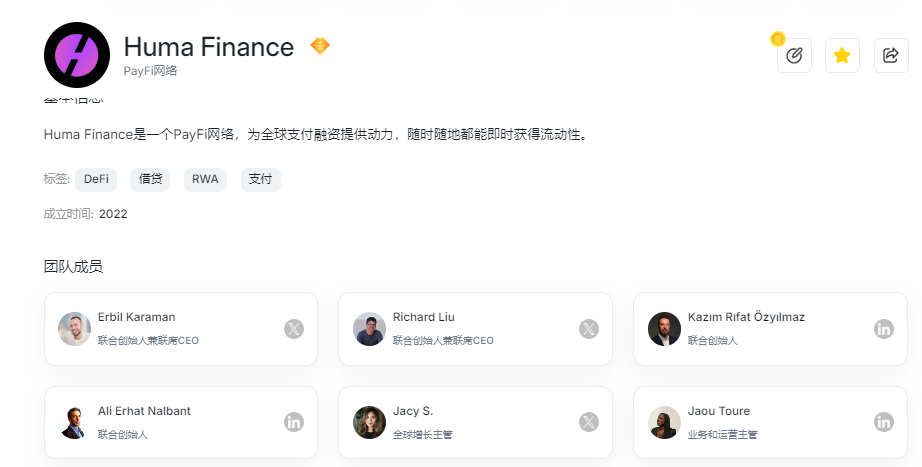
成立于 2023 年的 Huma Finance,定位为跨境支付与资金周转的区块链解决方案提供商。其核心逻辑是通过稳定币和智能合约技术,将传统金融中的贸易融资、信用卡清算、跨境汇款等场景链上化,实现资金流的实时结算与收益分配。根据最新披露,Huma 已实现43 亿美元总交易量,平台总收益达 409 万美元,活跃流动性资产突破 1.04 亿美元,存款用户数近 4.9 万(较上月增长 9 倍)。这一数据在 Solana 生态中堪称「统治级」——其交易量占 Solana DeFi 总 TVL 的 40% 以上,甚至超越 Jupiter、Raydium 等老牌协议。

相较于依赖投机性流动性的 DeFi 协议,Huma 的收益来源更具现实根基。其 10%-20% 的年化收益率源自跨境贸易中的利差套利和资金周转需求,例如中小企业通过质押应收账款获取链上信贷。这种模式使其在 Messari 报告的「30 万亿美元 PayFi 市场规模」中占据先发优势,并吸引 Distributed Global、Circle Ventures 等机构两轮累计注资 4630 万美元。

二、代币经济模型:实用主义设计与流通博弈
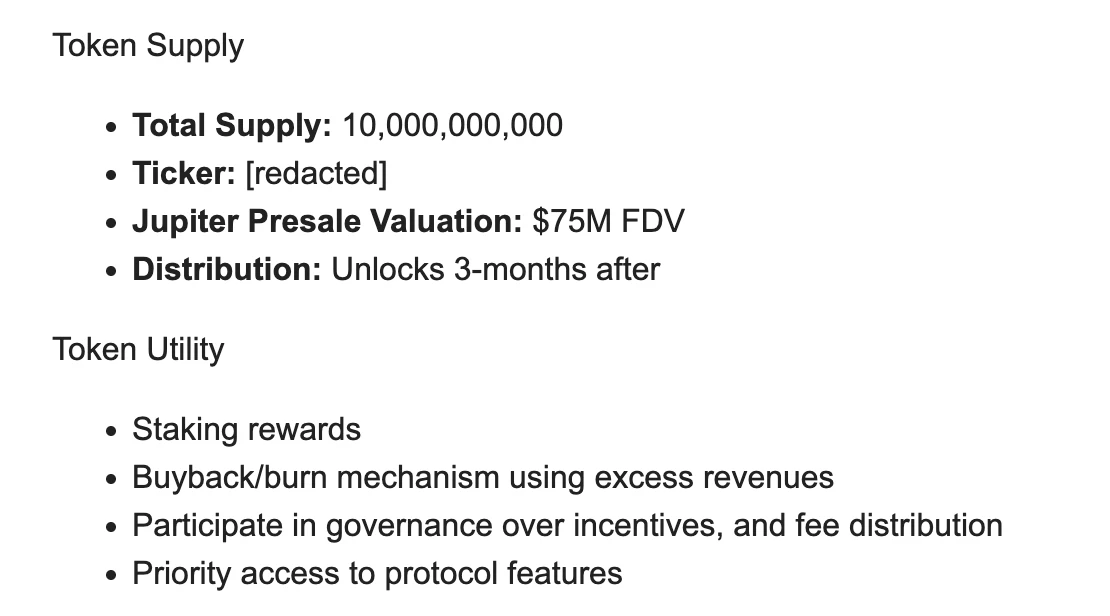
Huma 代币(HUMA)总量 100 亿枚,初始流通比例 17.33%,其经济模型凸显「收益共享 + 通缩机制」的双重逻辑:

  • 代币效用:持有者可分享质押奖励(年化 14% 收益的部分分配)、参与治理投票,并享受协议超额收入的回购销毁(Buyback & Burn)。团队强调,Huma 的利润来源稳定,2024 年 4 月单月利润已达 900 万美元,这为代币价值提供了基本面支撑。

  • 分配结构:5% 用于初始空投(面向早期存款用户),31% 用于生态激励,20.6% 归属早期投资者,19.3% 分配给团队及顾问。值得注意的是,预售仅占总供应的 1%(1 亿枚),且需锁定 3 个月。这种「低流通 + 高锁仓」的设计,既为早期参与者提供折扣机会,也试图缓解代币上市初期的抛压。

与上一轮融资 1.71 亿美元的 FDV 相比,本次预售估值 7500 万美元,折扣超 56%。这一策略显然意在吸引 Jupiter 社区的散户力量,但其 1% 的供应量也引发争议——社区提案中大量用户呼吁提高预售比例,以平衡机构与散户的入场成本。

三、Jupiter 的野望:从流量战争到生态联盟

作为 Solana 生态的流量入口,Jupiter 月活用户已突破 40 万,但其 Launchpad 业务长期面临 Pump.Fun 的压制(后者日活地址数超 50 万)。此次与 Huma 的合作,标志着 Jupiter 从「交易聚合器」向「生态孵化器」的转型:

  • 战略协同:Jupiter 与 Huma 的 25 万美元资产互换(基于 7500 万美元 FDV),不仅是财务投资,更是生态协同的宣言。Huma 的支付清算能力可增强 Jupiter 的稳定币流动性,而 Jupiter 的用户基数将加速 Huma 的采用率。

  • 社区共治:预售仅面向 JUP 质押者开放,无最低门槛但按质押量分配额度。这一设计既激励 JUP 锁仓,又将代币分配权交予社区,与 Pump.Fun 的「无差别打新」形成差异化竞争。

此外,双方计划共建 DAO 联盟,通过 Meme 传播、联合活动等方式扩大影响力。Jupiter 联合创始人 meow 在长文中透露,其与 Huma 创始人 Erbil Karaman 的十年私交为合作奠定信任基础——从 Quora 的早期相识,到 Facebook 内部的比特币布道,再到共同策划 JUP 代币销毁事件,两人关系已超越商业利益,成为生态联动的「情感纽带」。

四、PayFi 的机遇与挑战:在理想主义与现实壁垒之间

尽管 Huma 的 PayFi 叙事充满想象力,但其面临的挑战不容忽视:

  • 竞争红海:Ripple、Stellar 等传统支付协议已布局链上化,而 Solana 生态内的 Parcl、Kamino 也在探索现实资产赛道。Huma 需凭借技术开放性(支持多链资产接入)和 Solana 的高性能优势建立壁垒。

  • 合规风险:跨境支付涉及 KYC、反洗钱等监管框架,Huma 的「部分中心化」架构(如信用评估模块)可能成为监管焦点。团队宣称 2024 年实现零违约,但需持续证明其风控能力。

  • 代币流动性博弈:3 个月锁仓期虽降低抛压,却可能削弱短期投机热情。若同期市场出现系统性风险(如 Solana 网络拥堵复发),代币解锁后的价格压力将陡增。

五、预售策略与社区情绪:一场理性与 FOMO 的拉锯战

对于普通投资者,参与 Huma 预售需权衡三大要素:

  • 成本评估:按 7500 万美元 FDV 计算,HUMA 初始价格约 0.0075 美元。若对标上一轮 1.71 亿美元估值,潜在涨幅约 128%,但需扣除 3 个月锁仓的资金成本(假设年化收益率为 15%,机会成本约 3.75%)。

  • 社区治理权:HUMA 持有者可参与协议费用分配等关键决策,这对长期投资者具有战略价值。若 Huma 能持续吸引真实商业需求,治理权溢价将逐步显现。

  • 生态红利:作为 Jupiter 首个 Launchpad 项目,HUMA 可能获得生态空投、流动性挖矿等附加激励。历史数据显示,JUP 质押者在此前的 JTO、WEN 等项目中平均获得超 3 倍回报。

社区讨论中,支持者认为 Huma 的「现实收益 + 低估值」组合是熊市中的稀缺标的;反对者则质疑锁仓机制压制流动性,且 PayFi 赛道仍需时间验证。X 平台用户@DeFiGuru 评论称:「这是 Solana DeFi 从赌场转向银行的转折点,但银行需要百年信用,而加密市场只给 3 个月耐心。」

结语:Solana 生态的「成人礼」

Huma Finance 的 Jupiter 预售,本质上是一场关于 DeFi 未来形态的实验。若成功,PayFi 将证明区块链无需依赖庞氏模型也能创造真实价值;若失败,则意味着「现实资产上链」叙事仍需蛰伏。对于 Solana 而言,这场战役不仅是 Launchpad 的流量之争,更是生态从「高速扩张」迈向「价值沉淀」的成人礼。

正如 Jupiter 创始人 meow 所言:「我们需要让资金流在链上创造就业,而不仅是纸面财富。」无论结果如何,Huma 与 Jupiter 的联手,已为 2025 年的加密世界写下了一个充满张力的开篇。


Trending Cryptos

Related Reads

Lightning Fast Five-Whip Combo! Strategy's Self-Rescue Plan Officially Released

Strategy, amidst the STRC de-pegging crisis, has unveiled its "Digital Credit Capital Framework" self-rescue plan. The five-part framework includes: 1) **Cash Reserves**: Management of ~$2.55B in USD reserves, dedicated solely to covering ~17.4 months of preferred stock dividends and debt interest, with a 12-month minimum coverage floor. 2) **Dividend Policy**: STRC's dividend yield rises to 12% from July 1st, with monthly reviews. Strategy clarifies de-pegging does not automatically trigger further hikes. 3) **Preferred Stock Buyback**: A $1B authorization, prioritizing STRC repurchases to support its price, reduce future dividend obligations, and signal commitment, using funds separate from dividend reserves. 4) **Common Stock Buyback**: A separate $1B authorization for MSTR stock, aimed at creating shareholder value when the stock is deemed undervalued, establishing a two-way capital management mechanism. 5) **Bitcoin Monetization**: Formal authorization to sell BTC (up to $1.25B earmarked) to build USD reserves, cover dividends/interest, or fund buybacks, marking a strategic shift where BTC becomes a managed asset rather than a strictly "hold-only" reserve. Market reaction saw MSTR and STRC shares rise pre-market, while BTC remained stable. The plan aims to restore confidence in STRC, ensure dividend sustainability, and reopen Strategy's funding channels.

Odaily星球日报8m ago

Lightning Fast Five-Whip Combo! Strategy's Self-Rescue Plan Officially Released

Odaily星球日报8m ago

The Sword of Damocles Over the AI Bull Market: Not Just in South Korea, Leverage in U.S. Stocks Is Equally Staggering

Global equity markets are hitting new highs driven by the AI boom, but the fuel behind this rally is becoming increasingly dangerous. From the US to South Korea, margin debt and leveraged ETF assets have soared to historical extremes, with their pro-cyclical nature amplifying tail risks in market volatility. In the US, margin debt rose 54% year-over-year in May, reaching a record $1.4 trillion. Simultaneously, leveraged ETF assets nearly doubled in under 70 days to over $220 billion by early June, with intense focus on tech, semiconductor indices, and single stocks like NVIDIA and Tesla. A warning sign appeared in South Korea, where the KOSPI index experienced extreme volatility, plunging 10% to trigger a circuit breaker, then sharply rebounding before halting again, partly driven by concentrated, highly leveraged positions in chip stocks. Analysts are raising alarms. Barclays warns that leveraged funds have accumulated roughly $300 billion in equity-linked derivatives since late March, creating a major source of non-discretionary risk. Morgan Stanley notes an unprecedented reliance on leveraged financing by marginal buyers, with financing becoming more expensive and scarce. Charles Schwab has tightened margin requirements. The core risk lies in the mechanics: leveraged ETFs and derivatives can create a "tail wags the dog" effect, where fund flows force market makers to buy underlying stocks, amplifying gains. This process reverses in a downturn, triggering a self-reinforcing selling spiral as funds deleverage. Additionally, the cost of borrowing to buy stocks has spiked to multi-year highs. Morgan Stanley warns this sets up a nonlinear risk: high financing costs stall momentum, a price decline triggers forced deleveraging, and selling pressure is multiplied by leverage, potentially leading to outsized declines. The current market breadth is narrow, with gains heavily concentrated in tech, making the rally vulnerable to a pullback in leveraged positions. In summary, the AI-fueled bull market is increasingly propped up by record leverage. When this trend reverses, the deleveraging process could magnify losses, posing a significant threat to financial stability.

marsbit17m ago

The Sword of Damocles Over the AI Bull Market: Not Just in South Korea, Leverage in U.S. Stocks Is Equally Staggering

marsbit17m ago

Strategy Launches 'Digital Credit Capital Framework': Authorizes Sale of $12 Billion in Bitcoin, Ending the 'Never Sell' Script

Strategic, the world’s largest corporate holder of Bitcoin (formerly MicroStrategy), has dramatically shifted its long-standing “never sell Bitcoin” strategy by announcing a new “Digital Credit Capital Framework” on June 29. This plan authorizes the sale of up to $1.25 billion worth of Bitcoin to raise cash, establishes a $2.55 billion USD reserve, increases the dividend rate on its STRG preferred shares to 12%, and authorizes up to $1 billion each for repurchases of its own digital credit securities and Class A common stock. This pivot comes amid severe financial pressure. The company’s STRG preferred shares are trading at a ~24% discount to their $100 face value, making new issuances difficult and stalling its buy-Bitcoin funding flywheel. Its annualized dividend obligation has surged to ~$1.2 billion. Meanwhile, its MSTR stock has plummeted 36% in eight days, erasing its traditional premium over its Bitcoin holdings per share. In recent weeks, Strategic has already shifted focus from accumulating Bitcoin to bolstering cash reserves by selling its own MSTR shares. The new framework formalizes this defensive turn, aiming to ensure liquidity, cover dividends, and support its securities prices through buybacks. However, the move risks triggering a “death spiral” if Bitcoin sales pressure the market, further devaluing the company’s core asset. The company also faces a potential securities investigation and carries significant debt, with Bitcoin’s current price below its average acquisition cost.

marsbit23m ago

Strategy Launches 'Digital Credit Capital Framework': Authorizes Sale of $12 Billion in Bitcoin, Ending the 'Never Sell' Script

marsbit23m ago

Trading

Spot

Hot Articles

Discussions

Welcome to the HTX Community. Here, you can stay informed about the latest platform developments and gain access to professional market insights. Users' opinions on the price of SOL (SOL) are presented below.

活动图片