В спотовых биткоин-ETF зафиксирован приток капитала, в Ethereum-ETF — затишье

cryptonews.ruPublished on 2024-10-18Last updated on 2025-04-18

  • 17 апреля в спотовые биткоин-ETF поступило более $107 млн.
  • До этого тут прослеживался отток.
  • В Ethereum-ETF наступило затишье после семи дней вывода средств.

17 апреля 2025 года чистый суточный приток в спотовых биткоин-ETF на рынке США составил $107,83 млн, в Ethereum-ETF движение средств не зафиксировано. До этого во втором сегменте в течение семи дней подряд прослеживался отток.

Среди фондов на базе первой криптовалюты притоком средств отметились три продукта:

  • IBIT — $80,96 млн;
  • FBTC — $25,9 млн;
  • DEFI — $965 510.

Остальные ETF закрыли день с нулевым значением притока/оттока средств.

Приток/отток капитала в американском секторе спотовых биткоин-ETF. Источник: SoSoValue.

Как видно на графике ниже, с начала апреля 2025 года было всего три «зеленых» дня в этом секторе:
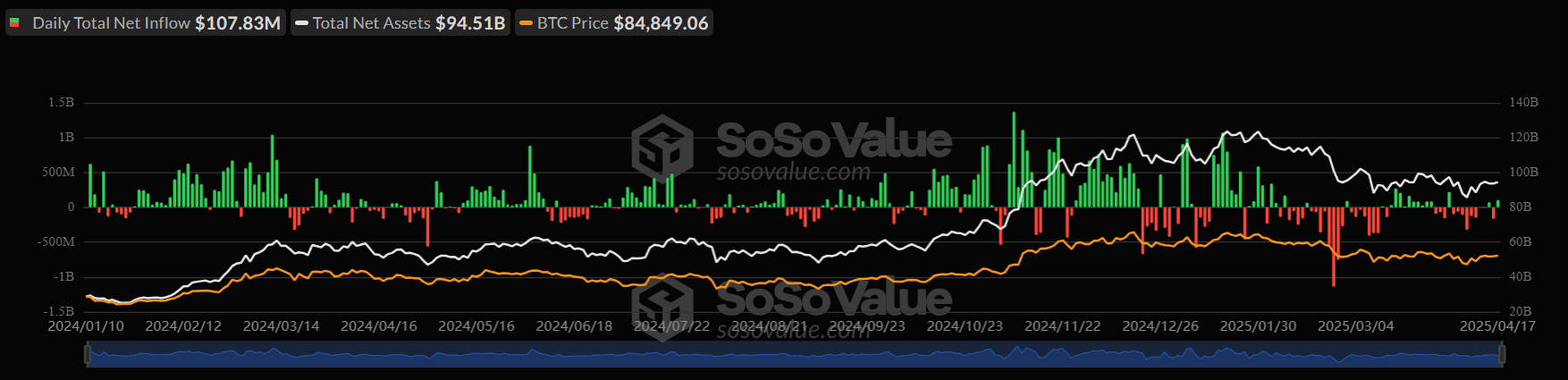
Приток/отток капитала в американском секторе спотовых биткоин-ETF по дням. Источник: SoSoValue.

При этом 16 апреля в секторе был зафиксирован чистый суточный отток капитала. Последовательное снижение интереса инвесторов к ETF на базе биткоина в JPMorgan Chase считают одним из признаков того, что первая криптовалюта теряет нарратив цифрового золота.

В секторе спотовых Ethereum-ETF, в свою очередь, наступило затишье после семи дней вывода капитала. Все продукты в этой категории закончили сессию 17 апреля с нулевым значением притока/оттока.

Приток/отток капитала в американском секторе спотовых Ethereum-ETF по дням. Источник: SoSoValue.

На рынке Гонконга зафиксирован чистый суточный отток из спотовых биткоин-ETF в 7,91 BTC. По спотовым Ethereum-ETF данных нет.


Trending Cryptos

Related Reads

Goldman Sachs Research Report Analysis: Circle and USDC Are Moving Beyond the Crypto World, Cross-Border Payments and AI Agents Become New Battlegrounds

Goldman Sachs published a summary of its meeting with Circle Internet Group (issuer of USDC) on July 5th. The core takeaway is that stablecoins, led by USDC, are evolving from a crypto-native tool into foundational infrastructure for traditional finance and the AI economy. USDC's use cases are rapidly expanding beyond crypto trading into cross-border payments, e-commerce, capital market settlements, and notably, payments for AI agents. Circle's management emphasized that stablecoin growth is now decoupled from crypto market cycles, driven by this diversification. They outlined five key application layers and highlighted USDC's network effects, global liquidity depth, and regulatory compliance as competitive moats. Circle distinguishes USDC from bank-issued tokenized deposits, arguing the former is an open, internet-native system without bank credit risk. Strategically, Circle is building a broader fintech platform with its Arc Layer 1 blockchain, the Circle Payments Network for cross-border transfers, and an "Agentic Stack" to serve AI agent economies, where USDC already dominates. Regarding regulation, Circle views potential U.S. legislation like the CLARITY Act as a catalyst for growth rather than a constraint, expecting it to encourage broader institutional adoption and active usage. Goldman Sachs maintains a Neutral rating on Circle with a $96 price target, noting the company's shift from a pure stablecoin issuer to a financial infrastructure provider. Key risks include competition from USDT and potential earnings pressure from declining interest rates on its reserve assets.

marsbit1h ago

Goldman Sachs Research Report Analysis: Circle and USDC Are Moving Beyond the Crypto World, Cross-Border Payments and AI Agents Become New Battlegrounds

marsbit1h ago

The Robinhood Stock Tokens You Bought Are Just Debts from Jersey Island

The Robinhood stock tokens you buy are essentially debt securities issued by a shell company in Jersey, not real equity. These tokens merely track stock prices like NVIDIA or Apple but grant no shareholder rights like voting or dividends. If the underlying company fails, you have no claim on its assets. Instead, you hold a debt instrument from Robinhood Assets (Jersey) Limited, which promises returns based on stock performance. If this Jersey entity goes bankrupt, you become an unsecured creditor. This complex structure stems from Robinhood's past crisis during the 2021 GameStop short squeeze, where T+2 settlement caused liquidity issues. The blockchain-based tokens enable instant settlement, theoretically preventing such trading halts. The product is classified by the SEC as a "linked security" or structured note, carrying counterparty risk not borne by actual shareholders. It is available globally but excluded from the US, UK, and other major markets, while Robinhood offers a fully compliant, asset-backed token model in Europe under MiFID II. The system relies on oracles for pricing, which poses risks like manipulation and faulty liquidations seen in DeFi exploits. Robinhood profits from spreads and aims to become a full-chain settlement layer. Meanwhile, competitors like Ondo have launched SEC-registered, fully compliant equity tokens in the US with actual voting rights and dividends. Robinhood’s Jersey debt model appears as a transitional, regulatory-arbitrage product, aiming to capture market share ahead of future regulatory clarity.

Foresight News1h ago

The Robinhood Stock Tokens You Bought Are Just Debts from Jersey Island

Foresight News1h ago

Trading

Spot

Hot Articles

Discussions

Welcome to the HTX Community. Here, you can stay informed about the latest platform developments and gain access to professional market insights. Users' opinions on the price of ETH (ETH) are presented below.

活动图片