Odaily专访Boundless:这群技术宅将ZK上升成文化和哲学

Odaily星球日报Published on 2025-03-26Last updated on 2025-03-26

Abstract

当我们谈论ZK时,我们在谈论什么。

原创|Odaily星球日报

作者|jk

Odaily专访Boundless:这群技术宅将ZK上升成文化和哲学

科罗拉多州的寒风裹挟着区块链世界的热望,ETH Denver 的周边活动上,一串红色莓果为原型的印章正印在每一个参会者的手臂上——这是 Boundless 团队留给参会者的第一个密码。品牌与传播负责人 Reka 站在装置旁,手指轻轻划过莓果印章的表面:“Berry(树莓)是一个很有意思的谐音梗,每一颗都代表 Boundless 和可验证计算(Verifiable Compute)的结合。”

Berry 显然点燃了 Boundless 社区成员的热情,如今以它为主题的 NFT 已经铸造了超过 150 万个。远处落基山脉的积雪映照下,Odaily 与“Berry”背后的 Boundless 核心团队六位成员——CEO Jeremy Bruestle、技术产品负责人 Jacob Everly、首席信息官 Shiv Shankar、首席运营官 Joe Restivo、产品副总裁 Brett Carter,以及品牌舵手 Reka Medvecz——展开了一系列深度对话。从 ZKVM 的工程哲学到 TEE 的信任博弈,从 AI 推理的革命性实验到“莓果”背后的品牌叙事,这家公司的技术野心与人文触觉同样令人震撼。

高仿大会入场手环,偷感很重的第一桶金

2022 年初的 ETH Denver 大会,一群没有入场资格的年轻人站在会场外,手里攥着从 Joann Fabrics(一个当地的打印店)买来的布料和工具。他们对照着入场者的手环样式,裁剪、缝制、反复练习抬手晃过安检的姿势。当仿制手环成功骗过检查时,这群人或许没想到,这种“不守规则”的黑客式突围,会成为公司命运的隐喻。

“我们后来拿到的几笔早期投资,全是在这场‘混进去’的大会上谈成的。”Boundless CEO Jeremy Bruestle 回忆道。对于一家以安全为技术核心的公司,这种近乎荒诞的起点,却暗合了区块链世界的底层逻辑:打破旧规则的人,往往最先定义新规则。

数学论文里的“顿悟时刻”,引发了一场虚拟机革命

作为公司的联创之一,Jeremy 对数学的痴迷像一条暗线,串联起 Boundless 的技术基因。当我问起他,Boundless 的创立是源于某个灵光乍现的想法,还是长期积累和筹备的结果时,他毫不犹豫地说“是一个循序渐进的过程”。

五六年前,这个能够把阅读数学论文当作爱好的人,在一篇关于 PCP 定理(概率可验证证明,Probabilistically Checkable Proofs)的论文中读到:“任何复杂计算都可在常数时间内被验证”。也就是说,无论一个计算本身需要多长时间去完成,我们都可以瞬间证明它的正确性。这个发现如同电流穿过大脑——如果人类能瞬间验证《大英百科全书》的全部真伪,区块链的信任机制将被彻底颠覆。

但彼时的技术现实冰冷刺骨:验证耗时远超计算本身,理论完美无瑕,工程寸步难行。直到 2020 年,STARK 证明体系的论文让他看到曙光。“我做了个简单计算,发现只要工程优化到位,ZK 的验证速度能提升百万倍。”

深夜的电话里,他激动地向合伙人 Frank 描述愿景,却遭遇灵魂拷问:“可开发者要怎么编程?”当 Jeremy 抛出“有限域多项式约束”时,电话那头沉默了。“没有人会愿意写这种东西,这根本没用!”Frank 的冷水浇醒了技术理想主义的泡沫。

真正的转折发生在旧金山。那天晚上,Jeremy 和 Frank、Brian 三个男人盯着喝空的啤酒罐,突然有了一个想法:“如果我们能在 ZK 里模拟一台现有的计算机会怎样?”

这个后来被称为 ZKVM(零知识虚拟机)的想法,彻底改变了游戏规则。他们选择兼容 RISC-V 指令集——就像在加密世界克隆了一台标准计算机,开发者用普通 Rust 和 Solidity 代码写程序,虚拟机自动生成 ZK 证明。“我们要让 ZK 变得像用电一样自然,开发者只管拧灯泡,不用懂发电原理。”Jeremy 比喻道。

行业起初嗤之以鼻。Jeremy 他们的观点当时确实属于激进观点;“虚拟机相对而言更低效”“开发者应该学习底层电路,根本不需要 zkVM”——质疑声如潮水涌来。但 Boundless 团队清楚:当日本便利店用标准化流程接管街头茶铺时,兼容生态的力量永远大于局部效率。

2023 年,RISC-V ZKVM 的发布像投入湖面的巨石。四五家后来者迅速跟进同类方案,证明市场终于读懂了当时还是 RISC Zero 的超前判断:当 ZK 遇上标准化指令集,技术普及的速度将呈指数级爆发。

但 Jeremy 的视线已投向更远处。“ZKVM 只是让开发者能写代码,我们还要让它能‘通电’。”如今发布了 Boundless 的团队,正将 ZK 封装成区块链的基础设施——就像云计算把服务器变成即取即用的资源。当开发者三行代码就能调用 ZK 加速链上计算时,这场始于数学论文的革命,才真正触及它要改变的世界。

Odaily专访Boundless:这群技术宅将ZK上升成文化和哲学

Boundless CEO Jeremy,一个把数学论文当作爱好的人

什么是 Boundless?

在 Boundless 设计精美的官网上,写着这样一句话:“We're building Boundless, the first universal ZK protocol that brings the power of zero-knowledge proofs to all chains. (我们正在建造 Boundless,首个将会把零知识证明的能力带到所有区块链的 ZK 应用。)但 Boundless 究竟是什么?和它背后的母公司 RISC Zero——在 2023 年融资四千万美元的天王级项目到底有什么关系?

从 RISC Zero 到 Boundless:从 zkVM 到模块化 ZK 计算网络

在区块链行业中,RISC Zero 是一个知名度极高的名字,它作为 zkVM(零知识虚拟机) 的领导者,在 ZK 计算领域占据了重要地位。然而,Boundless 并不仅仅是 RISC Zero 的延续,而是一个更广义的去中心化计算协议。

“RISC Zero 是驱动 Boundless 的底层计算引擎,而 Boundless 是开发者在链上使用 RISC Zero 技术的方式。”Boundless CIO Shiv Shankar 解释道。

回顾几年前,ZK 计算的讨论仍主要围绕如何提升速度,试图缩小 ZK 计算与传统计算之间的性能差距。后来,RISC Zero 使用了一条全新的路径:利用 zkVM(而非传统的电路级优化)来提升 ZK 计算的效率。 这一突破带来了更强的灵活性,使得 ZK 计算能够脱离固定的电路设计,更接近传统计算架构,真正实现通用计算。

然而,仅仅拥有 zkVM 仍然不够,因为开发者不仅需要计算能力,还需要完整的工具链、端到端的开发者体验和可落地的经济模型。

“这正是 Boundless 存在的意义。”Shiv 说道,“它不仅提供高性能的 ZK 计算,还简化了开发者集成 ZK 技术的过程,让他们无需关心底层计算细节,无论他们构建的应用运行在哪条链上,都能轻松使用 ZK 计算。”

Boundless = RISC Zero + 完整的协议栈 + 经济激励。

从三叉戟计划到 Boundless 的挑战:用实践寻找最优解

“我们希望从一开始就构建正确的解决方案。” Boundless CEO Jeremy Bruestle 这样回忆团队的起步阶段。这个目标听起来理所当然,但要真正做到,需要面对的挑战远比想象中更复杂。

在 Boundless 诞生之前,团队并没有盲目追随市场上的流行方案,而是进行了一个大规模的技术探索实验——Project Trident(三叉戟计划)。

当时,团队内部对于如何构建 ZK 计算市场存在截然不同的看法。一部分人认为应该从 Layer 1 (L1) 的角度出发,打造一条从底层优化的 ZK 计算公链;另一部分人认为 Layer 2 (L2) 是更现实的路径,可以更快地实现落地;还有人主张采用一种混合架构,在不同的层面实现可扩展的 ZK 计算,还有不同派系的其他尝试等等。

在许多公司,技术路线的决策往往由创始人或高管拍板决定,而 Boundless 选择了一条更有挑战性的道路:同时开发三种不同的原型,实际测试它们的可行性,并最终以数据和结果来决定方向。

“最终胜出的方案,既不是 CEO 提出的,也不是产品负责人的,而是我们的高级工程师的方案。” Boundless CIO Shiv Shankar 说道。

这个过程不仅找到了最优的技术方案,也确立了 Boundless 的文化:不盲目服从权威,让最好的想法胜出。 Shiv 说,“Boundless 未来将会有一个庞大的开发者社区,我们希望社区成员提出的优秀想法也能像内部团队的想法一样受到尊重和采纳。如果有人对 Boundless 的发展方向有建议,我们希望他们能看到这个故事,并明白他们的想法不会被忽视,而是会被认真对待,就像我们对待自己的想法一样。”

“以太坊的原生 Rollup 执行层”:Boundless 的核心成就

如果要用一个概念来概括 Boundless 在区块链生态中的定位,它就是“以太坊原生 Rollup(Native Rollup)的模块化执行层(Modular Execution Layer)”。

产品副总裁 Brett Carter 将 Boundless 定义为“以太坊的原生模块化执行层”,这个定位暗含区块链架构的范式转移。就像云计算将数据中心拆解为不同层,Boundless 正在将 ZK 证明拆分为可插拔组件:

  • ZK 挖矿市场:借鉴比特币 PoW 的竞争机制,但用证明生成替代哈希碰撞,消除能源浪费

  • 验证即服务:如同 AWS Lambda 将服务器管理抽象化,开发者无需自建验证节点

  • 跨链执行层:类似 HTTP 协议统一互联网通信,Boundless 成为多条链共享的 ZK 协处理器

“如果你研究 Ethereum Research Forum 上 Justin Drake 关于原生 Rollup(Native Rollup) 的讨论,你会发现,以太坊需要一个专注于执行(Execution-Only)的去中心化网络,以提升计算能力,而 Boundless 正是这一需求的最佳解。”Brett Carter 说。

技术产品负责人 Jacob Everly 告诉我,新加坡的国际清算银行(BIS)已经使用 RISC Zero 和 Boundless 的技术开发了一个原型系统,能够验证亚太地区的交易者是否可以在新加坡交易所进行交易,而无需他们提供完整的个人信息。用户只需要上传护照和手机号码,就可以生成一个零知识证明(ZKP),证明他们符合交易资格即可。

目前,已有 30 多个团队计划在 Boundless 上构建和部署应用。“我们的目标是在明年达到 100 个合作团队,让 Boundless 成为行业标准。”Jacob Everly 说。

340 倍优化:如何让 ZK 计算成本降至可承受范围?

如果说找到正确的架构是 Boundless 的第一道关卡,那么让它真正具备商业可行性则是更大的挑战。ZK 计算不仅需要足够快,还必须足够便宜,否则它只能停留在实验室里,而无法成为 Web3 生态的核心基建。

Boundless 产品副总裁 Brett Carter ,当被我问到最大挑战是什么的时候,立刻给出了答案:“历史上,我们面临的最大挑战一直是性能和成本。”

在 ZK 计算中,延迟(Latency)和成本(Cost) 并不总是同步的。理论上,可以通过并行化计算来降低延迟,但这样会推高成本。对于 Layer 2 而言,如果 ZK 计算的成本过高,那么 Rollup 方案的经济模型将难以成立,更不用说大规模推广。

2023 年 7 月,Boundless 发布了 Zeth,这是全球首个 Type 1 ZK EVM,并运行在 Boundless 的 ZKVM 上。当时的估算数据显示,如果要证明整个以太坊主网的所有交易,每年的计算成本高达 1.7 亿美元。 这个成本足以让大多数项目望而却步。

但在短短 16 个月内,Boundless 通过一系列 GPU 计算优化、ZKVM 内核优化以及架构级改进,成功地将 ZK 计算成本降低了 340 倍,使得以太坊主网的证明成本降至 50 万美元以下。“这背后是大量的技术优化,尤其是在 GPU 层面,我们对 ZKVM、GPU 内核进行了持续的优化,才使得这个成本得以大幅降低。”说起这一成就时,Brett 眼里满是骄傲。

TEE 与 ZKVM:当「可验证性」遇见「可编程性」

在计算可信性方面,TEE(可信执行环境) 与 ZK(零知识证明) 往往被视为两种竞争方案,但 Boundless 证明了它们可以相辅相成,就像本地计算与云计算的结合,各自发挥优势,优化整体系统。

TEE 负责在受信任的环境中执行计算,但其证明数据通常过于庞大,难以直接放到区块链上。而 ZK 则通过生成可验证的数学证明,在链上高效验证计算正确性。产品副总裁 Brett Carter 用账单揭示了这种协作的经济价值:以 Automata 为例,在以太坊上直接验证 TEE 证明需要 600 万 Gas,但通过 ZKVM,计算部分可先在链下执行,链上仅需验证 ZK 证明,Gas 成本降至 30 万,实现了一个数量级的优化。Taiko 已在其 Rollup 方案中同时支持 TEE 证明与 ZK 证明,这表明未来的区块链计算将更加灵活,开发者可根据场景选择最优的可信计算方案。

这也让很多在 DeFAI 领域使用 TEE 服务的项目多了一种可能:AI 领域习惯了将推理任务托管给中心化服务,例如 OpenAI 或 Google Cloud,但用户实际上无法验证这些模型是否按照既定的方式运行。换句话来说,如果 ChatGPT 在模型层面上作恶,用户将毫无办法。而通过 ZK 进行可验证推理,将是一个非常有价值的应用场景。

Boundless 的 ZKVM 现已支持 AI 计算,并在 2024 年 7 月试运行以来,性能提升了 50-100 倍,这意味着 AI 计算可以直接在 ZKVM 内执行,并生成可验证的 ZK 证明,确保推理基于正确的模型权重,且无法被篡改。

为什么是 ZK?为什么还在聊 ZK?

在科技发展史上,每一项变革性技术都会经历相似的轨迹:从概念萌芽到市场狂热,再到幻灭低谷,最终进入成熟应用阶段。如今,零知识证明(ZK)正在经历这样的转折点——它曾被吹捧为区块链扩展性的终极解法,但在实际落地过程中,工程挑战远超预期,市场情绪随之波动。然而,Boundless CEO Jeremy Bruestle 笃信 ZK 的未来,认为它正处在计算范式转变的关键时刻。

“从技术炒作周期(Hype Cycle)的角度来看,我们正处于幻灭低谷(Trough of Disillusionment)阶段。”Jeremy 解释道。“许多人在几年前看到 ZK 的潜力,认为它能迅速改变区块链计算模式,但低估了从理论到实际落地的工程难度。”

尽管如此,ZK 技术的进步速度却是惊人的。“过去几年,ZK 计算的性能每个季度都提升 3 到 4 倍。这意味着,一年前无法大规模应用的 ZK,如今已开始进入实际可用阶段。”

这正是 Boundless 诞生的原因。ZK 不仅仅是一个新兴技术,而是一种正在成熟的计算范式。Jeremy 甚至将其比作 1970 年代的微处理器革命:“当时,市场上的计算任务大多由定制电路(ASICs)完成,微处理器的出现并不被看好。但随着技术的进步,它们变得更快、更便宜,最终取代了所有专用硬件。ZK 计算正在走同样的道路——它将突破当前的区块链计算瓶颈,让可扩展、低成本的计算成为标准。”

突破“区块链上的树莓派”困境

当前的区块链计算环境究竟处于什么阶段?Boundless CIO Shiv Shankar 给出了一个生动的比喻:“今天的区块链计算能力,大概相当于一台 Raspberry Pi(树莓派)。计算资源极其有限,应用开发者不得不拼命优化 Gas 成本,以适应链上的性能限制。

目前,传统区块链上执行一个高复杂度的智能合约计算,可能需要消耗数十亿 Gas,相当于 30 个区块的计算量,根本无法在主网上完成。这如同 1999 年互联网泡沫时期,人们为拨号上网支付天价账单,却连一张图片都要加载半分钟。而 ZK 带来的改变,恰似宽带时代的降临——当 Boundless 将链上计算成本压缩 90% ,区块链终于有机会挣脱 Gas 的枷锁。

过去 12 个月,区块链用户支付了 50 亿美元 的 Gas 费用,但实际计算量极为有限。而在 ZK 计算成熟后,相同的计算成本将带来 10 倍甚至 20 倍的计算能力提升,整个行业的‘经济产出’将指数级增长。“我们正在创造‘区块链的弹性云计算’,让计算资源像 AWS 云服务器一样按需扩展,价格几乎可以忽略不计。”Shankar 解释道。

未来五年,ZK 计算将如何改变区块链?

如果要对 ZK 在未来五年的发展做一个大胆预测,Jeremy 认为 ZK 将逐步取代基于共识的执行模式,成为区块链计算的主流方式。

这种转变的技术临界点可能比预期更早到来。Boundless 等团队正在突破的「证明市场」体系,实际上在复制云计算市场的演进逻辑——当 ZK 算力成为可标准化交易的商品,价格战与性能竞赛将催生出更精密的证明聚合器、更高效的硬件加速方案、更智能的资源调度算法。届时,区块链的「GDP」增长曲线或将重现互联网从拨号到宽带时代的陡峭攀升。

这场静默革命的核心,始终遵循计算机产业的古老法则:真正伟大的技术从不会要求世界适应它,而是让自己变成世界的一部分。 当开发者停止讨论 ZK 本身,转而专注于用它构建过去不敢想象的链上应用时,这场算力解放运动才算真正胜利。
Odaily专访Boundless:这群技术宅将ZK上升成文化和哲学

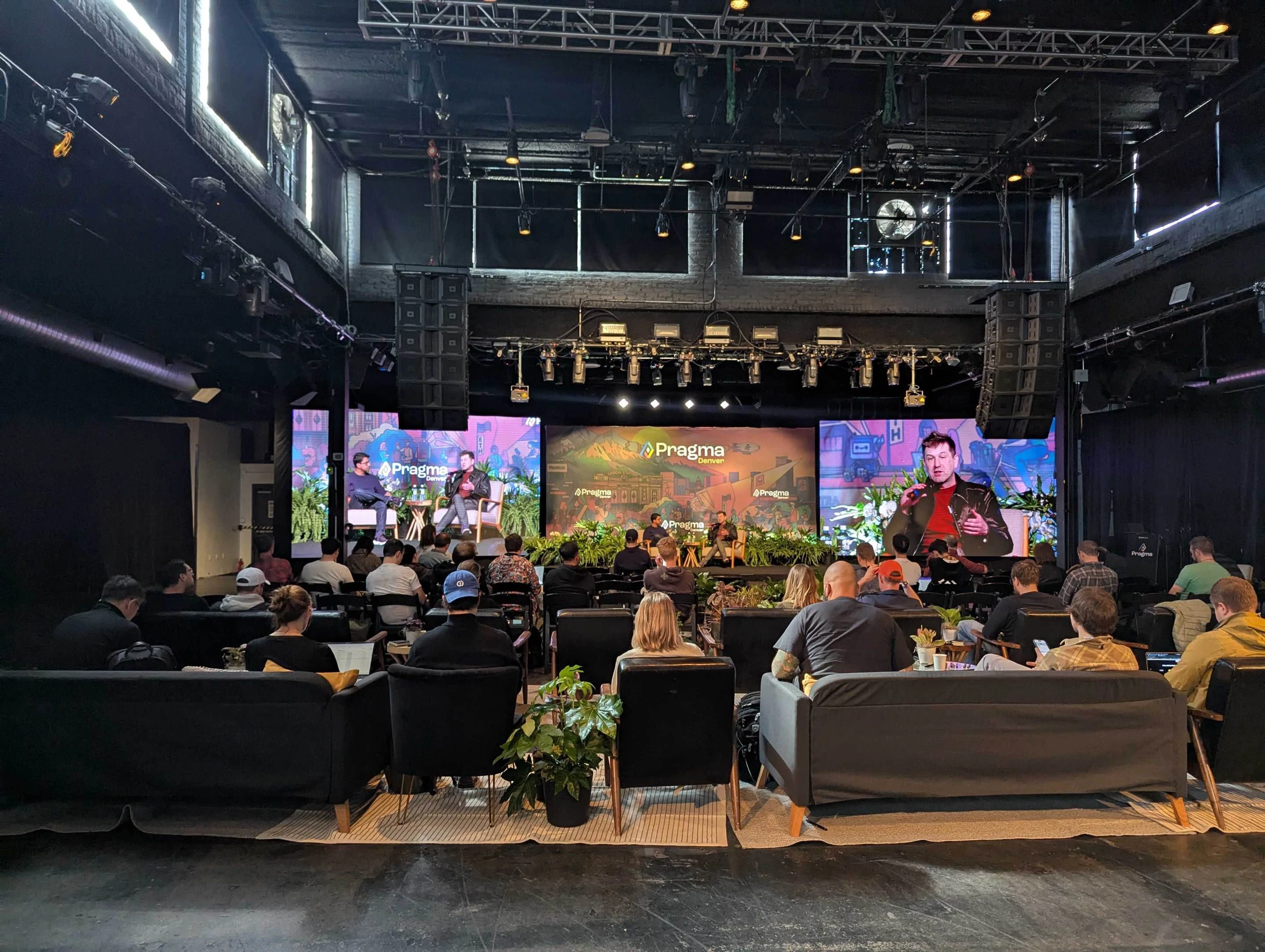
Jeremy 在 ETHDenver 大会上。

竞争格局:当效率让位,安全与易用登台

区块链的历史总是重复着相同的循环:新技术出现时,市场上涌现出无数“解决方案”,每个都自称是未来的标准,每个都在竞相争夺注意力。但当技术进入真正的落地阶段,市场会迅速筛选出那些只是看起来光鲜亮丽的泡沫,留下真正具备长期价值的架构。而在这场竞争中,Boundless 正在用一种前所未有的方式脱颖而出。

如果 ZK 计算市场是一座新兴城市,那么大多数项目都在建造高楼大厦,希望用闪耀的外观吸引居民。但 Boundless 选择的路径是修建道路、优化水电供应,打造真正能长期运转的基础设施。

“真正的去中心化,从一开始就意味着抗审查性,意味着建立一个真正的市场机制,让证明成本降到最低,同时保证一个真正安全的虚拟机(VM)。”Boundless CEO Jeremy Bruestle 直言,很多 ZK 计算方案在市场初期看似无懈可击,但真正的考验只有在大规模采用后才会到来。

试想,一个 DeFi 协议每天要处理上千笔复杂交易,突然发现 ZK 计算的成本超出预算,或者系统的去中心化程度无法抵抗监管压力,这样的方案即便技术再先进,也终究无法成为行业基石。Boundless 解决问题的方式是,通过可验证工作量证明(Verifiable Proof of Work) 机制,确保计算资源的使用透明且公平。

这一创新机制确保了证明者(Provers)获得的奖励完全基于他们实际完成的计算工作量,有效防止刷量攻击,并同时补贴证明成本,让整个系统的运行费用得以降低至合理区间。换言之,Boundless 不是在炒作“ZK 计算的未来”,它正在让 ZK 计算真正可用、可扩展,并且可负担。

从“租用计算”到“完整解决方案”:一站式 ZK 计算体验

许多项目把 ZK 计算市场看作是一个“计算交易所”,开发者像在云服务平台上租用服务器一样,购买计算能力来生成证明。但 Boundless 的思维方式完全不同——它不只是提供算力,而是提供端到端的 ZK 计算体验。

“我们并不是单纯地向用户出售计算资源,而是提供一个完整的 zk 计算解决方案,让开发者能够无缝地将 zk 集成到他们的应用中。”Boundless CIO Shiv Shankar 解释道。

换句话说,Boundless 并不想成为 Web3 时代的“云计算供应商”,而是要成为开发者的“ZK 计算合作伙伴”。从证明生成到最终链上验证,Boundless 让整个流程变得流畅无阻。这种体验上的优化,才是真正让 ZK 计算从实验室走向大规模应用的关键。

对开发者而言,这种端到端的设计意味着更低的技术门槛,更快的集成速度,以及更稳定的运行环境。Boundless 让 ZK 计算不仅仅是一个高深的技术概念,而是一个可以直接落地的生产力工具。

产品市场契合度(Product-Market Fit):当计算成本趋近于零,真正的竞争才刚刚开始

“到 2026 年,几乎不会再有人谈论 ZK 计算的性能问题。”Shiv Shankar 告诉我说。

计算技术的突破最终都绕不开一个终极问题:成本。无论是云计算、GPU 渲染还是 AI 训练,行业的真正爆发点从来不是性能极限的突破,而是计算成本的下降。

Shiv 的判断听起来不可思议,但如果我们回顾云计算的发展路径,就会发现这个趋势再明显不过。如今,几乎没有工程师会关心 AWS EC 2 的具体计算成本,因为价格已经降到可以忽略不计的程度,开发者关注的只是如何更好地利用这些资源。

而 Boundless 团队认为,ZK 计算即将走向同样的阶段。这意味着,开发者将不再纠结于“ZK 计算有多快”,而是开始思考如何利用它打造更安全、更高效、更可扩展的应用。DeFi、身份验证、链上游戏、数据隐私保护……ZK 的应用场景将迎来真正的爆发,而 Boundless 正站在这场变革的最前线。

目前,ZK 计算的主要需求来自 Rollups、Layer 2 以及需要验证状态转换函数(State Transition Function) 的应用场景。例如,EigenLayer 计划在削减机制(Slashing Mechanism) 中使用 Boundless 技术,因为在以太坊上执行这些计算需要 10 亿 Gas,但 ZK 计算能够在链下完成计算并高效提交证明,使其成为可行方案。

但现在,ZK 计算不仅会优化现有 Web3 应用,还将催生一批全新的区块链应用。Boundless 目前正在与一个 DeFi 团队合作,他们希望构建数据市场(Data Markets),其中涉及数个定价模型。过去,由于计算量过大,他们只能在链上运行近似计算,而 Boundless 使他们能够完整运行模型,并提交 ZK 证明,从而实现更精准的 DeFi 交易。

“如果你今天开始构建 DeFi 应用,而没有在系统中使用 ZK 技术,那么你很快就会被行业淘汰。”Shiv 的这句话听上去激进,但事实正是如此:到 2026 年,ZK 计算的使用将成为默认选项,而不是高端技术的特权。当开发者不再为 Gas 预算抓狂,创新将从“生存模式”切换至“创造模式”。

未来,DeFi 应用将不再局限于 Web3 圈子,而是能与 TradFi(传统金融) 甚至大型交易所直接竞争。它们将拥有更强的隐私保护、更低的交易成本,以及更高的执行效率。而 Boundless,正在为这一天的到来铺设高速公路。

主网上线:Boundless 的“登月计划”

“我们正在全速冲刺主网(Mainnet),最理想的情况是在今年 Q2 到 Q3 早期实现主网上线。”Shiv Shankar 告诉我说。Boundless 目前的首要任务,毫无疑问就是主网部署。过去几个月里,团队已经在测试网进行了多轮实验,验证协议的稳定性、计算性能和经济模型。如今,一切正在进入最后的冲刺阶段。

在最终主网上线之前,Boundless 的下一个里程碑是 “Mainnet Beta”,一个面向开发者的试运营阶段。

在当前的测试网环境下,ZK 计算的证明虽然可以运行,但并未完全进入真正的经济系统。Mainnet Beta 的目标,是让开发者开始在真实的资金环境中生成 ZK 证明,测试系统在实际市场条件下的表现。

“在 Mainnet Beta 之后,我们将专注于激励机制(Incentive Mechanism) 的广泛测试。”Joe Restivo 透露。

这将是 Boundless 经济模型落地的关键阶段,团队将在这个过程中测试并优化 Verifiable Work(可验证工作机制),确保计算资源的分配和激励体系能够在去中心化环境下高效运作。

去中心化治理:建立一个由社区驱动的 ZK 生态

与主网同步推进的,还有去中心化治理(DG, Decentralized Governance) 的规划。

Shiv Shankar 直言,Boundless 不仅仅希望构建一个高效的 ZK 计算平台,还希望真正让社区成为生态的一部分。

“去中心化治理的上线时间,更多取决于法律和运营团队,而不是工程团队的控制范围。” 这意味着,尽管 Boundless 已经为 ZK 计算市场提供了技术支持,但最终的决策权将逐步交给社区,真正实现去中心化运作。

Boundless 的终极计划:让区块链计算突破极限

产品副总裁 Brett Carter 告诉我说,他的核心观点是,所有的计算执行最终都会迁移到零知识证明(ZK),背后的原因很简单:在当前的区块链架构下,所有计算都必须在所有节点间达成共识,这使得整个网络的吞吐量受到物理限制。例如,以太坊每个区块的 Gas 上限仅为 3600 万,这一限制意味着智能合约无法执行 AI 推理等高复杂度计算,否则整个网络都将陷入瘫痪。

如果说今天的区块链计算类似于同步编程(Synchronous Programming),那么 Boundless 提供的 ZK 计算更像是异步编程(Asynchronous Computing)——开发者可以在 链下(Off-chain)并行执行计算,再通过 ZK 证明其正确性,最终仅提交小型证明到结算层,而无需将整个计算过程都在链上完成。

当以太坊L2遍地开花,真正的瓶颈已从网络层转移到计算层——谁能把 AI 训练、3D渲染这些“重型卡车”开上区块链高速路,谁就握有下一个时代的通行证。Brett 说,这就是为什么我们将协议命名为 Boundless(无限)——为了消除计算的边界,让区块链真正具备无限的计算能力。未来,区块链将不再只是交易和智能合约执行的工具,而是能够支撑更复杂的应用,例如可验证 AI 推理(Verifiable AI Inference)、高性能链上游戏、去中心化社交网络等。Boundless 的愿景是,让区块链计算从根本上摆脱当前的性能约束,实现真正的计算自由。

结语:一件衬衫背后,是非标准化的创新哲学

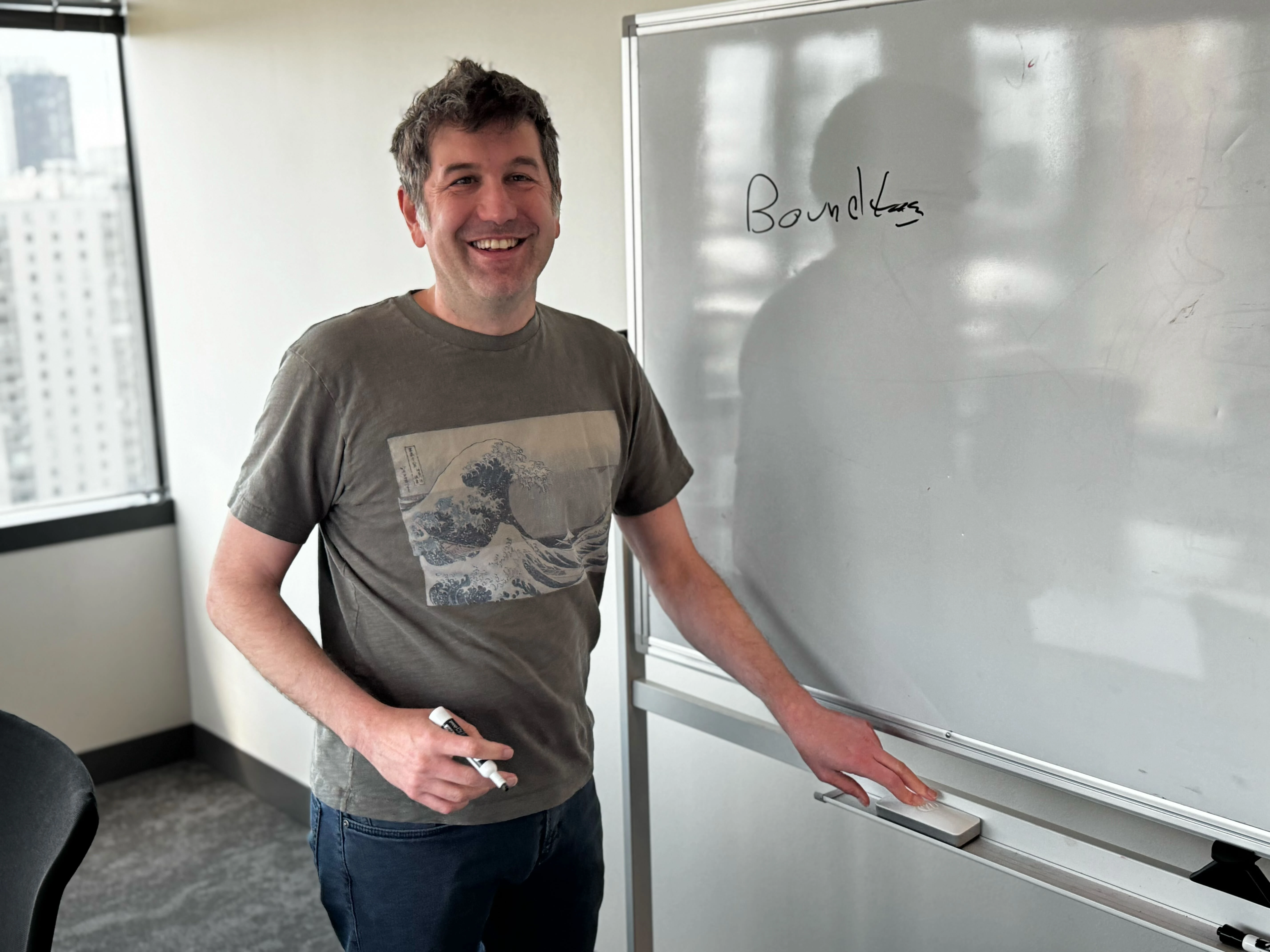
在采访的结尾,首席运营官 Joe Restivo 冲着我嘟囔,话语中满是怨念:“你知道吗,我们工作中还有一个非常大的挑战:Jeremy 有一件‘特别的’、印有日本海啸图案的衬衫,不管什么时候上台他都穿着,而不是我们公司官方的周边。每次他穿着那件海啸衬衫上台,我都想冲过去给他套上 Boundless 的官方 POLO 衫。”
Odaily专访Boundless:这群技术宅将ZK上升成文化和哲学

Jeremy 的幸运衬衫:浮世绘风格的海浪

我特意又把这个问题拿过去问了 Jeremy。面对质疑,他大方承认:“我确实经常穿那件有海啸图案的衬衫。特别是在见投资人或者演讲的时候,基本都会穿。”这种个人审美与公司品牌之间的微妙对抗,意外成了团队文化的注脚:在 Boundless,团队正在用自己喜欢的方式创造价值。或者,用更浮世绘一样的风格表达出来就是,在技术浪潮中,比随波逐流更重要的,是找到属于自己的那朵浪花。

“世界上有这么多人,如果大家都在做相同的事情,那这个世界的可能性就会受到限制。”他告诉我说,“它象征着一种理念...我一直相信,我们每个人都可以自由选择自己想要创造的东西。而最有意义的事情,就是创造出最能代表“我们自己”的东西。不管它最终是否成功,我们会一直坚持创造。”

Trending Cryptos

Related Reads

Trading

Spot

Hot Articles

What is LINON

Linde plc Tokenized Stock (Ondo): Revolutionizing Traditional Equity Access Through Blockchain Innovation The emergence of Linde plc Tokenized Stock (Ondo), represented by the ticker $LINON, signifies a monumental shift in the fusion of traditional financial structures and decentralized finance (DeFi). This innovative financial instrument showcases the tremendous potential of blockchain technology to democratize access to traditional equity markets while ensuring the security and regulatory compliance necessary for institutional-grade financial products. Through Ondo Finance's pioneering tokenization platform, $LINON provides a seamless pathway for global investors to engage with one of the world's leading industrial gas companies, Linde plc, creating a blockchain-native representation of the underlying equity. Introduction to Linde plc Tokenized Stock The landscape of financial markets is witnessing a groundbreaking transformation through the tokenization of real-world assets. Linde plc Tokenized Stock (Ondo) epitomizes this revolutionary approach by bridging the gap between conventional stock ownership and blockchain-enabled financial infrastructure. The $LINON token allows investors to gain exposure to one of the prominent industrial companies worldwide through decentralized technology. Operating within Ondo Finance's comprehensive ecosystem, $LINON symbolizes a practical application of tokenization technology that enhances accessibility, efficiency, and global connectivity in traditional financial markets. By leveraging blockchain infrastructure, this tokenized stock enables international investors to participate in U.S. equity markets, overcoming traditional barriers associated with cross-border investing. The significance of $LINON goes beyond technological innovation; it represents a fundamental shift in asset structuring, distribution, and trading in the digital age. This tokenized stock maintains all the economic benefits associated with traditional Linde plc shares while offering improved liquidity, programmable compliance features, and seamless integration with decentralized finance protocols. The development of $LINON indicates a growing acceptance of blockchain technology as a viable means for traditional finance, exemplifying how even well-established assets like Linde plc can integrate into blockchain systems. This approach preserves the core attributes that appeal to investors while introducing advanced capabilities that enhance the overall investment proposition. Project Overview and Objectives Linde plc Tokenized Stock (Ondo) encapsulates a strategic effort to democratize access to traditional equity markets through advanced blockchain technologies. The primary objective of $LINON is to provide approved global investors seamless access to the economic exposure associated with Linde plc shares, furthering an effort to create a more inclusive financial ecosystem. Beyond the digital representation of traditional assets, $LINON endeavors to eliminate barriers of geography and time zones that limit investor participation. Its design ensures that blockchain technology can elevate traditional investment vehicles without undermining the security or compliance requirements expected by investors. Key goals of the project include enhanced liquidity provision, programmable compliance mechanisms, and interoperability with other blockchain networks. Each $LINON token is fortified by actual Linde plc securities housed at U.S.-registered broker-dealers, allowing holders to reap economic advantages akin to traditional stockholders, such as dividend reinvestment. Furthermore, $LINON aims to establish new industry standards for institutional-grade tokenized securities, paving the way for traditional assets to embrace blockchain technology while remaining compliant with regulatory frameworks. By associating itself with a company as reputable as Linde plc, the project opens avenues for exploring tokenized equities catering to both conservative institutional players and daring retail investors. Project Creator and Development Team The vision for Linde plc Tokenized Stock (Ondo) comes from Nathan Allman, founder and CEO of Ondo Finance. His background in traditional finance coupled with expertise in blockchain technology positions him uniquely to navigate the complexities of asset tokenization. Allman's academic journey began at Brown University, focusing on Economics and Biology, equipping him with valuable analytical skills. His time at Goldman Sachs in the Digital Assets division strengthened his understanding of the interplay between financial institutions and emerging technologies, laying the groundwork for his later endeavors in alternative investment strategies. Under Allman's guidance, Ondo Finance has emerged as a leader in asset tokenization, launching $LINON as a flagship example of the company's larger mission towards revolutionizing traditional financial systems using blockchain technology. His commitment to leveraging blockchain for creating institutional-grade financial products has shaped the landscape of real-world asset tokenization. Investment and Funding Structure The growth of Ondo Finance, the platform powering Linde plc Tokenized Stock (Ondo), is bolstered by robust financial backing from prestigious venture capital firms and strategic investors. This strong investment foundation underpins the development of the key infrastructure essential for compliant tokenized securities like $LINON. In August 2021, Ondo Finance secured $4 million in seed funding led by a major venture capital firm, which enabled the company to commence platform development and establish the necessary regulatory processes for tokenizing real-world assets. This early investment cemented Ondo Finance's credibility within the industry. The Series A funding round followed, garnering $20 million with participation from renowned firms committed to transformative technology companies. This backing demonstrated substantial institutional confidence in Ondo Finance's vision, allowing it to hone its approach to asset tokenization through mechanisms that ensure compliance and accessibility. Noteworthy contributors, including institutional investors and experienced partners, have added significant value to Ondo Finance’s development efforts. Their involvement underscores the confidence across sectors in Ondo Finance's approach to bridging traditional finance with blockchain innovations. Technical Infrastructure and Innovation The technical architecture that underpins Linde plc Tokenized Stock (Ondo) represents a sophisticated melding of traditional finance systems and cutting-edge blockchain technology. The architecture's foundation is built on the Ethereum network, renowned for its security and programmability—both critical for intricate financial instruments. The $LINON tokenization process comprises creating a blockchain-native representation of Linde plc shares that preserves economic benefits while augmenting investor capabilities. Each token corresponds to actual shares held at U.S.-registered broker-dealers, creating a compliant custody structure that legitimizes the asset's existence and value. Automated compliance systems are integrated into the tokenization process, managing critical components such as know-your-customer (KYC) verification and anti-money laundering (AML) protocols. This incorporation of programmable compliance empowers $LINON to uphold regulatory standards essential for institutional proliferation. Cross-chain interoperability characterizes the advanced technical features of $LINON. While initially deployed on Ethereum, the framework is designed for expansion to other networks such as Solana and BNB Chain. This adaptability enhances liquidity and accessibility, allowing investors to select their preferred blockchain ecosystems. Historical Timeline and Development Crafting the history of Linde plc Tokenized Stock (Ondo) unfolds in parallel with the evolution of Ondo Finance's tokenization platform. The timeline's inception dates back to March 2021 when Nathan Allman laid the foundations for creating institutional-grade financial products on blockchain infrastructure. The initial funding round in August 2021 provided crucial resources for developing the platform and establishing partnerships necessary for effective tokenization. By January 2023, Ondo Finance launched its tokenized treasury products, establishing mechanisms that would facilitate future tokenized equities such as $LINON. A pivotal milestone arose in February 2025 when Ondo Chain—a Layer 1 blockchain designed specifically for asset tokenization—was introduced. This infrastructure enhances capabilities vital for institutional markets, demonstrating Ondo Finance's long-term commitment to tokenization. Subsequently, the launch of Ondo Global Markets in September 2025 marked the official debut of $LINON. This milestone showcased the successful transition from development to active trading, enabling investors around the world to access American financial markets seamlessly. Ongoing development plans include a targeted expansion of available tokenized assets to over 1,000 by the end of 2025, pointing to a bright future for Ondo Finance's ecosystem and its mission to broaden tokenized equity accessibility. Regulatory Compliance and Legal Framework The legal architecture governing Linde plc Tokenized Stock (Ondo) emphasizes a sophisticated approach to regulatory compliance, allowing tokenized securities to be implemented within a blockchain-based framework. The legal structure governing $LINON spans multiple jurisdictions while maintaining a robust legal footing. Compliance systems ensure that only eligible investors can access the token, enforced through automated verification that aligns with international regulations. This innovative regulatory technology promises real-time enforcement of complex requirements, considerably enhancing efficiency in operating within the regulatory landscape. The custody framework undergirding $LINON ensures that the underlying shares are securely held at U.S.-registered broker-dealers, complying with necessary regulations while delivering blockchain-driven access to investors. The token maintains its economic equivalency and security through this carefully structured custody arrangement. KYC and AML compliance systems are embedded within the smart contract architecture, ensuring integrity and adherence to regulatory practices while fostering transparency for investors. The jurisdictional restrictions mark a commitment to navigating the evolving landscape of international securities laws. Market Impact and Industry Significance The advent of Linde plc Tokenized Stock (Ondo) holds profound implications for the broader financial landscape, symbolizing a clear shift towards blockchain-enabled markets. $LINON serves as a proof-of-concept for integrating traditional companies into blockchain ecosystems, showcasing the potential benefits such as broader accessibility and improved efficiency. The market's response to $LINON indicates a growing acceptance of tokenization among institutional investors, contributing to the emergence of an expanding sector wherein traditional assets can be interconnected with blockchain innovations. The success of $LINON further solidifies market confidence, indicating an overarching shift towards recognizing asset tokenization as a transformative force in finance. Future Development and Expansion Plans The future trajectory for Linde plc Tokenized Stock (Ondo) centers around the expansion of the tokenization ecosystem and enhanced infrastructure supporting blockchain-enabled financial services. Plans for cross-chain integration usher in new opportunities for liquidity and flexibility within the investment framework, with existing capabilities poised for continuous enhancement. With the introduction of Ondo Chain, Ondo Finance aims to transition $LINON to an optimized blockchain environment specifically designed for asset tokenization. This new infrastructure heralds exciting prospects for the development of institutional-grade financial products, ensuring ongoing compatibility with contemporary investment strategies. Further integration with decentralized finance protocols signifies a commitment to empowering $LINON holders through advanced financial strategies. The anticipated expansion of available tokenized assets promises to broaden investor access, enhancing the utility and appeal of the platform. In alignment with ambitions for regulatory expansion, ongoing efforts to secure approvals for new jurisdictions will enhance investor access, further positioning $LINON at the forefront of the burgeoning tokenization market. Conclusion Linde plc Tokenized Stock (Ondo), as represented by the $LINON token, stands at the intersection of traditional finance and blockchain innovation. It embodies a transformative milestone in how financial assets are structured, distributed, and engaged within modern investment ecosystems. The technical sophistication behind $LINON, combined with its regulatory compliance framework, illustrates that asset tokenization can improve financial infrastructure rather than simply digitizing existing products. This pioneering effort not only enhances investor access to U.S. equity markets but also signifies an evolution of how traditional financial services can integrate blockchain technology. As the asset tokenization market grows exponentially, with prospects suggesting significant valuation increases, $LINON paves the way for a future where tokenized securities become standard fixtures in the financial landscape. The trajectory of $LINON will undoubtedly influence how traditional finance adapts to a transformed, blockchain-powered world.

3.3k Total ViewsPublished 2025.12.05Updated 2025.12.05

What is LINON

What is CRMON

Salesforce Tokenized Stock (Ondo): Revolutionising Traditional Equity Access Through Blockchain Innovation The emergence of Salesforce Tokenized Stock (CRMON) marks a pivotal advancement in integrating traditional financial markets with blockchain technology. This innovative approach offers investors unprecedented access to equity exposure through tokenisation. Developed by Ondo Finance, CRMON provides tokenholders with economic exposure equivalent to holding Salesforce stock (CRM) while automatically reinvesting dividends. This effectively bridges the gap between conventional equity markets and decentralised finance (DeFi). Introduction and Comprehensive Overview of Salesforce Tokenized Stock In recent years, the financial landscape has dramatically transformed due to blockchain technology, fundamentally altering how investors access and interact with traditional assets. The development of Salesforce Tokenized Stock (CRMON) is a prime example of this evolution, representing a sophisticated fusion of conventional equity markets with cutting-edge distributed ledger technology. CRMON is a tokenised version of Salesforce stock, emerging from the innovative work of Ondo Finance, a leading platform in the real-world asset tokenisation sector that positions itself as a bridge between traditional finance and decentralised systems. Designed to provide tokenholders with economic exposure that mirrors the performance of the underlying Salesforce stock, CRMON incorporates automatic dividend reinvestment mechanisms. This eliminates many traditional barriers associated with international equity investment, such as complex brokerage relationships, currency conversion challenges, and restricted trading hours. The tokenisation process reimagines stock ownership as a blockchain-native asset while maintaining its economic equivalence with the underlying security, offering enhanced portability and integration capabilities within decentralised finance ecosystems. CRMON transcends its individual utility as an investment instrument to represent a fundamental shift in how financial markets can operate in an increasingly digital world. By maintaining full backing through U.S.-registered broker-dealers and implementing robust compliance frameworks, CRMON demonstrates that tokenised securities can achieve the regulatory standards necessary for institutional adoption while delivering the technological advantages of blockchain infrastructure. Understanding Tokenized Real-World Assets and CRMON's Strategic Position Tokenised real-world assets signify one of the most significant innovations in modern finance, fundamentally reimagining how traditional securities are represented, traded, and utilised within digital ecosystems. CRMON operates as a tokenised equity instrument correlating directly with Salesforce stock while optimising accessibility and efficiency. This aligns with Ondo Finance's broader mission to democratise access to institutional-grade financial products through innovative tokenisation strategies. The tokenisation process guarantees complete economic equivalence with the underlying Salesforce equity. Each CRMON token represents a proportional claim on Salesforce stock held by qualified custodians, with dividend payments automatically reinvested to maintain continuous exposure to total return performance. This structure simplifies dividend management and ensures that tokenholders receive the full economic benefit of their equity exposure, encompassing both capital appreciation and income generation. Ondo Finance's strategy in tokenising Salesforce stock demonstrates its expertise in creating compliant, institutional-grade products that meet traditional financial markets' stringent requirements. The platform’s focus on merging regulatory compliance with blockchain benefits positions it at the forefront of decentralised finance, captivating both institutional and retail investors seeking blockchain-native solutions. The Technology and Innovation Framework Behind CRMON The technological infrastructure supporting CRMON integrates blockchain technology with traditional financial mechanisms, delivering institutional-grade security and compliance while maintaining the operational advantages of decentralised systems. Built on the Ethereum blockchain, CRMON utilises robust smart contract capabilities to ensure transparent, secure operations. The smart contract architecture incorporates layered security and compliance mechanisms, enabling automated compliance checks and real-time asset backing verification. Integration with oracle services maintains accurate pricing and dividend information, ensuring CRMON reflects the underlying Salesforce stock's accurate performance. This architecture delivers automated dividend reinvestments and other corporate actions, eliminating manual processing requirements and directly enhancing tokenholder benefits. Ondo Finance ensures CRMON's security structure includes daily third-party verification of holdings, independent collateral agents, and a multiple-layer custody system through partnerships with established financial institutions. This framework safeguards tokenholder interests against operational risks while providing robust asset backing. The user interface enhances integration capabilities, allowing seamless interaction between CRMON and various decentralised finance protocols, as well as cryptocurrency exchanges. This interoperability enables users to leverage their tokenised equity across multiple platforms, creating sophisticated investment strategies that marry traditional equity characteristics with blockchain-native innovation. Leadership and Corporate Structure of Ondo Finance The leadership team behind CRMON and Ondo Finance blends expertise from traditional finance and blockchain technology, presenting a robust combination of skills essential for successfully bridging conventional markets with decentralised finance. Nathan Allman, the founder and CEO, emerged from a distinguished financial background before establishing Ondo Finance in 2021. Allman's experience includes notable roles at major financial institutions, including significant contributions to developing cryptocurrency market services. His insights into regulatory compliance were paramount in developing products like CRMON that successfully unify traditional securities with blockchain technology. With a team of professionals boasting substantial experience in both conventional finance and blockchain sectors, Ondo Finance's leadership comprises diverse expertise that covers every aspect of tokenised asset development. Justin Schmidt serves as President and COO, contributing unique operational expertise, while Chris Tyrell brings essential compliance knowledge. Investment Landscape and Funding History The investment landscape surrounding Ondo Finance reflects significant institutional confidence in its mission to tokenise real-world assets. The company has raised substantial funds through various investment rounds, attracting leading venture capital firms and strategic investors that recognise the transformative potential of tokenised securities like CRMON. Notably, Ondo Finance completed a successful Series A funding round in 2022, led by well-known venture capital firms. This funding success validates Ondo Finance's innovative approach to creating compliant, institutional-grade tokenised products. In total, Ondo Finance has successfully secured substantial funding, raising significant capital for product development and market expansion, including a noteworthy token sale that reinforced its governance structure through the establishment of the ONDO token. The diverse composition of investors reflects broad market confidence in Ondo Finance's business model, demonstrating support from both traditional and blockchain-native organisations. Operational Mechanics and Technical Implementation The operational framework supporting CRMON exemplifies sophisticated integration of traditional financial mechanisms with blockchain technology. The technical implementation introduces multiple layers of security, compliance, and operational efficiency to meet institutional standards while enhancing accessibility. The tokenisation process begins by acquiring actual Salesforce stock through U.S.-registered broker-dealers, ensuring each CRMON token maintains direct correlation with the underlying equity performance. Smart contracts automate operational processes, including dividend reinvestment and corporate action processing, facilitating a streamlined user experience. The Minting and redemption processes allow authorised participants to manage CRMON tokens effectively. During U.S. trading hours, institutions can mint new tokens by depositing stablecoins that are used to purchase corresponding Salesforce equity. This structure maintains a tight correlation with underlying assets, enhancing liquidity and price discovery. Additionally, the infrastructure supports twenty-four-hour token transfer capabilities, providing CRMON holders with operations outside traditional market hours. This represents a significant advantage over conventional securities ownership, thus promoting integration with decentralised finance applications. Plans for cross-chain compatibility through partnerships signal further ambitions for CRMON's market reach. By expanding to other blockchain networks, Ondo Finance aims to enhance accessibility and user engagement with tokenised equity products. Timeline and Historical Development of Tokenized Equity Innovation The timeline of CRMON's development and Ondo Finance's broader tokenised capabilities demonstrates a systematic innovation process beginning with the company's founding in 2021. 2021: Ondo Finance is founded by Nathan Allman and co-founders, launching initial products focused on structured vault offerings on the Ethereum blockchain. 2022: The company completes substantial funding rounds—both equity and token sales—totaling significant capital and launching initial tokenised U.S. Treasury products. 2023-2024: Ondo Finance experiences substantial growth, establishing partnerships with major financial institutions while expanding its product offerings beyond fixed-income securities. February 2025: Ondo Global Markets is announced, marking the transition into equity tokenisation with plans for accessing over one hundred U.S. stocks and ETFs. September 2025: The official launch of Ondo Global Markets includes CRMON alongside other tokenised equity offerings, marking a significant evolution in Ondo Finance's product ecosystem. This timeline highlights the organisation's rapid growth and its capability to adapt its technological and compliance frameworks to accommodate different asset classes effectively while maintaining security and regulatory integrity. Regulatory Framework and Compliance Approach Ondo Finance's regulatory framework showcases a sophisticated compliance strategy, essential for achieving institutional adoption in the tokenised securities market. The company's strong partnerships with U.S.-registered broker-dealers promote adherence to Securities and Exchange Commission regulations and apply robust investor protections. Acquisitions, such as Oasis Pro—a registered broker-dealer—significantly enhance Ondo Finance's compliance capabilities, ensuring thorough alignment with existing regulatory structures. The company employs independent verification procedures that foster transparency, aiming for a solid performance standards reputation. Furthermore, Ondo Finance's commitment extends to international regulatory compliance, ensuring token access remains restricted to eligible investors while adhering to pertinent cross-border securities regulations. Comprehensive attention to tax implications and reporting requirements fortifies the security and compliance landscape of CRMON, ensuring that investor obligations remain manageable. Future Prospects and Market Positioning The forward-looking landscape for CRMON and Ondo Finance illustrates substantial growth opportunities driven by institutional adoption of blockchain technology and escalating demand for efficient alternatives to conventional securities ownership. Market projections indicate the tokenised asset sector could value multiple trillion dollars by 2030. With plans to scale CRMON offerings significantly and integrate it with a dedicated blockchain infrastructure—Ondo Chain—Ondo Finance aims to elevate its institutional-grade tokenised asset operations. Additionally, the development of strategic partnerships enhances distribution capabilities while establishing the company's credibility in the financial market. Furthermore, the integration of tokenised equity with decentralised finance protocols offers new potential for innovative financial products and strategies previously impossible with traditional securities. These factors underscore CRMON's positioning to effectively capture increased market share and deliver innovative solutions for international investment exposure. Conclusion Salesforce Tokenized Stock (CRMON) symbolises a transformative development within financial markets, successfully bridging traditional equity ownership with blockchain technology to create unprecedented accessibility for global investors. Through Ondo Finance's sophisticated tokenisation framework, CRMON provides complete economic exposure to Salesforce equity performance while enhancing operational advantages that exceed traditional ownership. The launch of CRMON reflects the broader evolution of financial markets towards blockchain infrastructures that maintain regulatory compliance while delivering increased efficiency. Ondo Finance's extensive approach to regulatory adherence, institutional-grade security, and technological innovation solidifies CRMON as a model for future tokenised securities, delivering access previously unattainable in conventional brokerage structures. As the tokenised asset sector continues to develop, CRMON is well-positioned to address historical inefficiencies in capital markets while providing investors with innovative solutions for accessing traditional securities. The outlook for CRMON looks exceptionally promising, supported by ambitious expansion plans, technological innovations, and strategic partnerships, thereby representing a pioneering model of modern financial infrastructure evolving through blockchain integration.

3.4k Total ViewsPublished 2025.12.05Updated 2025.12.05

What is CRMON

What is SHOPON

Shopify Tokenized Stock (Ondo): A Comprehensive Analysis of Real-World Asset Tokenization in Web3 This article delves into the Shopify Tokenized Stock (Ondo), recognised by its ticker symbol $SHOPON, exploring its implications at the intersection of traditional finance and blockchain technology. As a part of Ondo Finance's tokenized securities platform, Shopify’s tokenized stock exemplifies advancements in democratizing access to global capital markets through innovative digital assets. Introduction and Overview of Shopify Tokenized Stock (Ondo) Shopify Tokenized Stock (Ondo), or $SHOPON, portrays a pivotal innovation in the realm of tokenized securities, allowing investors to gain economic exposure akin to directly owning shares of Shopify Inc. This token, developed under the umbrella of Ondo Finance, not only provides investors with the ability to hold digital representations of the company’s stock but also integrates features such as automatic reinvestment of dividends. This advancement represents a substantial shift in the landscape of decentralized finance (DeFi), linking conventional equity markets with blockchain solutions designed to enhance accessibility, transparency, and liquidity. By eliminating geographical barriers and enabling 24/7 trading capabilities, $SHOPON is positioned as a bridge connecting traditional financial instruments and the emerging Web3 ecosystem. What is Shopify Tokenized Stock (Ondo), $SHOPON? The $SHOPON token serves as a digital manifestation of Shopify Inc.'s shares, engineered to provide a direct correlation to the underlying asset's performance. Through the utilization of blockchain technology, the token gives holders a mechanism to participate in the economic benefits associated with equity ownership, including capital appreciation and dividend distribution. The unique aspect of $SHOPON lies in its automatic dividend reinvestment mechanism, which allows returns to compound without necessitating active management by the investor. This feature inherently enhances its attractiveness as an investment vehicle, particularly for individuals seeking passive income growth alongside exposure to high-performing equities. The tokenization process is facilitated by the custody of actual Shopify shares through regulated intermediaries, ensuring that every $SHOPON token is verifiably backed by real equity. This structure empowers investors with the dual advantages of both traditional financial characteristics and the innovative benefits tied to blockchain technology. Who is the Creator of Shopify Tokenized Stock (Ondo)? The creator of Shopify Tokenized Stock (Ondo), Nathan Allman, is an experienced figure in the finance sector, formerly associated with Goldman Sachs. His rich background includes significant expertise in digital asset development, bridging the gap between traditional finance and cryptocurrencies. Allman’s educational journey, marked by studies at Brown University, provided him with a deep understanding of economics and biology, equipping him with analytical skills that inform his strategic vision. In 2021, he founded Ondo Finance, committing to developing tokenized securities that meet institutional-grade standards while leveraging blockchain's transformative capabilities. Under Allman's leadership, Ondo Finance has focused on creating compliant and innovative financial products that empower a diverse investor base. Who are the Investors of Shopify Tokenized Stock (Ondo)? The investment landscape surrounding Shopify Tokenized Stock (Ondo) is notably robust, underpinned by significant institutional support. Primarily, Pantera Capital stands out as a strategic partner through the Ondo Catalyst initiative, a $250 million commitment aimed at accelerating the development of on-chain capital markets. This partnership not only signifies institutional confidence in the potential of tokenized assets but also reinforces Ondo Finance's operational capabilities and market positioning. The funding pathways have included earlier rounds that amassed millions in seed funding and further structural investments, solidifying relationships with both venture capital firms and private investors. Moreover, the financial framework is complemented by strategic partnerships with established financial institutions and technology companies, enhancing Ondo’s infrastructure and operational expertise. How Does Shopify Tokenized Stock (Ondo), $SHOPON Work? At the core of $SHOPON's operational framework is a sophisticated system integrating traditional finance mechanisms with blockchain technology. The custody of actual Shopify shares ensures that token holders retain authentic economic exposure, safeguarding their investments in line with recognized legal structures. The smart contracts employed in managing $SHOPON handle various functions, including automatic dividend reinvestment and ownership transfer, offering instant settlement and increased liquidity, marking a significant departure from conventional trading systems plagued by multi-day settlement delays. By providing interoperability with other decentralized finance applications, $SHOPON empowers holders with potentially lucrative opportunities for advanced investment strategies, including lending and automated market making. This complex integration presents a unique value proposition, catering to both traditional and crypto-native investors. The innovative structure of $SHOPON also allows for real-time settlements and transactions documented on the blockchain, delivering unparalleled transparency and security—a major advancement over standard equity trading practices. Timeline of Shopify Tokenized Stock (Ondo) March 2021: Nathan Allman establishes Ondo Finance, initially focusing on decentralized finance yield optimization. August 2021: Completion of a $4 million seed funding round led by Pantera Capital. January 2023: Launch of initial tokenized treasury security products, laying the groundwork for future equity tokenization. July 2025: Announcement of the Ondo Catalyst initiative, a strategic investment program valued at $250 million, aimed at propelling the development of tokenization in capital markets. September 3, 2025: Launch of Ondo Global Markets featuring over 100 tokenized U.S. stocks and ETFs, including $SHOPON. Technical Implementation and Blockchain Infrastructure Shopify Tokenized Stock (Ondo) operates on a technical architectural framework that marries blockchain protocols with traditional financial custody arrangements. The ecosystem leverages Ethereum's smart contract capabilities, providing seamless transaction management while ensuring compliance with regulatory standards through established financial custodians. Central to this architecture are security measures and transparent transaction records that affirm the legitimacy of each tokenholder's economic stake. With automated features managed by intricate smart contracts, $SHOPON not only streamlines ownership transfers but also allows for the tactical reinvestment of dividends—a hallmark of modern investment strategies. Moreover, the incorporation of LayerZero technology facilitates cross-chain interoperability, making $SHOPON accessible across multiple blockchain environments while preserving its functional robustness. This forward-thinking technical design positions $SHOPON as an adaptable asset within the larger DeFi milieu. Regulatory Framework and Compliance Architecture $SHOPON's regulatory framework is built upon the meticulous navigation of existing financial regulations that govern securities. The custody arrangements for the underlying Shopify shares are managed by U.S.-regulated broker-dealers, ensuring compliance and protection for investors. By maintaining a separation between the blockchain tokenization process and traditional custody, $SHOPON adheres to legal requirements while offering innovative functionalities that challenge conventional constraints. This dual-layered compliance approach enhances investor confidence and underscores Ondo Finance's commitment to regulatory integrity. Notably, the availability of $SHOPON is tailored to international investors from regions such as Asia-Pacific, Europe, and Africa, as regulatory parameters in the U.S. and U.K. present challenges in accessing tokenized securities. Market Access and Global Distribution Strategy The distribution strategy of $SHOPON is keenly designed to optimize global access while conforming to regulatory standards. The platform aims to establish comprehensive coverage for eligible investors across multiple regions, effectively dismantling traditional barriers through the implementation of blockchain technology. Integration with various cryptocurrency wallets and exchanges also promotes user-friendliness and accessibility, establishing a streamlined experience for investors to manage their holdings. Moreover, the 24/7 trading capabilities afforded by the tokenized model allow participants to react promptly to market shifts, fundamentally transforming how global equities are accessed and traded. Technology Integration and Cross-Chain Functionality The remarkable technological underpinnings of $SHOPON propagate its multi-chain functionality, set to expand its reach beyond Ethereum to networks such as Solana and BNB Chain. Such cross-chain capabilities allow users flexibility when navigating between blockchains, concurrently leveraging distinct network attributes to optimize their trading experience. LayerZero serves as the backbone for ensuring decentralized transfers between networks while providing the requisite security and speed, quintessential for maintaining investor trust. This comprehensive interoperability illustrates $SHOPON's commitment to being a versatile, user-centric asset in the evolving investment landscape. Ecosystem Integration and DeFi Compatibility Incorporating $SHOPON into broader DeFi protocols signifies its potential beyond traditional stock ownership. Token holders can leverage their holdings for various sophisticated strategies and applications, enhancing investment returns and liquidity management. By establishing a presence in lending protocols and automated trading systems, $SHOPON effectively democratizes access to advanced financial strategies previously limited to institutional investors. Such integration contributes to a more competitive and dynamic financial landscape, where individual investors can capitalize on tools typically reserved for larger entities. Risk Management and Security Framework Security remains paramount in the operational infrastructure of $SHOPON. The tokenization framework employs multiple layers of protection—beginning with regulated custody of the underlying Shopify shares. The operational protocols establish rigorous auditing, key management, and transaction monitoring standards, thus safeguarding against potential vulnerabilities. Moreover, meticulous adherence to evolving regulatory requirements provides an extra layer of security, fortifying investor protections and institutional compliance. Market Impact and Industry Implications The introduction of Shopify Tokenized Stock (Ondo) heralds a transformative shift in how financial markets operate, emphasizing the potential of tokenized securities to reshape traditional investment paradigms. The successful integration of $SHOPON encapsulates the efficiencies inherent in blockchain technology and opens avenues for new user demographics previously barred from extensive market participation. The impact extends beyond the immediate benefits to token holders, indicating broader trends that may challenge the status quo of investment services, particularly in addressing geographic restrictions and operational costs typically associated with traditional brokerage platforms. Undeniably, $SHOPON encapsulates the potential for traditional institutions to innovate further, leveraging the increasing demand for seamless blockchain access to complement existing financial infrastructure. Future Development Roadmap and Strategic Vision As Ondo Finance looks forward, the trajectory of $SHOPON rests on ambitious goals aimed at broadening the spectrum of available tokenized assets significantly. Over the next few years, plans are in place to expand to more than 1,000 tokenized securities, further enhancing market participation and investment options for individuals worldwide. Continued integration with traditional financial actors, development of specialized institutional products, and enhancements in automated trading capabilities will ensure that $SHOPON maintains its position at the forefront of financial innovation. Regulatory collaboration will also remain a focal point, establishing a framework that not only supports the compliance requirements but also promotes a healthy environment for tokenized asset proliferation. Conclusion and Market Significance In summary, Shopify Tokenized Stock (Ondo), represented by the ticker $SHOPON, is more than merely a tokenized equity offering; it embodies the innovation possible when traditional finance collides with modern blockchain applications. With a robust technical architecture, a commitment to compliance, and a clear strategic vision, $SHOPON exemplifies the potential for tokenized assets to enhance liquidity, accessibility, and functionality in capital markets. As the global investment landscape evolves, the transformative implications of $SHOPON extend beyond individual investors to revolutionize how financial instruments are perceived, traded, and utilized within both traditional and decentralized frameworks.

3.4k Total ViewsPublished 2025.12.05Updated 2025.12.05

What is SHOPON

Discussions

Welcome to the HTX Community. Here, you can stay informed about the latest platform developments and gain access to professional market insights. Users' opinions on the price of ZK (ZK) are presented below.

活动图片