深度解析狗狗币的终局之战

Foresight NewsPublished on 2025-03-13Last updated on 2025-03-13

Abstract

未来发展方向将取决于三个关键变数:支付应用、机构投资与筹码动向。

撰文:b12ny,PANews

一直以来被市场视为迷因币龙头,2024 年底因美国大选期间的川普与马斯克效应价格飙升,但随后进入大幅回调跌幅一度超过 60%,这与迷因币板块整体下跌一致,显示其短期动能受市场情绪主导。

在机构布局方面,灰度 Grayscale 于 2025 年 1 月推出了狗狗币信托基金(管理费为 2.5%),该信托仅限合格投资者参与,尽管规模仍小(近 200 万美元 AUM),但意义超过数字本身,代表 $Doge 正式进入机构可投资资产范围,也被视为狗狗币从迷因导向向机构投资转型的关键一步。

而 ETF 则是由 Bitwise 推动,其向 SEC 提交 $Doge ETF 申请若获得批准,可能进一步扩大其市场流动性。然而,目前尚未有批准案例,未来发展仍需观察监管环境的变化。

$Doge 具备短期投机价值与长期应用场景的潜力,且价格长期与马斯克存在高度相关性,其中 X 正在积极探索支付系统的整合,如果 $Doge 被纳入 X 支付体系,这会是自 2021 年以来最大的市场催化剂。

未来发展方向将取决于三个关键变数:支付应用、机构投资与筹码动向。

目前 $Doge 仍偏向社群推动的投机性资产,如果 X 或特斯拉扩展支付应用,可能带来新的市场需求。此外,ETF 申请进度与监管政策也会影响机构资金流入,进一步改变 DOGE 的市场结构,本文将以历史回顾、叙事经济以及筹码结构的深度解析,评估 $Doge 的当前定位与未来的潜在机会。

历史回顾

$Doge 诞生于 2013 年,最初是 Billy Markus 和 Jackson Palmer 为了讽刺加密货币市场的泡沫化而创立的,却意外发展为全球市值最高的迷因币。$Doge 的历史发展可以划分为几个主要阶段:

2013 - 2017:社群驱动与慈善文化

Reddit 社群推动 $Doge 成为网路打赏货币。

2014 年赞助牙买加雪橇队参加冬奥。

2015 年 Elon Musk 首次公开表示对 $Doge 有兴趣。

2018 - 2020:低流动性与市场边缘化

$Doge 长期维持低价,无明显叙事驱动市场。

主要流动性来自社群交易,未受机构关注。

2021 - 2022:Elon Musk 与迷因币浪潮

GME 事件与马斯克发文推动 $Doge,在 4 个月内上涨 100 倍。

$Doge 市值一度突破 900 亿美元,成为前三大加密货币。

Robinhood 、 Coinbase 、 Binance 、 OKX 主流交易平台上架 $Doge。

2023 - 2025:机构资本进场与支付化进程

Elon Musk 收购 Twitter(现 X)情绪推动 $Doge 上涨。

特斯拉开始接受 $Doge 支付部分商品。

川普当选美国总统,态度转变为加密货币友善并可能推动相关政策。

X Money 代码与相关资讯流传,市场预期可能支持加密支付为 $Doge。

Grayscale 推出 $Doge 信托基金,Bitwise 提交 $Doge ETF 申请。

叙事经济

$Doge 的市场价值主要依赖叙事驱动,这些叙事决定了 $Doge 未来的发展与流动性来源,也影响了机构与散户的资本轮动模式。

以下是目前影响市场的叙事:

迷因币龙头与 POW 机制马斯克效应与 $Doge 的联系支付叙事(特斯拉、 X Money)机构投资与 ETF 申请

迷因币龙头与 POW 机制

迷因币龙头

自从 $Doge 诞生后早期主要是由 Reddit 社群推动成为网路打赏功能,而自从上一轮牛市后开始因为马斯克的关系,奠定了当前市值最大的迷因币龙头。虽然主要受整体市场趋势影响,但也与其他的迷因币长期具有相关性,并催化了其他的迷因币诞生。

例如 2021 年诞生的 $Shib 以及 $Floki,还有当时最红的 $Babydoge。值得一提的是,相较于其他相容 / 存在公链上的「迷因代币(Token)」,$Doge 是市值最大的 POW「迷因币(Coin)」(仅次于 $BTC),第三名则是 $LTC。

POW 机制

而在上一轮经常会听到一句话是「比特金、莱特银、狗狗铜」,是因为他们的技术架构都为 POW 且代码相近,而 $Doge 与他们最大的不同是来自通货膨胀的机制,每年固定增发 50 亿颗,其馀两者则是有最大供应上限,下方表格为三者的资讯与机制比较:
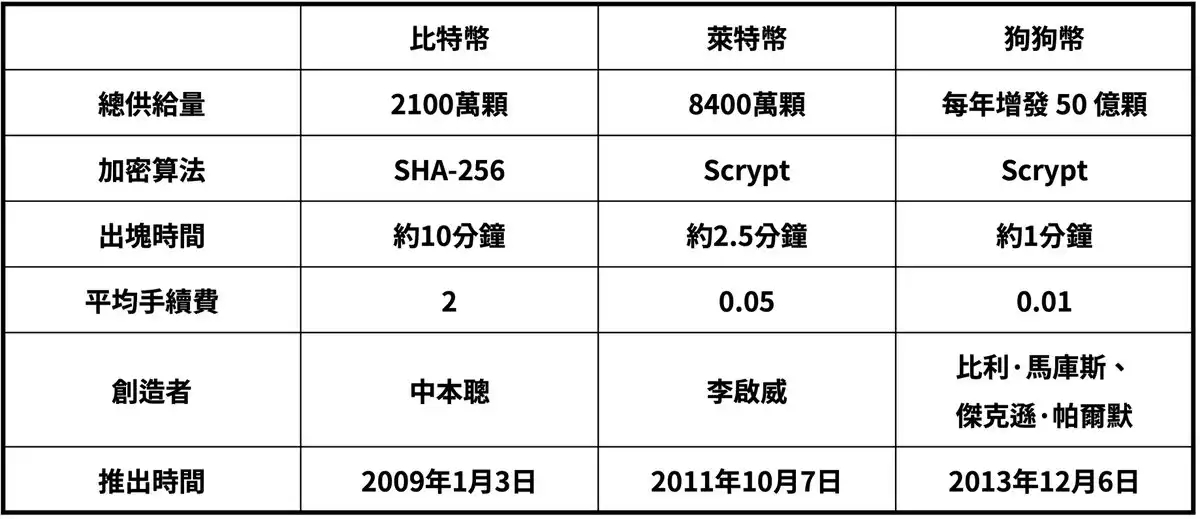
早期在 2014 年,当时 $Ltc 的算力高达 600GH/s,而 $Doge 只有不到 40GH/s,这导致 DOGE 的网路攻击成本很低,遭到矿池攻击与 Dogecoin Wallet 被骇,价格迅速崩盘 95.26%。为了加强安全性,LTC 创办人 Charles Lee 建议 $Doge 社群与 $Ltc 进行联合挖矿(AuxPoW),这项建议引起了激烈的争论,最后社群选择了与 $Ltc 绑定。

透过共享算力,$Doge 的全网算力不断成长,使得骇客攻击 DOGE 的成本增加,也保障了链的安全,加上矿工得到的 $Doge 收益也成为了他们主要收入来源(早期 $Ltc 矿工大户也是 $Doge 大额持有者),回头来看,当时的联合挖矿确实带来了双赢局面。

马斯克效应与 $Doge 的相关性

大家都知道当初 2021 年会再次倍炒作起来,背后最大的推手是马斯克。随著时间的推移,$Doge 的市场影响力与马斯克的连结也逐步扩大,包括了 2021 年 4 月 28 日马斯克宣布将登上《周六夜现场》(SNL),并于 5 月 8 日直播。

其中在直播中被问及 $Doge 是什么,他笑着回应:「It』s a hustle(这是一场骗局)」,价格直接从 $0.74 崩跌 30%,当时 Grayscale 负责人 Barry Silbert 甚至在发文表示在 FTX 上以 100 万美元做空 $Doge,因果轮回如今 $Doge 成为了灰度信托基金的其中一个币种,也能看出明显的态度转变。

而马斯克在这轮选举也是大力支持川普执政,在去年甚至提出了政府效率部门(缩写为 D.O.G.E)主要负责提高政府效率与减少花费成本,市场初期皆把这项举动与 $Doge 价格绑定在一起,在今年 1 月初官方网站还短暂换为 $Doge 的 logo 图案。

不过从过去到现在的回顾,能发现整体环境已经不同,市场不再买单马斯克单纯的口号迷因或推文了,将上涨预期放在马斯克能透过其他方式,更进一步实际支持 $Doge。

支付叙事(特斯拉、 X Money)

2025 年 X 宣布即将推出支付服务 X Money,这是马斯克将 X 打造成「All-in-one 程式」的关键一步,根据目前掌握的资讯,已经有数位钱包、即时转帐、QR 码支付以及与 Visa 的功能,预期接下来可能有更深度的整合系统释出。

不过身为在 Crypto 的交易者,更关注的是 X Money 与 $Doge 的预期结合是否能落地实现,加上已存在的特斯拉支付方式包含 $Doge(仅限于部分商品),其中有新闻媒体指出,美国境内的部分超级充电站也支援充电付款。

以下是根据个人目前掌握的资讯进行解读:

特斯拉

根据 @inevitable360 查询前端代码有发现在 cybertruck 页面可以找到「DOGECOIN」的代码,在 2022 - 2023 年期间,我个人也是透过查询前端代码找到「DOGEPAY」与「DOGECOIN」等相关代码,后续则是由马斯克发文公告正式开放支付功能,因此这个资讯配合支付叙事来看,非常有可能于今年实现支援付款买入车辆的选择。

X Money

@aaronp613 发布的资讯显示,X 预计先在美国推出 X money,由于 X Money 尚未获得美国 50 州的完整许可,可能会选择先在已获准的 39 个州率先上线,透过部分州的测试验证,另外也为每位使用者提供一个二维码,类似扫码付款可互相进行转帐与汇款。

根据个人过去研究的经验与解读,是当初在 2023 年 4 月马斯克为兑现 2022 年的承诺,将当时的蓝鸟 logo 改为 $Doge 的狗狗 logo,包括前段讲的 D.O.G.E 短暂将官网 logo 换成狗狗一样,我认为马斯克是会遵守当初的承诺或是玩笑(收购推特也是)。

在实际层面,假设 X Money 正式支援金融服务,X 可以测试支付服务的可行性,再根据市场反应进行优化与扩张,而监管就会成为炒作题材,X Money 是否能克服监管障碍,也可能成为市场焦点,吸引资本投机于 $Doge,而 $Doge 更是可以实现跨境支付的通用方法之一。

其中最知名的是在 2022 年,最大 $Doge 持有地址 Robinhood 的执行长 Vladimir Tenev 发文表示:如果狗狗币想要成为未来日常支付和交易的资产,可以透过提高区块大小和缩减出块时间来解决交易吞吐量太低的问题,其中狗狗币共同创办人和马斯克也对他的看法表示支持。

Tenev 首先提到狗狗币的交易费用已经够小,足以作为可行的电子现金领先者,但他认为如果要更广泛地采用,狗狗币的区块大小和出块时间是需要改进的主要重点,因此,如果可以再缩小速度上的问题(我相信马斯克想做肯定是完全没问题),加上现在特斯拉是已经实现 $Doge 支付方式,那么走向配合 X Money 支付应用的场景可能就大大扩增至全球

机构投资与 ETF 申请

机构投资

除了灰度 Grayscale 在今年推出了狗狗币信托基金(近 200 万美元 AUM),被视为 $Doge 从迷因导向向机构投资转型的关键一步之外,狗狗币基金会(Dogecoin Foundation)也是致力于推广和支持狗狗币发展的核心脚色。

基金会也在 2023 年初宣布设立「核心开发基金」,投入 500 万 $Doge(约 36 万美元),用于支持狗狗币核心开发者的工作。2024 年 11 月,基金会发布筹款呼吁,寻求大型赞助商的支持,以推动 2025 年的狗狗币大规模采用,资金将用于构建名为「Dogebox」的去中心化支付基础设施,协助中小型企业接受狗狗币作为支付方式。

另外在基金会成员上面也是值得关注,2021 年基金会重组,顾问委员会成员包括:狗狗币共同创办人 Billy Markus 、核心开发人员 Max Keller 、以太坊创办人 V 神以及马斯克的长期合作伙伴 Jared Birchall,这些人物都是大家熟知具有影响力的名人。

ETF 申请

2 月初时,彭博分析师 James Seyffart 和 Eric Balchunas 就 $Sol、 $Doge 、 $Ltc 和 $Xrp 这四大加密货币 ETF 的批准机率作出预测:

$Doge(75%):作为最大的迷因币,灰度与 Bitwise 提交的 19b-4 文件得到了 SEC 的认可,因此获得批准机率较高。

机构部分则是因川普的政策与发言倾向于减少监管、鼓励市场发展,这对 $Doge ETF 而言也是提升了批准的机率,因此,真正的问题不是会不会通过,是什么时候会通过。

个人认为至少必须在今年年底前通过,才不会让 ETF 这个叙事的利好效果随著边际效应而减少,目前可能申请与提交的币种 ETF 越来越多,必须把握在年底前通过,市场对价格的预期才会提高(以流动性先后与多寡的角度)。

而身为迷因币龙头的 $Doge 假设真的如期批准,那么作为合法支付的地位与机率可能大幅提高,也就是说,接下来川普的 Crypto 政策是否真正推动,也对马斯克在 $Doge 支付与金融市场的发展产生关键影响。

筹码结构

由于 $Doge 筹码集中在少数地址上,前 115 位持有者占据了总流通量的 65.4 %,甚至 Robinhood 单一机构就持有了 21.06% 的筹码,因此深入了解分析这些筹码对于价格涨跌的影响,通常能在行情开始与结束前发现端倪,在个人过去交易经验上也是非常有帮助的,下表为个人整理过去的 Top 20 与 Robinhood 持有量比较:
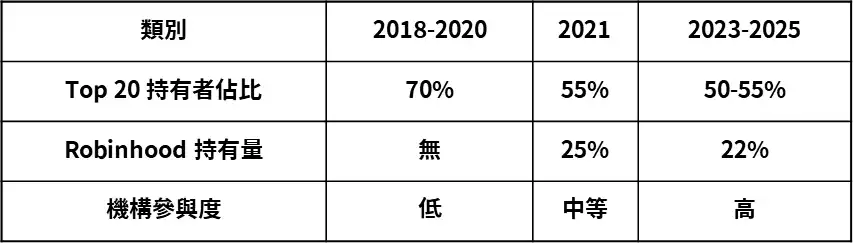
根据《马斯克之外:Dogecoin 真正的价格推手?!筹码分配、价格影响一次看!快速掌握价格暴涨前的关键信号》分析 $Doge 前 20 大持有者,特别是聪明钱地址的链上转移行为,可以发现这些持有大额 $Doge 地址的操作时机与价格涨跌高度相关,下表为文章统计与价格相关性较高的地址:
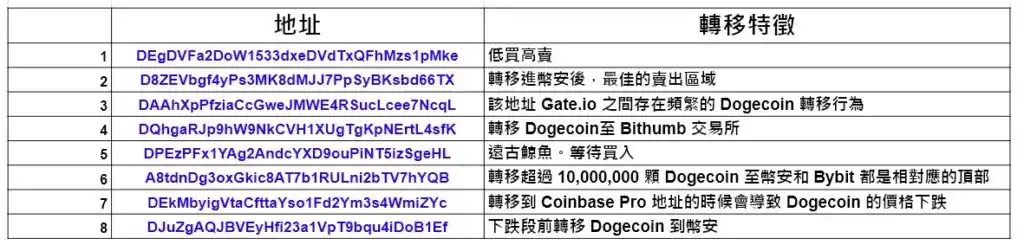
可参考地址转移行为辅助交易规划低点买入、高点卖出的策略,以及大规模转出导致的卖压,往往成为市场短期走势的参考讯号。对于交易者而言,关注这些地址的动向,能提供分析评估 未来的价格走势,不过其市场行为显示,大额的聪明钱参与使其筹码动态更具复杂性。

$Doge 当前定位与未来的潜在机会
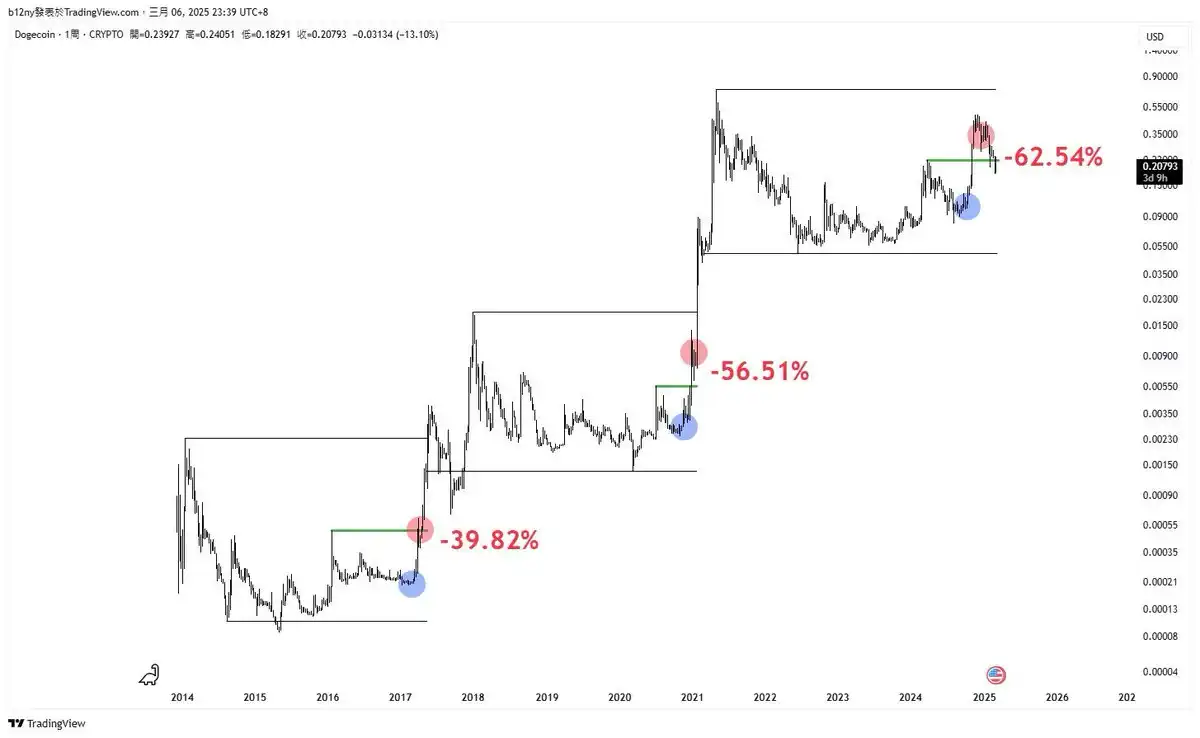
以过去价格与周期来看,非常有可能在 0.18 至 0.2 形成相对低点再次向上突破历史高点,个人也在先前的推文表示愿意在 0.18 大额买入,如果要我给一个价格预测,那我认为本轮周期到 1 美元的机率是最高的,如同十万之于 $Btc 的历史意义一样。

现阶段的 $Doge 仍然依赖市场叙事与资本流动性,中短期内可能还是跟随整体市场维持高波动性,假设 X Money、ETF 获批等关键事件如预期实现,那么就可能从迷因币真正转型为「支付型加密货币」。

这篇内容是我从进圈以来累积了五年对于狗狗币的深度理解与分析,如果喜欢我的内容或想进一步交流,欢迎留言或按赞转发。

我们月球见。

Trending Cryptos

Related Reads

Li Fei-Fei's Latest Long-Form Article: When Video Generation, Robotics, and NVIDIA All Call Themselves World Models, We Need a Taxonomy

In a new article, Dr. Fei-Fei Li addresses the widespread and often inconsistent use of the term "world model" in AI. She proposes a clear, functional taxonomy rooted in the classic Partially Observable Markov Decision Process (POMDP) loop (agent → action → state → observation → agent). According to this framework, current systems called "world models" are different projections of this loop, categorized by their primary output: 1. **Renderers**: Output observations (pixels). Their goal is visual fidelity for human consumption (e.g., video generation models like Sora). They are the most commercially mature but are limited by a focus on appearance over physical accuracy. 2. **Simulators**: Output states (geometric, physical, dynamic representations). They provide a structurally accurate world for both human professionals (e.g., architects) and computational agents (e.g., robots for training). Li argues simulators are the crucial, underappreciated bridge, as they can underpin both rendering and planning. 3. **Planners**: Output actions. Given an observation and a goal, they decide what an agent should do next (e.g., robotic action models). This area is highly promising but remains the least mature for real-world deployment. Li highlights a key trend: the boundaries between these three categories are beginning to blur, as they all rely on a shared underlying understanding of geometry, physics, and dynamics. The logical endpoint is a unified world foundation model capable of switching between rendering, simulation, and planning based on downstream needs. This convergence, she concludes, is central to advancing spatial intelligence—enabling machines not just to talk about the world, but to truly understand, imagine, and interact with it.

marsbit2h ago

Li Fei-Fei's Latest Long-Form Article: When Video Generation, Robotics, and NVIDIA All Call Themselves World Models, We Need a Taxonomy

marsbit2h ago

Forbes Feature: Stablecoin Cross-Border Payments Are Faster, But Not Yet Cheaper

A Forbes feature delves into the state of stablecoin-based cross-border payments, noting rapid growth but a key shortfall: while faster and more accessible, they are not yet cheaper. At a recent industry conference in Mexico City, optimism about technology, regulation, and volume was tempered by discussions with practitioners. The core issue is liquidity. Traditional FX brokers charge 60-70 basis points, and stablecoins promise to slash this to 2-5 basis points. However, this theoretical cost advantage cannot be realized until deep liquidity pools are established at scale, requiring significant institutional capital inflow. A major adoption barrier is trust. Businesses often rely on long-standing relationships with traditional brokers, valuing reliability over marginal cost savings. This shift will be gradual. Furthermore, successful companies in the space are not positioning themselves as replacements for legacy systems like SWIFT, but as complements. They leverage stablecoins for speed while using traditional rails for their standardization and reliability in ensuring accurate payment details—a critical factor for supplier payments to avoid customs issues. Companies like Caliza, experiencing high monthly growth, exemplify this hybrid approach. The industry anticipates consolidation, as long-term viability will depend on securing the essential trifecta: proper licensing, robust fiat on/off-ramps, and deep liquidity. Without these, firms risk being mere intermediaries rather than building sustainable businesses.

marsbit2h ago

Forbes Feature: Stablecoin Cross-Border Payments Are Faster, But Not Yet Cheaper

marsbit2h ago

Li Feifei's Latest Article: When Video Generation, Robotics, and NVIDIA All Claim to Have 'World Models,' We Need a Taxonomy

"World Model" has become a widely used yet ambiguous term in AI. Drawing from the classic POMDP framework (agent → action → state → observation), this article proposes a functional taxonomy to clarify the concept. It identifies three distinct types, categorized by their output in the perception-action loop: 1. **Renderers**: Output visual observations (pixels). These models, like advanced video generators, prioritize visual fidelity but often lack underlying physical accuracy. 2. **Simulators**: Output the state of the world (geometry, physics, dynamics). They provide a structurally accurate representation for professionals (e.g., architects) and serve as training environments for robots and AI agents. 3. **Planners**: Output actions. Given an observation and a goal, they determine what an agent should do next, closing the perception-action loop (e.g., vision-language-action models). While renderers are currently the most commercially mature and planners are the most aspirational, the article argues that **simulators are the crucial, underappreciated hub**. By working at the level of geometry and physics, a simulator can project upwards to create visuals for humans and downwards to predict action consequences for agents. The future lies in the convergence of these three functions. Emerging research and products, like World Labs' Marble model which outputs both visual splats and physical collision meshes, are beginning to blur these boundaries. The logical endpoint is a unified world foundation model capable of rendering, simulating, and planning based on a shared understanding of spatial and temporal structures—ultimately enabling machines to understand, imagine, and interact with the physical world.

链捕手2h ago

Li Feifei's Latest Article: When Video Generation, Robotics, and NVIDIA All Claim to Have 'World Models,' We Need a Taxonomy

链捕手2h ago

Trading

Spot

Hot Articles

What is DOGE M

Doge Matrix ($doge m): The New Breed of Community-Driven Cryptocurrency Introduction In the ever-evolving landscape of cryptocurrency, new projects constantly emerge, each aiming to capture the interest of investors and enthusiasts alike. One of the latest entrants to this domain is Doge Matrix, represented by the ticker symbol $doge m. This project has attracted attention thanks to its roots in the popular meme culture surrounding Dogecoin, establishing its place within the web3 space. This article aims to provide a comprehensive analysis of Doge Matrix, covering its overview, creator, investors, functionality, timeline, and notable aspects. What is Doge Matrix ($doge m)? Doge Matrix is a community-driven cryptocurrency project that seemingly builds upon the widespread appeal of Dogecoin, a digital currency known for its Shiba Inu mascot and its meme origins. While the overarching objectives of Doge Matrix are not extensively defined, it is characterized by a commitment to harnessing community involvement and support. Unlike traditional cryptocurrencies that often emphasize utility or intrinsic value through underlying technologies, Doge Matrix positions itself within a space that embraces the cultural phenomenon of cryptocurrencies, particularly appealing to those who resonate with the ethos of meme-based assets. Drawing on the strengths of the Dogecoin community, Doge Matrix operates as part of a broader ecosystem, inviting participation and engagement from users who share an interest in cryptocurrency and the digital landscape. Who is the Creator of Doge Matrix ($doge m)? The identity of the creator of Doge Matrix remains unknown. This lack of transparency is not an uncommon occurrence in the cryptocurrency space, where some projects are launched without revealing the identities of their founders. The absence of information regarding the founding team can raise questions among potential investors about the project’s accountability and direction. Who are the Investors of Doge Matrix ($doge m)? As it stands, there is no publicly available information detailing the investors or investment foundations that back Doge Matrix. The project appears to rely primarily on community support rather than institutional investment. This model aligns with the community-driven nature of the initiative, fostering an environment where the direction of the project is shaped by its participants rather than being dictated by a select few financial backers. How Does Doge Matrix ($doge m) Work? The specifics regarding the operational mechanisms of Doge Matrix are somewhat vague, reflecting a broader trend of projects in the meme coin space where innovative functionalities are not always clearly articulated. Nonetheless, Doge Matrix seems designed to tap into the existing cryptocurrency ecosystem by encouraging user participation while tapping into the familiar cultural references associated with Dogecoin. Its potentially unique characteristics derive from community interactions rather than technological advancements, emphasizing shared experiences and collaboration among token holders. While the exact innovations have not been explicitly outlined, the project appears to create a space where community members can engage, share ideas, and propel the project's potential forward. Timeline of Doge Matrix ($doge m) Reflecting on the project’s timeline reveals notable events that have defined its journey thus far: November 25, 2024: Doge Matrix reached its all-time high value, marking a significant milestone in its early history. January 1, 2025: Conversely, Doge Matrix hit its all-time low value, illustrating the volatility often associated with cryptocurrencies, especially in the early stages of a project's lifecycle. Ongoing: The project continues to be actively traded and supported by its community, although specific future milestones or objectives have yet to be disclosed. Key Points About Doge Matrix ($doge m) Community Focus At the heart of Doge Matrix is a commitment to community engagement. The project thrives on the premise of collaboration and shared objectives among its members, emphasizing the importance of collective effort. Unlike centralized projects that often have a defined leadership structure, Doge Matrix at present showcases a more fluid approach to governance, where every community member's voice matters. Volatility The cryptocurrency market is notorious for its volatility, and Doge Matrix is no exception. Its price history reflects significant fluctuations between high and low values, which is typical of many new cryptocurrencies but underscores the risks associated with investment in emerging tokens. Lack of Detailed Information One of the most striking features about Doge Matrix is the scarcity of detailed information regarding its technological underpinnings and operational mechanisms. This ambiguity necessitates that potential investors conduct thorough due diligence before engaging with the project. Conclusion In summary, Doge Matrix ($doge m) illustrates a new wave of cryptocurrency projects that lean heavily on community engagement and cultural relevance. While lacking in certain specifics—such as clear leadership, defined objectives, and detailed functionality—the project has managed to generate interest within the crypto community, leveraging the established appeal of meme culture. As with any investment in the cryptocurrency space, understanding the inherent risks and conducting comprehensive research is essential for potential participants. Doge Matrix stands as a reminder of the dynamic, sometimes unpredictable nature of the crypto industry, marked by constant evolution and enthusiasm for community-driven initiatives.

3.9k Total ViewsPublished 2025.02.03Updated 2025.02.03

What is DOGE M

Discussions

Welcome to the HTX Community. Here, you can stay informed about the latest platform developments and gain access to professional market insights. Users' opinions on the price of DOGE (DOGE) are presented below.

活动图片