Forbes Feature: Stablecoin Cross-Border Payments Are Faster, But Not Yet Cheaper

marsbitPublished on 2026-07-05Last updated on 2026-07-05

Abstract

A Forbes feature delves into the state of stablecoin-based cross-border payments, noting rapid growth but a key shortfall: while faster and more accessible, they are not yet cheaper. At a recent industry conference in Mexico City, optimism about technology, regulation, and volume was tempered by discussions with practitioners. The core issue is liquidity. Traditional FX brokers charge 60-70 basis points, and stablecoins promise to slash this to 2-5 basis points. However, this theoretical cost advantage cannot be realized until deep liquidity pools are established at scale, requiring significant institutional capital inflow. A major adoption barrier is trust. Businesses often rely on long-standing relationships with traditional brokers, valuing reliability over marginal cost savings. This shift will be gradual. Furthermore, successful companies in the space are not positioning themselves as replacements for legacy systems like SWIFT, but as complements. They leverage stablecoins for speed while using traditional rails for their standardization and reliability in ensuring accurate payment details—a critical factor for supplier payments to avoid customs issues. Companies like Caliza, experiencing high monthly growth, exemplify this hybrid approach. The industry anticipates consolidation, as long-term viability will depend on securing the essential trifecta: proper licensing, robust fiat on/off-ramps, and deep liquidity. Without these, firms risk being mere intermediaries rathe...

Author: Aaron Stanley

Compiled by: Jiahuan, ChainCatcher

The stablecoin cross-border payments industry is experiencing rapid growth.

Earlier this month, hundreds of companies gathered in Mexico City for the Bitso Business Stablecoin Summit. Ask anyone present, and you'll get the same answer: the technology is mature and usable, the regulatory environment is improving, and transaction volumes are climbing.
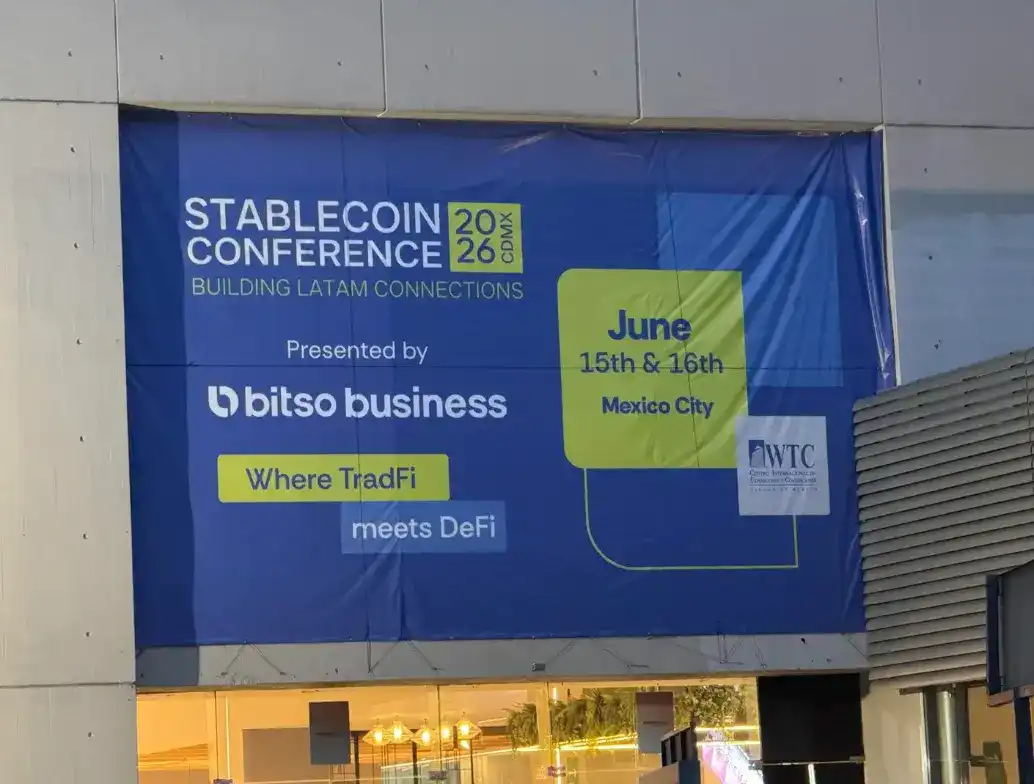
But spend some time talking to those actually moving money across borders, and a more nuanced picture emerges: stablecoin-based cross-border payments are faster, more accessible, and increasingly reliable. But on price, the industry has yet to deliver on its promise.

Where's the gap? Foreign exchange brokers typically charge 60 to 70 basis points for cross-border supplier payments. Stablecoins promise to compress that cost to 2 to 5 basis points. The direction is clear.

It's just that the deep liquidity pools needed to make this cost compression a reality have not yet been built at scale.

Imran Ahmad, head of Bitso Business, the B2B arm of one of Latin America's largest crypto exchanges, put it bluntly: Until institutional liquidity floods into these corridors, the cost advantage of stablecoins remains theoretical.

Once banks start connecting directly, pricing will be driven down and the equation will change.

"They're faster? Absolutely. They're better? Absolutely. They operate 24/7? Absolutely. But are they cheaper? Not yet," Ahmad explained in an interview on the sidelines of the summit. "Liquidity pools need to be built first."

Addressing the Trust Problem

Getting that liquidity online requires a change in behavior.

Consider a medium-sized importer located in Santos, Brazil (Latin America's largest port), who has used the same local forex broker to handle payments for years.

That broker charges 60 to 70 basis points. In theory, a stablecoin solution could accomplish the same payment for a fraction of that cost.

But the importer may not measure the transaction in basis points. What comes to mind is that reliable agent who has handled their forex for a decade: the person who always answers the phone and always gets things done.

It's this relationship, built on trust, that is the real barrier to stablecoin adoption in B2B payments. It will only erode slowly: when the price gap becomes too large to ignore, and as a new generation of practitioners no longer takes personal relationships for granted.

"Everything ultimately boils down to trust," said Ezra Kebrab, CEO of Caliza, a cross-border payments company handling supplier payments and treasury transactions between Latin America, North America, and Asia.

"It's not just, 'I'm the cheapest, fastest solution,'" Kebrab added. "Do you understand what's at stake if this payment doesn't meet the counterparty's requirements?"

Complementing Swift, Not Replacing It

Contrary to some rhetoric in the stablecoin payments space, the companies gaining real market traction are precisely those that have stopped treating existing infrastructure as the enemy.

Caliza's clients range from customs brokers in Santos to global payment processors like Flutterwave and India's Skydo; the company also works with payment partner LianLian for Latin America-to-China flows.

Despite running on stablecoin rails, Caliza still executes many transactions via Swift. The reason: In supplier payments, paying correctly is just as important as paying quickly. A wire with a wrong tax ID or missing payment field can hold goods indefinitely at customs.

"Some of my peers might call themselves 'Swift killers,'" Kebrab said. "But I think Swift has done a phenomenal job in establishing the standardization required for supplier payments."

This willingness to walk alongside, not against, traditional systems has translated into sustained growth. Since its inception, Caliza has consistently seen month-over-month growth exceeding 40%, reaching 60% last month.

To avoid reliance on intermediaries, the company built its licensing and banking relationships from scratch. A decision that seemed costly early on now looks increasingly like a competitive advantage.

Bitso's Ahmad believes the growth trajectory of stablecoin companies operating in these cross-border corridors over the past year has been phenomenal; but given the structure of the business and its highly regulated nature, he expects natural attrition to eventually arrive.

"The growth trajectories of these companies have been fascinating to watch," he said. "There hasn't been a 'graveyard' of stablecoin companies yet. But I think it's coming."

In his view, who ultimately stands firm depends on three things: licensing, fiat on/off ramps, and liquidity. Build those three, and you have a real business. "Otherwise, you're just a middleman."


Related Questions

QAccording to the article, what is the main advantage of stablecoin-based cross-border payments that has already been realized?

AThe main realized advantages are that stablecoin-based cross-border payments are faster, more accessible, and increasingly reliable compared to traditional methods.

QWhat key promise regarding stablecoin payments has NOT yet been fulfilled, as highlighted in the article?

AThe promise of being significantly cheaper has not yet been fulfilled. While stablecoins aim to reduce fees to 2-5 basis points compared to 60-70 for traditional brokers, this cost advantage is still theoretical due to a lack of large-scale, deep liquidity pools.

QWhat does Imran Ahmad of Bitso Business identify as the critical factor needed for stablecoin payments to achieve their promised cost advantage?

AHe identifies the need for large-scale, deep liquidity pools, which require significant institutional liquidity (like banks) to flow into these channels before the pricing can be driven down.

QWhat is described as the real obstacle to the adoption of stablecoins in B2B payments, beyond just cost and speed?

AThe real obstacle is trust. Businesses have long-standing, reliable relationships with traditional brokers who handle their forex needs. This trust-based relationship is a significant barrier that will only erode slowly as the price gap widens and a new generation of operators emerges.

QHow does Caliza, a company mentioned in the article, position its use of stablecoins relative to the traditional SWIFT system?

ACaliza positions stablecoins as a complement to SWIFT, not a replacement. It uses stablecoin channels for transactions but still relies on SWIFT for many payments because SWIFT provides excellent standardization crucial for accurate supplier payments, where correctness is as important as speed.

Related Reads

Fidelity Assesses the Limits of AI's Influence on the Crypto Market

Fidelity Analysts Assess the Limits of AI's Impact on the Crypto Market Fidelity Digital Assets senior analyst Max Waddington notes that AI agents could become a new source of activity in the digital asset sector, from payments to trading and lending. However, the benefits will likely be distributed unevenly. Fidelity's study of over 100,000 GitHub developers shows AI coding assistants increased commit counts by up to 180% and releases by 30%. These tools enable smaller teams to build blockchain applications faster, though critical financial software still requires manual code review. In the crypto industry itself, developer counts fell in 2026 amid lower prices, but commits per developer continued to rise. Waddington cautions that more applications don't guarantee success; user adoption, liquidity, compliance, and trust remain key. Autonomous AI agents, capable of payments, trading, liquidity provision, and lending, are emerging as another driver. Blockchains are suitable due to 24/7 operation and programmable settlements. According to Keyrock, AI agents had already conducted over 176 million transactions worth more than $73 million by May, predominantly using USDC. Infrastructure is developing, with Coinbase launching tools like the x402 protocol and 'Coinbase for Agents'. However, Fidelity expects agents to use multiple platforms (both public blockchains and traditional finance systems) based on cost and convenience. A surge in AI-driven transactions may not proportionally boost blockchain revenue. Payments, while numerous, generate low fees and can be batched or moved to cheaper Layer 2s. Capital-intensive activities like trading are far more lucrative for networks; over 180 days, trading generated 49x more revenue per dollar of volume for Ethereum's base layer than payments did, with additional revenue from MEV. Therefore, analysts see greater potential in AI agents involved in trading, lending, and liquidity provision. Widespread automated payments would primarily benefit stablecoin issuers and infrastructure providers rather than native blockchain tokens. This aligns with earlier comments from Bernstein and Franklin Templeton on AI agents driving crypto payments and being key to stablecoins' future.

cryptonews.ru5m ago

Fidelity Assesses the Limits of AI's Influence on the Crypto Market

cryptonews.ru5m ago

Trading

Spot
活动图片