在市场调整期间,以太坊有跌至1600美元的风险

币界网Published on 2024-08-16Last updated on 2024-08-16

币界网报道:

以太坊的价格目前比8月5日达到的8个月低点2112美元上涨了25%。以太坊加密货币交易员Peter L.Brandt对领先的替代货币以太坊(ETH)及其下跌幅度做出了大胆的预测。

Brandt在X上的一篇帖子中观察到,山寨币的价格将降至1651美元,这是自2023年10月以来的最低交易价格。

在过去的七天里,市值第二大的加密货币的价值增长了13%。尽管表现如此,分析师仍认为以太坊的下行风险依然存在。

Arete Capital合伙人McKenna在8月15日的一篇X帖子中表示:“我真的不认为ETH会突破2800-2900美元,而是在8月和9月的一些时候保持区间波动。”

在最近的下跌之后,由于做市商Jump Trading的ETH倾销和对全球经济衰退的担忧而加剧,McKenna讨论了Ether的价格走势。8月5日,ETH经历了21%的下跌,达到2112美元的波动低点,然后反弹至目前的2614美元。

BTC/USD日线图。来源:麦肯纳

分析师指出,2800美元的供应商拥堵区对Ether在8月12日升至2750美元构成了重大阻力。McKenna表示,他们不会非常确信从目前的水平做多以太坊,因为价格“接近这个供应量”

以太坊将失去2200美元的支撑位

与此同时,另一位分析师Peter Brandt表示,以太坊的价格走势提供了两种潜在的情景,这两种情景来自两种不同的图表模式:一种是5个月的矩形,另一种是上升的楔形。在第一种情况下,当以太坊价格升至2960美元以上时,出现了理想的多头退出头寸。

第二种观点认为,上升楔将崩溃,从而延长下降趋势。这将导致以太币跌至1650美元,这是矩形的看跌目标。

来源:Peter Brandt on X

该硬币的盘整阶段于8月4日结束,当时它跌至矩形图案的下线以下。通常,资产会重新测试突破水平,以确定它在突破整合模式后是作为支撑还是阻力。

Brandt声称,山寨币目前正在以当前价格重新测试这一突破水平,以确定它是保持还是下跌。

此外,市场分析师在日内图表上看到了上升的楔形模式。当资产价格持续经历较高和较低的低点,但它们之间的距离变窄,导致楔形时,就会建立这种模式。这种模式通常被认为是一个负面信号,表明可能会出现下行逆转。

由于无法超过该水平,该硬币的价格将继续下跌。根据这一信息,Brandt以1651美元的目标开始空头头寸。该头寸的风险回报比为3:1。

来源:Peter Brandt on X

尽管如此,他承认谨慎的必要性,宣布如果ETH的价格超过这一阈值,他将把止损设置为2961美元并退出交易。

Glassnode的数据显示,自2024年初以来,以太坊的融资率一直是积极的,这意味着乐观的预期。然而,最近价格跌至2100美元的同时,融资率也下降了,这突显了市场情绪的变化。

总的来说,负融资率表明空头头寸多于多头头寸,这表明看跌押注的数量很多。

Trending Cryptos

Related Reads

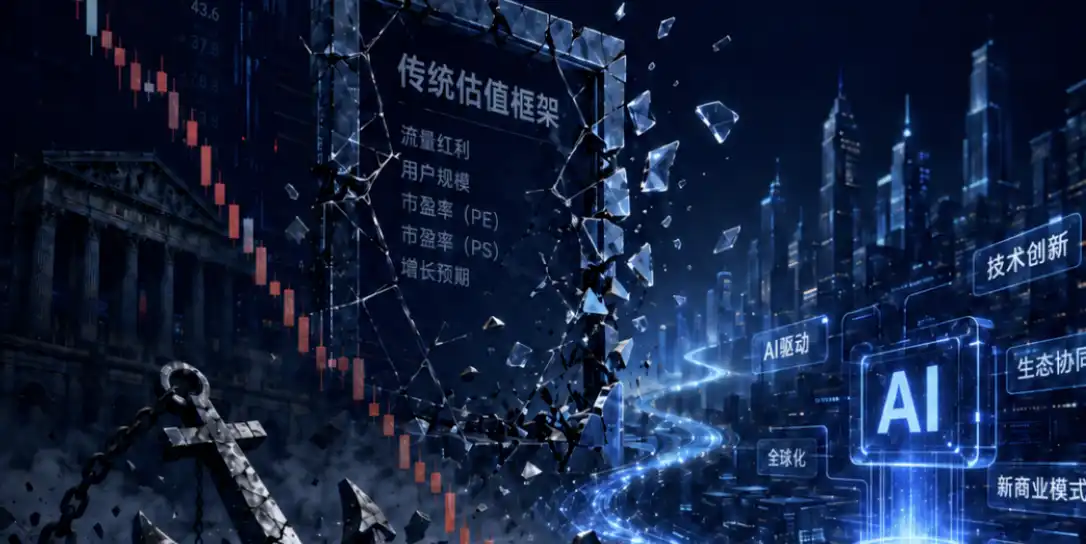
Valuation Rout of Old Titans: The Demise of a Generation's Asset Valuation Framework

"The Old Titans' Valuation Collapse: The Death of an Era's Valuation Framework" Between Alibaba's 2014 NYSE debut at $93.89 and its 2026 price of ~$95, twelve years have passed with zero price appreciation. This stagnation symbolizes a wholesale valuation reset for an entire generation of Chinese internet assets. Companies like Tencent, Pinduoduo, Meituan, Bilibili, and Kuaishou have seen catastrophic declines of 80-98% from their peaks. The core question arises: what framework now prices these companies, or has the framework itself expired? The valuation logic for Chinese internet stocks followed a clear "anchor-setting and anchor-removing" process. From 2014-2017, the dominant narrative was "US comparable discounting" – applying a growth premium and governance discount to US peers' multiples. This anchor loosened with the 2018 US-China trade war and the VIE structure risk, then was violently uprooted by the 2020-2021 regulatory crackdowns (Ant Group, Didi, anti-monopoly fines). The 2022 delisting panic and subsequent 2025-2026 geopolitical shocks (US military lists, AI espionage accusations) completed the demolition. The old "US对标打折" model is dead. However, this is not solely a China story. A structural mirror exists in US "old titan" stocks ("老登股"). In 2026, even Microsoft – with robust fundamentals – saw its PE compress from a 34x median to 22x, its worst performer status among the "Magnificent Seven" driven by a $190 billion annual AI capex crushing free cash flow. The core dilemma is universal: legacy platform giants, whether Alibaba or Microsoft, are spending colossal sums to chase an AI paradigm that may颠覆 their own high-margin, user/subscription-based business models. They have shifted from "companies defining the future" to "companies needing to prove they won't be淘汰ed by the future." This phenomenon of a dying valuation坐标系 has a historical precedent: post-1989 Japan. After its bubble burst, the "Japan premium" narrative ("most efficient manufacturing + perpetual growth") collapsed. A 25-year valuation vacuum ensued until Warren Buffett provided a new language in the 2010s: "low valuation + high dividend + governance reform." China's internet sector is now in a similar vacuum six years into its reset. While different from Japan's deflationary context, the parallel is clear: the old macro assumption of "deep integration with global capital" is falsified, but a new pricing framework is absent. Potential "new languages" for Chinese internet valuations are contradictory. AI transformation requires gutting profitable core businesses (e.g., Alibaba's ad-driven e-commerce) for an unproven consumption-based model, risking a Microsoft-like cash flow crunch. Alternatively, shareholder returns (buybacks/dividends) could build a floor, following Buffett's Japanese playbook, but current scales are insufficient to form a standalone anchor. The current state mirrors mid-1990s Japan: the old framework is dead, the new one unborn. The market waits in a vacuum for a重新定义ing force – a person, event, or proven business model shift – to answer "why buy." This may only be the middle phase of a prolonged re-rating.

marsbit4m ago

Valuation Rout of Old Titans: The Demise of a Generation's Asset Valuation Framework

marsbit4m ago

STRC Trading at Significant Discount, mNAV Falls Below Break-Even, Strategy's Valuation Logic Has Been Rewritten

Title: STRC Deeply Discounted, mNAV Falls Below Break-even, Strategy's Valuation Logic Redefined The recent volatility in MSTR and STRC highlights the need to reassess the core business model of Bitcoin reserve companies. These entities function more like leveraged, single-asset banks rather than software/tech firms. Consequently, they should be valued using banking metrics, not based on their total Bitcoin holdings. The key valuation metric is mNAV (market net asset value), akin to a price-to-book ratio. It compares the company's market capitalization to the equity value of its Bitcoin holdings after deducting all senior debt and preferred equity (like STRC). As of June 24, Strategy's mNAV was 1.10x. The focus should be on "net Bitcoin per share" (the Bitcoin claim per share after senior claims) and its growth rate, equivalent to a bank's book value and return on assets. Given STRC's 19% discount to its $100 par value (yielding 14.2%), issuing new MSTR equity at the current price to buy more Bitcoin is inefficient. It slightly dilutes the widely watched "total Bitcoin per share" metric while providing minimal improvement to the more critical "net Bitcoin per share." The article analyzes four potential uses for $1 billion in new equity: 1. **Buy Bitcoin:** Least effective. Improves net Bitcoin per share only marginally while diluting total Bitcoin per share. 2. **Repurchase STRC:** Most effective for balance sheet repair. The discount creates immediate value, increasing net Bitcoin per share by 1.0%, reducing debt burden, and lowering future dividend obligations. 3. **Boost Cash Reserves:** Dramatically improves the "cash coverage ratio" for STRC dividends from 9.8 months to 16.8 months, a crucial liquidity metric in a tightening funding environment. 4. **50/50 Split (STRC buyback & cash):** A balanced approach improving all key metrics. Strategy's own Q1 report indicates its internal break-even mNAV for profitable equity issuance to buy Bitcoin is 1.22x. With the current mNAV at 1.10x, such a move would be value-destructive. The core assumptions of its previous expansion model—issuing STRC at par and maintaining ample dividend coverage—have broken down. The recommended path is to use new capital to optimize core financial health: repurchasing discounted STRC and/or bolstering cash reserves. This would repair the balance sheet, signal liquidity strength, support STRC's price, lower its yield, and potentially reopen the par-value issuance channel. The current STRC discount represents a low-cost capital opportunity to restart this positive cycle. Bitcoin reserve companies must be evaluated as banks, focusing on book value, leverage, and liquidity resilience.

Foresight News6m ago

STRC Trading at Significant Discount, mNAV Falls Below Break-Even, Strategy's Valuation Logic Has Been Rewritten

Foresight News6m ago

South Korean Institutions' Crypto Race: Dual Explosion of Stablecoins and RWA

**Summary: South Korea's Institutional Crypto Race: Stablecoins and RWA Take Off** South Korea is undergoing a structural shift in its crypto ecosystem, moving beyond its historical role as a major retail trading hub. Major financial institutions and internet platforms are now building institutional-grade blockchain infrastructure, with stablecoins and Real-World Asset (RWA) tokenization as the primary drivers. The push for a regulated Korean won stablecoin market is a major policy and corporate focus. This is driven partly by an estimated $115 billion outflow into dollar stablecoins like USDC, threatening the domestic financial system. Banks (e.g., KB Financial, Hana), payment giants (e.g., Shinhan Card, BC Card), and internet super-apps (KakaoPay, NAVER Pay) are all conducting pilots. The goal is to anchor future digital finance to the Korean won and local regulations. In RWA, South Korea is advancing rapidly within regulatory sandboxes, focusing on unique domestic assets beyond typical global templates like US Treasuries. Projects involve tokenizing ships (with Hyundai Heavy Industries), defense supply chain assets, and K-pop intellectual property, alongside more conventional assets. A legal framework is set for 2027, and platforms like NXT are preparing for regulated trading. Key opportunities for crypto-native projects lie in providing the underlying technology these traditional institutions lack: global distribution channels for tokenized assets, cross-chain liquidity solutions, and enabling infrastructure tools (e.g., for asset packaging and management). Partnerships, such as Solana with Shinhan Card or LayerZero with the Korea Gold Exchange, exemplify this proactive approach. Crucially, user access is being shaped by consumer platforms. NAVER's planned acquisition of Upbit's operator Dunamu and Kakao's development of a unified wallet aim to seamlessly integrate crypto with everyday payments for tens of millions of users. The race is now about which protocols and projects will become the foundational standards as regulation solidifies and institutional adoption accelerates.

Foresight News1h ago

South Korean Institutions' Crypto Race: Dual Explosion of Stablecoins and RWA

Foresight News1h ago

Trading

Spot

Hot Articles

Discussions

Welcome to the HTX Community. Here, you can stay informed about the latest platform developments and gain access to professional market insights. Users' opinions on the price of ETH (ETH) are presented below.

活动图片