加密货币市场今日为何上涨?

币界网Published on 2024-08-08Last updated on 2024-08-08

币界网报道:
  • 加密货币总市值继续缓慢回升,过去 24 小时内增加了 700 亿美元。

  • 比特币的价格正逐渐接近突破 58,200 美元的阻力位,这可能催化其上涨至 60,000 美元。

  • XRP 价格在过去 24 小时内表现出色,在看跌趋势的推动下上涨了 20%。

uuhWyIBE3qOBi4doyuMbzCIFOMw0qCzJdNv8NsJp.jpeg

随着投资者期待复苏,加密货币总市值 (TOTAL) 和比特币 (BTC) 正在逐步上升。另一方面,瑞波币 (XRP) 的价格表现优于顶级加密货币,在与美国证券交易委员会的长期法律纠纷结束后,其价格大幅上涨了 20%。

加密货币市值接近 2 万亿美元

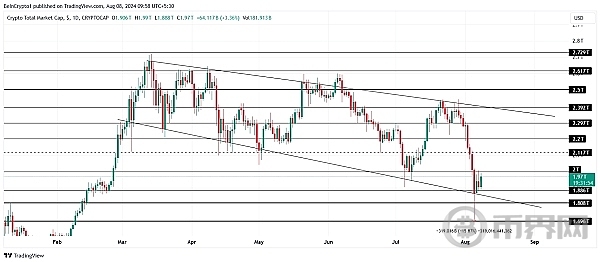
加密货币总市值为 1.97 万亿美元,过去 24 小时内上涨了 700 亿美元。总市值的下一个障碍是 2 万亿美元,突破并将其转化为支撑对于进一步复苏至关重要。

为了从最近的损失中恢复过来,道达尔需要获得约 3000 亿美元的资金流入。这将帮助它重新获得 2.30 万亿美元的支持,并将其推向 2.50 万亿美元。

feIaKH6KaviMUxqNSRqXlMEM3ZAr4PvBaD9OxlbQ.jpeg

然而,加密货币总市值可能难以突破 2.11 万亿美元和 2.20 万亿美元的阻力位。这些障碍过去也曾给道达尔带来挑战。

比特币价格遭遇阻力

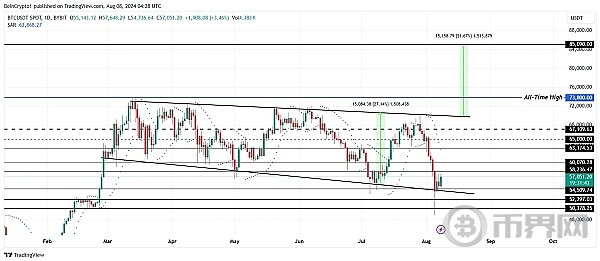
比特币的价格为 57,000 美元,在过去一天内上涨了近 3.5%,此前该价格从扩大的下降楔形的下趋势线反弹。BTC 的下一个阻力位是 58,200 美元和 60,000 美元。

这两个障碍在过去都曾被多次测试过,后者在支撑位被尝试过。一旦翻转,60,000  美元将成为 BTC 重返 68,000 美元的跳板。

imiBySzkRorAf8RJN4Lm3lI1vIeIYbQZs2FQM9Ik.jpeg

另一方面,如果未能突破,则可能会延续该水平下的盘整。比特币价格上涨停滞也可能影响山寨币的复苏。

XRP 价格上涨引发市场波动

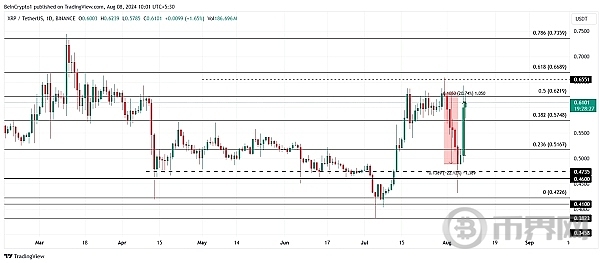
XRP 价格出现当日最大涨幅,因为 Ripple 原生代币成为表现最佳的资产。这是由于上述被罚款 1.25 亿美元所致。

虽然事态发展不容乐观,但投资者却欣喜若狂。这是因为罚款意味着 SEC 的诉讼已经结束。罚款金额也远低于 SEC 要求的 20 亿美元。

BA323xdqhyGXSZHyBaHDfJ7h5wtczw48ZCFiMICc.jpeg

结果,XRP 价格一天内上涨了 20%,推动山寨币价格上涨至 0.62 美元。这一水平标志着 50% 斐波纳契回撤线,将其翻转为支撑位意味着 XRP 已从最近的 22% 暴跌中恢复过来。

Trending Cryptos

Related Reads

Bitcoin Withstood 10 Bearish Blows in 2026, Yet Experienced Its Mildest Bear Market

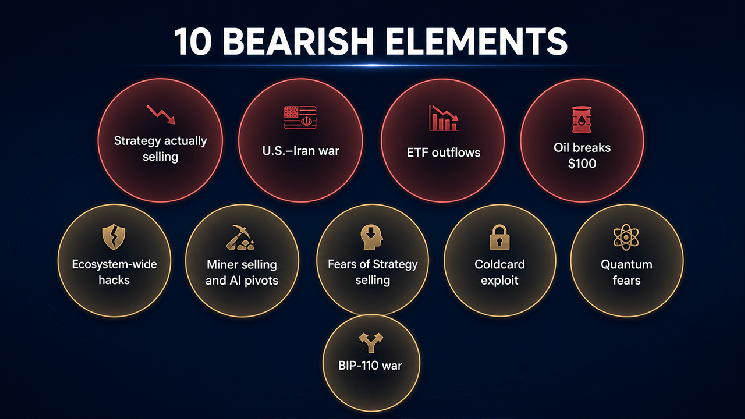
Bitcoin, the leading cryptocurrency by market cap, peaked above $126,000 in early October before entering a prolonged decline. By August, it was mainly trading between $63,000 and $65,400, inflicting losses on late buyers but resulting in what is, historically for Bitcoin, an unusually shallow bear market—down about 49% from its peak, compared to typical 75-80% plunges. Throughout 2026, Bitcoin faced multiple headwinds yet demonstrated notable resilience. Geopolitical tensions in the Middle East and volatile oil prices revived inflation concerns but failed to trigger the panic-driven sell-offs seen in prior cycles. A significant psychological blow came from corporate seller MicroStrategy, a longtime accumulator, which began strategic sales to bolster its cash position, reducing its holdings. U.S. spot Bitcoin ETFs also faced sustained outflows, though a late-week inflow hinted at potential relief. Pressure also came from within the ecosystem. A contentious blockchain proposal, BIP-110, failed after a minority chain stalled. Miners, facing tighter economics, sold reserves and pivoted infrastructure toward AI. A major security breach involving Coldcard hardware wallets saw an estimated 2,000 BTC stolen, shaking confidence in self-custody. Long-term threats like quantum computing resurfaced in discussions. Despite this confluence of corporate selling, ETF outflows, miner capitulation, geopolitical shocks, internal conflict, and security issues—any one of which could historically cause sharp declines—Bitcoin stubbornly held above a key $60,000 support level. Deeper market liquidity, regulated products, and long-term holders appear to be absorbing selling pressure that once would have caused deeper crashes. This resilience suggests a maturing market structure, though risks remain. Another shock could still push Bitcoin toward $50,000. For now, its 49% decline, severe for most assets, is relatively moderate by Bitcoin's own volatile standards. The remaining months of 2026 will test whether $60,000 is a durable floor or merely the next major line of defense.

cryptonews.ru21m ago

Bitcoin Withstood 10 Bearish Blows in 2026, Yet Experienced Its Mildest Bear Market

cryptonews.ru21m ago

Korean Financial Supervisory Service to Revise Compensation System for Phishing Losses Involving Crypto Transfer

The South Korean Financial Supervisory Service (FSS) is overhauling its system for reimbursing victims of voice phishing scams. Starting in October, the new system will be able to calculate and compensate losses held in cryptocurrency, not just in Korean won. Previously, the reimbursement system assumed stolen funds were in won, failing to fully compensate victims whose money was converted into digital assets. The upgraded software will apply a recovery ratio to determine the specific type and quantity of tokens owed to each victim, based on the token's value at the time the payment was frozen. It will also better track cases where fraud proceeds are split across multiple accounts and later consolidated. These changes follow March 31st amendments to the Act on Reimbursement of Losses from Telecommunications Fraud, which now classify virtual assets as both damaged and recoverable property. Major Korean crypto exchanges like Upbit and Bithumb must now comply with the same anti-phishing obligations as banks, including verifying transaction purposes and tracking suspicious funds. The revised law takes effect October 1st, with the FSS allocating a three-month period and a budget of 118.53 million won for system implementation and troubleshooting. The update addresses schemes where stolen money is intentionally laundered through cryptocurrency for overseas transfer. Notably, telecom fraud losses in South Korea rose 14.1% to 433.8 billion won in 2025, a five-year high.

cryptonews.ru31m ago

Korean Financial Supervisory Service to Revise Compensation System for Phishing Losses Involving Crypto Transfer

cryptonews.ru31m ago

Trading

Spot

Hot Articles

What is $BITCOIN

DIGITAL GOLD ($BITCOIN): A Comprehensive Analysis Introduction to DIGITAL GOLD ($BITCOIN) DIGITAL GOLD ($BITCOIN) is a blockchain-based project operating on the Solana network, which aims to combine the characteristics of traditional precious metals with the innovation of decentralized technologies. While it shares a name with Bitcoin, often referred to as “digital gold” due to its perception as a store of value, DIGITAL GOLD is a separate token designed to create a unique ecosystem within the Web3 landscape. Its goal is to position itself as a viable alternative digital asset, although specifics regarding its applications and functionalities are still developing. What is DIGITAL GOLD ($BITCOIN)? DIGITAL GOLD ($BITCOIN) is a cryptocurrency token explicitly designed for use on the Solana blockchain. In contrast to Bitcoin, which provides a widely recognized value storage role, this token appears to focus on broader applications and characteristics. Notable aspects include: Blockchain Infrastructure: The token is built on the Solana blockchain, known for its capacity to handle high-speed and low-cost transactions. Supply Dynamics: DIGITAL GOLD has a maximum supply capped at 100 quadrillion tokens (100P $BITCOIN), although details regarding its circulating supply are currently undisclosed. Utility: While precise functionalities are not explicitly outlined, there are indications that the token could be utilized for various applications, potentially involving decentralized applications (dApps) or asset tokenization strategies. Who is the Creator of DIGITAL GOLD ($BITCOIN)? At present, the identity of the creators and development team behind DIGITAL GOLD ($BITCOIN) remains unknown. This situation is typical among many innovative projects within the blockchain space, particularly those aligning with decentralized finance and meme coin phenomena. While such anonymity may foster a community-driven culture, it intensifies concerns about governance and accountability. Who are the Investors of DIGITAL GOLD ($BITCOIN)? The available information indicates that DIGITAL GOLD ($BITCOIN) does not have any known institutional backers or prominent venture capital investments. The project seems to operate on a peer-to-peer model focused on community support and adoption rather than traditional funding routes. Its activity and liquidity are primarily situated on decentralized exchanges (DEXs), such as PumpSwap, rather than established centralized trading platforms, further highlighting its grassroots approach. How DIGITAL GOLD ($BITCOIN) Works The operational mechanics of DIGITAL GOLD ($BITCOIN) can be elaborated on based on its blockchain design and network attributes: Consensus Mechanism: By leveraging Solana’s unique proof-of-history (PoH) combined with a proof-of-stake (PoS) model, the project ensures efficient transaction validation contributing to the network's high performance. Tokenomics: While specific deflationary mechanisms have not been extensively detailed, the vast maximum token supply implies that it may cater to microtransactions or niche use cases that are still to be defined. Interoperability: There exists the potential for integration with Solana’s broader ecosystem, including various decentralized finance (DeFi) platforms. However, the details regarding specific integrations remain unspecified. Timeline of Key Events Here is a timeline that highlights significant milestones concerning DIGITAL GOLD ($BITCOIN): 2023: The initial deployment of the token occurs on the Solana blockchain, marked by its contract address. 2024: DIGITAL GOLD gains visibility as it becomes available for trading on decentralized exchanges like PumpSwap, allowing users to trade it against SOL. 2025: The project witnesses sporadic trading activity and potential interest in community-led engagements, although no noteworthy partnerships or technical advancements have been documented as of yet. Critical Analysis Strengths Scalability: The underlying Solana infrastructure supports high transaction volumes, which could enhance the utility of $BITCOIN in various transaction scenarios. Accessibility: The potential low trading price per token could attract retail investors, facilitating wider participation due to fractional ownership opportunities. Risks Lack of Transparency: The absence of publicly known backers, developers, or an audit process may yield skepticism regarding the project's sustainability and trustworthiness. Market Volatility: The trading activity is heavily reliant on speculative behavior, which can result in significant price volatility and uncertainty for investors. Conclusion DIGITAL GOLD ($BITCOIN) emerges as an intriguing yet ambiguous project within the rapidly evolving Solana ecosystem. While it attempts to leverage the “digital gold” narrative, its departure from Bitcoin's established role as a store of value underscores the need for a clearer differentiation of its intended utility and governance structure. Future acceptance and adoption will likely depend on addressing the current opacity and defining its operational and economic strategies more explicitly. Note: This report encompasses synthesised information available as of October 2023, and developments may have transpired beyond the research period.

1.7k Total ViewsPublished 2025.05.13Updated 2025.05.13

What is $BITCOIN

Discussions

Welcome to the HTX Community. Here, you can stay informed about the latest platform developments and gain access to professional market insights. Users' opinions on the price of BTC (BTC) are presented below.

活动图片