Bitcoin closed the week above $77,700, gaining $15,000—the largest weekly gain in dollar terms in the asset's history. Over seven days, the coin appreciated by 23.8%.
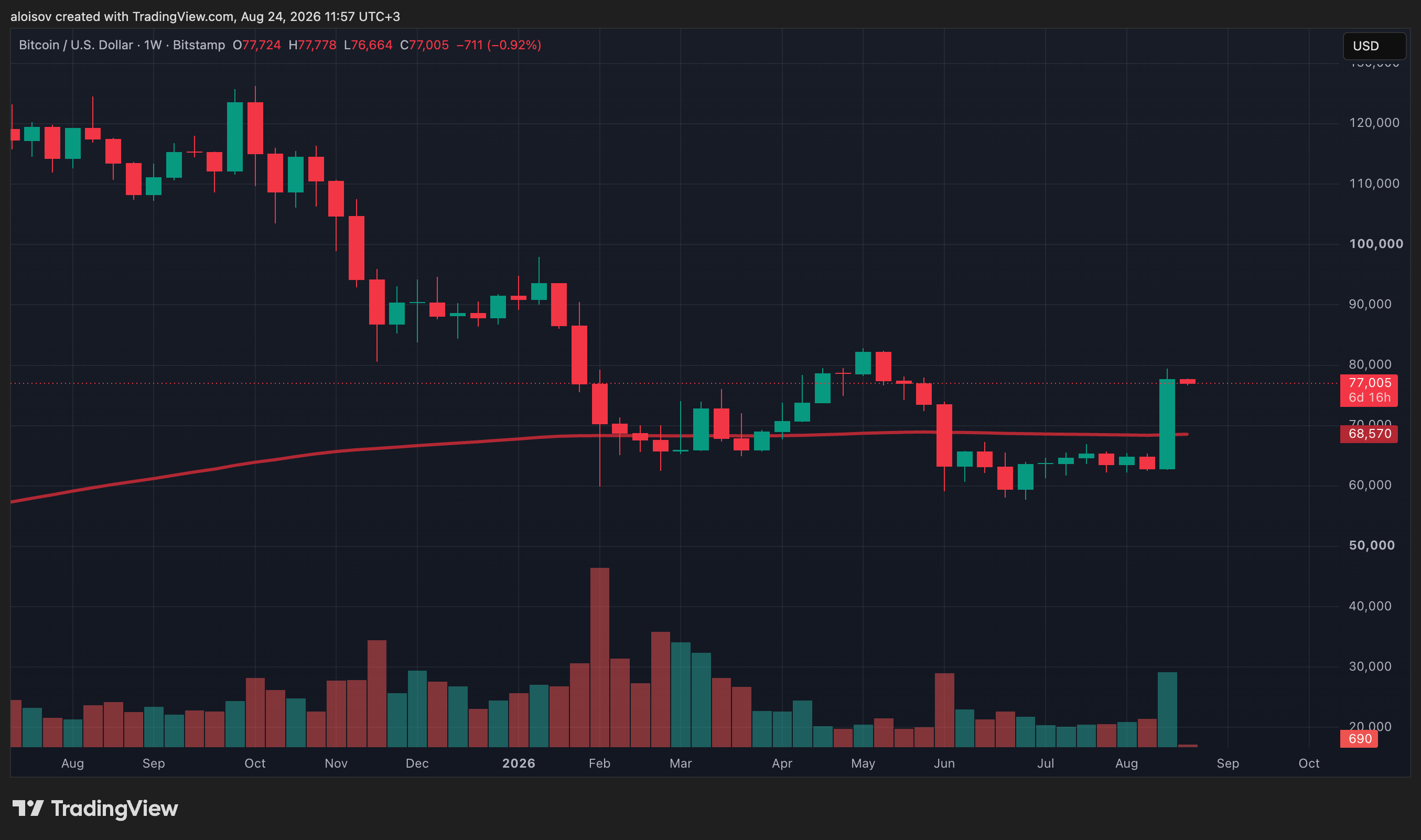
The rally was sparked by an announcement from the U.S. Treasury Department last week regarding the expansion of the reverse repo program. The news shifted investor sentiment from apathy to FOMO. The Crypto Fear & Greed Index rose to 78 points—close to the "extreme greed" zone and its highest level since December 2024.
The improved sentiment was also reflected in exchange-traded fund flows. During the trading week ending August 21, spot Bitcoin ETFs recorded $1.9 billion in net capital inflows—according to SoSoValue, this is the largest figure since the peak of the previous bull cycle in October 2025.
Matt Cole, Chairman and CEO of Strive, believes that Bitcoin's performance relative to the dollar and gold indicates that the next cycle will be "the strongest in the asset's history."
Scarcity Chase
"Rising demand for scarce assets in a world where AI is creating abundance creates a powerful structural tailwind for such assets," Cole wrote, adding that this factor will direct more capital into gold, silver, and Bitcoin.
The Bitcoin-to-gold ratio rose to 16.73 ounces per coin—its highest level since May, according to Longtermtrends.
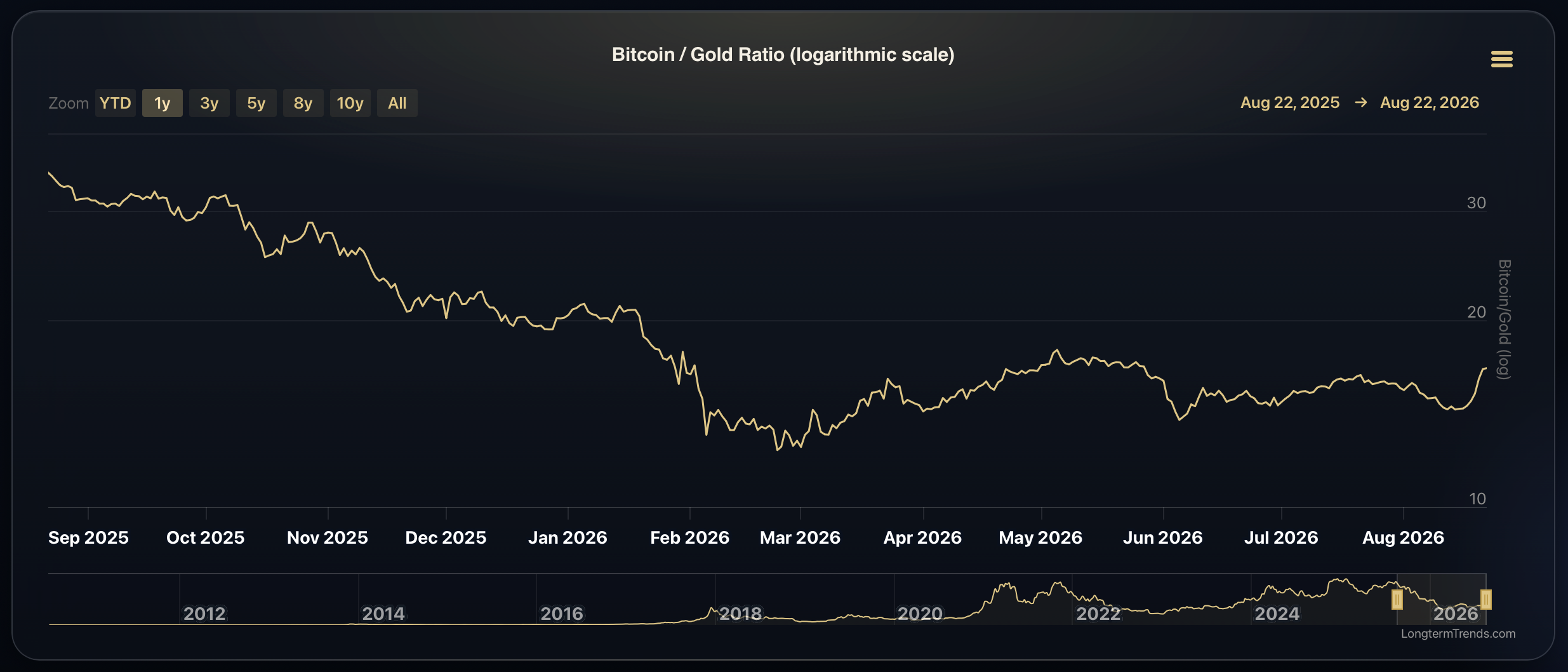
"What was unique about this week is that Bitcoin broke out against both the dollar and gold simultaneously. The breakout was explosive," noted Cole. He added that the relative performance within this pair will determine where additional capital and liquidity flow: if Bitcoin remains the fastest asset, it will attract a disproportionately large share of funds.
The head of Strive admitted that structural factors make him more optimistic about Bitcoin than ever before. While not ruling out a short-term pullback, he expects buyers to aggressively buy any price dip.
Rally Could Continue
The upward momentum is likely to persist in the near term. The rise may continue in the short term amid resumed ETF inflows and improved macro liquidity. The potential progress of the CLARITY Act in September could bolster institutional investor confidence, although medium-term consolidation before the next leg up seems likely.
It is important to understand what is behind a rally of this scale. Such a sharp impulse is more often explained by a combination of short covering, spot demand, and derivatives positioning, rather than a single catalyst. The key is to look beyond the headline figure and monitor whether the move is supported by spot volumes and ETF inflows or is being amplified by leverage.
A rally driven by spot demand provides a more solid structural foundation for the next phase of growth, whereas moves built on borrowed funds make the market vulnerable to a sharp reversal.
AI Perspective
From a data-driven machine analysis perspective, attention should be paid not to the scale of the rise but to its speed. The market has seen a symmetrical situation before: in early February, Bitcoin lost over $10,000 in a single day, with forced liquidations of leveraged long positions reaching $2.1 billion out of a total $2.6 billion for the day. Sharp moves up and down in cryptocurrencies are often fueled by the same engine—derivatives. Therefore, the share of leveraged positions in the current rally deserves no less attention than the inflows into spot ETFs.
The macroeconomic connection is also ambiguous: the bond buyback program lowers Treasury yields, but such policy usually signals broader issues within the government debt system, not just an excess of liquidity for risk assets. Gold and silver have been rising alongside Bitcoin for several months—the question is what will happen to the correlation if yields reverse direction.