On the 16th of March, T. Rowe Price, an investment management company, filed an amended S-1 registration statement with the U.S. Securities and Exchange Commission (SEC), providing new details about its proposed Price Active Crypto ETF.
It is worth noting that T. Rowe Price first filed for the Price Active Crypto ETF with the U.S. SEC in October 2025.
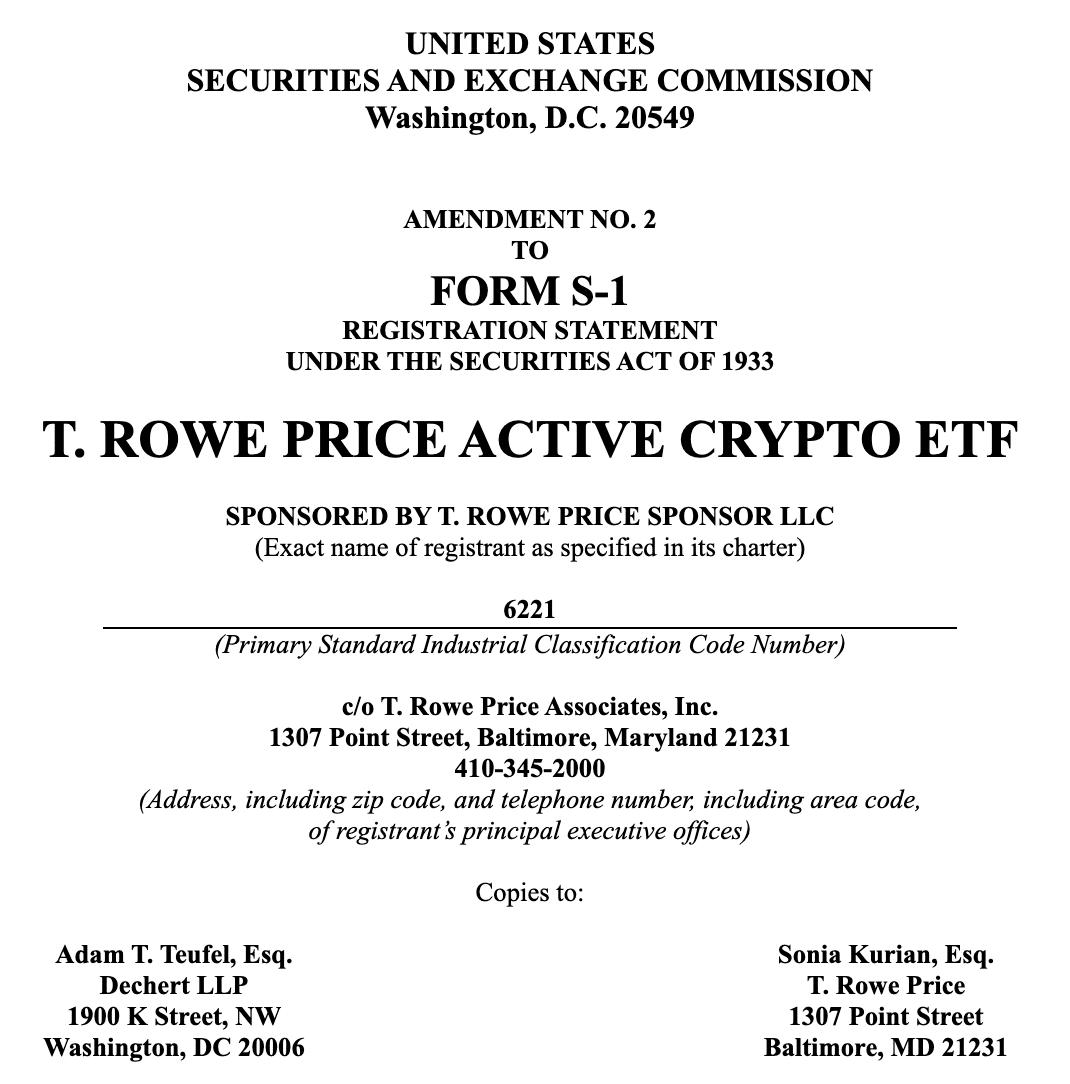
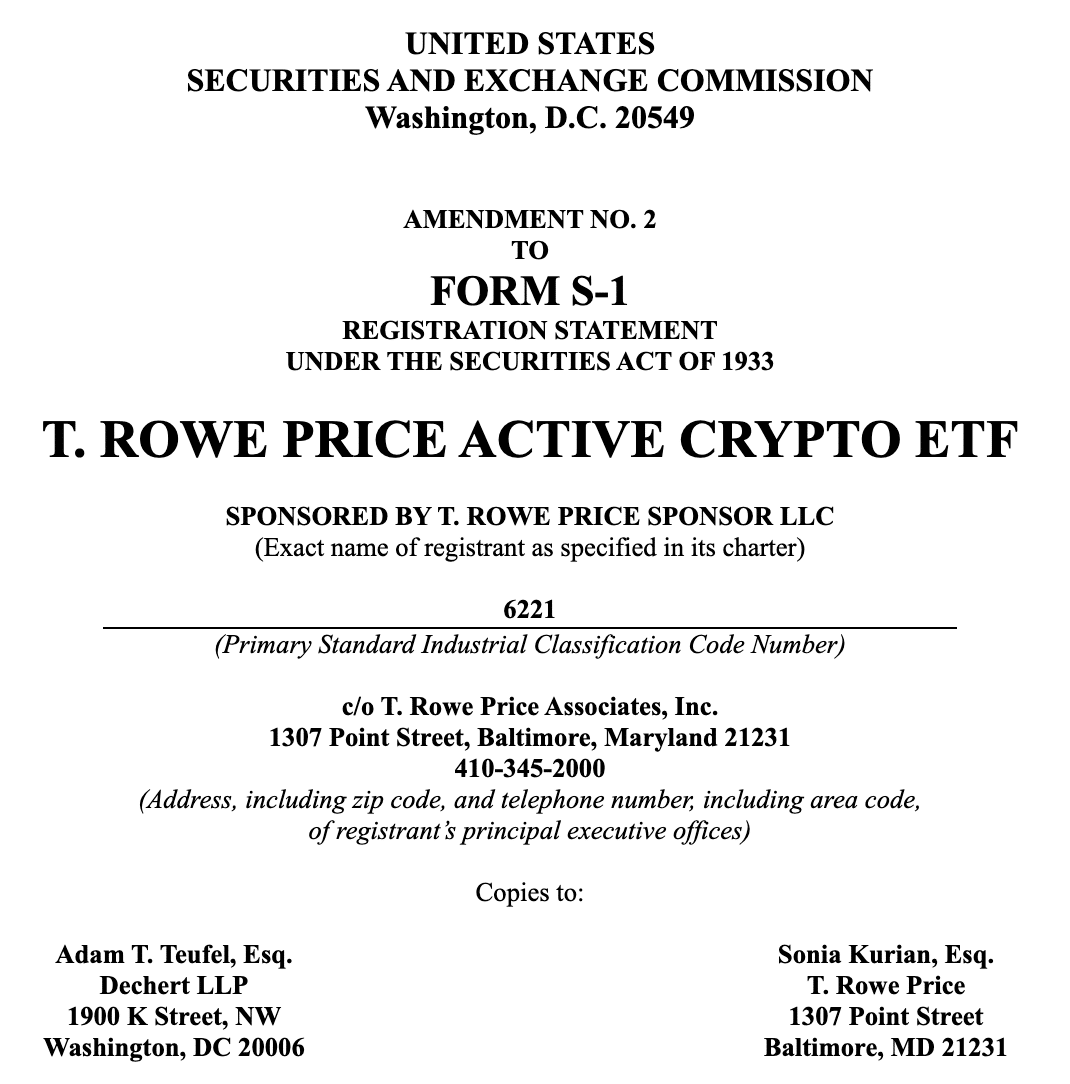
T. Rowe amends its crypto ETF filing
The filing suggests that traditional financial firms may be becoming more open to crypto. Instead of focusing solely on major assets such as Bitcoin [BTC] and Ethereum [ETH], the firm is considering a broader strategy that includes more volatile tokens, such as Dogecoin [DOGE] and Shiba Inu [SHIB].
That said, the proposed ETF would be actively managed, meaning managers could shift investments among approximately five to fifteen digital assets depending on market conditions.
The list will also include altcoins such as Solana [SOL], Ripple [XRP], and SUI [Sui], aiming to generate returns by moving between assets rather than simply tracking a single cryptocurrency.
Several factors may explain why this shift is happening now. Regulatory clarity has improved with legislation such as the GENIUS Act, giving traditional firms greater confidence to enter the crypto market.
At the same time, competition is increasing. After the U.S. SEC approved Generic Listing Standards in 2025 to speed up approvals for crypto exchange-traded products, asset managers began racing to launch more diversified crypto ETFs.
How is this filing different from the October filing?
The firm’s amended structure reflects a strong focus on security and compliance. The digital assets will be stored with Anchorage Digital Bank, which will act as the custodian for the tokens.
Initially, the ETF will use a cash-based creation and redemption model, meaning investors will buy or sell shares using cash rather than exchanging cryptocurrencies directly.
However, the filing notes that the fund could permit “in-kind” transactions in the future if regulations permit.
In the future, the Fund may engage in in-kind creations and redemptions.
The fund will also use the FTSE Crypto U.S. Listed Index as a reference point to guide its investment decisions, while managers will retain flexibility to adjust the portfolio.
Moreover, the filing also mentions the possibility of staking. If introduced, this would allow the fund to generate additional income by supporting blockchain networks rather than relying solely on price gains.
However, T. Rowe Price said staking will only be considered once regulators and tax authorities provide clearer guidance. By working with Anchorage Digital as custodian, the firm is trying to ensure the fund meets strict regulatory standards.
Other ETF performance
The timing of T. Rowe Price’s filing update comes as the U.S. crypto ETF market shows mixed signals. At the time of writing, Bitcoin and Ethereum ETFs recorded net inflows of $199.4 million and $35.9 million, respectively, while investor interest in altcoins has become more mixed.
For example, Solana ETFs saw only about $2.1 million in inflows, while the XRP ETF recorded roughly $5.98 million in outflows.
Crypto ETF race intensifies
At the same time, competition among crypto ETF providers is intensifying, particularly on fees. Hashdex recently reduced the management fee for its Hashdex Nasdaq Crypto Index US ETF from 0.50% to 0.25%.
Additionally, large financial institutions are also starting to take stronger positions in the crypto market. Morgan Stanley, for instance, recently updated its filings as it prepares to expand access to digital assets for its wealth management clients.
Therefore, if approved, the Price Active Crypto ETF could represent another major step in the institutional adoption of digital assets.
Final Summary
- By including altcoins such as Solana, XRP, and Sui, the fund highlights increasing institutional interest in diversified crypto strategies.
- The proposal reflects intensifying competition in the crypto ETF market, as firms race to launch innovative and cost-efficient products.







