Author: BlockWeeks
In the world of crypto, attention is currency, and X (formerly Twitter) has long been the world's largest wholesale market for attention.
For a long time, users here have been accustomed to a fragmented existence: searching for "Alpha" (excess return information) on X, quickly switching to TradingView to check charts, and then jumping to an exchange to place an order. This "friction cost" caused by app switching is often the key factor determining the profit or loss of a high-frequency trade.
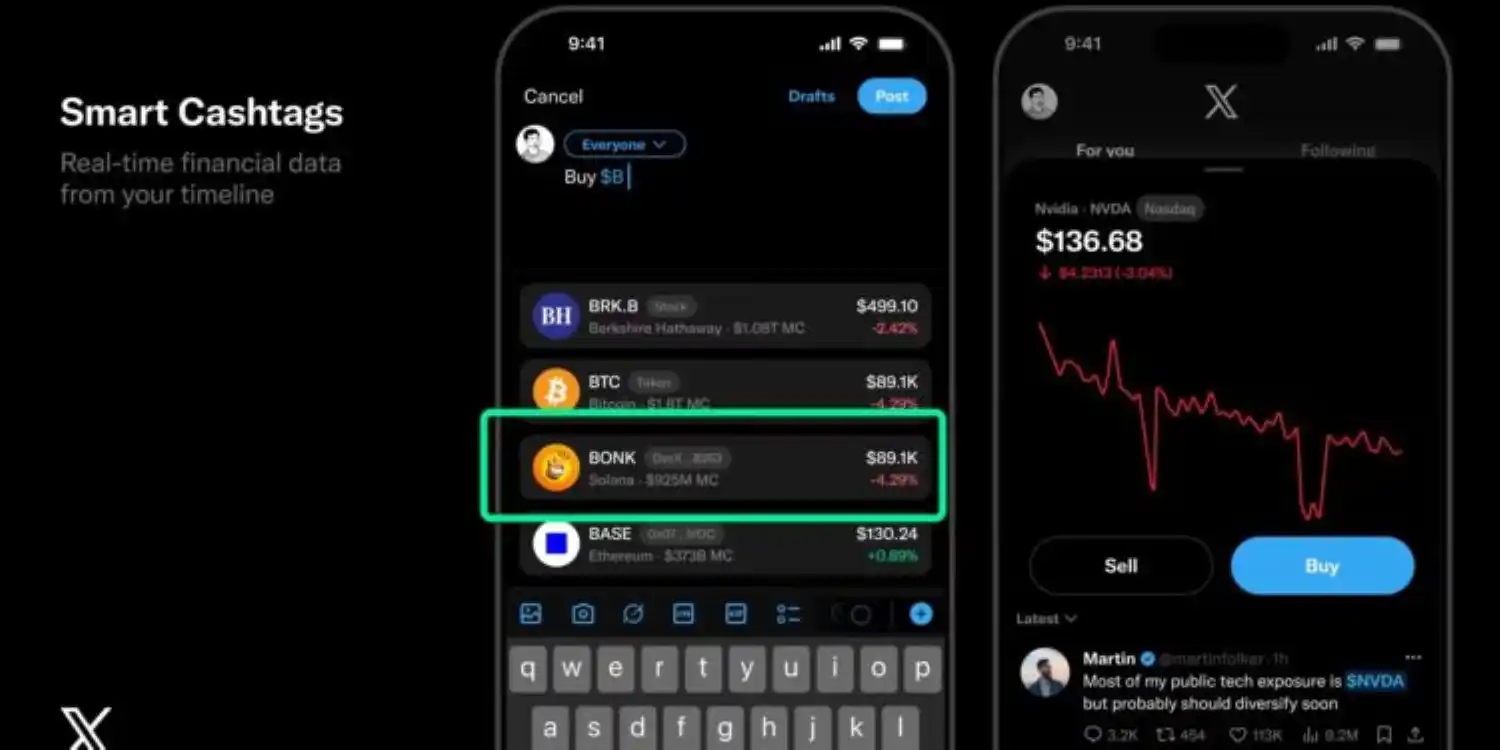
However, with the official preview of Smart-Cashtags by X's product lead Nikita Bier in early 2026, this fragmented state may become history. This is more than just a UI component update; it marks the placement of the most critical piece in Musk's puzzle of building the "Everything App"—the closed loop of financial information flow.
Farewell to "Fakes": On-Chain Authentication of Token Identity
For any investor who has lived through a "shitcoin season," the first, and most painful, point that Smart-Cashtags addresses is "identity verification."
In the old system, a Cashtag (like $ABC) was merely a blue hyperlink for search. But in the decentralized world, anyone can issue a token named $ABC. This meant that when a big influencer shilled a coin, scammers could often deploy a token with the same name within minutes and manipulate search results through volume manipulation, causing many retail investors to buy the wrong contract address.
The core change with Smart-Cashtags is its introduction of a "hard binding of semantics and contract." Based on currently disclosed information, the new feature will allow posters or communities to directly associate a specific smart contract address when typing the $ symbol.
This means that in the future, $SOL will no longer be an ambiguous tag; it will directly point to the native asset on the Solana chain. For those highly liquid, short-lived Meme coins, this is equivalent to introducing an "anti-counterfeiting watermark" at the social layer. X is attempting to use technical means to cleanse the rampant scam noise on its platform, paving the way for subsequent compliant finance.
The "Bloomberg-ization" of the Social Interface: When the Information Flow Becomes the Trading Flow
If "anti-counterfeiting" is the foundation, then shaping X into the "Bloomberg Terminal for retail" is its true ambition.
In traditional finance, the Bloomberg Terminal is expensive because it integrates news, data, and trading on one screen. Smart-Cashtags is doing the same thing for retail. Once the feature goes live, clicking a tag will no longer redirect to a tweet search stream but will instead directly summon a floating financial dashboard.
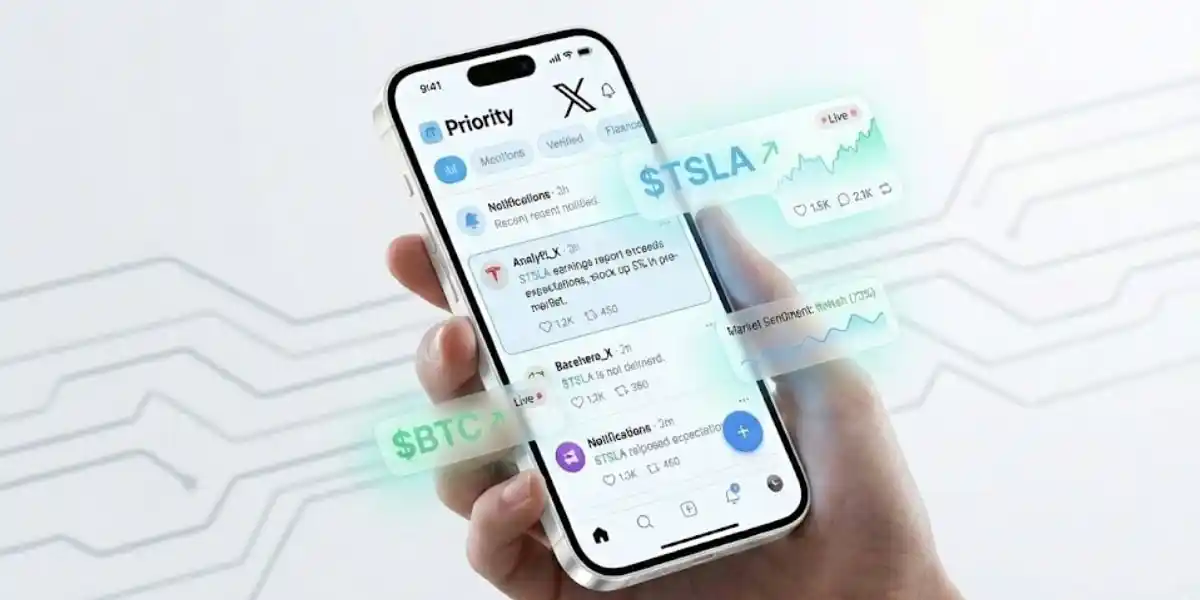
Imagine this scenario: You come across breaking news about a DeFi protocol being hacked. In the past, you would need to exit X, open a charting app to confirm the price drop, and then decide whether to buy the dip or cut losses. In the future, you simply click the tag in the tweet, and real-time price, trading volume changes, and on-chain fund flows will be instantly displayed on the current page.
This "zero-redirect" experience will drastically shorten the time window from "acquiring information" to "making a decision." For the market, this means the speed of sentiment transmission will further accelerate, and X's immediate influence on asset pricing will reach an unprecedented height.
The Endgame of Social-Fi: A Direct Challenge to Telegram
We cannot view this update in isolation. Behind Smart-Cashtags lies the invisible war between X and Telegram for the "Web3 traffic gateway."
Over the past two years, Telegram,凭借 Unibot, Banana Gun, and other trading bots, has successfully captured a significant portion of mobile trading demand. Users see a message in a Telegram group and buy directly with one click via a bot—an experience that once could only be envied by X.
Smart-Cashtags is X's powerful counterattack. Although the initial functionality focuses on market display,结合 Musk's acquisition of payment licenses in multiple US states and X's testing of an "in-app wallet" feature, it is reasonable to speculate that integrating "Buy/Sell" buttons directly on the tag page is only a matter of time.
Once the payment layer is connected, X will instantly升级 from a "square for arguments" to the world's largest "social exchange." It boasts a more public arena for discourse, more sophisticated algorithm recommendations, and a larger user base of institutions compared to Telegram.
Conclusion
2026 is destined to be a year where Social-Fi (Social Finance) separates the wheat from the chaff.
The emergence of Smart-Cashtags means X is no longer content with just being a traffic "referral"; it wants to become the "checkout counter" itself. For the average investor, this may mean more convenient tools; but for professional crypto practitioners, this heralds a new battlefield: those who can first leverage this new tool to capture emotional value will occupy the high ground in the new traffic distribution mechanism.
It is reported that the feature is expected to be rolled out to global users in February. When that happens, every time we click the $ symbol, we might be participating in a tiny rewrite of financial history.