BIS Warns Crypto Self-Custody Could Become New AML Loophole

bitcoinist發佈於 2026-03-11更新於 2026-03-11

文章摘要

A new BIS paper warns that self-custodied crypto wallets could become a significant loophole in anti-money laundering (AML) enforcement if regulatory gaps are not addressed. The report highlights that as regulated payment channels face stricter rules, illicit financial flows may shift towards self-hosted wallets, which operate without intermediaries and thus avoid customer due diligence, transaction monitoring, and suspicious activity reporting. The paper argues that these wallets may be more attractive for illegal activities than cash due to their digital ease of transfer, cross-border efficiency, and lack of physical constraints. This creates a “waterbed effect,” where tightening one area of regulation simply displaces risk to another. Using the EU as a case study, the authors note that while hosted crypto services are now integrated into AML frameworks, self-custody wallets remain largely outside direct oversight. The absence of transaction limits, unlike the €10,000 cap on cash, could incentivize malicious actors to migrate to self-hosted crypto assets, thereby undermining overall AML efforts.

A new Bank of International Settlement (BIS) paper argues that self-custodied crypto could become the next weak point in anti-money laundering enforcement if regulators tighten rules around other payment rails without closing the gap around user-controlled wallets. The core concern is straightforward: when one channel becomes harder to use, illicit flows do not disappear. They move.

BIS Warns About Self-Hosted Crypto Wallets

Using the EU as its main case study, the paper says self-hosted wallets occupy a particularly sensitive position because they do not rely on an identifiable intermediary to perform customer due diligence, monitor transactions or file suspicious activity reports. That is the design distinction the authors keep returning to.

“Self-hosted wallets are a type of wallet that is entirely controlled by the user, without reliance on an intermediary. Validation of self-hosted cryptoasset transactions takes place on a permissionless public blockchain, with no individual intermediary being accountable for updating accounts.” On that basis, the paper says self-hosted crypto payments, absent additional measures, present one of the lowest probabilities of detection and enforcement.

The paper goes a step further. It says self-hosted wallets may, in practice, be even more attractive for illicit use than cash. Cash still offers the lowest level of oversight by design, the authors argue, but physical constraints matter: it is bulky, harder to move at scale and riskier to store or transport. Self-custodied crypto does not have those same frictions, which means the portability and cross-border speed of digital assets can amplify the compliance gap once intermediaries drop out of the picture.

That framing feeds into what the paper calls the “waterbed effect.” “Differences in the probability of detection ... can lead to arbitrage between payment instruments. This could be called a waterbed effect: if the water is pressed down in one area, it pops up in another. Over time, this dynamic weakens the overall effectiveness of AML/CFT frameworks and necessitates regulatory and supervisory intervention.” In the crypto context, the point is not simply that self-custody carries risk, but that uneven regulation can actively redirect bad actors toward it.

The EU example is central to that argument. Hosted crypto wallets are now much more tightly folded into the bloc’s AML architecture through the broader cryptoasset service provider, or CASP, framework, updated monitoring obligations and the Travel Rule regime. The paper notes that wallets and services enabling anonymisation are being pushed out of the regulated perimeter.

Self-hosted wallets, by contrast, are treated more indirectly: transactions involving them are not subject to due diligence and transaction monitoring unless a CASP is on one side of the transfer. In those cases, CASPs must assess money laundering and terrorist financing risk and apply mitigating measures.

What makes that asymmetry notable, the authors say, is that cash has a hard backstop the self-custody segment does not. Their comparison table states it plainly: cash in the EU is subject to a €10,000 transaction limit, while self-hosted crypto assets face “no transaction or holding limits.” The paper’s conclusion is that this difference “may provide an incentive for malicious actors to shift from cash to self-hosted crypto asset wallets.”

At press time, the total crypto market cap stood at $2.37 trillion.
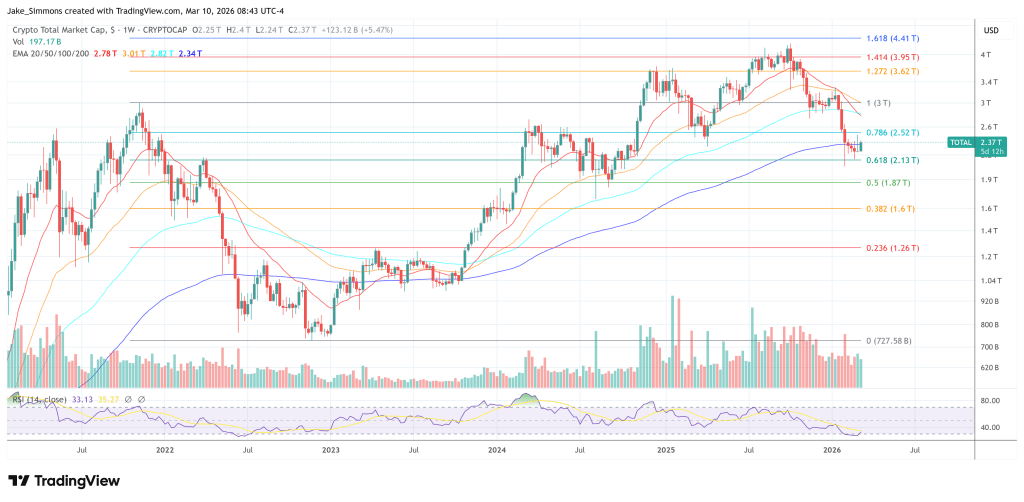
Total crypto market cap, 1-week chart | Source: TOTAL on TradingView.com

相關問答

QWhat is the main concern raised by the BIS paper regarding self-custodied crypto?

AThe main concern is that self-custodied crypto could become a new weak point in anti-money laundering enforcement if regulators tighten rules around other payment methods without addressing the regulatory gap around user-controlled wallets, potentially redirecting illicit financial flows to this channel.

QAccording to the paper, why are self-hosted wallets particularly attractive for illicit use compared to cash?

ASelf-hosted wallets are more attractive than cash for illicit use because, while cash has the lowest oversight by design, it has physical constraints like bulkiness and transportation risks. Self-custodied crypto lacks these frictions and offers greater portability and cross-border speed, amplifying the compliance gap.

QWhat is the 'waterbed effect' as described in the BIS paper?

AThe 'waterbed effect' refers to the phenomenon where differences in detection probabilities between payment instruments lead to arbitrage: when one channel becomes harder to use for illicit activities (pressed down), the activity moves to another, less regulated channel (pops up), weakening overall AML/CFT framework effectiveness.

QHow does the EU regulate self-hosted crypto wallets differently from hosted wallets?

AIn the EU, hosted wallets are tightly regulated under the CASP framework with updated monitoring obligations and Travel Rule requirements. Self-hosted wallets are treated indirectly: transactions involving them are only subject to due diligence and monitoring if a Cryptoasset Service Provider (CASP) is involved on one side of the transfer.

QWhat specific regulatory asymmetry between cash and self-hosted crypto does the paper highlight in the EU?

AThe paper highlights that cash transactions in the EU are subject to a €10,000 limit, while self-hosted crypto assets face no transaction or holding limits, creating an incentive for malicious actors to shift from cash to self-hosted crypto wallets to avoid detection.

你可能也喜歡

交易

現貨
合約

熱門文章

什麼是 $BANK

銀行人工智能:銀行未來的革命性步伐 介紹 在這個科技迅速進步的時代,銀行人工智能處於人工智能(AI)和銀行服務的交匯點。這個創新的項目旨在重新定義金融格局,通過人工智能的力量提高運營效率、安全措施和客戶體驗。在我們探索銀行人工智能的過程中,將深入探討這一項目的內涵、運作動態、歷史背景以及重要里程碑。 銀行人工智能是什麼? 從本質上講,銀行人工智能代表了一項變革性倡議,旨在將人工智能整合進各種銀行運營中。這個項目利用人工智能的能力來自動化流程、改善風險管理協議,並通過個性化服務增強客戶互動。 銀行人工智能的主要目標包括: 銀行功能自動化:通過利用人工智能技術,銀行人工智能旨在自動化日常任務,減輕人力資源的負擔並提高效率。 加強風險管理:該項目利用人工智能算法來預測和識別風險,從而強化針對欺詐和其他威脅的安全措施。 銀行服務個性化:銀行人工智能專注於通過分析客戶數據和行為提供量身定制的金融產品和服務。 改善客戶體驗:實施由人工智能驅動的解決方案,如聊天機器人和虛擬助手,旨在為用戶提供更接近人類的互動,徹底改變客戶與銀行的互動方式。 有了這些目標,銀行人工智能將自己定位為在提高銀行效率、安全性和以用戶為中心的關鍵角色。 銀行人工智能的創造者是誰? 關於銀行人工智能的創造者的具體細節尚不清楚。因此,在可用信息中尚未確定具體的個人或組織。圍繞該項目創建的匿名性引發了問題,但並未減少其雄心壯志的願景和目標。 銀行人工智能的投資者是誰? 與項目的創造者類似,關於銀行人工智能的投資者或支持組織的具體信息尚未披露。沒有這些信息,很難概述可能推動該項目向前發展的財務支持和機構支持。儘管如此,擁有堅實的投資基礎對於在這樣一個創新領域中保持發展至關重要。 銀行人工智能是如何運作的? 銀行人工智能在幾個創新領域運作,專注於使其與傳統銀行框架區分開來的獨特因素。以下是主要的運作特點: 自動化:通過應用機器學習算法,銀行人工智能自動化銀行內的各種手動流程。這樣不僅減少了運營成本,還使人力工作者能夠將精力轉向更具戰略性的活動。 先進的風險管理:將人工智能整合到風險管理實踐中,使銀行獲得準確預測潛在威脅(如欺詐)的工具,確保客戶信息和資產的安全。 量身定制的財務建議:通過持續學習客戶互動,人工智能系統發展出對用戶需求的細緻理解,能夠對財務決策提供量身定制的建議。 增強的客戶互動:利用由人工智能驅動的聊天機器人和虛擬助手,銀行人工智能提供了更具吸引力的客戶體驗,使用戶能夠快速解決問題,從而減少等待時間並提高滿意度。 這些運作特徵使銀行人工智能成為銀行業的先驅,建立服務交付和運營卓越的新標準。 銀行人工智能的時間線 了解銀行人工智能的發展軌跡需要看其歷史背景。以下是突顯重要里程碑和發展的時間線: 2010年代早期:對人工智能整合到銀行服務的概念開始引起關注,隨著銀行機構認識到潛在利益。 2018年:隨著銀行開始使用聊天機器人等人工智能工具進行基本客戶服務和風險管理系統以改善安全處理,人工智能技術的實施顯著增加。 2023年:人工智能的技術不斷進步,生成式人工智能被引入進行更複雜的任務,如文件處理和實時投資分析。今年標誌著人工智能技術為銀行提供能力的重要飛躍。 2024-當前狀態:截至今年,銀行人工智能正處於上升軌道,持續的研究和開發預示著將進一步提升銀行業務的能力。對人工智能應用的持續探索暗示著未來令人興奮的發展。 銀行人工智能的關鍵點 人工智能在銀行中的整合:銀行人工智能專注於採用人工智能來簡化銀行流程並改善用戶體驗。 自動化和風險管理的聚焦:該項目強烈關注這些領域,旨在減輕例行任務的負擔,同時通過預測分析增強安全框架。 個性化的銀行解決方案:通過利用客戶數據,銀行人工智能提供滿足個別用戶需求的量身定制銀行服務。 對發展的承諾:銀行人工智能致力於持續的研究和開發,確保其隨著技術的持續演變而保持適應性和持續相關性。 結論 總結來說,銀行人工智能展現了銀行業的一個重要進步,利用人工智能重塑運營範式、提高安全性,並促進客戶滿意度。儘管有關創造者和投資者的信息仍有缺口,但銀行人工智能的明確目標和功能機制為其持續發展提供了堅實基礎。隨著人工智能技術的不斷進步和與銀行業的融合,銀行人工智能在金融服務未來的影響力將十分顯著,改善我們對銀行的理解和互動方式。

116 人學過發佈於 2024.04.06更新於 2024.12.03

什麼是 $BANK

如何購買BANK

歡迎來到HTX.com!在這裡,購買Lorenzo Protocol (BANK)變得簡單而便捷。跟隨我們的逐步指南,放心開始您的加密貨幣之旅。第一步:創建您的HTX帳戶使用您的 Email、手機號碼在HTX註冊一個免費帳戶。體驗無憂的註冊過程並解鎖所有平台功能。立即註冊第二步:前往買幣頁面,選擇您的支付方式信用卡/金融卡購買:使用您的Visa或Mastercard即時購買Lorenzo Protocol (BANK)。餘額購買:使用您HTX帳戶餘額中的資金進行無縫交易。第三方購買:探索諸如Google Pay或Apple Pay等流行支付方式以增加便利性。C2C購買:在HTX平台上直接與其他用戶交易。HTX 場外交易 (OTC) 購買:為大量交易者提供個性化服務和競爭性匯率。第三步:存儲您的Lorenzo Protocol (BANK)購買Lorenzo Protocol (BANK)後,將其存儲在您的HTX帳戶中。您也可以透過區塊鏈轉帳將其發送到其他地址或者用於交易其他加密貨幣。第四步:交易Lorenzo Protocol (BANK)在HTX的現貨市場輕鬆交易Lorenzo Protocol (BANK)。前往您的帳戶,選擇交易對,執行交易,並即時監控。HTX為初學者和經驗豐富的交易者提供了友好的用戶體驗。

925 人學過發佈於 2025.05.09更新於 2025.05.09

如何購買BANK

相關討論

歡迎來到 HTX 社群。在這裡,您可以了解最新的平台發展動態並獲得專業的市場意見。 以下是用戶對 BANK (BANK)幣價的意見。

活动图片