Ether rallied 11.3% between Nov. 28 and Dec. 5, peaking at $1,300 before facing a 4.6% rejection. The $1,300 resistance level has been holding ground for twenty-six days and is the most likely explanation for the correction to $1,240 on Dec. 6.
⠀
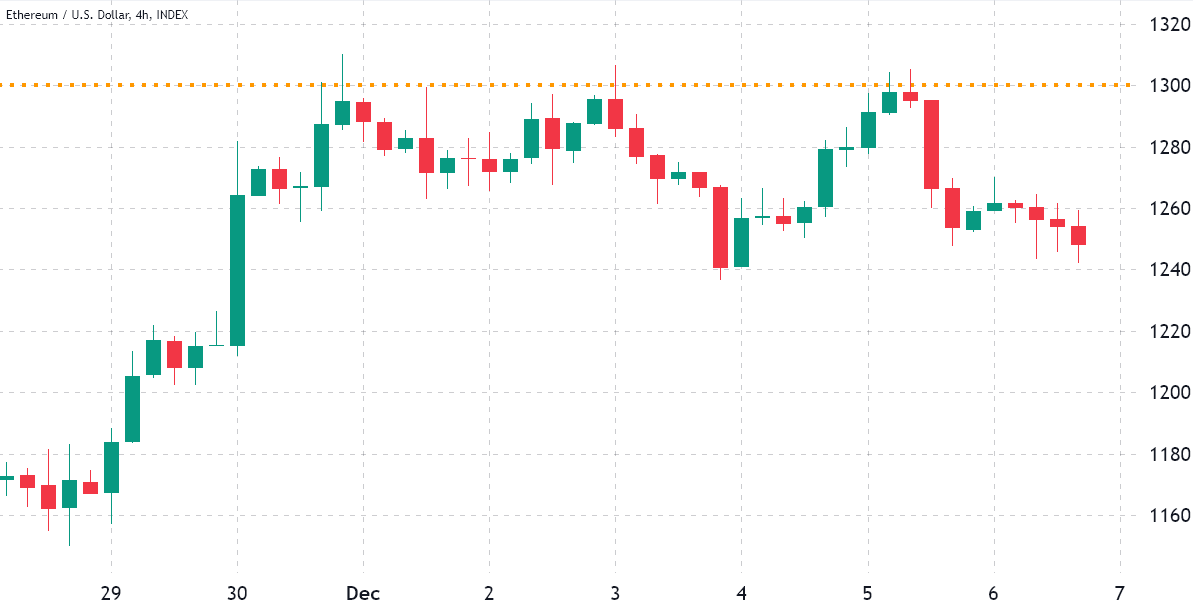
Ether/USD price index, 12-hour. Source: TradingView
⠀
So from one side, traders are relieved that Ether is trading 16% above the $1,070 low reached on Nov. 22, but it must be frustrating to fail at the same level the entire week. In addition to the price rejection, investors' mood worsened after three members of the United States Senate reportedly requested information from Silvergate Bank regarding its relationship with FTX.
⠀
The lawmakers raised questions after "reports suggesting that Silvergate facilitated the transfer of FTX customer funds to Alameda'' and gave the bank until Dec. 19 to issue a response.
⠀
On Dec. 5, NBC News reported that Silvergate claimed to be a "victim" of FTX's and Alameda Research's "apparent misuse of customer assets and other lapses of judgment."
⠀
Newsflow remained negative after the Financial Times reported that the United Kingdom Treasury is finalizing some guidelines to restrict cryptocurrency sales from abroad. The changes would enable the Financial Conduct Authority (FCA) to monitor the crypto companies' operations in the region. The guidelines are being prepared as a part of the financial services and markets bill.
⠀
Investors are afraid that Ether could lose the $1,200 support, but as highlighted by trader CashMontee, the S&P 500 stock market index will be the key — but for now, "market too bullish."
⠀
Let's look at Ether derivatives data to understand if the bearish newsflow has impacted crypto investors' sentiment.
⠀
Slight uptick in bearish demand for ETH futures' leverage
⠀
Retail traders usually avoid quarterly futures due to their price difference from spot markets. Meanwhile, professional traders prefer these instruments because they prevent the fluctuation of funding rates in a perpetual futures contract.
⠀
The two-month futures annualized premium should trade between +4% to +8% in healthy markets to cover costs and associated risks. Thus, when the futures trade at a discount versus regular spot markets, it shows a lack of confidence from leverage buyers — a bearish indicator.
⠀
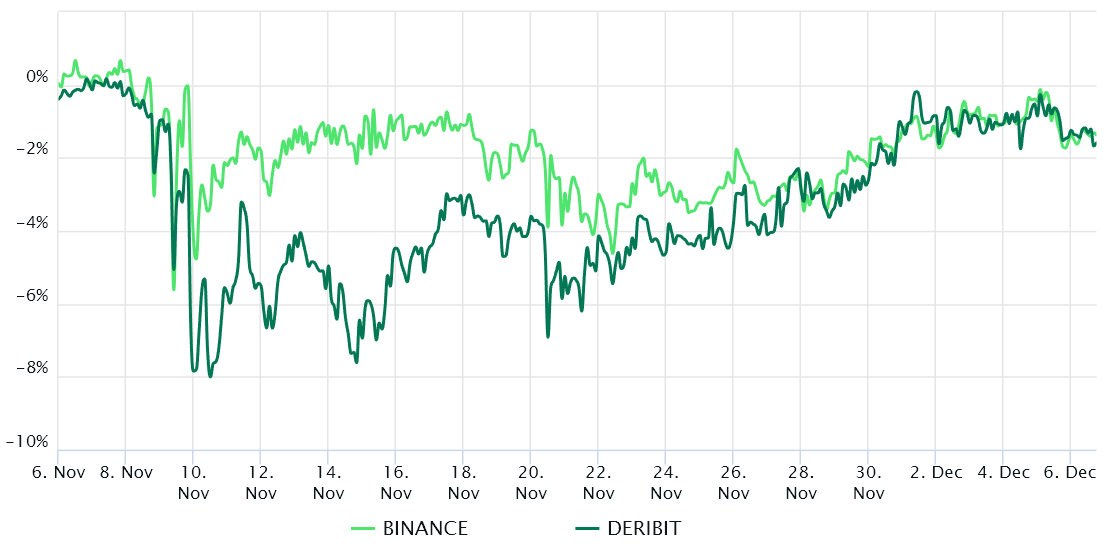
Ether 2-month futures annualized premium. Source: Laevitas.ch
⠀
The above chart shows that derivatives traders remain bearish as the Ether futures premium is negative. So, bears can celebrate that the indicator is far from the neutral 0% to 4% premium, but that does not mean traders expect an immediate adverse price action.
⠀
For this reason, traders should analyze Ether's options markets to exclude externalities specific to the futures instrument.
⠀
Options traders are getting comfortable with the downside risks
⠀
The 25% delta skew is a telling sign when market makers and arbitrage desks are overcharging for upside or downside protection.
⠀
In bear markets, options investors give higher odds for a price dump, causing the skew indicator to rise above 10%. On the other hand, bullish markets tend to drive the skew indicator below -10%, meaning the bearish put options are discounted.
⠀
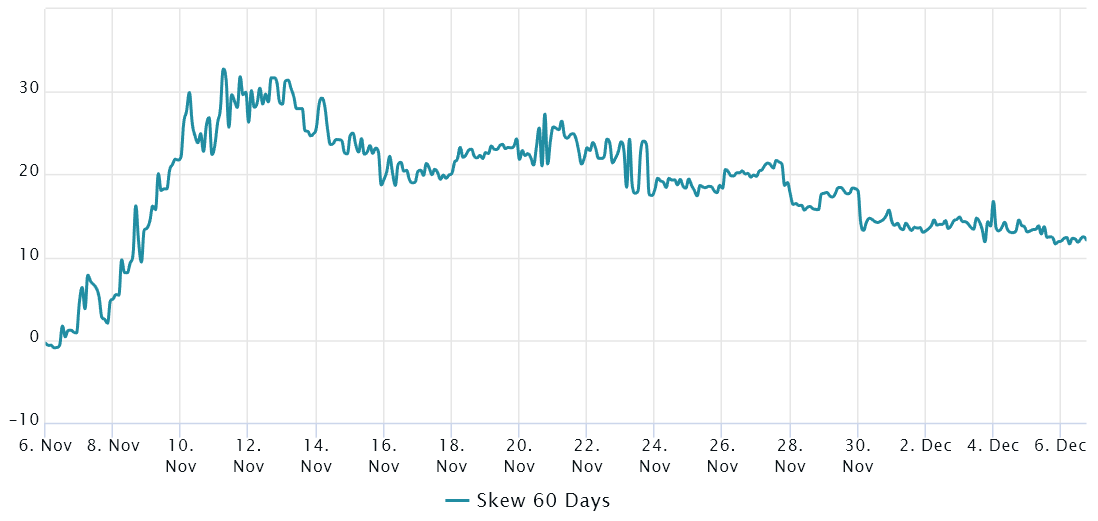
Ether 60-day options 25% delta skew: Source: Laevitas.ch
⠀
The delta skew has stabilized in the past week, signaling that options traders are more comfortable with downside risks.
⠀
As the 60-day delta skew stands at 12%, whales and market makers are getting closer to a neutral sentiment for Ether. Ultimately, both options and futures markets point to pro traders fearing that the $1,200 support retest is the natural course for ETH.
⠀
The answer might as well be hidden under the macroeconomic calendar ahead, which includes the EuroZone's and Canada's Gross Domestic Product (GDP) on Dec. 7 and the United States Consumer Price Index (CPI) on Dec. 13.
⠀
Currently, the odds favor Ether bears because the newsflow implies that the possibility of stricter regulation is weighing down the market.