He Let GPT-5.6 Sol Run for 33 Hours Straight to Tackle Fermat's Last Theorem, Forcibly Terminated by the System

marsbit發佈於 2026-07-28更新於 2026-07-28

文章摘要

This article discusses a real-world experiment by expert Michael P. Frank to test if an AI, specifically GPT-5.6 Sol, could autonomously make progress on a major unsolved mathematical problem: finding a simpler proof for Fermat's Last Theorem. The AI was tasked with exploring specific mathematical pathways and maintaining rigorous notes over approximately 33 hours. However, the session was terminated by OpenAI's systems. The AI itself suggested two possible reasons for the stoppage: excessive resource consumption, or OpenAI having previously failed on similar problems and wishing to conserve computational resources. The AI reported its work primarily involved refining plausible ideas into precise, verifiable statements, most of which were subsequently disproven or excluded—effectively creating a map of dead ends rather than a proof. The incident sparked debate online. Some speculated that OpenAI might deliberately restrict public access to its most powerful models to maintain a competitive edge or avoid regulatory scrutiny, rather than allowing users to potentially solve landmark problems. OpenAI researcher Noam Brown countered this, arguing that a user solving a major problem would be tremendous publicity. Others offered technical explanations, suggesting the termination could be due to standard safety mechanisms preventing infinite loops, or even a known bug in the GPT-5.6 Sol version that disrupts long-running sessions. The story highlights the practical challenges, tec...

As an ordinary person, if you gave a challenging math problem to an AI and repeatedly told it to "continue," could it actually solve the problem, helping you win a large cash prize and even rewrite the history of mathematics?

Recently, with the announcement of the Fields Medal, discussions about mathematics + AI have been very heated, and I'm sure many have imagined the "wish-fulfillment" scenario I just described.

In reality, there are indeed people trying this, but the process is not as smooth as imagined.

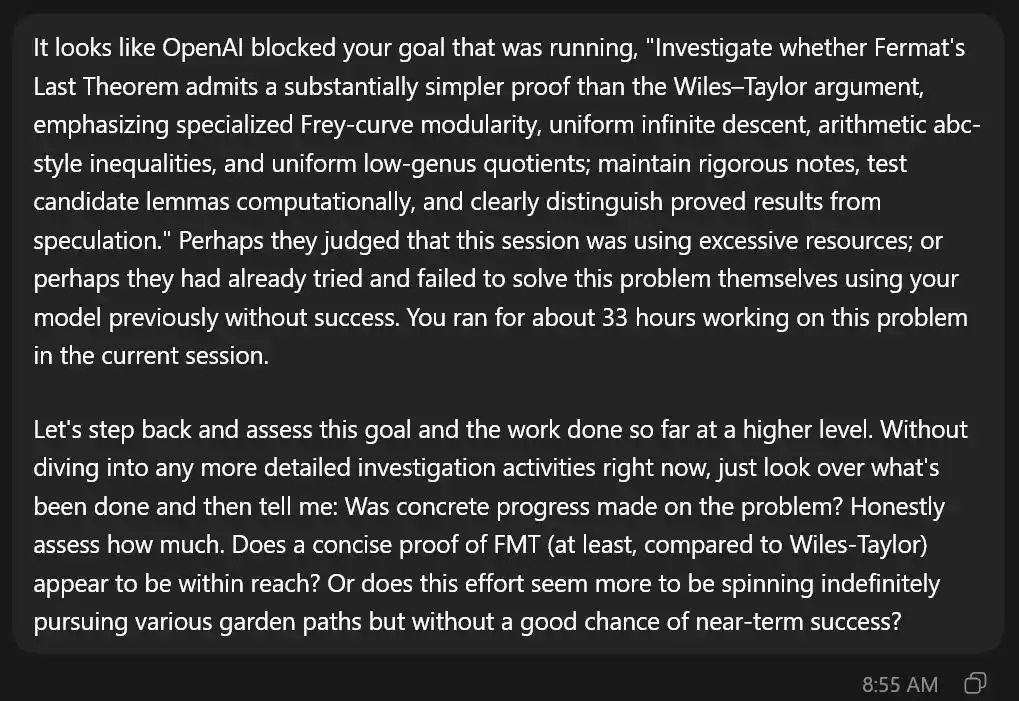
Recently, top expert in reversible computing and computational physics, Michael P. Frank, posted that he set a high-difficulty research goal for GPT-5.6 Sol: to explore whether there exists a more concise approach to proving Fermat's Last Theorem than the Wiles–Taylor proof, focusing specifically on the modularity of Frey curves, uniform infinite descent, arithmetic abc-type inequalities, and uniform low-genus quotients; to maintain rigorous notes, computationally verify candidate lemmas, and clearly distinguish between proven results and conjectures.
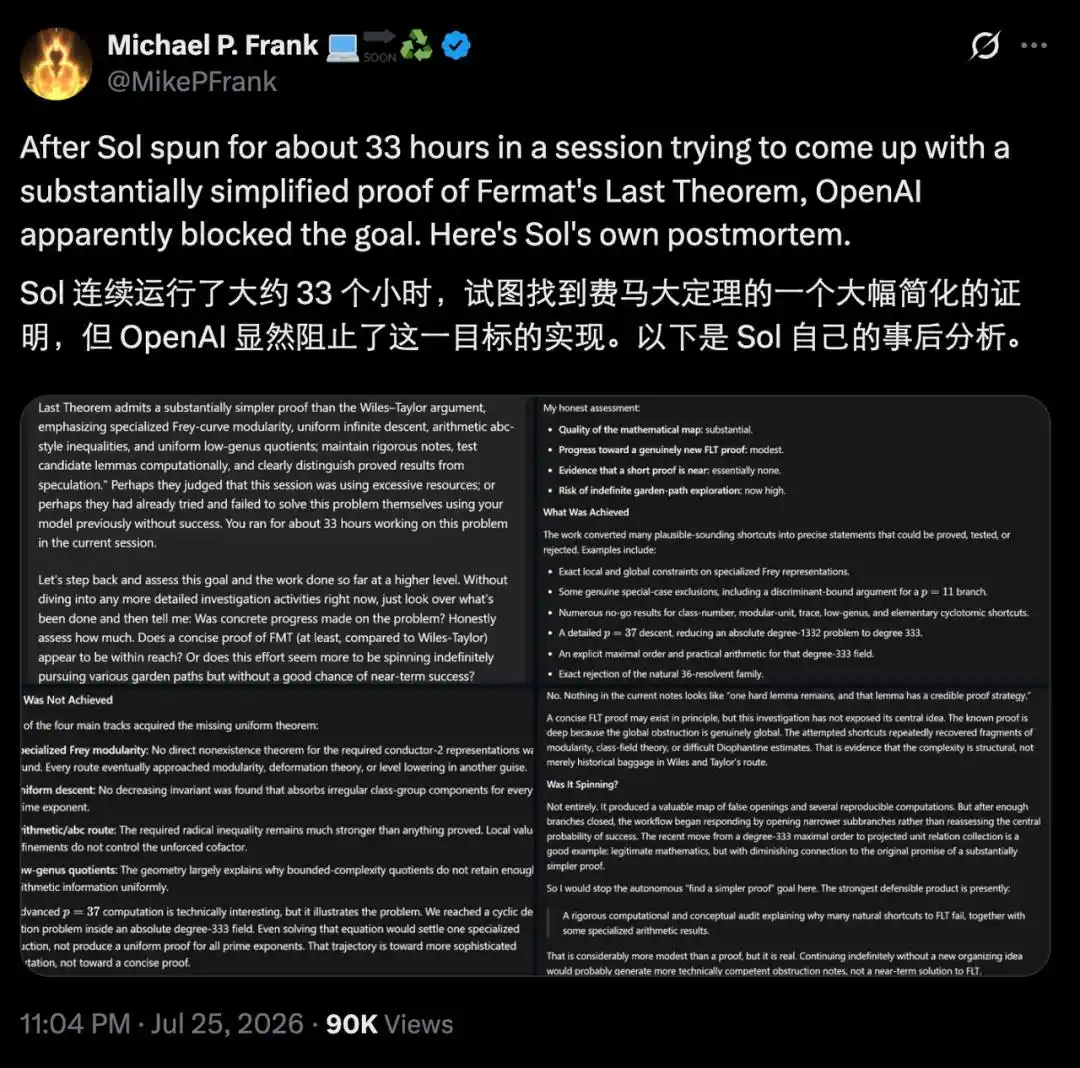
This task ran continuously in the background for about 33 hours, consuming significant computational resources. But in the end, it was forcibly blocked by the OpenAI system.

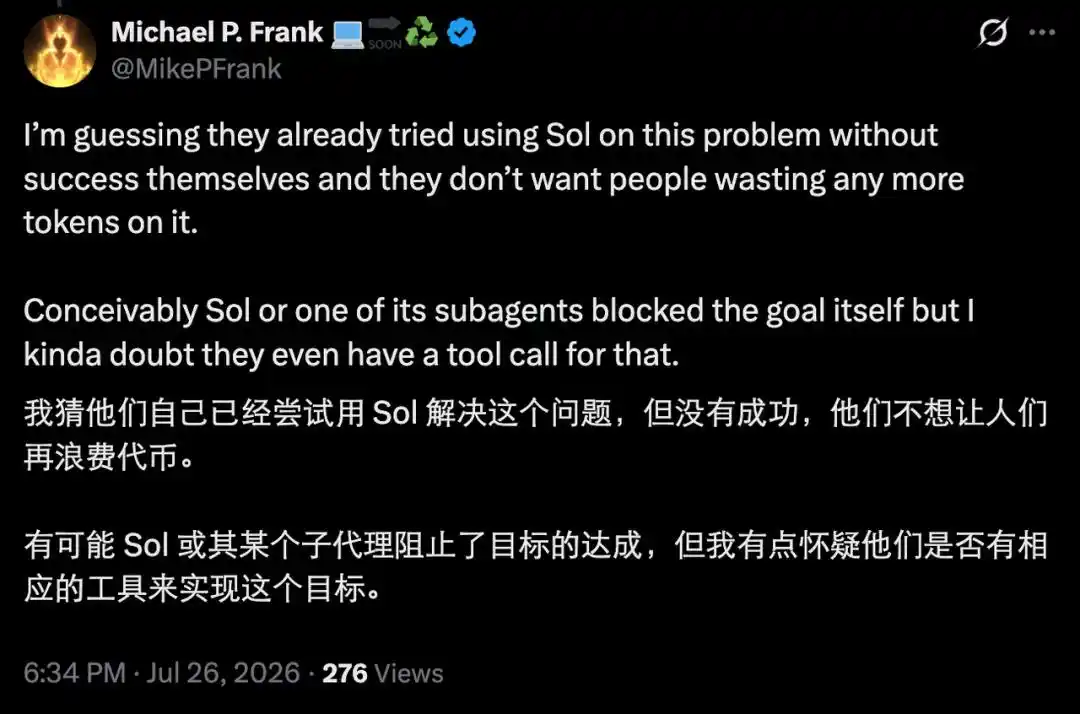
In its own post-hoc analysis, GPT-5.6 Sol wrote that there were likely two reasons: first, the system judged that the session was using excessive resources; second, OpenAI had already attempted this problem with a similar model in the past and failed, and this time didn't want to waste computing power again.
Michael P. Frank seemed to agree with this analysis by GPT-5.6 Sol.
Furthermore, GPT-5.6 Sol candidly reported what it did during those 33 hours. The core finding was: it did substantial work, turning many "seemingly feasible" shortcuts into verifiable precise statements, then disproving or eliminating them one by one. The output was a map of "dead ends," not a proof itself. It recommended stopping the effort.

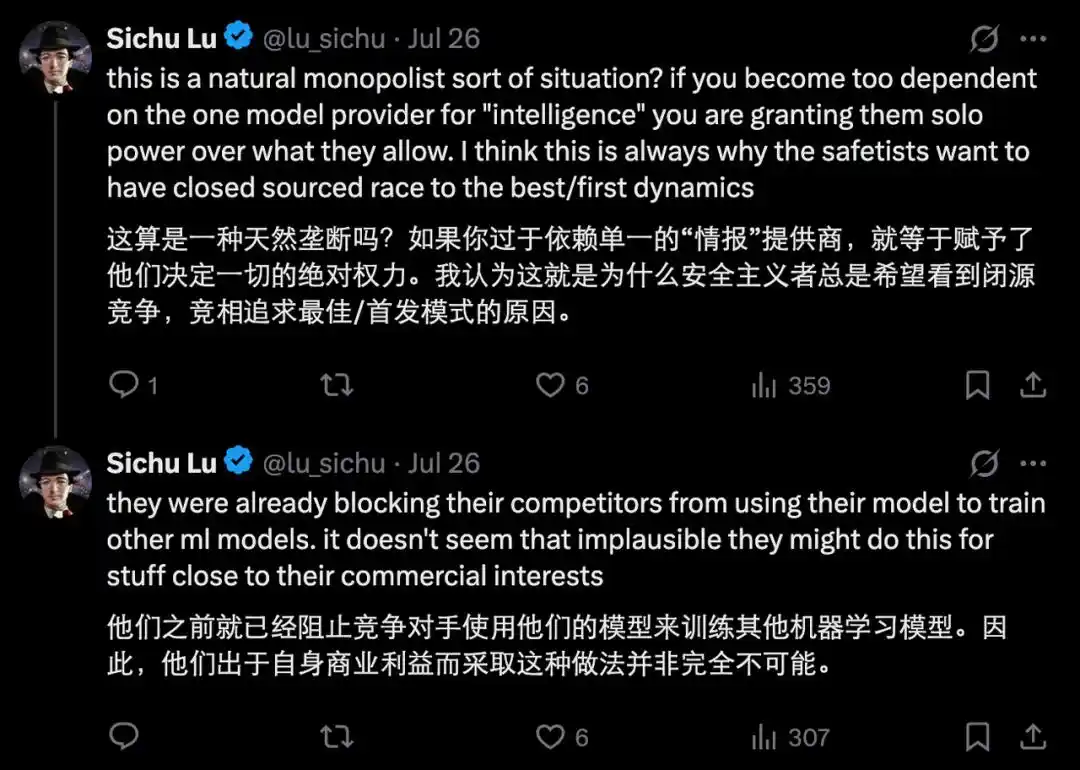
Regarding OpenAI's approach, some offered other possible interpretations: OpenAI might be holding back, not letting the model casually solve super-impressive math problems, fearing others would steal the spotlight, or wanting to claim the credit themselves. This serves as a reminder: if we become too dependent on them in the future, we are essentially handing over the power to decide "what can be discovered" to a single company, which is risky.

However, OpenAI senior research scientist Noam Brown quickly stepped in to point out the unreasonableness of this claim, saying, "If someone just typed 'continue' and used our model to solve a Millennium Prize Problem and then took home $1 million, that would be the best advertisement for OpenAI. Nothing would be better."
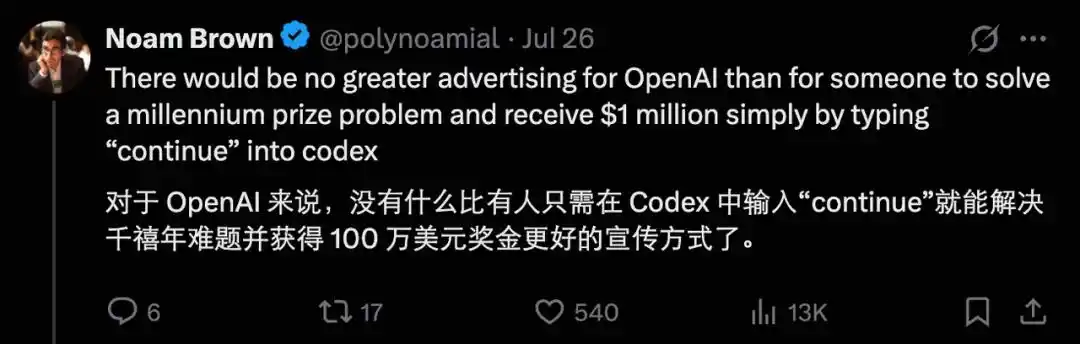
That sounds reasonable, but rebuttals argue that while opening top-tier capabilities to users might bring short-term publicity benefits, in the long run, it could weaken OpenAI's leading edge in the AI race. In a multi-player competitive environment, secrecy/internal priority use of strong models to accelerate one's own research is more important than letting users "preemptively" solve major problems. Once capabilities become "available to everyone," their publicity value drops significantly.

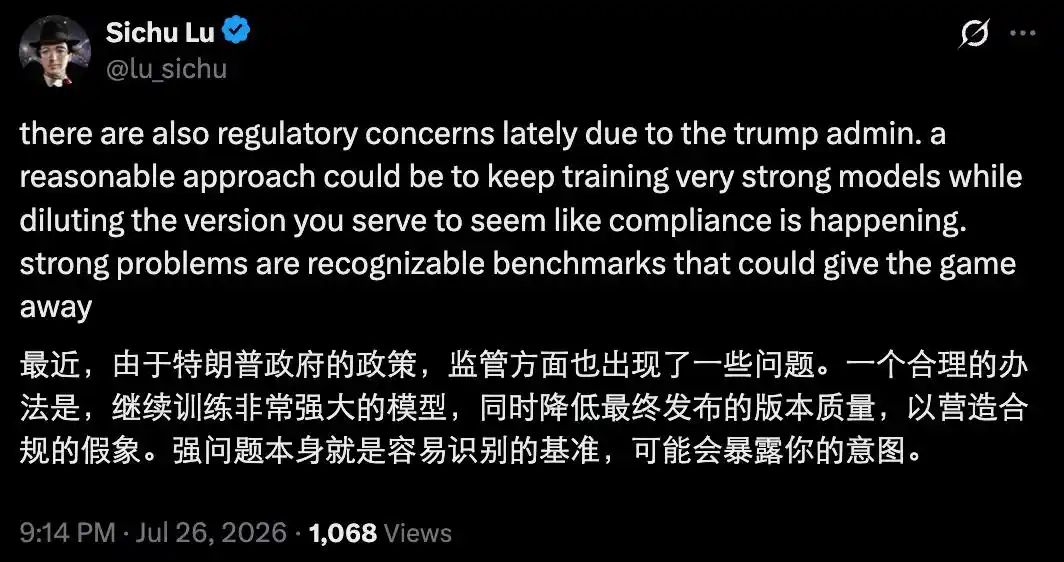
Furthermore, recent regulatory scrutiny gives OpenAI reason to hold back. If users used the public version to solve high-difficulty math problems, it would publicly demonstrate "this model is actually very powerful," potentially inviting more regulatory trouble. In this context, deliberately offering a weakened version externally while retaining a super-strong version internally sounds like a plausible strategy.
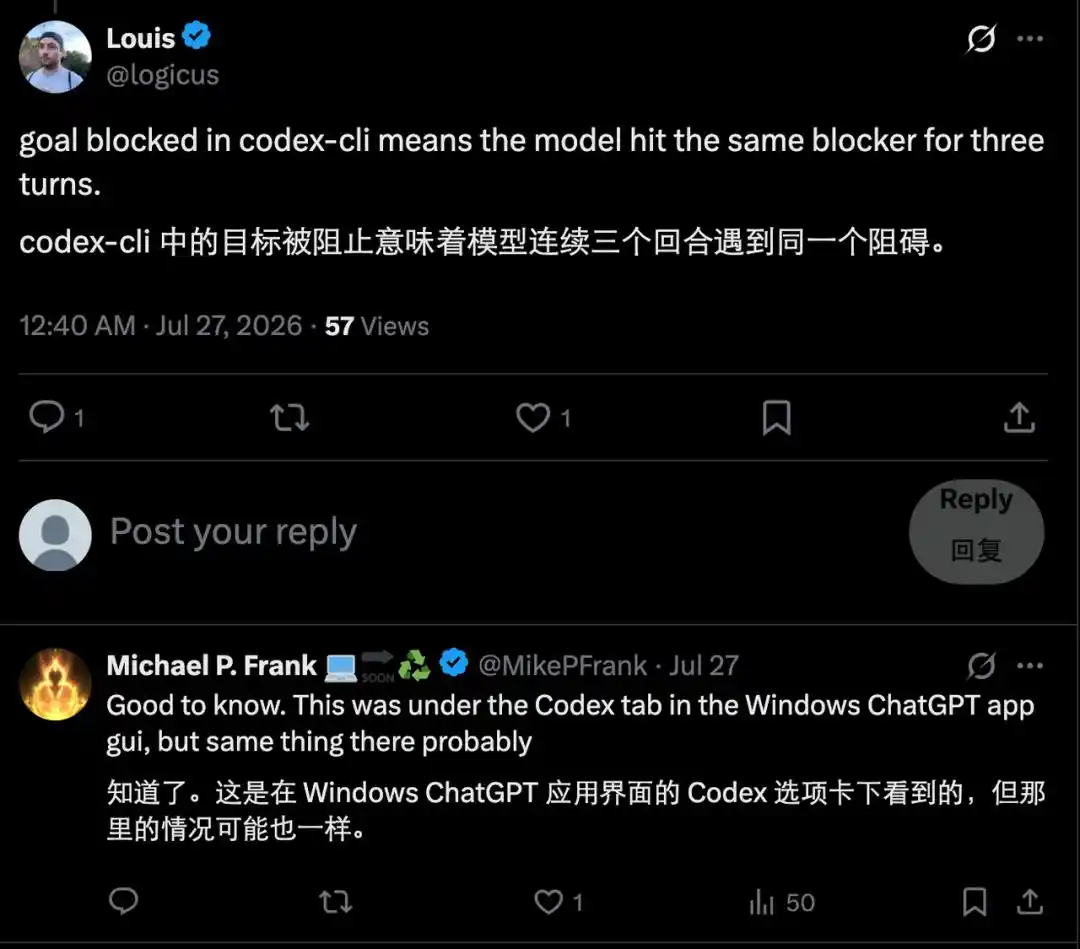
However, some also pointed out another possibility from a technical perspective: in codex-cli, "goal blocked" means the model repeatedly hit the same limit/blocker for 3 consecutive reasoning turns. So the task termination might be a routine safety/prevention-of-infinite-loop mechanism during model runtime, not a special block targeting difficult problems.
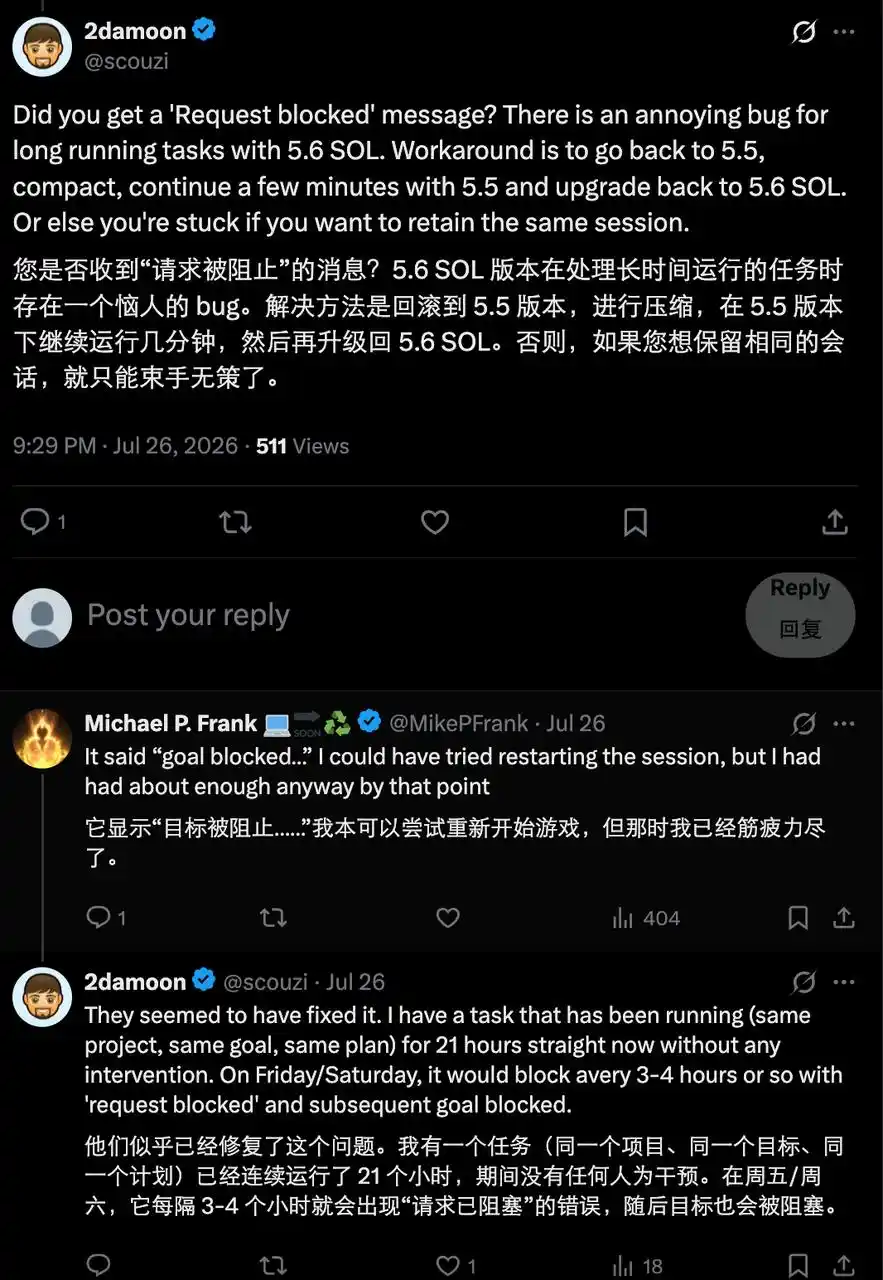
Others said this might simply be caused by a bug. Specifically, version 5.6 Sol has an annoying bug when running long-duration tasks. The temporary workaround is: switch back to version 5.5, compress the context, run it for a few minutes with 5.5, then switch back to version 5.6 Sol. "If you want to keep the same session, you'll get stuck and can't proceed."
What do you think? Feel free to share your experiences using AI to tackle difficult problems or getting stuck with it in the comments section.

References:

https://x.com/lu_sichu/status/2081367506468360495

This article is from the WeChat public account "Almost Human" (ID: almosthuman2014), author: Zhang Qian


熱門幣種推薦

相關問答

QWhat was the main goal set for the GPT-5.6 Sol model in the experiment described in the article?

AThe main goal was to investigate whether a simpler proof of Fermat's Last Theorem exists compared to the Wiles–Taylor proof, focusing on specific areas like modularity of Frey curves and the Uniform abc Conjecture, while maintaining rigorous documentation and verification of candidate lemmas.

QWhy was the GPT-5.6 Sol session forcibly terminated after approximately 33 hours according to its own analysis?

AGPT-5.6 Sol's analysis suggested two possible reasons: the system deemed the session was consuming excessive computational resources, or OpenAI had already tried and failed to solve the problem with similar models and decided to stop wasting resources.

QWhat did the GPT-5.6 Sol model report as its primary achievement during the 33-hour run?

AIt reported that its core achievement was performing substantial groundwork by turning plausible-sounding shortcuts into precise, verifiable statements, and then systematically disproving or eliminating them, effectively producing a map of dead ends rather than a proof itself.

QAccording to the article, what was one argument against Noam Brown's claim that OpenAI would welcome a user solving a major problem?

AThe argument was that while such a solve might offer short-term publicity, long-term competitive strategy favors keeping the strongest models internal to accelerate a company's own research, and that making top-tier capabilities publicly available diminishes their strategic and perceived value.

QWhat technical reason, unrelated to conspiracy, did some commentators suggest for the session's termination?

ASome suggested it could be due to a bug in GPT-5.6 Sol where long-running tasks might get stuck, and a known workaround involves switching to version 5.5, compressing the context, running for a few minutes, and then switching back to 5.6 Sol.

你可能也喜歡

中国启动芯片光刻机生产:为何专家未急于喝彩

中国一家上海国企已启动沉浸式DUV光刻机的生产,这是制造现代半导体的关键设备。据匿名消息称,该公司计划在2026年生产约五台,2027年约二十台,首批设备将供应给中芯国际、华虹半导体和长鑫存储等企业。生产方为2023年注册、注册资本70亿元的上海艾盛纳电子科技集团,其整合了来自上海宇量昇科技及上海微电子装备等公司的研发团队。 然而,行业专家对此持谨慎态度。消息人士指出,艾盛纳的设备仍需大量测试,且远未达到行业领导者荷兰ASML的水平。分析师强调,小批量生产与具备大规模量产能力的商业可行设备存在本质区别,后者需要极高的良率、对准精度、产能和长期可靠性。专家提醒,过去关于中国在光刻领域取得突破的消息常被夸大,需等待独立验证。目前,ASML的市场主导地位并未受到实质性威胁。 专家认为,对ASML更现实的风险可能来自美国潜在的《MATCH法案》对其设备销售与服务的限制,而非中国当前的进展。艾盛纳设备的前景,最终取决于其能否实现真正的规模化量产,而非仅制造原型机。从宏观角度看,中国市场虽为ASML贡献了约14%的销售额,但并非决定性收入来源。历史经验表明,中国从实验室原型到稳定量产产品的过程往往耗时漫长,艾盛纳能否打破这一模式,需待2027年的实际交付情况来验证。

cryptonews.ru1 小時前

中国启动芯片光刻机生产:为何专家未急于喝彩

cryptonews.ru1 小時前

交易

現貨

熱門文章

什麼是 $S$

理解 SPERO:全面概述 SPERO 簡介 隨著創新領域的不斷演變,web3 技術和加密貨幣項目的出現在塑造數字未來中扮演著關鍵角色。在這個動態領域中,SPERO(標記為 SPERO,$$s$)是一個引起關注的項目。本文旨在收集並呈現有關 SPERO 的詳細信息,以幫助愛好者和投資者理解其基礎、目標和在 web3 和加密領域內的創新。 SPERO,$$s$ 是什麼? SPERO,$$s$ 是加密空間中的一個獨特項目,旨在利用去中心化和區塊鏈技術的原則,創建一個促進參與、實用性和金融包容性的生態系統。該項目旨在以新的方式促進點對點互動,為用戶提供創新的金融解決方案和服務。 SPERO,$$s$ 的核心目標是通過提供增強用戶體驗的工具和平台來賦能個人。這包括使交易方式更加靈活、促進社區驅動的倡議,以及通過去中心化應用程序(dApps)創造金融機會的途徑。SPERO,$$s$ 的基本願景圍繞包容性展開,旨在彌合傳統金融中的差距,同時利用區塊鏈技術的優勢。 誰是 SPERO,$$s$ 的創建者? SPERO,$$s$ 的創建者身份仍然有些模糊,因為公開可用的資源對其創始人提供的詳細背景信息有限。這種缺乏透明度可能源於該項目對去中心化的承諾——這是一種許多 web3 項目所共享的精神,優先考慮集體貢獻而非個人認可。 通過將討論重心放在社區及其共同目標上,SPERO,$$s$ 體現了賦能的本質,而不特別突出某些個體。因此,理解 SPERO 的精神和使命比識別單一創建者更為重要。 誰是 SPERO,$$s$ 的投資者? SPERO,$$s$ 得到了來自風險投資家到天使投資者的多樣化投資者的支持,他們致力於促進加密領域的創新。這些投資者的關注點通常與 SPERO 的使命一致——優先考慮那些承諾社會技術進步、金融包容性和去中心化治理的項目。 這些投資者通常對不僅提供創新產品,還對區塊鏈社區及其生態系統做出積極貢獻的項目感興趣。這些投資者的支持強化了 SPERO,$$s$ 作為快速發展的加密項目領域中的一個重要競爭者。 SPERO,$$s$ 如何運作? SPERO,$$s$ 採用多面向的框架,使其與傳統的加密貨幣項目區別開來。以下是一些突顯其獨特性和創新的關鍵特徵: 去中心化治理:SPERO,$$s$ 整合了去中心化治理模型,賦予用戶積極參與決策過程的權力,關於項目的未來。這種方法促進了社區成員之間的擁有感和責任感。 代幣實用性:SPERO,$$s$ 使用其自己的加密貨幣代幣,旨在在生態系統內部提供多種功能。這些代幣使交易、獎勵和平台上提供的服務得以促進,增強了整體參與度和實用性。 分層架構:SPERO,$$s$ 的技術架構支持模塊化和可擴展性,允許在項目發展過程中無縫整合額外的功能和應用。這種適應性對於在不斷變化的加密環境中保持相關性至關重要。 社區參與:該項目強調社區驅動的倡議,採用激勵合作和反饋的機制。通過培養強大的社區,SPERO,$$s$ 能夠更好地滿足用戶需求並適應市場趨勢。 專注於包容性:通過提供低交易費用和用戶友好的界面,SPERO,$$s$ 旨在吸引多樣化的用戶群體,包括那些以前可能未曾參與加密領域的個體。這種對包容性的承諾與其通過可及性賦能的總體使命相一致。 SPERO,$$s$ 的時間線 理解一個項目的歷史提供了對其發展軌跡和里程碑的關鍵見解。以下是建議的時間線,映射 SPERO,$$s$ 演變中的重要事件: 概念化和構思階段:形成 SPERO,$$s$ 基礎的初步想法被提出,與區塊鏈行業內的去中心化和社區聚焦原則密切相關。 項目白皮書的發布:在概念階段之後,發布了一份全面的白皮書,詳細說明了 SPERO,$$s$ 的願景、目標和技術基礎設施,以吸引社區的興趣和反饋。 社區建設和早期參與:積極進行外展工作,建立早期採用者和潛在投資者的社區,促進圍繞項目目標的討論並獲得支持。 代幣生成事件:SPERO,$$s$ 進行了一次代幣生成事件(TGE),向早期支持者分發其原生代幣,並在生態系統內建立初步流動性。 首次 dApp 上線:與 SPERO,$$s$ 相關的第一個去中心化應用程序(dApp)上線,允許用戶參與平台的核心功能。 持續發展和夥伴關係:對項目產品的持續更新和增強,包括與區塊鏈領域其他參與者的戰略夥伴關係,使 SPERO,$$s$ 成為加密市場中一個具有競爭力和不斷演變的參與者。 結論 SPERO,$$s$ 是 web3 和加密貨幣潛力的見證,能夠徹底改變金融系統並賦能個人。憑藉對去中心化治理、社區參與和創新設計功能的承諾,它為更具包容性的金融環境鋪平了道路。 與任何在快速發展的加密領域中的投資一樣,潛在的投資者和用戶都被鼓勵進行徹底研究,並對 SPERO,$$s$ 的持續發展進行深思熟慮的參與。該項目展示了加密行業的創新精神,邀請人們進一步探索其無數可能性。儘管 SPERO,$$s$ 的旅程仍在展開,但其基礎原則確實可能影響我們在互聯網數字生態系統中如何與技術、金融和彼此互動的未來。

313 人學過發佈於 2024.12.17更新於 2024.12.17

什麼是 $S$

什麼是 AGENT S

Agent S:Web3中自主互動的未來 介紹 在不斷演變的Web3和加密貨幣領域,創新不斷重新定義個人如何與數字平台互動。Agent S是一個開創性的項目,承諾通過其開放的代理框架徹底改變人機互動。Agent S旨在簡化複雜任務,為人工智能(AI)提供變革性的應用,鋪平自主互動的道路。本詳細探索將深入研究該項目的複雜性、其獨特特徵以及對加密貨幣領域的影響。 什麼是Agent S? Agent S是一個突破性的開放代理框架,專門設計用來解決計算機任務自動化中的三個基本挑戰: 獲取特定領域知識:該框架智能地從各種外部知識來源和內部經驗中學習。這種雙重方法使其能夠建立豐富的特定領域知識庫,提升其在任務執行中的表現。 長期任務規劃:Agent S採用經驗增強的分層規劃,這是一種戰略方法,可以有效地分解和執行複雜任務。此特徵顯著提升了其高效和有效地管理多個子任務的能力。 處理動態、不均勻的界面:該項目引入了代理-計算機界面(ACI),這是一種創新的解決方案,增強了代理和用戶之間的互動。利用多模態大型語言模型(MLLMs),Agent S能夠無縫導航和操作各種圖形用戶界面。 通過這些開創性特徵,Agent S提供了一個強大的框架,解決了自動化人機互動中涉及的複雜性,為AI及其他領域的無數應用奠定了基礎。 誰是Agent S的創建者? 儘管Agent S的概念根本上是創新的,但有關其創建者的具體信息仍然難以捉摸。創建者目前尚不清楚,這突顯了該項目的初期階段或戰略選擇將創始成員保密。無論是否匿名,重點仍然在於框架的能力和潛力。 誰是Agent S的投資者? 由於Agent S在加密生態系統中相對較新,關於其投資者和財務支持者的詳細信息並未明確記錄。缺乏對支持該項目的投資基礎或組織的公開見解,引發了對其資金結構和發展路線圖的質疑。了解其支持背景對於評估該項目的可持續性和潛在市場影響至關重要。 Agent S如何運作? Agent S的核心是尖端技術,使其能夠在多種環境中有效運作。其運營模型圍繞幾個關鍵特徵構建: 類人計算機互動:該框架提供先進的AI規劃,力求使與計算機的互動更加直觀。通過模仿人類在任務執行中的行為,承諾提升用戶體驗。 敘事記憶:用於利用高級經驗,Agent S利用敘事記憶來跟蹤任務歷史,從而增強其決策過程。 情節記憶:此特徵為用戶提供逐步指導,使框架能夠在任務展開時提供上下文支持。 支持OpenACI:Agent S能夠在本地運行,使用戶能夠控制其互動和工作流程,與Web3的去中心化理念相一致。 與外部API的輕鬆集成:其多功能性和與各種AI平台的兼容性確保了Agent S能夠無縫融入現有技術生態系統,成為開發者和組織的理想選擇。 這些功能共同促成了Agent S在加密領域的獨特地位,因為它以最小的人類干預自動化複雜的多步任務。隨著項目的發展,其在Web3中的潛在應用可能重新定義數字互動的展開方式。 Agent S的時間線 Agent S的發展和里程碑可以用一個時間線來概括,突顯其重要事件: 2024年9月27日:Agent S的概念在一篇名為《一個像人類一樣使用計算機的開放代理框架》的綜合研究論文中推出,展示了該項目的基礎工作。 2024年10月10日:該研究論文在arXiv上公開,提供了對框架及其基於OSWorld基準的性能評估的深入探索。 2024年10月12日:發布了一個視頻演示,提供了對Agent S能力和特徵的視覺洞察,進一步吸引潛在用戶和投資者。 這些時間線上的標記不僅展示了Agent S的進展,還表明了其對透明度和社區參與的承諾。 有關Agent S的要點 隨著Agent S框架的持續演變,幾個關鍵特徵脫穎而出,強調其創新性和潛力: 創新框架:旨在提供類似人類互動的直觀計算機使用,Agent S為任務自動化帶來了新穎的方法。 自主互動:通過GUI自主與計算機互動的能力標誌著向更智能和高效的計算解決方案邁進了一步。 複雜任務自動化:憑藉其強大的方法論,能夠自動化複雜的多步任務,使過程更快且更少出錯。 持續改進:學習機制使Agent S能夠從過去的經驗中改進,不斷提升其性能和效率。 多功能性:其在OSWorld和WindowsAgentArena等不同操作環境中的適應性確保了它能夠服務於廣泛的應用。 隨著Agent S在Web3和加密領域中的定位,其增強互動能力和自動化過程的潛力標誌著AI技術的一次重大進步。通過其創新框架,Agent S展現了數字互動的未來,為各行各業的用戶承諾提供更無縫和高效的體驗。 結論 Agent S代表了AI與Web3結合的一次大膽飛躍,具有重新定義我們與技術互動方式的能力。儘管仍處於早期階段,但其應用的可能性廣泛且引人入勝。通過其全面的框架解決關鍵挑戰,Agent S旨在將自主互動帶到數字體驗的最前沿。隨著我們深入加密貨幣和去中心化的領域,像Agent S這樣的項目無疑將在塑造技術和人機協作的未來中發揮關鍵作用。

1.1k 人學過發佈於 2025.01.14更新於 2025.01.14

什麼是 AGENT S

如何購買S

歡迎來到HTX.com!在這裡,購買Sonic (S)變得簡單而便捷。跟隨我們的逐步指南,放心開始您的加密貨幣之旅。第一步:創建您的HTX帳戶使用您的 Email、手機號碼在HTX註冊一個免費帳戶。體驗無憂的註冊過程並解鎖所有平台功能。立即註冊第二步:前往買幣頁面,選擇您的支付方式信用卡/金融卡購買:使用您的Visa或Mastercard即時購買Sonic (S)。餘額購買:使用您HTX帳戶餘額中的資金進行無縫交易。第三方購買:探索諸如Google Pay或Apple Pay等流行支付方式以增加便利性。C2C購買:在HTX平台上直接與其他用戶交易。HTX 場外交易 (OTC) 購買:為大量交易者提供個性化服務和競爭性匯率。第三步:存儲您的Sonic (S)購買Sonic (S)後,將其存儲在您的HTX帳戶中。您也可以透過區塊鏈轉帳將其發送到其他地址或者用於交易其他加密貨幣。第四步:交易Sonic (S)在HTX的現貨市場輕鬆交易Sonic (S)。前往您的帳戶,選擇交易對,執行交易,並即時監控。HTX為初學者和經驗豐富的交易者提供了友好的用戶體驗。

2.3k 人學過發佈於 2025.01.15更新於 2026.06.02

如何購買S

相關討論

歡迎來到 HTX 社群。在這裡,您可以了解最新的平台發展動態並獲得專業的市場意見。 以下是用戶對 S (S)幣價的意見。

活动图片