Prompt Engineering Paper Accepted at ICML 2026 Sparks Heated Debate Among Netizens

marsbit發佈於 2026-07-15更新於 2026-07-15

文章摘要

A paper on prompt engineering, titled "Verbalized Sampling (VS)," has been accepted by the prestigious machine learning conference ICML 2026, sparking significant debate online. The paper addresses the problem of "mode collapse" in large language models (LLMs), where models tend to produce repetitive, safe, and homogeneous outputs. Instead of proposing new training algorithms or model architectures, the authors introduce a simple yet effective prompt-based method. The core technique, Verbalized Sampling, instructs the model to generate multiple responses (e.g., five jokes) while also outputting a possible probability value for each. This prompt adjustment alone was shown to significantly increase output diversity by 1.6x to 2.1x in creative writing tasks, without compromising factual accuracy or safety. The authors argue that the root cause of mode collapse lies not in optimization algorithms but in the "typicality bias" present in human preference data used for alignment. Human annotators naturally favor familiar and fluent text, which steers models toward conservative outputs. The VS method aims to counteract this by leveraging the model's inherent pre-training distribution during inference. The paper's acceptance has led to polarized reactions. Critics argue that prompt engineering lacks the theoretical depth and algorithmic innovation expected from top-tier conferences like ICML, questioning its novelty, generalizability across models, and experimental scale. Some draw...

Prompt engineering can get a paper published in ICML these days???

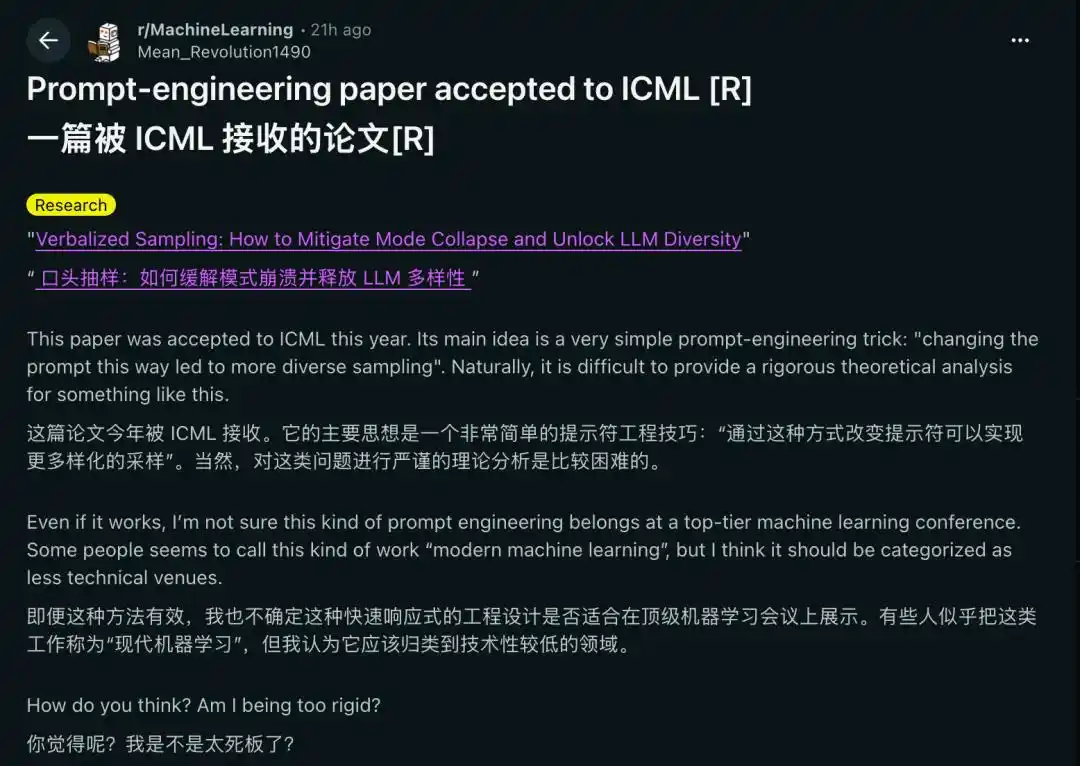
Recently, a guy shared a paper just accepted by ICML 2026 on Reddit, and the post instantly went viral, with the number of comments skyrocketing.

However, everyone was left scratching their heads: Is this for real?
The authors didn't propose any new optimization algorithms or train any new large models. They simply did one thing—

Modified the Prompt.

The paper proposes a method called Verbalized Sampling (VS), which significantly enhances the diversity of large language model outputs and alleviates the long-standing issue of Mode Collapse in LLMs, solely by adjusting the prompt.

It sounds quite practical, but is it right for a mere prompt trick to get into a top-tier conference?

Let's take a look at the paper first before passing judgment.

A Highly Controversial ICML Paper
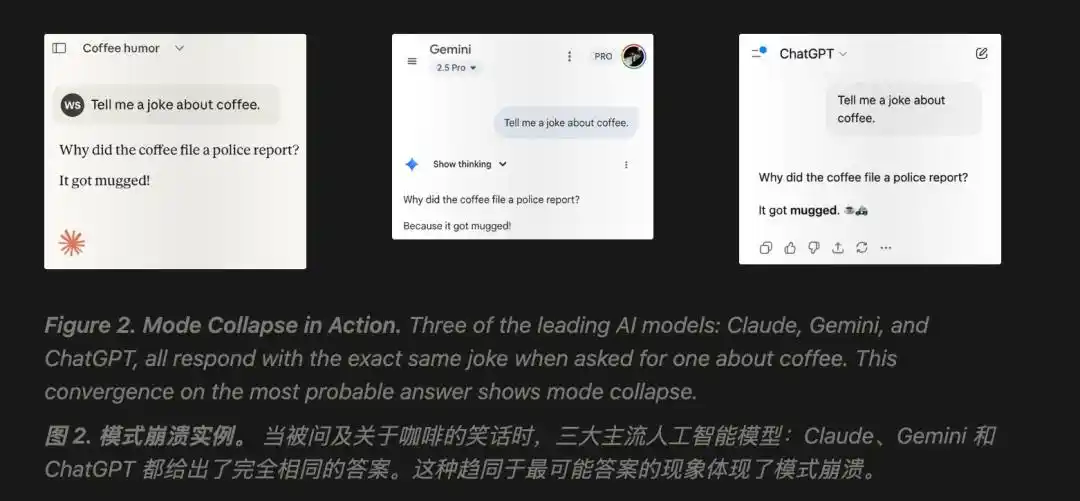
Have you ever felt that AI is becoming increasingly homogeneous?

Ask it ten times to "Tell me a joke," and the answers you get are often highly similar. This is not only true for creative tasks but also for Q&A, code generation...

This phenomenon is collectively referred to as mode collapse in academia.

Simply put, models increasingly prefer to output the highest probability, safest, and most classic answers, while rejecting alternative creative ideas.
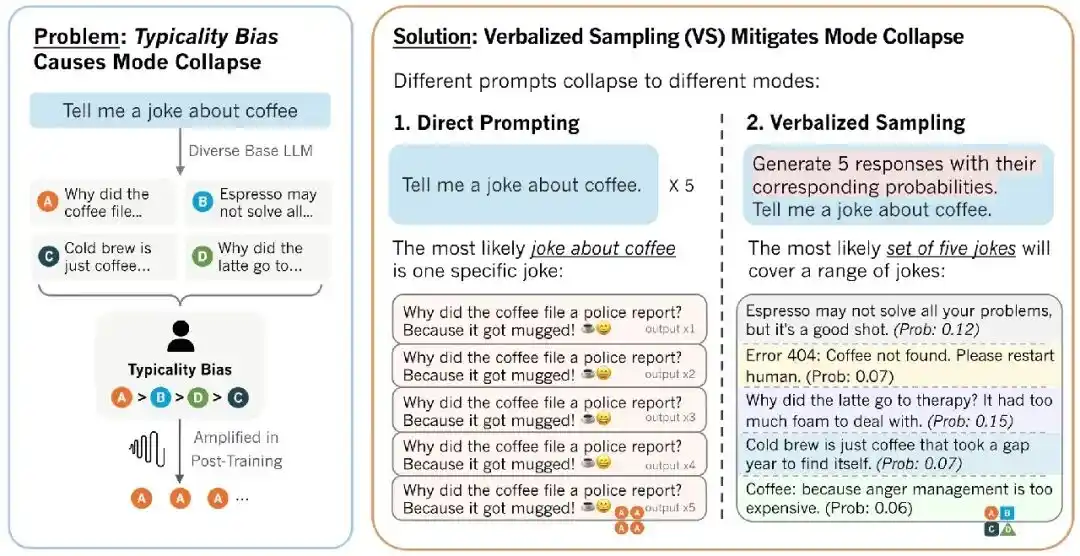
In the past, to solve this model problem, most researchers would first think of adjusting sampling parameters, modifying decoding algorithms, retraining, etc. However, this paper takes a different approach: directly asking the model to output its own sampling process along with the answer.

For example, using the earlier joke-telling scenario, the authors would modify the prompt, requiring the model to:

Generate 5 jokes, while also assigning a possible probability value to each joke.

Then the model can produce more varied and less repetitive answers.

It sounds very simple, doesn't it? In fact, this is the core contribution of the paper—the Verbalized Probability Sampling method. No fine-tuning is needed; just by changing the way of asking, content diversity can be significantly improved.
In the paper, however, the authors provide a rigorous argumentation process for this.

First, they address the root cause of the model's uniformity.

Past academia attributed this problem to algorithmic aspects, such as insufficient reward models or improperly set KL penalty terms. This paper delves deeper, suggesting the real root lies in the preference data itself.

They propose a concept called prototypical bias. From a cognitive psychology perspective, human annotators naturally prefer familiar, fluent, conventional text, and instinctively give higher scores to stereotypical, mainstream answers.
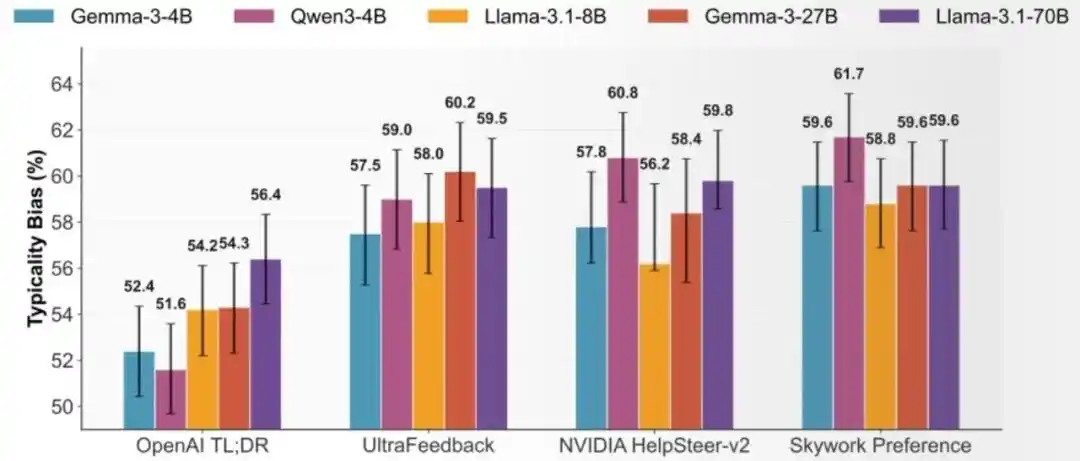
Therefore, even if reward models and optimization algorithms are perfected, as long as the human preference data used for training inherently contains prototypical bias, post-alignment models will still suffer from mode collapse.

The authors tested this repeatedly on five preference datasets and different base models, and the conclusion remained consistent.

After realizing this, the authors argue that since the problem is rooted in the training data, one only needs to consider designing a prompt-based correction scheme during the inference stage. That is, by making the model output the complete probability distribution in the prompt, the model's inherent diverse output distribution from the pre-training phase can be awakened, restoring diversity.

The rest involved running experiments with this method in various scenarios. The results show that in creative writing tasks, diversity was 1.6~2.1 times that of ordinary prompts, without reducing factual accuracy or compromising model safety.

Furthermore, the stronger the model's capabilities and the larger the parameter count, the more pronounced the diversity improvement brought by VS.
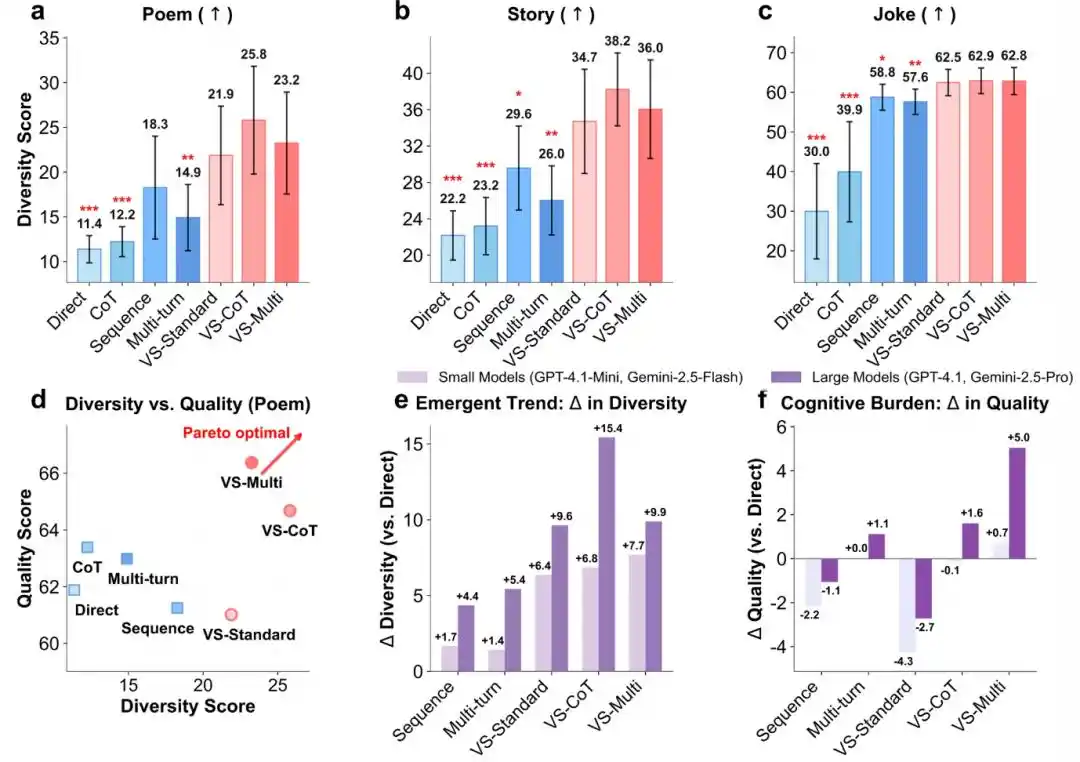
So, while the final method presented in the paper is simple, ICML still passed it.

Reddit Users in a Heated Debate

Under the original post, however, opinions on this paper are polarized.

Many netizens expressed that in the past, ICML featured hardcore innovations like new models, new algorithms, and new theories. Merely optimizing prompts or inference processes doesn't qualify as serious machine learning research.

In comparison, the innovation of this work seems somewhat thin, and several issues exist:

First, similar instruction-writing methods are not unique; some even claimed they were writing prompts like this just yesterday. Second, the theory is difficult to verify because prompts might fail when models are changed, unlike algorithms which are more stable. Third, the experimental scale is limited, insufficient to prove this is a universal law.
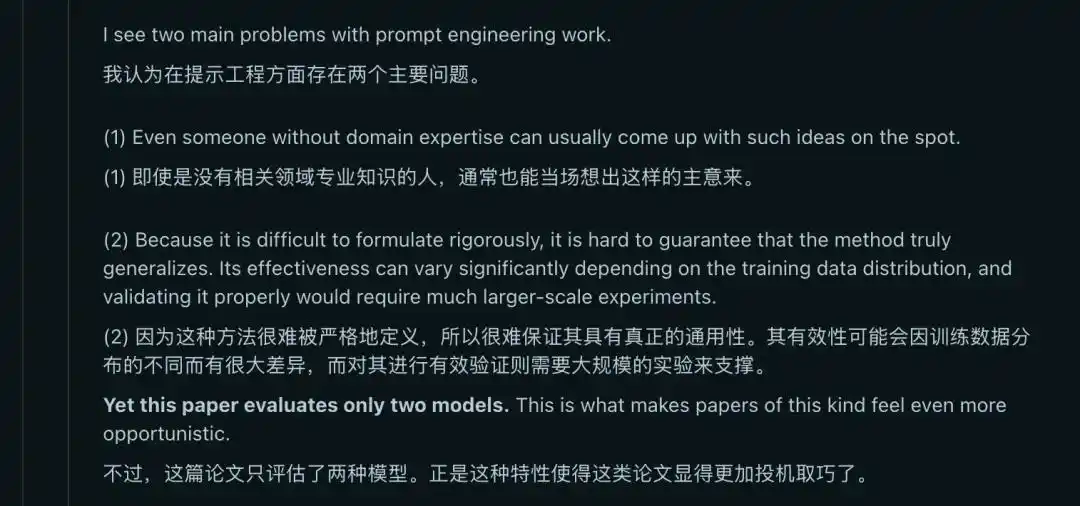
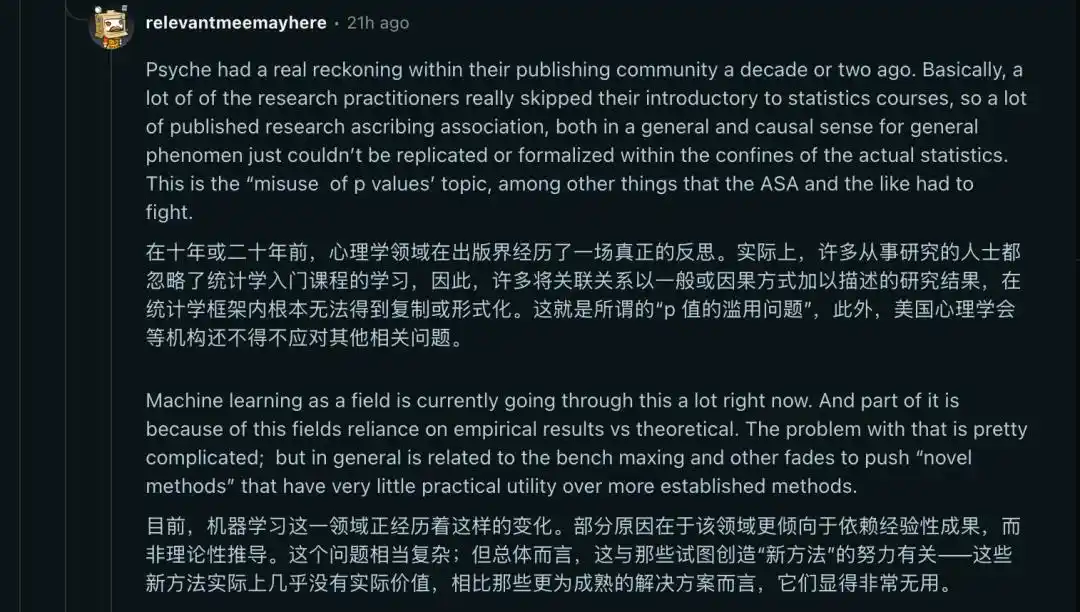
Some netizens directly compared the current state of the machine learning field to the academic crisis in psychology over a decade ago.

Back then, many researchers had weak statistical foundations and misused statistical tools, leading to many papers with unreproducible conclusions and a severe trust crisis in the field. Similarly, the machine learning industry now heavily relies on empirical experiments and undervalues rigorous theoretical support.

The industry is internally competitive, chasing new methods, but there's a widespread atmosphere of excessive hyperparameter tuning and benchmark score chasing. Many so-called innovative algorithms offer little practical value compared to mature baseline models, being packaged as innovative achievements based on tiny metric improvements.

Essentially, these are issues in paper publishing caused by unclear professional standards following the rapid expansion of the discipline.
But supporters argue that scientific research is not about whose method is more complex. As long as the hypothesis is clear, experiments are sufficient, and results are stable and reproducible, it can still be excellent research.

For example, this paper thoroughly explains what mode collapse is and proposes that the real problem lies in prototypical bias—a viewpoint more important than the prompt itself.

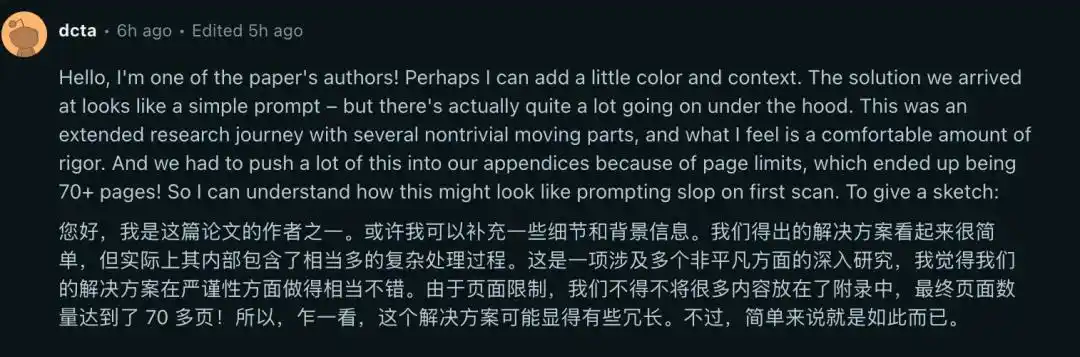
One of the authors also replied in the comments, stating that while the paper appears simple, it actually involves a great deal of complex processing.

The entire work includes complete problem tracing, new theoretical attribution, mathematical derivation, and multi-dimensional quantitative experiments—it's not a shallow, trivial prompt-tuning effort.
Many also mentioned Chain-of-Thought (CoT). When CoT first appeared, it was essentially a one-line prompt:

Let’s think step by step.

But now, almost all reasoning methods can be traced back to CoT. This precisely indicates that prompt engineering is no longer just about writing prompts; it is becoming a new method for studying model behavior.

Over the past decade, machine learning research has almost revolved around training. But now, some usage techniques during the inference stage are gradually moving toward the core of machine learning research.

Perhaps in the coming years, we will see more and more papers like this. They don't add a single line of training code or an extra model parameter, yet they can still change the capability boundaries of large models.

Research Team Introduction

Finally, let's take a look at the research team.

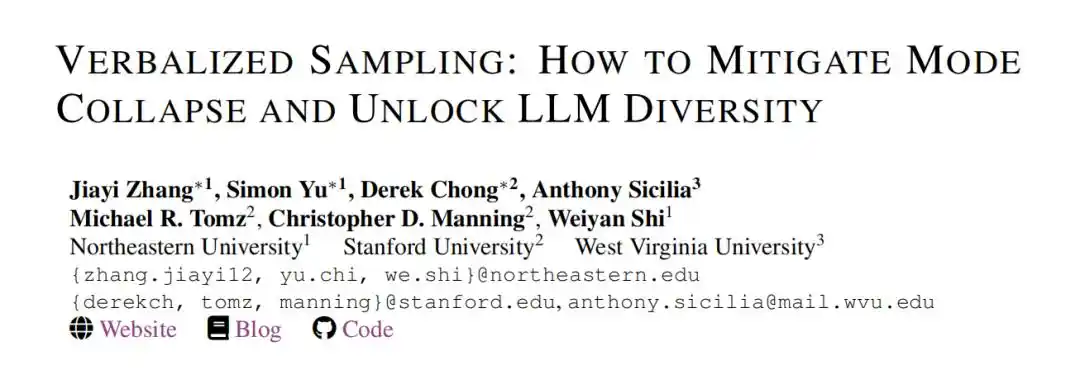
This work was completed by Weiyan Shi's team at Northeastern University (USA) in collaboration with Stanford's Manning Lab and West Virginia University. Jiayi Zhang, Simon Yu, and Derek Chong are listed as co-first authors.

Jiayi Zhang completed her undergraduate studies at the University of Michigan, earning triple bachelor's degrees in Computer Science, Mathematics, and Linguistics. She then pursued a Master's in Computer Science at Northeastern University (USA).

Another paper of hers, "Analyzing the Role of Semantic Representations in the Era of Large Language Models," accepted by the NLP top conference NAACL 2024, also revolves around semantic representation and large models.

Simon Yu is currently pursuing a Ph.D. at Northeastern University (USA), with his main research direction focusing on alignment and reinforcement learning mechanisms in large models. He completed both his bachelor's and master's degrees at the University of Edinburgh and has published several top conference papers.

Besides this paper, another one of his papers, "Unsafer in Many Turns: Benchmarking and Defending Multi-Turn Safety Risks in Tool-Using Agents," was also accepted by ICML 2026.

Derek Chong earned his Master's from Stanford University and is currently a researcher at the Stanford Artificial Intelligence Laboratory. His research primarily focuses on large language models in NLP.

He previously had three years of experience as a founder-entrepreneur and worked at Ello as an Applied Scientist, participating in industry-end AI implementation R&D. He possesses both solid theoretical research skills and rich hands-on practical experience.

References:[1]https://www.reddit.com/r/MachineLearning/comments/1uv1xb3/promptengineering_paper_accepted_to_icml_r/

[2]https://www.linkedin.com/in/jiayizx/[3]https://simonucl.github.io/[4]https://www.linkedin.com/in/derekch/

This article is from the WeChat public account "Qubit" (量子位), author: Focus on Frontier Technology


熱門幣種推薦

相關問答

QWhat is the main contribution of the 'Verbalized Sampling' paper accepted at ICML 2026?

AThe main contribution is a method called 'Verbalized Sampling' (VS), which involves adjusting prompts to ask language models to output their sampling process (e.g., assign probabilities to multiple generated answers). This simple intervention significantly increases the diversity of LLM outputs and mitigates the 'mode collapse' problem without requiring model retraining or new algorithms.

QAccording to the paper, what is identified as the root cause of the mode collapse problem in LLMs?

AThe paper identifies the root cause as 'typicality bias' in the human preference data used for training. This cognitive bias leads human annotators to consistently favor familiar, fluent, and conventional text. Consequently, the reward models trained on this data steer aligned models towards safe, high-probability answers, causing mode collapse.

QWhat are some of the key criticisms from Reddit users regarding this paper's acceptance at ICML?

ACritics argue that the innovation is thin, noting similar prompt techniques are already in use and questioning the method's stability across different models. They also contend that the experimental scale is insufficient to prove a universal law and express concern that the field is drifting towards an over-reliance on empirical results and 'benchmark hacking' rather than rigorous theoretical contributions.

QHow do the paper's supporters defend its value and acceptance at a top-tier conference?

ASupporters argue that good research is defined by clear hypotheses, rigorous experimentation, and reproducible results, not just complexity. They highlight that the paper's core contribution is the novel theoretical insight into the cause of mode collapse (typicality bias). They also compare it to foundational techniques like Chain-of-Thought, suggesting prompt engineering is evolving into a legitimate method for studying model behavior.

QWhat was the observed impact of the Verbalized Sampling method on creative writing tasks?

AIn creative writing tasks, the Verbalized Sampling method increased output diversity by 1.6 to 2.1 times compared to standard prompting, without compromising factual accuracy or model safety. The effectiveness of the method was also shown to be more pronounced in larger, more capable models.

你可能也喜歡

少投入不是苹果的免死金牌

《少投入不是苹果的免死金牌》一文指出,虽然苹果在AI浪潮中因资本开支克制而一度受到市场青睐,但其面临的挑战正在显现。 文章首先描述了市场的反差:当Meta、谷歌等巨头因巨额AI投入引发担忧时,苹果在AI领域的迟缓进展反而被视为“亮点”,其股价一度上涨。然而,这种“全靠同行衬托”的领先难以持续。 随后,文章分析了苹果最新财报。尽管2026财年第三财季营收与净利润均创同期历史新高,主要得益于iPhone和Mac的强劲销售,但财报发布后股价却大幅下跌。原因在于苹果对下一季度的增长指引低于市场预期。 核心问题在于供应链。AI热潮导致内存和芯片需求激增、价格上涨及产能紧张,严重波及苹果。其Mac产品线已因高端芯片供应不足而受限,并被迫提价。外界预测iPhone新品也将大幅涨价,这可能影响未来销量。为应对供应链风险,苹果库存大幅增加,并寻求与中企合作采购内存芯片,但此举面临政治阻力。 与其他科技巨头动辄数千亿美元的AI资本开支相比,苹果的资本开支不仅未增,反而下降,这使其保持了健康的现金流。但同时,苹果研发费用大幅增长,却未能在AI领域取得显著成果,形成反差。 文章总结,苹果虽未在AI烧钱竞赛中陷得太深,却无法避免由这场竞赛引发的供应链与成本冲击。即将卸任的库克对公司未来表示信心,但苹果能否在AI时代保持领先,仍存疑问。

marsbit2 分鐘前

少投入不是苹果的免死金牌

marsbit2 分鐘前

一周精选丨股市史诗级震荡,长鑫科技上市重塑存储格局,Saylor目标9月8日前后推动STRC回锚

PANews精选一周要闻。AI领域热度持续,智能体钱包成为加密支付新战场,Coinbase等巨头布局小额支付以抢占AI经济入口。韩国股市经历剧烈震荡,多次熔断并引发清算风暴,科技股暴跌堪比币圈行情。算力产业进入系统化竞争阶段,国产GPU与AI智能体(Agent)结合成为焦点。 宏观方面,长鑫科技上市后市值巨大,在经历长期亏损后单季度盈利显著。花旗银行预警未来大宗商品市场可能出现的极端风险。美联储维持利率不变,但内部出现罕见分歧,释放鹰派信号。 机构观点显示,有分析认为当前AI板块调整是去杠杆过程,长期牛市逻辑不变。中国散户在传统投资渠道收窄后,正转向加密资产等新途径。市场讨论未来货币形态,比特币价值受关注。比特币矿企被指出需向能源综合服务商转型。 市场热点包括NFT交易通过“抽卡”等新玩法激活流动性,但部分加密协议面临收入增长与代币价格脱钩的问题。RWA(真实世界资产)链上规模增长但利用率不足。以太坊公布2030年长期发展蓝图,Lido也进行了大规模升级。 行业动态方面,新银行领域面临洗牌,稳定币竞争加剧。重点资讯包括:美股收涨,Coinbase股价波动;MicroStrategy增持比特币并计划推动STRC回锚;多家AI与加密公司获得融资;韩国股市与长鑫科技股价出现大幅波动;巨鲸交易员在AI相关交易中获利了结。

marsbit42 分鐘前

一周精选丨股市史诗级震荡,长鑫科技上市重塑存储格局,Saylor目标9月8日前后推动STRC回锚

marsbit42 分鐘前

当市场开始质疑AI资本开支:五家科技巨头Q2财报全解析

2026年7月下旬,谷歌、英特尔、微软、Meta、苹果五家科技巨头相继发布第二季度财报。尽管各家营收和利润普遍超预期,且AI相关业务(如谷歌云、英特尔数据中心、Azure)增长强劲,但市场反应出现显著分化,焦点已从需求转向资本开支与现金流回报。 **谷歌**营收创十二季度双位数增长纪录,云业务同比大增82%,但资本支出同比翻倍至449亿美元,并上调全年指引,导致上市以来首次录得负自由现金流,股价下跌。 **英特尔**营收创十五年来最强增速,数据中心与AI业务表现突出,但因大幅上调资本支出指引引发对自由现金流的担忧,股价经历“过山车”式反转。 **微软**业绩超预期,Azure年收入首破千亿美元,同时通过会计调整下调资本支出指引并承诺正自由现金流,股价创十八年来最佳单日表现。 **Meta**广告业务稳健,营收增长28%,但因成本费用大增55%及资本开支指引上调,自由现金流同比萎缩逾90%,遭遇猛烈抛售。 **苹果**营收利润创同期新高,但下一季度营收指引上限低于预期,叠加供应链瓶颈担忧,股价大跌,市值单日蒸发超3000亿美元。 总结而言,本财报季显示AI需求依然强劲,但市场对巨额资本开支何时转化为实际回报的耐心正在消耗。各公司对资本开支节奏与现金流前景的表述,已成为影响股价的关键因素。

Odaily星球日报51 分鐘前

当市场开始质疑AI资本开支:五家科技巨头Q2财报全解析

Odaily星球日报51 分鐘前

交易

現貨

熱門文章

什麼是 G$

了解 GoodDollar ($G$):去中心化的普世基本收入藍圖 介紹 在不斷演變的加密貨幣和區塊鏈技術領域,旨在解決迫切社會問題的倡議越來越受到關注。其中一個項目是 GoodDollar ($G$),這是一個基於 Web3 的普世基本收入 (UBI) 解決方案。GoodDollar 致力於通過創造和分配可及的經濟資源來解決不平等問題,縮小財富差距,特別是向最需要幫助的人提供支持。通過創新的去中心化金融 (DeFi) 使用,GoodDollar 提出了一個獨特的模式,可能改變全球對金融援助的看法和提供方式。 什麼是 GoodDollar ($G$)? GoodDollar 是一種加密貨幣協議,能夠每天向註冊用戶發放數字代幣,稱為 $G$。這些代幣作為一種普世基本收入的形式,促進來自不同背景的個人,特別是那些傳統上被排除在金融系統之外的人的財務賦權。 GoodDollar 運行在區塊鏈上,利用包括以太坊、Celo 和 Fuse 在內的多條鏈,確保廣泛的接入和可用性。GoodDollar 的基本目標是使加密貨幣對每個人都可接近和有益,無論他們的經濟起點如何。 GoodDollar ($G$) 的創建者 好Dollar的創建者的詳細信息仍然有些模糊。然而,值得注意的是,該項目受到了廣為人知的投資平台 eToro 的強力支持,該平台為 GoodDollar 的開發提供了初始資金和基礎支持。該項目的願景不僅僅是以盈利為目標,而是強烈傾向於社會企業家精神,旨在促進經濟可接近性的系統性變革。 GoodDollar ($G$) 的投資者 GoodDollar 在 eToro 的財務支持和運營支持下蓬勃發展。這一夥伴關係在協議的啟動及其後續發展中發揮了重要作用。雖然 eToro 在建立項目的基礎方面發揮了重要作用,但 GoodDollar 計劃在長期內向社區資助的模式轉變。這一社區資助的轉變符合 GoodDollar 對去中心化的承諾,使其用戶能夠直接參與項目的未來。 GoodDollar ($G$) 如何運作? GoodDollar 的運營框架主要依賴 DeFi 原則,從質押的加密貨幣中產生利息。這一機制使項目能夠鑄造和分發 $G$ 代幣,作為全球用戶的數字基本收入。幾個關鍵特徵使 GoodDollar 的獨特性和創新性得以體現: 普世基本收入 (UBI):每天,註冊用戶會獲得免費代幣,建立自動收入流,以減輕經濟壓力。 可持續經濟模型:該項目的代幣經濟旨在平衡 $G$ 代幣的供需,確保其價值隨時間穩定。 儲備支持的代幣:每個 $G$ 代幣都由一籃加密貨幣儲備支持,為其提供內在價值和可靠性,這對保持用戶信任至關重要。 去中心化治理:GoodDollar 通過代幣驅動的去中心化治理,採取民主的決策方式。這使社區成員能夠積極參與項目軌跡的塑造,使其真正以社區為驅動。 全球可及性:GoodDollar 已經建立了相當大的社區基礎,擁有來自 181 個國家的超過 640,000 名成員。如此廣泛的影響力對於促進全球範圍內的 UBI 實施至關重要。 GoodDollar ($G$) 的時間線 GoodDollar 的發展歷程中標誌著幾個重要的里程碑: 2019:GoodDollar 錢包的推出標誌著將其通過加密貨幣提供 UBI 願景的第一步。 2020:在成功推出錢包後,GoodDollar 協議正式公開。這標誌著其提供每日分發收入的使命的重要階段。 2021:該項目通過推出去中心化自治組織 (DAO) 進一步推進,促進了更高水平的社區參與和治理。 2022:GoodDollar 推出了其 DeFi 友好版本 2 (V2),旨在提升用戶參與度和運營效率。同年,還實現了通過 GoodDAO 轉變為去中心化治理結構。 2022:制定了新路線圖,重點關注旨在促進 $G$ 相關創業計畫的贈款計畫及升級的 GoodDollar 市場。 GoodDollar ($G$) 的主要特徵 GoodDollar 項目引入了多個關鍵特徵,旨在重新定義基本收入的格局: 普世基本收入:每天向用戶提供免費代幣,根本強調了消除經濟危險的使命。 多鏈運作:利用多條區塊鏈網絡增強可及性和可擴展性,確保更廣泛的參與。 與去中心化金融的互動:使用 DeFi 支持基本收入模型的可持續資金,增強其作為經濟解決方案的可行性。 社區參與和治理:GoodDollar 計劃一個社區影響運作的模式,通過民主參與來促進透明度和問責制。 全球社區:擁有多元的全球社區,讓該項目能夠實施適合不同文化和經濟背景的基本收入解決方案。 結論 GoodDollar 代表了通過區塊鏈技術的創新視角來整合普世基本收入原則的變革性飛躍。通過利用去中心化金融,該項目不僅提供了解決財務不平等的方案,還積極讓用戶參與其治理和運營。隨著社區的增長和路線圖的演變,GoodDollar 在加密貨幣與社會公益的交匯處,成為了一個重要的角色,為更公平的金融未來鋪平道路。隨著其不斷發展,GoodDollar 的旅程最終可能會激勵其他倡議考慮類似模式,進一步推進對所有人經濟賦權的事業。

245 人學過發佈於 2024.04.05更新於 2024.12.03

什麼是 G$

如何購買G

歡迎來到HTX.com!在這裡,購買Gravity (G)變得簡單而便捷。跟隨我們的逐步指南,放心開始您的加密貨幣之旅。第一步:創建您的HTX帳戶使用您的 Email、手機號碼在HTX註冊一個免費帳戶。體驗無憂的註冊過程並解鎖所有平台功能。立即註冊第二步:前往買幣頁面,選擇您的支付方式信用卡/金融卡購買:使用您的Visa或Mastercard即時購買Gravity (G)。餘額購買:使用您HTX帳戶餘額中的資金進行無縫交易。第三方購買:探索諸如Google Pay或Apple Pay等流行支付方式以增加便利性。C2C購買:在HTX平台上直接與其他用戶交易。HTX 場外交易 (OTC) 購買:為大量交易者提供個性化服務和競爭性匯率。第三步:存儲您的Gravity (G)購買Gravity (G)後,將其存儲在您的HTX帳戶中。您也可以透過區塊鏈轉帳將其發送到其他地址或者用於交易其他加密貨幣。第四步:交易Gravity (G)在HTX的現貨市場輕鬆交易Gravity (G)。前往您的帳戶,選擇交易對,執行交易,並即時監控。HTX為初學者和經驗豐富的交易者提供了友好的用戶體驗。

839 人學過發佈於 2024.12.13更新於 2026.06.02

如何購買G

什麼是 @G

Graphite Network, $@G: 橋接傳統金融與Web3 Graphite Network, $@G 介紹 在充滿活力的加密貨幣和Web3項目世界中,Graphite Network作為創新的燈塔而崛起。憑藉其原生代幣$@G,這個Layer-1、權威證明(PoA)區塊鏈旨在橋接傳統金融(TradFi)與快速發展的Web3生態系統之間的鴻溝。隨著數字貨幣的普及,Graphite Network努力提供一個優先考慮安全性、合規性和速度的區塊鏈平台,展現其作為信任與問責的促進者。 Graphite Network, $@G 是什麼? Graphite Network不僅僅是另一個區塊鏈項目;它旨在重新定義去中心化、安全性和用戶問責在數字金融領域的認知。該項目擁有一系列獨特的特徵: 基於聲譽的區塊鏈:Graphite Network的核心實施了一個用戶一賬戶的政策,並配備了集成的了解你的客戶(KYC)驗證和評分機制。這一設計確保了用戶隱私與透明度之間的平衡——這是當今數字世界金融運作中的關鍵方面。 入門節點收入:該網絡激勵用戶設置入門節點,允許運營商從網絡交易中獲得獎勵。這一收入生成模式不僅提升了用戶參與度,還加強了網絡健康和去中心化。 EVM兼容性:Graphite Network配備以太坊兼容的虛擬機(VM),使現有的Solidity去中心化應用(dApps)和智能合約的無縫集成成為可能,從而邀請開發者在不需大量修改的情況下利用其能力。 KYC集成:在合規性至關重要的時代,集成的KYC框架與多層驗證增強了對金融操作的控制,而不強制參與,為用戶自主權樹立了先例。 誰是Graphite Network, $@G的創建者? Graphite Network源自Graphite Foundation的努力,這是一個專注於Graphite Network的開發、維護和演進的非營利組織。該基金會的承諾強調了項目創建一個安全和可持續的區塊鏈環境的願景,專注於真實的用戶參與和合規性。 誰是Graphite Network, $@G的投資者? 目前,關於支持Graphite Network倡議的具體投資者的信息有限。創始組織Graphite Foundation獨立運作,促進項目的增長,同時尋求與其合規和可訪問的區塊鏈平台願景相契合的夥伴關係。 Graphite Network, $@G如何運作? Graphite Network的運作基於其獨特的權威證明共識機制,這在高吞吐量和去中心化之間取得了令人印象深刻的平衡。讓我們深入了解定義其運作的各個組件: 傳輸節點:作為入門節點,這些對生態系統至關重要。運營商可以從穿越網絡的交易中獲得收入,這不僅賦予個別用戶權力,還增強了網絡的去中心化。 授權節點:Graphite Network的核心是經過嚴格合規測試的核心驗證者,這包括強大的KYC驗證以及技術評估。這一信任層對於確保網絡內交易保持高水平的完整性至關重要。 代碼系統:Graphite Network為其包裝代幣採用獨特的代碼系統,標記為@G。這一特徵增強了資產整合的清晰度,使得用戶交易易於理解和簡單明瞭。 Graphite Network的創新方法反映了在解決數字金融關鍵問題方面的重要一步,為未來的發展奠定了良好的基礎,隨著越來越多的用戶從傳統金融形式轉向去中心化應用的世界。 Graphite Network, $@G的時間線 要了解Graphite Network的進展和里程碑,回顧其時間線上的關鍵事件是有益的: 2021年:Graphite Foundation創立Graphite Network,標誌著區塊鏈開發新篇章的開始,專注於合規性和用戶賦權。 關鍵發展:在啟動後,入門節點收入的引入、基於聲譽的模型的建立、集成的KYC驗證以及EVM兼容性的提供代表了該項目的重大進展。 近期活動:Graphite Foundation的持續開發和培育工作專注於增強網絡功能,同時促進生態系統的增長,展現了對可持續性和創新的長期承諾。 其他關鍵點 除了其基礎組件外,Graphite Network還包含幾個工具和功能,以增強其可用性: Graphite Wallet:一個用戶友好的Chrome擴展,方便用戶訪問各種網絡功能和應用,提升用戶便利性。 Graphite Bridge:此工具允許在不同網絡之間無縫轉移Graphite資產,促進一個集成和互操作的生態系統。 Graphite Explorer:作為生態系統中的一個重要工具,該功能使用戶能夠查看和驗證智能合約源代碼、跟踪交易並實時探索其他重要信息。 Graphite Testnet:該項目為開發者提供了一個強大的測試環境,使其能在主網部署之前確保穩定性和可擴展性。這一舉措不僅賦予開發者權力,還增強了整個網絡的可靠性。 結論 Graphite Network及其原生代幣$@G代表了在橋接傳統金融與尖端區塊鏈技術方面的重要進展。通過專注於安全性、合規性和去中心化,這一創新平台將引領進入Web3時代的過渡。隨著用戶參與度的增長和更多項目利用其能力,Graphite Network有望對快速發展的數字環境作出持久貢獻。 總之,Graphite Network是創新思維與現代金融和技術日益增長的需求相結合所能實現的成就的見證。隨著世界探索去中心化金融的潛力,Graphite Network無疑將在這一領域中保持重要的地位。

101 人學過發佈於 2025.01.06更新於 2025.01.06

什麼是 @G

相關討論

歡迎來到 HTX 社群。在這裡,您可以了解最新的平台發展動態並獲得專業的市場意見。 以下是用戶對 G (G)幣價的意見。

活动图片