From Pump.fun to Collector Crypt: Has Solana's Revenue Throne Changed Hands?

链捕手發佈於 2026-07-02更新於 2026-07-02

文章摘要

From Pump.fun to Collector Crypt: Is Solana’s Revenue Throne Changing Hands? Solana’s on-chain narrative is expanding from meme coins to tokenized trading cards. Previously, Pump.fun dominated consumer revenue on Solana. However, starting in Q2 2026, Pump.fun's quarterly revenue growth slowed, while Collector Crypt shows a stronger recent growth trajectory. Data indicates Pump.fun's Q1 revenue was $108.3M, dropping 36.1% to $69.2M in Q2 so far. Conversely, Collector Crypt's revenue grew 108.8%, from $12.3M in Q1 to $25.8M in Q2 to date, with recent weekly revenue hitting $5.1M. While Pump.fun remains larger in scale, Collector Crypt demonstrates stronger short-term momentum. Collector Crypt's model involves custodying graded physical trading cards, minting corresponding NFTs on Solana, and selling randomized packs. Revenue comes from pack sales, secondary market fees, and royalties. Its profitability, estimated around 4-5%, stems from bulk card purchases at a discount and a buyback system for users. However, a full-scale reversal in rankings hasn't occurred. Year-to-date, Pump.fun's revenue is ~$177.5M (with its ecosystem at ~$466.5M), vastly exceeding Collector Crypt's ~$38.1M. The shift is more about narrative and recent growth dynamics than total historical volume. Pump.fun relies on speculative token launches, while Collector Crypt focuses on collectibility, scarcity, and real-world asset backing. This highlights a broadening of Solana's consumer revenue sources beyo...

Author: Chloe, ChainCatcher

The narrative on Solana is expanding from meme coins to tokenized trading cards. In the past, Pump.fun was almost the representative application for consumer-side revenue on Solana; but entering the second quarter of 2026, Pump.fun's quarterly revenue began to slow down, while Collector Crypt delivered a stronger recent growth curve.

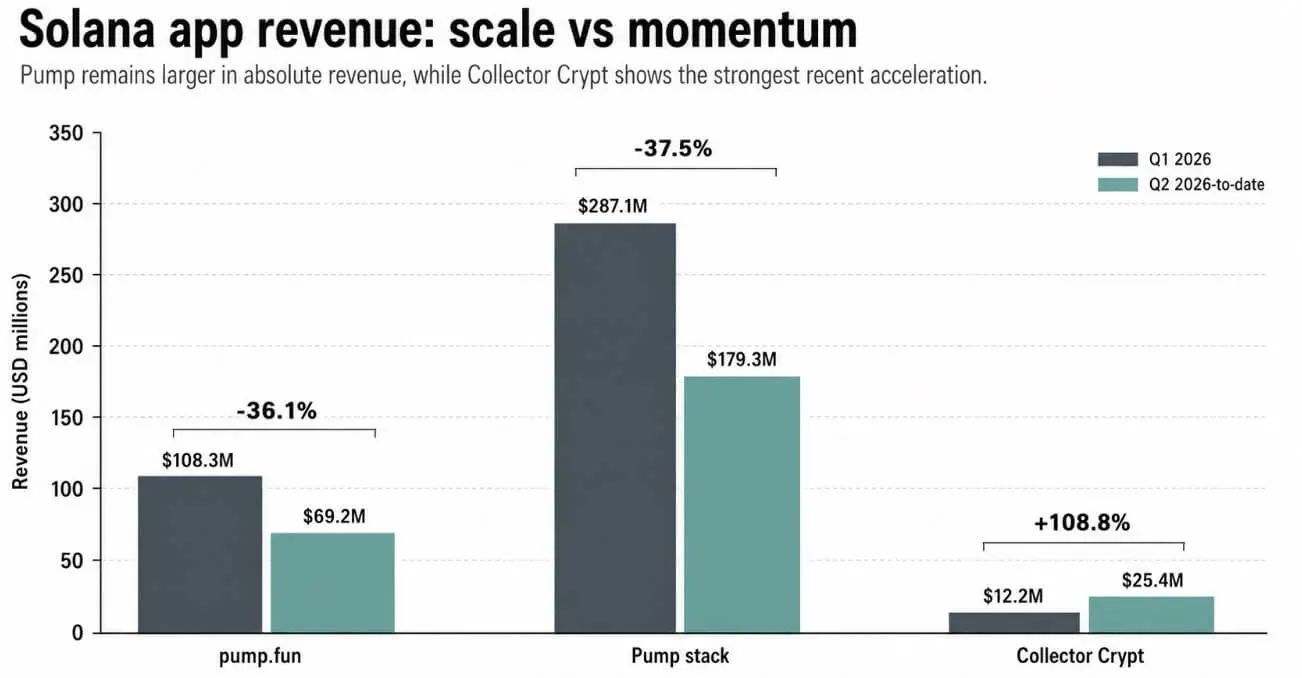
DefiLlama data shows that Pump.fun's revenue in Q1 was $108.3 million, which has dropped to $69.2 million so far in Q2, a decrease of 36.1% compared to the previous quarter. During the same period, Collector Crypt's revenue curve has clearly trended upward.

Collector Crypt's revenue in Q1 was $12.3 million, rising to $25.8 million so far in Q2, a growth of 108.8%; its recent weekly revenue reached $5.1 million, accounting for about 38% of its 30-day total revenue of nearly $13.5 million. This set of data shows that Pump.fun still has a larger scale, but Collector Crypt is gaining stronger short-term growth momentum.
Summarizing the data, perhaps it's not that Pump.fun has lost scalable growth, but rather that the sources of consumer fees on Solana are beginning to diversify. The meme coin sector remains vast, but tokenized trading cards, random card packs, physical redemption, and on-chain secondary markets are becoming another consumer scenario capable of generating real fees, real transactions, and truly retaining users.

Are Collector Crypt's Profit Sources Stable?

The core operational model of Collector Crypt is to hold physical graded trading cards in custody and mint corresponding NFTs on Solana. Users who purchase random card packs receive digital cards linked to real physical cards; they can then choose to hold the NFT, sell it on-chain, sell it back to the platform, or redeem the physical card.

Collector Crypt's revenue mainly comes from random card pack sales, secondary market transaction fees, and royalties; when calculating revenue, it also deducts buyback costs incurred when users sell cards back to the platform. Furthermore, Collector Crypt purchases trading cards in bulk, acquiring inventory at discounts of about 5% to 15%; after users open packs, if they don't want to keep the cards, they can sell them back to the platform at a price roughly 7% to 15% below market value.

This allows Collector Crypt to retain an operating profit margin of about 4% to 5%. According to estimates, for a $1,000 card pack, Collector Crypt's comprehensive profit margin is about 5.14%; after deducting incentive costs such as user rewards, the net profit margin is about 4.44%.

This model has garnered attention because it's not just about selling on-chain pictures, but about connecting on-chain transactions with real-world collectibles. Collector Crypt surpassed $1 billion in cumulative trading volume in May 2026; the platform opened over 215,000 tokenized trading card packs in a single week, and more than 30% of users have redeemed physical cards.

Solana's Revenue Ranking Has Not Fully Reversed

However, Collector Crypt has not truly replaced Pump.fun in terms of total volume. So far in 2026, Pump.fun's revenue is about $177.5 million, and the overall Pump ecosystem revenue is about $466.5 million; in comparison, Collector Crypt's 2026 revenue is about $38.1 million. In cumulative revenue, Pump.fun exceeds $1 billion, the overall Pump ecosystem is about $1.18 billion, while Collector Crypt is about $58.4 million.
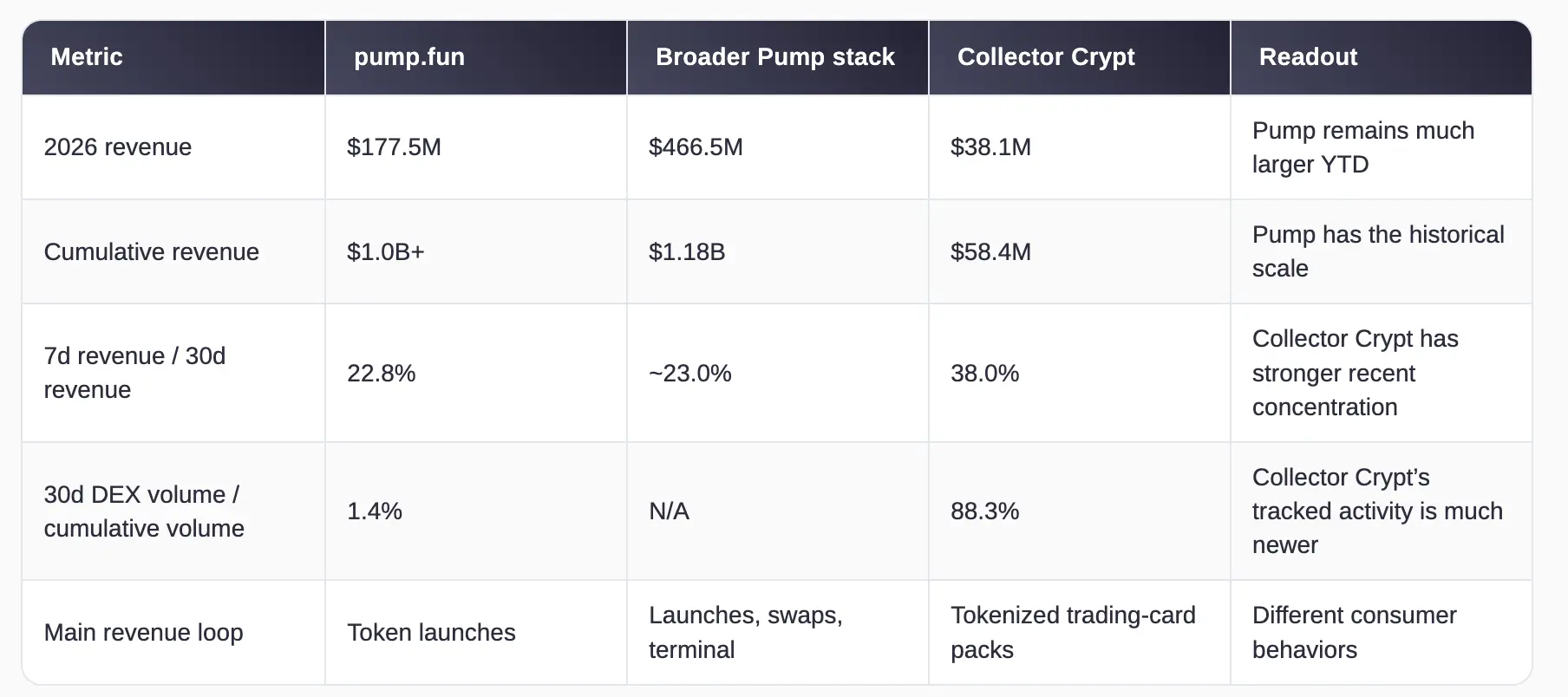
Therefore, the so-called "change of hands on the revenue throne" more accurately describes a narrative shift in recent revenue momentum and daily revenue rankings, rather than a complete reversal in historical cumulative scale.

Pump.fun's model relies on a speculative token-issuance cycle: users continuously issue new tokens, trade on early price curves, then some tokens enter public markets, generating fees at various stages. Collector Crypt's model is another type of consumer cycle: users buy random card packs, receive on-chain vouchers corresponding to physical collectibles, and then engage in on-chain trading, instant sell-back, or physical redemption. Both can generate fees, trading volume, and market attention, but they attract users for different reasons.

Pump.fun leans more towards attention, volatility, and early meme coin positions; Collector Crypt leans more towards collecting, scarcity, gamified experience, and real-world asset anchoring. This is also where the focus of the discussion about Solana's consumer applications is changing: revenue is no longer just from meme coin issuance, but can also come from collectible consumption closer to real-world assets.

Conclusion

Finally, the sustainability of Collector Crypt's revenue first depends on whether demand for random card packs can be maintained. If pack demand remains strong, Collector Crypt's 30-day revenue may continue to approach that of Pump.fun; if demand for random card packs cools, the recent high concentration of Collector Crypt's revenue could turn from a growth signal into a risk.

Additionally, the second growth variable for Collector Crypt is whether it can expand from Pokémon cards to sports cards and other collectibles. Data indicates that Pokémon cards currently dominate Collector Crypt's monthly trading volume; but at physical card shows, sports cards and Pokémon card sales are roughly split 50/50, while on-chain sports cards currently only account for 3% to 4% of Collector Crypt's $88 million monthly trading volume.

The third variable for Collector Crypt is regulatory pressure. If multiple jurisdictions begin to scrutinize the random card pack mechanism using a "loot box regulatory framework," it could slow Collector Crypt's growth.

Therefore, barring changes in the macro environment, Pump.fun will likely remain the larger revenue engine, while Collector Crypt will continue to appear at the top of Solana application revenue rankings. In this scenario, consumer application revenue on Solana will no longer rely solely on meme coin issuance but will gradually diffuse into more consumer scenarios.

The key change for Solana is not that Pump.fun has been completely replaced, but that the consumer revenue structure has broadened. Pump.fun proved that meme coin issuance can become a highly revenue-generating consumer application on Solana; Collector Crypt proves that tokenized physical collectibles can also form real revenue, real transactions, and real user behavior.


熱門幣種推薦

相關問答

QAccording to the article, what is the main difference between Pump.fun's and Collector Crypt's revenue models?

APump.fun's revenue model relies on a speculative cycle of new token issuance and early-stage trading on bonding curves, attracting users with attention, volatility, and early memecoin access. Collector Crypt's revenue model is based on a consumption cycle: users buy randomized card packs containing tokenized, real-world graded trading cards, and then engage in on-chain trading, instant buybacks, or physical redemption, focusing on collection, scarcity, gamification, and real-world asset backing.

QWhat specific reasons does the article give for Collector Crypt's recent stronger growth in revenue compared to Pump.fun?

AThe article attributes Collector Crypt's stronger recent revenue growth to its unique offering of randomized packs linked to real-world collectible trading cards, creating a 'real fee, real transaction, and real user retention' scenario. This has provided stronger short-term growth momentum, evidenced by a 108.8% increase in Q2 revenue year-over-year and recent weekly revenue accounting for 38% of its 30-day total.

QWhat are the three key variables or challenges mentioned that could affect the sustainability of Collector Crypt's growth?

AThe three key variables are: 1) Sustained demand for randomized card packs, 2) The ability to expand from Pokémon cards to other collectibles like sports cards, and 3) Potential regulatory pressure as jurisdictions may scrutinize the 'randomized pack' mechanism under 'blind box' regulatory frameworks.

QBased on the DefiLlama data cited, how do the cumulative revenues of Pump.fun and Collector Crypt compare historically?

AHistorically, Pump.fun holds a significantly larger cumulative revenue. The article states Pump.fun's cumulative revenue exceeds $1 billion, and the broader Pump ecosystem is around $1.18 billion. In contrast, Collector Crypt's cumulative revenue is approximately $58.4 million. Therefore, the shift in 'revenue throne' refers to recent momentum, not a total historical reversal.

QWhat is the article's final conclusion regarding the broader change in Solana's consumer application landscape, beyond just the competition between these two protocols?

AThe article concludes that the key change on Solana is not Pump.fun being replaced, but a broadening of the consumer application revenue structure. While Pump.fun proved memecoin issuance could generate high revenue, Collector Crypt demonstrates that tokenized physical collectibles can also create real revenue, transactions, and user engagement, indicating a diffusion of revenue sources into more diverse consumer scenarios.

你可能也喜歡

十年变迁:加密初创的消亡之路

**摘要:** 文章回顾了加密行业过去十年从自由初创到高度合规化的根本性转变。 **昔日(2017年前后):** 行业准入门槛极低,匿名开发者仅凭白皮书和代码即可通过ICO快速融资并启动项目。监管缺失,资金和合规成本近乎为零,催生了大量创新实验,但也伴随着欺诈和投资者损失,为后续严格监管埋下伏笔。 **当下(2026年):** 行业面貌已彻底改变。在欧美亚等主要市场合规运营,企业必须像传统金融机构一样,配备完整的法务、合规团队,建立反洗钱体系,并满足高昂的牌照与资本金要求(例如,在美国全面运营的前三年合规成本可达75-120万美元)。 与此同时,风险投资逻辑巨变。资金高度集中于后期成熟企业(如2026年Q1,C轮后融资占风投资金28.4%),而早期初创融资严重萎缩(种子轮仅占5.2%)。风投更偏好交易平台、借贷等基础设施,对前沿探索性项目的支持减少。 **关键壁垒与行业格局:** 技术创新的重要性下降,**合规牌照、银行合作渠道、机构客户资源和品牌信任**成为核心护城河。这导致并购成为巨头快速获取这些稀缺资源的主要方式(如Coinbase收购Deribit)。行业话语权向少数资源雄厚的老牌企业集中,新入局者面临巨大障碍。 **结论与反思:** 行业成熟化带来了机构信任和投资者保护等好处,但也显著提高了创业门槛,压缩了无资源创业者的创新空间。加密行业正复刻传统金融的整合轨迹,其最初“去中心化”和“打破垄断”的理想,正面临被高合规成本和资本壁垒所侵蚀的挑战。

Foresight News21 分鐘前

十年变迁:加密初创的消亡之路

Foresight News21 分鐘前

机器人看视频学操作,伯克利首次打通互联网视频到灵巧手真机部署链路

加州大学伯克利分校的研究团队提出了一种名为“Do as I Do”的端到端流程,首次成功实现了从互联网单目RGB视频到灵巧手真机部署的完整链路。该方法旨在解决机器人“看”视频却“不会做”的核心难题,即如何将带有噪声的日常人类操作视频,转化为多指灵巧手能够执行的动作轨迹。 系统流程分为两个阶段。第一阶段,通过引导式扩散模型,稳定地从视频中重建出4D手-物交互过程,解决了传统方法在运动模糊、遮挡下跟踪不稳定的问题。第二阶段,针对重建出的带噪声参考轨迹,改进了原有的动作重定向优化框架,通过多项设计显著提升了成功率,从25%提升至71%。 研究团队利用该方法,从网络视频中生成了涵盖放置、书写、搅拌、锤击等20类复杂日常操作的500条已验证轨迹,并选取其中10项成功部署到双UR3e机械臂与双Sharpa Wave灵巧手平台上进行50Hz的真实执行。Sharpa Wave灵巧手因其接近人手的尺度和自由度,更适合此类迁移。 研究同时指出,直接从网络海量视频中筛选可用数据至关重要,未经处理的视频中仅有约5%的片段适合用于机器人学习,并总结了一套关键的数据筛选要点。这项工作标志着将人类视频大规模转化为机器人可执行数据的关键一步,为机器人学习开辟了新的数据来源。

marsbit1 小時前

机器人看视频学操作,伯克利首次打通互联网视频到灵巧手真机部署链路

marsbit1 小時前

交易

現貨

熱門文章

什麼是 MEME 2.0

Memecoin 2.0:$MEME 2.0 在加密貨幣世界中的崛起 引言 在不斷演變的加密貨幣環境中,一個新的競爭者出現了。Memecoin 2.0,以 $MEME 2.0 為象徵,將 meme 幣的概念提升到一個令人興奮的新水平。作為原始 Memecoin 的副產品,該項目透過將焦點從典型的金融激勵轉移到引人入勝和娛樂性的體驗,吸引了加密社區的注意。Memecoin 2.0 在以太坊區塊鏈上運行,勇敢地重新定義了加密領域中的社區參與。 什麼是 Memecoin 2.0,$MEME 2.0? Memecoin 2.0 在本質上是一個優先考慮社區精神和與 meme 文化相關的趣味的加密貨幣項目。與專注於實際用例和具體利益的傳統加密貨幣不同,Memecoin 2.0 通過擁抱數字貨幣的輕鬆一面,脫穎而出。 該項目在沒有實用性承諾、結構化路線圖或財務回報的情況下存在,而是專注於培養圍繞 meme 和共享樂趣的活躍社區。通過這樣做,它利用了在線空間中日益增長的 meme 文化趨勢,使其成為數字資產世界中的獨特參與者。 Memecoin 2.0 的創造者,$MEME 2.0 儘管對 Memecoin 2.0 的起源進行了廣泛的研究,但其創造者的具體身份仍然未知。在加密社區中,這種匿名性並不罕見,許多項目由個人或團體牽頭,這些人或團體更願意隱身於幕後。創造者缺乏公開可用信息的情況可以被視為一種戰略性舉措,將焦點放在社區參與而非個人在該領域的聲譽上。 Memecoin 2.0 的投資者,$MEME 2.0 有關 Memecoin 2.0 的投資者或財務支持的信息稀少。這一細節的缺乏可能表明該項目要麼是自籌資金,要麼其對社區而非傳統投資結構的關注吸引了不同類型的支持者。由於 meme 幣的世界通常涉及更多的基層參與而非機構投資,這一做法與社區驅動項目的精神相契合。 Memecoin 2.0,$MEME 2.0 如何運作? Memecoin 2.0 完全運行在以太坊區塊鏈上,充分利用其強大的安全性和可擴展性。通過利用以太坊的優勢,Memecoin 2.0 可以為用戶交互提供一個安全的環境,同時確保交易既高效又具成本效益。 Memecoin 2.0 的一個獨特特徵在於其社區驅動的結構。$MEME 2.0 代幣的價值和流行度來自於用戶的積極參與,而不是內在的實用性。這一設計強化了該項目對加密貨幣娛樂方面的關注,這暗示著笑聲和社區參與是推動其成功的真正貨幣。 此外,該項目符合 meme 幣更廣泛的生態系統,在這裡,每個 meme 幣的價值根據文化、趨勢和社區參與而波動,而不是基於傳統的經濟原則。 Memecoin 2.0,$MEME 2.0 的時間線 為了更好地了解 Memecoin 2.0 的演變和里程碑,以下是重點突顯其歷史中的重要事件的時間線: 2024:Memecoin 2.0 被公認為原始 Memecoin 的衍生品,致力於在繁榮的 meme 幣背景中建立自己,同時在以太坊區塊鏈上運行。 2024 年 7 月 13 日:Memecoin 2.0 正式以社區為中心的 meme 幣身份確立於以太坊網絡,強調其以娛樂為中心的方式,邀請用戶參與其成長。 關於 Memecoin 2.0,$MEME 2.0 的關鍵點 幾個關鍵特徵定義了 Memecoin 2.0: 以社區為中心的方式:Memecoin 2.0 的核心任務是創造一種有趣、引人入勝的社區體驗,充分利用來自 meme 文化的集體樂趣。 建於以太坊:在以太坊區塊鏈上運行為該項目提供了基本基礎設施,確保安全性和可擴展性。 缺乏實用性或路線圖:與傳統加密貨幣截然不同,Memecoin 2.0 並不承諾任何實用功能或財務回報,重申其對社區參與和社會互動的承諾。 聚焦於 meme 文化:通過擁抱 meme 現象的幽默和文化方面,Memecoin 2.0 為用戶提供了一個在線下和在線上參與加密貨幣的平臺。 額外背景:meme 幣的意義 meme 幣已成為一個獨特的加密貨幣類別,通常受到幽默和輕鬆交易方式的驅動。這些幣通常缺乏重大的實用性或發展路線圖,吸引用戶以有趣、社區互動和文化相關性的承諾。 在更廣泛的加密生態系統中,meme 幣重新喚起了社區參與的重要性,挑戰僅以利潤為驅動的方式。像 Memecoin 2.0 這樣的項目開創了一個娛樂與財務願望可以和諧共存的時代,將區塊鏈變成創意和社交互動的遊樂場。 結論 Memecoin 2.0,或 $MEME 2.0,體現了一場新的加密貨幣浪潮,將社區參與置於嚴格的財務結構之上。專注於幽默和社交互動,它利用了圍繞 meme 文化的魅力。通過在以太坊區塊鏈上運行,Memecoin 2.0 利用這一技術的能力,同時堅定不移地致力於數字貨幣的娛樂價值。 隨著加密貨幣周圍的空間不斷演變,Memecoin 2.0 證明了數字資產的未來很可能寄託在共享體驗、笑聲和穩固的社區聯繫上。在這個不可預測的加密世界中,也許快樂和傳統財務收益一樣有價值。

201 人學過發佈於 2024.04.04更新於 2024.12.03

什麼是 MEME 2.0

如何購買MEME

歡迎來到HTX.com!在這裡,購買Memeland (MEME)變得簡單而便捷。跟隨我們的逐步指南,放心開始您的加密貨幣之旅。第一步:創建您的HTX帳戶使用您的 Email、手機號碼在HTX註冊一個免費帳戶。體驗無憂的註冊過程並解鎖所有平台功能。立即註冊第二步:前往買幣頁面,選擇您的支付方式信用卡/金融卡購買:使用您的Visa或Mastercard即時購買Memeland (MEME)。餘額購買:使用您HTX帳戶餘額中的資金進行無縫交易。第三方購買:探索諸如Google Pay或Apple Pay等流行支付方式以增加便利性。C2C購買:在HTX平台上直接與其他用戶交易。HTX 場外交易 (OTC) 購買:為大量交易者提供個性化服務和競爭性匯率。第三步:存儲您的Memeland (MEME)購買Memeland (MEME)後,將其存儲在您的HTX帳戶中。您也可以透過區塊鏈轉帳將其發送到其他地址或者用於交易其他加密貨幣。第四步:交易Memeland (MEME)在HTX的現貨市場輕鬆交易Memeland (MEME)。前往您的帳戶,選擇交易對,執行交易,並即時監控。HTX為初學者和經驗豐富的交易者提供了友好的用戶體驗。

661 人學過發佈於 2024.12.12更新於 2026.06.02

如何購買MEME

相關討論

歡迎來到 HTX 社群。在這裡,您可以了解最新的平台發展動態並獲得專業的市場意見。 以下是用戶對 MEME (MEME)幣價的意見。

活动图片