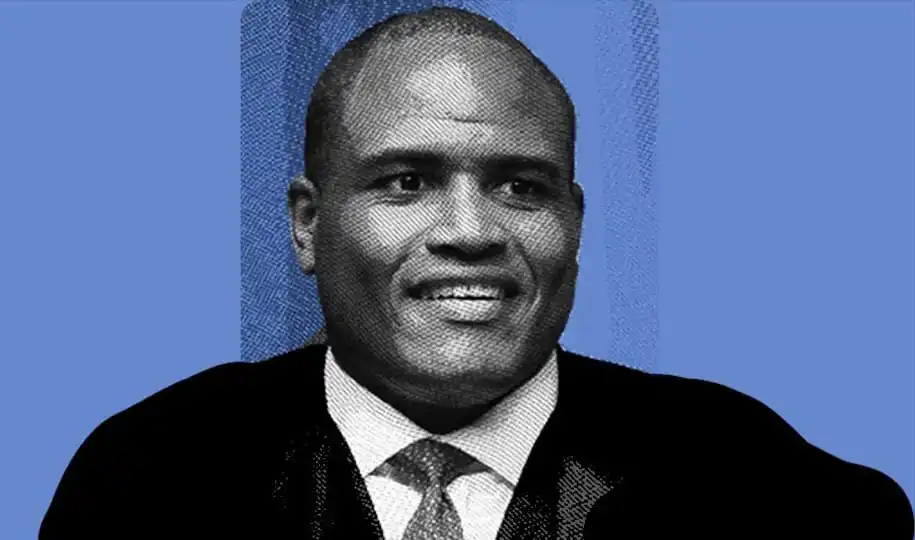
In a CoinStories interview with Nathalie Brunell, Jeff Park, Head of Alpha Strategies at Bitwise Asset Management, argued that US sovereign Bitcoin holdings are a matter of “when,” not “if”—but only via a deliberate, legislated process and likely in concert with key allies.
Park stated plainly: “It will be inevitable that governments will buy Bitcoin on their balance sheet. This is something I feel very strongly,” adding that advocates should “be patient” because it is “not likely a rogue decision.”
He drew a firm distinction between an executive action and a durable national policy: “There’s a difference between an executive order mandate to buy Bitcoin as a strategic asset versus a congressional mandate,” he said. Executive orders are “volatile” and “can be turned by the next administration,” whereas a legislated strategic reserve “embed[s] the mandate of the people.”
Why The US Bitcoin Reserve May Hinge On Japan
Crucially, Park framed the US Bitcoin reserve as an allied, not unilateral, project. The United States, he said, operates within an economic “social contract” with partners such as Japan. A surprise US pivot into BTC would risk trust: “It would be a slight betrayal of that social contract if you were to stuff, let’s say, Japan with all your long-dated Treasury bonds and then didn’t give them a heads up and just bought Bitcoin on your own.”
As a practical indicator, he flagged Tokyo: “I think Japan is the one you should be paying attention to… Once you start seeing Japan embrace Bitcoin then I do think we’re ready for that dialogue to happen at the country levels.”
Park also cautioned that sovereign BTC seen today mostly reflects legal seizures rather than market accumulation.
“Most of the core treasury holdings of sovereigns have so far come from seizures or forfeitures,” he said, citing the US and China. He dismissed coercive domestic takings as inconsistent with US norms: using eminent domain against a compliant private entity would cross a line “the US generally is not on that side of history for.”
Open-market accumulation at scale, meanwhile, would be price-disruptive. Instead, he pointed to a more American pathway through market structures and public-private alignment: “If you think about the construct of Fannie Mae and Freddie Mac… you could still have a private entity that is able to extend credit for the American people,” suggesting that “Bitcoin treasury companies can be… private, yes, but aligned with kind of the national mission.”
Park’s monetary rationale threads these points together. Post-2008 policy has elevated “abundant reserves” and technocratic rate-setting, making scarce collateral strategically valuable. Within that context, he said, “Bitcoin is the scarcest, hardest asset known to man and it is the social covenant that I think will supersede the dollar as we’ve known it in a way that hopefully in the future will be synergistic for both American exceptionalism.”
Park’s conclusion is exacting rather than speculative: governments buying Bitcoin is “inevitable,” but a US move requires congressional authorization, signaling and coordination with allies—particularly Japan—and institutional mechanisms capable of execution at size without violating core property-rights norms.
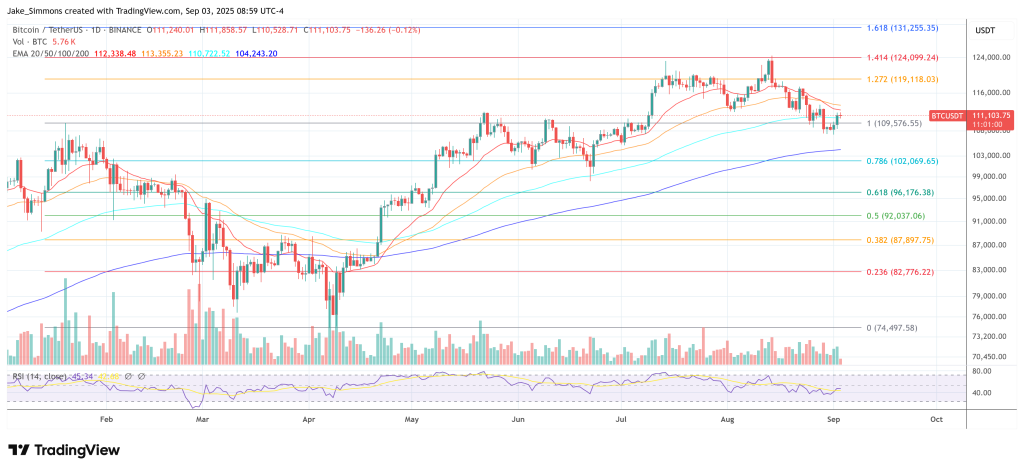
At press time, BTC traded at $111,103.

Related Posts