USD1 Hits $5 Billion Market Cap As Trump Hails ‘Built In America’ Stablecoin

bitcoinist发布于2026-01-31更新于2026-01-31

文章摘要

USD1, a stablecoin issued by World Liberty Financial, has surpassed a $5 billion market cap, becoming one of the largest dollar-pegged tokens. It maintained its $1 peg despite increased market interest, aided by new exchange listings and incentives. The milestone was celebrated by the Trump family on social media, boosting mainstream attention. Growth was driven by improved liquidity, institutional adoption, and large fund movements. However, questions remain about reserve transparency and regulatory compliance, with the issuer seeking a U.S. banking charter. Notably, while USD1 thrived, other related speculative tokens fell sharply, highlighting a market shift toward stability over volatility.

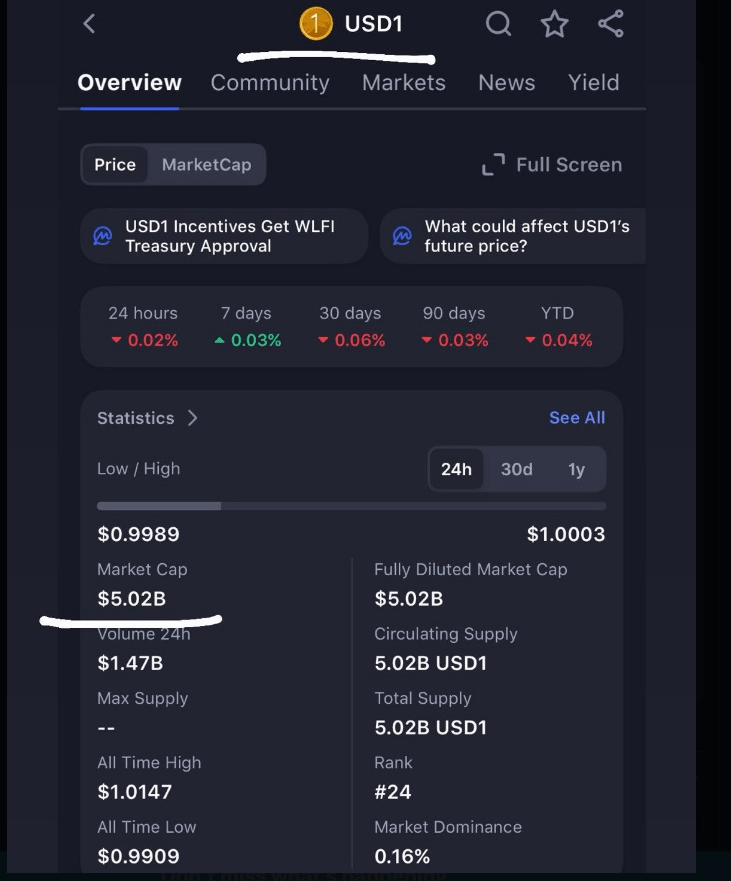
USD1 has pushed past a $5 billion market cap, a rapid climb that has attracted wide attention across crypto markets. Reports say the stablecoin, issued by World Liberty Financial, now ranks among the largest dollar-pegged tokens.

Trading has stayed close to the $1 peg even as overall market interest spiked. Some exchanges have added new pairs and incentives, which helped volume swell over recent weeks.

Market Milestone Reached

Reports note that members of the Trump family celebrated the milestone on social feeds, calling USD1 “Built in America.” US President Donald Trump was quoted praising the token as an example of American engineering and finance coming together.

That message boosted mainstream interest and brought a fresh round of headlines. At the same time, other tokens linked to the same circle have fallen sharply, showing mixed fortunes across related projects.

How The Coin Grew

Liquidity and listings matter. Based on exchange disclosures, USD1 gained listings and earning programs that made the stablecoin easier for traders and institutions to hold massive balances.

This lowered technicalities for movement and helped the coin’s market valuation rise quickly. On-chain activity shows large inflows at times, while prices stayed steady around the dollar peg.

Reports say some big holders moved funds between platforms, which pushed reported market cap numbers higher on public trackers.

Trust And Regulation

There remain some queries over transparency in reserves, along with some queries from banking regulators and observers about a clearer audit and a specific banking arrangement for issuance.

Total crypto market cap currently at $2.78 trillion. Chart: TradingView

According to reports, the issuer has applied for charter and is taking steps to be in compliance with US requirements. While this has reassured some of the investors, others claim they still need proof to gain their trust.

The regulatory angle is shaping future plans for expansion and institutional use.

Comparisons And Contrast

USD1’s rise has not lifted every project tied to the same names. One meme token linked to the group dropped more than 90% from its peak.

Investors are splitting between stable, utility-style holdings and speculative bets that have lost steam. Reports say the stablecoin’s steady peg made it attractive to users fleeing volatility elsewhere.

This split highlights a broader shift: some money prefers a token that holds value closely to the dollar, while other funds chase quick gains.

Featured image from Unsplash, chart from TradingView

相关问答

QWhat is the current market cap of the USD1 stablecoin and why has it attracted attention?

AThe USD1 stablecoin has reached a market cap of $5 billion, attracting wide attention due to its rapid growth and its position as one of the largest dollar-pegged tokens.

QWhich company issued the USD1 stablecoin and how did the Trump family react to its milestone?

AThe USD1 stablecoin was issued by World Liberty Financial. Members of the Trump family, including Donald Trump Jr., celebrated the $5 billion market cap milestone on social media, hailing it as 'Built in America'.

QWhat are two key factors that contributed to the rapid growth of USD1's market valuation?

ATwo key factors were increased liquidity through new exchange listings and earning programs, which made it easier for traders and institutions to hold large balances, and large on-chain inflows that pushed the reported market cap higher.

QWhat are some of the regulatory concerns or queries surrounding the USD1 stablecoin?

AThere are queries over the transparency of its reserves and calls from banking regulators and observers for a clearer audit and a specific banking arrangement for its issuance. The issuer has applied for a charter and is taking steps to comply with US requirements.

QHow does the performance of USD1 contrast with other tokens linked to the same group, and what does this highlight?

AWhile USD1 has grown steadily, other tokens like a related meme coin dropped over 90% from its peak. This contrast highlights a broader market shift where some investors prefer stable, utility-style holdings, while others chase speculative, volatile bets.

你可能也喜欢

为什么美国没有出现“花呗”、“借呗”?

马斯克近期提及X Money计划,再次凸显美国缺乏像微信支付或支付宝那样的一站式支付平台,同时也引发疑问:为何美国没有发展出类似“花呗”、“借呗”这样庞大的信用贷和消费贷产品? 美国金融底层存在显著需求。FDIC 2023年数据显示,约560万家庭无银行账户,1900万家庭银行服务不足;美联储2024年报告指出,年收入低于2.5万美元的成年人中22%无银行账户。这些人因资金不足或不信任银行系统而依赖现金,甚至不得不使用年化利率高达400%的发薪日贷款。此外,“先用后付”服务虽在年轻群体中增长,但用户规模相对较小,传统银行也在快速跟进类似功能。 信用卡体系在美国占据主导地位:约70%-80%成年人持有信用卡,未偿余额达1.28万亿美元,平均年化利率22.3%。2024年消费者支付了1600亿美元利息。信用卡生态依赖交叉补贴——无法全额还款的用户以高利率补贴全额还款者,形成“合法掠夺性贷款”体系。 美国未能发展出互联网小额信贷的原因是多方面的: 1. 严苛且碎片化的监管体系(联邦与州双轨制),合规成本极高,保护了银行而非消费者; 2. 严格的数据法律(如FCRA、CCPA)禁止科技公司将用户行为数据直接用于信贷风控; 3. 资本市场对互联网公司涉足金融业务给予估值惩罚,因金融业务被视为重资产、低增长; 4. 信贷定价权被大型银行集团(如JPMorgan、Bank of America)垄断,它们通过游说和行为惯性维持高利率信用卡生态。 综上,监管、数据法律、资本估值和银行巨头共同阻断了互联网小额信贷在美国的发展路径。

Odaily星球日报1小时前

为什么美国没有出现“花呗”、“借呗”?

Odaily星球日报1小时前

交易

现货
合约
活动图片