Jensen Huang announced on a podcast that "we have achieved AGI," Eighty percent of US AI startups are running Chinese open-source models. The technological revolution is accelerating, and so are the cracks.
1| Jensen Huang Announces "I Think We Have Achieved AGI," Then Spends Half an Hour Explaining Why AI-Generated Content Isn't Trash
NVIDIA CEO Jensen Huang made a judgment on the Lex Fridman podcast that no one in the industry dares to utter lightly. When Fridman asked, "How far are we from an AI that can found and run a billion-dollar company?" Huang replied, "I think it's now. I think we have achieved AGI." He cited the popularity of the open-source Agent platform OpenClaw as evidence, while also admitting that such systems might create short-term value rather than lasting enterprises.
This statement sets him apart from his peers who have been busy distancing themselves from the term AGI in recent months. OpenAI and Microsoft have clauses in their contracts triggered upon the achievement of AGI, and Huang chose this moment to shout it out. The person announcing AGI sells GPUs; his motives need no guessing.
In the same episode, he also defended DLSS 5. This generative graphics enhancement technology, collectively criticized by the gaming community as "AI garbage," was called an "artist-guided optional enhancement" by Huang. Announcing that AGI has arrived while explaining why AI-generated content isn't trash—this juxtaposition is the most precise snapshot of the current AI narrative.
(Source: Lex Fridman Podcast / The Verge / Ars Technica / Tom's Hardware)
2| Eighty Percent of US AI Startups Are Running Chinese Models, But the Pentagon Aims Its Guns at Anthropic
A report from the US-China Economic and Security Review Commission provided a glaring number: approximately 80% of US AI startups are using Chinese open-source models. Models from Alibaba, Moonshot AI, and MiniMax already dominate the global rankings on HuggingFace and OpenRouter. The committee warned that this is forming a "self-reinforcing competitive advantage," with the open-source ecosystem and manufacturing data creating a dual cycle, allowing them to approach the cutting edge even under chip restrictions.
Last week's Cursor incident is the most specific case. When the AI programming tool, valued at $29.3 billion, launched Composer 2 and claimed a self-developed breakthrough, developers discovered through API debugging within hours that the underlying model was Moonshot AI's Kimi K2.5. The co-founder admitted that not disclosing the base model was a mistake.
Meanwhile, the Pentagon labeled Anthropic a "supply chain risk." Senator Warren sent a letter to the Defense Secretary calling this a "retaliatory act," pointing out that the contract could simply be terminated without using a punitive label. The real supply chain risk isn't in Anthropic's contract terms; it's in the model dependencies of 80% of startups.
(Source: US-China Economic and Security Review Commission / VentureBeat / TechCrunch / Reuters)
3| IEA Chief: Iran Crisis More Severe Than the Two 1970s Oil Shocks Combined, Putin is the Biggest Winner
IEA Chief Fatih Birol gave a quantitative comparison at the Australian National Press Club. The 1973 and 1979 oil crises together caused a global loss of about 10 million barrels per day in supply; the current Iran crisis is about 11 million barrels per day. Natural gas losses are about 140 billion cubic meters, nearly double that of the Russia-Ukraine conflict. Energy assets in at least 40 locations across 9 Middle Eastern countries are severely damaged. Chevron's CEO was more direct at CERAWeek, saying oil prices "have not yet fully reflected" the actual shortage.
The biggest beneficiary of this crisis is not in the Middle East. According to CREA data, Russia's fossil fuel exports brought in about $7 billion in the first two weeks of March. Urals crude soared from about $57/barrel to nearly $100, almost on par with Brent, erasing the long-term discount. Trump's 30-day sanctions waiver (expiring April 11th) allows countries to purchase Russian oil already in transit. Treasury Secretary Yellen claimed it would not bring "significant financial benefit," while analysts called the restriction "almost unenforceable."
(Source: IEA / Fortune / Al Jazeera / CNBC / Guardian / CREA)
4| Fink's Annual Letter: AI Will Widen Wealth Inequality, the Cure is to Get More People Investing
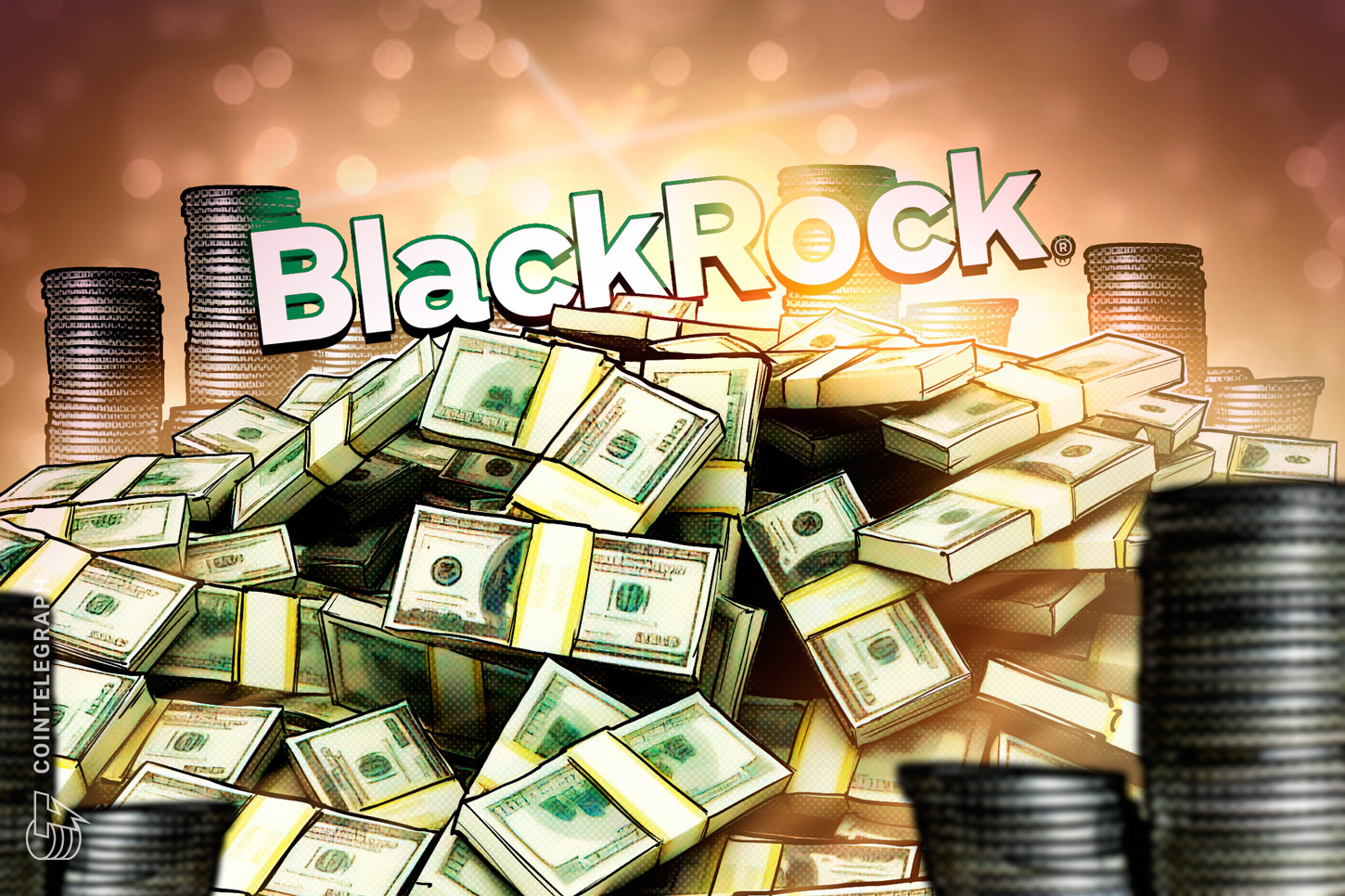
BlackRock CEO Larry Fink placed AI at the center of the inequality narrative in his annual letter to investors. His core argument: the vast wealth created in past generations primarily flowed to those who already held financial assets, and the AI boom will accelerate this trend. If market participation isn't broadened, the dividends will only make the rich richer.
Fink's solution comes with a clear product logic. He suggested establishing a government retirement investment fund of about $1.5 trillion, operating in parallel with the existing Social Security trust fund. He also pointed to tokenization as a key tool for expanding market access. This happens to be BlackRock's core business bet in recent years. When the person managing $11.6 trillion in assets says "get more people investing," it translates to "get more people's money flowing into the products I manage."
The signal isn't just from BlackRock. On the same day, Bloomberg reported that JPMorgan launched a new tool to help clients hedge AI-related debt risks. When Wall Street starts pricing hedging products for an AI bubble, the threshold of being "big enough to short" is not far away.
(Source: BlackRock Annual Letter / CNN / Reuters / Bloomberg)
5| Altman Steps Down as Helion Board Chairman, OpenAI Negotiates Nuclear Fusion Power Purchase Agreement
Sam Altman has stepped down as Chairman of the board of nuclear fusion company Helion Energy to allow OpenAI to negotiate a power purchase agreement as an independent buyer. According to TechCrunch, the proposed agreement would give OpenAI 12.5% of Helion's total power generation, corresponding to 5 GW by 2030 and 50 GW by 2035.
A few weeks ago, Altman admitted "data centers are hard" after a Texas data center outage, and subsequently pulled back from infrastructure self-building. The signal is clearer now: OpenAI does not intend to solve the energy bottleneck within the traditional grid framework but is betting on nuclear fusion, which is not yet commercialized. The 2030 target of 5 GW means Helion needs to go from the lab to large-scale power generation in less than four years—something no nuclear fusion company has ever achieved.
Altman previously served simultaneously as Helion Chairman and OpenAI CEO; the decision-maker for the seller and the buyer was the same person. Resignation was a prerequisite for the deal to proceed and means commercialization is near enough to require handling conflicts of interest. Betting on nuclear fusion looks less like science fiction and more like a hedge when traditional energy is losing 11 million barrels per day due to the Iran crisis.
(Source: TechCrunch / CNBC / Axios)
Also Worth Knowing ↓
According to the New York Times, Trump established a "Pax Silica" fund to reduce dependence on foreign chips. This multilateral framework already includes eight countries including the US, Japan, South Korea, and Singapore, with India joining in February. On the same day, Musk announced that SpaceX and Tesla will build an advanced chip factory in Austin. (Source: NYT / Reuters)
The CEOs of Kalshi and Polymarket jointly invested in a $35 million prediction market VC fund on the same day the Senate introduced a bipartisan bill to ban sports prediction on prediction markets. The fund is named 5c(c) Capital, founded by an early Kalshi employee. The two companies are fierce product competitors but reached an agreement on betting on the sector. (Source: Fortune / TechCrunch / WSJ)
Luma AI released the Uni-1 image generation model, surpassing Google and OpenAI on several benchmarks with 30% lower cost. Google's Nano Banana series had been the undisputed leader for months; Luma entered the image generation赛道 from video tools and directly rewrote the rankings. (Source: VentureBeat)
Apple announced WWDC 2026 will open on June 8, teasing "AI progress." After last year's visual redesign, Apple Intelligence needs to deliver on the long-delayed Siri upgrade promise. (Source: TechCrunch / The Verge)
Strategy restored potential Bitcoin purchasing power to $42 billion, purchasing $76 million worth of BTC last week through the sale of common stock. The previous week, it bought using $1.6 billion raised from STRC preferred stock financing. The buying pace hasn't slowed due to market turmoil. (Source: CoinDesk / Fortune)
According to Bankless, two US senators and the White House have reached a "principled agreement" on stablecoin yield provisions. This is another step in the transition from "regulation by enforcement" to "regulation by rules" for crypto oversight. (Source: Bankless)