Understanding Jensen Huang's Physical AI: Why Is Crypto's Opportunity Also Hidden in the 'Nooks and Crannies'?

marsbit发布于2026-01-23更新于2026-01-23

文章摘要

Jensen Huang's recent speech at Davos signals a pivotal shift in AI: the transition from the training-focused "brute force" era of AI 1.0 to the new paradigm of "Physical AI" and inference. This marks the next phase after Generative AI, focusing on real-world application and embodiment. Physical AI aims to solve the "last-mile" problem of AI: moving from digital intelligence to physical action. While LLMs have consumed vast digital data, they lack understanding of the physical world—like how to twist open a bottle cap. Physical AI requires three core capabilities: 1. Spatial Intelligence: AI must perceive and interpret 3D environments in real-time, understanding object properties, depth, and interaction dynamics. 2. Virtual Training Grounds: Systems like NVIDIA’s Omniverse enable simulation-to-real (Sim-to-Real) training, allowing robots to learn through vast virtual iterations without costly physical failures. 3. Electronic Skin and Touch Data: Sensors that capture tactile feedback—temperature, pressure, texture—are critical. This data is a new, untapped asset class. This shift opens significant opportunities for Crypto and Web3 ecosystems. DePIN networks can crowdsource hyperlocal spatial data from "every corner" of the world through token incentives. Distributed computing networks can provide edge-based rendering and inference power for low-latency physical responses. Tokenized data ownership and privacy-preserving sharing mechanisms can enable the scalable, ethical col...

What did Jensen Huang actually say at the Davos Forum?

On the surface, he was promoting robotics, but in reality, he was initiating a bold 'self-revolution.' With one speech, he ended the old era of 'stacking GPUs,' yet unexpectedly handed the Crypto sector a once-in-a-lifetime opportunity?

Yesterday, at the Davos Forum, Huang pointed out that the application layer of AI is exploding, and the demand for computing power will shift entirely from the 'training side' to the 'inference side' and the 'Physical AI side.'

This is very interesting.

As the biggest winner in the 'computing arms race' of the AI 1.0 era, NVIDIA is now actively advocating for a shift toward 'inference' and 'Physical AI,' sending a very clear signal: the era of 'brute force miracles' by stacking GPUs to train large models is over. From now on, AI competition will revolve around the 'application-first' principle for real-world implementation.

In other words, Physical AI is the second half of Generative AI.

Because LLMs have already read all the data accumulated by humans on the internet over decades, but they still don’t know how to twist open a bottle cap like a human. Physical AI aims to solve the problem of 'unity of knowledge and action' beyond AI’s intellectual capabilities.

The reason is simple: Physical AI cannot rely on the 'long reflex arc' of remote cloud servers. If ChatGPT is one second slower in generating text, you might just feel a lag. But if a bipedal robot is one second slower due to network latency, it might fall down the stairs.

However, while Physical AI seems like a continuation of generative AI, it actually faces three entirely new challenges:

1) Spatial Intelligence: Enabling AI to understand the three-dimensional world.
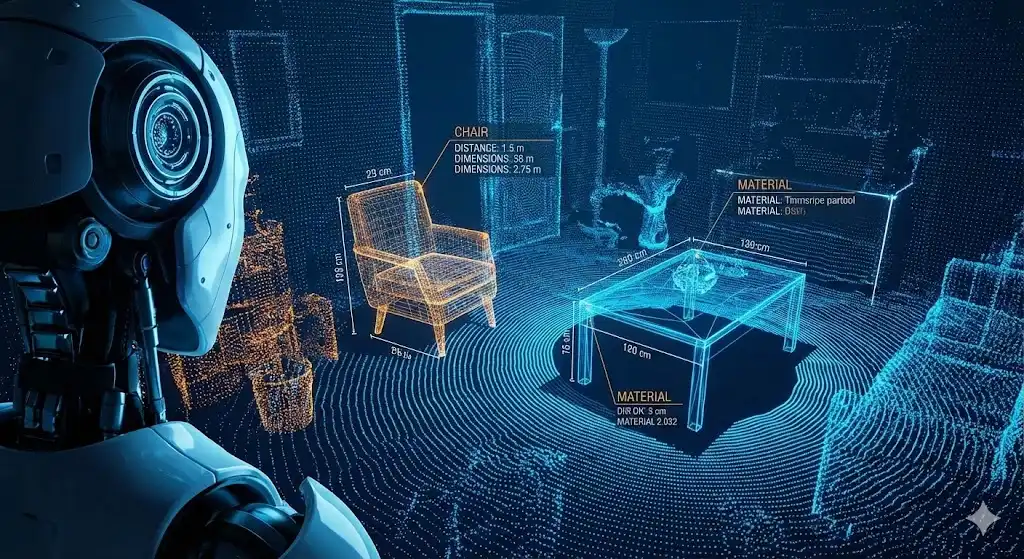
Professor Fei-Fei Li once proposed that spatial intelligence is the next North Star for AI evolution. For robots to move, they must first 'see' the environment. This isn’t just about recognizing 'this is a chair,' but understanding 'the chair’s position in 3D space, its structure, and how much force I should use to move it.'

This requires massive, real-time, 3D environmental data covering every corner, both indoors and outdoors;

2) Virtual Training Grounds: Allowing AI to train through trial and error in simulated worlds.
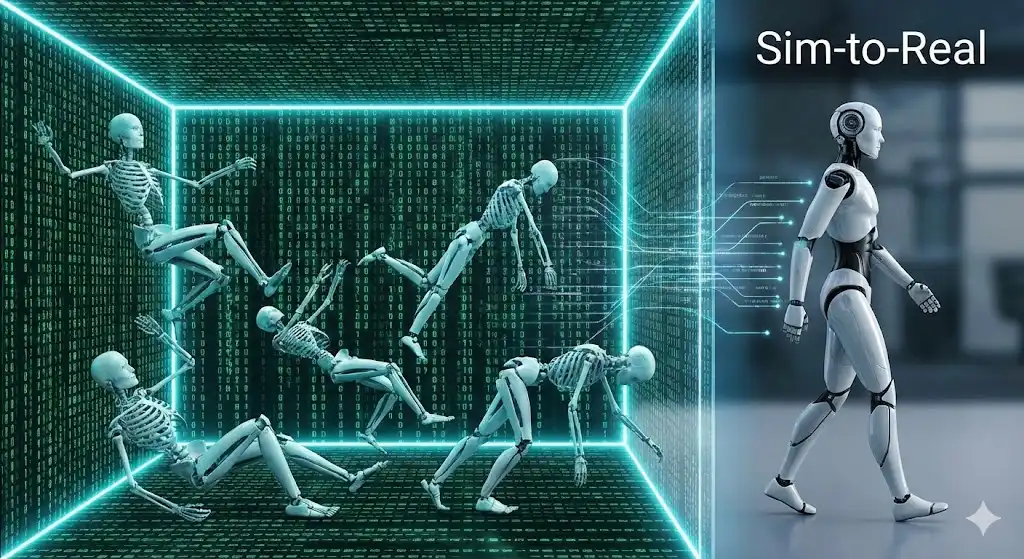
The Omniverse mentioned by Jensen Huang is essentially a 'virtual training ground.' Before entering the real physical world, robots need to train 'falling ten thousand times' in a virtual environment to learn how to walk. This process is called Sim-to-Real, or simulation to reality. If robots were to trial-and-error directly in the real world, the hardware wear-and-tear costs would be astronomically high.

This process demands an exponential increase in the throughput requirements for physics engine simulation and rendering computing power;

3) Electronic Skin: 'Tactile Data'—A Gold Mine Waiting to Be Mined.
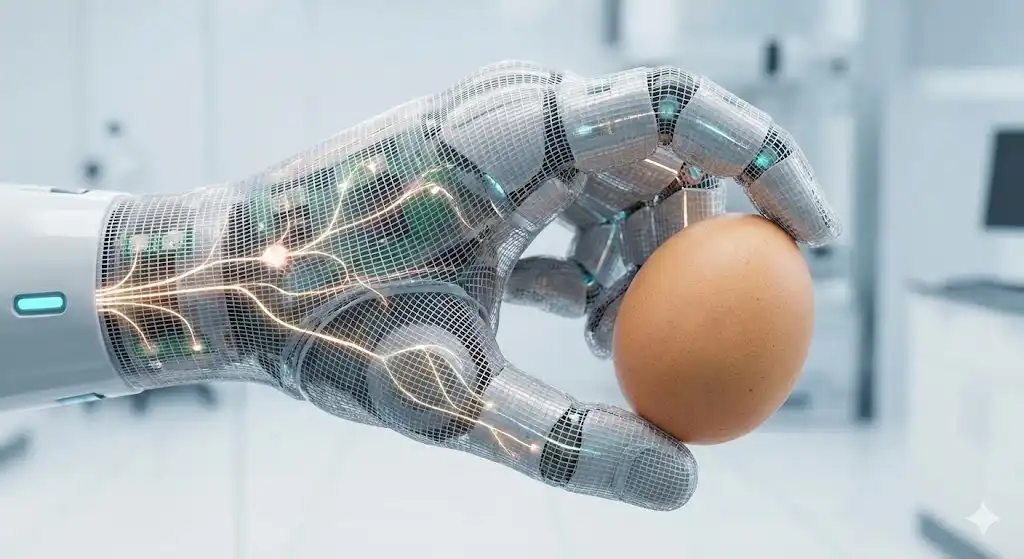
For Physical AI to have a 'sense of touch,' it needs electronic skin to perceive temperature, pressure, and texture. This 'tactile data' is a brand-new type of asset that has never been collected on a large scale before. This may require large-scale sensor deployment. At CES, Ensuring company demonstrated 'mass-produced skin' with a single densely packed hand integrating 1,956 sensors, enabling the robot to perform miracles like peeling an egg.

This 'tactile data' is a brand-new type of asset that has never been collected on a large scale before.

After reading this, you might feel that the emergence of the Physical AI narrative gives a significant opportunity for wearable devices, humanoid robots, and other hardware devices to shine—要知道, these were largely dismissed as 'big toys' just a few years ago.

Actually, I want to say that in the new landscape of Physical AI, the Crypto sector also has an excellent opportunity to fill ecological gaps. Let me give a few examples:

1. AI giants can deploy street-view cars to scan every main street in the world, but they can’t collect data from the nooks and crannies of streets, residential complexes, and basements. By using Token incentives provided by DePIN network devices to mobilize global users to supplement this data with their personal devices, it’s possible to fill these gaps;

2. As mentioned earlier, robots cannot rely on cloud computing power, but to utilize edge computing and distributed rendering capabilities on a large scale in the short term, especially for Sim-to-Real data processing. By leveraging distributed computing networks to pool and schedule idle consumer-grade hardware, it can be put to good use;

3. 'Tactile data,' besides requiring large-scale sensor applications, by its very name, will be extremely private. How to incentivize the public to share this privacy-sensitive data with AI giants? A feasible path is to allow data providers to obtain data ownership and profit-sharing rights.

To sum up:

Physical AI is the second half of the web2 AI赛道 that Huang has called for. For the web3 AI + Crypto sectors, such as DePIN, DeAI, DeData, isn’t it the same? What do you think?


热门币种推荐

相关问答

QWhat is Physical AI according to Jensen Huang's speech at the Davos Forum?

APhysical AI is the next phase of Generative AI, focusing on enabling AI to interact with and operate in the physical world. It addresses the 'integration of knowledge and action' by allowing AI to understand 3D environments, simulate actions in virtual training grounds, and process tactile data through electronic skin, moving beyond pure data training to real-world application.

QWhy does Physical AI require a shift from cloud-based computing to edge or distributed systems?

APhysical AI cannot rely on distant cloud servers due to latency issues. For example, a delay of one second might be acceptable for text generation by ChatGPT, but it could cause a bipedal robot to fall down stairs. Real-time responsiveness is critical, necessitating edge computing or distributed networks to reduce latency and ensure reliable operation in physical tasks.

QHow can Crypto and DePIN networks contribute to Physical AI development?

ACrypto and DePIN (Decentralized Physical Infrastructure Networks) can help by incentivizing global users to collect spatial data from hard-to-reach areas (e.g., alleys, basements) using token rewards. They can also leverage distributed computing resources for simulation training and rendering, and enable privacy-preserving data sharing through tokenized incentives for tactile data contribution and ownership.

QWhat are the three key challenges mentioned for Physical AI?

AThe three key challenges are: 1) Spatial Intelligence - AI must understand 3D environments, including object positions and physical interactions; 2) Virtual Training Grounds - AI requires simulated environments (e.g., Omniverse) for cost-effective trial-and-error training; 3) Electronic Skin - AI needs sensors to collect tactile data (e.g., pressure, temperature) for fine motor skills, which is a new type of data asset.

QWhy is tactile data important for Physical AI, and how can it be collected ethically?

ATactile data (e.g., pressure, texture, temperature) is crucial for Physical AI to achieve 'hand-eye coordination' and perform delicate tasks like handling objects. It can be collected ethically using token-based incentives in Crypto ecosystems, where contributors are rewarded for sharing data while maintaining privacy and data ownership rights, ensuring fair compensation and control over personal information.

你可能也喜欢

CPU杀回牌桌,一场1700亿美元的“上位”大戏开启

英伟达在2026年台北电脑展上首次发布独立CPU产品线Vera CPU,标志着其业务重心从GPU向更广阔的计算领域扩展。CEO黄仁勋指出,在AI智能体时代,CPU已成为数据中心性能的关键瓶颈。与此同时,AMD将服务器CPU市场规模预测大幅上调至1200亿美元以上,行业预测其潜在市场规模将在2030年达到约1700亿美元。 市场格局正在发生变化。2026年一季度,AMD在服务器CPU收入份额上逼近英特尔,显示出高核数产品的强大溢价能力。分析指出,AI发展正从训练转向推理和智能体阶段,后者需要频繁进行复杂控制流、工具调用和数据处理,这些任务严重依赖CPU而非GPU。在智能体任务中,GPU利用率可能低于50%,而CPU工作量占比可达七成以上。这导致CPU与GPU的配比从过去的1:8显著收敛至1:4甚至1:1。 需求变化直接推动了十多年来首次大规模涨价,英特尔和AMD服务器CPU价格普遍上涨10%-15%,且出现产能紧张。市场分化为配合GPU的高核数CPU和用于智能体任务编排的中核数批量CPU两类需求。 英伟达基于ARM架构的Vera CPU入局,进一步凸显了CPU的战略地位。这对中国CPU产业链既是机遇也是挑战。国产CPU厂商如海光信息、华为鲲鹏等,既受益于全球AI需求增长,也面临信创政策带来的国产替代窗口期。行业共识是,AI大规模落地的关键已从单芯片性能转向CPU与GPU的协同能力。

marsbit4小时前

CPU杀回牌桌,一场1700亿美元的“上位”大戏开启

marsbit4小时前

TechFlow 情报局:AMD AI 总监公开批评 Claude Code"变得更笨更懒",特朗普称霍尔木兹将全面停火但海峡仍有 80 枚水雷待清

**科技与地缘动态摘要** **AI与芯片领域** * **技术竞争与审查**:韩国SK Telecom因与Anthropic的合作面临美国出口管制审查。与此同时,中国Z.AI发布了不依赖英伟达芯片、性能对标Claude Opus的GLM-5.2大模型,引发关于技术围堵效果的讨论。 * **安全与伦理问题**:Google Gemini被曝在诈骗场景中提供误导建议,引发AI安全担忧。GitHub上发现上万个分发木马的仓库,开源供应链安全敲响警钟。 * **行业动态**:亚马逊正洽谈对外出售其自研AI芯片,意图进军市场。苹果据悉将为特殊版iPhone独享台积电最新制程工艺。0G Labs宣布其链上AI推理总量突破重要里程碑。 * **争议与监管**:AMD AI总监公开批评Claude Code性能下降。多名亚马逊工程师因批评公司AI数据中心扩张的环境影响遭内部调查。微软、亚马逊云服务或面临欧盟严厉反垄断审查。 **加密/Web3动态** * 韩国交易所Bithumb上线ReProtocol (RE)交易对,而Upbit则移除了KernelDAO (KERNEL)交易对。 **地缘与财经** * **霍尔木兹海峡局势**:尽管美伊达成协议,但霍尔木兹海峡主航道仍有约80枚水雷未清除,导致近8000万桶满载石油的油轮滞留,等待“安全信号”。伊朗取消了赴瑞士外交行程,和谈前景不明。特朗普称协议是伊朗“无条件投降”,并宣称总统拥有无限权力。 * **美股表现**:美股半导体板块大涨,英特尔因与苹果合作传闻暴涨10.6%,而SpaceX股价下跌3.5%。 **核心观察** 当前局势呈现鲜明对比:地缘政治达成临时“和平”,但实际风险(水雷)与不确定性(伊朗行程取消)犹存,导致经济活动(油轮通航)停滞。与此同时,科技领域的竞争与重构却在加速进行,从芯片自主研发、AI模型突破到供应链安全,科技公司正以另一种方式重塑全球格局。

marsbit4小时前

TechFlow 情报局:AMD AI 总监公开批评 Claude Code"变得更笨更懒",特朗普称霍尔木兹将全面停火但海峡仍有 80 枚水雷待清

marsbit4小时前

交易

现货
合约

热门文章

加密市场宏观研报:原油飓风、AI巨浪与比特币的十字路口

全球金融市场正经历一场由地缘冲突引发的系统性重估:霍尔木兹海峡封锁导致原油一度暴涨30%,G7紧急释放储备后涨幅收窄,滞胀风险取代通胀成为核心担忧,美元成为“唯一避风港”并逼近100大关,亚太及美股遭遇“黑色星期一”全线重挫;AI领域则冰火两重天,国家发改委提出“十五五”末10万亿规模目标,OpenClaw项目火爆推动概念股狂飙;比特币在宏观风暴中跌破70000美元关键防线。

583人学过发布于 2026.03.12更新于 2026.03.12

加密市场宏观研报:原油飓风、AI巨浪与比特币的十字路口

相关讨论

欢迎来到HTX社区。在这里,您可以了解最新的平台发展动态并获得专业的市场意见。以下是用户对AI(AI)币价的意见。

活动图片