Tokenization will disrupt finance faster than digital disrupted media: Crypto exec

cointelegraph发布于2025-12-21更新于2025-12-21

文章摘要

Tokenization will transform finance faster than digital technology disrupted media, according to MoonPay president Keith Grossman. He argues that real-world asset (RWA) tokenization will force traditional financial firms to adapt, citing examples like BlackRock and Franklin Templeton already offering tokenized funds. Major banks are also exploring onchain settlements. Grossman believes institutions that embrace this shift will succeed, while those resisting will fall behind. Benefits include 24/7 market access, global scalability, lower costs, and near-instant settlements. Regulatory progress, such as the SEC and CFTC working on round-the-clock market frameworks and the DTCC’s approval to launch tokenized U.S. Treasuries by 2026, signals accelerating adoption.

Tokenization will transform the financial industry faster than digital technology disrupted legacy media, such as print newspapers, physical copies of music and other analog formats, according to Keith Grossman, president of crypto payments company MoonPay.

“While many feared digitization would destroy media, what it actually did was force its evolution,” Grossman said, adding that real-world asset (RWA) tokenization, the process of representing traditional assets onchain, will force traditional institutions to adapt. He added:

“This is no longer hypothetical. BlackRock is offering tokenized funds. Franklin Templeton is running tokenized money market funds on public blockchains. Major global banks are piloting onchain settlement, tokenized deposits and real-time asset movement.”
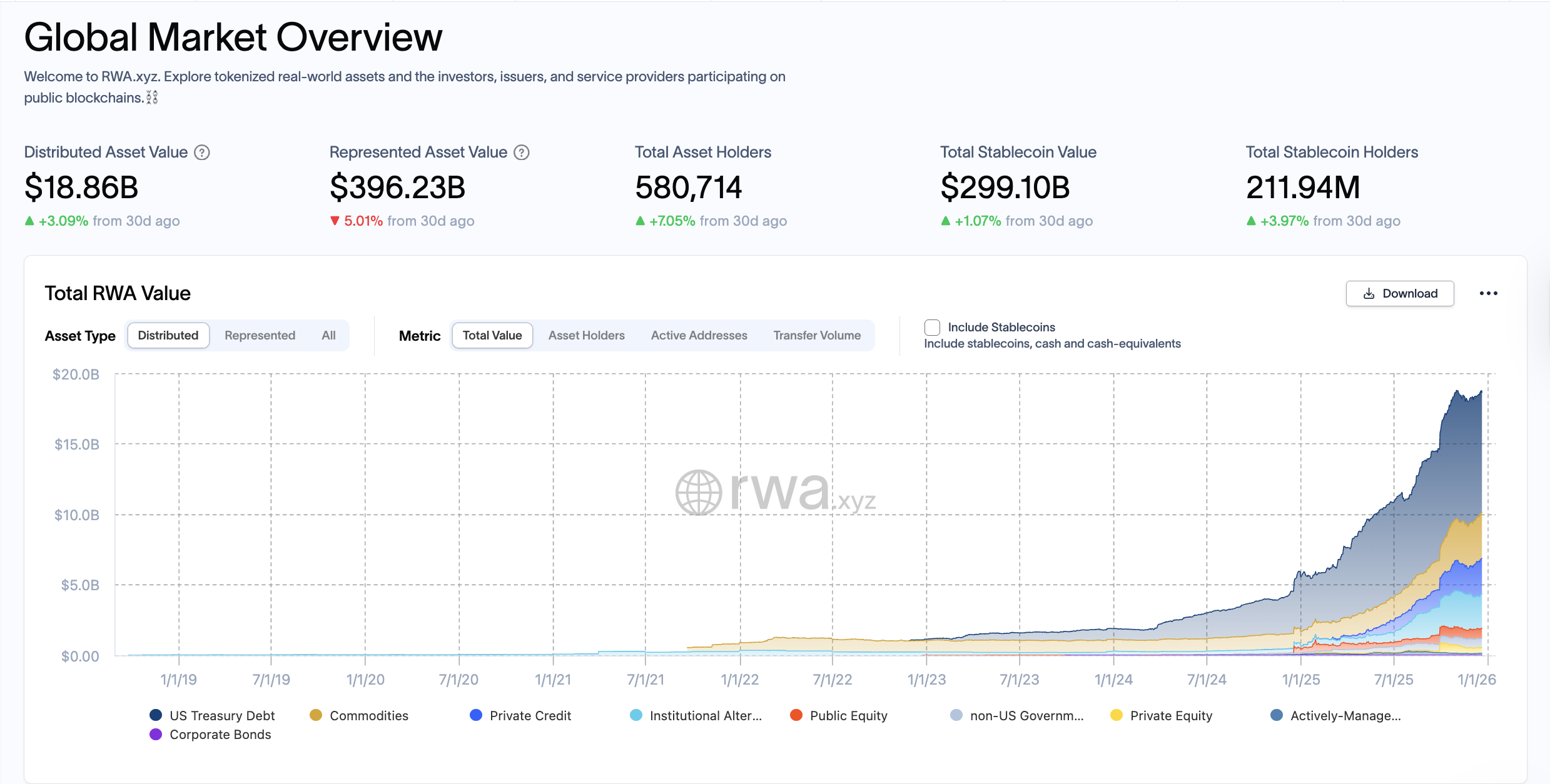
The market capitalization of the RWA sector, excluding stablecoins, is nearly $19 billion at the time of this writing. Source: RWA.XYZ

Financial incumbents like Citi, Bank of America, JPMorgan Chase and others will continue to exist in a different form, Grossman said, much like media companies continued to exist after the shift to digital distribution in the late 1990s and early 2000s, which disrupted business models that worked for decades.

Ultimately, the survivors and winners of the ongoing shift toward tokenized finance will be those companies that get ahead of the change and not those that attempt to stop the inevitable shift to a global financial system powered through blockchain rails, he said.

Related: Wall Street’s $4 quadrillion backbone to roll out tokenized US Treasurys

Why tokenized assets can change the game

Tokenizing real-world assets carries several benefits, including enabling 24/7 access to markets, making asset classes global in scale, cheaper transaction costs through disintermediation, and lowering settlement times to minutes, instead of days.

In September, the United States Securities and Exchange Commission (SEC) and the Commodity Futures Trading Commission (CFTC) issued a joint statement on creating a regulatory framework to enable 24/7 capital markets.
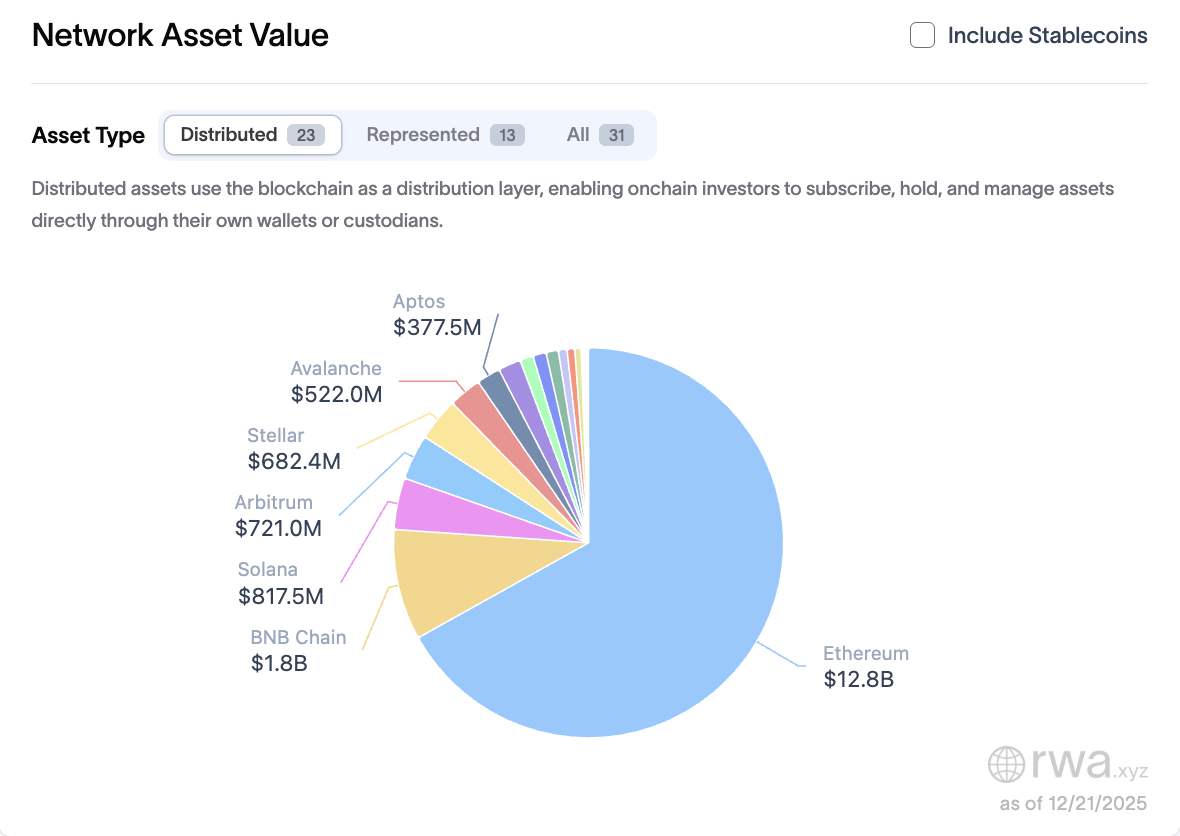
The overwhelming majority of tokenized RWA value has found its home on the Ethereum network. Source: RWA.XYZ

The financial system shifting to 24/7 trading represents a major departure from how traditional markets, which close on nights, weekends and holidays, currently operate.

In December, the Depository Trust and Clearing Corporation (DTCC), a settlement and clearing company that processed about $3.7 quadrillion in settlement volume in 2024, received approval from the SEC to start offering tokenized financial instruments.

The DTCC plans to roll out tokenized assets in the second half of 2026, starting with US Treasuries and stock indexes.

Magazine: Unstablecoins: Depegging, bank runs and other risks loom

相关问答

QAccording to Keith Grossman, how will tokenization impact the financial industry compared to digital technology's effect on media?

AKeith Grossman believes that tokenization will transform the financial industry faster than digital technology disrupted legacy media, such as print newspapers and physical music copies.

QWhat are some examples of major financial institutions already involved in tokenization, as mentioned in the article?

ABlackRock is offering tokenized funds, Franklin Templeton is running tokenized money market funds on public blockchains, and major global banks are piloting onchain settlement, tokenized deposits, and real-time asset movement.

QWhat key benefits does tokenizing real-world assets provide, according to the article?

ATokenizing real-world assets enables 24/7 access to markets, makes asset classes global, reduces transaction costs through disintermediation, and lowers settlement times to minutes instead of days.

QWhich organization, responsible for processing about $3.7 quadrillion in settlement volume in 2024, received SEC approval to offer tokenized financial instruments?

AThe Depository Trust and Clearing Corporation (DTCC) received approval from the SEC to start offering tokenized financial instruments.

QOn which blockchain network is the overwhelming majority of tokenized RWA value located, as per the article?

AThe overwhelming majority of tokenized RWA value is on the Ethereum network.

你可能也喜欢

伯恩斯坦披露 Core Scientific 与 AMD 价值 140 亿美元交易的细节

加密货币矿业公司Core Scientific与芯片制造商AMD达成一项数据中心基础设施合作协议,初始合约涉及530兆瓦容量。据Bernstein分析师估算,该协议在15年内可能为Core Scientific带来超过140亿美元的收入,AMD则实际上为部分比特币矿商的基础设施提供了信贷担保。 具体而言,530兆瓦中,377兆瓦为AMD直接以“三重净租赁”模式承租,余下152兆瓦由一家未具名的云提供商承租,并获得AMD的信贷支持。分析师认为,这种结构降低了融资成本和交易对手风险。AMD还获得了以每股23.47美元购买3000万股Core Scientific股份的认股权证,其归属与双方实现总计2.5吉瓦容量的目标挂钩。 分析师估计,该协议年均收入约为9亿美元,即每兆瓦约180万美元,略低于近期矿商与AI客户达成的交易水平。然而,AMD直接承租部分毛利率接近100%,整体交易混合EBITDA利润率估约96%。Core Scientific预计相关资本支出为每兆瓦1100-1200万美元,总计约60亿美元。 Bernstein指出,这笔交易标志着前比特币矿商向AI基础设施运营商转型的新阶段。近期类似案例包括Hut 8为据信是英伟达的客户预留704兆瓦,以及AMD向Riot Platforms预订200兆瓦。此前,Core Scientific曾向Block支付4190万美元,终止了矿机芯片供应合同,以加速向AI业务多元化。

cryptonews.ru22分钟前

伯恩斯坦披露 Core Scientific 与 AMD 价值 140 亿美元交易的细节

cryptonews.ru22分钟前

贝莱德推动比特币ETF恢复,在连续4天资金流出后实现3200万美元净流入

加密货币ETF市场在7月29日周三再度转向。比特币在连续四日资金流出后迎来买家,而Solana则几乎以同等规模的流入收复了前一日的显著跌幅。 贝莱德的IBIT ETF成为比特币ETF复苏的主要动力,单日流入8983万美元,抵消了富达FBTC流出4308万美元和ARK 21Shares ARKB流出1464万美元的影响。最终,比特币ETF类别实现净流入3211万美元。 以太坊ETF则表现分化。新推出的摩根士丹利质押基金MSSE吸引了1430万美元,贝莱德的ETHA ETF流入516万美元。然而,富达FETH流出1607万美元、灰度ETHE和Ether Mini Trust分别流出974万和809万美元等五款产品的资金流出超过了流入,导致该类别净流出1865万美元。 Solana ETF吸引1906万美元资金流入,完全抵消了前一交易日1807万美元的流出。所有新资金均流入新推出的摩根士丹利质押支持ETF MSOL。摩根士丹利新推出的质押相关产品需求显著,MSSE两日内吸引1945万美元,MSOL在首个资金流入日便吸引1900万美元。 XRP ETF也重回净流入,富兰克林邓普顿的XRPZ流入58.471万美元,增幅温和。Hyperliquid($HYPE)ETF则持续承压,Bitwise的BHYP基金流出878万美元,已是该类别连续第五日下跌。 最新资金流数据显示,市场仍愿承担加密风险,但选择性增强。比特币重获支撑,Solana反弹,质押产品受关注,而以太坊和$HYPE则面临又一轮抛售。

cryptonews.ru29分钟前

贝莱德推动比特币ETF恢复,在连续4天资金流出后实现3200万美元净流入

cryptonews.ru29分钟前

Gumi与SBI联合推出300亿日元加密货币基金,日本为现货ETF敞开大门

日本游戏与区块链技术公司Gumi与金融集团SBI合作,将于2026年8月1日启动规模为30亿日元(约1830万美元)的加密基金SBI Crypto Fund I。该基金由SBI Financial Services持股51%,Gumi旗下gC Labs持股49%,投资方还包括大和证券集团等,将专注于比特币及主要交易所上市的替代币,采用质押、对冲和投资组合再平衡等策略管理。 Gumi自2018年起活跃于数字资产领域,截至2026年4月底,其加密资产总额约140亿日元(约8600万美元),并致力于成为日本最大的XRP管理公司。SBI已持有Gumi约34%股份。此外,Gumi成立了“Neo Crypto”部门,整合数字资产业务,为未来日本可能批准的加密货币ETF做准备。 日本议会近期通过新法,将数字货币重新归类为金融工具而非仅支付手段,相关修正案预计2027年生效。新规为比特币ETF铺平道路,并加重了对无牌照加密活动的处罚,最高刑期增至10年,罚金提高至1000万日元。同时,加密货币税率计划从55%降至20%,自2028年起实施。 SBI旗下交易所SBI VC Trade的注册账户数已突破200万,较2025年翻倍,企业正增加比特币和XRP持仓以对冲日元疲软。该交易所于2025年上线美元稳定币USDC,2026年新增Ripple的RLUSD及日元锚定稳定币JPYSC,并开始提供稳定币资产抵押贷款服务。尽管日本加密市场规模仍小于美国和韩国,但账户增长与企业参与度的提升显示市场正加速发展。

cryptonews.ru29分钟前

Gumi与SBI联合推出300亿日元加密货币基金,日本为现货ETF敞开大门

cryptonews.ru29分钟前

交易

现货
活动图片