Engie is evaluating whether to pair battery storage or bitcoin mining data centers with its new Assu Sol solar project in Brazil, a move that would position BTC mining as a grid-balancing and revenue tool rather than a standalone industrial bet. The idea matters because it comes from one of Europe’s largest utilities. Moreover, Engie is 23.64% owned and 33.20% controlled by the French government.
Reuters reported on Monday that Engie’s Brazil unit is studying the addition of storage systems or bitcoin-mining-linked data centers at Assu Sol to improve profitability at the site, which the company describes as its largest solar project worldwide. Eduardo Sattamini, Engie’s country manager for Brazil, said the company is assessing local demand solutions as the plant faces output curtailments.
Why Engie Weighs Bitcoin Mining At New Brazil Solar Plant
Assu Sol, located in northeast Brazil, has 895 MWp of installed capacity and entered full commercial operation this month, according to Reuters. But like other renewable projects in the country, it has been affected by grid curtailments used to balance supply and demand, with Sattamini saying he did not specify how much output had been reduced at the plant itself.
The core logic is straightforward: if the grid cannot absorb all renewable generation, Engie can potentially create local offtake demand at the project level. Reuters said the company is considering “data centers for bitcoin mining or storage” as ways to manage the issue at Assu Sol and reduce the economic drag from curtailed production.
Sattamini’s comments also make clear this is an infrastructure planning track, not an imminent launch. “We are looking at some possible offtakers,” he said. “That’s not coming next month. It will take a couple of years for us to implement.”
That timeline is important for Bitcoin markets reading this as a near-term mining expansion signal. The report points instead to a utility-scale feasibility process tied to power monetization and grid constraints, with bitcoin mining one of several candidate loads rather than the confirmed end state.
Reuters said curtailment has become a major issue for Brazilian solar and wind operators since 2023, contributing to billions of reais in losses across the sector. The reported drivers include a rapid buildout of renewable capacity, weak demand growth, infrastructure bottlenecks, and the expansion of distributed generation, especially rooftop solar.
For Bitcoin, the Engie case reinforces a theme that has gained traction in mining strategy: mining demand is increasingly being discussed in power-market terms, especially where excess or stranded generation needs a flexible buyer. If Engie moves forward, the signal may be less about hash rate in the short run and more about how large utilities are starting to treat bitcoin mining as a potential grid-adjacent industrial load.
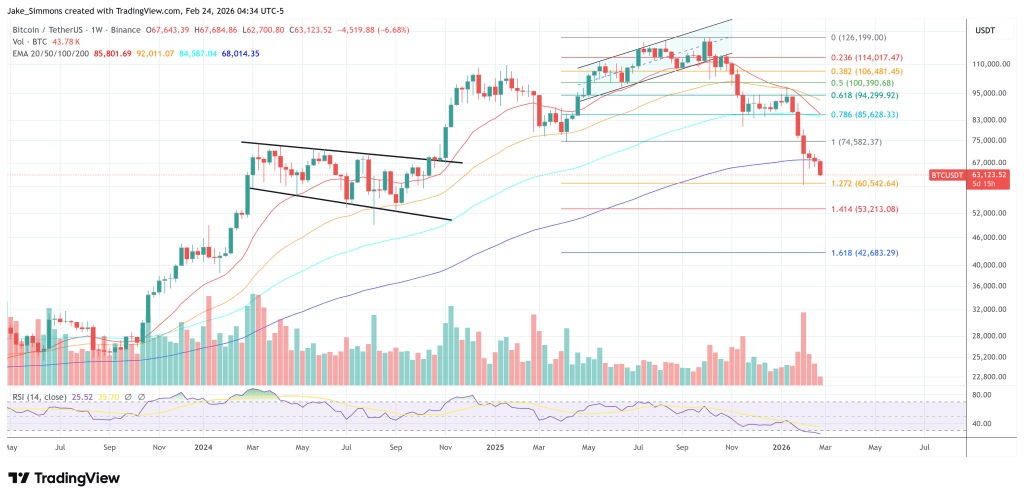
At press time, Bitcoin traded at $63,123.