European Central Bank Backs EU’s Plan For Centralized Crypto Firms Oversight

bitcoinist发布于2026-04-11更新于2026-04-11

文章摘要

The European Central Bank (ECB) has endorsed the EU's proposal to centralize oversight of crypto asset service providers (CASPs) and other key financial market participants under the European Securities and Markets Authority (ESMA). This move, supported by France and Germany, aims to harmonize regulation and boost the competitiveness of the EU's capital markets. The ECB emphasized the need for ESMA resources and a gradual transition to minimize disruption. However, the plan faces opposition from smaller EU nations and industry participants who argue it undermines national regulators' efforts and the credibility of the existing Markets in Crypto-Assets Regulation (MiCA). Critics warn that reopening MiCA now could create legal uncertainties and delay implementation. The proposal will now undergo negotiations between EU governments and the European Parliament.

The European Central Bank (ECB) has reportedly endorsed the European Union’s (EU) plan to shift oversight of key financial markets, including crypto, from national authorities to a centralized supervisory authority.

ECB Greenlights Crypto Oversight Centralization

On Friday, the European Central Bank backed the EU’s proposal to integrate the bloc’s capital market through a centralized entity, seeking to boost the region’s competitiveness and harmonize regulation, Reuters reported.

The financial regulator expressed its full support for enhanced EU-level oversight of systemically important, cross-border financial market participants, including major trading platforms, central counterparties, central securities depositories, and crypto asset service providers (CASPs).

“The ECB fully supports the ‌Commission ⁠proposals, which constitute an ambitious step towards deeper integration of capital markets and financial market supervision within the Union,” it said in an opinion. It’s worth noting that the opinion is required by the Commission’s legislative process, but is not binding for lawmakers.

The plan, led by France and Germany, was initially suggested during the development of the Markets in Crypto-Assets Regulation (MiCA). It proposes transferring the power to authorize new businesses and supervise all crypto asset service providers to the bloc’s market watchdog, the European Securities and Markets Authority (ESMA).

In October, ESMA’s Chair, Verena Ross, disclosed that the EU’s executive branch was in the process of formulating regulations to grant enhanced authority to the regional regulatory authority and push for a “more integrated and globally competitive” capital market within Europe.

She argued that nation-level regulation takes significant effort to build up specific new resources and expertise 27 times in different national supervisors, which “could have been done more efficiently once at a European level.”

The ⁠ECB’s Friday opinion noted that ESMA will need adequate resources and staffing to handle the increased responsibilities. Furthermore, it suggested a gradual transition from national to EU-level supervision to minimize disruption.

Now, the Commission’s proposal will be negotiated between EU governments and the European Parliament, with discussions expected to last several months before the law is finalized.

EU’s Proposal Could Undermine MiCA’s Credibility

Despite the ECB’s support, some EU countries and crypto industry participants have opposed the EU’s proposal, arguing that it could undermine the efforts of national watchdogs and businesses over the past few years to regulate the industry and implement the bloc’s comprehensive framework for crypto assets.

Smaller EU nations, including Luxembourg, Ireland, and Malta, have expressed concerns about the proposal and ESMA’s ability to oversee the crypto market, arguing it could weaken their financial sectors.

Notably, ESMA questioned Malta’s process for approving pan-EU licenses for crypto companies last year, finding the national regulator only “partially met expectations,” despite having adequate staffing and technical infrastructure.

As reported by Bitcoinist, Robert Kopitsch, secretary general of Blockchain for Europe, said in November that reopening MiCA at this stage could introduce legal uncertainties, potentially delaying the authorization process and diverting attention and resources from the practical task of consistent implementation.

Kopitsch believed that a shift towards a more centralized supervisory model should occur based on “concrete experience and evidence gathered from MiCA’s initial years of implementation.” He also pointed out that local regulators have had more direct and frequent interactions with firms.

Andrew Whitworth, the founder of Global Policy Ltd., confirmed that transferring oversight would require additional resources to manage the current workload handled by local regulators. He acknowledged that this change could be challenging at the moment, considering the current implementation status and the need to adjust the goalposts

Judith Arnal, associate senior research fellow at the Centre for European Credit Research Institute (ECRI) and board member at the Bank of Spain, has also said that the recent attempts to amend the bloc’s crypto rules, particularly in the stablecoins sector, risk “undermining MiCA’s credibility as a coherent and globally influential regulatory framework.”
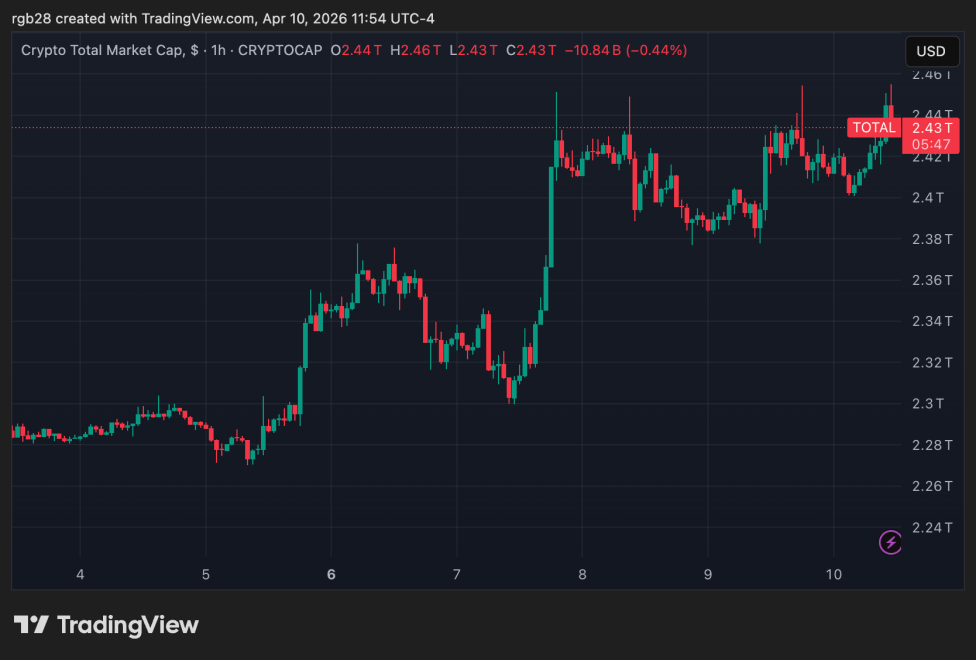
The total crypto market capitalization is at $2.43 trillion in the one-week chart. Source. TOTAL on TradingView


热门币种推荐

相关问答

QWhat is the main proposal that the European Central Bank (ECB) has endorsed regarding crypto oversight?

AThe ECB has endorsed the EU's plan to shift the oversight of crypto asset service providers (CASPs) and other key financial markets from national authorities to a centralized supervisory authority, specifically the European Securities and Markets Authority (ESMA).

QWhich two EU countries were the primary proponents of the plan to centralize crypto market supervision?

AThe plan to centralize crypto market supervision was initially led by France and Germany.

QWhat is one of the main concerns raised by smaller EU nations like Luxembourg, Ireland, and Malta about this proposal?

ASmaller EU nations are concerned that the proposal could weaken their financial sectors and have expressed doubts about ESMA's ability to effectively oversee the crypto market.

QAccording to critics like Robert Kopitsch, what risk does reopening the Markets in Crypto-Assets Regulation (MiCA) at this stage pose?

AReopening MiCA at this stage could introduce legal uncertainties, potentially delay the authorization process for crypto firms, and divert attention and resources away from the consistent implementation of the existing framework.

QWhat did the ECB specify would be needed for ESMA to handle its proposed increased responsibilities effectively?

AThe ECB's opinion noted that ESMA would need adequate resources and staffing to handle the increased responsibilities and suggested a gradual transition from national to EU-level supervision to minimize disruption.

你可能也喜欢

如何让自己变得让人工智能永远也无法取代

面对人工智能的冲击,许多人担心工作被取代。然而,真正的威胁在于个人对他人和系统的依赖,以及由此产生的“薪资奴役”——即为生存而从事无意义、枯燥的工作。摆脱这种困境的关键,不是抵制技术,而是成为拥有高自主性的“不可受雇”个体。 文章提出了成功抵御AI替代的五个核心要素:自主性(主动行动的能力)、品味(判断事物价值的经验)、说服力(让他人关注你工作的能力)、毅力(坚持并从错误中学习)和迭代(根据反馈持续改进)。这些能力无法仅通过理论学习获得,必须通过实践来培养。 要启动转变,首先要彻底改变环境,重塑身份认同。其次,应选择一个能获得真实、快速反馈的实践领域,例如创业。在众多技能中,内容创作(媒体)比编写代码更具优势,因为其价值是主观的,需要独特的审美和判断力,这正是AI目前难以完全复制的。 具体行动上,可以从三个步骤开始: 1. **挖掘原始素材**:反思自己长期痴迷的知识领域、轻松解决的难题或童年被压抑的兴趣,找到独特的个人经验。 2. **确立反向思考主轴**:找出你坚信但主流观点错误的地方,或行业内普遍忽视的“皇帝新衣”,形成独特的批判性视角。 3. **立即发布**:将前两步的思考融合,撰写并发布第一个核心内容(如帖子、视频),勇敢接受真实世界的反馈,并在此基础上持续学习和迭代。 最终,抵御AI的关键在于构建一份与自身身份深度契合的毕生事业,通过持续的内容创作和真实互动,建立无法被自动化取代的独特价值和影响力。行动,从今天发布第一个想法开始。

marsbit4小时前

如何让自己变得让人工智能永远也无法取代

marsbit4小时前

通过掷骰子离线保管比特币密钥:并非人人愿意为之

文章探讨了通过投掷骰子生成比特币钱包种子短语的安全方法及其现实挑战。核心观点如下: **1. 骰子提供物理熵源** 骰子结果由众多微小变量决定,理论上虽可预测,但实践中无法被攻击者复制或计算,从而提供高质量的随机性。每个六面骰子投掷约产生2.585比特熵,50次投掷即可满足典型12词助记词(128比特熵)的安全需求。 **2. Coldcard漏洞事件凸显手工熵源的价值** 近期Coldcard硬件钱包因固件漏洞导致其内部随机数生成器存在缺陷,致使约1128枚比特币被盗。但那些**完全**通过足量骰子投掷生成种子短语的用户未受此漏洞影响,因为他们的主密钥未使用有缺陷的生成器。 **3. 重要警示:手工种子并非万能保护** 安全研究员指出,即使用户使用骰子生成了安全的种子,若他们使用了Coldcard的其他功能(如生成纸钱包、克隆密钥、共享签名密钥、密码等),这些**衍生密钥**仍可能调用有漏洞的随机数生成器,从而存在风险。安全种子不保证设备生成的所有秘密都安全。 **4. 手工生成熵源的现实局限性** 尽管数学上可靠,但该方法对大多数用户并不友好: * **过程繁琐易错**:需投掷50-99次,精确记录,任何输入错误都会导致钱包完全不同。 * **引入新风险**:用户可能在记录、转换过程中泄露信息,或使用有偏的骰子/投掷方式。 * **用户体验差**:难以想象大规模推广需要用户手动投掷近百次骰子。安全措施需适应现实生活场景和普通用户的知识水平。 **5. 给用户的建议** 受影响的Coldcard用户应: * 更新固件至最新版。 * 检查是否使用过有漏洞的功能生成了次级密钥或密码,如有则需立即更换。 * 考虑采用多签方案,使用不同厂商的设备分散风险。 **结论**:手工投掷骰子生成熵源是技术娴熟用户的一个有效安全选项,但其过程复杂、容易出错,不适合作为主流用户的默认方法。长远目标是依赖安全、透明且无需专业知识的硬件/软件随机数生成方案。

cryptonews.ru7小时前

通过掷骰子离线保管比特币密钥:并非人人愿意为之

cryptonews.ru7小时前

交易

现货

热门文章

如何购买S

欢迎来到HTX.com!我们已经让购买Sonic(S)变得简单而便捷。跟随我们的逐步指南,放心开始您的加密货币之旅。第一步:创建您的HTX账户使用您的电子邮件、手机号码注册一个免费账户在HTX上。体验无忧的注册过程并解锁所有平台功能。立即注册第二步:前往买币页面,选择您的支付方式信用卡/借记卡购买:使用您的Visa或Mastercard即时购买Sonic(S)。余额购买:使用您HTX账户余额中的资金进行无缝交易。第三方购买:探索诸如Google Pay或Apple Pay等流行支付方法以增加便利性。C2C购买:在HTX平台上直接与其他用户交易。HTX场外交易台(OTC)购买:为大量交易者提供个性化服务和竞争性汇率。第三步:存储您的Sonic(S)购买完您的Sonic(S)后,将其存储在您的HTX账户钱包中。您也可以通过区块链转账将其发送到其他地方或者用于交易其他加密货币。第四步:交易Sonic(S)在HTX的现货市场轻松交易Sonic(S)。访问您的账户,选择您的交易对,执行您的交易,并实时监控。HTX为初学者和经验丰富的交易者提供了友好的用户体验。

3.3k人学过发布于 2025.01.15更新于 2026.06.02

如何购买S

相关讨论

欢迎来到HTX社区。在这里,您可以了解最新的平台发展动态并获得专业的市场意见。以下是用户对S(S)币价的意见。

活动图片