Assessing Sonic’s [S] 12% price drop and why more selling may be next

ambcrypto发布于2026-06-26更新于2026-06-26

文章摘要

Sonic (S) has dropped 12% in 24 hours, with further declines anticipated. Despite a notable 23% surge in daily active users and over 228,000 on-chain transactions, key metrics suggest selling pressure is driving the activity. Total Value Locked (TVL) fell by $4.47 million to around $16.07 million, indicating capital outflows. While DEX volume spiked to $3.27 million and overall trading volume rose 51% to $26.8 million, this high volume alongside a falling price points to dominant selling momentum. Spot market data shows slight positive net inflows of about $20,000, hinting at minor accumulation, but this buying pressure is currently insufficient to counter the selling or fuel a near-term price recovery.

Sonic SVM [S] has shed 12% of its value over the past 24 hours in one of the steepest losses across the market. That’s not all though as at press time, the decline looked likely to extend further as the week wears on.

A convergence of off-chain and on-chain metrics seemed to build the case for a deeper drop. Hence, investors may have to offload more of their S holdings at discounted prices.

Sonic’s users and on-chain activity surge in tandem

On-chain activity across the Sonic blockchain has spiked notably over the past week, with two metrics standing out in particular—Daily Active Users (DAU) and the volume of chain transactions.

At the time of writing, the data revealed a clear surge in users on the network, with the count climbing week-over-week from 6,200 to 7,600. This hinted at an increase of roughly 22.6% in just seven days.
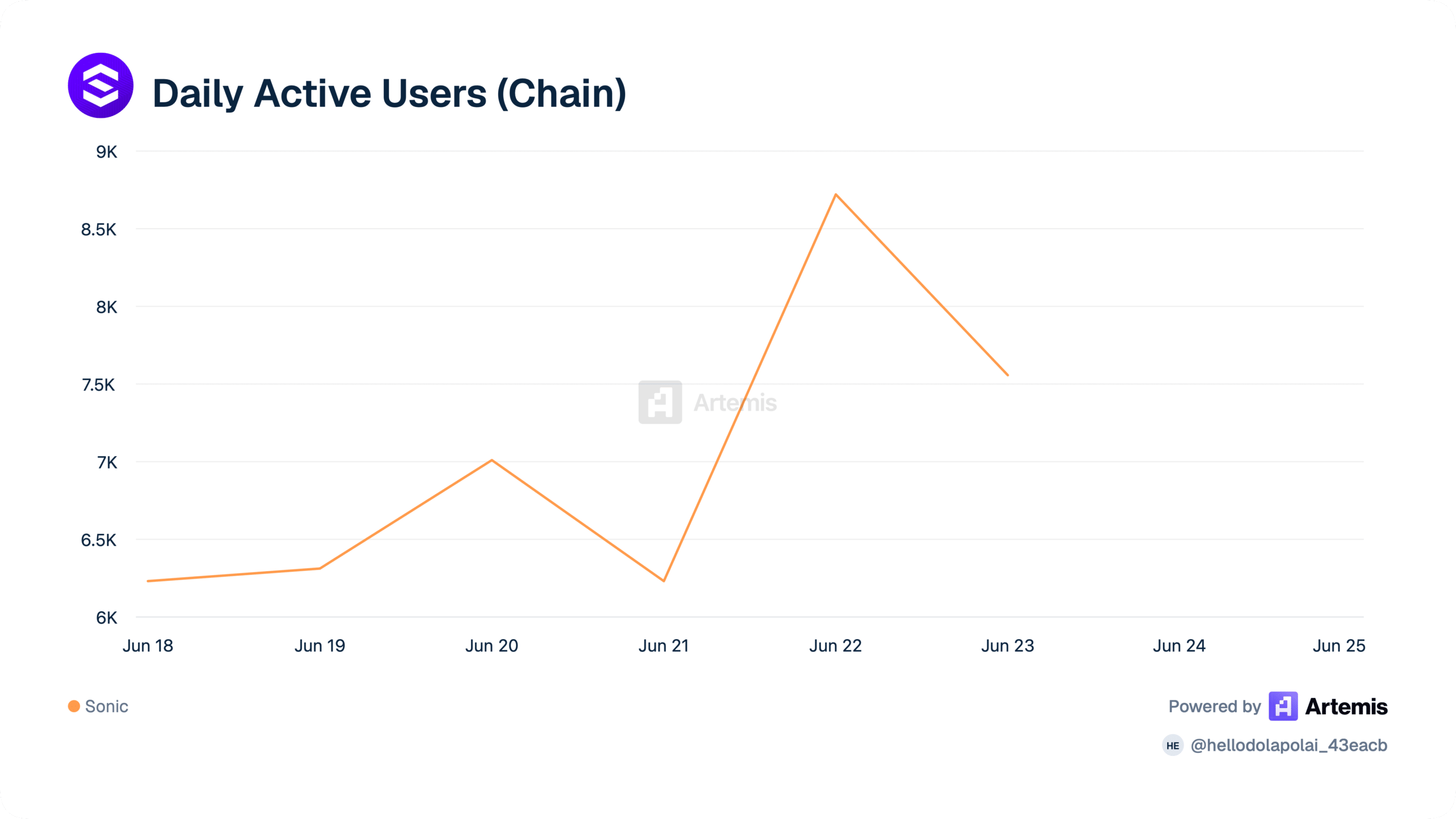
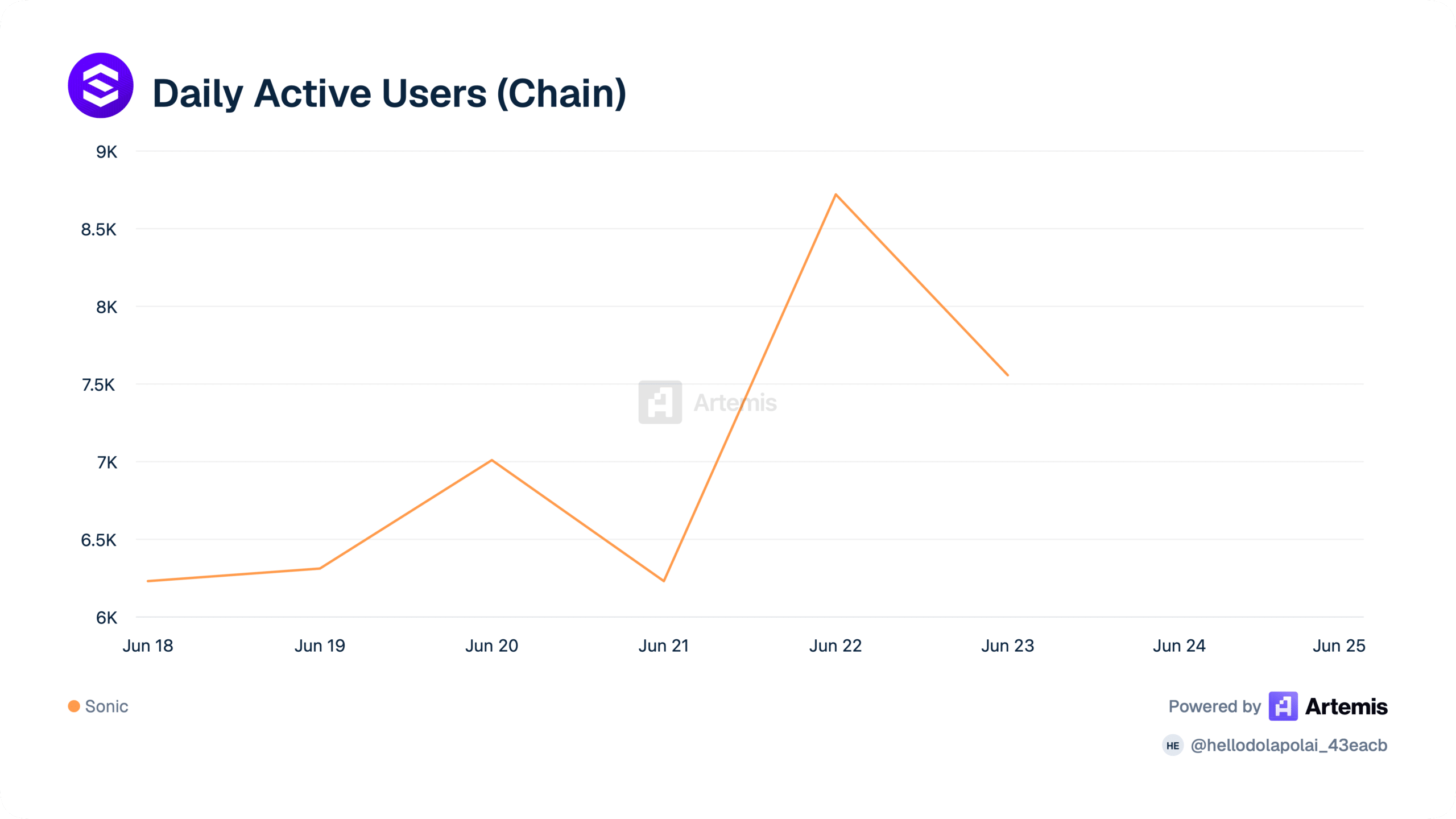
Source: Artemis

This kind of surge rarely happens in isolation and tends to pull broader chain activity higher with it. Sonic has followed that pattern closely with a matching jump in its transaction count.

Artemis data highlighted on-chain transactions at 228,000 too – A figure that underscores how active participants have remained across the network, despite the price weakness.

A build-up like this would normally signal price strength. And yet, the opposite may be playing out since S has dropped by 25% over the past 30 days. In fact, a closer look at the numbers might tie the recent rise in on-chain activity to selling, rather than to fresh demand.

Sonic’s on-chain activity is tracking outflows, not inflows

The uptick in on-chain activity can be correlated with capital leaving the network rather than flowing into it. This finding could reframe what the surge actually represents.

One of the clearest markers of this liquidity drain is total value locked (TVL). It declined over the very same period that users and transactions were climbing.

TVL measures how much capital sits deposited on a blockchain and often serves as a gauge of investor outlook, with inflows pointing to longer-term conviction and a greater willingness to hold, while outflows signal that short-term selling pressure could be building beneath the surface.
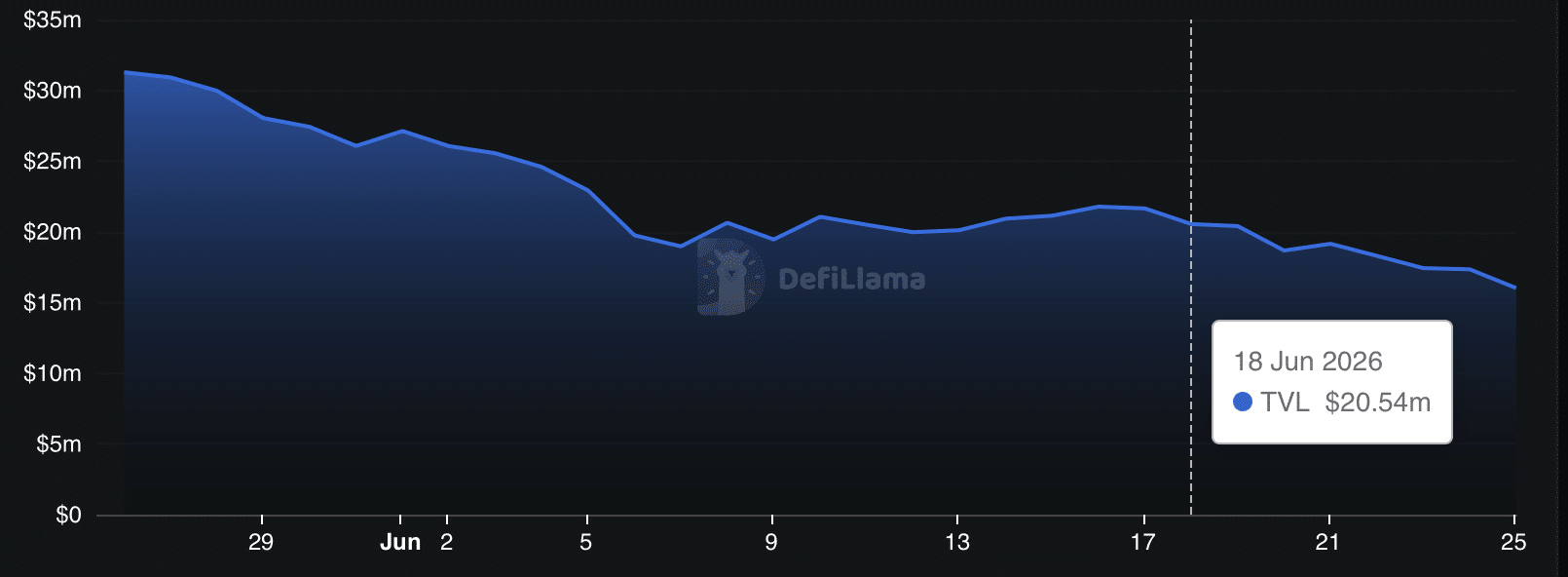
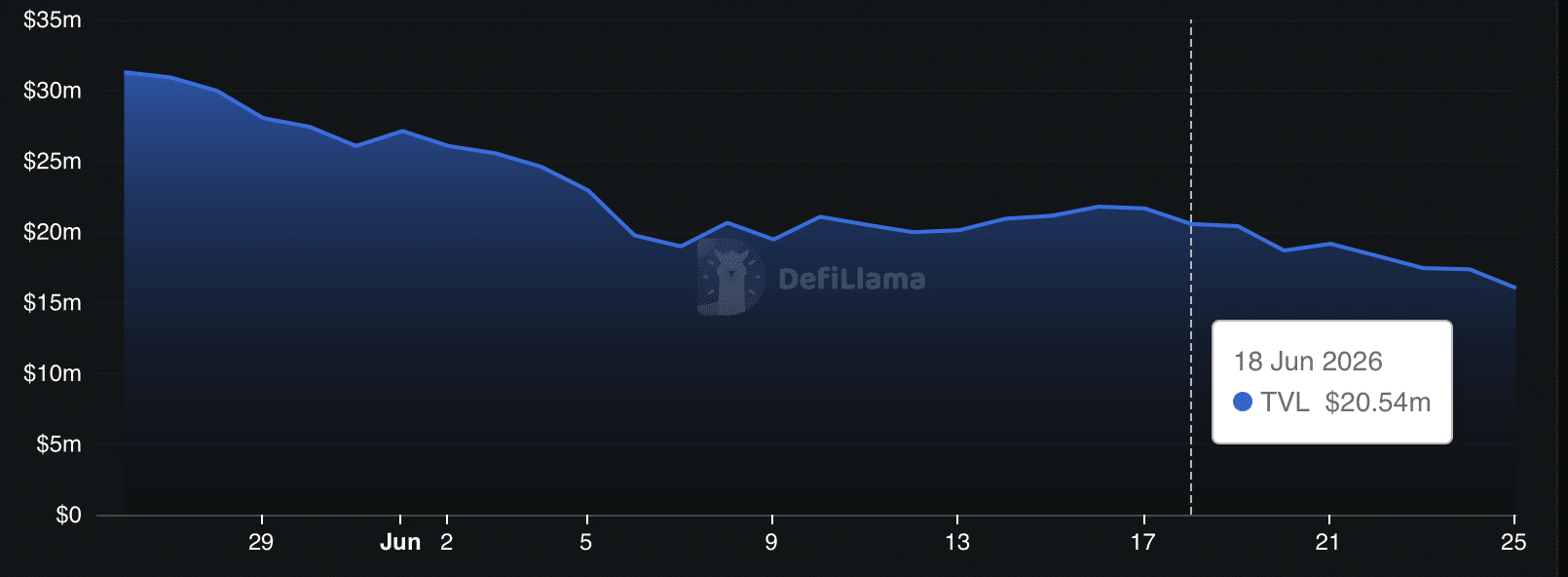
Source: DeFiLlama

At the time of writing, $4.47 million had left Sonic’s TVL, dragging it down to roughly $16.07 million. This, even as decentralized exchange (DEX) volume pushed it in the other direction.

DeFiLlama data also highlighted DEX volume surging to $3.27 million—its second-highest reading of the month and third-highest since March—while Sonic’s own trading volume sat around 51% higher on the day at $26.8 million.

A hike in volume set against a falling price points to selling momentum holding the upper hand. Traders may be ready to keep pressing in that direction for as long as volume stays elevated at press time levels.

Are buyers holding back?

Activity in the spot market, by contrast, has stayed largely muted, with little meaningful buying or selling moving through it.

Spot netflows for the week has nonetheless leaned supportive and could allude to buyers quietly accumulating, carrying a net inflow of roughly $20,000 on total buys of about $231,000 across the week. However, any meaningful rebound from here would demand that buying scale up far more sharply.

For now, buying pressure remains too thin to fuel a sustained upward move in the near term.


Final Summary

  • Sonic’s DAUs rose 23% and transactions topped 228,000, but TVL saw outflows.
  • Positive spot netflow hinted at light accumulation, too thin to absorb the selling, leaving S exposed to more downside.


热门币种推荐

相关问答

QAccording to the article, what is the main reason Sonic (S) price dropped 12% and may continue to decline?

AThe price drop and potential for further decline are attributed to on-chain activity surging due to capital outflows (evidenced by a decrease in Total Value Locked) rather than new demand, indicating underlying selling pressure despite increased user numbers and transactions.

QWhat two key on-chain metrics for Sonic showed significant growth recently, and by how much did Daily Active Users increase?

AThe two key metrics were Daily Active Users (DAU) and the volume of chain transactions. Daily Active Users increased by approximately 22.6% week-over-week, climbing from 6,200 to 7,600.

QHow does the article interpret the relationship between Sonic's rising DEX/on-chain volume and its falling price?

AThe article interprets the rise in trading volume (including DEX volume hitting $3.27M) concurrent with a falling price as a signal that selling momentum is dominant, suggesting traders are actively selling rather than buying.

QWhat does the change in Sonic's Total Value Locked (TVL) indicate about investor behavior according to the analysis?

AThe decrease in Total Value Locked (TVL) by $4.47 million to around $16.07 million indicates capital is leaving the network, signaling a build-up of short-term selling pressure and a lack of longer-term holding conviction among investors.

QDoes the article suggest buying pressure is currently strong enough to reverse Sonic's price trend? Why or why not?

ANo, the article suggests buying pressure is not strong enough. While spot netflows showed a slight positive inflow ($20k on ~$231k buys), this accumulation is described as 'too thin to absorb the selling' and insufficient to fuel a sustained upward price move in the near term.

你可能也喜欢

Tiger Research:金融机构跟上代币化浪潮的三大方略

Tiger Research指出,现实世界资产代币化市场正快速增长,但许多地区监管框架仍不完善。金融机构面临三种策略选择:等待本国立法、利用监管沙盒有限实验,或率先进入海外成熟市场以积累经验并建立优势。 报告强调,代币化并非魔法,而是将传统金融工具迁移至新基础设施的精密过程。机构在进入前需在六个核心领域做好准备:1) 建立离岸基地(如利用香港、新加坡或美国的现有实体、新设实体或合作);2) 获取必要牌照;3) 明确代币化的资产类型(标准化证券更易落地);4) 界定目标投资者范围(通常优先非美国投资者);5) 设计结算货币与支付流程;6) 安排其他运营要求,如区块链选择、托管及发行后治理。 具体路径主要有两条:一是直接进入已有成熟监管的司法管辖区(如香港、新加坡、美国),利用当地平台加速进入;二是采用链上原生路径,依托已有合规架构的链上平台(如Ondo Global、Plume Nest)设计发行,绕过设立实体基地的复杂流程,快速进入市场并可能对接更广泛的DeFi流动性。 报告以一家已有香港实体的中型证券公司为例,拆解了其为离岸机构投资者代币化债券的典型流程,包括评估现有基地、选择合作平台、完成合规与产品设计、建立托管结构及最终执行销售。报告最后指出,法律审查虽耗时昂贵,但等待完整监管并非唯一答案,市场不会等待。金融机构应尽快规划可行路径,通过执行积累真实运营经验,关键在于完成完整的销售过程,而非仅仅技术设计。

Foresight News43分钟前

Tiger Research:金融机构跟上代币化浪潮的三大方略

Foresight News43分钟前

交易

现货

热门文章

如何购买S

欢迎来到HTX.com!我们已经让购买Sonic(S)变得简单而便捷。跟随我们的逐步指南,放心开始您的加密货币之旅。第一步:创建您的HTX账户使用您的电子邮件、手机号码注册一个免费账户在HTX上。体验无忧的注册过程并解锁所有平台功能。立即注册第二步:前往买币页面,选择您的支付方式信用卡/借记卡购买:使用您的Visa或Mastercard即时购买Sonic(S)。余额购买:使用您HTX账户余额中的资金进行无缝交易。第三方购买:探索诸如Google Pay或Apple Pay等流行支付方法以增加便利性。C2C购买:在HTX平台上直接与其他用户交易。HTX场外交易台(OTC)购买:为大量交易者提供个性化服务和竞争性汇率。第三步:存储您的Sonic(S)购买完您的Sonic(S)后,将其存储在您的HTX账户钱包中。您也可以通过区块链转账将其发送到其他地方或者用于交易其他加密货币。第四步:交易Sonic(S)在HTX的现货市场轻松交易Sonic(S)。访问您的账户,选择您的交易对,执行您的交易,并实时监控。HTX为初学者和经验丰富的交易者提供了友好的用户体验。

2.8k人学过发布于 2025.01.15更新于 2026.06.02

如何购买S

相关讨论

欢迎来到HTX社区。在这里,您可以了解最新的平台发展动态并获得专业的市场意见。以下是用户对S(S)币价的意见。

活动图片