The 'Execution Line' Sweeping the Internet: The Shattering of the American Dream, The Awakening of the Crypto Dream

深潮发布于2025-12-24更新于2025-12-24

文章摘要

The term "Execution Line" (斩杀线), a gaming concept referring to the threshold at which a character can be instantly killed, has gone viral on Chinese social media. It symbolizes a brutal financial breaking point in the U.S., where individuals with little savings can be pushed into homelessness or bankruptcy by emergencies like medical bills or job loss—exposing the fragility of the American Dream. The article draws a sharp comparison to the crypto world, where the "execution line" is even more ruthless. While the U.S. system slowly drains resources, crypto executes rapid financial destruction: leverage liquidations, exchange hacks, and rug pulls can wipe out fortunes in minutes. The October 10 flash crash—triggered by a Trump tweet announcing 100% tariffs on China—led to $19.3 billion in liquidations and a massive market plunge. 2025 has been a year of extreme volatility and exploitation in crypto, with over $3.4 billion stolen in hacks, largely by North Korean groups. Unlike traditional systems, crypto offers no safety nets—no insurance, bailouts, or regulatory buffers. The core argument: survival in such a high-risk environment demands personal discipline, risk-aware investing, and robust asset allocation. The dream of quick wealth is over; the priority is to stay financially alive.

Author: Yanz, Deep Tide TechFlow

On Chinese-language internet platforms, the term "execution line" has gone viral within two days. Starting from a video shared by American blogger "Prisoner A" about the life of a homeless person on the streets, this concept has swept across Chinese websites like Zhihu, Douyin, Xiaohongshu, and Bilibili, and has also sparked considerable discussion on X.

Posts comparing the cost of living in China and the United States have become popular, with more and more people discovering that Americans earn high salaries but spend the majority on rent, healthcare, and student loans, leaving little savings. 37% of Americans cannot come up with $400 for an emergency. For many living paycheck to paycheck, a minor illness, job loss, or car trouble can trigger a chain reaction.

The term "execution line" originally comes from gaming terminology, referring to a threshold of an enemy's health points where a set of skills can instantly kill them. In this discussion, the term has taken on a deeper meaning. It has been borrowed to describe a brutal financial collapse mechanism in real society, especially in the United States: once an ordinary person's savings, income, or credit falls below a critical point, the entire system triggers an automatic process, pushing the person into an irreversible underclass—unemployment, debt, homelessness, or even giving up on life.

Why has this concept become so popular? I think it's because it ruthlessly punctures the sweet illusion of the American Dream, allowing people to see the cruel reality after the "shattering of the American Dream."

In 2025, with global economic turmoil and U.S. debt exceeding $38 trillion, inflationary pressures have left the middle class teetering. But this execution is not just a social meme; upon closer thought, if the "execution line" in the U.S. shatters dreams, turning our gaze back to the crypto world, the "execution line" here is even more sobering.

The harvesting mechanism in the crypto space is more brutal and more globalized than the execution line in American society. The U.S. execution line slowly harvests through medical bills, unemployment, and debt, while execution in the crypto world often completes within minutes or hours: leveraged positions liquidated, projects rug pulling, hacker attacks—funds can go to zero overnight.

There is no government bailout, no unemployment benefits, only cold, on-chain records becoming a bloody history.

How can one say that crypto in 2025 is not a large-scale moment of awakening? The anticipated peak of the bull market instead became a year of bloodshed for many retail investors. The most unforgettable was the flash crash on October 10th.

At 4:50 AM on October 11th, U.S. President Trump suddenly posted, emphatically reiterating retaliatory plans to impose 100% tariffs on China starting November 1st. Market panic instantly exploded. Overnight, global financial markets underwent a major upheaval. The three major U.S. stock indices all fell sharply: the Dow Jones Industrial Average dropped 1.9%, the S&P 500 plummeted 2.71%, and the Nasdaq Composite plunged 3.56%, marking its largest single-day drop since April. European stock markets and the crude oil market were also strongly impacted.

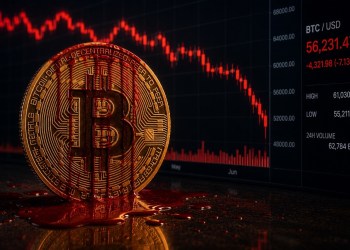
And in the crypto space, which had fragile liquidity at the time, the largest liquidation in crypto history was unfolding on exchanges: over 1.6 million people were instantly "executed," with $19.3 billion in positions liquidated. Bitcoin fell 13%, Ethereum plunged 17%, and the altcoin sector crashed by 85%, with many small-cap tokens wicking to zero. It was a doomsday scenario littered with casualties.

This was an epic cleansing, but clearly not the only one. Throughout 2025, hacker attacks and Rug Pulls emerged one after another.

In February, Bybit exchange suffered the largest single theft in its history, losing $1.5 billion, with over 400,000 Ethereum taken.

In July, the Cetus protocol was stolen from, losing $220 million.

In September, the HyperVault protocol was accused of a rug pull, siphoning off $3.6 million in user funds......

A Chainalysis report shows that total crypto theft in 2025 exceeded $3.4 billion, hitting a new record, with North Korean hacker groups responsible for over $2 billion. These events often target retail investors: newcomers FOMOing in and buying high, going all-in with leverage, blindly trusting KOL shills. Once something goes wrong, funds evaporate directly.

Obviously, compared to the slow execution in American society, crypto is more like a blitzkrieg. Emotions and leverage amplify all risks, but the margin for error? One can only laugh; it's almost zero.

It's not just countries; any system with a low margin for error can easily transform into a harvesting machine. The key to resisting execution lies in strengthening safety net mechanisms: improving regulation, controlling debt, and building a multi-layered social safety net to give individuals breathing room and a chance to recover.

Countries can establish social security, provide a buffer, and avoid a fatal blow. But retail investors in the crypto market face potential collapse at any time due to 24/7 trading. The proliferation of leverage tools allows newcomers to easily open high-leverage positions. Anonymity and weak regulation reduce the cost of rug pulls and amplify the risk of falling into traps. These, once seen as shortcuts to the "sweet dream" of wealth freedom, have now also become fuel accelerating the arrival of execution, rushing toward everyone.

The heated discussion about the execution line marks the shattering of the American Dream, and it should also be the moment of awakening for crypto. Rather than believing you are the only lucky one, it's better to spend more effort on building personal discipline and a more resilient asset allocation. Participate rationally, build defenses, and perhaps we can teeter on the "line" for a few more years.

After all, in the reality after the dream awakens, the most important thing is to survive.

相关问答

QWhat is the concept of '斩杀线' (Zhan Sha Xian) as discussed in the article, and how does it apply to both American society and the crypto world?

AThe term '斩杀线' (Zhan Sha Xian), which translates to 'execution line' or 'kill threshold,' originated from gaming and refers to a critical point where an enemy can be instantly killed. In the context of the article, it is used as a metaphor for a financial breaking point. In American society, it describes a mechanism where individuals, due to high living costs, debt, and lack of savings, can be pushed into irreversible poverty by a single event like a medical emergency or job loss. In the crypto world, it represents the rapid and brutal financial ruin that can occur within minutes or hours through events like leverage liquidations, exchange hacks, or rug pulls, where users' funds can be completely wiped out with no safety net.

QWhat specific event on October 10th, 2025, is cited as an example of a major '斩杀线' event in the crypto market, and what triggered it?

AThe major '斩杀线' event cited occurred on October 10th-11th, 2025. It was triggered by a sudden announcement from former U.S. President Donald Trump, who posted on social media at around 4:50 AM on October 11th (UTC+8) that he would impose 100% tariffs on China starting November 1st. This caused immediate panic across global financial markets. In the crypto space, this led to a massive flash crash with over 1.6 million traders being liquidated, resulting in $19.3 billion in liquidations. Bitcoin fell 13%, Ethereum plummeted 17%, and many altcoins crashed by up to 85% or even went to zero.

QAccording to the article, what are some key differences between the '斩杀线' in traditional American society and in the cryptocurrency world?

AThe key differences are in the speed, mechanism, and presence of a safety net. In American society, the '斩杀线' is a slow process driven by systemic issues like medical debt, student loans, and unemployment, which gradually erode financial stability, and there is some level of government welfare or social safety net. In contrast, in the crypto world, the '斩杀线' is extremely fast, often happening in minutes or hours through mechanisms like leverage trading liquidations, exchange hacks (e.g., the $1.5 billion Bybit hack), or rug pulls. There is no government bailout or safety net; losses are total and irreversible, with only on-chain records remaining.

QWhat does the article suggest is the 'antidote' or key to resisting the '斩杀线' in both contexts?

AThe article suggests that the key to resisting the '斩杀线' is to strengthen bottom-line protection mechanisms and increase error tolerance. For a country, this means implementing sound regulations, controlling debt, and building a multi-layered social safety net to provide individuals with a buffer and a chance to recover. For individuals in the crypto market, it means building personal discipline, adopting anti-risk asset allocation strategies, participating rationally, and establishing protective measures (like avoiding excessive leverage and being wary of unreliable projects) to survive longer in a high-risk environment.

QWhat alarming statistic does the article cite regarding Americans' financial fragility, and how does it relate to the concept of the '斩杀线'?

AThe article cites the statistic that 37% of Americans cannot come up with $400 for an emergency. This extreme lack of savings directly relates to the concept of the '斩杀线' as it illustrates how financially precarious many Americans are. They are living paycheck to paycheck, and a single unexpected expense—such as a car repair, medical bill, or period of unemployment—can be the triggering event that pushes them below their financial 'kill threshold,' leading to a cascade into debt, homelessness, or worse.

你可能也喜欢

黄仁勋戏剧性“拯救”韩国股市

韩国股市在6月5日和8日遭遇大幅下跌,KOSPI指数暴跌并触发熔断。在此市场动荡之际,英伟达CEO黄仁勋访韩,其与SK集团的合作动向对市场产生了显著影响。 黄仁勋与SK集团会长崔泰源、SK海力士CEO郭鲁正举行晚餐会,并确认英伟达新款Vera CPU将采用SK海力士的DRAM内存,双方正为下半年及明年的“超大规模合作”做准备。随后,英伟达与SK海力士官宣了一份多年期技术合作协议,涉及AI超级计算机、机器人、数字孪生和半导体制造。黄仁勋更公开表示AI公司股价目前“非常低”。 合作核心内容包括:英伟达将首款数据中心CPU Vera的内存供应锁定SK海力士,双方将共同开发下一代内存以支持英伟达的AI基础设施路线图。此外,SK海力士将利用英伟达的CUDA-X库和AI技术来加速其半导体设计和制造流程,例如计算光刻和构建晶圆厂数字孪生,以实现更智能的工厂运营。 此次合作有前期铺垫,早在2025年10月,双方就宣布在韩国合作建设大型AI工厂。值得注意的是,在关键的HBM4内存供应上,英伟达采取了多元策略,同时认证了三星、SK海力士和美光三家供应商。黄仁勋判断,由于AI需求旺盛,从晶圆到封装的整个存储芯片短缺状况将持续数年。 黄仁勋此行还会见了现代、LG、三星等韩国企业,显示出英伟达正系统性地加深与韩国科技产业的联系。其访问及释放的积极合作信号,在韩国股市低迷时起到了提振市场信心的作用。

链捕手6小时前

黄仁勋戏剧性“拯救”韩国股市

链捕手6小时前

当推理成为稀缺资源,价值由谁捕获

当推理成为稀缺资源,价值由谁捕获?本文探讨了AI算力市场中,推理(inference)正取代训练成为核心瓶颈与价值捕获点的趋势。 2023年提出的“2000亿美元问题”指出GPU超前建设可能带来收入缺口,而2024年该问题已扩大为“6000亿美元问题”。市场近期开始意识到,缺口实际上正通过推理侧的需求来填补。推理是持续性的运营成本,伴随每次模型调用而增长,其市场规模可达训练的10至50倍。 英伟达最新财报将业务重组为“数据中心”与“边缘计算”两大平台,凸显推理已成为战略核心。边缘计算虽当前占比小,但代表了推理向终端设备的延伸。同时,Cerebras的IPO获得超额认购,也因市场看好其专注于推理加速的芯片架构。 Anthropic的案例进一步印证了推理资源的紧张:其因使用量远超产能而接管大型数据中心专用于推理,并对高频的agentic使用改为按量计费,说明推理已成为制约应用扩张的关键因素。 在AI算力栈中,价值沉淀点正在转移。大多数公司只占据从芯片制造到API服务中的某一层,而Hyperbolic作为一家不持有GPU的聚合平台,通过整合多来源的碎片化算力供给,提供统一、低成本的GPU租赁与路由服务,形成了“供给聚合-数据洞察-优化路由-吸引更多用户与供给”的飞轮。与之相比,Venice等应用层公司虽直接面向用户,但其利润受限于向底层购买的推理算力成本,凸显了聚合层在产业链中的潜在优势。 最终,随着agentic AI和物理AI推动推理需求爆发,价值可能不会流向持有最多硬件的公司,而是流向能高效聚合、路由并优化算力资源的那一层。Hyperbolic正试图成为这样的关键聚合层,在推理成为稀缺资源的时代捕获核心价值。

链捕手6小时前

当推理成为稀缺资源,价值由谁捕获

链捕手6小时前

交易

现货
合约
活动图片