Early in 2021, markets for nonfungible tokens (NFTs) started to gain some notoriety, and by the end of March 2021, this new market for digital assets had a total lifetime traded volume of about $550 million. Any digital asset can be an NFT including collectibles, artwork, video game characters, virtual world objects and digitized sports.
⠀
A blockchain, often one on the Ethereum network, is where an NFT’s ownership is recorded. However, the sale of this digital asset will result in ownership transfers and the blockchain recording of the crypto payment received. This isn’t to say that NFTs and cryptocurrencies are the same. In general, one of the fundamental properties of cryptocurrencies and fiat money is fungibility or interchangeability, whereas the nonfungibility characteristic of NFTs makes them valuable.
⠀
This article will discuss how to price NFTs with profitability, what makes NFT’s floor price go up, how to know if your NFT is valuable or not and how much you should charge for an NFT.
⠀
How are NFT prices determined?
⠀
As artists in the Web3 space begin their NFT journey, they may frequently find themselves considering the vital question: “How does one price their art?” or “what is the best strategy to sell NFTs?” Although there are no fixed strategies to price nonfungible tokens, NFT sellers may choose to sell them at the listing price in a secondary marketplace. Alternatively, they may conclude the sale at a price that a buyer is willing to pay, called buyer price.
⠀
Regardless, being the creator, you have full authority to choose the best NFT pricing strategy. However, if you set your price too high, you risk never being able to sell that item, and if you select your price too low, it will be more challenging to raise it gradually. So here are a few things to consider to determine how much you should charge for an NFT or how to price your NFT art pieces.
⠀
Understand different types of costs involved
⠀
Different kinds of costs are implied while producing and selling NFTs, including creation costs such as the wages of a professional 3D artist if one needs to learn how to create nonfungible tokens themselves. Using a zero code tokenization platform like TokenMint might be an alternative option for those with a non-software development background.
⠀
Other costs involve minting costs that may vary with the fluctuating gas fees, marketplace fees for minting or listing nonfungible tokens, selling fees charged by NFT marketplaces and the cost of marketing nonfungible tokens.
⠀
Rarity and functionality
⠀
A rare NFT is worth more than a common one because an asset’s supply and type determine if it is rare or not. For instance, a limited edition NFT may be priced higher than one with multiple copies. Similarly, a physical painting may be worth more than its digital image(s) available. In terms of functionality, utility tokens are more valuable because owners may use them to buy goods and services. Therefore, you must consider your clients’ needs when determining the price for these utility NFTs.
⠀
Build your brand and improve visibility
⠀
The NFT ecosystem is still developing and has enough room to grow. As consistency is one of the most crucial factors to accomplishment and success, the same goes for the nonfungible token artists, i.e., they need to display passion and trust in the process.
⠀
To make a reputation in the NFT industry, one needs to market their artist’s name to the masses via different mediums such as Twitter, Discord and Telegram to familiarize people with the artistic journey. Additionally, working with other platforms, artists and businesses in the nonfungible token space may open further opportunities to sell your work at the right price.
⠀
Makes sales your proof-of-concept to raise floor price
⠀
Having an idea that, “if Beeple can sell his Everydays artwork for an astounding $69 million, why can’t I?” is good for motivation. However, overconfidence can be misleading as you may not garner the same sales that another artist in the space achieved. So, what makes the NFT floor price go up? In order to raise the floor price of an NFT, make some consistent sales to establish a proof-of-concept.
⠀
The floor price is the lowest price for NFT collections and is constantly updated. A nonfungible token’s floor price is initially determined during the minting process by the NFT project’s founder or creator. Then, holders who list their work on a secondary market, once the minting procedure is complete, set the floor price. That said, the floor price for an NFT project rises as it gains popularity. And, proof-of-concept is evidence that intends to assess an idea’s viability or confirm that it will work as intended.
⠀
Utilize multiple platforms and maintain some consistency in your pricing
⠀
NFT artists can sell their artwork at marketplaces like OpenSea and Rarible, but their work is considered valuable everywhere, regardless of where it was minted. Therefore, leveraging multiple platforms with consistent prices for your work may be an ideal option to stay active and gain maximum traction.
⠀
Add value to your NFTs by offering unlockables
⠀
For NFTs, unlockable content creates utility for owners. The artist can enhance the NFT’s real-world worth by creating unlockable content outside of the digital token. There is a setting for unlockables when configuring nonfungible tokens. Unlockable content is the hidden content to be viewable by NFT owners only.
⠀
Redeemable discounts, thank-you notes, physical objects like signed products and high-resolution video clips are all examples of unlockable content on nonfungible tokens. This strategy aids NFT sellers in building brand equity and selling their work at competitive prices.
⠀
How to start selling NFTs like a pro?
⠀
The first step to successfully selling and pricing your NFTs is to understand the industry, blockchains used in NFT development, marketplaces for nonfungible tokens, common types of NFTs already sold by artists in the space and their typical price range. The next step is to choose an NFT marketplace that suits your goals and determine the creation, minting, service and selling costs before defining your token’s unique value proposition. So, can you price an NFT at any price?
⠀
Being a creator, you can price an NFT at any price you find suitable. However, understanding what makes your nonfungible tokens unique from the competition is critical to charge a higher price for your NFTs and attract more buyers if you have a distinct and appealing value proposition. Then, research the ways to sell NFTs. The techniques you can use to sell your nonfungible tokens depend on your preferences.
⠀
NFTs can be sold utilizing two most common methods: at a fixed price or an auction, where nonfungible tokens are offered for sale on the open market. Fixed price can be set up for NFTs during the minting process or if you want to test the market, choose an auction in which your NFT is won by the bidder who makes the highest payment at the end, often called an English auction.
⠀
However, one can opt for a timed auction, a particular kind of English auction in which an NFT is up for bid for a predetermined length of time, with the highest bidder winning at the end. Additionally, a dutch auction is another option available; it is a decreasing-price auction in which the price keeps declining until your NFT is purchased. If NFT sellers want to earn revenue each time their work is sold, they can choose the royalties option. Finally, set a fair price for your NFT after considering the above-mentioned substitutes.
⠀
How to price your NFTs on OpenSea?
⠀
Nonfungible token sellers can sell crypto art or NFTs on OpenSea by following the steps below:
⠀
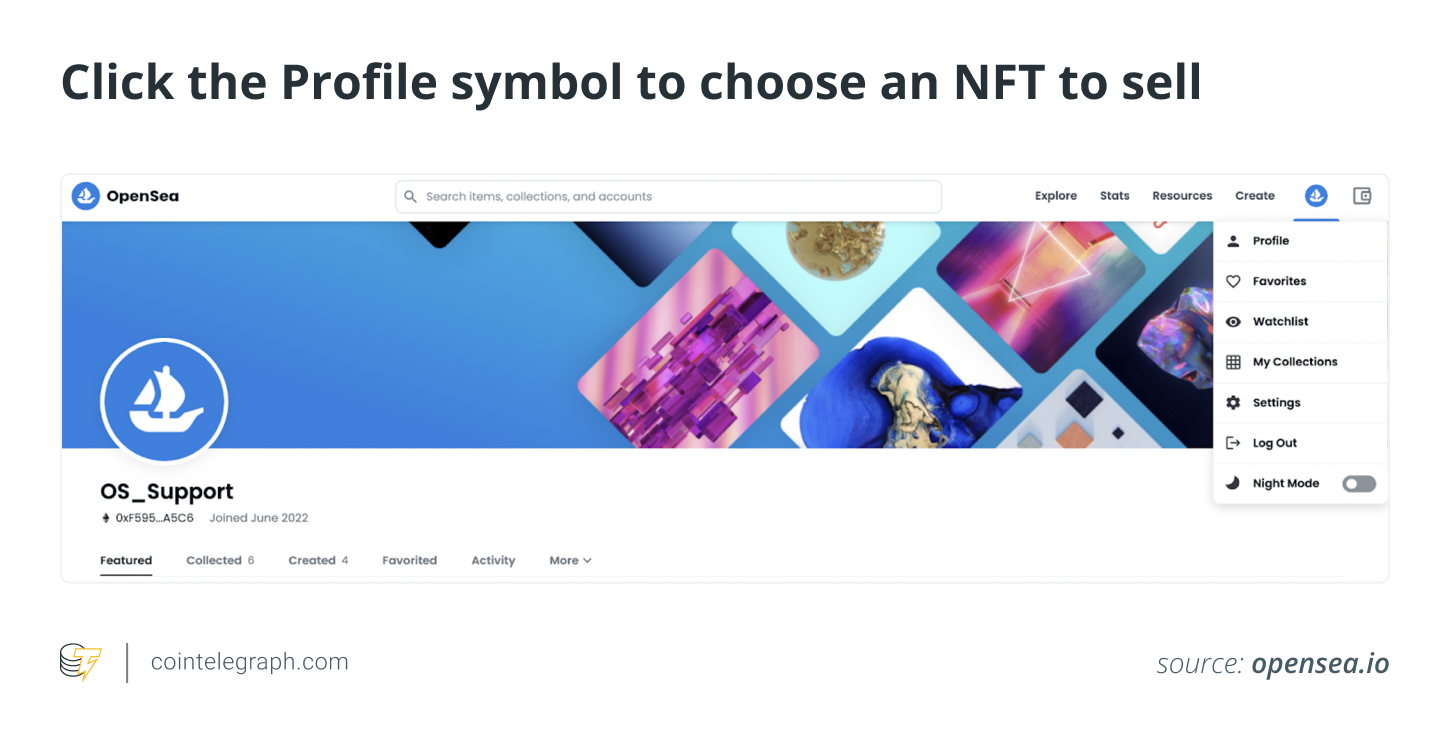
1. Click the “Profile” button in the top right corner of the OpenSea page, as shown in the image below.
⠀
⠀
2. Choose the nonfungible token from your wallet that you want to sell, or learn how to create an NFT to get started.
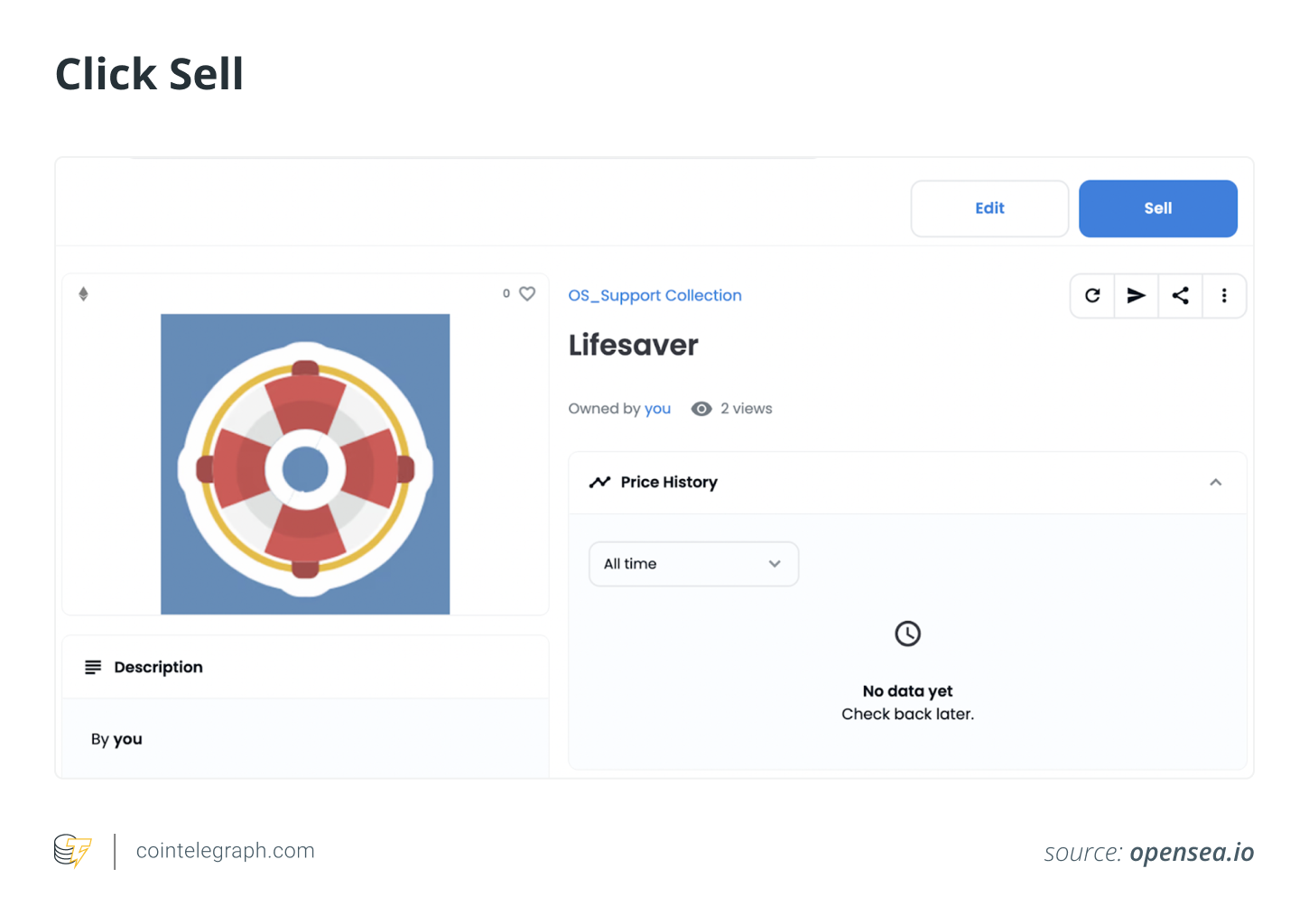
3. Click “Sell” on the top right of the item page, as shown in the image below.
⠀
⠀
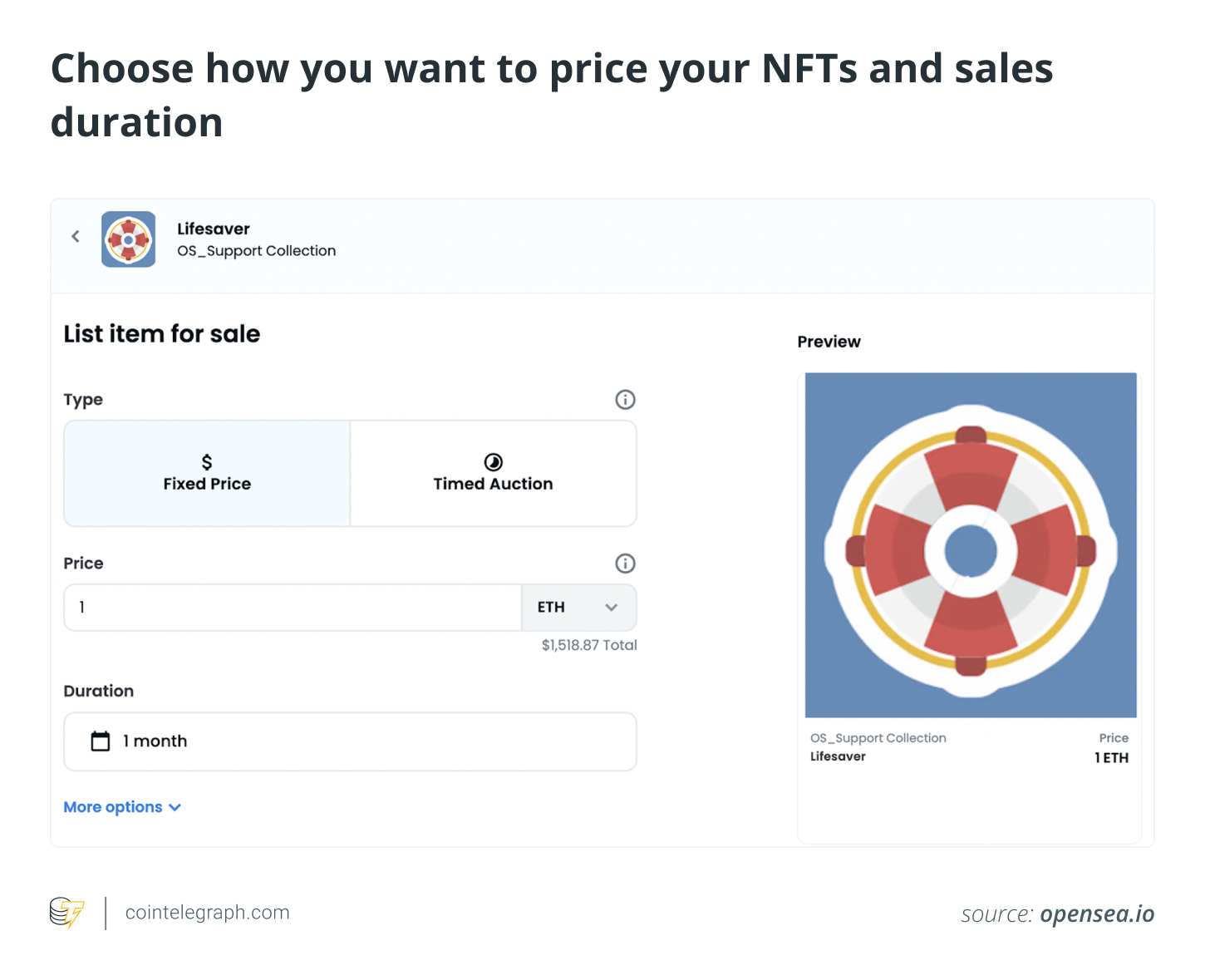
4. Select the price as a fixed price or timed auction, choose a default sale period or enter a specific duration using the calendar.
⠀
⠀
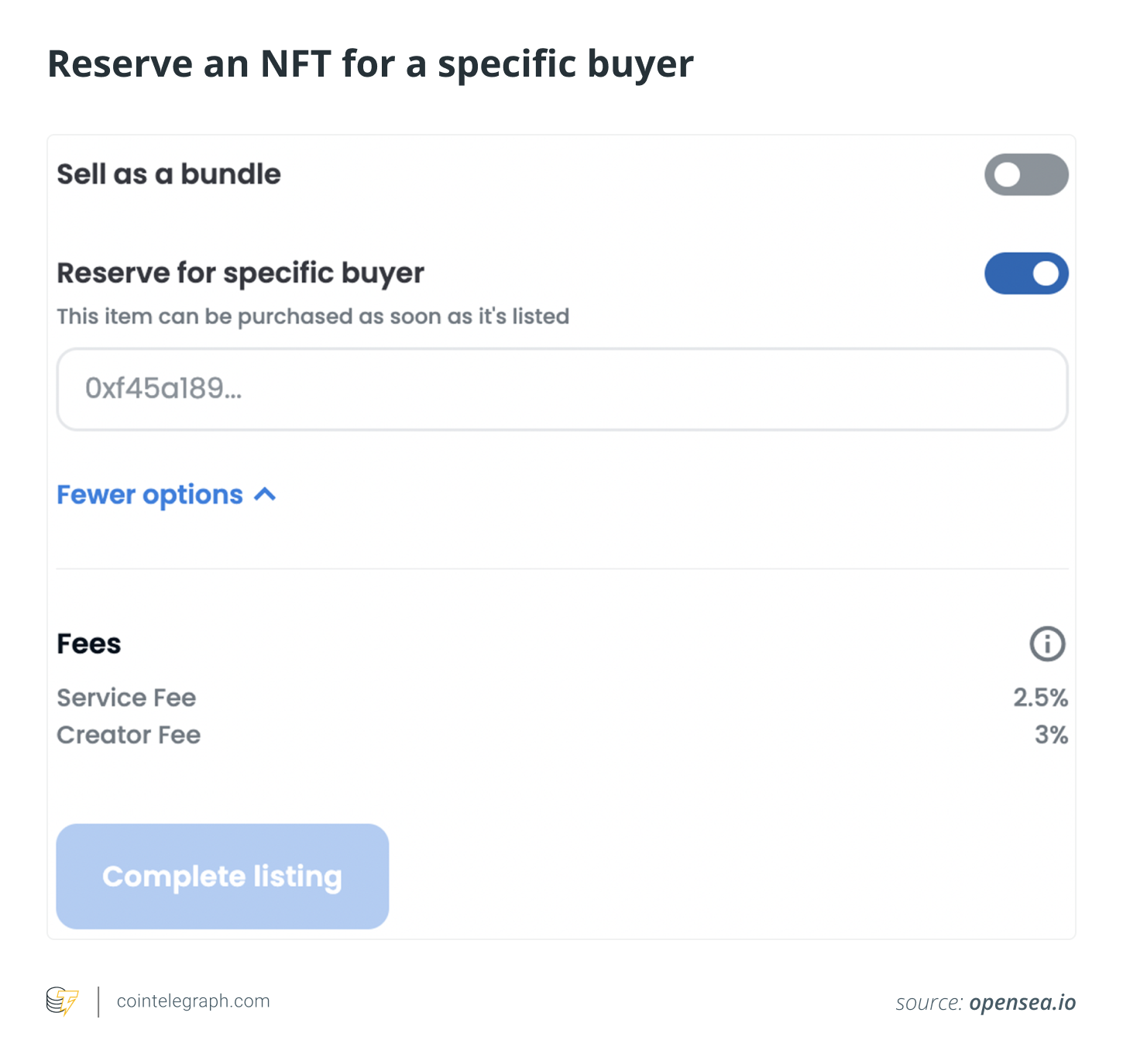
5. The item can also be set aside for a specific customer by typing the wallet address into the “Reserve for specific buyer” field under the “More Options” section, as shown in the image below. For this sale, OpenSea charged a 5.5% fee, including a 3% creator fee and a 2.5% service fee.
⠀
⠀
6. Sign a transaction to complete your listing. A pop-up confirmation will indicate that your item has been listed for sale.
⠀
Can you sell NFTs without marketing?
⠀
Marketing is at the heart of selling nonfungible tokens like any other product. So, if you are wondering why your NFT is not selling, it might be due to a lack of awareness among the nonfungible tokens community. But, how hard is it to sell an NFT?
⠀
Every artist has their own personal preferences: Some choose to be publicly visible, while others like to remain anonymous. However, to raise an NFT project’s profile, informing buyers of your professional background, including name, experience with blockchain technology and crypto art or other nonfungible tokens, is of paramount importance.
⠀
So, what kind of NFTs sell best? Although there is no definite answer, nonfungible tokens with a solid presence on different social media channels and displaying clear roadmaps may sell better than others. For instance, if an artist frequently tweets about their digital artwork and joins conversations about NFTs, it will help them build a brand and attract people to buy their work.
⠀
Alternatively, an attractive website listing your NFT collection with an accurate description will indicate genuineness to the community and help convert website visitors to actual buyers. However, avoid under-promising or over-delivering to build customer confidence in your work.