MSTR Discloses Sale of 3,588 Bitcoins, Stock Price Drops Over 5% at One Point During Trading

华尔街日报发布于2026-07-06更新于2026-07-06

文章摘要

MicroStrategy, the world's largest corporate holder of Bitcoin, has significantly shifted its business model. Between June 29 and July 5, the company sold 3,588 bitcoins for approximately $216 million to fund quarterly dividends for its preferred stock. This marks its largest-ever Bitcoin sale and signals a strategic pivot: Bitcoin is transitioning from a "buy-and-hold" reserve asset to a liquidity management tool for the company. This move follows a recent authorization allowing Bitcoin sales when equity fundraising is less attractive. The announcement contributed to a more than 5% intraday drop in MicroStrategy's stock price, while Bitcoin fell to around $61,800—below the company's average holding cost of roughly $75,700. The sale represents a major departure from MicroStrategy's long-standing "never sell" commitment, which saw its first minor breach in May with a $2.5 million sale. The latest, hundred-times-larger transaction underscores growing financial pressures. Analysts note the company faces about $1.5 billion in annual preferred dividend obligations, far exceeding cash flow from its software business. As of July 5, MicroStrategy holds 843,775 bitcoins. Its current operational logic involves buying Bitcoin during favorable financing conditions and selling portions to cover dividends when needed, creating a flexible capital management cycle amidst a challenging market environment.

Strategy is rewriting its own business model. On July 6, the world's largest corporate Bitcoin holder disclosed that it sold 3,588 Bitcoins between June 29 and July 5, raising approximately $216 million to pay dividends on its preferred shares. This not only marks the largest Bitcoin sale in the company's history but also its third sale since launching its Bitcoin strategy in 2020.

This sale signals an important shift: Bitcoin is gradually transitioning from a "buy and never sell" strategic reserve for Strategy to an asset that can be used for liquidity management.

According to Bloomberg, the company recently expanded its authorization to allow Bitcoin sales to supplement liquidity when new stock financing becomes less attractive. This adjustment comes as both Bitcoin and Strategy's stock price face pressure. Over the past year, MSTR has fallen about 75%, and Bitcoin has declined over 45% from its all-time high.

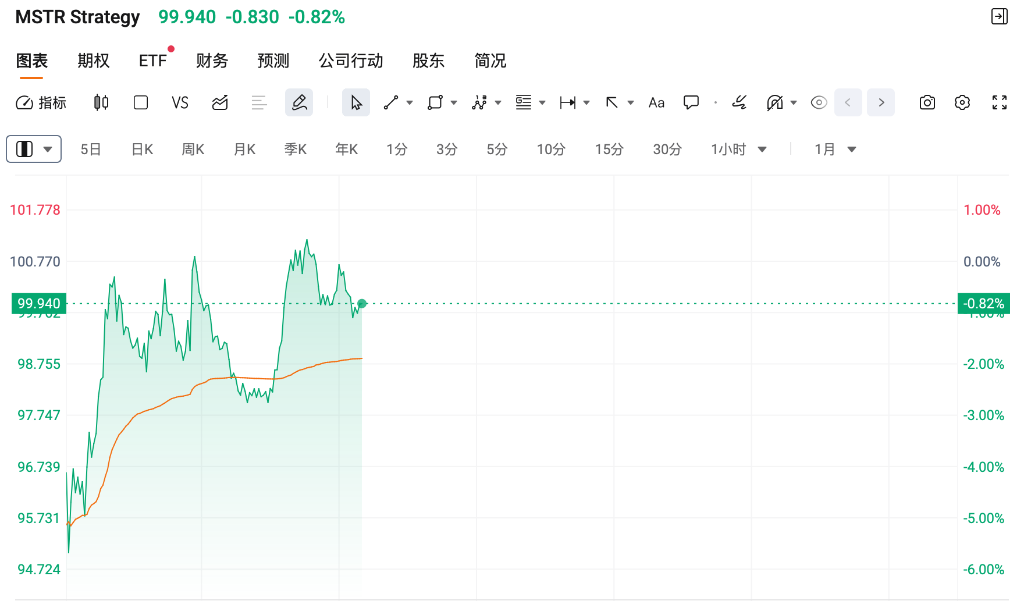
Following the news, Strategy's stock price dropped over 5% intraday, and Bitcoin fell to around $61,800, below the company's average holding cost of approximately $75,700.
'Never Selling Bitcoin' Begins to Soften

Strategy long regarded "never selling Bitcoin" as the cornerstone of its business model, but this commitment has shown clear signs of weakening.

At the end of May this year, the company broke its own rule for the first time, selling 32 Bitcoins for approximately $2.5 million to pay preferred stock dividends. At the time, the company emphasized that this move was solely to fulfill its commitment to preferred stock investors and did not represent a strategic shift.

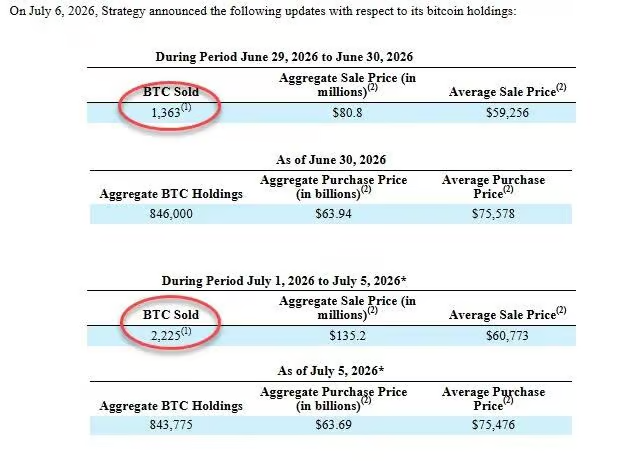
However, the scale of the latest sale has expanded significantly to 3,588 Bitcoins, about one hundred times the May sale. According to the company's disclosure, 1,363 of these were sold at an average price of about $59,300 each, and the remaining 2,225 were sold at about $60,800 each. This indicates that selling Bitcoin is no longer a one-off symbolic operation but is gradually being integrated into the company's regular financing system.
Under Pressure from $1.5 Billion Annual Dividend, Hundred-Fold Sale Exposes Tight Cash Flow

The proceeds from this sale will be specifically used to pay the Q2 dividends for the four preferred securities (STRF, STRE, STRK, STRD), as well as the June monthly dividend for STRC. Analyst Zach Pandl pointed out that Strategy's annual preferred stock dividend expenditure alone is as high as about $1.5 billion, which its software business cash flow cannot cover by itself. When cash reserves are insufficient, the company can only continue to raise funds or sell Bitcoin.

As of July 5, Strategy holds 843,775 Bitcoins, has cash reserves of $2.55 billion, with an average holding cost of about $75,700. Although the company quickly purchased an additional 1,550 Bitcoins after its first sale at the end of May, and had conducted large-scale purchases of $2.54 billion and $2.0 billion in April and May respectively, this latest sale does not mean a halt to accumulation. Instead, it represents a flexible adjustment within the system.

Strategy's operational logic is becoming increasingly clear: When financing is smooth, continue buying Bitcoin; when financing tightens, sell a small amount of Bitcoin to pay dividends, maintaining the closed-loop of its capital operation system. According to Bloomberg, the company recognized an $8.32 billion digital asset impairment loss in Q2, coinciding with a 14% drop in Bitcoin's price during the period, further intensifying pressure on its cash flow management.


热门币种推荐

相关问答

QWhy did MicroStrategy sell 3,588 bitcoins between June 29 and July 5, according to the article?

AMicroStrategy sold the bitcoins to raise approximately $216 million to pay the quarterly dividends on its STRF, STRE, STRK, and STRD preferred securities, as well as the monthly dividend for STRC.

QHow does the article describe the change in MicroStrategy's strategy regarding its bitcoin holdings?

AThe article describes a shift in strategy: bitcoin is gradually transforming from MicroStrategy's 'buy and hold' strategic reserve into an asset that can be used to manage liquidity.

QWhat is the approximate annual financial pressure MicroStrategy faces from its preferred stock dividends, and why is this significant?

AMicroStrategy faces approximately $1.5 billion in annual preferred stock dividend payments. This is significant because the cash flow from its core software business is far from sufficient to cover this cost, forcing the company to rely on financing or selling bitcoin when cash reserves are low.

QWhat happened to MicroStrategy's stock price and the bitcoin price after the news of the bitcoin sale was announced?

AAfter the news was announced, MicroStrategy's stock price fell by more than 5% intraday, and the price of bitcoin dropped to around $61,800, which is below the company's average holding cost of approximately $75,700.

QWhat was the reported scale of MicroStrategy's first-ever bitcoin sale in May, and how does it compare to the recent sale?

AIn May, MicroStrategy sold 32 bitcoins for about $2.5 million, marking its first-ever sale. The recent sale of 3,588 bitcoins is roughly a hundred times larger than the May sale.

你可能也喜欢

Token经济如何改写AI“度量衡”的商业规则丨ToB产业观察

本文探讨了AI时代中Token经济的兴起及其如何重塑商业规则。文章指出,随着AI技术的快速发展,特别是大模型和算力的指数级增长,企业面临如何评估AI投资价值的难题。Token作为AI服务的计量单位,正成为衡量其价值的关键。 Token调用量在中国呈现爆发式增长,从2024年初的日均1000亿跃升至2026年3月的140万亿,增长超千倍。专家将其类比为“智能时代的电”,预示其巨大潜力。然而,Token的价值在不同行业和场景下差异巨大,例如药物研发领域的Token价值远高于闲聊场景,关键在于其产生的“智力水平”和是否为“有效Token”。 针对Token定价与价值评估的混乱,联想集团副总裁阿不力克木提出了Token经济的“三大定律”: 1. **惯性定律**:单位Token成本将持续下降,得益于芯片、能源、模型的技术创新,系统调优以及运行时智能调度。 2. **加速定律**:单位Token创造的价值将加速释放,这取决于AI嵌入业务流程的深度、工程化程度以及配套的人才、基础设施和治理体系的完善。 3. **奇点定律**:企业AI应用存在一个成本与价值的转折点(奇点)。奇点之前,AI主要节省成本;奇点之后,AI将创造前所未有的增量价值,实现“创新的规模化”。 现实中,许多企业如Uber、Meta已面临AI使用成本超预算的困境,问题根源包括Token定价不透明、计费方式复杂以及智能体应用导致Token消耗量剧增。为应对挑战,产业界正推动建立“高质量Token”标准,并发展如Token工厂、算力套餐等更高效、透明的服务模式。 文章最后强调,Token经济的核心在于让每次AI调用产生真实价值。AI的终极目标并非替代人力,而是让创新本身能够规模化,其意义如同电力普及一样深远。

marsbit34分钟前

Token经济如何改写AI“度量衡”的商业规则丨ToB产业观察

marsbit34分钟前

交易

现货

热门文章

加密市场宏观研报:《GENIUS Act》法案取得重大进展,BTC突破历史新高,后市全新展望

2025年5月22日,比特币价格正式突破11万美元大关,创下历史新高。在政策面、宏观经济、资金面与投资者结构共同作用下,一场结构性牛市浪潮正在展开。而此轮上涨背后的核心驱动,是美国《GENIUS稳定币法案》的实质性进展以及多项利好的叠加。本文将从政策端突破、宏观环境转向、链上与ETF资金结构、交易行为演化,以及重点受益赛道五大维度,全面解析此轮BTC再创新高的深层逻辑,并前瞻下半年市场的潜在趋势。

1.7k人学过发布于 2025.05.22更新于 2025.05.22

加密市场宏观研报:《GENIUS Act》法案取得重大进展,BTC突破历史新高,后市全新展望

相关讨论

欢迎来到HTX社区。在这里,您可以了解最新的平台发展动态并获得专业的市场意见。以下是用户对BTC(BTC)币价的意见。

活动图片