Standard Chartered’s venture arm, SC Ventures, plans to raise $250 million for a cryptocurrency investment fund to launch in 2026. This shows growing interest from big institutions in digital currencies, as companies focus on long-term plans to hold cryptocurrencies.
During a financial technology event at the Money 20/20 financial technology event in Riyadh on Monday, Gautam Jain, an operating partner, stated that the firm plans to start a cryptocurrency fund by next year with some funding from Middle Eastern investors. Jain also added that the firm will pursue opportunities worldwide with the launch of its operations in Saudi Arabia.
SC Ventures, the bank’s innovation unit, started in 2018, will focus on digital assets in the financial services sector. As per the Bloomberg report, Jain shared that it is also preparing to roll out a $100 million fund aimed at African investments and is also weighing the launch of its first venture debt fund. He did not clarify whether these funds would cover or prioritize cryptocurrencies and fintech.
The announcement comes after Standard Chartered warned that many firms holding digital assets are seeing their market net asset value (mNAV), a measure comparing a company’s value to its crypto holdings, fall below the critical level of one. This drop makes it harder for these companies to issue new shares to raise money and buy more cryptocurrencies.

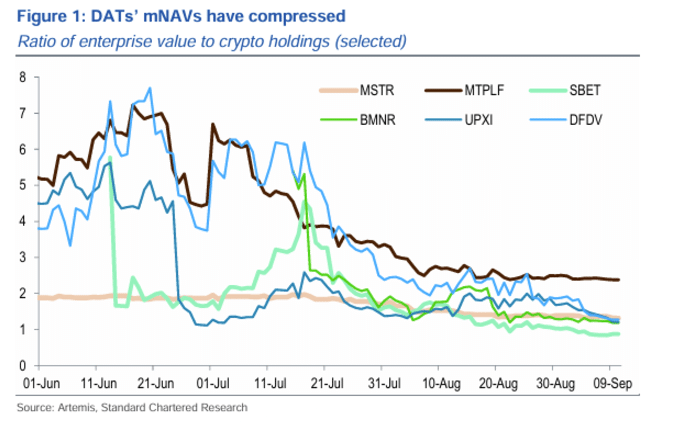
“The recent collapse in DAT mNAVs will likely drive differentiation and market consolidation,” the firm said, predicting advantages for top performers with low funding costs and staking yields, such as MicroStrategy and Bitfarms.
Also Read: Hyperscale Invests $100M in Bitcoin, Expands Michigan AI Campus