World's Richest Man, 'Silicon Valley Iron Man' Musk, to Take SpaceX Public in 2026!

marsbitXuất bản vào 2025-12-11Cập nhật gần nhất vào 2025-12-11

Tóm tắt

Elon Musk, the world's richest person and CEO of SpaceX, plans to take the company public in 2026 with a target valuation of approximately $1.5 trillion. The IPO is expected to raise "significantly more than $30 billion," potentially making it the largest in history, surpassing Saudi Aramco's 2019 offering. A key driver of this ambitious valuation is a new narrative: **space-based AI computing**. Musk introduced the concept of "space AI compute" at a recent investor conference, arguing that within five years, running AI training and inference in space could become the lowest-cost solution. The core advantages include near-uninterrupted solar power and the vacuum of space acting as an ultimate heat sink. Additionally, with its reusable Starship rockets, SpaceX aims to drastically reduce launch costs to as low as $200–300 per kilogram. This vision, however, faces significant technical hurdles. Challenges include managing extreme heat radiation in direct sunlight, protecting hardware from cosmic radiation, and the economic risks associated with potential launch failures. Competitors are also entering the arena, including Jeff Bezos’ Blue Origin, which is developing its own orbital data centers, and Sam Altman’s OpenAI, which is reportedly considering acquiring a rocket company. Despite the challenges, Wall Street has responded positively. Firms like Ark Invest are now valuing SpaceX as a high-growth AI infrastructure company rather than a traditional aerospace firm, projectin...

World's Richest Man, 'Silicon Valley Iron Man' Musk, to Take SpaceX Public in 2026.

Overall valuation is approximately $1.5 trillion (about RMB 10.6 trillion), and the planned financing scale will "significantly exceed $30 billion". If achieved, it will surpass Saudi Aramco's 2019 IPO ($29.4 billion) to become the world's largest IPO.

The grand goal of a $1.5 trillion valuation cannot rely solely on the old dream of Starlink and Starship's "stars and seas"; Musk has opportunistically crafted a new dream: Space Computing Power.
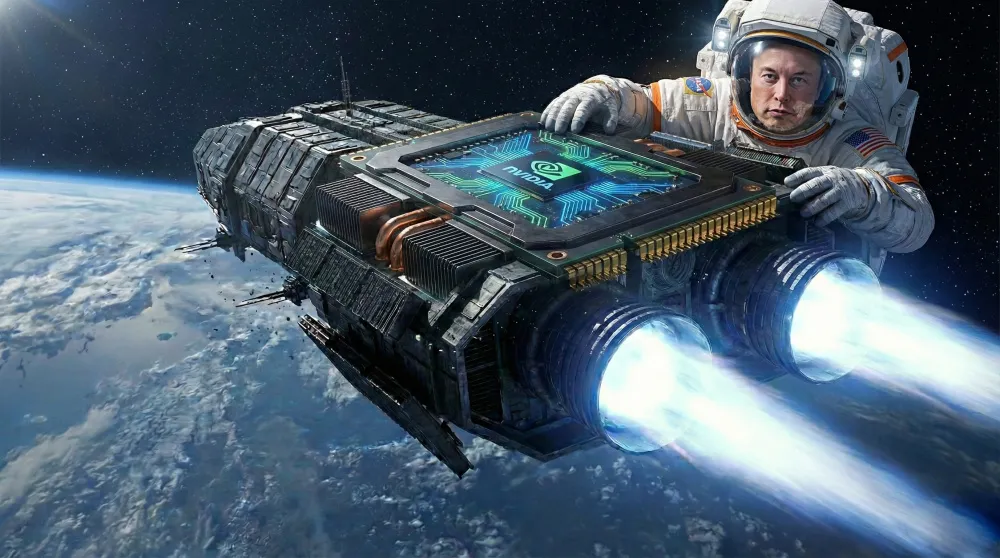
Those sharing the same dream include Bezos, Altman, and Silicon Valley giants like Google, NVIDIA, and Amazon. There's no other way—infrastructure and electricity on Earth are just too expensive.

At the Baron Capital Annual Investor Conference on November 18, Musk publicly elaborated on the concept of "Space AI Computing Power" for the first time. "Within five years, running AI training and inference in space will become the lowest-cost solution."

Musk clearly stated that Earth's orbit has the never-setting sun providing free electricity; the cosmic vacuum is the ultimate heat sink; the reusability of Starship will significantly reduce the cost of transporting materials to Earth's orbital space.

However, to utilize space's environment and energy, computing power in space requires additional technological advancements, including radiation protection, heat dissipation, etc., which in turn raises economic feasibility questions—the very problem space-based computing was meant to solve economically.

A senior aerospace researcher quipped: "Placing user data under the狂暴solar wind冲刷, what he needs isn't a computer, it's a brain supplement."

01

The Core of the New Narrative: Space Computing Power

Musk's proposed "space data center" is not science fiction but directly targets the two major bottlenecks of current Earth-based AI infrastructure: energy costs and cooling costs.

The environmental characteristics offered by space make it a leapfrog alternative, primarily including the never-setting sun and the cosmic vacuum. The former provides almost free energy, while the latter is a natural "ultimate heat sink".

As AI models expand dramatically, energy has become the biggest pressure point in the computing economy. Training a model like GPT-5 could cost hundreds of millions of dollars, with electricity costs constituting a significant portion.
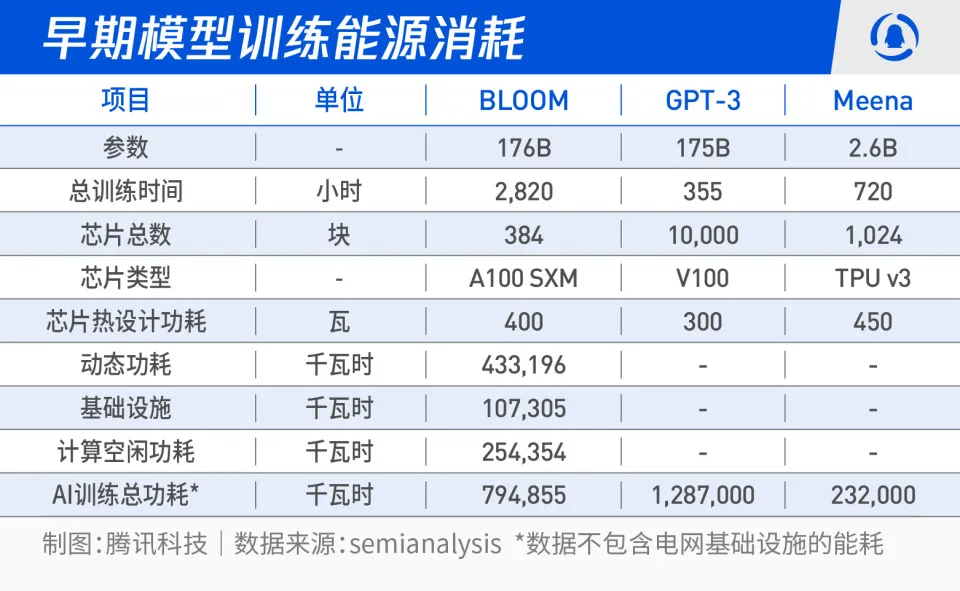
In contrast, low Earth orbit could enable space computing power to achieve a cost floor that is unattainable on Earth.

First, there is continuous solar resources—low orbit satellites circle the Earth about 16 times a day. Through orbital distribution and inter-satellite link scheduling, tasks can be switched in real-time to nodes in the sunlit zone, achieving nearly 24-hour energy supply.

Second, no land, power grid, or substation facilities are needed. Once deployed, the long-term cost of space-based solar power approaches zero.

Energy and infrastructure become cheap in space, but the heat dissipation problem must be solved. High-performance GPUs have extremely high thermal density, causing 30%–40% of a ground data center's electricity to be consumed by cooling.

In space, the vacuum environment, lacking convection and conduction, relies solely on thermal radiation for heat dissipation. For satellites on the sun-facing side, this is equivalent to "barbecue mode". Additionally, space radiation and high-energy particles could potentially disrupt high-performance computing processes, making them "fragmented".

"The computing chips you use on the ground likely won't work up there," emphasized the aforementioned researcher.

Another key element supporting SpaceX's space computing power story is Starship's launch capacity cost.

The economics of space computing power are built upon Starship's extremely low launch costs. Musk's planned Starship V3 (single payload ~100 tons) could, with high-frequency reuse, push the launch price down to $200–300 per kilogram, far lower than existing rockets.

Based on this estimate, the transportation cost to send a 200MW-class data center into orbit would be about $5–7.5 billion, still significantly lower than the total investment required to build a similar-scale AI supercomputer on Earth ($15–25 billion).

The story is always beautiful, but reality presents numerous challenges.

Beyond the aforementioned heat dissipation and cosmic rays, the first issue proponents of the "space computing power" narrative must consider is rocket explosions and accidents—the cost of such low-probability events would far exceed the value brought by increased launch capacity, especially considering 1GW of computing power on Earth is worth up to $50 billion.

From this perspective, everything returns to the original point: the "economic problem".

Regarding heat dissipation, while it might be possible to utilize the deep space's low temperatures, this raises another issue—distance is too great, requiring another more efficient energy source, such as nuclear power, to replace solar.

As for radiation, although it can be mitigated through radiation hardening, this adds extra technical challenges and costs beyond standard GPUs.

"Radiation hardening, the materials and processes themselves are expensive, and there's an upper limit to reinforcement; it's never as effective as the atmosphere's radiation protection," said the aforementioned researcher.

To address this, SpaceX is leveraging Tesla's experience with automotive-grade AI chips: Triple Modular Redundancy (TMR) architecture and real-time verification significantly improve radiation resistance.


02

Silicon Valley Capital Pushers "Get On Board"

SpaceX's new space computing power narrative is receiving a strong response from Wall Street and Silicon Valley capital.

Investment bank Morgan Stanley emphasized in a recent research report that the market's repricing of SpaceX's valuation essentially stems from the renewed expansion of its commercial boundaries. The "orbital data center" has become a new AI infrastructure narrative driving its valuation surge.
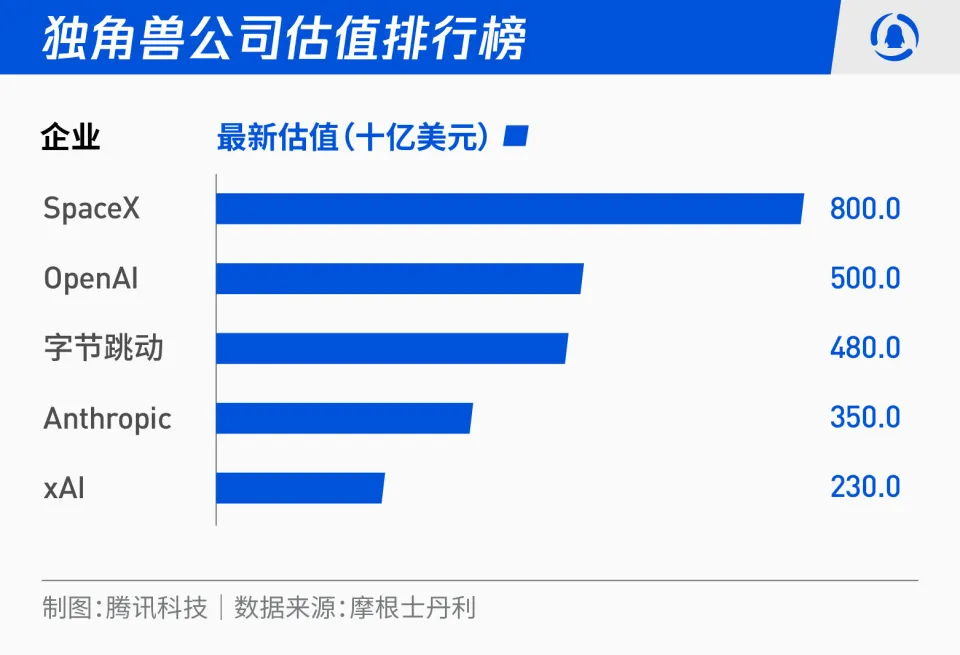
Analysts pointed out that this concept not only explains why the market is willing to price SpaceX like a high-growth software company but also why its valuation has shown a trend of doubling in half a year.

Wall Street has responded positively to Musk's new story for SpaceX. The most representative example is Cathie Wood's Ark Investment.

Ark's latest model explicitly values SpaceX entirely as a high-growth software company and AI infrastructure company, rather than a traditional aerospace or telecommunications enterprise. Almost all the新增valuation in their model comes from the "Space AI Computing Power" business line.

As long-time investors in Musk, they made aggressive scenario assumptions: By 2030, Starlink terminal users reach 120 million, contributing $300 billion in annual revenue; Orbital data centers will bring an additional $80–120 billion in revenue, with a net profit margin exceeding 70%, far higher than ground-based cloud services.

Ark Investment believes the key point is reducing Starship launch costs to below $100 per kilogram. After that, the scaled deployment of space computing power will experience exponential growth, similar to Amazon Web Services (AWS) after its launch, pushing SpaceX to become a $2.5 trillion-level company.

On the other hand, Silicon Valley mogul Peter Thiel's influence on SpaceX is more strategically significant.

As one of the earliest and most crucial external investors, Thiel provided a lifeline in 2008 when SpaceX faced three consecutive launch failures and was on the verge of bankruptcy, investing $20 million through Founders Fund as a timely rescue. He has since made multiple additional investments in SpaceX.

Thiel's support for SpaceX goes far beyond money itself; it also comes with the authoritative endorsement of the Silicon Valley ideology. Peter Thiel's involvement lends credibility to the "space computing power" narrative. More importantly, Thiel leverages his "Silicon Valley-Washington" influence to secure key policy and regulatory space for SpaceX.

The backing of these capital大佬相当于给SpaceX 1.5万亿美元的估值贴上了“可信”的标签. Therefore, Morgan Stanley noted in the aforementioned report that while Musk denied the rumored "$800 billion valuation," he was更多的是否认“融资行为”,并未否认估值本身.

Progress on Starship and Starlink, acquisition of global direct-to-cellular spectrum, the orbital data center becoming a new narrative, and SpaceX's overwhelming capability of capturing 90% of global launch mass have convinced capital markets that these variables will become the "main artery of future AI infrastructure".


03

Competition, Bubbles, and Risks

Over the past few years, Musk hasn't been the only one pushing the development of space computing power.

As early as 2021, the Barcelona Supercomputing Center (BSC) in Europe and Airbus Defence and Space jointly launched the GPU4S (GPU for Space) project, funded by the European Space Agency (ESA), to verify the feasibility of embedded GPUs in aerospace applications.

The project produced an open-source benchmark suite, GPU4S Bench, for evaluating performance in image processing, autonomous navigation, etc., and yielded the open-source benchmark test suite OBPMark adopted by ESA, laying the foundation for Europe's technological autonomy in orbital computing.

On November 2, 2025, a SpaceX Falcon 9 successfully launched the first experimental satellite, Starcloud-1, for startup Starcloud into low Earth orbit. The satellite carried an NVIDIA H100 GPU, marking the first verification of in-orbit AI data processing capability. It is reported that NVIDIA and Starcloud jointly developed a combined vacuum heat dissipation architecture, using highly thermally conductive materials on the satellite's exterior to conduct heat to the surface for dissipation via infrared radiation.

As Musk's old rival in the commercial space race, Jeff Bezos is also pushing Blue Origin to develop orbital AI data center technology, planning to use space-based solar power to fuel large-scale AI computing power.

He predicts that within the next 20 years, the cost of orbital data centers could be lower than ground facilities.

Another opponent in the AI field, OpenAI CEO Sam Altman, is also eager, considering acquiring rocket company Stoke Space to send AI computing payloads into space.

It can be said that the path for SpaceX to reach its $1.5 trillion valuation via "space computing power" is full of challengers, but the most direct opponent at this stage is Amazon's Project Kuiper.

Public information shows that Kuiper plans to deploy 3,200 satellites between 2026 and 2029 through launch agreements with Blue Origin. Its biggest advantage lies in AWS's global cloud ecosystem, which can offer enterprises a "ground + space" hybrid computing power offering.

But in Thiel's view, Kuiper still belongs to an "extension of the traditional cloud," relying on an Earth-infrastructure mindset that hasn't changed. Whereas SpaceX's space AI is a completely new paradigm: moving the computing center itself into orbit, making Earth data centers a supplementary layer. This paradigm difference determines the ceiling for both sides in the future "orbital cloud" competition.

Beyond technical and competitive challenges, regulatory issues must be considered—including orbital debris management, international spectrum coordination, and space militarization controversies—any of which could affect SpaceX's progress节奏in the next two to three years.

Returning to SpaceX: From the "Starlink IPO" in 2019, to "Starship is the core asset" in 2022, to the current "space data centers will become the cheapest AI computing power," Musk has rewritten SpaceX's narrative three times in the past six years, almost每一次都从质疑变成现实原型 (each time transforming from skepticism to a reality prototype).

Now, he is tying together Tesla's chip capabilities, xAI models, Starlink bandwidth, and Starship launch capacity into a unified strategy, targeting the most expensive resource of the AI era—low-cost computing power.

Wall Street has already started betting—the question is, can the richest man's new version of the "space dream" once again take shape?


Câu hỏi Liên quan

QWhat is the core of Elon Musk's new narrative for SpaceX's 2026 IPO, and what are its main advantages?

AThe core of the new narrative is 'Space Computing' or 'Orbital Data Centers'. The main advantages are access to nearly free, continuous solar power in orbit and the vacuum of space acting as the 'ultimate heat sink', which could significantly reduce the energy and cooling costs associated with large-scale AI computing on Earth.

QWhat major challenge does placing computing hardware in space present, according to the article?

AA major challenge is protecting the hardware from intense solar radiation and high-energy particles, which can disrupt high-performance computing processes. This requires developing and implementing expensive radiation-hardened technology and materials.

QWhich financial institution's analysis is cited as supporting the new 'space computing' narrative for SpaceX's valuation?

AInvestment bank Morgan Stanley is cited. Their analysis states that the 'orbital data center' concept is a new AI infrastructure story driving a re-rating of SpaceX's valuation, explaining why it's being valued like a high-growth software company.

QWho are some of the key competitors also exploring the concept of space-based computing, as mentioned in the article?

AKey competitors include Jeff Bezos' Blue Origin, which is developing orbital AI data center technology, and OpenAI CEO Sam Altman, who is considering acquiring rocket company Stoke Space for AI computing payloads. Amazon's Project Kuiper is also a direct competitor leveraging its AWS cloud ecosystem.

QWhat is the projected cost target for SpaceX's Starship V3 launch to make space computing economically viable, according to Ark Invest's model?

AArk Invest's model assumes a crucial target of reducing the Starship launch cost to under $100 per kilogram. Achieving this is seen as a key trigger for the exponential growth of space computing deployment.

Nội dung Liên quan

Sentora và Firelight Hợp Tác Mang Lại Bảo Hiểm DeFi Nguyên Bản

Sentora, một nền tảng quản lý rủi ro và trí tuệ DeFi thể chế, đã hợp tác với Firelight Protocol để cung cấp bảo hiểm gốc (native coverage) cho các khoản đầu tư trên nền tảng của mình. Sự hợp tác này nhằm lấp đầy khoảng trống về bảo mật, vốn là rào cản cho sự tham gia của các tổ chức vào DeFi, bằng cách tích hợp một lớp bảo vệ được hỗ trợ bởi vốn trực tiếp vào cơ sở hạ tầng kho tiền (vault). Thông qua quan hệ đối tác, người tham gia vào các vault của Sentora sẽ được bảo vệ bẩm sinh trước các rủi ro như nợ xấu, lỗi Oracle và khai thác hợp đồng thông minh. Firelight, được xây dựng trên Flare Network, sử dụng FXRP (một đại diện 1:1 của XRP) làm cơ chế tài sản thế chấp chính, biến XRP thành một tài sản sinh lời. Giám đốc điều hành Sentora, Anthony DeMartino, nhấn mạnh nhu cầu về một lớp bảo vệ rõ ràng để thúc đẩy áp dụng DeFi rộng rãi hơn. Hugo Philion, đồng sáng lập Flare, cũng đánh giá cao mô hình này như một cơ sở hạ tầng cấp thể chế. Đây được xem là một bước tiến nhằm chuẩn hóa bảo hiểm như một yếu tố cơ bản trong triển khai vốn DeFi, từ đó xây dựng niềm tin và tạo điều kiện cho việc áp dụng trên quy mô lớn.

TheNewsCrypto19 phút trước

Sentora và Firelight Hợp Tác Mang Lại Bảo Hiểm DeFi Nguyên Bản

TheNewsCrypto19 phút trước

Giao dịch

Giao ngay
Hợp đồng Tương lai

Bài viết Nổi bật

AGENT S là gì

Agent S: Tương Lai của Tương Tác Tự Động trong Web3 Giới thiệu Trong bối cảnh không ngừng phát triển của Web3 và tiền điện tử, các đổi mới đang liên tục định nghĩa lại cách mà cá nhân tương tác với các nền tảng kỹ thuật số. Một dự án tiên phong như vậy, Agent S, hứa hẹn sẽ cách mạng hóa tương tác giữa con người và máy tính thông qua khung tác nhân mở của nó. Bằng cách mở đường cho các tương tác tự động, Agent S nhằm đơn giản hóa các nhiệm vụ phức tạp, cung cấp các ứng dụng chuyển đổi trong trí tuệ nhân tạo (AI). Cuộc khám phá chi tiết này sẽ đi sâu vào những phức tạp của dự án, các tính năng độc đáo của nó và những tác động đối với lĩnh vực tiền điện tử. Agent S là gì? Agent S đứng vững như một khung tác nhân mở đột phá, được thiết kế đặc biệt để giải quyết ba thách thức cơ bản trong việc tự động hóa các nhiệm vụ máy tính: Thu thập Kiến thức Cụ thể theo Miền: Khung này học một cách thông minh từ nhiều nguồn kiến thức bên ngoài và kinh nghiệm nội bộ. Cách tiếp cận kép này giúp nó xây dựng một kho lưu trữ phong phú về kiến thức cụ thể theo miền, nâng cao hiệu suất của nó trong việc thực hiện nhiệm vụ. Lập Kế Hoạch Qua Các Tầm Nhìn Nhiệm Vụ Dài Hạn: Agent S sử dụng lập kế hoạch phân cấp tăng cường kinh nghiệm, một cách tiếp cận chiến lược giúp phân chia và thực hiện các nhiệm vụ phức tạp một cách hiệu quả. Tính năng này nâng cao đáng kể khả năng quản lý nhiều nhiệm vụ con một cách hiệu quả và hiệu suất. Xử Lý Các Giao Diện Động, Không Đều: Dự án giới thiệu Giao Diện Tác Nhân-Máy Tính (ACI), một giải pháp đổi mới giúp nâng cao tương tác giữa các tác nhân và người dùng. Sử dụng các Mô Hình Ngôn Ngữ Lớn Đa Phương Thức (MLLMs), Agent S có thể điều hướng và thao tác các giao diện người dùng đồ họa đa dạng một cách liền mạch. Thông qua những tính năng tiên phong này, Agent S cung cấp một khung vững chắc giải quyết các phức tạp liên quan đến việc tự động hóa tương tác giữa con người với máy móc, mở ra nhiều ứng dụng trong AI và hơn thế nữa. Ai là Người Tạo ra Agent S? Mặc dù khái niệm về Agent S là hoàn toàn đổi mới, thông tin cụ thể về người sáng lập vẫn còn mơ hồ. Người sáng lập hiện vẫn chưa được biết đến, điều này làm nổi bật giai đoạn sơ khai của dự án hoặc sự lựa chọn chiến lược để giữ kín các thành viên sáng lập. Bất chấp sự ẩn danh, sự chú ý vẫn tập trung vào khả năng và tiềm năng của khung này. Ai là Các Nhà Đầu Tư của Agent S? Vì Agent S còn tương đối mới trong hệ sinh thái mã hóa, thông tin chi tiết về các nhà đầu tư và những người tài trợ tài chính của nó không được ghi chép rõ ràng. Sự thiếu vắng thông tin công khai về các nền tảng đầu tư hoặc tổ chức hỗ trợ dự án dấy lên câu hỏi về cấu trúc tài trợ và lộ trình phát triển của nó. Hiểu biết về sự hỗ trợ là rất quan trọng để đánh giá tính bền vững và tác động tiềm năng của dự án. Agent S Hoạt Động Như Thế Nào? Tại cốt lõi của Agent S là công nghệ tiên tiến cho phép nó hoạt động hiệu quả trong nhiều bối cảnh khác nhau. Mô hình hoạt động của nó được xây dựng xung quanh một số tính năng chính: Tương Tác Giống Như Con Người: Khung này cung cấp lập kế hoạch AI tiên tiến, cố gắng làm cho các tương tác với máy tính trở nên trực quan hơn. Bằng cách bắt chước hành vi của con người trong việc thực hiện nhiệm vụ, nó hứa hẹn nâng cao trải nghiệm người dùng. Ký Ức Tường Thuật: Được sử dụng để tận dụng các trải nghiệm cấp cao, Agent S sử dụng ký ức tường thuật để theo dõi lịch sử nhiệm vụ, từ đó nâng cao quy trình ra quyết định của nó. Ký Ức Tình Huống: Tính năng này cung cấp cho người dùng hướng dẫn từng bước, cho phép khung này cung cấp hỗ trợ theo ngữ cảnh khi các nhiệm vụ diễn ra. Hỗ Trợ OpenACI: Với khả năng chạy cục bộ, Agent S cho phép người dùng duy trì quyền kiểm soát đối với các tương tác và quy trình làm việc của họ, phù hợp với tinh thần phi tập trung của Web3. Tích Hợp Dễ Dàng với Các API Bên Ngoài: Tính linh hoạt và khả năng tương thích với nhiều nền tảng AI khác nhau đảm bảo rằng Agent S có thể hòa nhập liền mạch vào các hệ sinh thái công nghệ hiện có, làm cho nó trở thành lựa chọn hấp dẫn cho các nhà phát triển và tổ chức. Những chức năng này cùng nhau góp phần vào vị trí độc đáo của Agent S trong không gian tiền điện tử, khi nó tự động hóa các nhiệm vụ phức tạp, nhiều bước với sự can thiệp tối thiểu của con người. Khi dự án phát triển, các ứng dụng tiềm năng của nó trong Web3 có thể định nghĩa lại cách mà các tương tác kỹ thuật số diễn ra. Thời Gian Phát Triển của Agent S Sự phát triển và các cột mốc của Agent S có thể được tóm tắt trong một dòng thời gian nêu bật các sự kiện quan trọng của nó: 27 tháng 9, 2024: Khái niệm về Agent S được ra mắt trong một bài nghiên cứu toàn diện mang tên “Một Khung Tác Nhân Mở Sử Dụng Máy Tính Như Một Con Người,” trình bày nền tảng cho dự án. 10 tháng 10, 2024: Bài nghiên cứu được công bố công khai trên arXiv, cung cấp một cái nhìn sâu sắc về khung và đánh giá hiệu suất của nó dựa trên tiêu chuẩn OSWorld. 12 tháng 10, 2024: Một video trình bày được phát hành, cung cấp cái nhìn trực quan về khả năng và tính năng của Agent S, thu hút thêm sự quan tâm từ người dùng và nhà đầu tư tiềm năng. Những dấu mốc trong dòng thời gian không chỉ minh họa sự tiến bộ của Agent S mà còn chỉ ra cam kết của nó đối với sự minh bạch và sự tham gia của cộng đồng. Những Điểm Chính Về Agent S Khi khung Agent S tiếp tục phát triển, một số thuộc tính chính nổi bật, nhấn mạnh tính đổi mới và tiềm năng của nó: Khung Đổi Mới: Được thiết kế để cung cấp cách sử dụng máy tính trực quan giống như tương tác của con người, Agent S mang đến một cách tiếp cận mới cho việc tự động hóa nhiệm vụ. Tương Tác Tự Động: Khả năng tương tác tự động với máy tính thông qua GUI đánh dấu một bước tiến tới các giải pháp tính toán thông minh và hiệu quả hơn. Tự Động Hóa Nhiệm Vụ Phức Tạp: Với phương pháp mạnh mẽ của nó, nó có thể tự động hóa các nhiệm vụ phức tạp, nhiều bước, làm cho các quy trình nhanh hơn và ít sai sót hơn. Cải Tiến Liên Tục: Các cơ chế học tập cho phép Agent S cải thiện từ các trải nghiệm trước đó, liên tục nâng cao hiệu suất và hiệu quả của nó. Tính Linh Hoạt: Khả năng thích ứng của nó trên các môi trường hoạt động khác nhau như OSWorld và WindowsAgentArena đảm bảo rằng nó có thể phục vụ một loạt các ứng dụng rộng rãi. Khi Agent S định vị mình trong bối cảnh Web3 và tiền điện tử, tiềm năng của nó để nâng cao khả năng tương tác và tự động hóa quy trình đánh dấu một bước tiến quan trọng trong công nghệ AI. Thông qua khung đổi mới của mình, Agent S minh họa cho tương lai của các tương tác kỹ thuật số, hứa hẹn một trải nghiệm liền mạch và hiệu quả hơn cho người dùng trên nhiều ngành công nghiệp khác nhau. Kết luận Agent S đại diện cho một bước nhảy vọt táo bạo trong sự kết hợp giữa AI và Web3, với khả năng định nghĩa lại cách chúng ta tương tác với công nghệ. Mặc dù vẫn còn ở giai đoạn đầu, những khả năng cho ứng dụng của nó là rộng lớn và hấp dẫn. Thông qua khung toàn diện của mình giải quyết các thách thức quan trọng, Agent S nhằm đưa các tương tác tự động lên hàng đầu trong trải nghiệm kỹ thuật số. Khi chúng ta tiến sâu hơn vào các lĩnh vực tiền điện tử và phi tập trung, các dự án như Agent S chắc chắn sẽ đóng một vai trò quan trọng trong việc định hình tương lai của công nghệ và sự hợp tác giữa con người với máy tính.

Tổng lượt xem 643Xuất bản vào 2025.01.14Cập nhật vào 2025.01.14

AGENT S là gì

Làm thế nào để Mua S

Chào mừng bạn đến với HTX.com! Chúng tôi đã làm cho mua Sonic (S) trở nên đơn giản và thuận tiện. Làm theo hướng dẫn từng bước của chúng tôi để bắt đầu hành trình tiền kỹ thuật số của bạn.Bước 1: Tạo Tài khoản HTX của BạnSử dụng email hoặc số điện thoại của bạn để đăng ký tài khoản miễn phí trên HTX. Trải nghiệm hành trình đăng ký không rắc rối và mở khóa tất cả tính năng. Nhận Tài khoản của tôiBước 2: Truy cập Mua Crypto và Chọn Phương thức Thanh toán của BạnThẻ Tín dụng/Ghi nợ: Sử dụng Visa hoặc Mastercard của bạn để mua Sonic (S) ngay lập tức.Số dư: Sử dụng tiền từ số dư tài khoản HTX của bạn để giao dịch liền mạch.Bên thứ ba: Chúng tôi đã thêm những phương thức thanh toán phổ biến như Google Pay và Apple Pay để nâng cao sự tiện lợi.P2P: Giao dịch trực tiếp với người dùng khác trên HTX.Thị trường mua bán phi tập trung (OTC): Chúng tôi cung cấp những dịch vụ được thiết kế riêng và tỷ giá hối đoái cạnh tranh cho nhà giao dịch.Bước 3: Lưu trữ Sonic (S) của BạnSau khi mua Sonic (S), lưu trữ trong tài khoản HTX của bạn. Ngoài ra, bạn có thể gửi đi nơi khác qua chuyển khoản blockchain hoặc sử dụng để giao dịch những tiền kỹ thuật số khác.Bước 4: Giao dịch Sonic (S)Giao dịch Sonic (S) dễ dàng trên thị trường giao ngay của HTX. Chỉ cần truy cập vào tài khoản của bạn, chọn cặp giao dịch, thực hiện giao dịch và theo dõi trong thời gian thực. Chúng tôi cung cấp trải nghiệm thân thiện với người dùng cho cả người mới bắt đầu và người giao dịch dày dạn kinh nghiệm.

Tổng lượt xem 1.3kXuất bản vào 2025.01.15Cập nhật vào 2025.03.21

Làm thế nào để Mua S

Thảo luận

Chào mừng đến với Cộng đồng HTX. Tại đây, bạn có thể được thông báo về những phát triển nền tảng mới nhất và có quyền truy cập vào thông tin chuyên sâu về thị trường. Ý kiến ​​của người dùng về giá của S (S) được trình bày dưới đây.

活动图片