We've Hoarded Trillions in Bitcoin, But Never Use It? That's Changing Now

marsbitXuất bản vào 2025-12-09Cập nhật gần nhất vào 2025-12-09

Tóm tắt

A significant portion of Bitcoin's trillion-dollar market cap remains dormant, with 61% of coins not moving in over a year and only 0.8% used in DeFi. While other ecosystems like Ethereum and L2s thrive with active use cases, Bitcoin has largely functioned as a passive store of value due to architectural and cultural constraints—prioritizing security over programmability, resisting upgrades, and lacking native interoperability. Previous solutions like wrapped BTC, federated systems, and bridges attempted to unlock Bitcoin’s liquidity but introduced new risks like custodial trust, security vulnerabilities, and reliance on external validators, contradicting Bitcoin’s trust-minimized ethos. However, this is changing with recent breakthroughs. Innovations like BitVM enable Bitcoin to verify external computations without executing them, allowing for Bitcoin-secured rollups and trust-minimized bridges. Upgrades like Taproot facilitate native assets and programmable vaults. New systems now support Bitcoin staking, restaking, and Lightning Network-based yield without requiring custodial wrapping or bridging. This emerging BTCFi ecosystem—comprising infrastructure, asset, and protocol layers—finally allows Bitcoin to participate in a functional economy while preserving its security model and self-custody principles. This could unlock a portion of the dormant capital, significantly impacting the broader crypto landscape.

Most people who buy Bitcoin today don't use it at all.

They hold it, call it digital gold, and proudly declare they are "in it for the long term." And that's fine—Bitcoin has earned that reputation.

But such massive holdings have created one of the largest pools of idle capital in the crypto ecosystem today. About 61% of Bitcoin hasn't moved in over a year, and nearly 14% hasn't moved in over a decade. Despite a market cap exceeding $2 trillion, only 0.8% of Bitcoin is currently participating in any form of decentralized finance (DeFi) activity.

In other words, Bitcoin is the most valuable asset in crypto, but also the least used.

Now, let's contrast this with other aspects of the crypto world:

  • Stablecoins settle payments globally at a massive scale.
  • Ethereum powers smart contracts, decentralized autonomous organizations (DAOs), wallets, and entire economies.
  • Layer 2s (L2s) run complete ecosystems with lending, trading, gaming, and thousands of applications.

Meanwhile, Bitcoin, the largest, most secure, and most widely held asset, can do none of the above.

Instead, it sits there with trillions in value, idle, generating no yield, creating no liquidity, and contributing nothing to the broader economy beyond security and price appreciation.

When people tried to solve this, the solutions created new problems. Wrapped BTC (WBTC) became popular but required trusting a custodian. Cross-chain bridges allowed you to move Bitcoin to another chain but introduced security risks. Bitcoin holders wanted to use their Bitcoin, but the infrastructure never provided a secure, native way to do so.

But that is finally changing. Over the past few years, a whole new ecosystem has been forming around Bitcoin, attempting to unlock all this "sleeping capital" without forcing people to wrap their Bitcoin, trust intermediaries, or move it into someone else's custody.

Why Bitcoin Ended Up Here

Bitcoin becoming a passive asset was no accident. Its entire architecture steered it in this direction. Long before DeFi emerged, Bitcoin made a clear trade-off: prioritize security above all else. This decision shaped its culture, developer environment, and ultimately, the type of economic activity that flourished around it.

The result is an extremely immutable blockchain, great for moving money but severely limiting for innovation. Most people only see the surface symptoms: low liquidity, high dormancy rates, and the dominance of wrapped Bitcoin, but the root of the problem goes much deeper.

The first limitation is Bitcoin's scripting model. It deliberately avoids complexity, keeping the base layer hard to exploit and predictable. This means no general computation, no native financial logic, no on-chain automation. Ethereum, Solana, and all modern L1s were built on the assumption that developers would build. Bitcoin was built on the assumption that they shouldn't.

The second limitation is Bitcoin's upgrade path. Any change, even a minor feature, requires coordination across the entire ecosystem. Hard forks are socially nearly impossible, and soft forks take years. So, while other cryptos iterated through entire design paradigms (e.g., AMMs, account abstraction, L2s, modular blockchains), Bitcoin remained largely stagnant. It became a settlement layer but never truly an execution layer.

The third limitation is cultural. Bitcoin's developer ecosystem is inherently conservative. This conservatism protects the network but also stifles experimentation. Any proposal introducing complexity is met with skepticism. This mindset safeguards the base layer but ensures new financial primitives can't emerge on Bitcoin like they do elsewhere.
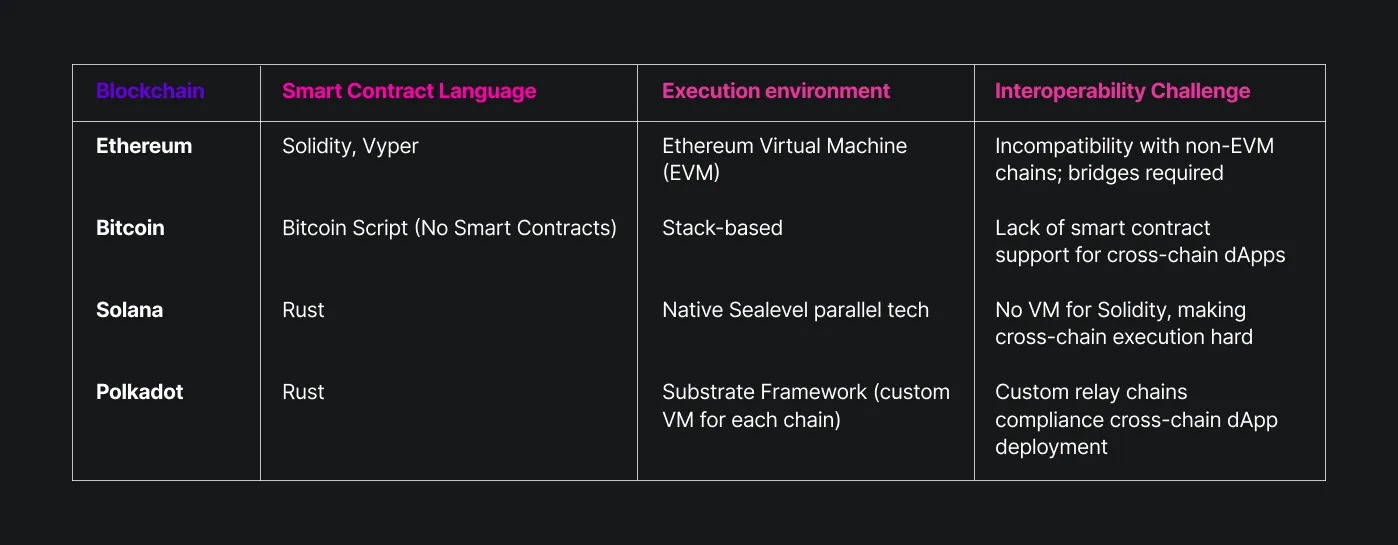
Furthermore, there's a structural limitation: Bitcoin's value grew faster than its surrounding infrastructure. Ethereum had smart contracts from the start; Solana adopted a high-throughput design from day one. Bitcoin's value ballooned into an asset class before its "range of usable applications" could expand. Thus, the entire ecosystem ended up with a paradox: you have trillions in capital with almost nowhere to deploy it.

The final limitation is interoperability. Bitcoin is uniquely isolated; it doesn't interoperate with other blockchains and has no native bridges. Until recently, there was no trust-minimized way to connect Bitcoin to external execution environments. So, any attempt to make Bitcoin usable required abandoning part of Bitcoin's security model—wrapping, bridging, custodial minting, multisigs, federations. For an asset built on distrust of intermediaries, this could never scale.

The First Workarounds: Wrappers, Sidechains, and Bridges

When it became clear that the Bitcoin base layer couldn't support meaningful activity, the industry did what it always does: developed workarounds. Initially, these seemed like progress, enabling Bitcoin to enter realms where DeFi activity thrived. But upon closer inspection, they all shared a common flaw: using them required giving up part of Bitcoin's trust model.

The most prominent example is Wrapped Bitcoin (WBTC). It became the default bridge between Bitcoin and Ethereum, and for a while, this model seemed to work. It unlocked liquidity, allowing Bitcoin to be used as collateral, traded on AMMs, used for margin loans, looped, restaked—basically everything Bitcoin itself couldn't do. But the cost was that WBTC existed only if real Bitcoin was held by someone else. This meant custody, reliance on external entities, operational risk, and a guarantee system divorced from Bitcoin's base security.
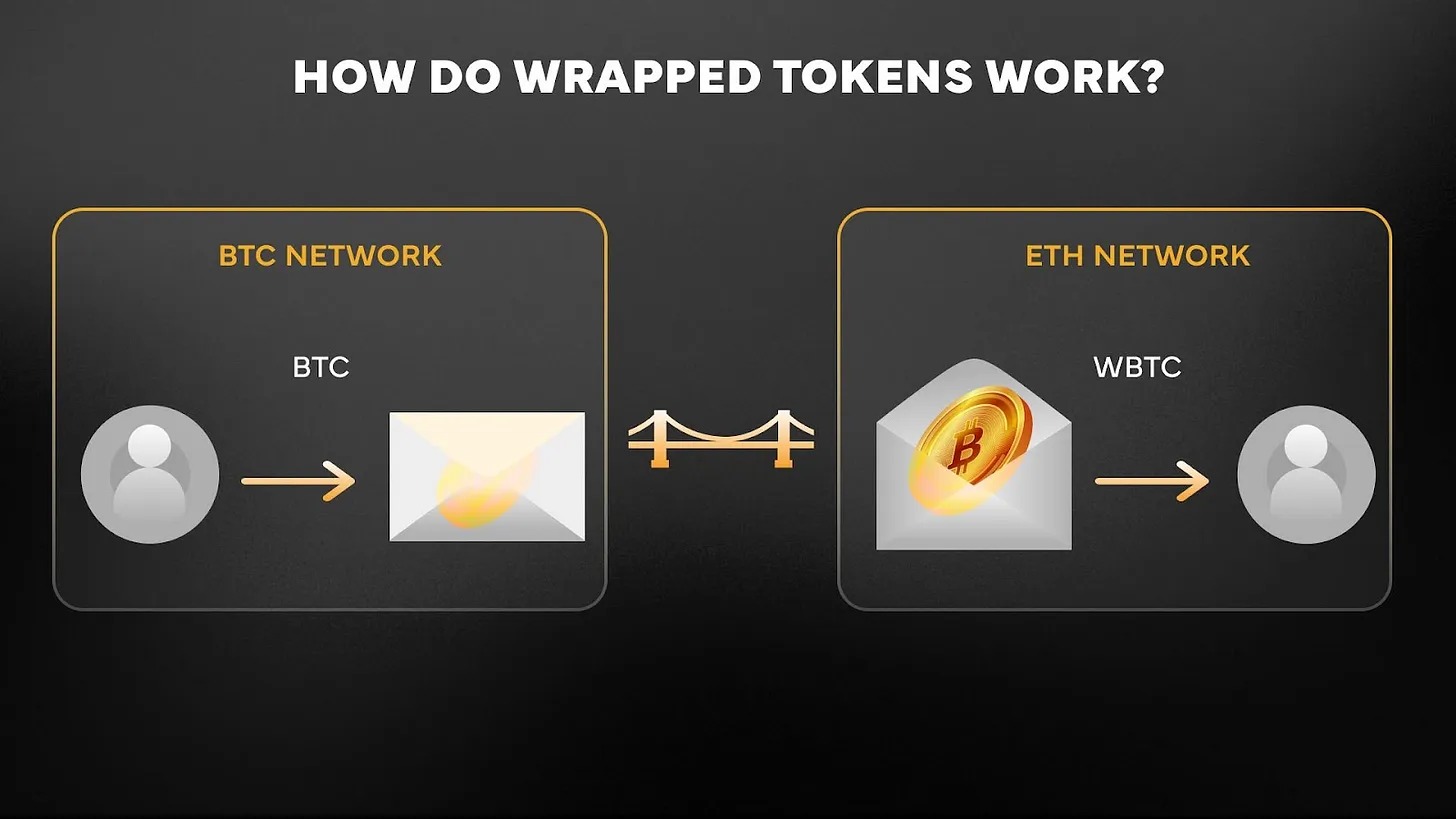
Federated systems tried to lessen this trust burden by dispersing control across multiple entities. Instead of a single custodian, a group collectively held the Bitcoin backing the wrapped asset. This was an improvement but far from trustless. Users still relied on a coordinated set of operators, and the strength of the peg depended solely on their incentives and integrity. For a community that prefers trustless systems, this wasn't ideal.

Bridge technology introduced a new set of problems. Instead of relying on custody, users relied on an external set of validators, whose security was often weaker than the chain they were leaving. Bridges enabled moving Bitcoin across chains but became one of the biggest security holes in crypto. Multiple analyses point to bridge exploits as one of the largest sources of fund loss in the space.
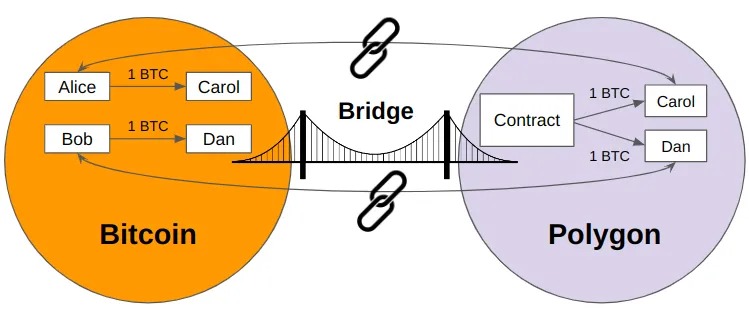
Sidechains added further complexity. They are chains separate from Bitcoin, connected via various peg mechanisms. Some use multisig control, others use Simplified Payment Verification (SPV) proofs. But none inherit Bitcoin's security. They run their own consensus mechanisms, validator sets, and risk assessments. The label "Bitcoin sidechain" is often more marketing than reality. Liquidity moved, but security guarantees didn't.
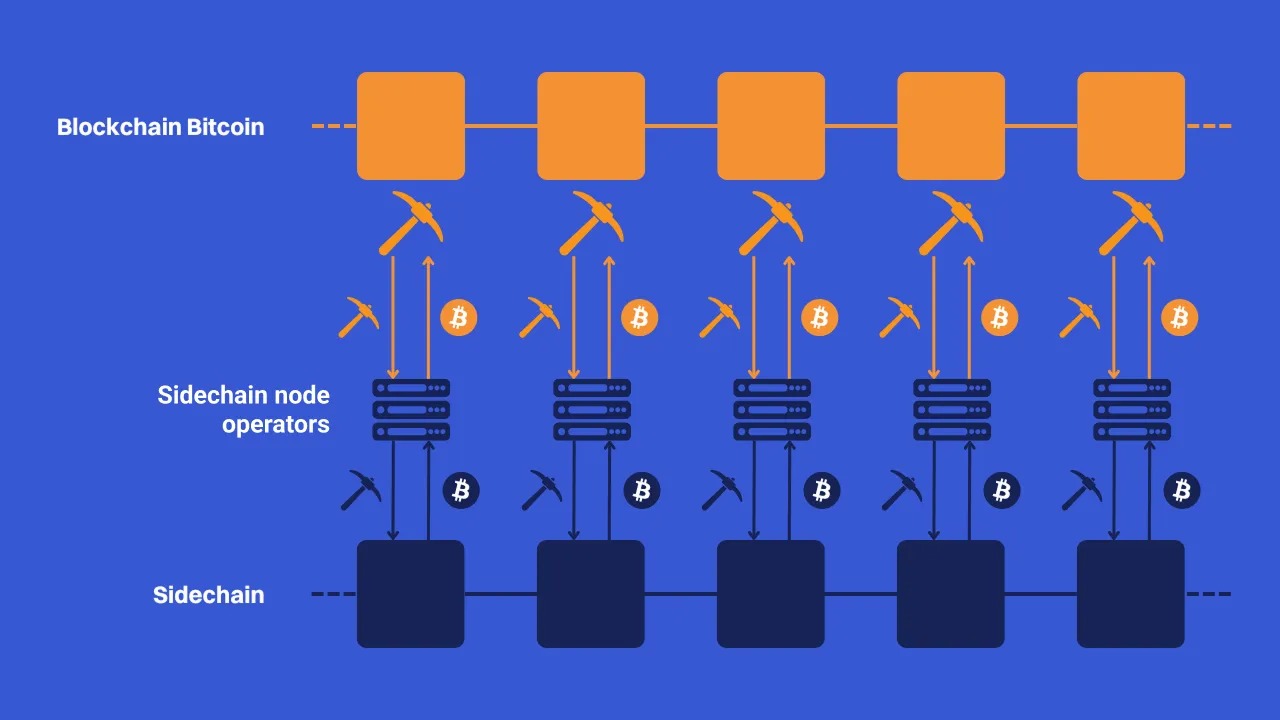
What all these methods had in common was that they pushed Bitcoin outward, off its base layer, into environments where others enforced the rules. This solved the usability problem short-term but created a bigger one: Bitcoin was operating under the very trust models it was designed to avoid.

The flaws were evident:

  • Wrapped BTC (WBTC) grew only because people tolerated custodians as a temporary fix.
  • Sidechains existed but remained niche due to failing to inherit Bitcoin's security.
  • Bridges connected Bitcoin to other chains but introduced entirely new attack vectors.

Each workaround solved one problem but created another.

The Breakthrough: Bitcoin Finally Gets New Primitives

For a long time, Bitcoin's limitations were seen as irreversible. The base layer wouldn't change, upgrades were slow, and any proposal to enhance its expressiveness was dismissed as unnecessary risk.

But in the past few years, that assumption began to crack.

1. Bitcoin gained a "verify, don't execute" capability: The most important breakthrough was the emergence of a new class of verification models enabling Bitcoin to check computations done elsewhere without running them itself.

This breakthrough made BitVM and later BitVM-like systems possible. These systems didn't change Bitcoin's functionality but leveraged its ability to enforce outcomes via fraud proofs.

This means you can build logic, applications, even full execution environments outside Bitcoin, and Bitcoin can still ensure their correctness. This is fundamentally different from Ethereum's "execute everything on L1" philosophy. Bitcoin can now act as a judge. This is what finally opened the door to:

  • Bitcoin-secured rollups
  • Trust-minimized bridges
  • Programmable Bitcoin vaults
  • Off-chain computation, on-chain verification

2. Upgrades like Taproot quietly expanded Bitcoin's range: Taproot wasn't initially promoted as a DeFi upgrade, but it provided the cryptographic foundation BTCFi needed: cheaper multisigs, more flexible key path spending, and better privacy. More importantly, it enabled architectures like Taproot Assets (for stablecoins) and more advanced vault systems.
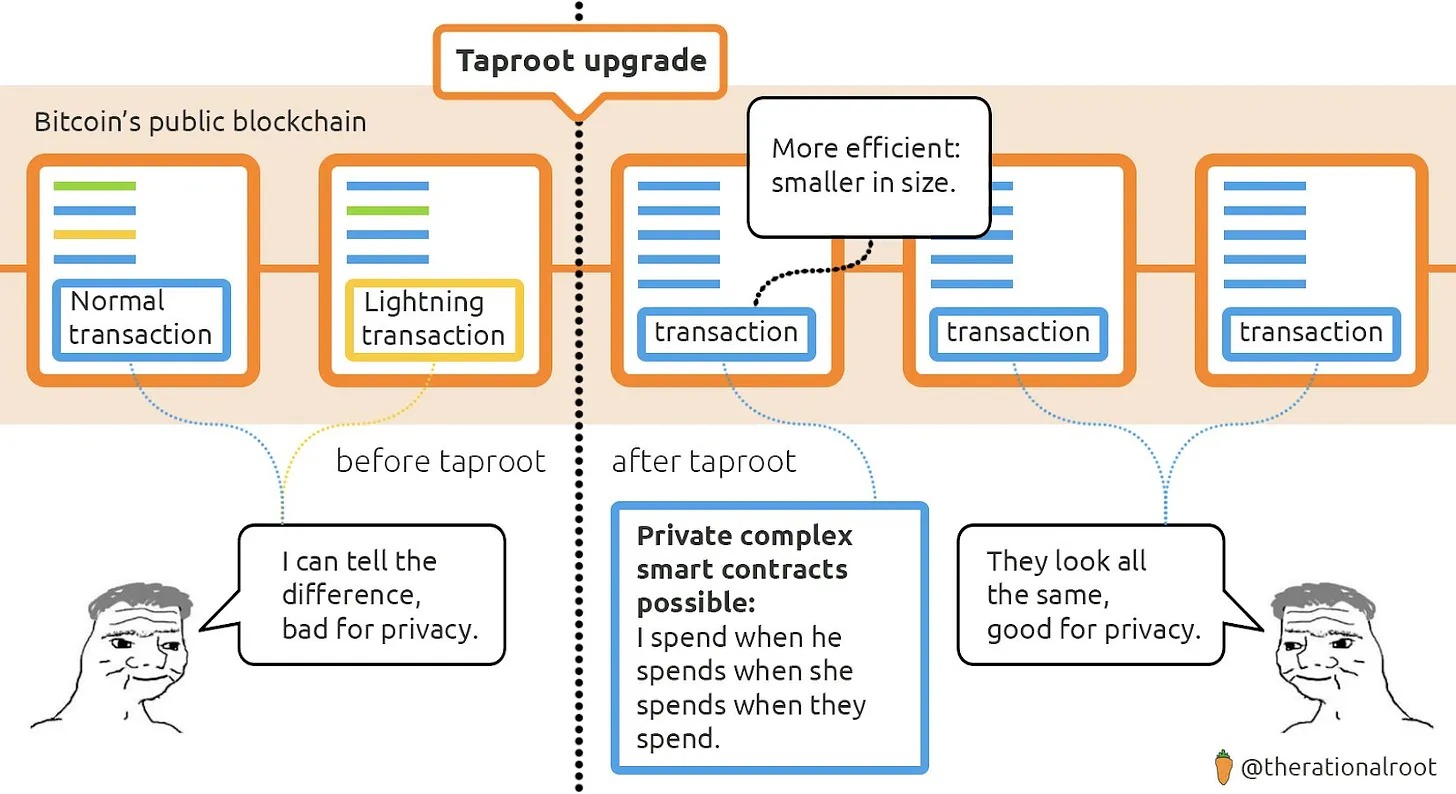
3. The emergence of Bitcoin-native assets: With Taproot and newer proof systems, projects began launching assets native to Bitcoin or secured by Bitcoin without wrapping BTC.

Combining Taproot, Schnorr signatures, and new off-chain verification techniques, developers can now build assets on Bitcoin itself or assets that directly inherit Bitcoin's security.
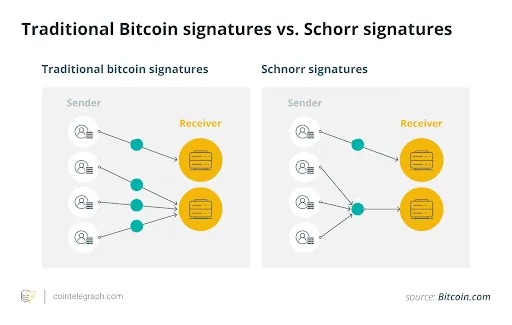
This includes:

  • Taproot Assets (Tether minting USDT directly on Bitcoin/Lightning stack)
  • Bitcoin-native stablecoins without relying on Ethereum, Solana, or Cosmos
  • BTC-backed synthetic assets without custodial pegs
  • Programmable vaults and multisig structures previously impossible

For the first time, assets issued on Bitcoin could be used without leaving Bitcoin. And assets issued by Bitcoin didn't require taking Bitcoin out of self-custody.

4. Bitcoin yield became possible: Bitcoin itself never had yield. Historically, the only way to "earn" yield on Bitcoin was to wrap it, send it to a custodian, lend it on a centralized platform, or bridge it to another blockchain. All these methods carried risk and completely departed from its security model.

BTCFi introduces a completely new way for Bitcoin to generate yield. How? By creating systems where Bitcoin contributes to network security. This leads to three types:

Bitcoin staking (for other networks): BTC can now secure PoS networks or appchains without leaving the Bitcoin chain.

Bitcoin restaking: Similar to how Ethereum can secure multiple protocols via shared security, Bitcoin can now be used as collateral to back external chains, oracles, DA layers, etc.

Lightning Network-based yield systems: Protocols like Stroom allow BTC used in Lightning channels to earn yield by providing liquidity, again without wrapping or relying on custodial bridges.

None of this was possible before BTCFi.

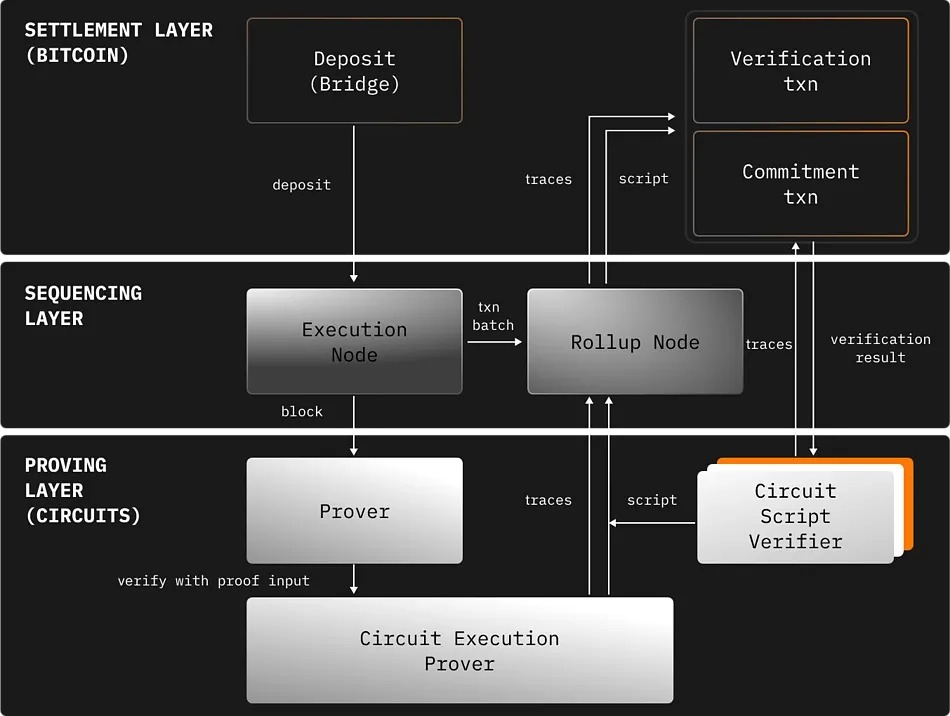
5. Bitcoin finally got an execution layer: Recent advances in off-chain verification allow Bitcoin to enforce the results of computations it doesn't perform itself. This lets developers build rollups, bridges, and contract systems around Bitcoin that rely on Bitcoin for verification, not computation. The base layer remains unchanged, but outer layers can now run logic and prove its correctness to Bitcoin when needed.

This gives Bitcoin unprecedented power: the ability to support applications, contract-like behavior, and new financial primitives without moving Bitcoin into custodial systems or rewriting the protocol. This isn't "smart contracts on Bitcoin" but a verification model that preserves Bitcoin's simplicity while allowing more complex systems to exist around it.
BTCFi Overview: What's Actually Being Built

As the underlying verification and portability tools matured, the Bitcoin ecosystem finally began expanding in ways that no longer rely on custodians or wrapped assets. What's emerging today isn't a single product or category but a series of interconnected layers that, for the first time, give Bitcoin a fully functional economy. The easiest way to understand this is to see how these components complement each other.
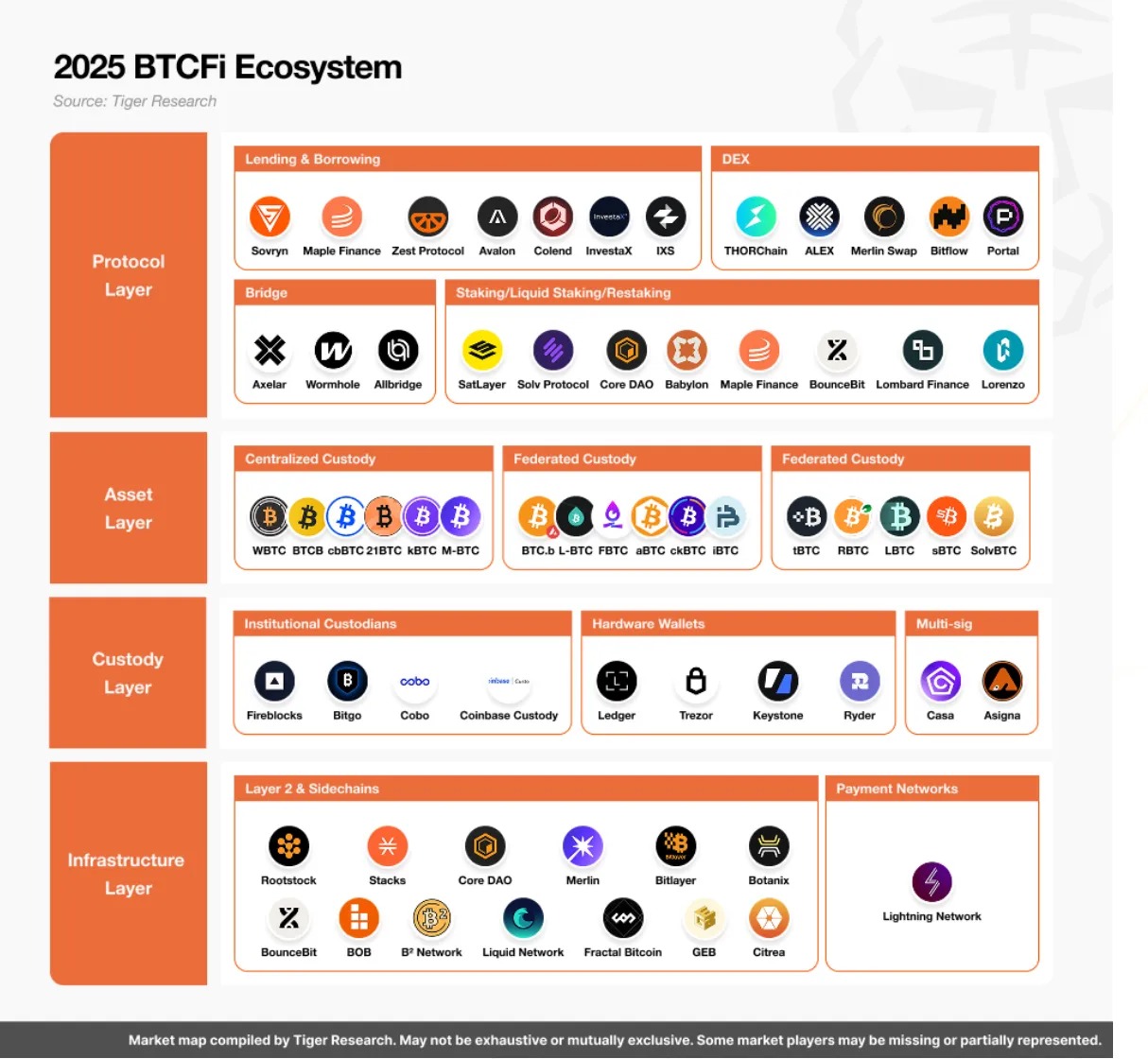
Infrastructure Layer: The first significant change is the emergence of Bitcoin-secured execution environments. These aren't L1 competitors or attempts to turn Bitcoin into a smart contract platform. They are external systems that handle computation, relying on Bitcoin only for verification. This separation is crucial. It creates a space where lending, trading, collateral management, and even more complex primitives can exist without any changes to Bitcoin's base layer. It also avoids the pitfalls of the old model, where using Bitcoin meant handing it to a custodian or trusting a multisig. Now, Bitcoin itself remains untouched; computation happens around it.

Assets & Custody Layer: Simultaneously, a new generation of Bitcoin bridges is forming, no longer the custodial, trust-heavy bridges of the last cycle, but bridges built around verifiable outcomes. Instead of requiring users to trust a set of operators, these systems use challenge mechanisms and fraud proofs to automatically reject incorrect state transitions. The result is a safer way to move Bitcoin to external environments without relying on the fragile trust assumptions of earlier designs. More importantly, this type of bridge aligns with Bitcoin holders' inherent sense of security: minimal trust, minimal dependency.

Protocol Layer: As asset movement becomes safer, the next wave of innovation focuses on what Bitcoin can do within these environments. Yield markets and security markets emerge here. For most of Bitcoin's history, earning any yield on Bitcoin meant sending it to an exchange or wrapping it onto another blockchain. Now, staking and restaking models allow Bitcoin to contribute to external network security without leaving its own custody. Yield doesn't come from credit risk or rehypothecation but from the economic value of maintaining consensus or verifying computation results.

Meanwhile, Bitcoin-native assets are starting to appear. Instead of wrapping Bitcoin or moving it to Ethereum, developers are beginning to use Taproot, Schnorr signatures, and off-chain verification to issue assets on Bitcoin or peg assets to Bitcoin's security. This includes stablecoins minted directly on Bitcoin infrastructure, synthetic assets without custodial dependencies, and vault structures allowing more flexible spending conditions. All this expands Bitcoin's utility without introducing it to different trust models.

These advances are interesting individually. Together, they mark the birth of the first coherent Bitcoin financial system. Computation can happen off-chain and be enforced on Bitcoin. Bitcoin can be moved securely without custody. It can earn yield without leaving self-custody. Assets can exist natively without relying on other ecosystems' security. Each advance solves a different part of the liquidity trap that has plagued Bitcoin for over a decade.

My Take?

I think the simplest way to view BTCFi is this: Bitcoin finally has an ecosystem that matches its scale. For years, people tried to build a Bitcoin ecosystem with tools that simply couldn't support trillion-dollar liquidity. No serious Bitcoin holder would stake their Bitcoin on custodial pegs, unverified bridges, or jury-rigged sidechains—and they didn't.

This wave is different because it meets Bitcoin entirely on its own terms. The security model remains intact, self-custody remains intact, and the surrounding systems are finally robust enough to carry meaningful capital. If even a small fraction of dormant BTC starts moving because the infrastructure is finally worthy of it, the impact will be profound.

This new wave is different because it approaches the challenge Bitcoin's way. The security model is preserved, self-custody mechanisms remain whole, and the systems around Bitcoin are finally strong enough to handle significant capital flows. Even if only a small portion of sleeping Bitcoin begins to move because the infrastructure has finally matured, the impact will be significant.


Câu hỏi Liên quan

QWhat percentage of Bitcoin has not moved in over a year, and what does this indicate about its use?

AApproximately 61% of Bitcoin has not moved in over a year, and nearly 14% has been dormant for over a decade. This indicates that Bitcoin, despite its massive market cap, is largely used as a passive store of value ('digital gold') rather than for active transactions or economic activity, creating one of the largest pools of idle capital in the crypto ecosystem.

QWhat were the main limitations of Bitcoin's architecture that prevented it from being used in DeFi and other economic activities?

ABitcoin's main limitations were its script model (lacking general computation and on-chain automation), its slow and difficult upgrade path requiring ecosystem-wide coordination, its conservative developer culture that discouraged complexity, and its structural isolation with no native interoperability or bridging capabilities. These factors prioritized security and immutability over innovation and programmability.

QWhat were the problems with early workarounds like Wrapped BTC and cross-chain bridges?

AEarly workarounds like Wrapped BTC required trusting custodians or federations, introducing counterparty risk. Cross-chain bridges relied on external validator sets that were often less secure than Bitcoin itself, making them major attack vectors. These solutions moved Bitcoin into external trust models that contradicted its foundational principle of minimizing trust in intermediaries.

QWhat key technological breakthrough enabled Bitcoin to verify off-chain computations without executing them?

AThe key breakthrough was the development of verification models like BitVM, which utilize Bitcoin's ability to enforce outcomes through fraud proofs. This allows Bitcoin to check the correctness of computations performed elsewhere (off-chain) without having to perform the computations itself, enabling trust-minimized rollups, bridges, and programmable vaults.

QHow does BTCFi enable Bitcoin to earn yield without leaving its own security model?

ABTCFi enables yield generation by allowing Bitcoin to contribute to the security of other networks or protocols without being moved to custodians or wrapped. This includes Bitcoin staking (securing PoS networks), restaking (securing multiple external systems), and earning from Lightning Network liquidity provision—all while the Bitcoin remains natively on-chain under self-custody.

Nội dung Liên quan

500 USD là có thể mua cổ phiếu OpenAI, lời mời chào bán tháo đàng hoàng nhất thung lũng Silicon

AngelList, nền tảng đầu tư mạo hiểm lớn nhất Thung lũng Silicon, vừa ra mắt quỹ USVC cho phép nhà đầu tư cá nhân Mỹ chỉ với 500 USD có thể sở hữu cổ phần của các công ty AI hàng đầu như OpenAI, Anthropic và xAI. Tuy nhiên, bản chất của sản phẩm này bị nghi ngờ là hình thức tìm tính thanh khoản để các nhà đầu tư giai đoạn đầu (thiên thần, quỹ VC, nhân viên) thoát hàng, chốt lời khi định giá công ty đã lên tới hàng trăm tỷ USD. Quỹ hoạt động bằng cách huy động vốn từ các nhà đầu tư nhỏ lẻ để mua lại cổ phần từ những người nắm giữ ban đầu thông qua giao dịch thứ cấp. Điều này khiến người mới vào mua ở định giá cao, trong khi người bán đã khóa lợi nhuận khổng lồ. Các điều khoản cũng có lợi cho bên bán: nhà đầu tư nhỏ không thể giao dịch tự do, phí quỹ thực tế lên tới 3.61%/năm, và việc mua lại chỉ giới hạn 5% giá trị tài sản ròng mỗi quý. Bài viết so sánh đây là phiên bản cổ phiếu của mô hình "vốn hóa cao, thanh khoản thấp" từng phổ biến trong ngành crypto, nơi các quỹ VC thoát hàng thuận lợi khi niêm yết. Tác giả cảnh báo, mỗi khi giới tài chính đột ngột quan tâm cho nhà đầu tư nhỏ lẻ tham gia, thường không phải vì cơ hội tốt hơn, mà vì kênh thoát vốn cho các nhà đầu tư bên trong đang thu hẹp. Lời khuyên cho các nhà đầu tư bình thường là hãy xem xét liệu những người vào sớm hơn đang mua vào hay bán ra. Nếu họ đang bán và bạn được mời mua, hãy tự hỏi bạn đang mang lại vốn hay mang lại tính thanh khoản cho họ.

marsbit7 phút trước

500 USD là có thể mua cổ phiếu OpenAI, lời mời chào bán tháo đàng hoàng nhất thung lũng Silicon

marsbit7 phút trước

Bitcoin tiến sát mốc 80.000 USD, dòng tiền ETF tiếp tục chảy vào, thị trường tiền mã hóa đang chuyển hướng?

Giá Bitcoin đang tiến sát ngưỡng 80.000 USD, đạt mức cao mới kể từ tháng 2, trong khi ETH dao động quanh 2.400 USD và nhiều altcoin khác tăng mạnh. Chỉ số sợ hãi và tham lam duy trì ở mức trung tính 60. Thị trường tài sản rủi ro toàn cầu tiếp tục phục hồi, với chứng khoán Mỹ lập kỷ lục mới. Căng thẳng địa chính trị Trung Đông có dấu hiệu hạ nhiệt khi ông Trump tuyên bố kéo dài lệnh ngừng bắn, góp phần thúc đẩy tâm lý lạc quan. Dòng tiền đang rời khỏi tài sản USD do đồng bạc xanh giảm giá và kỳ vọng Cục Dự trữ Liên bang có thể cắt giảm lãi suất trong năm nay. Quan trọng hơn, quỹ ETF Bitcoin ghi nhận dòng tiền ròng dương trong 6 ngày liên tục, với mức cao nhất 663,91 triệu USD vào ngày 17/4. ETF Ethereum cũng chứng kiến 9 ngày liên tiếp có dòng tiền vào. Tổng giá trị stablecoin đạt 3.206 tỷ USD, tăng 635 triệu USD trong tuần. Các dấu hiệu như nhu cầu spot, dòng tiền ETF và thanh khoản ổn định cho thấy thị trường đang thiết lập một vùng giao dịch mới. Dù vẫn tồn tại áp lực bán tại vùng 80.000 USD, khả năng giá tiếp tục tăng đang được củng cố nhờ cấu trúc nhu cầu được cải thiện và sự tham gia ngày càng tăng của các nhà đầu tư tổ chức.

marsbit9 phút trước

Bitcoin tiến sát mốc 80.000 USD, dòng tiền ETF tiếp tục chảy vào, thị trường tiền mã hóa đang chuyển hướng?

marsbit9 phút trước

Giao dịch

Giao ngay
Hợp đồng Tương lai

Bài viết Nổi bật

AGENT S là gì

Agent S: Tương Lai của Tương Tác Tự Động trong Web3 Giới thiệu Trong bối cảnh không ngừng phát triển của Web3 và tiền điện tử, các đổi mới đang liên tục định nghĩa lại cách mà cá nhân tương tác với các nền tảng kỹ thuật số. Một dự án tiên phong như vậy, Agent S, hứa hẹn sẽ cách mạng hóa tương tác giữa con người và máy tính thông qua khung tác nhân mở của nó. Bằng cách mở đường cho các tương tác tự động, Agent S nhằm đơn giản hóa các nhiệm vụ phức tạp, cung cấp các ứng dụng chuyển đổi trong trí tuệ nhân tạo (AI). Cuộc khám phá chi tiết này sẽ đi sâu vào những phức tạp của dự án, các tính năng độc đáo của nó và những tác động đối với lĩnh vực tiền điện tử. Agent S là gì? Agent S đứng vững như một khung tác nhân mở đột phá, được thiết kế đặc biệt để giải quyết ba thách thức cơ bản trong việc tự động hóa các nhiệm vụ máy tính: Thu thập Kiến thức Cụ thể theo Miền: Khung này học một cách thông minh từ nhiều nguồn kiến thức bên ngoài và kinh nghiệm nội bộ. Cách tiếp cận kép này giúp nó xây dựng một kho lưu trữ phong phú về kiến thức cụ thể theo miền, nâng cao hiệu suất của nó trong việc thực hiện nhiệm vụ. Lập Kế Hoạch Qua Các Tầm Nhìn Nhiệm Vụ Dài Hạn: Agent S sử dụng lập kế hoạch phân cấp tăng cường kinh nghiệm, một cách tiếp cận chiến lược giúp phân chia và thực hiện các nhiệm vụ phức tạp một cách hiệu quả. Tính năng này nâng cao đáng kể khả năng quản lý nhiều nhiệm vụ con một cách hiệu quả và hiệu suất. Xử Lý Các Giao Diện Động, Không Đều: Dự án giới thiệu Giao Diện Tác Nhân-Máy Tính (ACI), một giải pháp đổi mới giúp nâng cao tương tác giữa các tác nhân và người dùng. Sử dụng các Mô Hình Ngôn Ngữ Lớn Đa Phương Thức (MLLMs), Agent S có thể điều hướng và thao tác các giao diện người dùng đồ họa đa dạng một cách liền mạch. Thông qua những tính năng tiên phong này, Agent S cung cấp một khung vững chắc giải quyết các phức tạp liên quan đến việc tự động hóa tương tác giữa con người với máy móc, mở ra nhiều ứng dụng trong AI và hơn thế nữa. Ai là Người Tạo ra Agent S? Mặc dù khái niệm về Agent S là hoàn toàn đổi mới, thông tin cụ thể về người sáng lập vẫn còn mơ hồ. Người sáng lập hiện vẫn chưa được biết đến, điều này làm nổi bật giai đoạn sơ khai của dự án hoặc sự lựa chọn chiến lược để giữ kín các thành viên sáng lập. Bất chấp sự ẩn danh, sự chú ý vẫn tập trung vào khả năng và tiềm năng của khung này. Ai là Các Nhà Đầu Tư của Agent S? Vì Agent S còn tương đối mới trong hệ sinh thái mã hóa, thông tin chi tiết về các nhà đầu tư và những người tài trợ tài chính của nó không được ghi chép rõ ràng. Sự thiếu vắng thông tin công khai về các nền tảng đầu tư hoặc tổ chức hỗ trợ dự án dấy lên câu hỏi về cấu trúc tài trợ và lộ trình phát triển của nó. Hiểu biết về sự hỗ trợ là rất quan trọng để đánh giá tính bền vững và tác động tiềm năng của dự án. Agent S Hoạt Động Như Thế Nào? Tại cốt lõi của Agent S là công nghệ tiên tiến cho phép nó hoạt động hiệu quả trong nhiều bối cảnh khác nhau. Mô hình hoạt động của nó được xây dựng xung quanh một số tính năng chính: Tương Tác Giống Như Con Người: Khung này cung cấp lập kế hoạch AI tiên tiến, cố gắng làm cho các tương tác với máy tính trở nên trực quan hơn. Bằng cách bắt chước hành vi của con người trong việc thực hiện nhiệm vụ, nó hứa hẹn nâng cao trải nghiệm người dùng. Ký Ức Tường Thuật: Được sử dụng để tận dụng các trải nghiệm cấp cao, Agent S sử dụng ký ức tường thuật để theo dõi lịch sử nhiệm vụ, từ đó nâng cao quy trình ra quyết định của nó. Ký Ức Tình Huống: Tính năng này cung cấp cho người dùng hướng dẫn từng bước, cho phép khung này cung cấp hỗ trợ theo ngữ cảnh khi các nhiệm vụ diễn ra. Hỗ Trợ OpenACI: Với khả năng chạy cục bộ, Agent S cho phép người dùng duy trì quyền kiểm soát đối với các tương tác và quy trình làm việc của họ, phù hợp với tinh thần phi tập trung của Web3. Tích Hợp Dễ Dàng với Các API Bên Ngoài: Tính linh hoạt và khả năng tương thích với nhiều nền tảng AI khác nhau đảm bảo rằng Agent S có thể hòa nhập liền mạch vào các hệ sinh thái công nghệ hiện có, làm cho nó trở thành lựa chọn hấp dẫn cho các nhà phát triển và tổ chức. Những chức năng này cùng nhau góp phần vào vị trí độc đáo của Agent S trong không gian tiền điện tử, khi nó tự động hóa các nhiệm vụ phức tạp, nhiều bước với sự can thiệp tối thiểu của con người. Khi dự án phát triển, các ứng dụng tiềm năng của nó trong Web3 có thể định nghĩa lại cách mà các tương tác kỹ thuật số diễn ra. Thời Gian Phát Triển của Agent S Sự phát triển và các cột mốc của Agent S có thể được tóm tắt trong một dòng thời gian nêu bật các sự kiện quan trọng của nó: 27 tháng 9, 2024: Khái niệm về Agent S được ra mắt trong một bài nghiên cứu toàn diện mang tên “Một Khung Tác Nhân Mở Sử Dụng Máy Tính Như Một Con Người,” trình bày nền tảng cho dự án. 10 tháng 10, 2024: Bài nghiên cứu được công bố công khai trên arXiv, cung cấp một cái nhìn sâu sắc về khung và đánh giá hiệu suất của nó dựa trên tiêu chuẩn OSWorld. 12 tháng 10, 2024: Một video trình bày được phát hành, cung cấp cái nhìn trực quan về khả năng và tính năng của Agent S, thu hút thêm sự quan tâm từ người dùng và nhà đầu tư tiềm năng. Những dấu mốc trong dòng thời gian không chỉ minh họa sự tiến bộ của Agent S mà còn chỉ ra cam kết của nó đối với sự minh bạch và sự tham gia của cộng đồng. Những Điểm Chính Về Agent S Khi khung Agent S tiếp tục phát triển, một số thuộc tính chính nổi bật, nhấn mạnh tính đổi mới và tiềm năng của nó: Khung Đổi Mới: Được thiết kế để cung cấp cách sử dụng máy tính trực quan giống như tương tác của con người, Agent S mang đến một cách tiếp cận mới cho việc tự động hóa nhiệm vụ. Tương Tác Tự Động: Khả năng tương tác tự động với máy tính thông qua GUI đánh dấu một bước tiến tới các giải pháp tính toán thông minh và hiệu quả hơn. Tự Động Hóa Nhiệm Vụ Phức Tạp: Với phương pháp mạnh mẽ của nó, nó có thể tự động hóa các nhiệm vụ phức tạp, nhiều bước, làm cho các quy trình nhanh hơn và ít sai sót hơn. Cải Tiến Liên Tục: Các cơ chế học tập cho phép Agent S cải thiện từ các trải nghiệm trước đó, liên tục nâng cao hiệu suất và hiệu quả của nó. Tính Linh Hoạt: Khả năng thích ứng của nó trên các môi trường hoạt động khác nhau như OSWorld và WindowsAgentArena đảm bảo rằng nó có thể phục vụ một loạt các ứng dụng rộng rãi. Khi Agent S định vị mình trong bối cảnh Web3 và tiền điện tử, tiềm năng của nó để nâng cao khả năng tương tác và tự động hóa quy trình đánh dấu một bước tiến quan trọng trong công nghệ AI. Thông qua khung đổi mới của mình, Agent S minh họa cho tương lai của các tương tác kỹ thuật số, hứa hẹn một trải nghiệm liền mạch và hiệu quả hơn cho người dùng trên nhiều ngành công nghiệp khác nhau. Kết luận Agent S đại diện cho một bước nhảy vọt táo bạo trong sự kết hợp giữa AI và Web3, với khả năng định nghĩa lại cách chúng ta tương tác với công nghệ. Mặc dù vẫn còn ở giai đoạn đầu, những khả năng cho ứng dụng của nó là rộng lớn và hấp dẫn. Thông qua khung toàn diện của mình giải quyết các thách thức quan trọng, Agent S nhằm đưa các tương tác tự động lên hàng đầu trong trải nghiệm kỹ thuật số. Khi chúng ta tiến sâu hơn vào các lĩnh vực tiền điện tử và phi tập trung, các dự án như Agent S chắc chắn sẽ đóng một vai trò quan trọng trong việc định hình tương lai của công nghệ và sự hợp tác giữa con người với máy tính.

Tổng lượt xem 643Xuất bản vào 2025.01.14Cập nhật vào 2025.01.14

AGENT S là gì

Làm thế nào để Mua S

Chào mừng bạn đến với HTX.com! Chúng tôi đã làm cho mua Sonic (S) trở nên đơn giản và thuận tiện. Làm theo hướng dẫn từng bước của chúng tôi để bắt đầu hành trình tiền kỹ thuật số của bạn.Bước 1: Tạo Tài khoản HTX của BạnSử dụng email hoặc số điện thoại của bạn để đăng ký tài khoản miễn phí trên HTX. Trải nghiệm hành trình đăng ký không rắc rối và mở khóa tất cả tính năng. Nhận Tài khoản của tôiBước 2: Truy cập Mua Crypto và Chọn Phương thức Thanh toán của BạnThẻ Tín dụng/Ghi nợ: Sử dụng Visa hoặc Mastercard của bạn để mua Sonic (S) ngay lập tức.Số dư: Sử dụng tiền từ số dư tài khoản HTX của bạn để giao dịch liền mạch.Bên thứ ba: Chúng tôi đã thêm những phương thức thanh toán phổ biến như Google Pay và Apple Pay để nâng cao sự tiện lợi.P2P: Giao dịch trực tiếp với người dùng khác trên HTX.Thị trường mua bán phi tập trung (OTC): Chúng tôi cung cấp những dịch vụ được thiết kế riêng và tỷ giá hối đoái cạnh tranh cho nhà giao dịch.Bước 3: Lưu trữ Sonic (S) của BạnSau khi mua Sonic (S), lưu trữ trong tài khoản HTX của bạn. Ngoài ra, bạn có thể gửi đi nơi khác qua chuyển khoản blockchain hoặc sử dụng để giao dịch những tiền kỹ thuật số khác.Bước 4: Giao dịch Sonic (S)Giao dịch Sonic (S) dễ dàng trên thị trường giao ngay của HTX. Chỉ cần truy cập vào tài khoản của bạn, chọn cặp giao dịch, thực hiện giao dịch và theo dõi trong thời gian thực. Chúng tôi cung cấp trải nghiệm thân thiện với người dùng cho cả người mới bắt đầu và người giao dịch dày dạn kinh nghiệm.

Tổng lượt xem 1.3kXuất bản vào 2025.01.15Cập nhật vào 2025.03.21

Làm thế nào để Mua S

Thảo luận

Chào mừng đến với Cộng đồng HTX. Tại đây, bạn có thể được thông báo về những phát triển nền tảng mới nhất và có quyền truy cập vào thông tin chuyên sâu về thị trường. Ý kiến ​​của người dùng về giá của S (S) được trình bày dưới đây.

活动图片