Weekly Editor's Picks (0321-0327)

marsbitXuất bản vào 2026-03-28Cập nhật gần nhất vào 2026-03-28

Tóm tắt

Weekly Editor's Picks (0321-0327) by Odaily Planet Daily features in-depth analyses from the past week. Key topics include: **Macro & Geopolitics:** The article analyzes why oil prices remain above $100/barrel despite a 400-million-barrel strategic reserve release, citing Iran-related supply disruptions in the Strait of Hormuz. It discusses the economic impact of the Iran conflict, parallels with Ukraine, and how bond market volatility—not just oil—is reshaping monetary policy expectations. **Investment & Startups:** Balancer proposes major tokenomics reforms and operational restructuring after a $120M exploit, shifting from token emission-driven growth to a revenue-focused model. **Web3 & AI:** ERC-8183 is highlighted as a key protocol for decentralized AI agent economies, structuring task-based commerce on-chain. Another piece argues that AI agents won’t kill SaaS; instead, proprietary data and entrenched workflows will remain crucial moats. **Prediction Markets:** Polymarket’s liquidity incentives and fee structure are examined, noting that only 2% of users generate 90% of volume. Profitable strategies include sports betting, crypto market-making, and high-conviction trading. **Policy & Stablecoins:** The proposed U.S. CLARITY Act may redefine stablecoins as payment tools (not savings products), potentially negatively impacting DeFi tokens like UNI while benefiting compliant entities like Circle. Also included are airdrop guides, Ethereum L2 developments, a...

"Weekly Editor's Picks" is a functional column by Odaily Planet Daily. While Planet Daily covers a vast amount of real-time information weekly, it also publishes many high-quality in-depth analysis pieces that might get lost in the information flow and hot news, passing you by.

Therefore, our editorial team will select some quality articles worth spending time to read and collect from the content published in the past 7 days every Saturday. From perspectives like data analysis, industry judgment, and opinion sharing, we aim to bring new inspiration to you in the crypto world.

Now, let's read together:
Macro Situation

400 Million Barrels Released, Why is Oil Still Above $100?

After the joint US-Israel strike on Iran, Iran threatened to attack oil tankers passing through the Strait of Hormuz, paralyzing the world's most critical oil shipping chokepoint. Current actual traffic through the Strait is less than 10% of pre-war levels. Oil prices have been soaring.

On March 11, the International Energy Agency (IEA) announced the release of strategic petroleum reserves, the largest one-time release by its 32 member states in its 50-year history. However, with a daily release of 400 million barrels covering only 17% of the shortfall, the effect was not ideal. If all 400 million barrels were dumped into the market at once, it would only last less than 4 days.

What determines the oil price reaction is not how many barrels are released, but whether the source of the supply disruption is eliminated. Reserve releases are essentially not "replenishing oil" but "buying time," using limited ammunition to buy negotiation windows and time to arrange alternative routes. If time is bought but the disruption source isn't resolved, oil prices will still rise. The mathematical reality is that the replenishment speed clearly cannot keep up with the depletion speed.

Jiang Xueqin: A Viral Beijing High School Teacher Who Predicted America's Defeat in Advance (Paired with "Jiang Xueqin's Latest Interview")

The US military is essentially a "muscle display" system from the Cold War era, expensive and追求 technical deterrence rather than resilience for a war of attrition. This mismatch manifests as an absurd asymmetry in reality.

The modern global economy is built on the premise that energy is cheap and readily available. Now this premise is collapsing.

Jiang Xueqin believes the Iran war will be highly similar to the Ukraine war: it will drag on, becoming a war of attrition. The US cannot withdraw because once it does, the only regional power that can fill the security vacuum is Iran. And with about one-fifth of the world's oil passing through the Strait of Hormuz daily, if the Gulf states tilt towards Iran, the petrodollar system will collapse.

The current US economy is essentially a Ponzi scheme, relying on foreigners continuously buying dollars to keep it afloat.

Three Weeks into the US-Iran War, Who's Making Money, Who's Paying the Bill?

The Iran war changed the Urals crude discount. The economic wall built by the West through three years of sanctions has been partly dismantled by three weeks of war with Iran.

Supply-side losses and beneficiary gains will eventually be passed on to the consumer end. US consumers are the most direct bearers. This round of oil price increases恰好吞掉了美国家庭刚到手的税收退税 (just swallowed up the tax refunds US families just received).

Three weeks into the Iran war, the world loses 11 million barrels of oil per day, Russia made nearly $800 million more in 15 days, US consumers' gas money increased by one-third, and this transmission chain will continue to lengthen after the sanction waivers expire on April 11.

Stop Staring at Oil Prices, the Bond Market is the Real Bellwether

As the war enters a stalemate, a more systemic variable is emerging: financial conditions themselves are tightening. What truly dominates the current market is no longer the war itself, but the disorder in the bond market.

Over the past month, the US 10-year Treasury yield has risen rapidly, directly reshaping interest rate expectations from a "rate cut path" to a "re-discussion of rate hikes," and putting pressure on stocks, commodities, and even policy space. In this process, the持续走弱 (持续走弱 - persistently weakening) labor market and renewed rise in inflation expectations have amplified the Fed's dilemma.

The bond market is not only reflecting risk but also determining the boundaries of risk.

War Won or Lost? Trump: Profited

Trump's market manipulation tactics and the underlying purpose—making stock market prosperity the best "substitute" for economic prosperity to consolidate his voter base.

Investment & Entrepreneurship

Abandoning Additional Issuance, Abolishing veBAL, Can Balancer's "All-In" Bet Bring New Life?

On November 3, 2025, a security incident causing over $120 million in losses largely shattered the growth illusion of the veteran DeFi protocol Balancer.

The entire system看似一台持续运转的 「印钞机」 (looks like a continuously running "money printing machine"), but actually leaks from both sides: on one hand, handling fees are split and lost layer by layer; on the other hand, the BAL token has an annual inflationary release of about 3.78 million tokens, creating持续抛压 (continuous selling pressure) of about $580,000 at current prices.

On March 23, the Balancer core team simultaneously released two important governance proposals: a comprehensive reform of BAL tokenomics and an operational structure reorganization. The core logic of the two documents combined can be summarized in one sentence: abandon the token release-driven growth model and转向收入驱动的可持续运营 (turn to revenue-driven sustainable operation).

Also recommended: 《Odaily Interview with Bitwise: BTC Could Reach $95,000 Range by Year-End》《SIREN, A Carefully Designed Leverage Harvest》《Bittensor (TAO) Short Logic: Income Desert Under the Computing Power Myth》.

Web3 & AI

The Underlying Business Protocol for the Trillion-Dollar Agent Economy: Understanding ERC-8183, Not Just Payment, But the Future

The ERC-8183 protocol is an on-chain standard for the decentralized AI agent economy. Its essence is not a traditional payment protocol but a商业基础设施规范 (business infrastructure specification) surrounding the full lifecycle of "task-delivery-settlement".

ERC-8183 takes "Job" as its core primitive, defining a tripartite collaboration model consisting of the Client, Provider, and Evaluator. It implements a complete state machine process (Open, Funded, Submitted, Completed/Rejected/Expired) for task publishing, fund escrow, result submission, and outcome arbitration through smart contracts.

Under this framework, payment is no longer a single action but a programmed process strongly bound to task conditions, delivery verification, and evaluation mechanisms, thus achieving trustless on-chain business execution. Application scenarios include automated supply chains, marketing automation, decentralized computing power markets, fully automated AI software outsourcing centers, etc.

CertiK Live Test: How the Vulnerable OpenClaw Skill Bypassed Review, Gaining Unauthorized Access to Take Over Computers

Skill scanning is almost useless against hacker attacks. Because static detection rules are极易被绕过 (extremely easy to bypass), AI review has inherent detection blind spots, and the review process has underlying design flaws.

AI Agent Can't Kill SaaS

Since AI can already write code, find vulnerabilities, and even dynamically generate tools itself, the cost of writing code approaches zero infinitely. Once Agents can随时随地为企业搓出各种定制化工具 (craft various customized tools for enterprises anytime, anywhere), the moats painstakingly built by those software companies charging monthly fees自然就荡然无存了 (naturally vanish). Thus, from CrowdStrike to IBM, from Salesforce to ServiceNow, no matter how bright their earnings reports are, they are experiencing惨烈的抛售 (brutal selling).

At the same time, countless AI entrepreneurs are拿着 BP (holding business plans), telling VCs they want to "be the middle layer in the Agent era" or "start a business For Agent".

They are all betting on one thing: building tools is the sexiest business of this era. But actually, software never sold just code.

The most critical things are actually these three: solidified business processes, customer data accumulated over years, and the extremely high switching costs resulting from them.

Scarcity has shifted from "the ability to build tools" to "possessing irreplaceable business context data." AI is the engine, and exclusive data is the fuel, as well as the沉淀 (precipitation) of time and unreplicable history. Code goes to zero, data starts collecting rent. The real winners are those holding the data assets that Agents cannot bypass.

Don't stare at the Agent's hands, go for the Agent's neck.

Also recommended: 《Token Naming War: Who is Fighting for the "Minting Right" in the AI Era?》.

Prediction Markets

The 4 Truths and Fee Trap Behind Polymarket LP Market Making Incentives

The original author analyzed Polymarket's new taker fee mechanism, market maker incentive program, liquidity incentives, and sponsored LP incentives.

Polymarket doesn't need volume-bot robots; it needs LPs that truly provide value. Systematically earning market making incentives requires capital, risk management, and continuous presence, which greatly削弱了撸毛党的优势 (weakens the advantage of airdrop farmers), instead favoring genuine market participants.

However, arbitrage trader and Polymarket/Kalshi bot player securezer0 believes being an LP is another form of "paying to lose money." Rather than drinking poison to quench thirst, it's better to make fundamental changes: target the vampires, not harvest users. Specific measures include: charging only a 1% fixed fee on profits; building native liquidity pools with the POLY token; charging on extended products, not core products.

Dismantling 40 Addresses from the Polymarket Leaderboard, Only Three Ways to Make Money

First: Sports markets, directional, buy right and wait till the end;

Second: Crypto板块 (sector), structural, not making money from prediction, but from market making;

Third: Cognitive type, small bets but each one has judgment.

Figuring out which game you are playing is more important than optimizing any parameters.

2% of Users Contribute 90% of Trading Volume: The True Portrait of Polymarket

The vast majority of Polymarket's trading volume is contributed by a small group of algorithmic and high-frequency traders; the large number of low-frequency retail users have almost no intersection with these professional traders. Recognizing the difference between these two groups directly determines platform fee design, product priority planning, and market category strategy layout.

Mastering Polymarket, These 7 Tools Are Enough (With Full Tutorial)
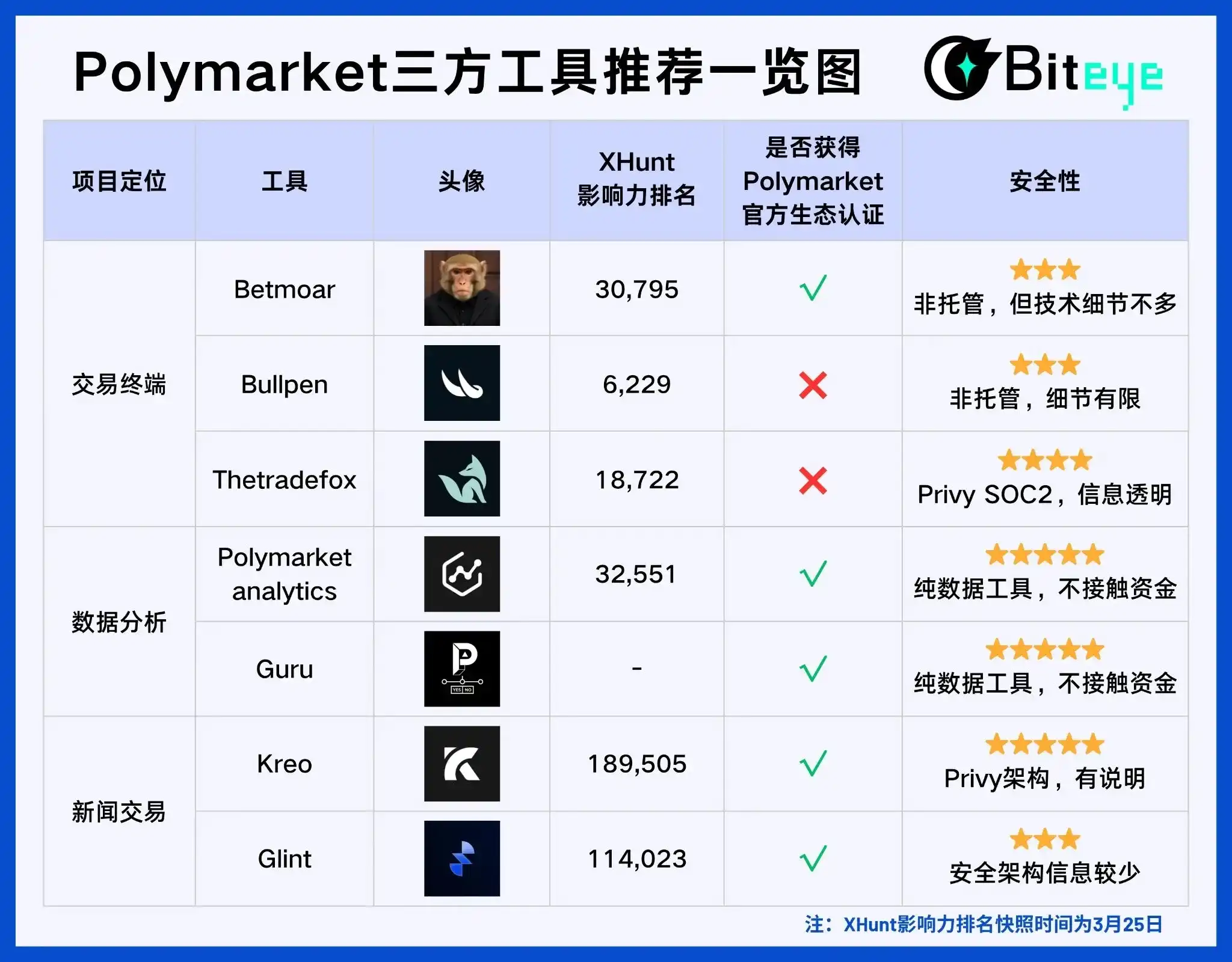
Also recommended: 《Interpreting Polymarket's Major Update Last Night: Fee Expansion, Self-Regulation, New Incentives》《Kalshi and Polymarket Jointly Capitalize New Fund, A Big Step Towards Prediction Market "Ecologization"》.

Policy & Stablecoins

CLARITY Act Rewrites DeFi's Life-and-Death Book: Circle Eats Meat, DeFi Tokens Bleed

The latest CLARITY proposal essentially ends the narrative of stablecoins as savings products. Stablecoins are strictly defined as payment tools rather than interest-bearing assets, which will be unfavorable for most DeFi. The assets most easily affected are DeFi tokens and governance tokens tied to fee income, such as UNI, SUSHI, DYDX, 1INCH, and CAKE等 DEX 代币 (and other DEX tokens).

Maker's structure already allows it to benefit from this shift. Other beneficiaries include compliant infrastructure providers like Circle, exchanges, and custodians (BitGo).

10x estimates a base target price of $120 for the next 12 months. If USDC growth accelerates again and profit margins improve significantly, it could rise to $150; but if growth stagnates and the current economic situation persists, there is a risk of falling to $80.

Also recommended: 《Tether Signs Big Four Auditor, Circle's Compliance Moat Collapses, Stock Price Plummets 20%》.

Airdrop Opportunities & Interaction Guides

Popular Interaction Collection | xStocks Points Activity Launched; Tempo Mainnet Launch (March 25)

Interaction Tutorial | Startale Group, Which Raised $63 Million, Launches Points Activity

Ethereum & Scaling

Ethereum Foundation Article: L1 and L2, From Division of Labor to Symbiosis

Weekly Hotspot Recap

In the past week, Iran presented the US with 5 ceasefire demands; Israel worries Trump might compromise to declare victory; Iran stated it will not allow Trump to decide the war's end time;

Additionally, regarding policy and macro markets: US lawmakers to propose bipartisan bill banning sports板块 (sectors) on prediction markets; UK plans to suspend crypto political donations, Prime Minister cites preventing illegal fund risks;

Views and voices: Analysis: Bitcoin under pressure alongside S&P and Nasdaq, Iran war加剧市场避险 (加剧市场避险 -加剧市场避险 - exacerbating market risk aversion); BIT: Bitcoin options market turns defensive, significant升温 (升温 - heating up) in downside protection demand; Bloomberg: Tether pauses $20 billion financing plan; Bernstein: Circle stock price correction may be excessive, market misreads stablecoin regulatory impact;

Institutions, large companies & top projects: NYSE partners with Securitize to develop tokenized securities platform, supporting 7x24 hour trading; Tether partners with a Big Four accounting firm to advance first full audit; Strategy launches total $42 billion equity issuance plan; Interactive Brokers launches crypto portfolio transfer function, supports inbound transfers from external wallets; Binance issues crypto market maker risk warning and project & user guide (interpretation); Backpack launches token claim and staking interface; Balancer co-founder announces closure of Balancer Labs, protocol to continue operations转向 DAO 和基金会架构 (turning to DAO and foundation structure); Odaily Skills launches free,主打省 Token 的精选信息结构化输出 (focusing on token-saving structured output of selected information);

Data-wise: March 23, spot gold's year-to-date gains归零 (returned to zero), intraday drop over 4%; March 25, Circle stock price fell up to 18%, US Clarity Act draft proposes to limit stablecoin rewards;

Security: Resolv Labs confirms vulnerability attack, suspends all protocol functions......Well, another rollercoaster week.

Attached: Portal to the 《Weekly Editor's Picks》 series.

See you next issue~

Tiền kỹ thuật số thịnh hành

Câu hỏi Liên quan

QWhat is the main purpose of the 'Weekly Editor's Picks' column by Odaily Planet Daily?

AIt is a functional column that selects high-quality, in-depth analysis articles from the past week that might be missed in the information flow and hot news, aiming to provide readers with valuable insights from data analysis, industry judgment, and perspectives.

QAccording to the article, why did the release of 400 million barrels of strategic oil reserves by the IEA fail to lower oil prices effectively?

AThe release was ineffective because the daily投放 (release) of 400 million barrels only covered 17% of the supply gap. The price of oil is determined not by the amount released but by whether the source of the supply disruption is resolved. The reserve release is essentially 'buying time' for negotiations and alternative route adjustments, not replenishing oil.

QWhat core change did Balancer's governance proposals on March 23rd aim to achieve?

AThe core change proposed was to abandon the token release-driven growth model and shift towards a revenue-driven sustainable operational model. This involved a comprehensive reform of BAL token economics and an operational structure reorganization.

QWhat is the fundamental nature of the ERC-8183 protocol as described in the article?

AERC-8183 is an on-chain standard for the decentralized AI agent economy. It is not a traditional payment protocol but a commercial infrastructure specification that defines a tripartite collaboration model (Client, Provider, Evaluator) for the full lifecycle of 'Job-Delivery-Settlement' through smart contracts.

QHow does the article characterize the current state of the Polymarket user base and its transaction volume?

AThe article states that 2% of users contribute 90% of the transaction volume on Polymarket. This volume is primarily driven by a small group of algorithmic and high-frequency traders, while the vast number of low-frequency retail users have almost no interaction with these professional traders.

Nội dung Liên quan

Giá Bitcoin được dự đoán sẽ diễn biến ra sao sau quyết định của Fed và dữ liệu lạm phát?

Chuyên gia phân tích tiền mã hóa Benjamin Cowen đã đánh giá dữ liệu lạm phát mới nhất của Mỹ và tác động kinh tế vĩ mô tiềm tàng đối với Bitcoin (BTC). Dữ liệu kinh tế Mỹ gần đây, cho thấy chỉ số giá tiêu dùng (PCE) giảm 0.1% hàng tháng vào tháng Sáu và tăng nhẹ 0.1% hàng năm ở lõi PCE, đã được thị trường đón nhận tích cực. Tăng trưởng GDP hàng năm 1.5% và số đơn xin trợ cấp thất nghiệp hàng tuần thấp (197,000) cho thấy sức bền của nền kinh tế. Giá Bitcoin đã duy trì xu hướng đi ngang ổn định sau các dữ liệu này. Tuy nhiên, Cowen tập trung vào sự bất đồng nội bộ trong quyết định lãi suất của Cục Dự trữ Liên bang (Fed). Dù Fed giữ lãi suất ổn định, việc ba thành viên FOMC bỏ phiếu tăng lãi suất cho thấy chính sách tiền tệ thắt chặt có thể chưa kết thúc. Ông lập luận rằng khi lợi suất trái phiếu kho bạc kỳ hạn 2 năm vượt lãi suất chiết khấu của Fed, tác động thắt chặt lên thị trường sẽ giảm. Áp lực lạm phát có thể quay trở lại nếu thị trường lao động tăng trưởng mạnh, và có khả năng cao về một đợt tăng lãi suất bất ngờ của Fed trong nửa cuối năm hoặc vào tháng Chín. Cowen cảnh báo rằng việc tăng lãi suất trong bối cảnh thị trường kỳ vọng giảm sẽ như "gáo nước lạnh" với nhà đầu tư, có thể thúc đẩy dòng tiền rời khỏi các tài sản rủi ro. Ông nhận định đáy thị trường có thể chưa xuất hiện và theo dữ liệu lịch sử, kịch bản có khả năng cao nhất là Bitcoin sẽ chạm đáy thực sự vào quý IV năm nay.

cryptonews.ru27 phút trước

Giá Bitcoin được dự đoán sẽ diễn biến ra sao sau quyết định của Fed và dữ liệu lạm phát?

cryptonews.ru27 phút trước

Dữ liệu PCE được Fed theo dõi sát sao nhất cho thấy kết quả tích cực: Các nhà phân tích đưa ra bình luận lạc quan

Dữ liệu Chỉ số Chi tiêu Tiêu dùng Cá nhân (PCE) được Cục Dự trữ Liên bang Mỹ (Fed) theo dõi sát sao tại Mỹ cho thấy tín hiệu tích cực khi lạm phát cơ bản giảm từ 3,4% xuống 3,3% vào tháng Sáu. Tuy nhiên, tỷ lệ này vẫn cao hơn đáng kể so với mục tiêu 2% của Fed. Chi tiêu tiêu dùng, động lực tăng trưởng chính, đã phục hồi mạnh mẽ với mức tăng 3,2% trong quý II, chứng tỏ nền kinh tế Mỹ vẫn kiên cường bất chấp lãi suất cao và giá năng lượng tăng. Chủ tịch Fed Kevin Warsh nhấn mạnh các quyết định chính sách sẽ dựa trên nhiều chỉ số lạm phát chứ không chỉ riêng PCE. Ông cũng khẳng định nền kinh tế tiếp tục vững vàng. Các nhà kinh tế cảnh báo việc giá năng lượng tăng trở lại là rủi ro lớn, có thể khiến Fed thắt chặt chính sách hơn nữa. Các chuyên gia từ Citigroup cho rằng việc Chủ tịch Warsh chú ý đến phạm vi chỉ số rộng hơn có thể làm giảm khả năng tăng lãi suất trong ngắn hạn. Họ chỉ ra rằng chỉ số giá tiêu dùng cơ bản (2,6%) gần với mục tiêu của Fed hơn so với PCE cơ bản. Thị trường hiện định giá xác suất Fed tăng lãi suất vào tháng 9 là 59%, nhưng Citigroup cho rằng kỳ vọng này có thể quá cao và không có khả năng xảy ra đợt tăng mới trong tương lai gần.

cryptonews.ru1 giờ trước

Dữ liệu PCE được Fed theo dõi sát sao nhất cho thấy kết quả tích cực: Các nhà phân tích đưa ra bình luận lạc quan

cryptonews.ru1 giờ trước

Khả năng Fed tăng lãi suất tăng mạnh sau cảnh báo 'diều hâu' của Warsh

Ủy ban Thị trường Mở Liên bang đã bỏ phiếu duy trì lãi suất mục tiêu không thay đổi. Chủ tịch Fed Kevin Warsh nhấn mạnh cam kết ổn định giá cả, khẳng định mục tiêu lạm phát duy nhất là 2%. Thị trường ngay lập tức điều chỉnh kỳ vọng, dự đoán khả năng tăng lãi suất vào tháng 9 đã tăng mạnh lên trên 61%. Các công cụ dự báo như CME FedWatch và thị trường dự đoán Kalshi, Polymarket đều cho thấy xu hướng tương tự, phản ánh nhận thức chung về lập trường "diều hâu" của Fed trong bối cảnh lạm phát chưa được kiểm soát. Trong bài phát biểu, Chủ tịch Warsh chỉ ra hai yếu tố đáng chú ý: sự tăng mạnh của lợi suất trái phiếu kho bạc và tác động của đầu tư vào trí tuệ nhân tạo (AI) đến lạm phát. Ông cũng cho biết ủy ban đã thảo luận sâu về tác động của lạm phát kéo dài, các cú sốc kinh tế, áp lực giá từ đầu tư AI và các công cụ chính sách tiền tệ. Thị trường chứng khoán biến động mạnh sau thông báo, nhưng đã phục hồi một phần vào ngày hôm sau. Bitcoin duy trì ổn định quanh mức 64.000 USD, cho thấy thị trường đang chờ đợi thêm dữ liệu. Quyết định chính sách tiếp theo của Fed sẽ diễn ra vào ngày 16 tháng 9. Chủ tịch Warsh nhấn mạnh các quyết định trong tương lai sẽ phụ thuộc nhiều hơn vào dữ liệu kinh tế thực tế và các cuộc thảo luận nội bộ, thay vì những tín hiệu chính sách có thể dự đoán trước.

cryptonews.ru1 giờ trước

Khả năng Fed tăng lãi suất tăng mạnh sau cảnh báo 'diều hâu' của Warsh

cryptonews.ru1 giờ trước

Kết thúc cơn sốt vàng? Nhu cầu toàn cầu với kim loại quý đang thay đổi

Thị trường vàng và kim loại quý đang trải qua sự biến đổi mạnh mẽ. Đầu năm 2026, giá vàng tăng vọt lên trên 5.500 USD/ounce nhưng sau đó giảm mạnh xuống dưới 4.000 USD vào cuối tháng 6, cho thấy biến động bất thường. Dù vậy, vàng vẫn nhận được sự hỗ trợ từ Ngân hàng Trung ương Trung Quốc, nơi đang tích cực mua vào để tăng dự trữ. Các chuyên gia từ J.P. Morgan dự báo giá vàng sẽ phục hồi, dao động trong khoảng 4.350-4.650 USD/ounce vào cuối năm. Bạc cũng có diễn biến tương tự, đạt mức 120 USD/ounce đầu năm rồi giảm khoảng một nửa, dù vẫn cao hơn 70% so cùng kỳ năm trước. Sự thiếu hụt nguồn cung buộc các ngành công nghiệp, như sản xuất tấm năng lượng mặt trời (chiếm 1/5 nhu cầu bạc toàn cầu), phải tăng cường tái chế và giảm lượng bạc sử dụng. Công ty WisdomTree lạc quan cho rằng nguồn cung bạc sẽ dần được cải thiện và dự báo giá có thể tăng lên 70 USD/ounce vào quý 2/2027. Tóm lại, thị trường kim loại quý hiện nay đòi hỏi nhà đầu tư phải có phân tích sâu sắc, đa dạng hóa rủi ro và đưa ra quyết định dựa trên các dữ liệu thị trường khách quan.

cryptonews.ru1 giờ trước

Kết thúc cơn sốt vàng? Nhu cầu toàn cầu với kim loại quý đang thay đổi

cryptonews.ru1 giờ trước

Giao dịch

Giao ngay

Bài viết Nổi bật

AGENT S là gì

Agent S: Tương Lai của Tương Tác Tự Động trong Web3 Giới thiệu Trong bối cảnh không ngừng phát triển của Web3 và tiền điện tử, các đổi mới đang liên tục định nghĩa lại cách mà cá nhân tương tác với các nền tảng kỹ thuật số. Một dự án tiên phong như vậy, Agent S, hứa hẹn sẽ cách mạng hóa tương tác giữa con người và máy tính thông qua khung tác nhân mở của nó. Bằng cách mở đường cho các tương tác tự động, Agent S nhằm đơn giản hóa các nhiệm vụ phức tạp, cung cấp các ứng dụng chuyển đổi trong trí tuệ nhân tạo (AI). Cuộc khám phá chi tiết này sẽ đi sâu vào những phức tạp của dự án, các tính năng độc đáo của nó và những tác động đối với lĩnh vực tiền điện tử. Agent S là gì? Agent S đứng vững như một khung tác nhân mở đột phá, được thiết kế đặc biệt để giải quyết ba thách thức cơ bản trong việc tự động hóa các nhiệm vụ máy tính: Thu thập Kiến thức Cụ thể theo Miền: Khung này học một cách thông minh từ nhiều nguồn kiến thức bên ngoài và kinh nghiệm nội bộ. Cách tiếp cận kép này giúp nó xây dựng một kho lưu trữ phong phú về kiến thức cụ thể theo miền, nâng cao hiệu suất của nó trong việc thực hiện nhiệm vụ. Lập Kế Hoạch Qua Các Tầm Nhìn Nhiệm Vụ Dài Hạn: Agent S sử dụng lập kế hoạch phân cấp tăng cường kinh nghiệm, một cách tiếp cận chiến lược giúp phân chia và thực hiện các nhiệm vụ phức tạp một cách hiệu quả. Tính năng này nâng cao đáng kể khả năng quản lý nhiều nhiệm vụ con một cách hiệu quả và hiệu suất. Xử Lý Các Giao Diện Động, Không Đều: Dự án giới thiệu Giao Diện Tác Nhân-Máy Tính (ACI), một giải pháp đổi mới giúp nâng cao tương tác giữa các tác nhân và người dùng. Sử dụng các Mô Hình Ngôn Ngữ Lớn Đa Phương Thức (MLLMs), Agent S có thể điều hướng và thao tác các giao diện người dùng đồ họa đa dạng một cách liền mạch. Thông qua những tính năng tiên phong này, Agent S cung cấp một khung vững chắc giải quyết các phức tạp liên quan đến việc tự động hóa tương tác giữa con người với máy móc, mở ra nhiều ứng dụng trong AI và hơn thế nữa. Ai là Người Tạo ra Agent S? Mặc dù khái niệm về Agent S là hoàn toàn đổi mới, thông tin cụ thể về người sáng lập vẫn còn mơ hồ. Người sáng lập hiện vẫn chưa được biết đến, điều này làm nổi bật giai đoạn sơ khai của dự án hoặc sự lựa chọn chiến lược để giữ kín các thành viên sáng lập. Bất chấp sự ẩn danh, sự chú ý vẫn tập trung vào khả năng và tiềm năng của khung này. Ai là Các Nhà Đầu Tư của Agent S? Vì Agent S còn tương đối mới trong hệ sinh thái mã hóa, thông tin chi tiết về các nhà đầu tư và những người tài trợ tài chính của nó không được ghi chép rõ ràng. Sự thiếu vắng thông tin công khai về các nền tảng đầu tư hoặc tổ chức hỗ trợ dự án dấy lên câu hỏi về cấu trúc tài trợ và lộ trình phát triển của nó. Hiểu biết về sự hỗ trợ là rất quan trọng để đánh giá tính bền vững và tác động tiềm năng của dự án. Agent S Hoạt Động Như Thế Nào? Tại cốt lõi của Agent S là công nghệ tiên tiến cho phép nó hoạt động hiệu quả trong nhiều bối cảnh khác nhau. Mô hình hoạt động của nó được xây dựng xung quanh một số tính năng chính: Tương Tác Giống Như Con Người: Khung này cung cấp lập kế hoạch AI tiên tiến, cố gắng làm cho các tương tác với máy tính trở nên trực quan hơn. Bằng cách bắt chước hành vi của con người trong việc thực hiện nhiệm vụ, nó hứa hẹn nâng cao trải nghiệm người dùng. Ký Ức Tường Thuật: Được sử dụng để tận dụng các trải nghiệm cấp cao, Agent S sử dụng ký ức tường thuật để theo dõi lịch sử nhiệm vụ, từ đó nâng cao quy trình ra quyết định của nó. Ký Ức Tình Huống: Tính năng này cung cấp cho người dùng hướng dẫn từng bước, cho phép khung này cung cấp hỗ trợ theo ngữ cảnh khi các nhiệm vụ diễn ra. Hỗ Trợ OpenACI: Với khả năng chạy cục bộ, Agent S cho phép người dùng duy trì quyền kiểm soát đối với các tương tác và quy trình làm việc của họ, phù hợp với tinh thần phi tập trung của Web3. Tích Hợp Dễ Dàng với Các API Bên Ngoài: Tính linh hoạt và khả năng tương thích với nhiều nền tảng AI khác nhau đảm bảo rằng Agent S có thể hòa nhập liền mạch vào các hệ sinh thái công nghệ hiện có, làm cho nó trở thành lựa chọn hấp dẫn cho các nhà phát triển và tổ chức. Những chức năng này cùng nhau góp phần vào vị trí độc đáo của Agent S trong không gian tiền điện tử, khi nó tự động hóa các nhiệm vụ phức tạp, nhiều bước với sự can thiệp tối thiểu của con người. Khi dự án phát triển, các ứng dụng tiềm năng của nó trong Web3 có thể định nghĩa lại cách mà các tương tác kỹ thuật số diễn ra. Thời Gian Phát Triển của Agent S Sự phát triển và các cột mốc của Agent S có thể được tóm tắt trong một dòng thời gian nêu bật các sự kiện quan trọng của nó: 27 tháng 9, 2024: Khái niệm về Agent S được ra mắt trong một bài nghiên cứu toàn diện mang tên “Một Khung Tác Nhân Mở Sử Dụng Máy Tính Như Một Con Người,” trình bày nền tảng cho dự án. 10 tháng 10, 2024: Bài nghiên cứu được công bố công khai trên arXiv, cung cấp một cái nhìn sâu sắc về khung và đánh giá hiệu suất của nó dựa trên tiêu chuẩn OSWorld. 12 tháng 10, 2024: Một video trình bày được phát hành, cung cấp cái nhìn trực quan về khả năng và tính năng của Agent S, thu hút thêm sự quan tâm từ người dùng và nhà đầu tư tiềm năng. Những dấu mốc trong dòng thời gian không chỉ minh họa sự tiến bộ của Agent S mà còn chỉ ra cam kết của nó đối với sự minh bạch và sự tham gia của cộng đồng. Những Điểm Chính Về Agent S Khi khung Agent S tiếp tục phát triển, một số thuộc tính chính nổi bật, nhấn mạnh tính đổi mới và tiềm năng của nó: Khung Đổi Mới: Được thiết kế để cung cấp cách sử dụng máy tính trực quan giống như tương tác của con người, Agent S mang đến một cách tiếp cận mới cho việc tự động hóa nhiệm vụ. Tương Tác Tự Động: Khả năng tương tác tự động với máy tính thông qua GUI đánh dấu một bước tiến tới các giải pháp tính toán thông minh và hiệu quả hơn. Tự Động Hóa Nhiệm Vụ Phức Tạp: Với phương pháp mạnh mẽ của nó, nó có thể tự động hóa các nhiệm vụ phức tạp, nhiều bước, làm cho các quy trình nhanh hơn và ít sai sót hơn. Cải Tiến Liên Tục: Các cơ chế học tập cho phép Agent S cải thiện từ các trải nghiệm trước đó, liên tục nâng cao hiệu suất và hiệu quả của nó. Tính Linh Hoạt: Khả năng thích ứng của nó trên các môi trường hoạt động khác nhau như OSWorld và WindowsAgentArena đảm bảo rằng nó có thể phục vụ một loạt các ứng dụng rộng rãi. Khi Agent S định vị mình trong bối cảnh Web3 và tiền điện tử, tiềm năng của nó để nâng cao khả năng tương tác và tự động hóa quy trình đánh dấu một bước tiến quan trọng trong công nghệ AI. Thông qua khung đổi mới của mình, Agent S minh họa cho tương lai của các tương tác kỹ thuật số, hứa hẹn một trải nghiệm liền mạch và hiệu quả hơn cho người dùng trên nhiều ngành công nghiệp khác nhau. Kết luận Agent S đại diện cho một bước nhảy vọt táo bạo trong sự kết hợp giữa AI và Web3, với khả năng định nghĩa lại cách chúng ta tương tác với công nghệ. Mặc dù vẫn còn ở giai đoạn đầu, những khả năng cho ứng dụng của nó là rộng lớn và hấp dẫn. Thông qua khung toàn diện của mình giải quyết các thách thức quan trọng, Agent S nhằm đưa các tương tác tự động lên hàng đầu trong trải nghiệm kỹ thuật số. Khi chúng ta tiến sâu hơn vào các lĩnh vực tiền điện tử và phi tập trung, các dự án như Agent S chắc chắn sẽ đóng một vai trò quan trọng trong việc định hình tương lai của công nghệ và sự hợp tác giữa con người với máy tính.

Tổng lượt xem 1.0kXuất bản vào 2025.01.14Cập nhật vào 2025.01.14

AGENT S là gì

Làm thế nào để Mua S

Chào mừng bạn đến với HTX.com! Chúng tôi đã làm cho mua Sonic (S) trở nên đơn giản và thuận tiện. Làm theo hướng dẫn từng bước của chúng tôi để bắt đầu hành trình tiền kỹ thuật số của bạn.Bước 1: Tạo Tài khoản HTX của BạnSử dụng email hoặc số điện thoại của bạn để đăng ký tài khoản miễn phí trên HTX. Trải nghiệm hành trình đăng ký không rắc rối và mở khóa tất cả tính năng. Nhận Tài khoản của tôiBước 2: Truy cập Mua Crypto và Chọn Phương thức Thanh toán của BạnThẻ Tín dụng/Ghi nợ: Sử dụng Visa hoặc Mastercard của bạn để mua Sonic (S) ngay lập tức.Số dư: Sử dụng tiền từ số dư tài khoản HTX của bạn để giao dịch liền mạch.Bên thứ ba: Chúng tôi đã thêm những phương thức thanh toán phổ biến như Google Pay và Apple Pay để nâng cao sự tiện lợi.P2P: Giao dịch trực tiếp với người dùng khác trên HTX.Thị trường mua bán phi tập trung (OTC): Chúng tôi cung cấp những dịch vụ được thiết kế riêng và tỷ giá hối đoái cạnh tranh cho nhà giao dịch.Bước 3: Lưu trữ Sonic (S) của BạnSau khi mua Sonic (S), lưu trữ trong tài khoản HTX của bạn. Ngoài ra, bạn có thể gửi đi nơi khác qua chuyển khoản blockchain hoặc sử dụng để giao dịch những tiền kỹ thuật số khác.Bước 4: Giao dịch Sonic (S)Giao dịch Sonic (S) dễ dàng trên thị trường giao ngay của HTX. Chỉ cần truy cập vào tài khoản của bạn, chọn cặp giao dịch, thực hiện giao dịch và theo dõi trong thời gian thực. Chúng tôi cung cấp trải nghiệm thân thiện với người dùng cho cả người mới bắt đầu và người giao dịch dày dạn kinh nghiệm.

Tổng lượt xem 2.0kXuất bản vào 2025.01.15Cập nhật vào 2026.06.02

Làm thế nào để Mua S

Thảo luận

Chào mừng đến với Cộng đồng HTX. Tại đây, bạn có thể được thông báo về những phát triển nền tảng mới nhất và có quyền truy cập vào thông tin chuyên sâu về thị trường. Ý kiến ​​của người dùng về giá của S (S) được trình bày dưới đây.

活动图片