Understanding Theory ≠ Gaining Profit: 5 Common Math Mistakes Made by Highly Intelligent People

marsbitXuất bản vào 2026-03-14Cập nhật gần nhất vào 2026-03-14

Tóm tắt

In the article "Knowing Theory ≠ Earning Returns: 5 Common Math Mistakes Made by Highly Intelligent People," crypto KOL darkzodchi explores why many highly educated individuals struggle financially despite their intellectual prowess, while less academically trained traders often succeed. The author identifies five key cognitive errors: 1. **Pursuing Precision Over Action**: Smart people often delay decisions to seek perfect accuracy, underestimating the cost of delay. The solution is to set deadlines and prioritize timely action over exhaustive research. 2. **Finding Patterns in Noise**: Intelligent individuals tend to overfit models by detecting false patterns in random data. The remedy is to apply statistical corrections (e.g., Bonferroni) and avoid complex strategies prone to noise. 3. **Misapplying Diversification**: Diversification is useful without an edge but harmful when one has a genuine advantage. The Kelly Criterion suggests concentrating bets based on the strength of the edge. 4. **Anchoring to Irrelevant Numbers**: People often fixate on past prices or values, impairing rational decision-making. Asking "Would I buy this today?" helps ignore sunk costs. 5. **Confusing Understanding with Action**: Knowledge alone doesn’t yield results; action and consistency are crucial. Small, real-world bets bridge the gap between theory and practice. The author emphasizes that markets reward simplicity, speed, and execution over complexity and perfection. Intelligent indiv...

Author: darkzodchi, Crypto KOL

Compiled by: Felix, PANews

There are many highly educated and intelligent people in the financial markets, but only a minority make money, and a significant portion of them are not highly educated. They have learned a lot of theory but cannot make money. What causes this "anomaly"? Based on personal experience and research, crypto KOL darkzodchi analyzed this phenomenon and proposed five common cognitive mistakes made by smart people. Details below.

I know someone who can mentally solve differential equations. He graduated with top honors and works at a top tech company you've definitely heard of, earning $180,000 a year. But his net worth is essentially zero. If you factor in his car loan, it might even be negative.

In stark contrast, most of my friends dropped out of school before they were 20, fully devoting themselves to entrepreneurship or trading, and now earn more than those with finance degrees. Half of them don't even understand basic economic terms; they just know when to act.

What's going on here?

I've seen this countless times: strategists almost never act. Have you ever wondered why university professors don't drive Ferraris? Because they know *how* to act in theory, but don't know *what* to do in practice.

Let's talk about 5 math mistakes that specifically plague smart people, and a "foolproof" solution for each.

Mistake 1: Pursuing Precision While Ignoring the Importance of Action

Smart people love pursuing absolutely correct answers. This pursuit is rewarded in school: on a math test, 97% accuracy is far worse than 100%.

But in the world of money? 97% accuracy achieved next month is far less valuable than 70% accuracy right now.

I watched a friend spend two years building a "perfect" liquidity provision project; he even raised funds for it. He used custom metrics and ran backtests spanning 15 years, covering three different volatility environments. Honestly, it was a remarkable piece of work.

But by the time he launched, the market environment had changed. His model was tailored for a market that no longer existed. Meanwhile, some unknown person on CT forums made $80,000 with three simple lines of heuristic code—"buy when funding rate is negative, sell when positive"—while my friend was still struggling.

There's actually a formula for this called the Value of Information (VoI), which tells you when more research is worth it:

VoI = EV(Decision with more info) - EV(Decision now) - Cost of Delay

If VoI < 0, stop researching and act immediately.

The cost of delay is something smart people consistently underestimate. They think it's zero because doing research "feels productive." It's not. Markets move, opportunities vanish, capital sits idle.

I've personally fallen for this. In August 2025, I spent a month thinking about how to structure a Polymarket project, trying to devise an extremely complex scheme, until I completely forgot about it.

By October, I switched my mindset and started coding daily. By November, the project was live.

I wasted more time "thinking about the idea" than actually creating it. Classic self-sabotage.

The Fix: Set a deadline *before* you start researching. "No matter how much information I have, I will decide by Friday." This single habit is more valuable than any formula.

Mistake 2: Finding Patterns in Noise (And Betting on Them)

This is a big one, and it's unique to smart people.

If you're smart, your brain is like a pattern recognition machine. This ability got you great grades and a dream job. You see structure where others see chaos.

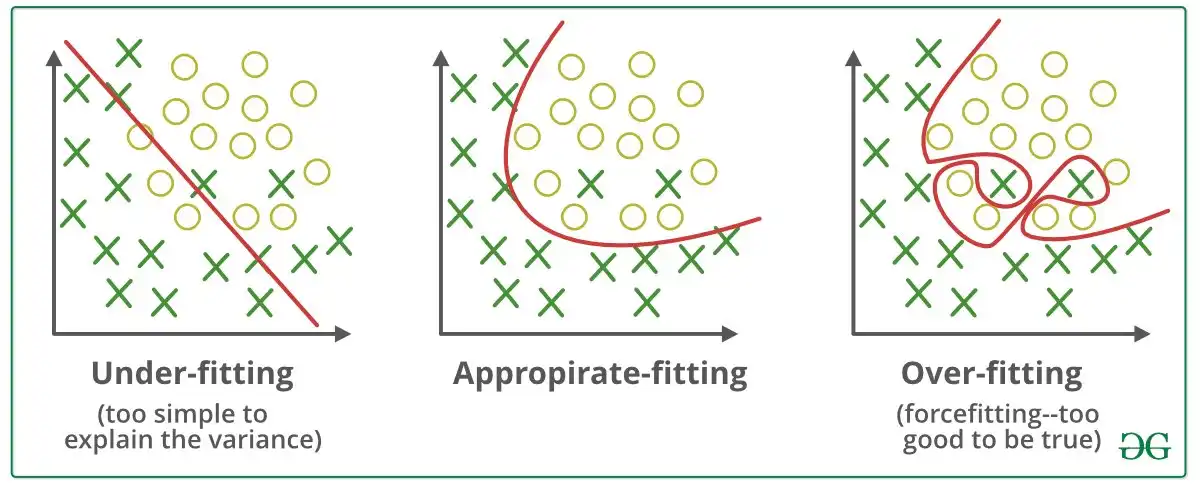
The problem: Financial markets are mostly chaos. Your amazing pattern-matching brain will find patterns that aren't there. Then it will convince you they are real, you'll bet, and you'll lose.

This is called "overfitting." Here's an example of how it works.

Take any random dataset: stock prices, temperature readings, anything. Run enough combinations of indicators, and you *will* find a formula that "predicts" the past with 95% accuracy. It looks amazing in backtests. But it's garbage; it found a pattern in the noise.

Overfitting Test:

  • If your model has N parameters and you tested K combinations:
  • Expected number of false discoveries = K × Significance level
  • Testing 100 indicators at p < 0.05 yields 5 "significant" results that are pure noise.

I fell for this hard. In 2022, I found a "pattern" in ETH that held for 3 months of data. Something about the Binance/Coinbase volume ratio. The backtest looked bulletproof, I got excited, and immediately put $2,000 into it.

Lost $400 the first week. The pattern was noise. I wasn't smart enough to realize that *being able to find it* was the problem.

The data from Polymarket confirms this powerfully. When I analyzed 112,000 wallets, those running the most complex strategies (10+ signals, fancy ML models) actually performed *worse* than those using just 2-3 simple rules. More complexity = more overfitting = more losses.

The Fix: Before believing any pattern, ask: "If I tested 100 random strategies, how many would look this good by pure luck?" If the answer is more than 1 or 2, your "discovery" is likely noise. The Bonferroni correction helps: divide your significance threshold by the number of strategies you tested.
Mistake 3: Diversifying When You Should Concentrate (And Vice Versa)

This one hits close to home, as I was running five different projects simultaneously a few years ago, and they all failed.

Every smart person knows "don't put all your eggs in one basket." It's like the first rule of finance: diversify. Modern Portfolio Theory, Markowitz, Nobel Prize.

Yet... the actual math reveals something more nuanced that most people miss.

Diversification protects you *when you have no edge*. If you're picking stocks randomly, sure, diversify. You don't actually know what will happen.

But when you actually have an edge (a genuinely mispriced opportunity), diversification *harms* your returns. You dilute your best idea with mediocre ones.

  • Kelly Criterion for Concentration: f* = Edge / Odds
  • If your edge is 15%, odds are 1:1: f* = 0.15 / 1.0 = 15% of bankroll
  • If your edge is 3%: f* = 0.03 / 1.0 = 3% of bankroll

This formula literally says: bigger edge, bigger bet; smaller edge, smaller bet. It does NOT say "spread your capital equally across 47 positions."

Warren Buffett (who is quite good at this) has said repeatedly that diversification is protection against ignorance. If you know what you're doing, it makes no sense.

I used to hold 5-10 different tokens during the SOL and BSC booms. The best performer went up 120%, but it was only 4% of my portfolio, netting me about $80 total. Meanwhile, my largest holding dropped 40%.

And the top Polymarket wallets I studied? They only have 3-5 positions open at any time, max, but each position is sized according to its edge.

The Fix: Ask yourself honestly: Do I have an edge in this trade? If yes, size up (within Kelly limits). If no, either skip it entirely or index. The "a little bit of everything" compromise is the graveyard of returns.

Mistake 4: Anchoring to Irrelevant Numbers

Smart people are especially susceptible to anchoring because they remember numbers, and remembered numbers become subconscious reference points for all future decisions.

"I bought ETH at $4800."

So what? The market doesn't care. That number is completely, utterly, 100% irrelevant to whether ETH is a good buy today. But your brain has welded $4800 to your self-esteem. Now, every price below feels like a "loss," every price above feels like "breaking even."

This isn't just a feeling. It measurably changes your behavior:

  • You hold losing positions too long (waiting to "break even")
  • You sell winning positions too early (fear of giving back profits).
  • You evaluate new opportunities based on past prices, not future value.

There's a very simple test for this. Daniel Kahneman calls it "Would I buy it today?"

  • You hold an asset, current price P.
  • You bought it at price P_0.
  • Ignore P_0 completely; it's a sunk cost.

Question: If you had cash right now, would you buy this asset at price P?

  • If yes → Hold
  • If no → Sell
  • If unsure → Your position is too large

I had to write this on a sticky note on my monitor: "Would I buy it today?" Because even knowing the bias, I'd still think, "But I'm only down 20%, let's wait for a bounce." Anchoring is that powerful.

This applies beyond trading. Salary negotiation? If you make $90k now, you anchor on that and ask for $100k. But the market rate for your role might be $130k. You're literally negotiating against yourself using an irrelevant anchor. Changing jobs? "I've been here 4 years." So what? The question is whether the next four years are better spent here or elsewhere. The past four are sunk regardless.

The Fix: Before any financial decision, write down the numbers influencing you. Then ask: "Is this number actually relevant to future outcomes, or am I just anchored to the past?" If it's the past, cross it out (literally, with a pen).

Mistake 5: Mistaking Understanding for Action

This is the cruelest one. Honestly, it's my biggest weakness too.

Smart people read about compound interest and nod along. They understand the Kelly Criterion, they can explain loss aversion at dinner parties, they've read *Thinking, Fast and Slow* (or at least the summary).

Then they think understanding equals action. It doesn't. Not even close.

Understanding compounding doesn't mean you're investing. Understanding Kelly doesn't mean you're sizing correctly. Understanding loss aversion doesn't mean you're immune to it.

There's research on this. It's called the "knowledge-action gap," and it's huge. One study found almost no correlation between financial literacy scores and actual financial outcomes. People scoring 95 on a financial literacy test were just as likely to carry credit card debt as those scoring 50.

Financial Outcome = Knowledge × Action × Consistency

No matter how vast the knowledge, if action is zero, the result is zero.

The formula is obvious, but smart people get stuck on the first term. They keep accumulating knowledge: one more book, one more course, one more podcast. Because learning feels safe and secure. Action feels risky and uncomfortable.

I know because I lived it. I read three books on investing before making my first trade. I could explain the Efficient Market Hypothesis, factor investing, options pricing—all of it. My first live trade? I panicked and lost 12% in three days. All that knowledge, and emotion still ruled everything.

You know what finally helped me? I was literally on the basketball court, pulled out my phone, and put $50 on a Polymarket bet, purely to try it. Not $5000, just $50. The stakes were low, real money was on the line, almost no chance to win—but I just wanted to feel what it was like to have skin in the game.

Suddenly, those probability formulas weren't abstract. They were tied to my money. That $50 bet taught me more about my biases than 11 books combined.

The Fix: After reading this, do *one* thing. Not five things. One thing. Place a small bet, calculate an expected value, test a hypothesis. The gap between knowing and doing is bridged by tiny acts of doing.

Why This Matters More Than You Think

What bothers me most about all this: These 5 mistakes aren't from being "stupid," but from being "smart in the wrong way." School trains us to be meticulous, precise, knowledgeable. The market rewards being fast, roughly right, and taking action.

The rules of the game changed, and nobody told us.

The good news is, once you see these traps, you can't unsee them. Every time you find yourself spending 3 hours researching a $200 decision—that's Mistake #1. Every time you find an exciting "pattern" in a crypto chart—that's Mistake #2. Every time you spread your capital across 20 positions because "diversification"—that's Mistake #3.

The smartest thing a smart person can do is get a little "dumber." Simpler strategies, fewer positions, faster decisions. Less research, more action.

The math supports it, the 112,000 wallets I studied prove it, the books prove it, my own expensive mistakes prove it.

Now stop reading and go do something.

Related reading: Must-Read for Beginners: Senior Trader Shares Five Trading "Secrets"

Câu hỏi Liên quan

QWhat is the first common mathematical mistake that intelligent people make in financial markets, and what is the suggested solution?

AThe first mistake is pursuing precision over action. The solution is to set a deadline before starting research and make a decision by that time, regardless of how much information has been gathered.

QWhat is overfitting, and how does it particularly affect smart individuals in trading?

AOverfitting is finding patterns in noise that don't actually exist. It affects smart individuals because their pattern-matching brains are prone to seeing structures in random market chaos, leading them to place bets based on these false patterns and lose money.

QAccording to the Kelly Criterion, when should an investor concentrate their bets instead of diversifying?

AAn investor should concentrate their bets when they have a genuine advantage (a truly undervalued opportunity). The Kelly Criterion formula, f* = edge / odds, indicates that a larger edge warrants a larger bet, while a smaller edge warrants a smaller bet or no bet at all.

QWhat is the 'anchoring effect' and how can it negatively impact financial decisions?

AThe anchoring effect is the cognitive bias where an individual relies too heavily on an initial piece of information (an 'anchor') when making decisions. It negatively impacts finances by causing people to hold losing positions too long (waiting to 'break even'), sell winning positions too early, and evaluate new opportunities based on past prices instead of future value.

QWhat is the 'knowledge-action gap' and why is it a significant problem for intelligent people?

AThe 'knowledge-action gap' is the disconnect between understanding a concept theoretically and actually putting it into practice. It's a significant problem for intelligent people because they often mistake understanding for action, continually accumulating knowledge instead of taking the risky and uncomfortable steps required to achieve real financial results.

Nội dung Liên quan

Agent tiếp quản quyền phân phối lưu lượng, Tencent, Byte, Alibaba đang tranh giành điều gì?

Bài viết phân tích cuộc cạnh tranh khốc liệt của ba gã khổng lồ công nghệ Trung Quốc - Alibaba, ByteDance và Tencent - trong việc giành quyền kiểm soát "cửa ngõ" thời đại AI, chính là các Agent thông minh. **Alibaba:** Chiến lược "song tử" với Ứng dụng Qianwen và Quark. Qianwen hướng tới trở thành một "siêu Agent" có khả năng điều phối nhiều dịch vụ trong hệ sinh thái Alibaba và mở rộng kết nối với các thương hiệu bên ngoài (như Luckin Coffee, KFC). Trong khi đó, Quark tập trung vào tra cứu thông minh cho giới trẻ. Alibaba cũng ra mắt nền tảng Agent doanh nghiệp "Wukong". **ByteDance:** Theo đuổi chiến lược "mọi lúc mọi nơi" với Doubao. Với 300 triệu người dùng hàng tháng, Doubao App là cửa ngõ AI phổ biến. Nền tảng phát triển Agent "Kouzi" đóng vai trò là "nhà máy lắp ráp" phía sau, hỗ trợ tạo và phối hợp nhiều Agent. ByteDance còn tích cực mở rộng sang phần cứng như điện thoại AI và kính thông minh để nhúng Doubao vào mọi thiết bị. **Tencent:** Sở hữu "lá bài tẩy" tiềm ẩn trong WeChat. Thay vì tạo một ứng dụng AI mới, Tencent đang phát triển một Agent thông minh được tích hợp sâu vào WeChat, cho phép người dùng trượt sang phải để gọi và ra lệnh. Agent này có thể hiểu yêu cầu và tự động gọi hàng triệu mini-program trên WeChat để thực thi nhiệm vụ (như đặt đồ uống, đặt vé), biến WeChat thành một "hệ điều hành dịch vụ". Đây là lợi thế khổng lồ với 1.4 tỷ người dùng. **Lõi cuộc chiến:** Cuộc cạnh tranh này không chỉ là về sản phẩm, mà là về sự thay đổi căn bản trong phân phối lưu lượng và quyền lực kinh doanh. Trong tương lai, quyền quyết định tiếp cận dịch vụ sẽ dần chuyển từ việc người dùng tự nhấp chuột sang việc Agent đại diện ra quyết định dựa trên "ý định" của người dùng. Công ty nào kiểm soát được điểm tiếp xúc đầu tiên với ý định người dùng và trở thành "lớp thực thi" mặc định, sẽ nắm giữ quyền lực phân phối lưu lượng Token và định hình lại toàn bộ hệ sinh thái thương mại. Thách thức với Tencent nằm ở năng lực hạ tầng máy tính để phục vụ số người dùng khổng lồ. Tóm lại, đây là thời điểm tái phân phối quyền lực, khi hình thái cửa ngõ chuyển từ Web (PC) sang App (di động) và giờ là Agent (AI). Cuộc đua đang diễn ra quyết liệt để định nghĩa lại cách người dùng kết nối với thế giới số.

marsbit8 phút trước

Agent tiếp quản quyền phân phối lưu lượng, Tencent, Byte, Alibaba đang tranh giành điều gì?

marsbit8 phút trước

Sàn Nasdaq Một Đêm Sụt 4%, 1.3 Nghìn Tỷ USD Bốc Hơi, Chứng Khoán Mỹ Đối Mặt Với Ba Đòn Chí Tử

**Sự Sụt Giảm Mạnh Trên Nasdaq: 4%, 1.3 Nghìn Tỷ USD Bốc Hơi, Chứng Khoán Mỹ Hứng Chịu "Ba Đòn Chí Tử"** Ngày 5 tháng 6 đánh dấu một phiên giao dịch tồi tệ nhất kể từ khủng hoảng thuế quan tháng 4/2025. Chỉ số Nasdaq lao dốc 4.18%, S&P 500 mất 2.64% và Dow Jones giảm 695 điểm. Ba nguyên nhân chính đồng thời gây ra sự sụp đổ: 1. **Báo cáo của Broadcom làm rạn nứt câu chuyện AI:** Dù doanh thu chip AI của Broadcom tăng 143%, dự báo cho quý tới thấp hơn kỳ vọng, gợi ý về tốc độ tăng trưởng có thể chậm lại. Điều này kích hoạt làn sóng bán tháo trên toàn ngành bán dẫn, với chỉ số Philadelphia Semiconductor giảm 10.26% và tổng vốn hóa các công ty chip Mỹ bốc hơi khoảng 1.3 nghìn tỷ USD. 2. **Dữ liệu việc làm mạnh bất ngờ trở thành "thuốc độc":** Báo cáo phi nông nghiệp tháng 5 cho thấy 172,000 việc làm mới, gấp đôi dự báo, cùng với việc điều chỉnh tăng số liệu các tháng trước. Trong bối cảnh giá dầu cao do chiến tranh Iran, dữ liệu này làm dấy lên lo ngại Cục Dự trữ Liên bang (Fed) không những không giảm lãi suất mà còn có thể tăng lãi. Kỳ vọng lãi suất tăng gây áp lực nén định giá lên cổ phiếu công nghệ và kích thích luân chuyển vốn sang tài sản an toàn hơn. 3. **Bóng ma lạm phát từ chiến tranh Iran:** Giá dầu duy trì trên 90 USD/thùng do tình trạng bất ổn ở eo biển Hormuz tiếp tục gây áp lực lạm phát, khiến Fed rơi vào tình thế khó xử và hạn chế không gian chính sách. Ba yếu tố này cùng lúc tấn công vào các trụ cột niềm tin thị trường: câu chuyện tăng trưởng vô hạn của AI, kỳ vọng Fed nới lỏng tiền tệ và nhận định lạm phát đã được kiểm soát. Sự sụt giảm lan rộng ra toàn cầu, ảnh hưởng đến chứng khoán châu Á, châu Âu và cả thị trường tiền mã hóa. Đây có thể là một đợt "định giá lại" cần thiết hơn là sự kết thúc của câu chuyện AI. Nhu cầu chip AI vẫn thực tế và mạnh mẽ, nhưng thị trường đang điều chỉnh kỳ vọng về tốc độ tăng trưởng và mức định giá phù hợp. Hướng đi tiếp theo của thị trường sẽ phụ thuộc vào cuộc họp sắp tới của Fed, các báo cáo từ các công ty AI khác và diễn biến của tình hình Iran.

marsbit31 phút trước

Sàn Nasdaq Một Đêm Sụt 4%, 1.3 Nghìn Tỷ USD Bốc Hơi, Chứng Khoán Mỹ Đối Mặt Với Ba Đòn Chí Tử

marsbit31 phút trước

Solana Có Thể Là Thị Trường Giao Dịch Spot Tốt Nhất Toàn Cầu? Một Chuyên Gia Crypto Nghĩ Vậy

Dù giá Solana (SOL) đang chịu áp lực giảm, giao dịch quanh mốc 64 USD, một chuyên gia tiền mã hóa vẫn bày tỏ quan điểm lạc quan mạnh mẽ về tiềm năng của mạng lưới này. Chase, một nhân sự tại Solana Mobile, sau khi đánh giá cấu trúc thị trường, đã đưa ra nhận định táo bạo rằng Solana có cơ sở hạ tầng để trở thành thị trường giao dịch giao ngay (spot) tốt nhất toàn cầu và có khả năng tạo ra nhiều doanh thu hơn bất kỳ blockchain nào. Ông nhấn mạnh Solana đã định vị là trung tâm cho việc hình thành vốn và giao dịch, với đầy đủ tài sản, tính thanh khoản, nhưng nhiều người vẫn chưa nhận ra đó là nơi tốt nhất để giao dịch spot. Việc thu hút thêm người dùng retail và trader lên chuỗi được xem là chìa khóa cho sự tăng trưởng. Báo cáo từ Zensei củng cố sức mạnh hệ sinh thái, cho thấy Tổng Vốn Huy Động (TCG) hàng tuần trên Solana đạt mức cao kỷ lục 73,6 triệu USD. Hơn nữa, Solana đã vượt Ethereum để trở thành blockchain dẫn đầu về vốn hóa thị trường cổ phiếu được mã hóa (tokenized stocks), với mức tăng hơn 54% lên 724,1 triệu USD trong tuần qua, chứng tỏ sự thu hút vốn mạnh mẽ vào mạng lưới.

bitcoinist1 giờ trước

Solana Có Thể Là Thị Trường Giao Dịch Spot Tốt Nhất Toàn Cầu? Một Chuyên Gia Crypto Nghĩ Vậy

bitcoinist1 giờ trước

Từ ‘cấm cửa’ Doubao đến ‘ôm lấy’ Honor: Tại sao WeChat bất ngờ thay đổi thái độ?

Từ chặn Doubao đến bắt tay Honor: Tại sao WeChat đột nhiên “thay đổi thái độ”? Bài viết phân tích về việc WeChat của Tencent, sau một thời gian dài phong tỏa các trợ lý AI của hãng điện thoại, đã đột ngột hợp tác với các nhà sản xuất như Huawei, Honor, Xiaomi, OPPO, vivo để phát triển khả năng trợ lý A2A (Agent-to-Agent). Động thái này diễn ra trong bối cảnh Tencent đang chịu áp lực cạnh tranh lớn về AI so với các đối thủ như ByteDance và Alibaba. Trước đây, WeChat kiên quyết chống lại các phương pháp như GUI Agent (AI mô phỏng thao tác màn hình) mà Doubao của ByteDance sử dụng, coi đó là sự “xâm phạm”. Giờ đây, Tencent chọn giải pháp A2A, trong đó trợ lý AI hệ thống điện thoại phân tích ý định người dùng và gửi lệnh được ủy quyền tới WeChat để thực thi nội bộ. Cách tiếp cận này cho phép WeChat duy trì quyền kiểm soát hệ sinh thái và bảo mật dữ liệu trong khi vẫn mở rộng tiếp cận thông qua cổng vào AI cấp hệ thống. Các hãng điện thoại, dẫn đầu là Honor, nhiệt tình tham gia vì con đường GUI đã bị chứng minh là không khả thi. Hợp tác A2A mang lại cho họ sự ổn định, tuân thủ và cơ hội tập trung phát triển các khả năng AI độc lập khác. Cơ chế ủy quyền kép (người dùng + ứng dụng) được nhấn mạnh để đảm bảo quyền riêng tư và an ninh. Bài viết kết luận rằng đây là một liên minh chiến lược tạm thời. Tencent muốn biến WeChat thành “hệ điều hành dịch vụ” trong kỷ nguyên AI, trong khi các nhà sản xuất điện thoại muốn củng cố vị thế là trung tâm hệ sinh thái AI của riêng họ. Cuộc chiến giành cổng vào AI thời đại mới chỉ vừa bắt đầu.

marsbit1 giờ trước

Từ ‘cấm cửa’ Doubao đến ‘ôm lấy’ Honor: Tại sao WeChat bất ngờ thay đổi thái độ?

marsbit1 giờ trước

Số Liệu Trên Chuỗi Đêm Trước Khai Mạc: World Cup Chưa Đá Đã Giao Dịch 1.6 Tỷ USD

Trước thềm FIFA World Cup 2026, thị trường dự đoán phi tập trung (prediction markets) trên blockchain đã ghi nhận khối lượng giao dịch khổng lồ. Chỉ riêng hợp đồng "World Cup Winner" trên nền tảng Polymarket đã đạt khoảng 1,6 tỷ USD khối lượng giao dịch tích lũy tính đến ngày 5/6, dù giải đấu chưa bắt đầu. Con số này tăng mạnh từ 368 triệu USD vào cuối tháng 3, phản ánh sự quan tâm ngày càng lớn. Hàng trăm hợp đồng khác bao phủ mọi trận đấu, từ tỷ số đến đội vô địch, đang được giao dịch sôi động. Giá hợp đồng (0.01-0.99 USD) biến động theo thông tin và biểu thị xác suất ngầm định của thị trường. Cơ sở hạ tầng của lĩnh vực này đang được củng cố với việc sử dụng stablecoin được quản lý (USDC) để thanh toán, oracle phi tập trung (Chainlink) để xác định kết quả, và cả FIFA cũng đã chỉ định đối tác chính thức đầu tiên trong hạng mục "thị trường dự đoán". Sự phát triển này đánh dấu bước chuyển từ các hình thức tiếp cận ban đầu như tài trợ hay fan token, sang việc thâm nhập sâu vào các lớp cơ sở hạ tầng tài chính và thông tin của thể thao. Tuy nhiên, khung pháp lý cho các thị trường sự kiện này vẫn đang thay đổi và khác biệt đáng kể giữa các khu vực pháp lý.

marsbit2 giờ trước

Số Liệu Trên Chuỗi Đêm Trước Khai Mạc: World Cup Chưa Đá Đã Giao Dịch 1.6 Tỷ USD

marsbit2 giờ trước

Giao dịch

Giao ngay
Hợp đồng Tương lai

Bài viết Nổi bật

Làm thế nào để Mua PEOPLE

Chào mừng bạn đến với HTX.com! Chúng tôi đã làm cho mua ConstitutionDAO (PEOPLE) trở nên đơn giản và thuận tiện. Làm theo hướng dẫn từng bước của chúng tôi để bắt đầu hành trình tiền kỹ thuật số của bạn.Bước 1: Tạo Tài khoản HTX của BạnSử dụng email hoặc số điện thoại của bạn để đăng ký tài khoản miễn phí trên HTX. Trải nghiệm hành trình đăng ký không rắc rối và mở khóa tất cả tính năng. Nhận Tài khoản của tôiBước 2: Truy cập Mua Crypto và Chọn Phương thức Thanh toán của BạnThẻ Tín dụng/Ghi nợ: Sử dụng Visa hoặc Mastercard của bạn để mua ConstitutionDAO (PEOPLE) ngay lập tức.Số dư: Sử dụng tiền từ số dư tài khoản HTX của bạn để giao dịch liền mạch.Bên thứ ba: Chúng tôi đã thêm những phương thức thanh toán phổ biến như Google Pay và Apple Pay để nâng cao sự tiện lợi.P2P: Giao dịch trực tiếp với người dùng khác trên HTX.Thị trường mua bán phi tập trung (OTC): Chúng tôi cung cấp những dịch vụ được thiết kế riêng và tỷ giá hối đoái cạnh tranh cho nhà giao dịch.Bước 3: Lưu trữ ConstitutionDAO (PEOPLE) của BạnSau khi mua ConstitutionDAO (PEOPLE), lưu trữ trong tài khoản HTX của bạn. Ngoài ra, bạn có thể gửi đi nơi khác qua chuyển khoản blockchain hoặc sử dụng để giao dịch những tiền kỹ thuật số khác.Bước 4: Giao dịch ConstitutionDAO (PEOPLE)Giao dịch ConstitutionDAO (PEOPLE) dễ dàng trên thị trường giao ngay của HTX. Chỉ cần truy cập vào tài khoản của bạn, chọn cặp giao dịch, thực hiện giao dịch và theo dõi trong thời gian thực. Chúng tôi cung cấp trải nghiệm thân thiện với người dùng cho cả người mới bắt đầu và người giao dịch dày dạn kinh nghiệm.

Tổng lượt xem 694Xuất bản vào 2024.12.12Cập nhật vào 2026.06.02

Làm thế nào để Mua PEOPLE

Thảo luận

Chào mừng đến với Cộng đồng HTX. Tại đây, bạn có thể được thông báo về những phát triển nền tảng mới nhất và có quyền truy cập vào thông tin chuyên sâu về thị trường. Ý kiến ​​của người dùng về giá của PEOPLE (PEOPLE) được trình bày dưới đây.

活动图片