The Playground of Whales: Why Retail Investors Are Fleeing DeFi

marsbitXuất bản vào 2026-01-27Cập nhật gần nhất vào 2026-01-27

Tóm tắt

The article "Whales' Playground: Why Retail Investors Are Fleeing DeFi" argues that the era of decentralized finance as a tool for financial democratization has ended. Despite lower transaction costs due to Layer 2 solutions and reduced Ethereum gas fees, retail participation is declining. Key reasons include: - **Low Gas Trap**: Cheap transactions have turned DeFi into a high-effort, low-reward "digital factory," where users perform repetitive tasks for minimal airdrop rewards. - **Unpredictable Rules**: Projects frequently change terms retroactively (e.g., altering tokenomics, adding lock-ups, or labeling users as "sybils"), violating the "code is law" principle and eroding trust. - **Lock-up Traps**: High APY incentives often lock users’ funds long-term, while whales and insiders exit early, leaving retail investors exposed to token devaluation. - **Risk-Reward Mismatch**: Low returns (5-10%) come with high risks like smart contract exploits, phishing, depegging, and rug pulls, making DeFi less attractive than holding core assets like Bitcoin. The conclusion urges retail investors to protect capital, avoid futile interactions, and seek better opportunities elsewhere, as DeFi has become a playground dominated by whales and manipulative projects.

Author: Chen Xiaomeng

The era of DeFi that once championed financial empowerment has, in reality, come to an end.

A few years ago, we were complaining that the几十dollar Gas fees on the Ethereum mainnet were blocking retail investors. Now, Layer 2 has become a ghost chain, and even the mainnet's Gas fees have dropped to almost negligible levels after upgrades.

The barrier is gone. We expected a狂欢of retail investors, but instead, we got a silent mass exodus.

Why? Because everyone has finally come to their senses:

In this market, we take on the stress of selling cocaine, but only earn the profits of selling flour.

I. The Low Gas Trap: From Noble Chain to Electronic Factory
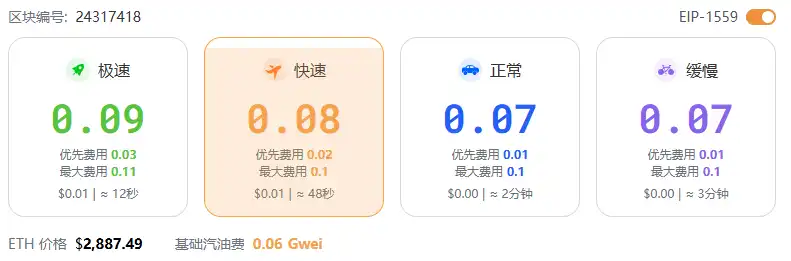
When Gas was expensive, it at least helped filter out low-quality interactions, forcing you to carefully consider every move. Now that Gas is cheap, DeFi has turned into a massive electronic assembly line.

Because interaction costs are low, projects assume you should perform a massive number of interactions. So, for that tiny potential airdrop expectation, retail investors are forced to become skilled laborers on the chain: cross-chain, swap, stake, provide LP... mechanically repeating these actions hundreds of times a day.

But this doesn't lead to higher returns. Instead, low Gas has become a tool for projects to infinitely inflate their activity metrics.

This is on-chain manual labor.

II. The Capricious Dictator: Code is No Longer Law

"Code is Law" was once DeFi's most captivating narrative. But now, DeFi protocols not only have backdoors in their code, but the teams' words are also a sickle随时waiting to fall.

This is the most hated pain point for retail investors today—the uncertainty of the rules.

Project teams have long learned how to be ruthless. They invented impossible-to-fulfill "points systems," like carrots dangling in front of a donkey, luring you to constantly invest money and time. After you've diligently grinded for half a year, eagerly awaiting the payout, the team suddenly issues an announcement:

  • "For the fairness of the community, we will strictly crack down on Sybil attacks."

  • "Our VE model needs to be modified."

  • "For the development of the community, we have added a 45-day cooldown period."

Yesterday you were their early supporter; today, because your IP address changed slightly or your funds were held for one day less, you are labeled a Sybil. The right to interpret the rules belongs solely to the project team—they change them as they please.

This feeling is like going to work for a boss who promised daily wages. After you finish the job, the boss suddenly announces: "For the long-term development of the company, we're withholding your pay. We'll see how you perform next year."

In traditional business, this is called fraud; in DeFi, it's called DAO governance.

III. The Locked-In Prisoner: Capital Hunting Under High APY
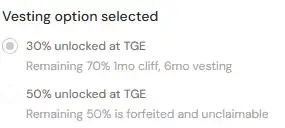
To maintain token prices, DeFi protocols are now extremely keen on locking users' funds. Various Ve models keep emerging, often requiring locks of one year, two years, or even four years.

Projects lure you with extremely tempting APY. It looks like high returns, but the outcome is already written:

  • Liquidity dries up: Your principal is locked, unable to move.

  • Whales front-run: Project teams, early investors, and whales often have special vesting schedules or can hedge their profits off-chain.

  • Price tanks to zero: When you can finally unlock, you find that while you earned a 50% return in token terms, the price has already dropped by 90%.

The essence of locking is retail investors using their liquidity to help whales cash out. You covet the interest; they eye your principal.

IV. Extreme Mismatch of Risk and Reward

Let's do some realistic math.

Current DeFi protocols, excluding those shady projects that might rug pull at any moment, offer stablecoin yields of only around 5% - 10% for mainstream ones. This seems higher than banks, but what are the risks behind it?

  • Smart contract vulnerabilities: Hackers could drain the pool at any time.

  • Front-end hijacking: Phishing sites are everywhere.

  • Depegging risk: Algorithmic stablecoins or bridged assets can go to zero instantly.

  • Project Rug Pull: Even projects with billions in TVL can disappear overnight with the funds.

Earning a 5% return while bearing a 100% risk of losing your principal. This is a classic case of high risk for low reward. This yield doesn't even cover the mental distress fee from the constant anxiety during operations. In comparison, simply buying and holding Bitcoin, or even using centralized exchange理财products, offers far better value than折腾on-chain.

Conclusion: Refuse to Become On-Chain Fuel

DeFi's innovation has stalled, but its harvesting tactics have evolved.

At this stage, for most retail investors with less than $100,000, DeFi has lost its golden attribute. It is no longer a wilderness full of opportunities, but a playground carefully designed by whales and unscrupulous project teams.

Every button, every rule, every lock-up suggestion here is designed to诱you into handing over your chips.

So, the best strategy now might be just one: Admit that current DeFi truly isn't working. Stop those meaningless interactions. Stop locking up funds for meager returns. Protect your principal. Convert it into truly valuable core assets, and then watch coldly as the whales fight amongst themselves.

Stop being an on-chain laborer. Your time and capital deserve a better place.

Câu hỏi Liên quan

QWhy are retail investors leaving DeFi despite lower transaction fees?

ARetail investors are leaving because low fees have turned DeFi into a high-effort, low-reward environment where they perform repetitive tasks for minimal returns, while project owners exploit the system to inflate engagement metrics without fair compensation.

QHow do DeFi projects change rules arbitrarily, and what impact does this have?

ADeFi projects frequently alter rules, such as modifying tokenomics, adding lock-up periods, or labeling users as sybils, which creates uncertainty and distrust, making investors feel cheated after investing time and resources based on initial promises.

QWhat risks do investors face with high APY lock-up schemes in DeFi?

AInvestors risk illiquidity, front-running by whales, and significant token price depreciation, often resulting in capital losses despite high nominal yields, as locked assets become vulnerable to market manipulations and project failures.

QHow does risk-reward mismatch discourage participation in DeFi?

AWith stablecoin yields around 5-10%, investors bear risks like smart contract hacks, front-end attacks, stablecoin depegging, and rug pulls, making the potential returns insufficient to justify the high probability of total capital loss compared to safer alternatives like Bitcoin or centralized exchanges.

QWhat is the author's recommended strategy for retail investors in the current DeFi landscape?

AThe author advises retail investors to stop futile interactions and lock-ups, preserve capital, and allocate it to core assets like Bitcoin, avoiding DeFi's exploitative structures dominated by whales and predatory projects.

Nội dung Liên quan

Ngoài sân cỏ: Trò chơi đầu cơ xoay quanh World Cup

Bên cạnh sân cỏ, World Cup 2026 đã tạo ra một mạng lưới đầu cơ đa dạng, biến sự kiện thể thao thành một thí nghiệm đầu tư toàn cầu kéo dài hàng tháng. Thị trường dự đoán (như Polymarket, Kalshi) nổi lên như một kịch bản đầu cơ mới, thu hút khối lượng giao dịch khổng lồ, thậm chí lấn át sự phát triển của các nền tảng cá cược truyền thống vốn vẫn là thị trường cơ bản lớn nhất. Các cổ phiếu khái niệm liên quan đến World Cup, như cổ phiếu "gà rán" của Hàn Quốc hay cổ phiếu liên quan đến đội tuyển Nhật Bản, biến động mạnh theo kết quả thi đấu và tâm lý người hâm mộ. Thị trường vé xem trở thành sân chơi đầu cơ phức tạp, với việc bán lại vé, giao dịch quyền mua vé (RTB) và cả hành vi "bán khống" vé trên các sàn thứ cấp. Các mặt hàng sưu tầm như sticker Panini hay áo đấu phiên bản giới hạn cũng được săn đón và định giá lại trên thị trường thứ cấp. Lĩnh vực tiền điện tử chứng kiến sự bùng nổ của các meme coin lợi dụng chủ đề World Cup, mang lại lợi nhuận siêu tốc cho một số ít nhưng cũng tiềm ẩn rủi ro sụp đổ lớn. Cuối cùng, một lớp dịch vụ khác thu lợi bằng cách cung cấp công cụ theo dõi giá vé, thông tin hoặc lời khuyên cá cược cho chính những người tham gia vào cuộc chơi đầu cơ này. Tóm lại, World Cup không chỉ là lễ hội bóng đá mà còn là một cửa sổ toàn cầu hiếm có, nơi sự chú ý, cảm xúc và nguồn lực được nén lại, tạo ra một hệ sinh thái đầu cơ đa tầng phức tạp xoay quanh nó.

marsbit30 phút trước

Ngoài sân cỏ: Trò chơi đầu cơ xoay quanh World Cup

marsbit30 phút trước

Tuyên Bố ETF Hyperliquid Thu Hút Sự Chú Ý Khi Câu Chuyện HYPE Phát Triển Trên X

Tuyên bố từ AlphaOnChain trên X (trước đây là Twitter) ngày 20 tháng 6 cho biết ba quỹ ETF Hyperliquid (HYPE) được ra mắt vào tháng 5 năm 2026 đã tích lũy tổng cộng 158 triệu USD tài sản. Trong đó, ETF Bitwise HYPE được cho là có 88 triệu USD và ETF 21Shares HYPE có 66 triệu USD. Thông tin này đã thu hút sự chú ý vào cuối tuần, củng cố cho nhận định rằng HYPE đang trở thành một trong những đồng altcoin được theo dõi sát sao, khi các nhà giao dịch tìm kiếm cơ hội vượt trội ngoài Bitcoin và Ethereum. Tuy nhiên, bài viết nhấn mạnh một cảnh báo quan trọng: các con số này đến từ một bài đăng trên mạng xã hội, chưa được xác minh bởi dữ liệu chính thức từ nhà phát hành quỹ, hồ sơ trao đổi hoặc trang thông tin quỹ. Do đó, chúng nên được coi là một tín hiệu cho thấy sự quan tâm ngày càng tăng xung quanh đồng tiền HYPE, chứ không phải là bằng chứng cuối cùng về dòng tiền thực tế. Hyperliquid thu hút cộng đồng nhờ hệ sinh thái tập trung vào giao dịch perpetual trên chuỗi và cơ sở hạ tầng sàn giao dịch. Nếu các sản phẩm ETF liên quan đến HYPE thực sự thu hút được lượng tài sản đáng kể, điều này có thể cho thấy nhu cầu từ cả tổ chức và nhà đầu tư cá nhân đang bắt đầu mở rộng sang các tài sản crypto có rủi ro cao hơn. Đối với các nhà giao dịch, dù sự quan tâm trên mạng xã hội có thể tác động ngắn hạn đến thị trường, nhưng sự tăng trưởng bền vững thường cần đến nhu cầu đã được xác nhận, thanh khoản và sự phát triển liên tục của hệ sinh thái.

bitcoinist1 giờ trước

Tuyên Bố ETF Hyperliquid Thu Hút Sự Chú Ý Khi Câu Chuyện HYPE Phát Triển Trên X

bitcoinist1 giờ trước

Codex Sử Dụng Máy Tính Như Thế Nào? Ba Lối Vào Và Ranh Giới Quyền Hạn

Bài viết phân tích ba phương thức chính để Codex tương tác với máy tính: Computer Use, Tiện ích Chrome và Trình duyệt trong ứng dụng. Computer Use là phương thức mạnh mẽ nhất, cho phép Codex điều khiển giao diện đồ họa của các ứng dụng macOS/Windows, cài đặt hệ thống, thậm chí iOS Simulator. Nó phù hợp cho các quy trình không có API hoặc công cụ cấu trúc, nhưng chậm hơn và có ranh giới quyền truy cập rộng nhất, đòi hỏi sự giám sát cẩn thận. Tiện ích Chrome cấp cho Codex quyền truy cập vào trạng thái Chrome đã đăng nhập của người dùng, bao gồm cookie, hồ sơ và các tab mở. Nó lý tưởng cho các tác vụ trên Gmail, LinkedIn, Salesforce, bảng điều khiển nội bộ hoặc nghiên cứu xuyên nhiều trang web, đồng thời hỗ trợ kiểm soát đa tab hiệu quả. Trình duyệt trong ứng dụng là một trình duyệt biệt lập bên trong luồng Codex, không kế thừa trạng thái đăng nhập hay tiện ích mở rộng. Nó hoàn hảo cho việc phát triển và gỡ lỗi web (máy chủ cục bộ, lỗi giao diện, bố cục responsive) và cho phép chú thích trực tiếp trên các phần tử trang, tạo vòng phản hồi nhanh giữa chỉnh sửa mã và xem trước. Appshots không phải là một phương thức điều khiển, mà là công cụ để người dùng cung cấp ngữ cảnh hình ảnh (chụp cửa sổ) cho Codex, giúp nó hiểu vấn đề cần giải quyết. Thông điệp cốt lõi: Không phải mọi tác vụ đều cần Computer Use. Nên chọn phương thức có phạm vi quyền hẹp nhất, an toàn nhất và được cấu trúc hóa nhất cho từng công việc cụ thể. Ưu tiên sử dụng plugin/MCP nếu có, sau đó mới xem xét đến Trình duyệt trong ứng dụng, Tiện ích Chrome, và chỉ dùng Computer Use cho "chặng đường cuối" khi các công cụ khác không đáp ứng được. Điều này đảm bảo hiệu quả và an toàn, đồng thời duy trì quyền giám sát của người dùng đối với các hành động quan trọng.

marsbit2 giờ trước

Codex Sử Dụng Máy Tính Như Thế Nào? Ba Lối Vào Và Ranh Giới Quyền Hạn

marsbit2 giờ trước

Quy tắc sắt của thiết bị bán dẫn đang bị phá vỡ

Quy tắc bất thành văn lâu nay trong ngành thiết bị bán dẫn, nơi các nhà sản xuất chip thường ép giảm giá (khoảng 10%) cho các đơn hàng lặp lại, đang bị phá vỡ. Gần đây, một số nhà cung cấp thiết bị chính của SK Hynix đã đề nghị tăng giá 3-4%, phản ánh sự thay đổi quyền lực thị trường. Nguyên nhân chính là cơn sốt mở rộng sản xuất để đáp ứng nhu cầu AI, dẫn đến tình trạng thiếu hụt thiết bị nghiêm trọng. Cụ thể, thiết bị TCB (Thermal Compression Bonding) đang "bán chạy" nhờ làn sóng đặt hàng cho sản xuất HBM4, chiplet AI và CPU. Các nhà sản xuất chính như Hanmi Semiconductor, Hanwha Semitech và ASMPT nhận được nhiều đơn hàng lớn. Trong khi đó, công nghệ Hybrid Bonding tiên tiến hơn sẽ được áp dụng rộng rãi hơn từ HBM5, còn ở giai đoạn hiện tại, TCB vẫn là giải pháp thực tế. Không chỉ vậy, sự thiếu hụt còn lan sang chính chuỗi cung ứng thiết bị. Các linh kiện quan trọng để sản xuất thiết bị kiểm tra bán dẫn như FPGA, CPU, Driver IC cũng khan hiếm do bị ưu tiên cung cấp cho các trung tâm dữ liệu AI, làm chậm tiến độ giao hàng thiết bị kiểm tra. Các báo cáo từ SEMI và Counterpoint dự báo một chu kỳ tăng trưởng mạnh mẽ cho ngành thiết bị bán dẫn, thúc đẩy bởi ba xu hướng: mở rộng công nghệ logic tiên tiến (TSMC, Intel, Samsung), bùng nổ sản xuất HBM (SK Hynix, Micron) và đầu tư lớn vào đóng gói tiên tiến (CoWoS, C2S). Tóm lại, các nhà cung cấp thiết bị then chốt nắm giữ công nghệ không thể thay thế trong các lĩnh vực này đang nắm giữ chìa khóa cho năng lực sản xuất trong kỷ nguyên AI, từ đó định hình lại cán cân quyền lực và định giá trong toàn ngành.

marsbit2 giờ trước

Quy tắc sắt của thiết bị bán dẫn đang bị phá vỡ

marsbit2 giờ trước

Giao dịch

Giao ngay
Hợp đồng Tương lai
活动图片