The End of the 'Talk-to-Earn' Era? X Delivers Heavy Blow, Bans InfoFi, Cutting Off Funding for a Batch of Projects

比推Xuất bản vào 2026-01-16Cập nhật gần nhất vào 2026-01-16

Tóm tắt

On January 15, X (formerly Twitter) revoked API access for InfoFi applications, effectively ending the "post-to-earn" model. The platform cited concerns over AI-generated spam and low-quality replies as the reason for the policy change, prioritizing user experience over the significant revenue these apps generated. Major InfoFi platforms like Kaito and Cookie DAO are now pivoting to alternative models, such as content marketing tools and market intelligence services. The move triggered sharp declines in related token values and NFT floor prices, with some teams accused of insider trading prior to the announcement. The crackdown is seen as a necessary step to combat spam and improve content quality on the platform, though it also reflects broader challenges in the crypto content ecosystem.

Author: Nancy, PANews

Original Title: 'Talk-to-Earn' Players' 'World Collapses'! Twitter Bans InfoFi, Ecosystem Projects Forced to Adapt Drastically


On the night of January 15th, the crypto Twitter circle (CT) was suddenly hit by a silent 'earthquake'.

With X (formerly Twitter) issuing an announcement cutting off API access for InfoFi applications, the 'post-to-earn' mechanism was brought to a halt. Project teams are choosing to pivot, while 'talk-to-earn' players exclaim that 'the sky has fallen'.

Revoking API Access, Rejecting Millions in 'Toll Fees'

The InfoFi sector changed overnight.

X's Product Lead and Solana Ecosystem Advisor, Nikita Bier, officially announced last night that the platform is revising its developer API policy and will no longer allow applications that reward users for posting, directly naming InfoFi.

Nikita stated bluntly that such incentive mechanisms are the root cause of the platform being flooded with a large amount of AI-generated spam and low-quality replies. Currently, X has revoked the API access permissions for these applications. Once the bots realize they are no longer being paid, the user experience should begin to improve soon.

For developers whose accounts were terminated, Nikita also 'thoughtfully' suggested that teams could help them transition their business to Meta's Threads and the decentralized social media platform Bluesky, a comment full of sarcasm.

More importantly, X resolutely chose to forgo this revenue, even though high-frequency API-calling applications like InfoFi contributed significant 'toll fees'. "InfoFi applications were already paying us millions of dollars for enterprise API access. We don't want that money," Nikita said. This statement also indicates that user experience is X's current strategic priority, especially since these earnings are insignificant compared to X's overall annual revenue.

This officially宣告 (declares) the end of the InfoFi model寄生 (parasitizing) the X ecosystem. The simple and brutal 'talk-to-earn' era is gone for good.

In fact, this is not the first time Nikita has 'declared war' on low-quality content.

Not long ago, he criticized crypto tweets for heading towards suicidal demise. Nikita posted at the time that since last October, a notion has been spreading within CT that users need to reply hundreds of times a day to achieve account growth. However, each post consumes part of the day's influence. Since the average user only browses 20 to 30 posts per day, the platform cannot show all posts from one user to all their followers. Therefore, crypto Twitter users end up wasting all their influence on hundreds of 'gm' replies. When they post substantive content like project announcements, very few people see it. The decline of crypto tweets stems from their own behavior, not algorithm issues.
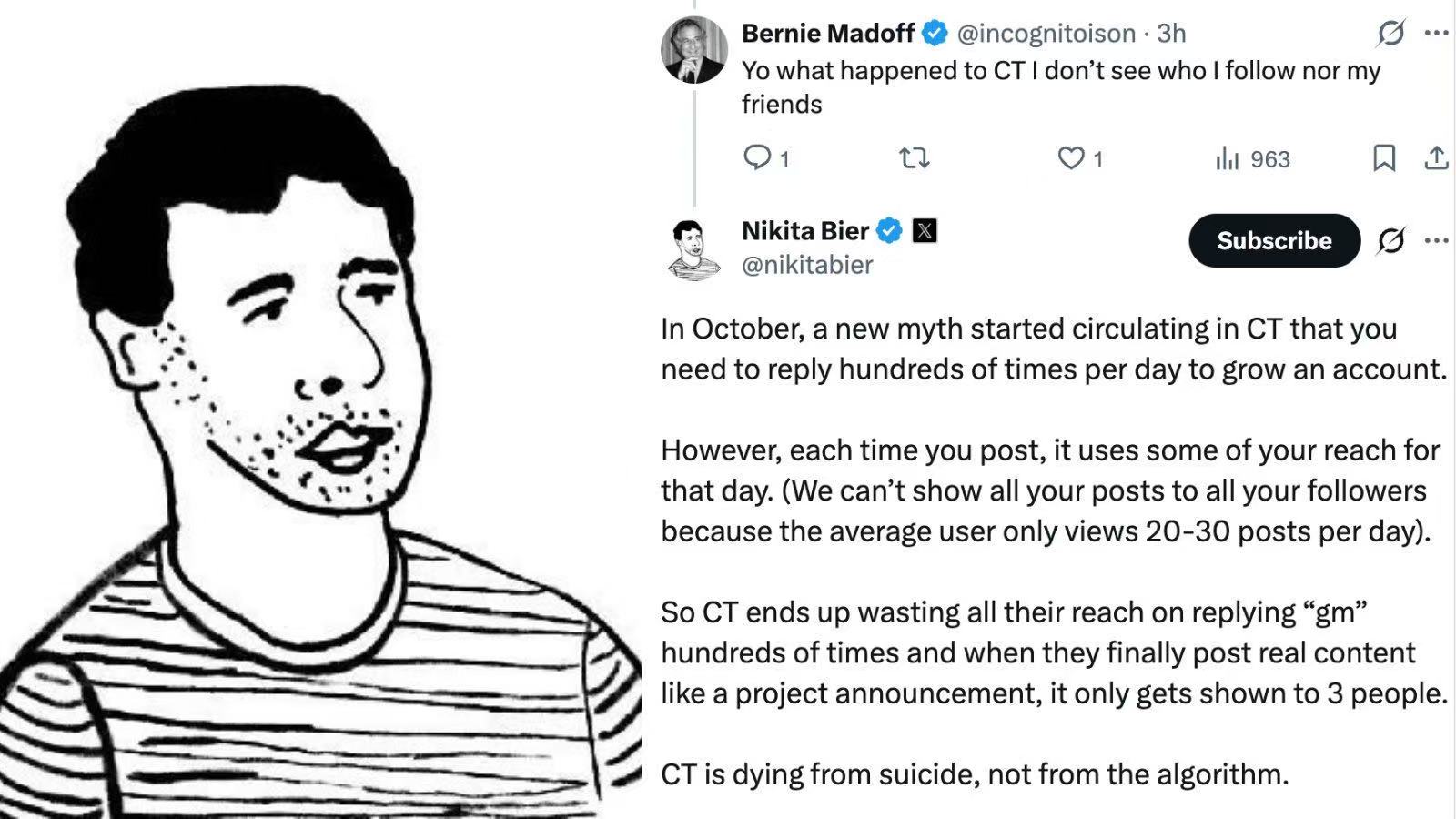
This post sparked strong dissatisfaction within the crypto community at the time, even leading to a large-scale 'GM' counter-attack, which eventually resulted in the tweet being deleted. But in hindsight, X's determination to clean up low-quality content had already been foreshadowed.

Ecosystem Projects Make Drastic Survival Moves, Teams Accused of Dumping Tokens Early

As X tightens its API policy, the InfoFi narrative is facing a cold spell.

CoinGecko data shows that in the past 24 hours, the market capitalization of the InfoFi sector fell to $350 million, with many tokens experiencing double-digit declines. Even the floor price of Yapybaras NFT from Kaito couldn't escape, plummeting.

Faced with a survival test, multiple InfoFi applications have announced pivots.

Yu Hu, founder of the representative project Kaito, stated that the company will gradually terminate Yaps and the incentivized leaderboard system, instead launching a new Kaito Studio. This decision stems from the platform's issues with low-quality content and spam, as well as a shift in the crypto industry from a high-frequency global distribution model towards more precise marketing. After discussions with the X platform, both parties reached a consensus: a completely permissionless distribution system is no longer viable and does not meet the needs of high-quality brands, serious content creators, or the X platform itself. Over the past few months, the platform has been developing Kaito Studio. This product will adopt a layered traditional marketing model, connecting brands with high-quality creators through top-tier analytical tools, covering multiple platforms like X, YouTube, TikTok, and expanding beyond cryptocurrency into areas like finance and AI.

Meanwhile, Cookie DAO, after consulting with the X team, decided to immediately shut down the Snaps platform and all creator activities. Cookie DAO stated it will wait for confirmation and guidance from the X platform to determine if creator activities similar to Snaps can operate in any form in the future. Simultaneously, the platform is communicating directly with all project teams running Snaps activities. Some situations are more complex, involving pre-paid activity fees and promised rewards. While full solutions are not yet available, they will adhere to principles of fairness and communicate directly with each project. The platform has taken snapshot archives of all active activities and will provide updates to creators as soon as possible. Other products under Cookie are unaffected. Additionally, over the past six months, the platform has been continuously developing Cookie Pro, a crypto real-time market intelligence tool, planned for launch in the first quarter.

Judging from the project teams' statements, this policy adjustment is not a sudden black swan event; the teams were already aware of the changing winds and had布局 (laid out plans for) a pivot in advance. This has also sparked market controversy, with the community质疑 (questioning) whether projects knew about the negative news in advance and dumped their tokens.
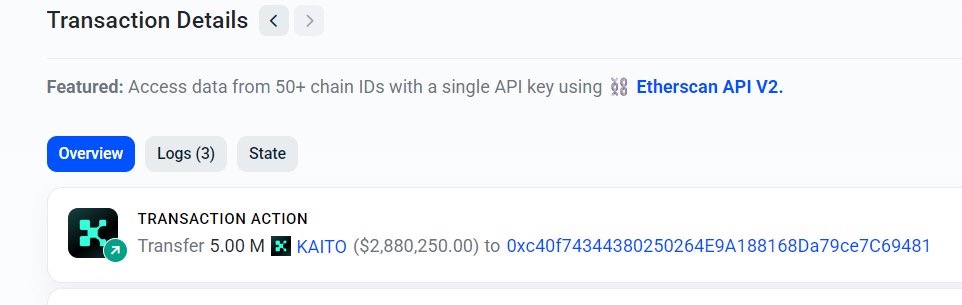
Taking Kaito as an example, its multi-signature contract address distributed and transferred a cumulative 24 million KAITO (approx. $13.31 million) to 5 addresses two weeks ago. Among them, according to monitoring by crypto KOL "vasucrypto", the 0x049A address associated with the Kaito team transferred 5 million KAITO to Binance 7 days ago, possibly for sale. More intriguingly, crypto KOL "加密无畏" (Crypto Fearless) added that Kaito's staking unlocks also peaked in the past few days. 1.1 million KAITO tokens are also scheduled to unlock tomorrow (January 17th), with the unstaking period being 7 days.

Farewell to the 'Talk-to-Earn' Era, Long-Overdue Content Justice

X's brutal industry purge is not just an adjustment of platform rules but also a reshaping of the crypto content ecosystem.

For X, which highly relies on advertising revenue and subscription services, facing external pressures like slowing user growth, inefficient traffic monetization, and the strong rise of competitors, this adjustment is an inevitable choice for survival. In fact, over the past few months, X has already begun making sweeping reforms in content and traffic distribution, including adjusting algorithm weights and increasing revenue for high-quality creators. Ultimately, X's true target is not solely the InfoFi model, but the low-quality content that severely dilutes the platform's value and drives away real users.

For the crypto Twitter circle, this is also a long-overdue form of content justice. Although the original intention of the InfoFi model was to encourage creators to produce high-quality content through token incentives, and it did shine briefly, this mechanism was also hijacked by 'airdrop farming' behavior, where a large number of profit-seekers疯狂制造 (frantically produced) low-quality and repetitive spam information. This false流量繁荣 (traffic prosperity) not only made content dull but also caused truly deep and valuable content to be drowned out by noise, accelerating the loss of real users.

This 'ban' is undoubtedly a 'noise filter' for CT users who are tired of spam; their timelines can finally catch a breath.

However, the decline in CT's热度 (heat) is not entirely attributable to InfoFi; it is also closely related to the overall downturn cycle of the crypto industry. Even the viewership of crypto content on YouTube has fallen to its lowest level since January 2021.

Regardless, the end of this InfoFi model is a necessary path to improving the readability of crypto content and returning to the essence of content. For InfoFi projects, now that the shortcut of寄生 (parasitizing) Web2 giant traffic has been cut off, how to establish a SocialFi mechanism based on the flow of real value is a难题 (challenge) that urgently needs answering.


Twitter:https://twitter.com/BitpushNewsCN

Bitpush TG Discussion Group:https://t.me/BitPushCommunity

Bitpush TG Subscription: https://t.me/bitpush

Original Link:https://www.bitpush.news/articles/7603422

Câu hỏi Liên quan

QWhat major change did X (formerly Twitter) announce regarding InfoFi applications on January 15th?

AX revoked API access for InfoFi applications, effectively ending the 'post-to-earn' model that rewarded users for posting.

QAccording to X's product lead Nikita Bier, why was the API access for InfoFi apps terminated?

ABecause these incentive mechanisms were identified as the main cause of a large amount of AI-generated spam and low-quality replies on the platform, which degraded user experience.

QHow did the InfoFi ecosystem react to X's policy change, as mentioned in the article?

AProjects like Kaito and Cookie DAO announced they were pivoting or shutting down their incentivized platforms, with Kaito developing a new marketing tool and Cookie DAO focusing on a market intelligence product.

QWhat controversy emerged concerning the Kaito team's actions prior to the official announcement?

AThe community questioned if the team had prior knowledge of the policy change, as a team-associated address transferred a large amount of KAITO tokens to Binance potentially for selling, and a significant token unlock was scheduled around the same time.

QWhat does the article suggest is the broader implication of X's crackdown on InfoFi for the crypto content ecosystem?

AIt is seen as a necessary step to filter out low-quality content and spam, a 'long-overdue content justice' that could improve readability and push the ecosystem to focus on genuine value and content quality rather than artificial engagement for rewards.

Nội dung Liên quan

Đối thoại với nhà sáng lập Patagon: Tiết lộ những góc khuất trong thị trường cấp hai của Anthropic

**Tóm tắt: Thị trường cấp hai Anthropic - Lợi nhuận khổng lồ, rủi ro và sự lộn xộn trước khi IPO** Trong podcast này, Dio Casares, nhà sáng lập Patagon, đã tiết lộ những góc khuất của thị trường giao dịch thứ cấp (secondary market) xoay quanh Anthropic - một "con kỳ lân" trong làng AI. **Quy mô và cơ cấu thị trường** Thị trường thứ cấp cho cổ phần Anthropic rất lớn, với hàng trăm tỷ USD giao dịch. Đây là thị trường dựa trên quan hệ nội bộ. Phí trung gian có thể lên tới 10% cho mỗi giao dịch, tạo ra một "mỏ vàng" cho các nhà môi giới. Thậm chí, nhiều người trong quỹ đầu tư kiếm được nhiều tiền hơn từ việc môi giới này so với công việc đầu tư chính. **Phân loại giao dịch & Thái độ của công ty** - **Giao dịch được công ty chấp thuận:** Anthropic ủng hộ các giao dịch trực tiếp thông qua các SPV (phương tiện mục đích đặc biệt) hoặc cho phép nhân viên bán cổ phần. Điều này giúp công ty huy động vốn và giảm áp lực bán trước khi IPO. - **Giao dịch "xám"/không được chấp thuận:** Các nền tảng như Hive, Forge bị Anthropic phản đối vì tạo ra chênh lệch giá và cản trở việc huy động vốn chính thức. Họ thường chào bán cổ phần "chiết khấu" cho một lượng lớn nhà đầu tư chưa được xác minh. **Lừa đảo và rủi ro** Khoảng 10-20% các thỏa thuận giao dịch có thể liên quan đến gian lận, như chứng chỉ cổ phần giả. Một rủi ro phổ biến hơn là việc nhà môi giới nhận tiền trước rồi mới đi tìm nguồn cổ phần để giao, và đôi khi thất bại. **Cấu trúc SPV chồng chéo & "Địa ngục" thanh toán sau IPO** Các SPV nhiều tầng phát sinh do khó khớp lệnh mua-bán trực tiếp. Khi Anthropic IPO, việc phân phối cổ phần thực tế qua nhiều tầng SPV sẽ rất phức tạp và chậm trễ, phụ thuộc vào quy tắc của mỗi quỹ và hệ thống DTCC. Bất kỳ tầng GP nào giữ cổ phần lại đều có thể chặn dòng phân phối cho các nhà đầu tư ở tầng dưới, dẫn đến tranh chấp và kiện tụng kéo dài hàng năm. Sau IPO, Anthropic có ít động lực can thiệp vào các vấn đề của thị trường thứ cấp tư nhân này. **Lời khuyên cho nhà đầu tư nhỏ lẻ** Đối với các nhà đầu tư nhỏ (ví dụ: thông qua các sản phẩm cổ phần "token hóa" của Anthropic), rất khó để kiểm tra tính xác thực của tài sản cơ sở. Lời khuyên là nên thận trọng, không tăng thêm vị thế, và nếu có cảm giác không tốt, nên rút lui. **Tầm nhìn của Patagon** Patagon hoạt động như một đối tác chuyên nghiệp, tự mình tìm kiếm cơ hội, thực hiện due diligence kỹ lưỡng, đảm bảo cổ phần là thật và cấu trúc tuân thủ, nhằm cung cấp trải nghiệm đầu tư minh bạch và đáng tin cậy hơn so với các nền tảng môi giới truyền thống.

marsbit20 phút trước

Đối thoại với nhà sáng lập Patagon: Tiết lộ những góc khuất trong thị trường cấp hai của Anthropic

marsbit20 phút trước

Tại sao XRP của Ripple là lựa chọn tốt hơn cho giao dịch so với SWIFT

Chuyên gia CharuSan giải thích lý do Ripple's XRP vượt trội hơn SWIFT trong giao dịch xuyên biên giới. Ông chỉ ra SWIFT hoạt động chậm và phức tạp, trong khi công nghệ ODL của XRP có thể giải phóng hàng nghìn tỷ USD cho ngân hàng chỉ trong vài giây. XRP giải quyết các vấn đề về tốc độ và chi phí, khiến ngân hàng cân nhắc lại việc sử dụng SWIFT. CharuSan dự đoán XRP sẽ tiếp quản thị trường một cách nhanh chóng, vì phần mềm chính của ngân hàng đã tích hợp sẵn với Ripple. Ông nhấn mạnh SWIFT phải thêm XRP như một lớp thanh khoản để tồn tại, nếu không sẽ mất dần vị thế và đóng cửa. Dù SWIFT đang phát triển sổ cái phân tán trên Ethereum layer-2 Linea với ConsenSys và nhiều ngân hàng, CharuSan cho rằng điều này không thể so sánh với XRP. Linea chỉ thử nghiệm chuyển tin nhắn và tài sản, không phải công cụ thanh khoản, vẫn cần Ethereum xác minh và phát sinh chi phí, không phù hợp cho thanh toán xuyên biên giới. Ông kết luận nếu SWIFT không đạt thỏa thuận với Ripple và tích hợp XRP, họ sẽ bị đào thải. Giá XRP tại thời điểm viết bài là khoảng 1,41 USD, giảm hơn 4% trong 24 giờ.

bitcoinist2 giờ trước

Tại sao XRP của Ripple là lựa chọn tốt hơn cho giao dịch so với SWIFT

bitcoinist2 giờ trước

Tether Bị Yêu Cầu Chuyển 344 Triệu Đôla USDT Đã Bị Đóng Băng Cho Các Nạn Nhân Khủng Bố

Một gia đình ở Jerusalem, có người thân thiệt mạng trong vụ đánh bom tự sát của Hamas năm 1997, cùng các nguyên đơn khác đang yêu cầu tòa án liên bang Mỹ buộc Tether chuyển giao hàng trăm triệu đô la tiền điện tử bị đóng băng. Vụ kiện được nộp tại Manhattan có thể tạo ra tiền lệ pháp lý quan trọng về cách xử lý các tổ chức phát hành stablecoin tập trung. Các nguyên đơn là nạn nhân và gia đình của các vụ tấn công khủng bố có liên quan đến Iran. Họ đã có phán quyết của tòa án chống lại Iran từ nhiều năm trước nhưng chưa được bồi thường. Giờ đây, họ nhắm đến số tiền điện tử bị đóng băng để thu hồi khoản nợ. Luật sư Charles Gerstein cho rằng, khác với Bitcoin hay Ethereum, USDT do một công ty tập trung kiểm soát, có thể đóng băng ví và chuyển tiền khi có lệnh. Vì Bộ Tài chính Mỹ (OFAC) đã xác định hai địa chỉ ví trên mạng Tron chứa khoảng 344 triệu USDT này có liên quan đến Lực lượng Vệ binh Cách mạng Hồi giáo Iran (IRGC) và đã đóng băng chúng, nên Tether có thể bị buộc phải chuyển số tiền tương đương cho bên nguyên đơn. Vụ kiện này là một phần trong chiến dịch pháp lý rộng hơn nhằm thử nghiệm việc liệu tòa án có thể buộc các nền tảng tiền điện tử có kiểm soát tập trung phải xử lý tài sản bị đóng băng trong các ví bị trừng phạt hay không.

bitcoinist4 giờ trước

Tether Bị Yêu Cầu Chuyển 344 Triệu Đôla USDT Đã Bị Đóng Băng Cho Các Nạn Nhân Khủng Bố

bitcoinist4 giờ trước

Gã Khổng Lồ ATM Tiền Mã Hóa Bitcoin Depot Cảnh Báo Về Khả Năng Sụp Đổ

Công ty Bitcoin Depot, nhà điều hành máy ATM tiền điện tử lớn, đã cảnh báo về nguy cơ sụp đổ khi nghi ngờ về khả năng tiếp tục hoạt động. Áp lực tài chính tăng cao với hơn 20 triệu USD tiền phạt pháp lý trong quý IV/2025, cùng hàng loạt vụ kiện từ các cơ quan quản lý tiểu bang Mỹ và sự sụt giảm mạnh khối lượng giao dịch. Doanh thu quý I/2026 giảm 80 triệu USD so với cùng kỳ, với khoản lỗ ròng 9,5 triệu USD. Công ty cho biết các quy định siết chặt và kiểm soát tuân thủ khiến khách hàng sử dụng dịch vụ ít hơn. Áp lực pháp lý gia tăng, bắt đầu từ khoản tiền 2 triệu USD để dàn xếp khiếu nại ở Maine. Các tiểu bang như Massachusetts, Iowa cùng nhiều thành phố cũng hạn chế hoặc cấm máy kiosk tiền điện tử. Cổ phiếu Bitcoin Depot (BTM) trên Nasdaq đã giảm hơn 40% trong năm ngày. Công ty đã thay thế CEO Scott Buchanan bằng Alex Holmes, người có kinh nghiệm về tuân thủ quy định. Tương lai của công ty vẫn bấp bênh giữa làn sóng kiện tụng và các bức tường quy định ngày càng khắt khe ở cả Mỹ và Canada, nơi chính phủ đề xuất lệnh cấm toàn quốc đối với ATM tiền điện tử.

bitcoinist6 giờ trước

Gã Khổng Lồ ATM Tiền Mã Hóa Bitcoin Depot Cảnh Báo Về Khả Năng Sụp Đổ

bitcoinist6 giờ trước

Cuộc Đàn Áp Tội Phạm Tiền Mã Hóa Gia Tăng Khi Myanmar Nhắm Mục Tiêu Vào Các Kẻ Lừa Đảo Với Hình Phạt Tử Hình

Theo báo cáo của FBI, người Mỹ mất hơn 11 tỷ USD vì lừa đảo liên quan đến tiền mã hóa vào năm ngoái, làm gia tăng áp lực lên các chính phủ Đông Nam Á. Đáp lại, chính quyền quân sự Myanmar đã đề xuất một trong những luật chống lừa đảo mạng nghiêm khắc nhất thế giới. Dự luật Chống Lừa đảo Trực tuyến, công bố hôm thứ Năm, quy định hình phạt tù từ 10 năm đến chung thân cho tội danh lừa đảo tiền số. Trong những trường hợp nghiêm trọng nhất, khi hoạt động lừa đảo dẫn đến cái chết của công nhân bị cưỡng bức hoặc buôn người, thủ phạm có thể phải đối mặt với án tử hình. Quốc hội Myanmar cho biết dự luật được soạn thảo để đối phó với các mối đe dọa đến chủ quyền và ổn định đất nước. Myanmar không đơn độc trong cách tiếp cận cứng rắn. Trung Quốc đã xử tử 11 người vào tháng 1 có liên quan đến các hoạt động lừa đảo từ Myanmar. Hoa Kỳ cũng tăng cường phản ứng, phối hợp bắt giữ hơn 200 người và đóng cửa 9 trung tâm lừa đảo vào tháng 4. Các trung tâm lừa đảo trực tuyến ở Đông Nam Á, hoạt động từ các hình thức như "giết lợn", lừa đảo tình cảm đến nền tảng đầu tư giả mạo, đang trở thành vấn đề nan giải cho cơ quan thực thi pháp luật toàn cầu, với nhiều vụ việc sử dụng tiền mã hóa. Bối cảnh đề xuất luật này diễn ra sau khi chính quyền quân sự Myanmar nắm quyền sau cuộc đảo chính năm 2021, với một quốc hội vừa tái nhóm họp vào tháng 3/2026 sau các cuộc bầu cử bị chỉ trích. Dự luật dự kiến được thảo luận vào tuần đầu tháng 6.

bitcoinist10 giờ trước

Cuộc Đàn Áp Tội Phạm Tiền Mã Hóa Gia Tăng Khi Myanmar Nhắm Mục Tiêu Vào Các Kẻ Lừa Đảo Với Hình Phạt Tử Hình

bitcoinist10 giờ trước

Giao dịch

Giao ngay
Hợp đồng Tương lai

Bài viết Nổi bật

Làm thế nào để Mua ERA

Chào mừng bạn đến với HTX.com! Chúng tôi đã làm cho mua Caldera (ERA) trở nên đơn giản và thuận tiện. Làm theo hướng dẫn từng bước của chúng tôi để bắt đầu hành trình tiền kỹ thuật số của bạn.Bước 1: Tạo Tài khoản HTX của BạnSử dụng email hoặc số điện thoại của bạn để đăng ký tài khoản miễn phí trên HTX. Trải nghiệm hành trình đăng ký không rắc rối và mở khóa tất cả tính năng. Nhận Tài khoản của tôiBước 2: Truy cập Mua Crypto và Chọn Phương thức Thanh toán của BạnThẻ Tín dụng/Ghi nợ: Sử dụng Visa hoặc Mastercard của bạn để mua Caldera (ERA) ngay lập tức.Số dư: Sử dụng tiền từ số dư tài khoản HTX của bạn để giao dịch liền mạch.Bên thứ ba: Chúng tôi đã thêm những phương thức thanh toán phổ biến như Google Pay và Apple Pay để nâng cao sự tiện lợi.P2P: Giao dịch trực tiếp với người dùng khác trên HTX.Thị trường mua bán phi tập trung (OTC): Chúng tôi cung cấp những dịch vụ được thiết kế riêng và tỷ giá hối đoái cạnh tranh cho nhà giao dịch.Bước 3: Lưu trữ Caldera (ERA) của BạnSau khi mua Caldera (ERA), lưu trữ trong tài khoản HTX của bạn. Ngoài ra, bạn có thể gửi đi nơi khác qua chuyển khoản blockchain hoặc sử dụng để giao dịch những tiền kỹ thuật số khác.Bước 4: Giao dịch Caldera (ERA)Giao dịch Caldera (ERA) dễ dàng trên thị trường giao ngay của HTX. Chỉ cần truy cập vào tài khoản của bạn, chọn cặp giao dịch, thực hiện giao dịch và theo dõi trong thời gian thực. Chúng tôi cung cấp trải nghiệm thân thiện với người dùng cho cả người mới bắt đầu và người giao dịch dày dạn kinh nghiệm.

Tổng lượt xem 494Xuất bản vào 2025.07.17Cập nhật vào 2025.07.17

Làm thế nào để Mua ERA

Thảo luận

Chào mừng đến với Cộng đồng HTX. Tại đây, bạn có thể được thông báo về những phát triển nền tảng mới nhất và có quyền truy cập vào thông tin chuyên sâu về thị trường. Ý kiến ​​của người dùng về giá của ERA (ERA) được trình bày dưới đây.

活动图片













