# Bài viết Liên quan Local AI

Trung tâm Tin tức HTX cung cấp những bài viết mới nhất và phân tích chuyên sâu về "Local AI", bao gồm xu hướng thị trường, cập nhật dự án, phát triển công nghệ và chính sách quản lý trong ngành tiền kỹ thuật số.

AI PCs Are Here, Going Toe-to-Toe with 120B Models Locally! NVIDIA Redefines the "Personal AI Computer" Foundation with RTX Spark

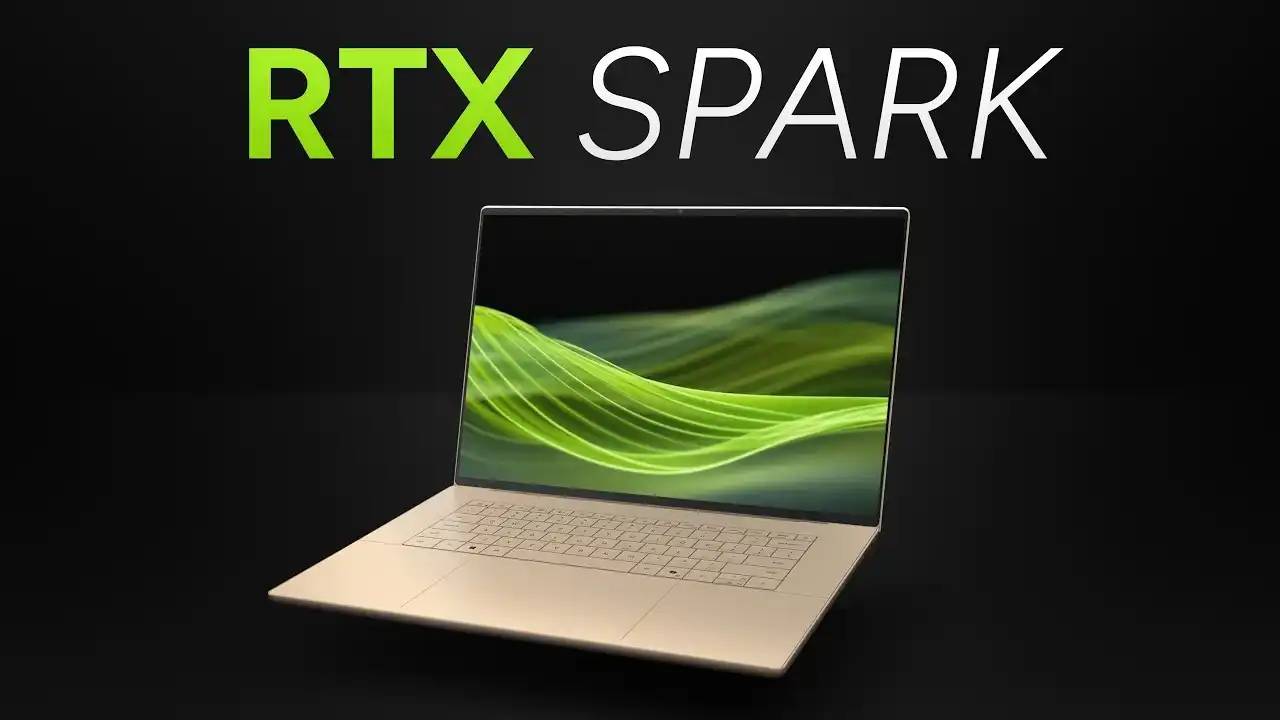
NVIDIA has redefined the "AI PC" standard with the launch of the RTX Spark super chip at GTC 2026. Boasting 1 petaflop (1000 TOPS) of AI performance, it dwarfs the 45-50 TOPS NPUs in current AI PCs. The SoC features a Blackwell GPU, a 20-core Arm CPU co-designed with MediaTek, and crucially, up to 128GB of unified memory shared between CPU and GPU. This architectural shift enables local execution of 120-billion-parameter large language models with million-token context windows, a massive leap from the 9B-40B models typical on current consumer hardware. Beyond AI, use cases include 12K video editing and high-fps ray-traced gaming. Key to enterprise adoption is a security collaboration with Microsoft. Windows security is upgraded, and NVIDIA's OpenShell sandbox runtime is integrated to safely contain AI agent actions. Major software support comes from Adobe, which announced a deep,底层-level rewrite of Photoshop and Premiere to leverage the unified memory for up to 2x performance gains. Six OEMs, including Dell, HP, Lenovo, and Microsoft Surface, will release RTX Spark-based轻薄本 and compact desktops this fall. However, questions remain about real-world performance,功耗, thermal management in laptops, pricing, and the actual impact of the OpenShell sandbox. The RTX Spark represents a fundamental power shift in the PC industry, moving from an x86 CPU-centric model to a GPU-centric SoC platform, but its ultimate success hinges on the upcoming product rollouts and ecosystem validation.

marsbit06/01 06:41

AI PCs Are Here, Going Toe-to-Toe with 120B Models Locally! NVIDIA Redefines the "Personal AI Computer" Foundation with RTX Spark

marsbit06/01 06:41

Running Gemma 4 Locally on iPhone Goes Viral: How Far Are We from the Zero Token Era?

Google's newly open-sourced Gemma 4 model, built on the same architecture as Gemini 3, has gained significant attention for its ability to run locally on mobile devices like the iPhone and Samsung Galaxy. With smaller versions such as E2B (2.3B parameters) and E4B (4.5B parameters), it supports native multimodal capabilities and offers a 128K context window. Users report impressive speeds—over 40 tokens per second on Apple chips with MLX optimization—making it feel "like magic." The model is accessible via Google’s official AI Edge Gallery app, ensuring ease of use and security. While Gemma 4 excels in tasks like text generation, coding, and image understanding, it struggles with more complex agent-based workflows, such as tool calling and structured outputs, where models like Qwen3-coder perform better. Despite some limitations in reasoning, Gemma 4’s local performance hints at a future where everyday AI tasks—chat, coding, reasoning—can be handled offline, reducing reliance on cloud-based token services. Although cloud models still lead in advanced reasoning and large-scale multi-agent tasks, the trend suggests that as hardware and quantization improve, on-device models will increasingly handle high-frequency simple tasks. This shift could disrupt the AI industry’s reliance on token sales and API subscriptions, pushing providers to focus on more complex, data-intensive capabilities. Gemma 4 is just the beginning of this transformation.

marsbit04/06 05:53

Running Gemma 4 Locally on iPhone Goes Viral: How Far Are We from the Zero Token Era?

marsbit04/06 05:53

活动图片